

The Gold Wing’s Golden Jubilee







The original touring motorcycle turns 50 years old.
Honda was founded in 1948, and the Japanese manufacturer has since produced a number of milestone motorcycles. These are bikes that have been around for decades, and have had a significant impact on motorcycling. The Honda Super Cub, for instance; it’s the unassuming step-through on which you were likely to “meet the nicest people.” It has introduced millions to motorcycling, and more than 100 million have been made since it was launched in 1958.
Then there’s the pint-sized Z50 Mini Trail. Countless kids hit the trails for the very first time on this easy-to-ride, semi-automatic minibike. While today’s CRF50F has more contemporary styling, it is nonetheless a direct descendant of the original Z50M introduced in 1967.
The CB750 — Japan’s first inline four motorcycle — changed the motorcycling landscape in 1969. It offered unheard-of performance and reliability in an attractive, accessible package. The other three major Japanese manufacturers would eventually follow with inline four-cylinders of their own.
GOLD WING MILESTONE
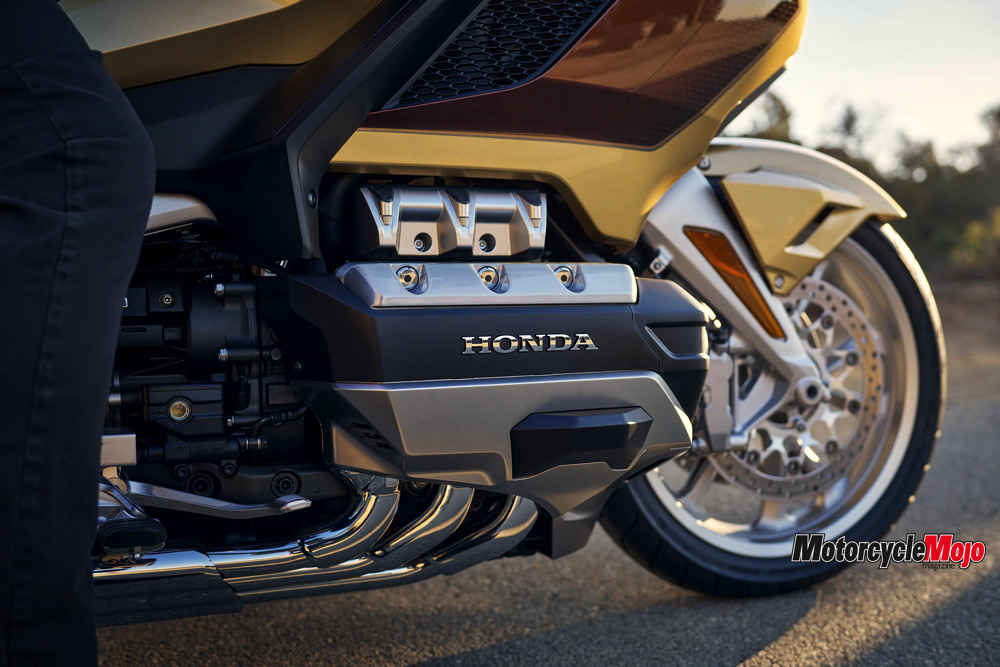
And then there’s the Honda Gold Wing. It revolutionized the touring category when it was introduced in 1975. This milestone motorcycle recently hit a milestone of its own in 2025: It turned 50.
The Gold Wing sits among the longest-running large-displacement motorcycles still in production, surpassed only by the Harley-Davidson Electra Glide, which preceded the Wing by a decade. Some might argue that the Harley Sportster outdates both of those bikes. However, while the new liquid-cooled, Revolution Max-engined Harleys carry the
Sportster name, the last true XL Sportster, which had an air-cooled 45-degree pushrod V-twin since 1957, left the factory in 2021, no longer able to meet emissions standards.
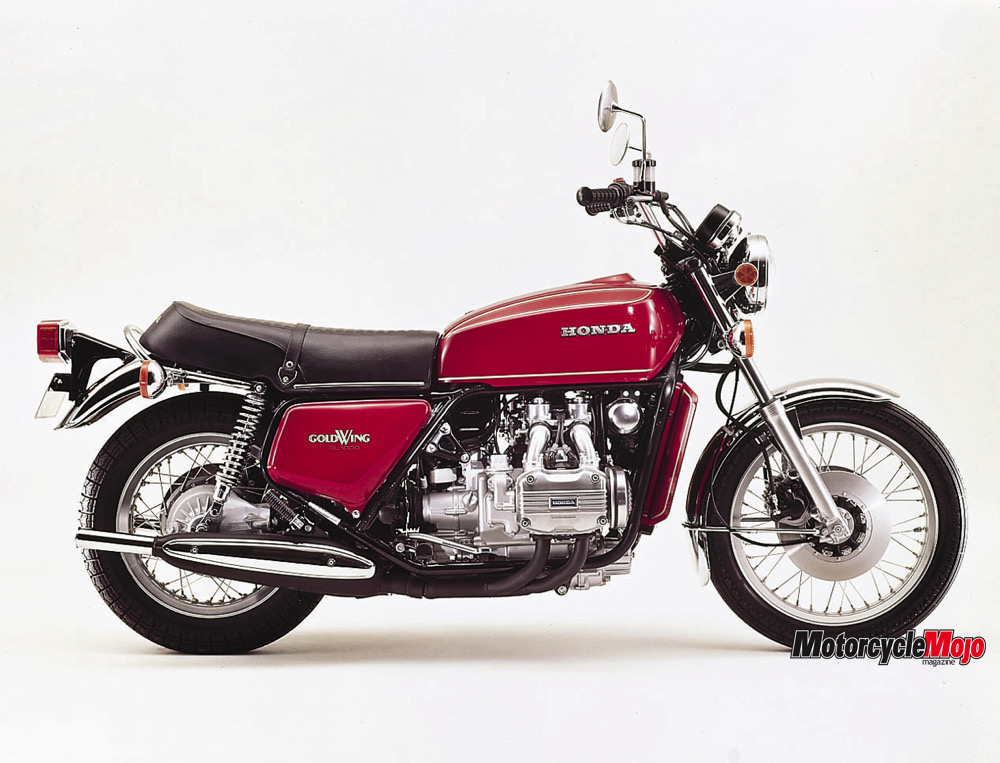
The original GL1000 Gold Wing was a naked bike with a 999 cc horizontally opposed four-cylinder engine. Aside from this unique engine layout, it also had a number of innovative features. It was the first Japanese motorcycle to feature a liquid-cooled four-stroke engine (the 1971 Suzuki GT750 “Water Buffalo” was the first liquid-cooled Japanese motorcycle but it was a two-stroke). The GL1000 was the first Japanese motorcycle with a shaft drive, BMW and Moto Guzzi being the only other manufacturers at the time to offer this maintenance-free drive system. And what looked like a fuel tank was in fact a trio of hinged panels. Beneath the right panel was located the engine coolant overflow tank, and a kick start lever to be installed and used in case the battery went flat; the left panel concealed the bike’s electrics. Beneath the flip-up top panel was a small storage compartment and the fuel filler cap. The fuel tank was actually located under the seat to lower the centre of gravity — in modern times, we call this mass centralization.
Another less obvious innovation introduced on the GL1000 was the location of the front brake caliper; it was…





Thanks for Reading
If you don’t already subscribe to Motorcycle Mojo we ask that you seriously think about it. We are Canada’s last mainstream motorcycle magazine that continuously provides a print and digital issue on a regular basis.
We offer exclusive content created by riders, for riders.
Our editorial staff consists of experienced industry veterans that produce trusted and respected coverage for readers from every walk of life.
Motorcycle Mojo Magazine is an award winning publication that provides premium content guaranteed to be of interest to every motorcycle enthusiast. Whether you prefer cruisers or adventure-touring, vintage or the latest models; riding round the world or just to work, Motorcycle Mojo covers every aspect of the motorcycle experience. Each issue of Motorcycle Mojo contains tests of new models, feature travel stories, compelling human interest articles, technical exposés, product reviews, as well as unique perspectives by regular columnists on safety or just everyday situations that may be stressful at the time but turn into fabulous campfire stories.
Thanks for considering a subscription. The Mojo team truly appreciates it.
