

Five HG3 EVO WP Heated Gloves

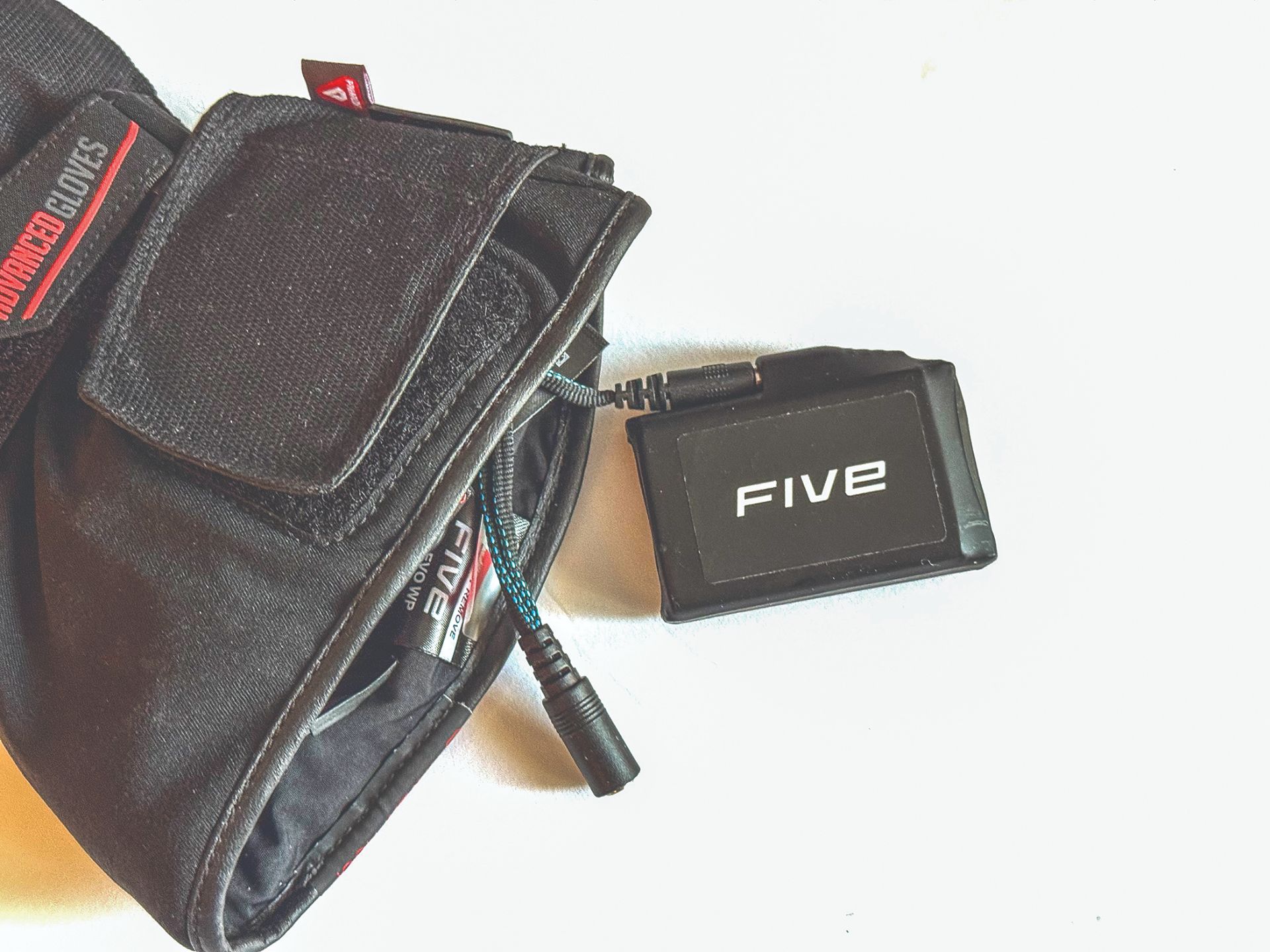
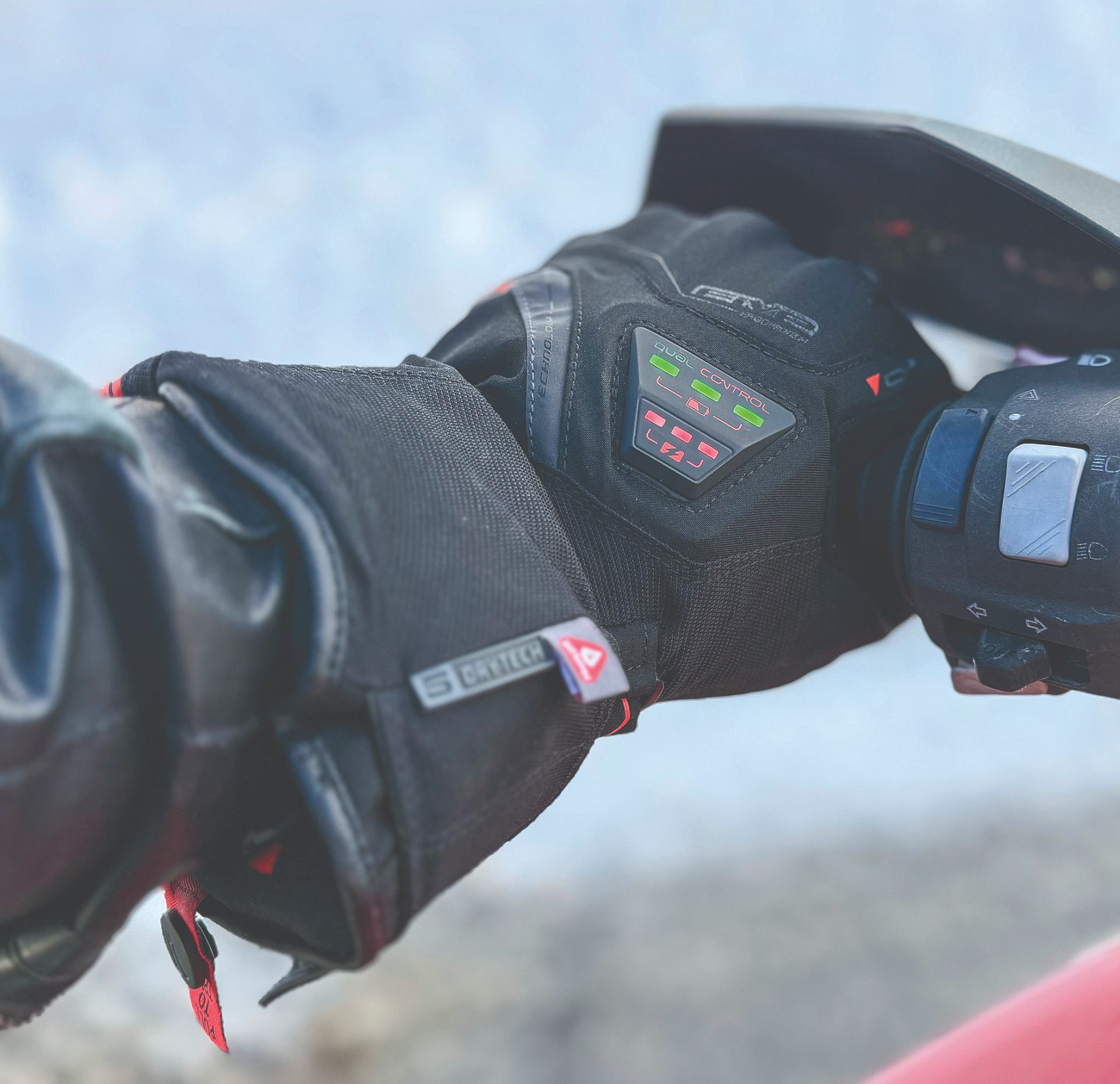
These heated gloves check all the boxes — well, almost all the boxes.
There must be something in the human genome that causes us all, somewhere around the age of 60, to suddenly develop a complete aversion to cold. It’s why old men wear toques in the summer, why retirees head to Florida as soon as they start collecting their Old Age Security, and why I have become inordinately interested in — nay, obsessed with — heated motorcycle gear.
I’ve got a full outfit of the stuff. From heated boot insoles to pants and jacket and gloves. But while I’ve kept the same go-to jacket and pants — from Venture Heat — for ages now, I’m always on the lookout for new electrically powered gloves. Having frostbitten pretty much every part of my body — including a few you really don’t want to hear about — I’ve determined that hands are the most vulnerable part of a motorcyclist to inclement weather.
Yes, your legs and your tushie will get a chill eventually. And, of course, protecting your organs is the prime directive when survival is on the line. But ride a motorcycle at anything less than 10 C and the first thing to freeze will be your hands. And, if the mercury gets really chilly, the only protection you have against frozen digits is electricity. Hence my obsession with heated gloves.
The latest to find a home in my garage are by Five, a French company. Unlike most other producers of electric gloves — Gerbing, Venture Heat and Keis — heated gear is just a part of the company’s glove lineup. Indeed, probably a small part, there being four models: my HG3 EVO WPs, HG1 and HG2 EVO WPs as well as the range-topping HG Prime GTXs.
Like most recent entrants to the field, the Fives are primarily meant to be battery-powered. Oh, Five does offer accessory cables that connect the gloves directly to the battery. But unlike any other heated gear I’ve ever seen, the lines from the battery don’t power the gloves directly but recharge the batteries instead. That might seem like small potatoes, but if you connect the battery directly to the gloves, then they operate on 12+ volts, which typically means they’re warmer
That said, the HG3s are plenty warm. I took a long ride in 2 C weather with one of the Five HG3s on my left hand and my trusty Keis G701s — my go-to heated gloves of late — on my right and, over an hour-long ride, the Five felt warmer, albeit ever so slightly, than the Keis. What makes that most impressive is that the Five gloves are powered by 7.4-volt batteries while the Keis gets its power from 11.4-volt batteries. And, as I said, normally, higher voltage generates greater warmth. I attributed the difference to the HG’s PrimaLoft synthetic insulation — on both the top and palm of the glove — as well as some aluminum foil that reflects some of the electric heat back into your hands.
It’s worth noting that, like most heated gloves, the Fives only heat the back of the hand and fingers as well as their tips. According to the company, it does not “place electric resistors inside the palm so as not to impede the grip of the controls” and instead calls heated grips “a good complement to heated gloves.” As dubious as that may sound, I agree with that sharing of duty. For one, gloves with wires through the palm and extra insulation often feel like snowmobile mitts while, on the other hand, heated grips on their own can’t heat the outside of your hands.
Besides, heated grips draw an extraordinary amount of current from the electrical system. Combining the two — battery-powered gloves and heated grips — can be a real boon because the combo can reduce the load on the battery.
For instance, on my 2018 Suzuki DL1000, which boasts a 490-watt alternator, heated pants and jacket with either gloves and/or heated grips on their maximum setting takes my onboard voltmeter a little too close to 13 volts for my comfort. Limiting my heated grips to their first setting of three and making up the difference with battery-powered gloves puts the charging system back in the black. And, believe me, if you need more heat than the grips and the Five’s on their medium or “Regular” setting, you’ve got bigger problems than cold digits. As in, I’d be on the lookout for black ice.
The batteries last pretty long too. On their highest “Boost” heat setting, for instance, the HG3’s 2,200 mAh batteries lasted 2.5 hours. Not only was that longer than the Keis G701s could hold out, it was also about 30 minutes longer than Five’s official rating. And, on their lowest “Eco” setting, they eked out about 6.5 hours, about 30 minutes more than Five claims.
Another laudable aspect of the Five’s performance is that the heat is controlled by a lone button located on the gauntlet of the right-hand glove. So you only have to tap one to change the heat level of both gloves and you never have to take your right hand off the throttle to modify your left glove’s heat output. Most excellent! Also included are LED monitors for the heat level and the state of charge of the batteries for both gloves. Overall, Five offers the best controls of any heated glove I’ve tested.
As for construction, the HG-3 is the one Five heated glove made entirely of synthetic materials, the others having at least a leather palm and some having some more animal hide on their back. That might seem like a disadvantage, but I see it as a benefit. For one thing, leather can hold water, which will require more energy from the battery to remain warm. Water laden leather can also overwhelm the waterproof layer as it did for one such heated leather glove I owned. The result was micro-shorting heating filaments, leaving me to choose between being very cold (with the heat off) or getting little zaps in my fingers if I wanted to keep warm. I now only ride with 100% synthetic gloves. All that said, the range-topping HG Prime GTXs use laminated Gore-Tex for waterproofing and thus, despite their leather palms, will almost assuredly repel all the wet stuff.
For protection, the HG-3s feature a plastic knuckle guard, a slider on the inside of the palm and some synthetic leather on the inside of the fingers, which results in the HG3s being rated as only Level 1 protection, the lower of the two CE accreditations. That said, in all my testing of heated gloves, they’ve all been only CE 1-KP rated, the only heated gloves I know of that rate a 2-KP rating are Keis’ G601s. As for whether I feel safe wearing the Fives, I found them as confidence-inspiring as my Keis G701s and more protective than Venture Heat gloves I no longer ride with.
So far, so good right? Good heat, excellent battery life and decent protection. All is right in the world of heated gloves. And, in fact, taken on their own — i.e. as the only heated garment you’re going to wear — the Fives have precious little downside. Even their price — $419.95 at Motovan.com — isn’t horrific.
What might cause some consternation is that when I’m on a long ride in very cold climes — I often ride between Toronto and Northern Quebec in late November — I like to plug my battery-powered gloves directly in the motorcycle’s battery to ensure I can get max heat for as long as I need it. Typically, I plug the gloves into a socket provided in the sleeves of pretty much every motorcycling heated jacket I’ve ever tested. The problem in this case is that the connectors Five uses aren’t the same as virtually — I’d just say “all” but I haven’t tested every heated product — all other producers use.
In other words, while I can plug my Venture Heat gloves into a Keis or a Macna heated jacket, the Fives can connect with neither. Although they outwardly look the same — a long tube with connections on the inner and outer surfaces, the male end of a Five is 3.5-millimetres in diameter while the industry standard versions measure 5.5-mm across. Oh, you could plug the Fives directly to the battery — with that accessory cable I mentioned earlier — but it would mean you’d have two heated electric circuits; one for your jacket and/or pants and another for your gloves. Not the most convenient of choices. That said, the Five connectors are as robust and waterproof as any used for motorcycle heated garments.
In the end, this remains the Fives’ only fault. If I were looking for heated gloves only (i.e. not a full complement of heated gear), the HG3s would be near — or even at — the top of my shopping list. They’re perfect for urban and suburban commuting and even longer trips as long as you’re not always in “Boost” mode. But if I were going truly sub-arctic — i.e. one of those long Quebec trips I mentioned with the mercury barely above freezing — I’d want gloves that I could conveniently plug into my jacket.
As I said, Five’s HG3 EVO WPs are available from Motovan for $419.95 and come with both batteries and a charger included. The HG Connection Kit that connects the gloves to your motorcycle via a direct battery wire or a DIN plug will be available by the time you read this article and costs $77.95.





Thanks for Reading
If you don’t already subscribe to Motorcycle Mojo we ask that you seriously think about it. We are Canada’s last mainstream motorcycle magazine that continuously provides a print and digital issue on a regular basis.
We offer exclusive content created by riders, for riders.
Our editorial staff consists of experienced industry veterans that produce trusted and respected coverage for readers from every walk of life.
Motorcycle Mojo Magazine is an award winning publication that provides premium content guaranteed to be of interest to every motorcycle enthusiast. Whether you prefer cruisers or adventure-touring, vintage or the latest models; riding round the world or just to work, Motorcycle Mojo covers every aspect of the motorcycle experience. Each issue of Motorcycle Mojo contains tests of new models, feature travel stories, compelling human interest articles, technical exposés, product reviews, as well as unique perspectives by regular columnists on safety or just everyday situations that may be stressful at the time but turn into fabulous campfire stories.
Thanks for considering a subscription. The Mojo team truly appreciates it.
