

Garage Musings

A few tech tips that can only come from experience.
Winter arrived early in eastern Canada this year, which means I’ve been spending more time in my workshop. My Kawasaki KLR650 got a major service, including taking the top end off to inspect the valve train and cylinder. What I found was an engine that looks like new, even with 60,000-plus kilometres on the clock. I suspected everything would be fine, as it did not use a drop of oil between oil changes. However, I did replace the cam chain, which on the KLR can be done without splitting the crankcase. The engine had a light rattle while running, and I saw from the timing marks on the cam that it had stretched a bit. Replacing the chain eliminated the rattle, and it put the cam timing where it should be, which — on the workbench at least — improved throttle response.
With the KLR buttoned up, I needed another distraction; it was time to find another project. But instead of consulting my usual source of used bikes, I called up my friend Rob and asked if he would like to sell a Honda ST90 minibike he’d bought from another friend of mine several years ago. I knew the bike, as I had given it a once-over before Rob picked it up. Luckily for me, Rob didn’t ride the bike much, and he already had a number of projects that needed tending to, so he agreed to part with it. So, after a long drive to his place just outside of Wiarton, Ont., home of the groundhog that thinks it can predict weather better than Environment Canada, I drove back with the ST90 in the back of my pickup. My plan is to give it a complete mechanical restoration, including opening up the engine.
Working on both bikes, I encountered a couple of challenges that required me to resort to some old tricks. Many of the threaded holes in the aluminum castings were dirty enough that some of the bolts almost snapped when unscrewing them. Heat and nut loosener are your friends in this situation. But you also need patience: one-quarter turn in, a half turn out on the affected bolt. If the bolt feels like it is twisting even with less than a half turn out, apply more heat and move it in and out a quarter turn until it frees up, then resort to the quarter in, half turn out routine.
It is imperative to take your time, because if you snap a bolt that is tight in its threads, there’s no extractor that will remove it; you will have to drill it out and rethread the hole. Once the bolt is out, refrain from using a tap to clean the threads, as it will remove material, which will weaken the threads and loosen the fit with the bolt.
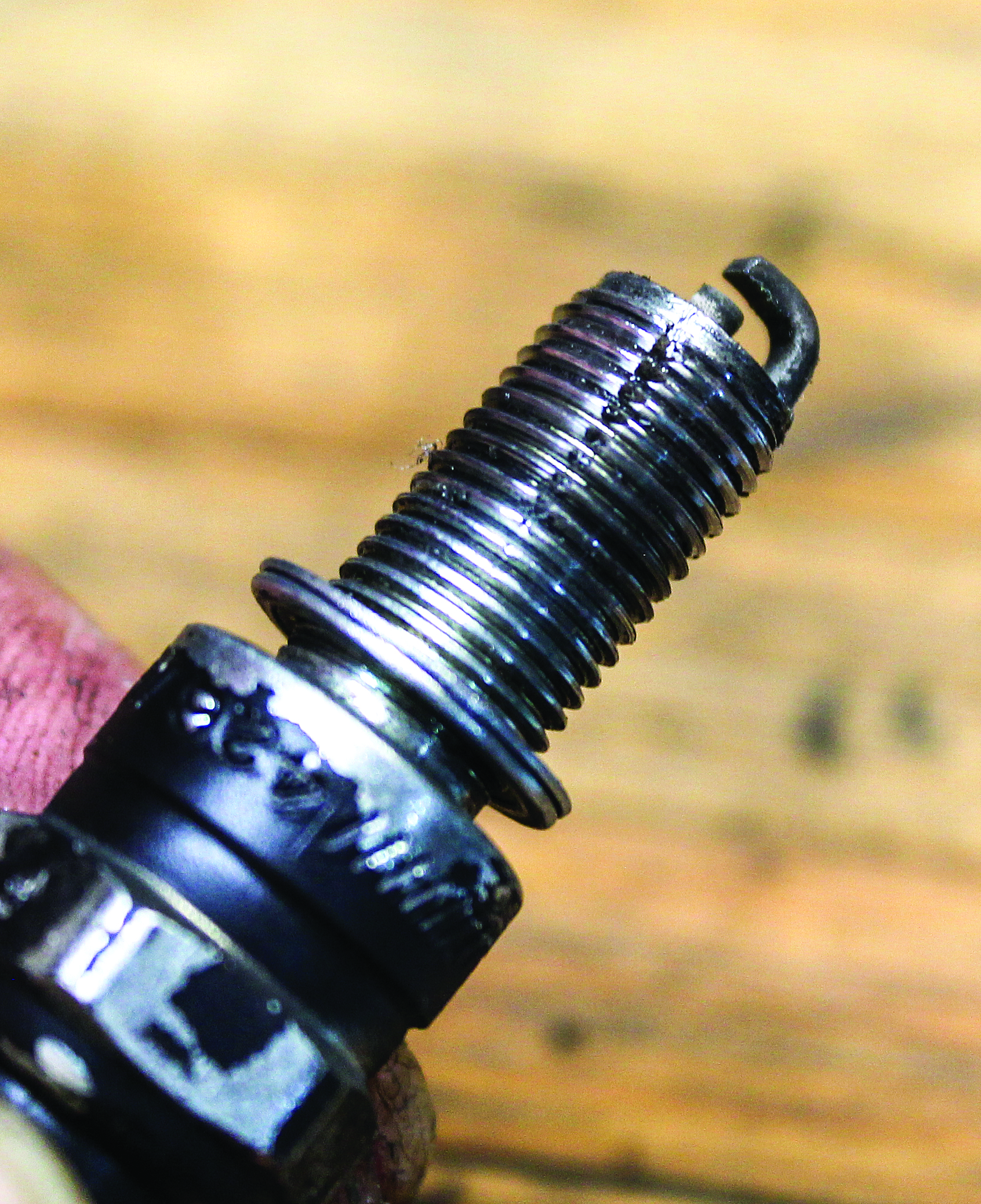
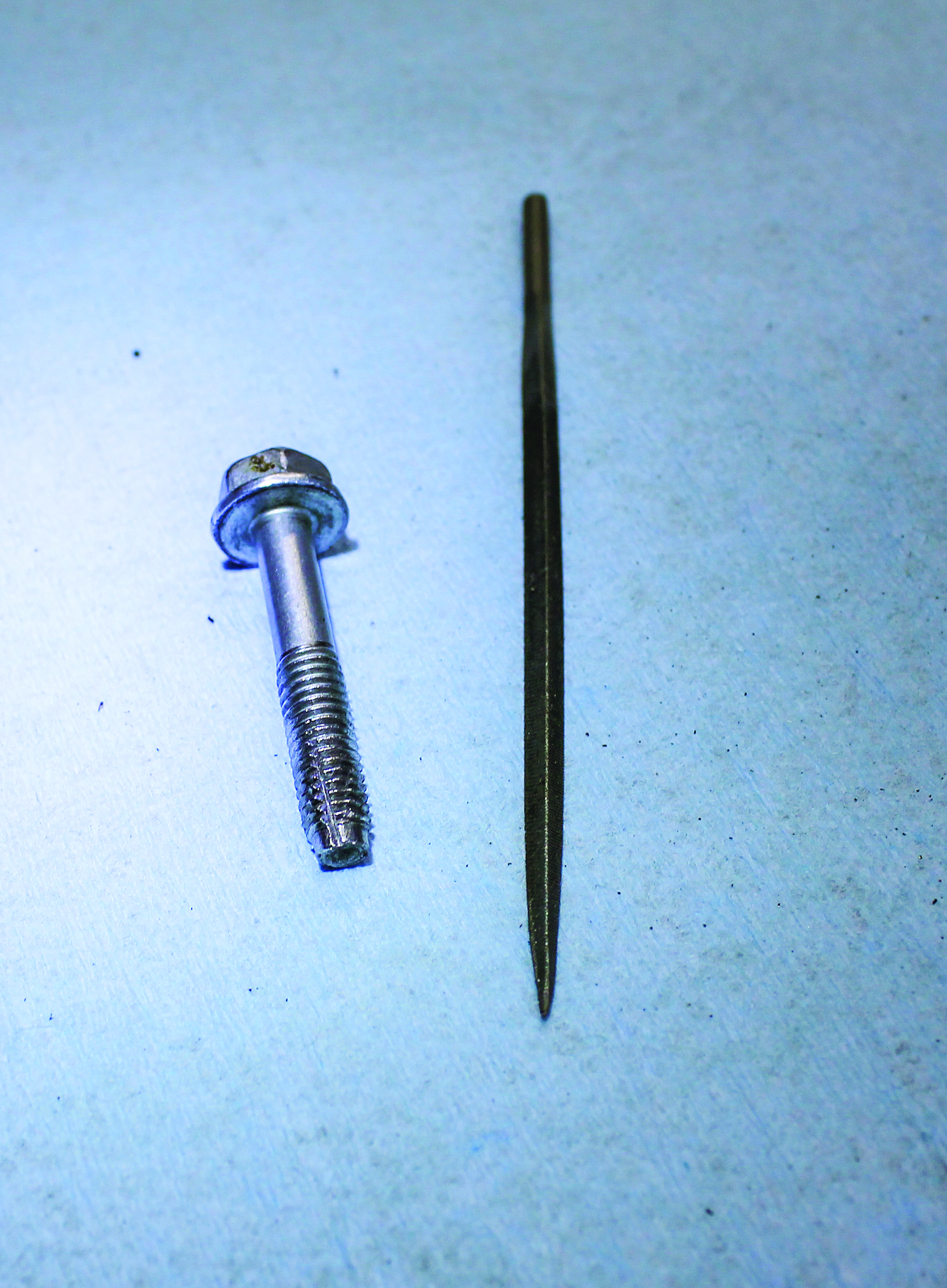
Instead, cut some grooves across the threads of a sacrificial bolt (keep it for future use) with a small triangular file, and use it to clean the threads. The spark plug hole in the ST90 was particularly stubborn; it took about five minutes just to remove the spark plug without damaging the threads. While it’s tempting to use an impact wrench to remove stubborn plugs, doing so can lead to disaster, since aluminum has a tendency to weld itself to the steel threads if you force the plug out, which will destroy the threads and require head surgery. I cut grooves into an old spark plug and used it to clean the threads.
Another note about spark plugs is to avoid using anti-seize compound on the threads. I used to do this, but then I found this on the NGK website: “NGK spark plugs feature trivalent plating. This silver or chrome-coloured finish on the threads is designed to provide corrosion resistance against moisture and chemicals. The coating also acts as a release agent during spark plug removal. NGK spark plugs are installed at the factory dry, without lubrication or anti-seize.” The torque recommendations given by all spark plug manufacturers are with dry threads; torquing with lubed threads will actually lead to a higher torque and can possibly pull the threads.
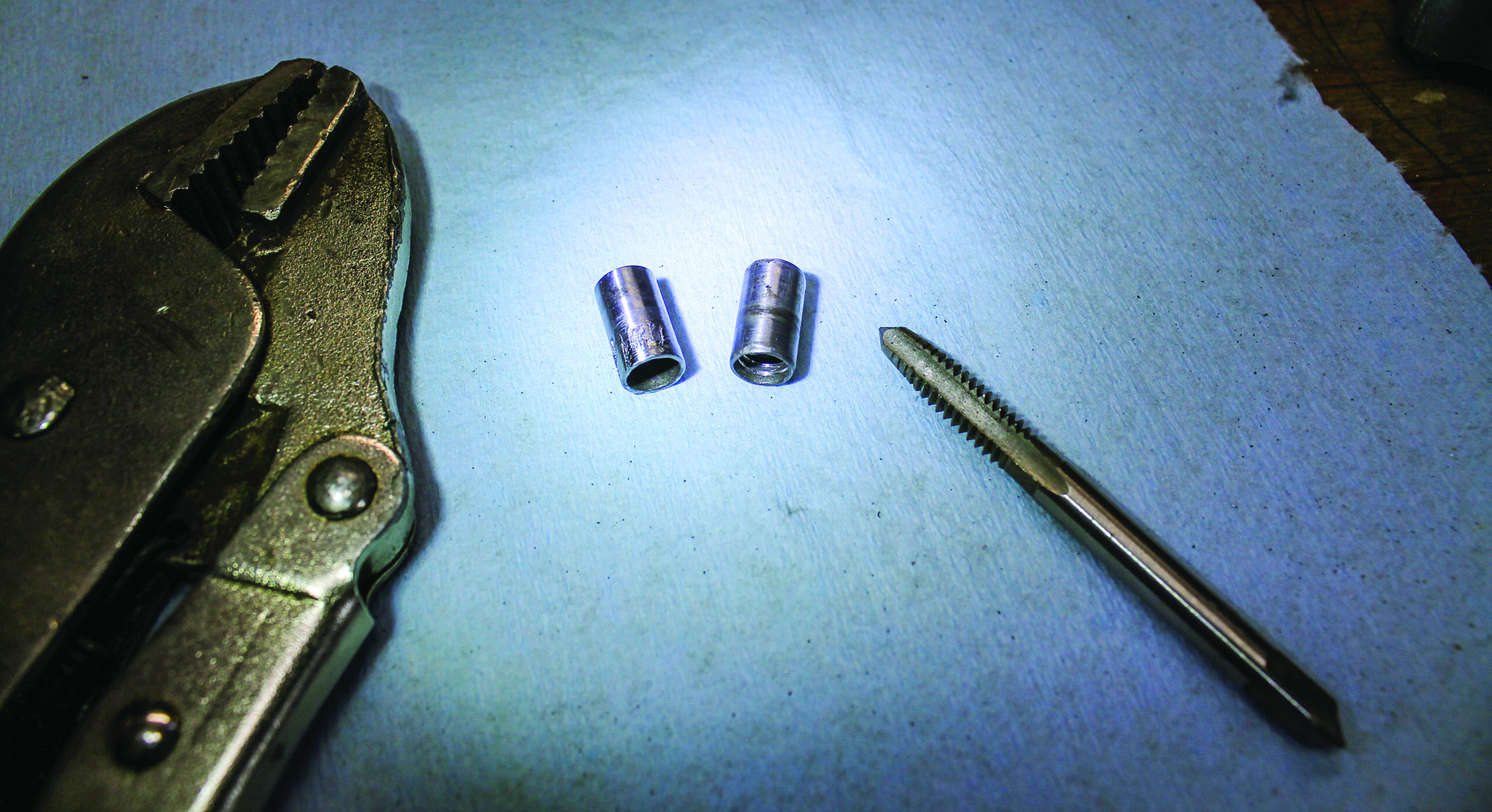
Another thing I had to do was to pull out some dowel pins, to either clean the gasket surface properly, or in the case of the KLR, to resurface the cylinder head. There are specialized dowel-pin extractors you can buy, but I have a simpler trick — and it is NOT using locking pliers. You can instead use a tap — the first size that will fit into the dowel — and cut light threads into it. Then use the locking pliers on the tap to hammer it out. The dowel can be reused even though it is partially threaded.
Winter is still going strong outside, but these projects make it bearable until I can actually ride again.





Thanks for Reading
If you don’t already subscribe to Motorcycle Mojo we ask that you seriously think about it. We are Canada’s last mainstream motorcycle magazine that continuously provides a print and digital issue on a regular basis.
We offer exclusive content created by riders, for riders.
Our editorial staff consists of experienced industry veterans that produce trusted and respected coverage for readers from every walk of life.
Motorcycle Mojo Magazine is an award winning publication that provides premium content guaranteed to be of interest to every motorcycle enthusiast. Whether you prefer cruisers or adventure-touring, vintage or the latest models; riding round the world or just to work, Motorcycle Mojo covers every aspect of the motorcycle experience. Each issue of Motorcycle Mojo contains tests of new models, feature travel stories, compelling human interest articles, technical exposés, product reviews, as well as unique perspectives by regular columnists on safety or just everyday situations that may be stressful at the time but turn into fabulous campfire stories.
Thanks for considering a subscription. The Mojo team truly appreciates it.
