

Three Epic Rides for 2025


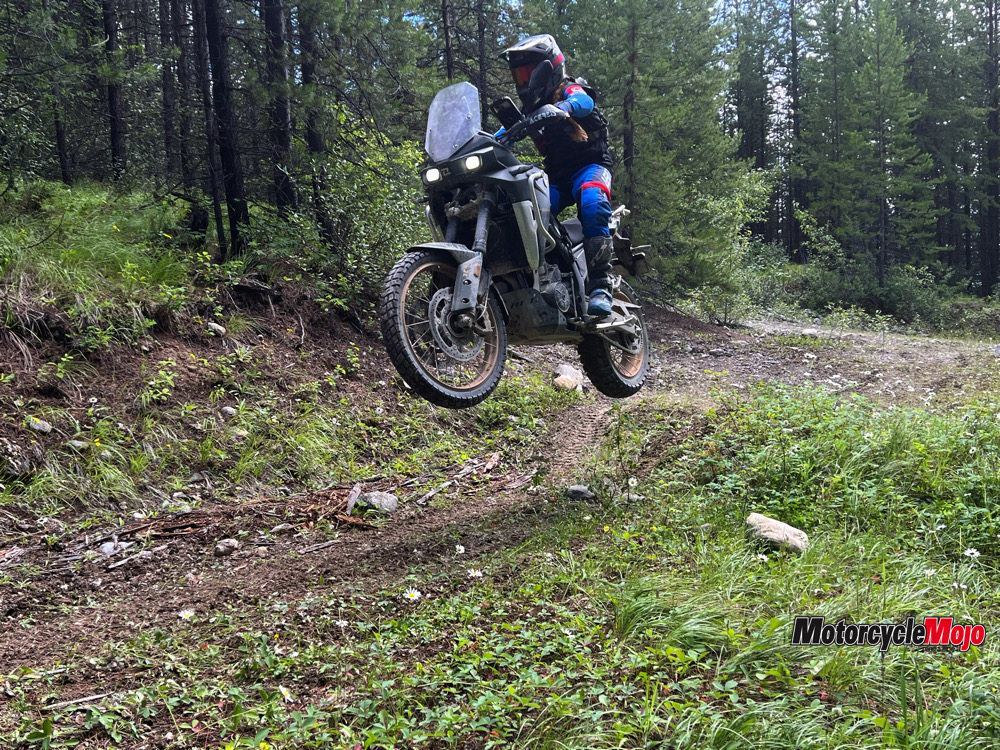

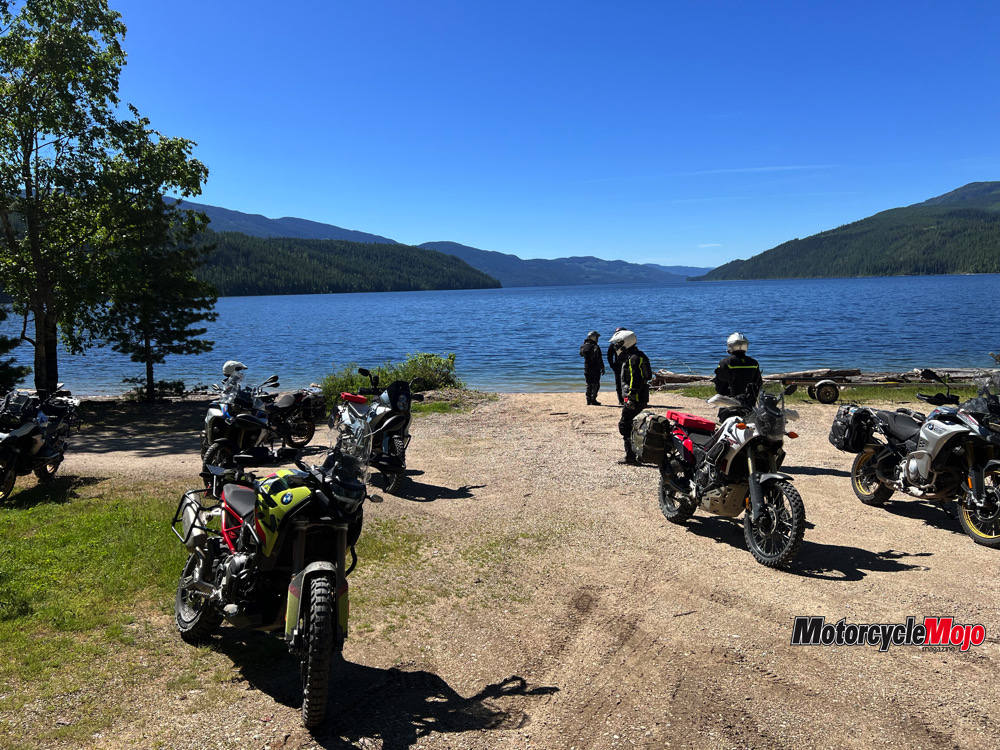
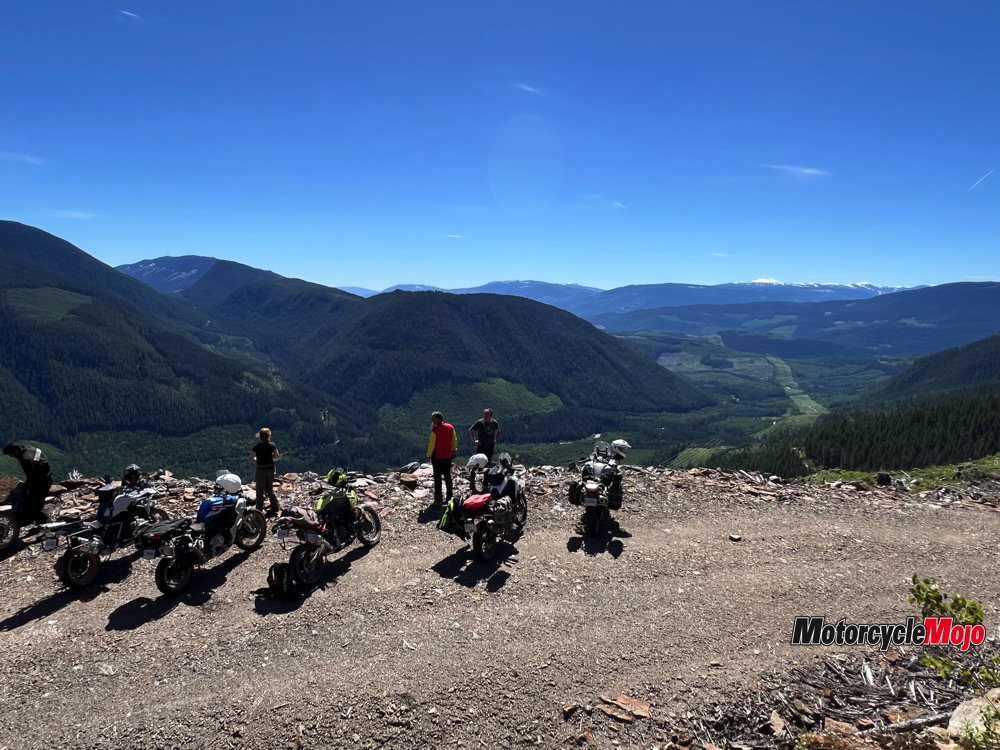
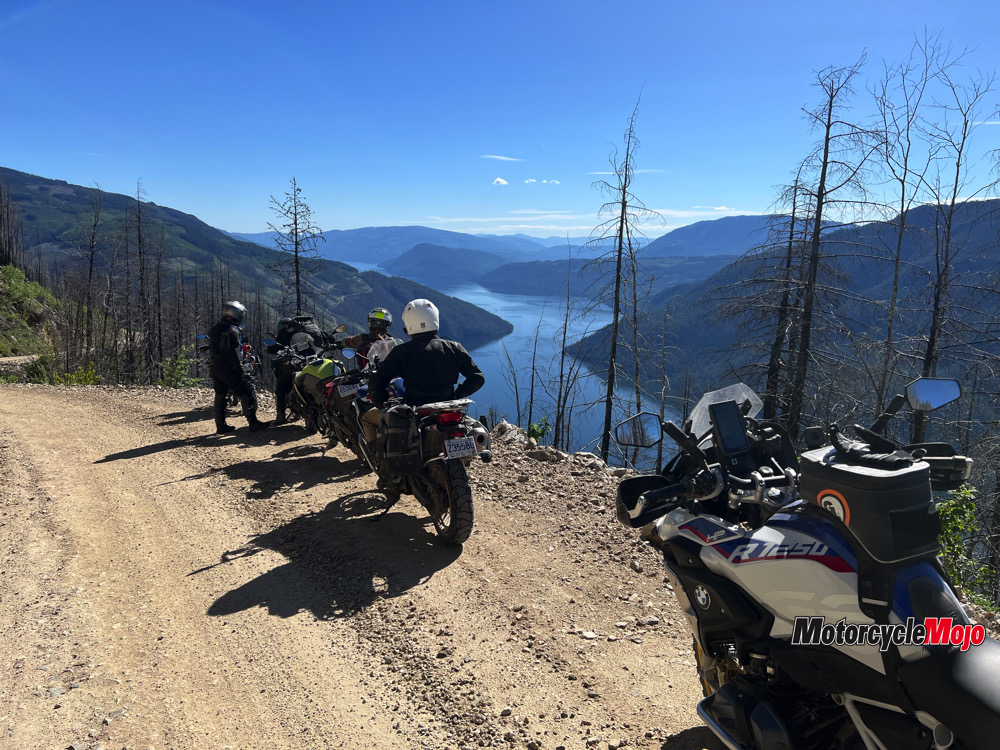





Our first year in a new-to-us house meant doing a lot of chores both inside and outside. That threw off my plans to explore this wonderful province of British Columbia. As a result, I didn’t get as much riding in during 2025 as I had originally hoped.
I did get out for a bunch of day trips to explore a few highways, backroads, fire roads and a number of trails here and there, but it’s never enough.
I was, however, able to manage three stand-out adventures in the summer of 2025.
Ride #1
SHUSWAP CIRCLE TOUR
STORY BY GLENN ROBERTS
The first major ride of the year was a ride hosted by Mark Lane of Dreamcycle Motorcycle Museum. Mark’s museum, which features more than 100 years of motorcycle history, is located on Trans-Canada Highway 1 in Sorrento, B.C.
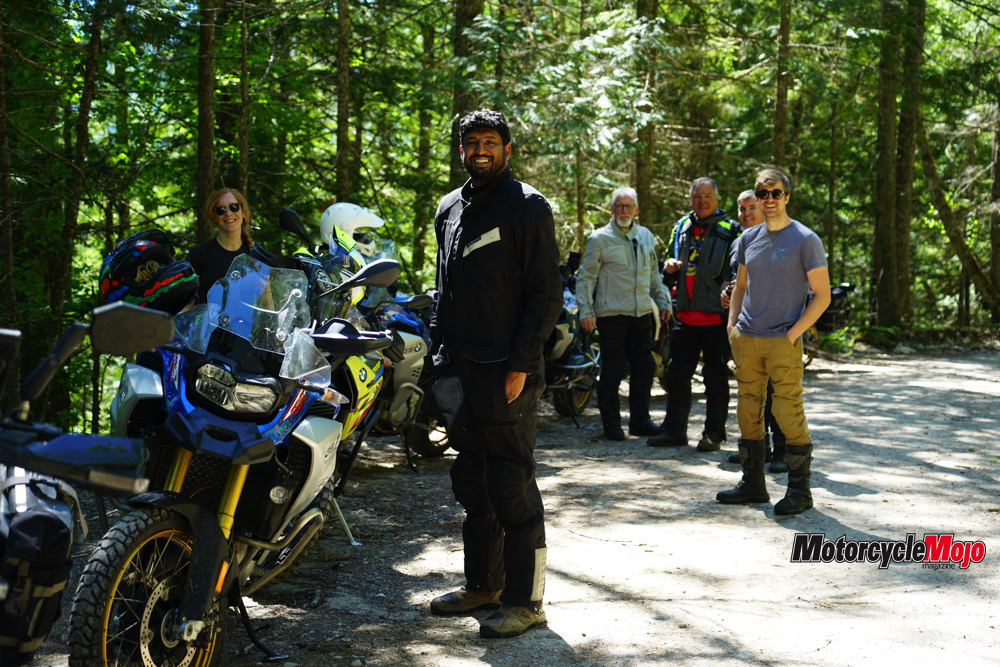
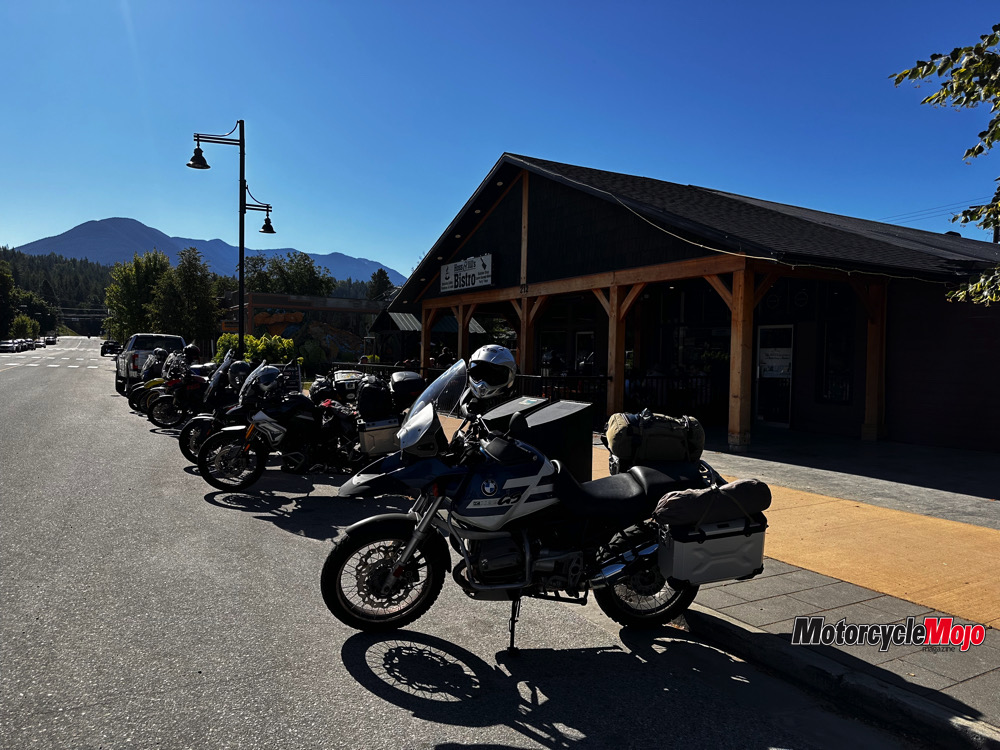
Emily and I met Mark and four other riders at Sprokkets Café early in the morning to get to know each other over breakfast. Sprokkets Café is part of the museum, and I highly recommend you check it out if you’re in the area — all the food and baked goods are made from scratch, and the coffee is excellent.
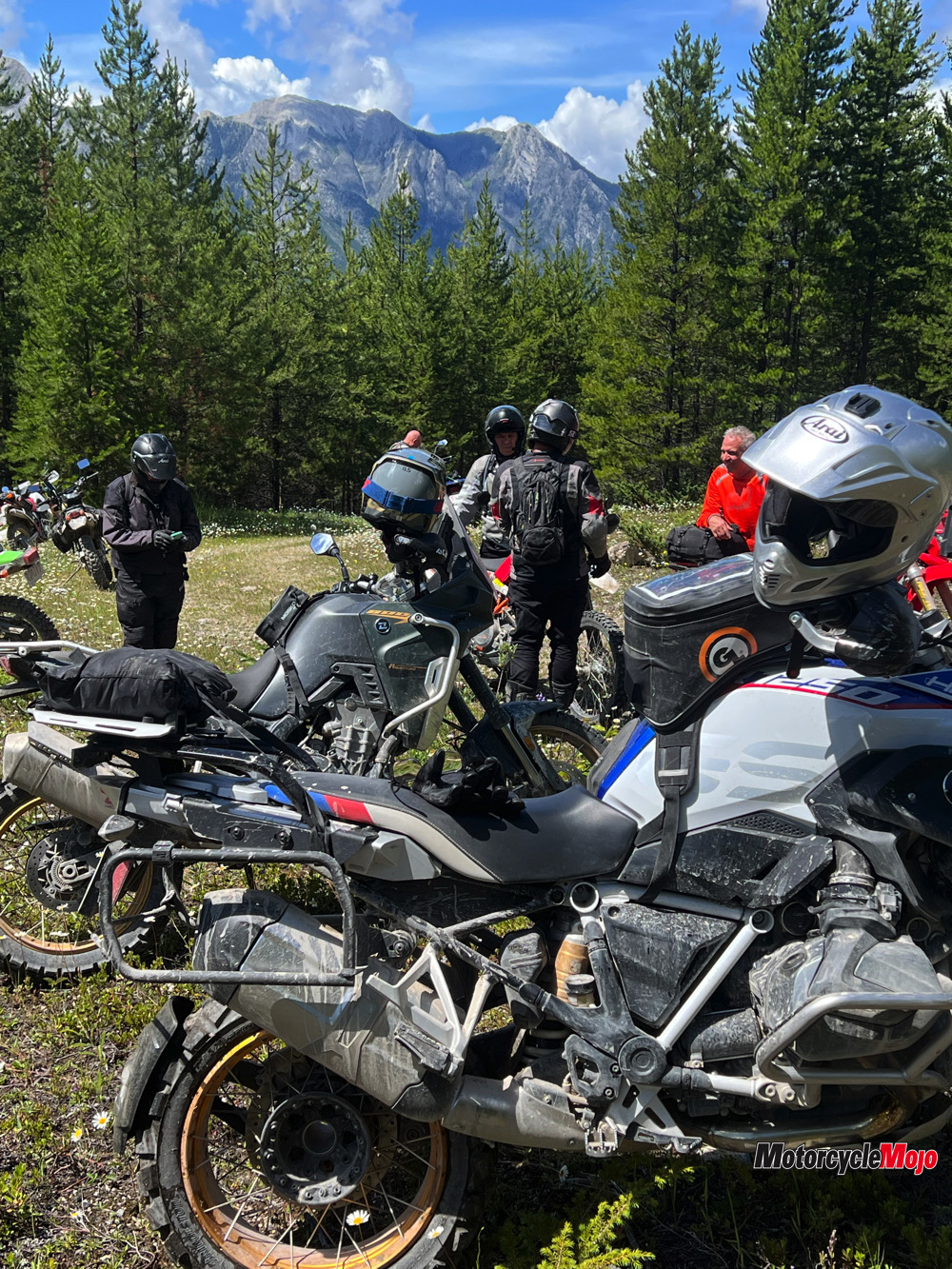
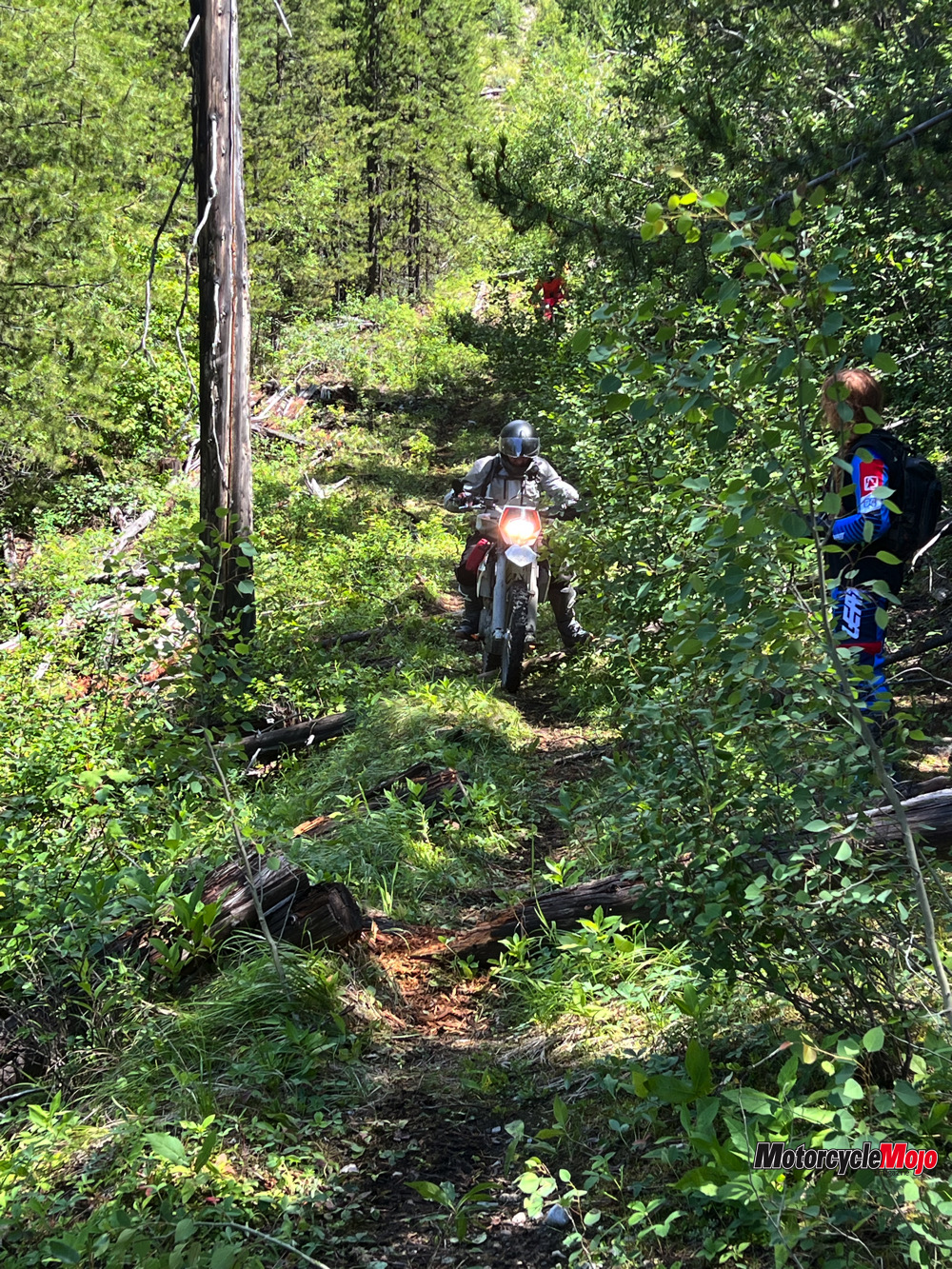
The plan was to spend the whole day riding clockwise around Shuswap Lake. But there’s more to that statement than just following a shoreline. The complexity of the ride focuses mostly on the fact that there are very few regular roads, and in many sections to the north and the east side of the lake there are only logging roads, some of which seemed pretty sketchy, desolate, and seldom used.
In addition to founding and running Dreamcycle Museum, Mark is also the owner/operator of Canadian Motorcycle Adventure Tours, and he has been appointed Western Canada’s representative for Iconic Motorbikes Auctions. I don’t know where he finds the time.
Shuswap Lake consists of four distinct arms in the shape of a stylized “H” with a small narrows that connect the two sides. After the pavement petered out on the north side of the lake at Saint Ives, we were left with the always-entertaining gravel roads for the next few hours as we headed north through Woods Landing and Albas to Seymour Arm at the very tip of the northwest arm of the lake. Villages are few and far apart in these remote wilderness regions.
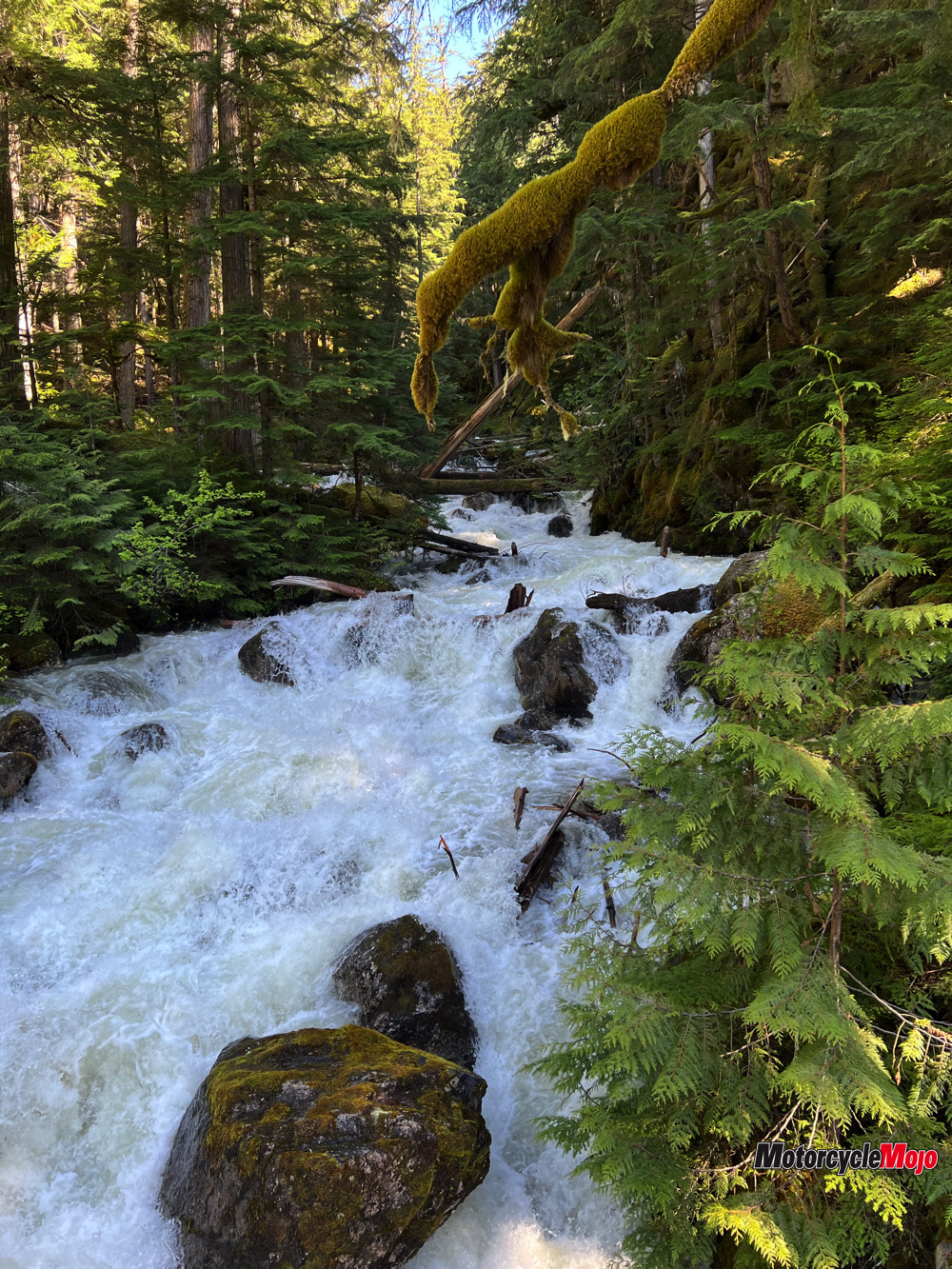
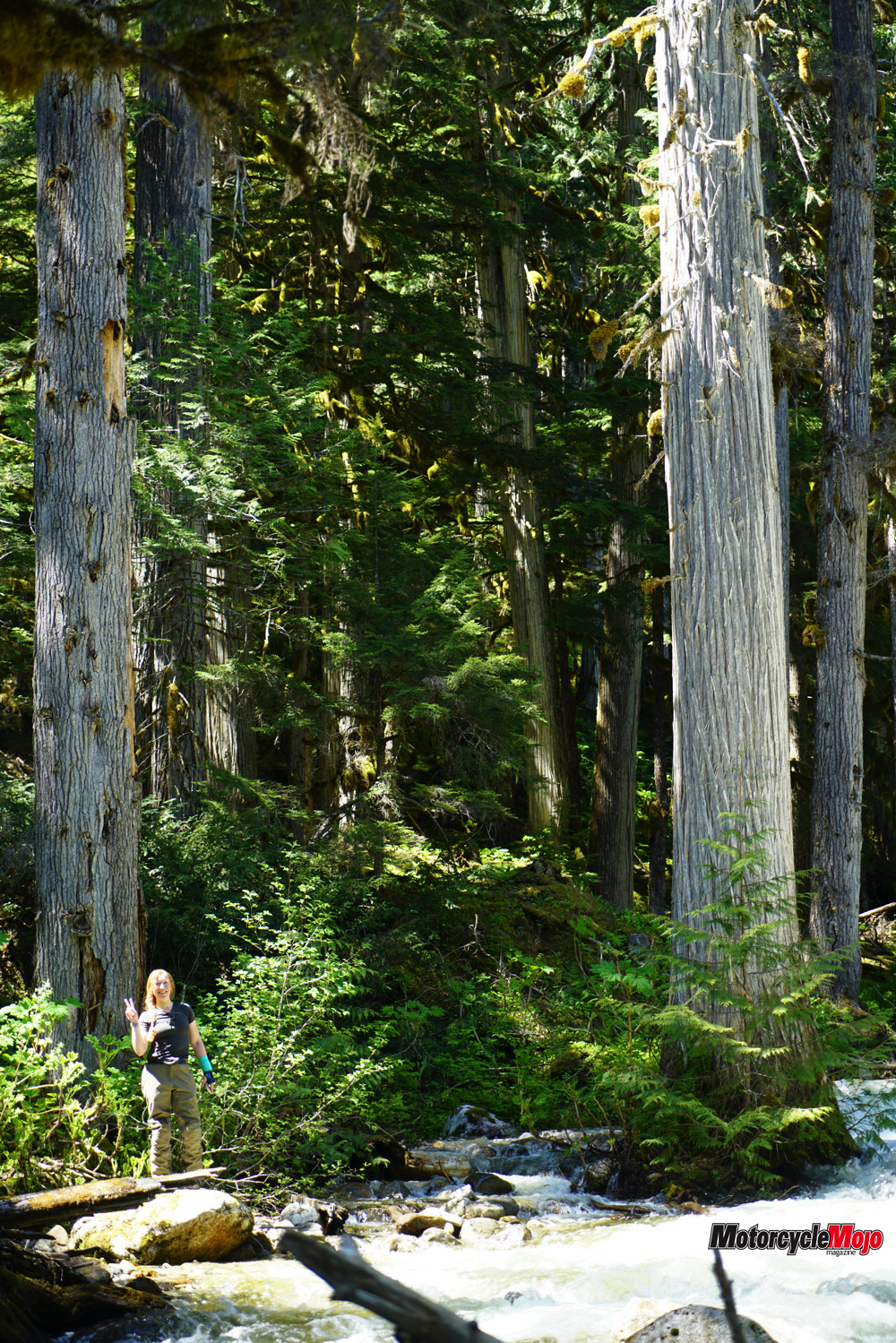
Many times along the way, Mark would lead us down various forest service roads to beautiful pristine lakes seemingly in the middle of nowhere, or to discreet waterfalls that we had to park and walk through the old-growth forest to access. I bet only a handful of people have ever seen some of these special places, but Mark has done an extensive amount of exploring in these parts; he’s an excellent guide and knows the area well.
And his knowledge is uber-important. Once we left the pavement behind, we passed hundreds of logging roads darting off in every direction; each one could get a regular rider lost in an instant. Riding alone is not recommended as there is no cell service, and you’re a long way from anything or anyone, including help. It’s important to note that Mark and the sweep rider were in communication with each other, and with any logging trucks in the area.
Seymour Arm is the Shuswap Lake’s most remote community. Solar panels and the hum of generators is ever-present as the town is so remote that the power grid doesn’t reach it. Now a ghost town, it once was home to approximately 5,000 residents during the Big Bend Gold Rush of the late-1860s.
Mark had arranged for some home cooking at Smurf’s Country Kitchen. The owner is a lovely lady nicknamed … wait for it … Smurf, and she prepared a perfect lunch with fresh homemade lemonade. Smurf and her restaurant are real treasures in Seymour Arm.
The rest of the day was even more isolated than getting to Seymour Arm. After Seymour Arm there are a few wilderness Provincial recreation parks shown on the map, but there are no villages on the eastern side of the lake.
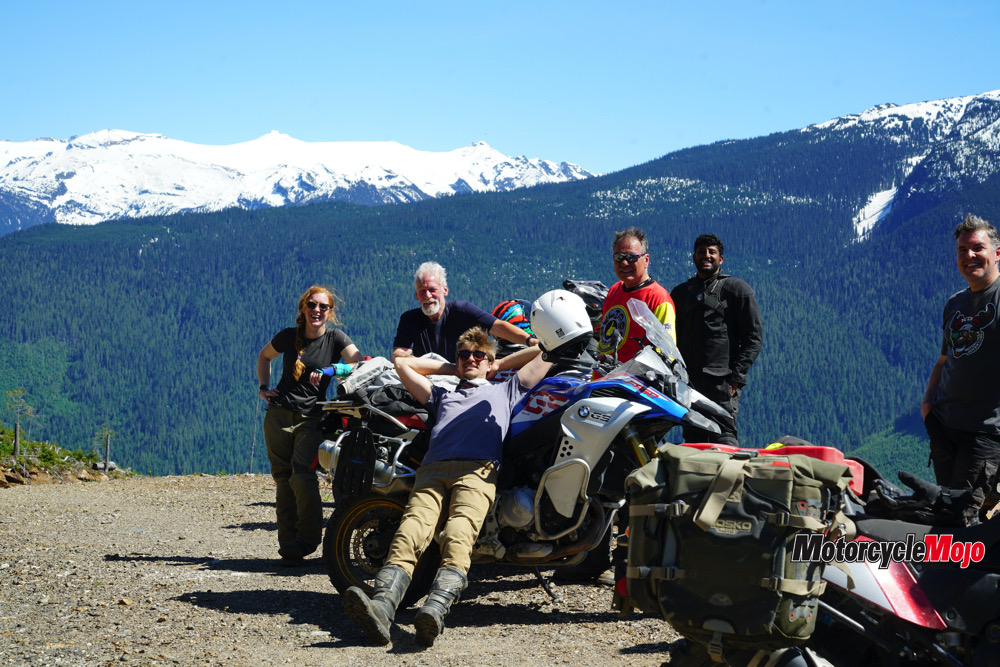
At one point, somewhere in our ride, our most technical “road” was traversing switchbacks on a very steep, skinny roadbed carved into the side of a mountain. The elevation at the top was 1,240 metres and the view was unlike anything I had ever seen before. I was mesmerized looking out over an enormous green valley with strings of logging roads like veins on a leaf far below and off into infinity. The view was akin to what you see when flying over the B.C. wilderness. We were level with other mountain tops, including the Bourne Glacier far off to our left. Sometimes I’m simply amazed at the remote places a 250 kg ADV bike can go. It’s scenes like this that reminds me that B.C. is dual-sport heaven.
The loose rocks that composed the path going up to the summit made going down somewhat difficult, and our speed had to be kept in check as my wheels would easily lock up, making it challenging to slow down enough for the next switchback. It was an exhilarating ride.
After 10 hours on the bike, we made our way to Sicamous. The temperature in the heat of the day was around 30 C, and the extreme dust and technical riding made the highway a welcome reprieve. Most of us parted ways in Sicamous and it was only an easy hour ride home for me.
You can bet that I won’t soon forget my first adventure ride in B.C. and hope for many more to come in the coming year.
For more information on Dreamcycle Museum or Canadian Motorcycle Adventure Tours, go to dreamcycle.ca and cmatours.ca.
RIDING WITH CANADIAN MOTORCYCLE ADVENTURE TOURS
STORY BY EMILY ROBERTS
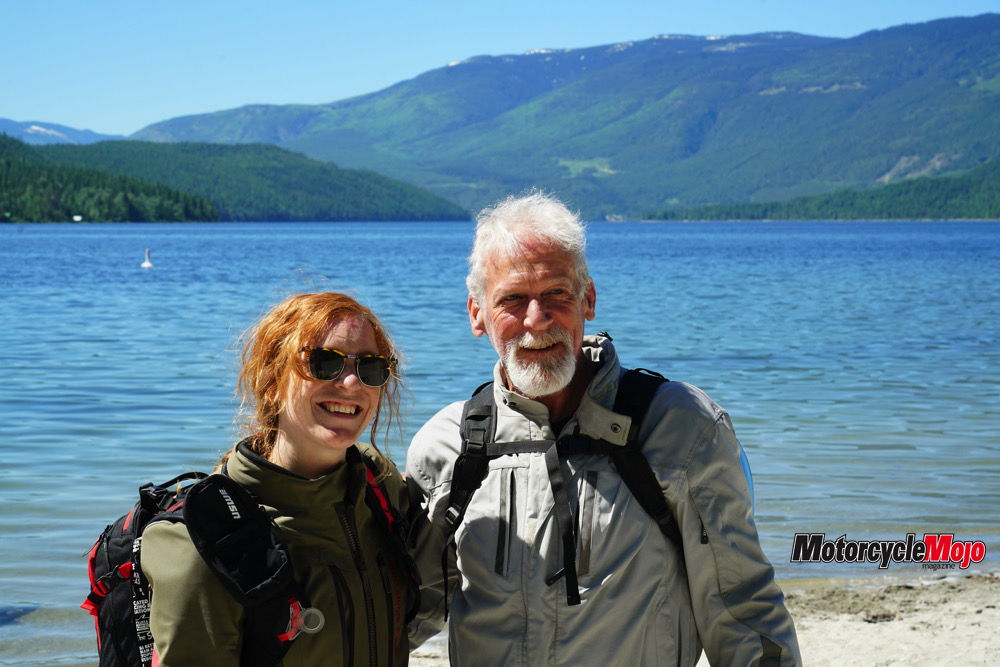
I had first met Mark Lane from Dreamcycle Museum a few years ago when I wandered in to take a look at the rarities that he had on display. I was ecstatic to hear of his tour company, Canadian Motorcycle Adventure Tours, offering locally guided tours around the area and Western Canada. With my parents now living close by, the idea of getting out for a ride with my dad was much more logistically feasible, and we decided it was time to see the area with a guide.
Glenn and I were heading out with Lane and a few friends. Our goal was to get to Seymour Arm (originally known as Ogden City), a remote town at the north end of the Shuswap Lake, famous for being one of the only towns in British Columbia to turn into a ghost town twice.
Tarmac turned to gravel. In the beginning, each corner led through a climbing switchback with expected views shrouded by mature trees, though we reached more open and logged sections, each corner offering up a taste of the mountainous vista that lay beyond. I’ve lived in the Interior of British Columbia for almost 15 years now, and I’ve learned that there’s no shortage of logging roads creeping into the backcountry and the vast wilderness that consumes this province.
Although Seymour Arm had been of interest to visit, it had always eluded me. Every time passing by the turn-off for the town seemingly placed in the middle of nowhere because I had always been on a time constraint. Now, it was part of our itinerary.
Seymour Arm, once known as Ogden City, was a booming town in the 1860s, but was destroyed by fire in the latter part of the decade. Then, around 1910, developers came and rebuilt the town, giving it its current name. After a few years of revival, the town became dormant again. One building that still stands in its glory from the 20th-century revival is the Seymour Arm Hotel, built in 1910 and heavily restored in the 1960s. The hotel was functional for many years, but currently sits as a historic memento from the village’s past.
After a great lunch at Smurf’s Country Kitchen, it was time to ride again. As we rode along the eastern side of Shuswap Lake, my fuel light on my BMW F900 GS came on; we had extra fuel with us, but having never tested it, I was curious to see just how long I could make it before running out.
We wrapped around mountainsides and through cut blocks busy with spring growth. I realized how much of a tourist I felt like in my own province. I had been down a couple of these roads before, but this was different. I had never noticed the incredible roadside stops that Lane and his guides led us to, had never gotten such a local taste of Seymour Arm, and had never seen such a view of the lake until now!
Lane led us up a steep trail not meant for his clients, but with the promise that it would be worth it. He certainly was not wrong. A thin haze hung before the perfectly blue sky, underneath a mirroring blue of water with snow-capped peaks breaking the horizon of lake and sky. We sat in astonishment for a long moment before realizing we had little sunlight and a lot of riding left.
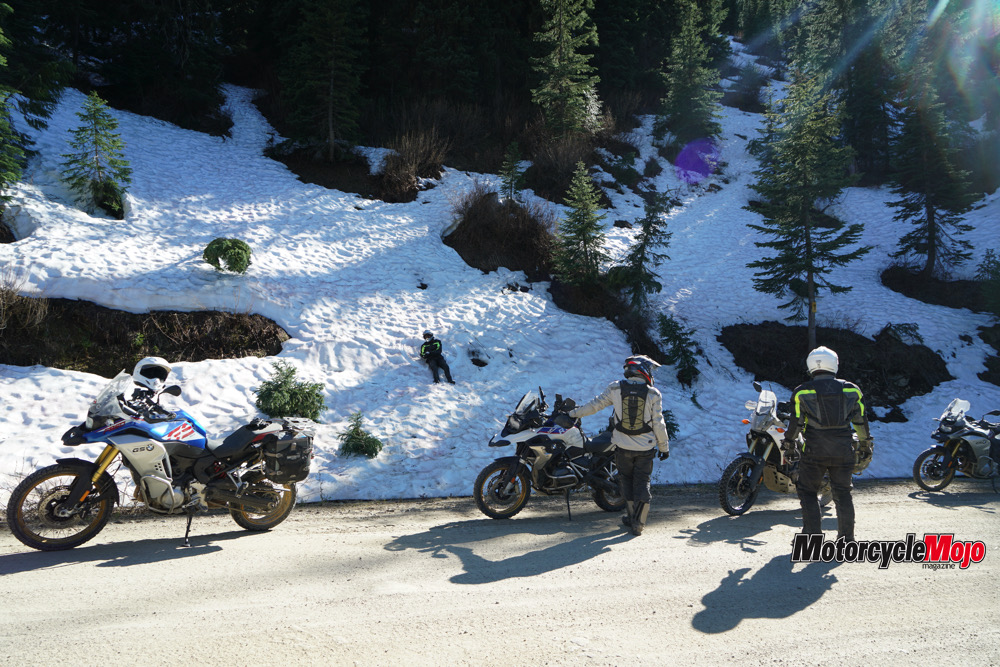
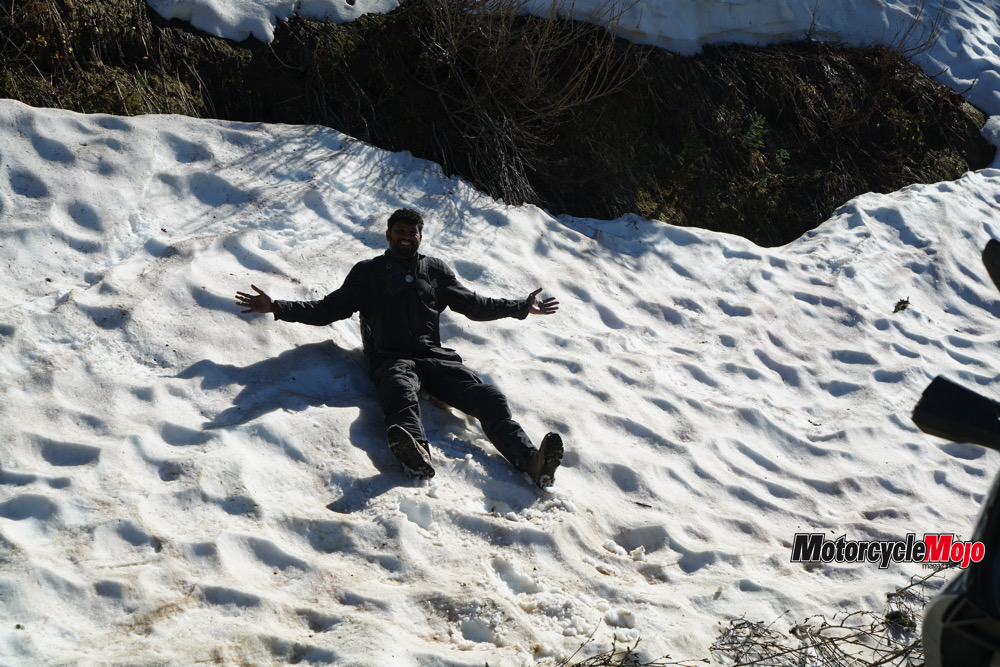
We slowly descended into a sheltered valley where we were met with patches of snow on the roadside. Being that it was an incredibly warm day, we decided it would be best for an impromptu snowball fight before heading back to the highway.
I became increasingly impressed with my GS’s mileage after the fuel light showed: it had been about 74 km since the fuel light first appeared when I rolled into a Sicamous gas station on fumes. One problem: The gas station was closed, and my bike coughed and puttered as I rolled into the parking lot. We pulled out the additional fuel we had brought so I could make the additional .5 km to the next gas station. Aside from my bike running out of fuel, it was a perfect day. Getting to ride with Canadian Motorcycle Adventure Tours was a must, even for a local. And getting to ride with my dad made every moment exceptional.
Ride #2
HORIZONS UD CANWEST TRAVELLERS MEETING
STORY BY GLENN ROBERTS
Horizons Unlimited Travellers Meetings are a standard meet-up for motorcycle travellers around the world. For those unaware, Horizons Unlimited is the de facto world traveller’s website for information, border crossings, travel alerts, and any kind of general travel information you may need during your ride, regardless of your location or length of time on the road. At one time, someone somewhere has experienced what you want to know.
Each year there are a dozen or more travellers’ meetings somewhere in the world. And it’s only fitting that since Grant and Susan Johnson, the founders of Horizons Unlimited, live in B.C., there is always a Canwest
Travellers Meeting, and for the past several years it has been held in Nakusp, on the east side of Upper Arrow Lake. And it just so happens that the 2026 meeting is HU’s 25th anniversary of Travellers Meetings.
While the riders’ meeting isn’t necessarily designed to be a “riding” weekend, there certainly are beautiful areas in the Selkirk and Monashee Mountains to get out to for all types of excursions. The HU meeting is more designed to be a weekend of information-gathering from over 70 demonstrations, talks, workshops and riding challenges.
These seminars included guidance on preparing, packing and planning your journey; travelling in other countries; proven equipment that works; motorcycle training; first-aid; navigation; photography and so much more. You don’t need to be a world traveller to learn new tricks that will make your next weekend ride more enjoyable.
In true British Columbia fashion, this gathering of like-minded motorcyclists is as laid-back as a weekend could be. HU reserves the whole campground, so you are not designated to a certain spot — if your tent fits, you can pitch it. It’s a great way to meet new friends and catch up with old acquaintances, and you’re always welcome to enjoy a beverage or two beside someone’s fire pit.
The seminars are equally laid-back, and since many of them overlap, you can come go as you please. Missing one because it overlaps with another isn’t a concern, since many of them run again over the weekend. Food is available if you buy into that package.
Overall, it was an extremely well-run weekend and I have to give paise to Grant and Susan and all of the volunteers who made it happen. If my schedule permits, I will be returning for the 2026 Canwest Travellers
Meeting, which will take place once again in Nakusp on July 9-12. For more information, go to horizonsunlimited.com. Registration is now open, and early bird specials are available.
NEW AND FAMILIAR FACES
STORY BY EMILY ROBERTS
Horizons Unlimited holds gatherings around the world throughout the year, focusing on bringing riders together to share stories and connections. Each event offers numerous activities, rides, and presentations to take in. I was ecstatic when Glenn mentioned that he would like to attend last year. It had been about seven years since I had attended. In the past, I had presented at the conference, but was more than happy this year to take it all in.
When Glenn and I arrived, we quickly saw a few familiar faces, letting us know we were in the right place. By midday, the campground was almost all filled with travellers coming from across Canada and the U.S. We found a few flat patches of ground that hadn’t been claimed and proceeded to set up camp. Soon after, we got registered, found the schedule, and quickly looked over of all the talks we wanted to catch.
The great thing about attending an HU conference is that it really is a “choose-your-own-experience” event. There, we met riders who were just planning to ride the area for the weekend, taking in the suggested routes from HU. We also met many who didn’t ride to the event but just wanted to camp and take in the presentations and atmosphere.
We saw many new and familiar faces over an afternoon of presentations, passing by on their way to the next event or seminar they were hoping to attend. It wasn’t until dinner, when everyone piled into the hall, that I realized just how many people were in attendance. With over 300 riders, there was no shortage of stories to share and opportunities to make new friends.
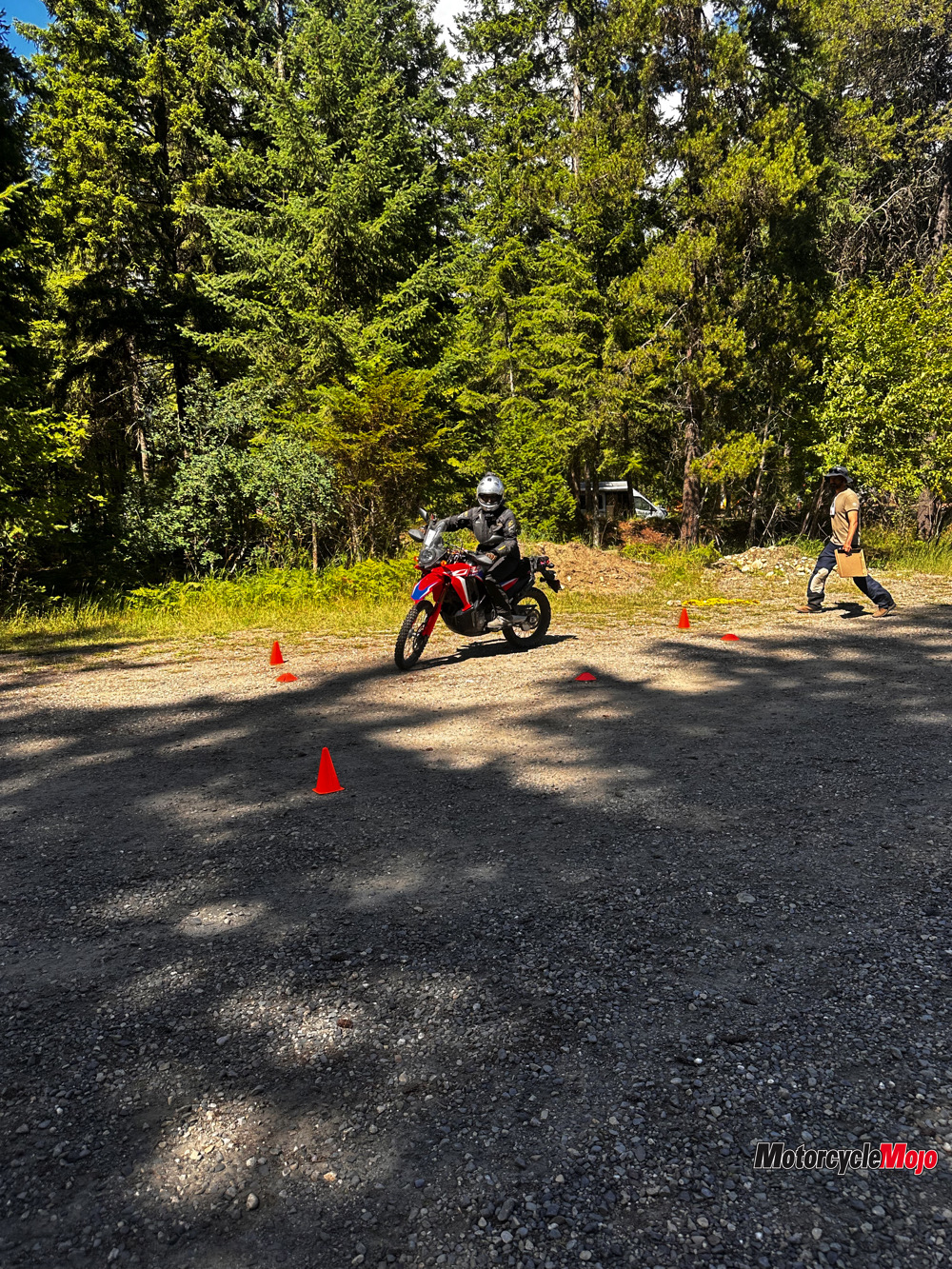
The next day, I spent the morning catching some presentations, and was about to head to another when I spotted a friend running past, yelling about a skills contest happening. Oh, of course I’m into that. I grabbed my bike and rode over to the skills area, where they had put participants through a training course in the morning and were now partaking in a light-hearted competition with all the riders. It was a blast: we cheered on each rider as they went one by one through the skills course, through tight turns, performing brake slides, a slow race section, a sand section, and an optional single-track section to really test each riders’ skills.
Throughout the event, we were able to meet riders from around the world and hear people’s experiences about travelling on trips big and small. This is where like-minded riders seem to convene. There’s never a dull moment at a Horizons Unlimited event. Regardless of whether you’re new to riding, travelling, or a seasoned adventurer, you can be sure to walk away from a Horizons
Unlimited meet with a new sense of inspiration, newfound knowledge and at least a handful of new friends.
Ride #3
Wandr Navigation Rally
STORY BY GLENN ROBERTS
One week after the HU event was the Adventure Moto Navigation event called WANDR. Trent Schumann is the brainchild behind this rally, which was open for registration starting on Thursday with the riders’ meeting Friday evening, and then the navigation fun begins on Saturday and runs through Sunday. Rally headquarters is at Canal Flats at the southern end of the Columbia Lake, 45 minutes south of Radium Hot Springs.
There are two ways to participate in the rally. You can register for the “Ultimate Ride,” which is competitive in that you collect points for the found tags and hope to win a trophy and bragging rights, or there is the non-competitive “Adventure Ride,” which means you are there for the riding experience, the outstanding scenery, and the challenging trails. If the HU meeting is laid-back, WANDR is the opposite. Everybody was having fun, but some of the riding was intense. The trails are rated: the higher the number, the harder the ride is and the more points are collected. It’s your choice.
The Friday night riders meeting saw attendees panicking and running out of the community centre to rescue their tents and tarps as a wicked windstorm rolled through with an equally wicked downpour. I heard riders lament of wet sleeping bags and bent tent poles afterward.
The WANDR rally operates through a dedicated smartphone app that pinpoints a number of unique tags, or waypoints, on a variety of trails in any direction. Riders are given a rudimentary map in order to get to a certain area, but the beauty of the app is that, when in the vicinity of a tag — which could be glued to a rock or nailed to a tree — the app tells you a direction by way of an arrow, a distance, and a photo of the tag. When you get to the location the photo will visually help you find the tag. The challenge comes when you have a direction and a distance, but there may be a lake, or a river, or a mountain in the way, and you have to figure out how to get to the tag.
It’s great fun; however, there were many riders who struggled with getting the app to work properly. I was one of them. After three attempts to download it, it eventually worked. Emily’s phone worked from the start, but I thought it prudent mine should work as well as a backup.
This rally is a combination of navigation, adventure riding, and exploration. Saturday was a blast. The temperature was perfect and the sun shone the whole day, although there were some slick clay sections and mud holes to deal with from the previous night’s storm. There is a plethora of trails through this area of the Rocky Mountains and the Columbia Valley. The scenery was simply amazing — we’re traversing tall mountains to river valleys, after all.
Every time we stopped, we’d meet up with other happy, smiling riders exuberant about their day’s ride. Dinner was included in the price of admission, and the rest of the evening was spent talking to other riders over a beverage or two about the fun, and the trials and tribulations they encountered throughout the day.
Sunday was most memorable, as we woke early morning to some serious monsoon-type rains. Once again, there were grumblings of wet sleeping bags from shivering, tired riders. Mud and large puddles fill the campground’s grassy field.
Most of the 150-ish riders registered for WANDR were riding small- to mid-size single-cylinder dual-sport bikes. They were the smart ones. I was one the few who was on a big ADV bike, but I was doing okay. I figure 95 per cent of my weekend’s riding on my R1250 GS was great, and I thought my tires were good … until they weren’t.
On Sunday morning, we realized we were heading away from the tags we wanted. A quick glance at a map showed a trail to the area we wanted to go — let’s call it a “shortcut.” Shortcuts are rarely good, and this one was just plain bad. At least for me it was, on rubber that, all of a sudden, wasn’t so good on a 250 kg behemoth of a bike.
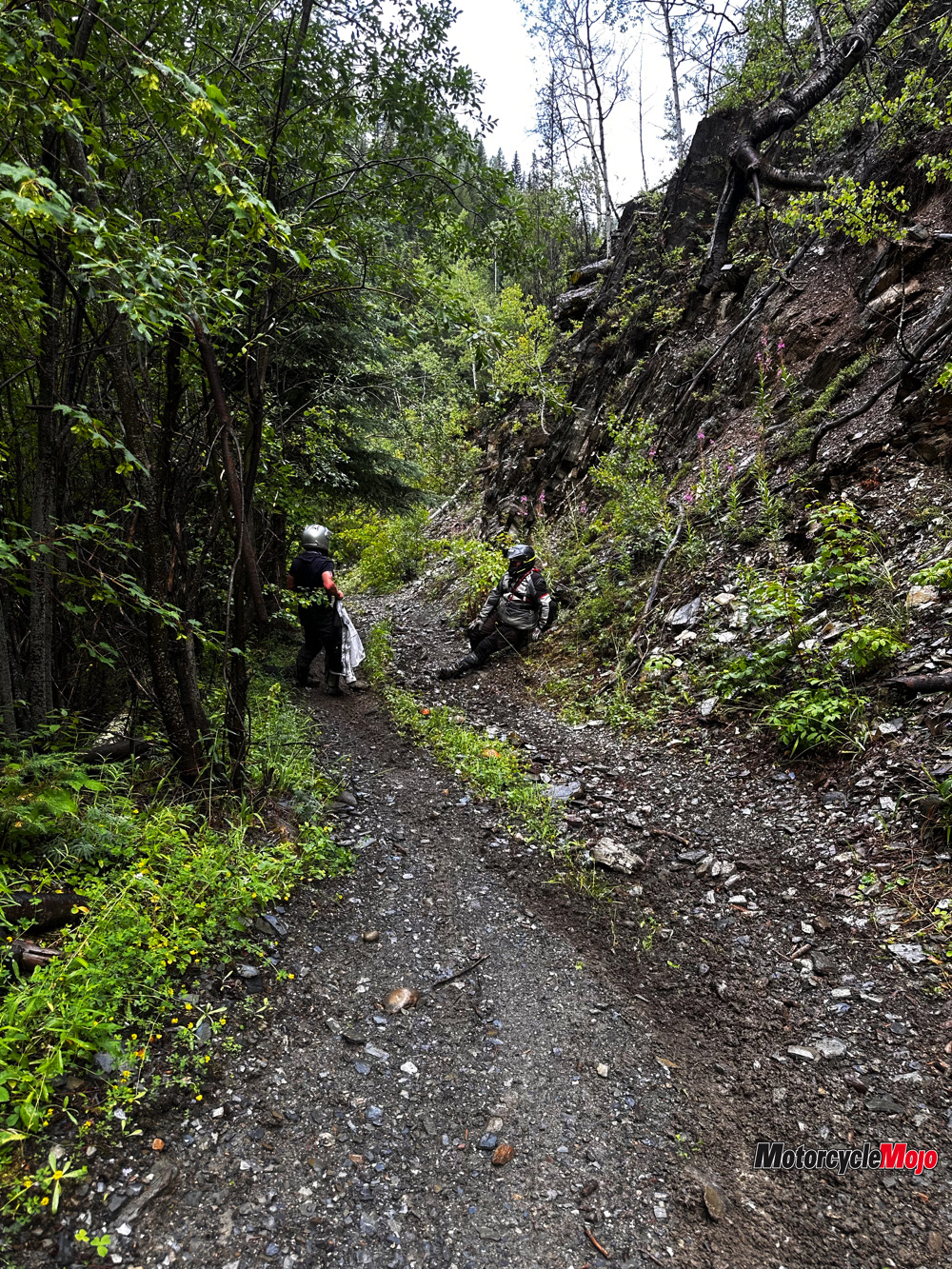
After few hundred metres on the shortcut, we happened upon a blind left turn straight up a steep hill on loose shards of shale. A slight twist of the throttle broke my rear tire loose and I instantly went down. The rest of the long, never-ending hill comprised wet roots, clay, slippery rocks, steep hills with more loose shale, and very slippery single-track with a drop off on one side and a wall of mountain on the other. It really challenged me. Needless to say, we didn’t see another rider on that “shortcut.” Emily saved my day by taking the GS up to the next little plateau a couple times before the mayhem started all over again. I was out of my league. I considered myself a pretty decent rider on a big ADV bike, but this was a humbling experience. It seemed to be one of those “It took three hours to go one kilometre” stories.
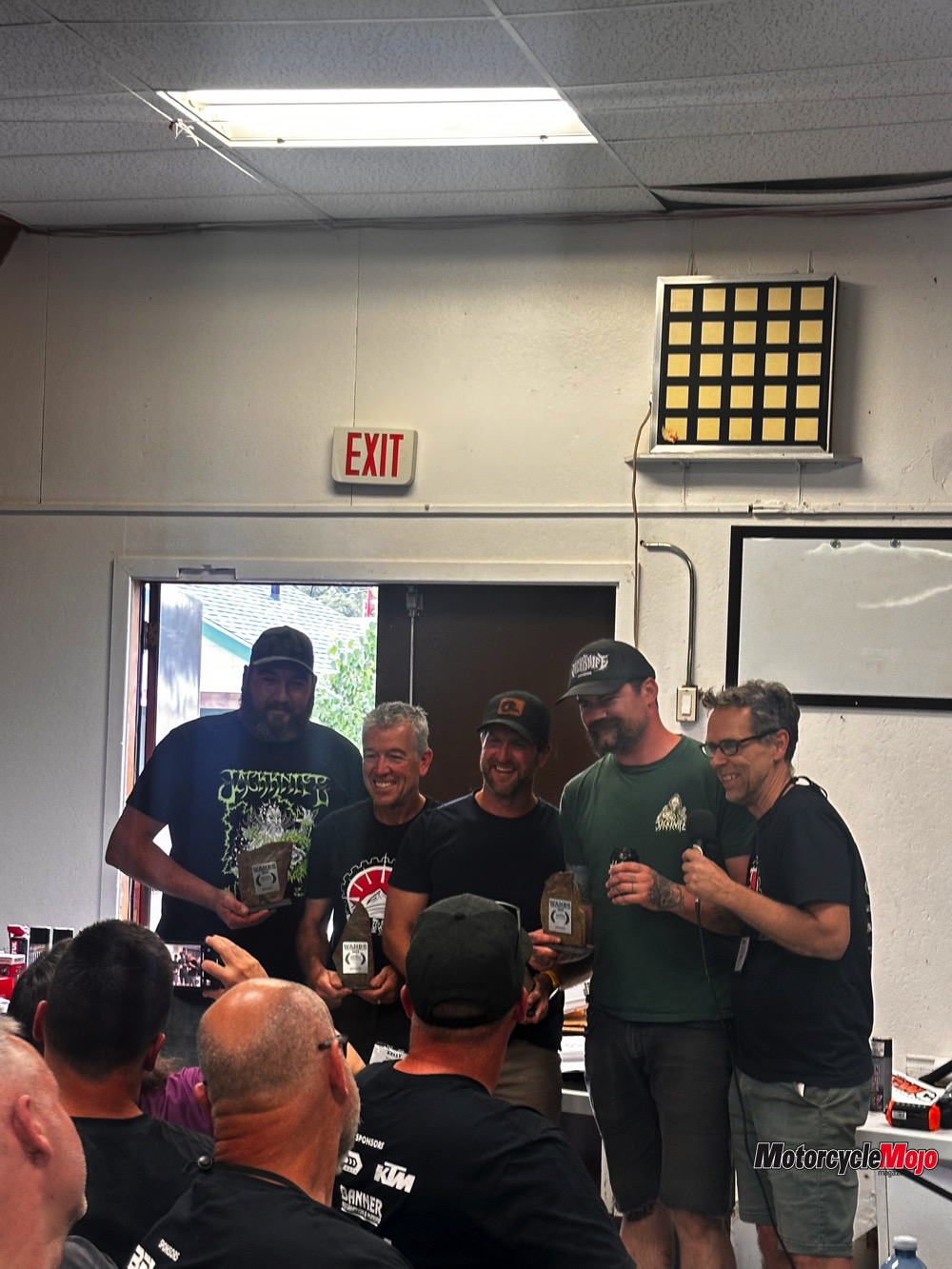
The whole weekend was good fun. WANDR wrapped up after dinner on Sunday evening with tables of door prizes and awards. I have since bought a smaller dual-sport bike for times like this, and I have the 2026 WANDR rally, which runs from July 16-19, 2026, already marked on my calendar. Registration is now open, and like most events, there are early bird specials. Go to yugenex.com/wandr for more information. MM
NAVIGATION GONE BAD
STORY BY EMILY ROBERTS
I remember the first time I rode the WANDR rally, I was instantly enthralled with the navigation aspects and treasure hunt-type fun that was created through the event. Glenn and I had decided to ride it together for 2025.
The concept is quite simple at a WANDR event: you download the app, which lists numerous waypoints varying in difficulty to ride to, and get the points, totalling to your score at the end of the event. Along with the WANDR app, you are given a broad satellite overview of the riding area, with the waypoint numbers listed, so you can look at the proximity of the waypoints in any given area. You are also given a Backroads Mapbook map and a 30-day trial to their smartphone app for the event, which gives a detailed overview of that area’s roads and trails. With these four pieces of information, you have to triangulate your location and attempt to get as many waypoints as possible before the end of each day.
Throughout Friday night, we had gotten heavy rains and winds, adding to the challenge. The event is held in Canal Flats, B.C., and allows for an immense and very scenic area of the southern Rockies to be covered by bike. We spent
Saturday riding on tight roads and logging roads that seemed to endlessly meander through the upswept mountains.
After the first day, we were very happy with the ride. I was lucky enough to ride the Kove 800X Rally for the event; it’s rare that I ever get on such an intuitive adventure bike with a low seat height.
On the second day, we found a new team member, Shane; his teammate had to leave early, leaving him without a riding partner. It was my turn to lead, and in typical “Emily” fashion, I was quick to find the wrong way. After a long, roundabout way to the riding area, I had spotted an ATV trail that seemingly led through to the road we needed to get on. The map had shown this as a road, but it was clear once we got on the trail that it would be a test of man and machine. Of course, every shortcut does not always cut down time, and unfortunately, this one added another three hours to our day without a waypoint. We left our camp around 9 a.m., and at 1 p.m., we were still without any points for the day.
There was a steep hill, littered with loose shale. I pointed the 800X, and up it went. I was impressed with the effortless feel of it. I had gotten to the top of a drawn-out hill, then Glenn went and soon found the tipping point of his 1250 GS. He had given it a few more attempts but was tiring of the technical terrain.
We had finally gotten all three bikes out and decided that, even though we only had a few hours left in our ride, we would try to make it worthwhile by catching some waypoints before ending our day. When we arrived back at camp, finally, the joyful exhaustion overtook us. We had worked so hard throughout the day just to get through the trails I had accidentally put us on.
That didn’t matter, though: we worked together and rode terrain that we didn’t think we could do. We proved ourselves wrong and gave our bikes one hell of a ride, not to mention we ended up placing second (out of two teams) in the Multi-Cylinder category.
Even though it was a tough day, it was incredibly rewarding to push big bikes through the bush and meet other amazing riders at the same time.





Thanks for Reading
If you don’t already subscribe to Motorcycle Mojo we ask that you seriously think about it. We are Canada’s last mainstream motorcycle magazine that continuously provides a print and digital issue on a regular basis.
We offer exclusive content created by riders, for riders.
Our editorial staff consists of experienced industry veterans that produce trusted and respected coverage for readers from every walk of life.
Motorcycle Mojo Magazine is an award winning publication that provides premium content guaranteed to be of interest to every motorcycle enthusiast. Whether you prefer cruisers or adventure-touring, vintage or the latest models; riding round the world or just to work, Motorcycle Mojo covers every aspect of the motorcycle experience. Each issue of Motorcycle Mojo contains tests of new models, feature travel stories, compelling human interest articles, technical exposés, product reviews, as well as unique perspectives by regular columnists on safety or just everyday situations that may be stressful at the time but turn into fabulous campfire stories.
Thanks for considering a subscription. The Mojo team truly appreciates it.
