

Choosing your first bike!



Congratulations! You just got your motorcycle licence and you’re now shopping for a motorcycle. Your first bike most probably won’t be the only bike you ever buy. As you gather motorcycling experience and your riding skills improve, you’ll eventually settle on a type of motorcycle that suits your riding style and interests. So, while you’ll probably love that first bike, you’ll eventually trade up to something else.
There are many things to consider when buying a first motorcycle. However, the item that should top the list is your budget. This will determine if you buy new or used; even if your budget is limited, you might still be able to buy a new bike, though it will be one of small displacement. For around $7,000, you can get a CFMoto 300SS ($5,999), a Honda XR150L ($4,299), a Kawasaki W230 ($6,100) or KLX230 ($6,199), a Triumph Speed 400 ($6,195), or a Yamaha WR125R ($5,499). The prices you see here are the MSRP, which is considerably lower than $7,000. However, you have to factor in freight and pre-delivery inspection charges, and taxes. Note that bikes under 400 cc are easier to handle than bigger bikes, and they are less expensive to register and insure.
You can also find out about factory rebates on leftover previous-year models by visiting each manufacturer’s respective website. At the time of this writing, CFMoto was offering $500 off 2025 models; Honda $250 off 2024 XR150Ls; Kawasaki $500 off a variety of 2025 models, including the W230; Triumph $300 off the 2025 Speed 400; and Yamaha $200 off the 2026 WR125R.
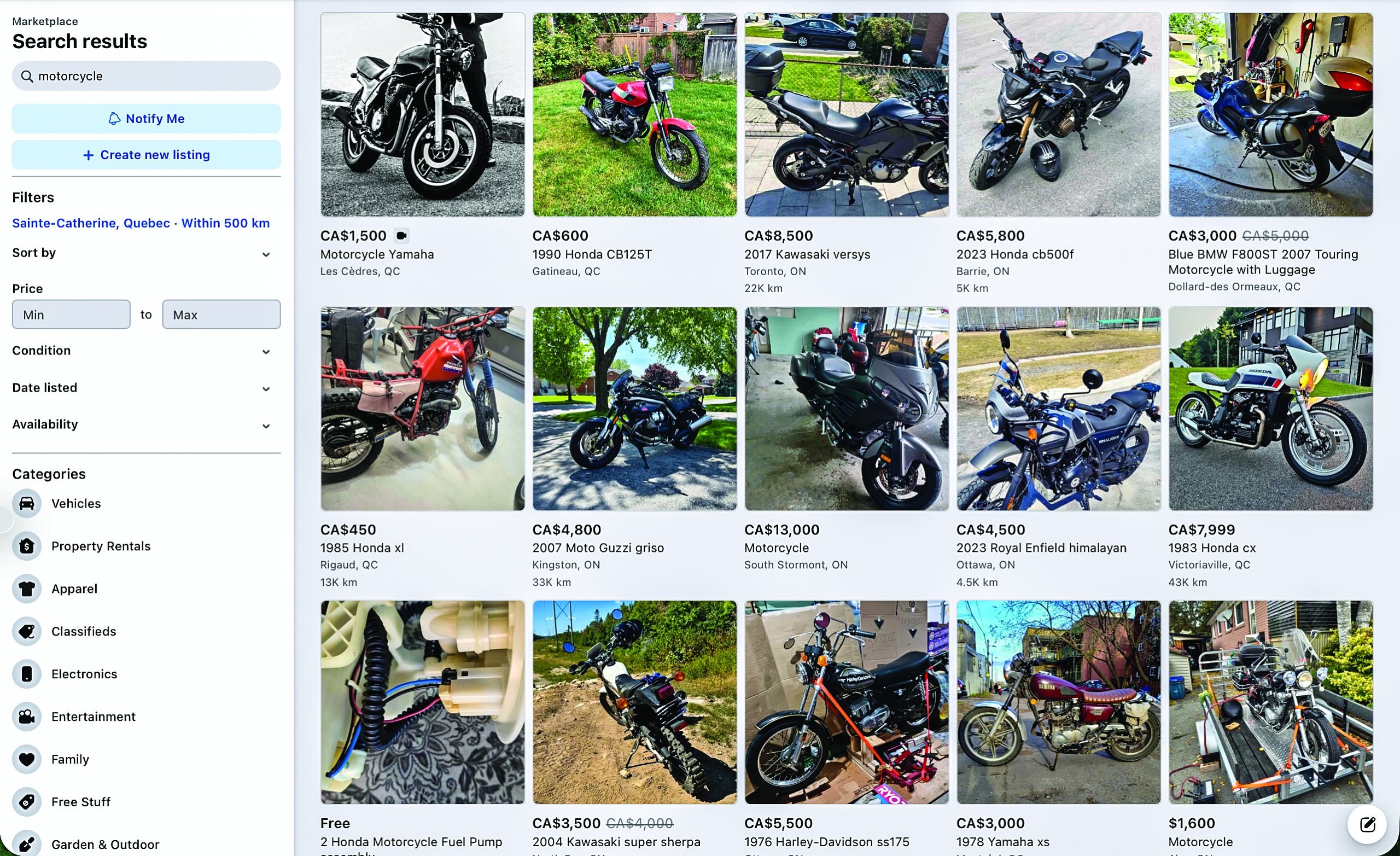
Of course, $7K can be a lot of money, so you might have to scour the classified ads for a more affordable, new-to-you bike. I’ve discussed how to buy a used bike in the past, but I will go over some of the basics here. A first bike should not feel intimidating when you sit on it. As a new rider develops their riding skill, a lot of their focus is on the bike, and not on the road ahead. Therefore, the easier the bike is to ride, the more that a rider will focus on the road.
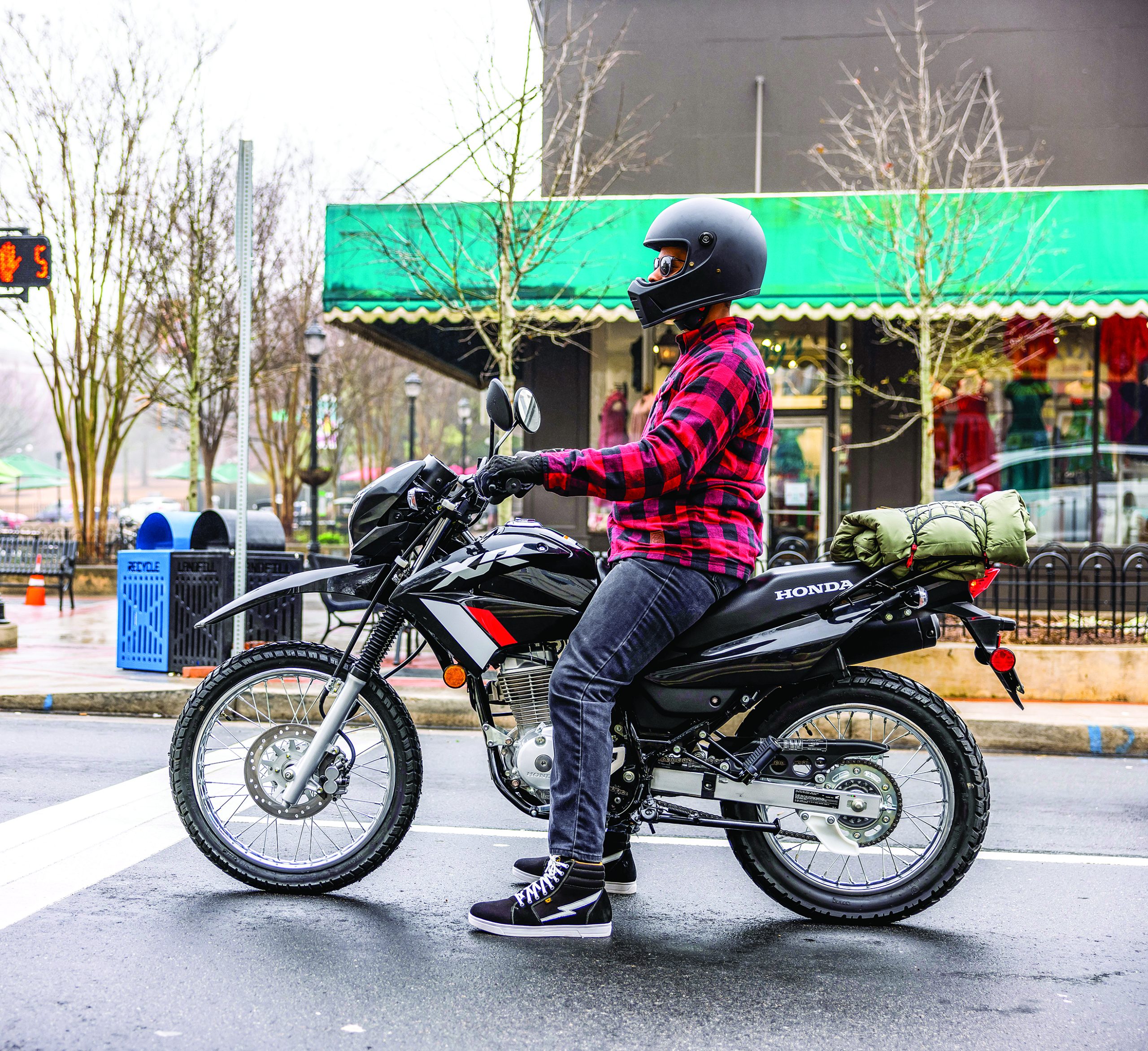
A novice rider’s confidence suffers most at low speeds and when coming to or leaving a stop. To inspire confidence early on, a bike should be light and easy to lift off the side stand, and should have a low seat relative to the rider’s height; standing on your tiptoes on a heavy bike does little to make you feel confident. The riding position should not be extreme: avoid footpegs and handlebars that are positioned far forward like on a cruiser, or contrarily, avoid high, rear-set pegs and low clip-ons like on a supersport. Either of those riding positions will make handling the bike at lower speeds difficult. Standard and naked bikes have neutral, upright riding positions and relatively low seats; dual-sport bikes also have neutral seating, but they also sit taller.
When buying a used bike, I recommend buying one that’s less than 20 years old and is in its original state; unless they are really cheap, stay away from older bikes or bikes that have been modified. While that 1981 Kawasaki KZ440 LTD “café racer” might look really appealing at $3,500, it has probably been mechanically butchered to look like that and will most likely leave you stranded. Bring someone who is knowledgeable about motorcycles with you when going to look at a potential purchase.
Facebook Marketplace has become a dominant online outlet for used bikes, but you must approach it with caution. If a deal looks too good to be true, it probably is. When you click on a listing, some basic seller info can be seen, the most important of which is the year they joined. If they joined a dozen years ago there’s probably a real person behind the account selling an actual bike; if the account is only months old, it’s probably a scammer. Clicking on the profile will reveal if they have many FB friends, or next to none, the latter being an indication of a possible fake account. Beware of users reaching out to you separately from a marketplace sale for any reason.
While you might love that first bike and think you’ll keep it forever, consider it expendable. A cheap used bike will probably return most of what you spend on it when it comes time to trade up. You’ll lose more when selling that brand new bike you bought, but one big advantage of buying new is that you get a manufacturer’s warranty. And finally, don’t forget to factor in a budget for riding gear.




Thanks for Reading
If you don’t already subscribe to Motorcycle Mojo we ask that you seriously think about it. We are Canada’s last mainstream motorcycle magazine that continuously provides a print and digital issue on a regular basis.
We offer exclusive content created by riders, for riders.
Our editorial staff consists of experienced industry veterans that produce trusted and respected coverage for readers from every walk of life.
Motorcycle Mojo Magazine is an award winning publication that provides premium content guaranteed to be of interest to every motorcycle enthusiast. Whether you prefer cruisers or adventure-touring, vintage or the latest models; riding round the world or just to work, Motorcycle Mojo covers every aspect of the motorcycle experience. Each issue of Motorcycle Mojo contains tests of new models, feature travel stories, compelling human interest articles, technical exposés, product reviews, as well as unique perspectives by regular columnists on safety or just everyday situations that may be stressful at the time but turn into fabulous campfire stories.
Thanks for considering a subscription. The Mojo team truly appreciates it.
