

Due Diligence

It pays to ask questions to get to the bottom of all the problems.
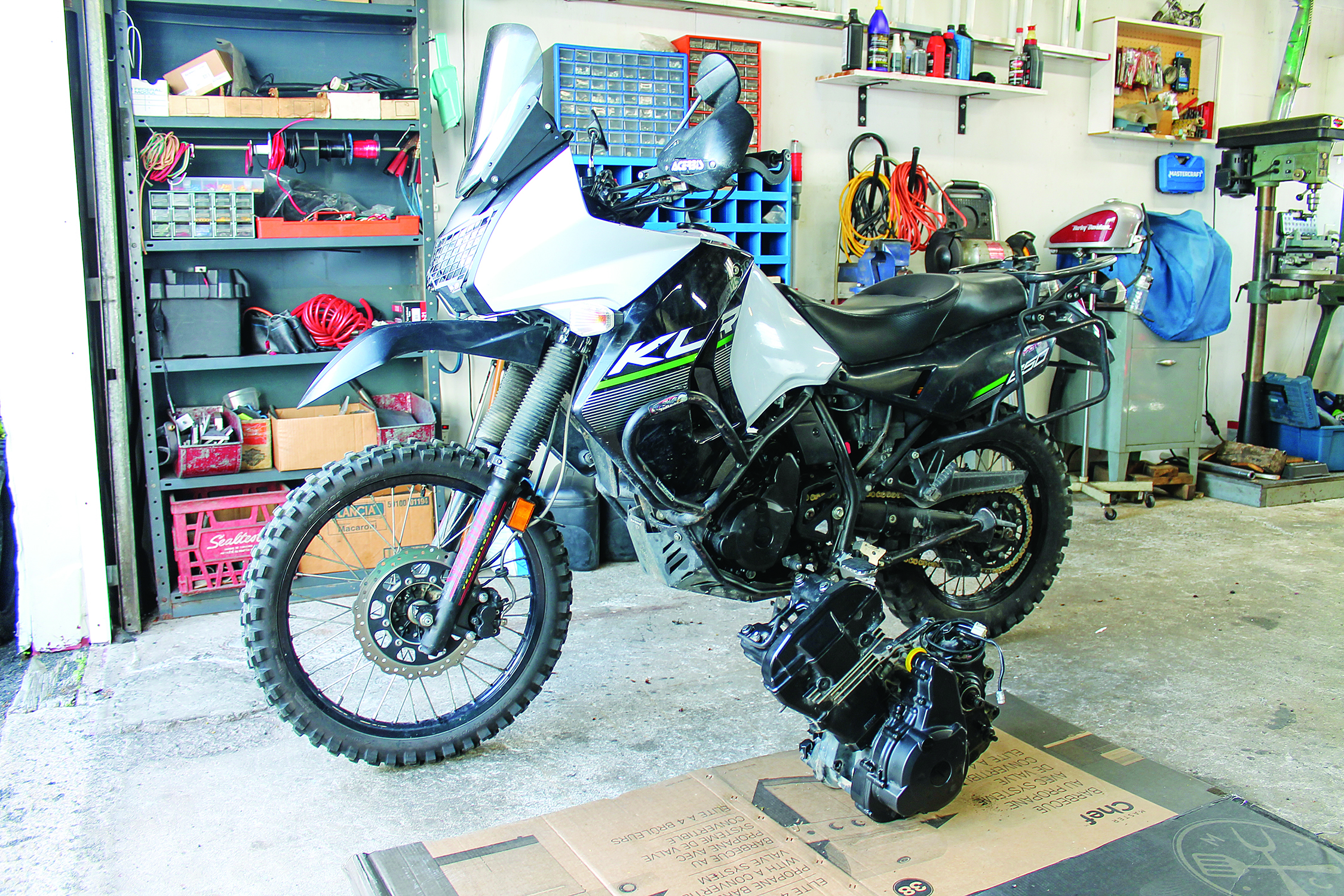
Martin, a friend of mine who takes on repair work at home, called me up recently to buy a KLR650 engine I was selling. He was tasked with refreshing the top end on a 2015 KLR that was consuming oil excessively. The engine I was selling was from a complete but partially disassembled 2008 KLR that I bought to be parted out; it was too far gone to sell as a complete bike.
Its engine was also an oil-burner, which I remedied by refreshing the cylinder and piston and refurbishing the head. I also removed the engine covers to inspect the clutch and the balancer chain tensioner, both of which were like new (the bike had only 24,000 km). Martin’s intention was to save time by simply swapping out the engine of his customer’s bike. The caveat was that he’d bring the bike to my place, and we’d tackle the swap together. The two of us had the old engine out and the new one in within about four hours. And that’s when the problems began.
The new engine fired up instantly, but it ran poorly and stalled repeatedly. Now, after I had refreshed the engine, I had installed it back into the parts bike, ran it to operating
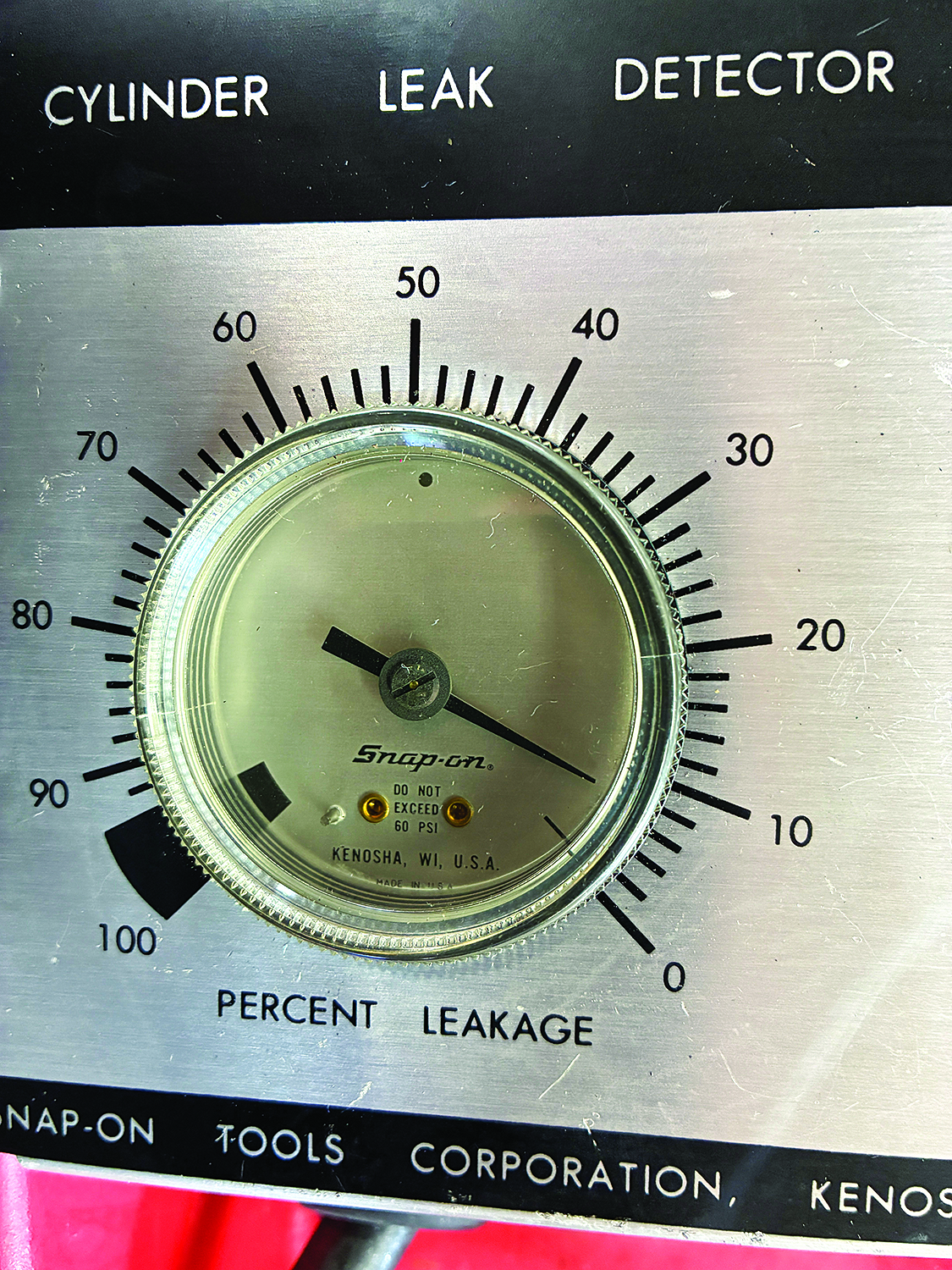
temperature, and then performed leak-down and compression tests to provide to the potential buyer as proof that it was a solid engine. The leak- down showed about seven per cent loss, which is excellent considering the new rings hadn’t yet seated in. Compression was 140 psi, which is also excellent considering that the KLR has an automatic decompressor that affects static compression. So why wasn’t the engine in this guy’s bike running right?
Martin had run the bike when he’d loaded it into his truck, and then we both saw it run when he fired it up at my place. But we both realized after trying to run it now that neither of us had actually run the bike for more than about half a minute, on the choke. The bike had 48,000 km on the clock, and the only mod was a freer-flowing aftermarket exhaust.
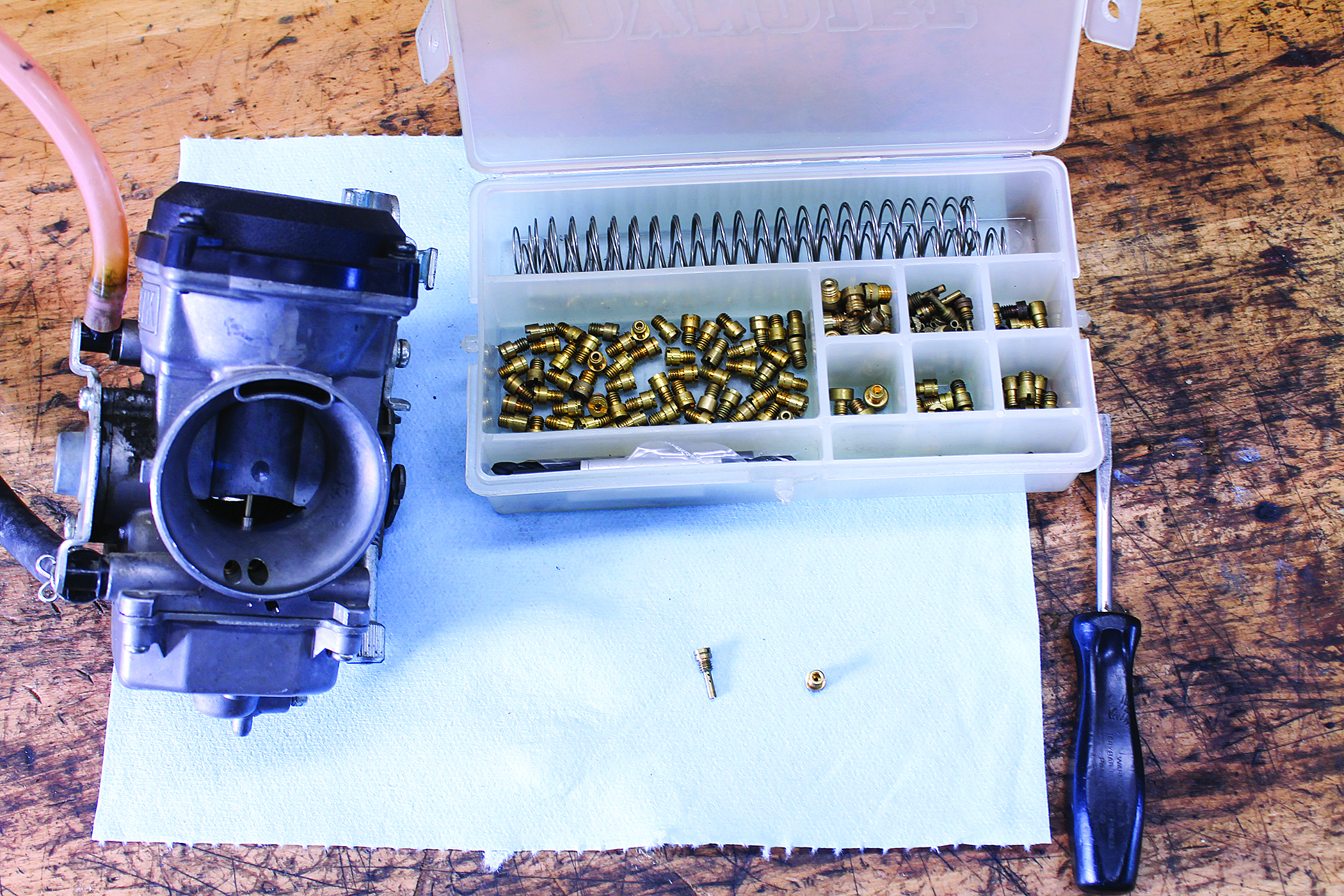
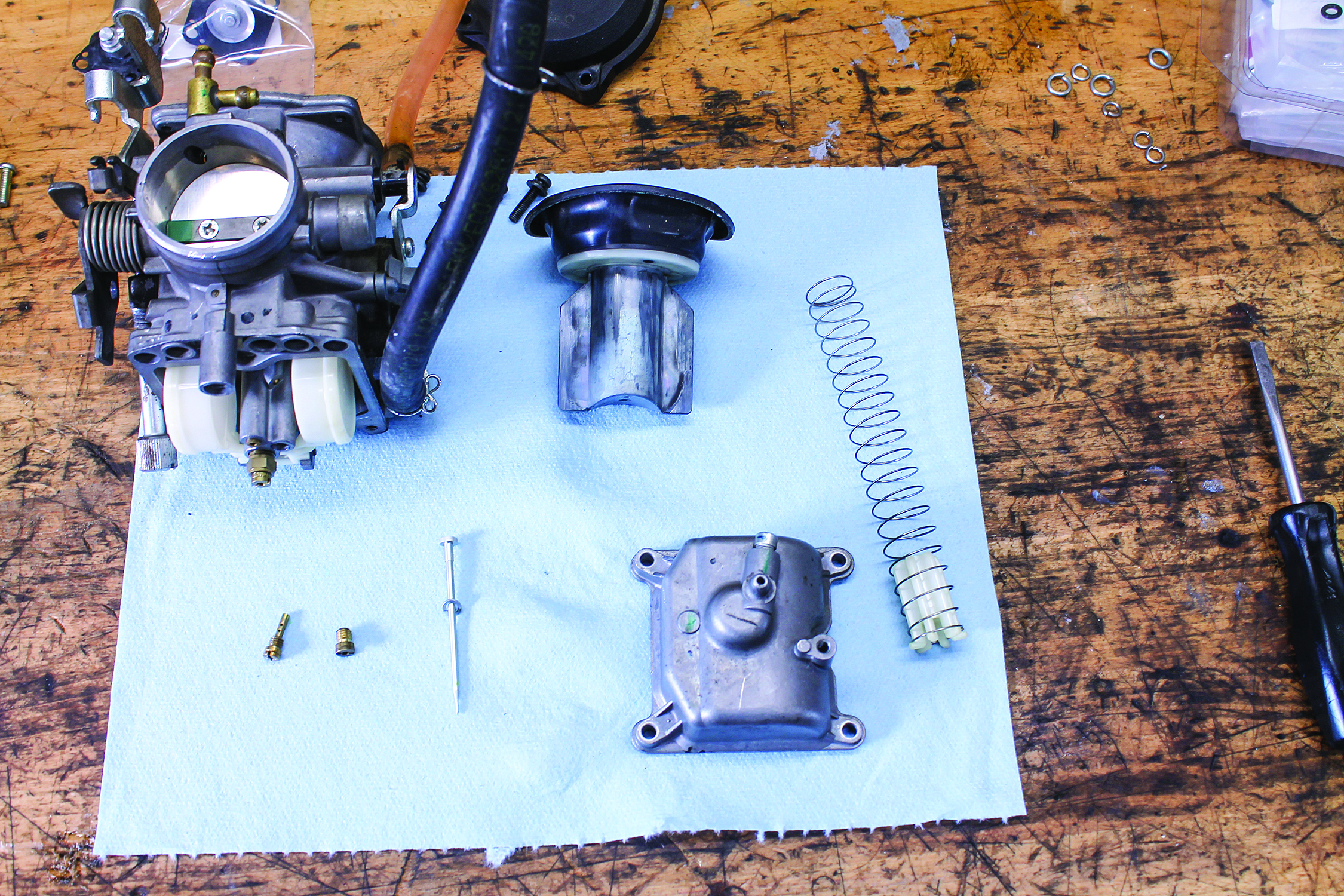
The carburetor came apart and we found some sand in the float bowl, as well as on the vacuum side of the slide diaphragm, the latter the direct result of a dry and dusty foam air filter that hadn’t been oiled, which would also explain the oil consumption — the engine sucked in a lot of dust. Maybe the dirty carb was the cause of the poor running.
After cleaning that up, I also checked the vacuum-operated petcock and found that it wasn’t holding vacuum. Eureka! That’s why the engine ran poorly and stalled: it was being starved of fuel. A few days later, I received a petcock rebuild kit, repaired it, and sure enough, the bike finally ran well and didn’t stall. But wait, there’s more!
The next step was a road test. The bike fired instantly and pulled well on side streets, torquing away from stops strongly. Then I got on the highway and got on the gas. At full throttle, it pulled about as hard as if the grip were being twisted only about a quarter of the way. It felt like going on a date and then going limp when asked to perform.
The bike had difficulty getting up to 90 km/h in fourth gear, and went even slower in fifth. Ugh, back to the shop. It’s also at about this time that I realized that I didn’t know the history of this bike, other than that the owner said it used a lot of oil. I asked Martin what exactly he’d been told, and he said that’s all he knew. We both would have failed Mechanics 101 by making the same mistakes: We didn’t properly interview the owner, and we both assumed that the bike was just burning oil, a diagnosis (somewhat) validated by the dry air filter.
Martin called the guy up and asked more questions. This time we found out that he’d bought the bike used and put 10,000 km on it. He always found the bike sluggish, something he’d attributed to it being loaded with luggage, crash bars and other accessories.
It turns out that the carburetor hadn’t been properly adjusted (richened) to compensate for the aftermarket exhaust, and the bike ran lean. Add to that a faulty petcock and the dry air filter, and you’ve got a sluggish single that uses oil.
The carburetor came apart one final time, the jets were replaced, and the jet needle was raised with a small washer, all mods that enriched the jetting throughout the carburetor’s range. Another road test revealed that the KLR was now running very strong, topping out at 170 km/h, which is really good for this big single. And we both relearned a lesson every mechanic should practice: asking questions is the first step toward finding a solution to a problem.





Thanks for Reading
If you don’t already subscribe to Motorcycle Mojo we ask that you seriously think about it. We are Canada’s last mainstream motorcycle magazine that continuously provides a print and digital issue on a regular basis.
We offer exclusive content created by riders, for riders.
Our editorial staff consists of experienced industry veterans that produce trusted and respected coverage for readers from every walk of life.
Motorcycle Mojo Magazine is an award winning publication that provides premium content guaranteed to be of interest to every motorcycle enthusiast. Whether you prefer cruisers or adventure-touring, vintage or the latest models; riding round the world or just to work, Motorcycle Mojo covers every aspect of the motorcycle experience. Each issue of Motorcycle Mojo contains tests of new models, feature travel stories, compelling human interest articles, technical exposés, product reviews, as well as unique perspectives by regular columnists on safety or just everyday situations that may be stressful at the time but turn into fabulous campfire stories.
Thanks for considering a subscription. The Mojo team truly appreciates it.
