

Ethanol Fuel Woes

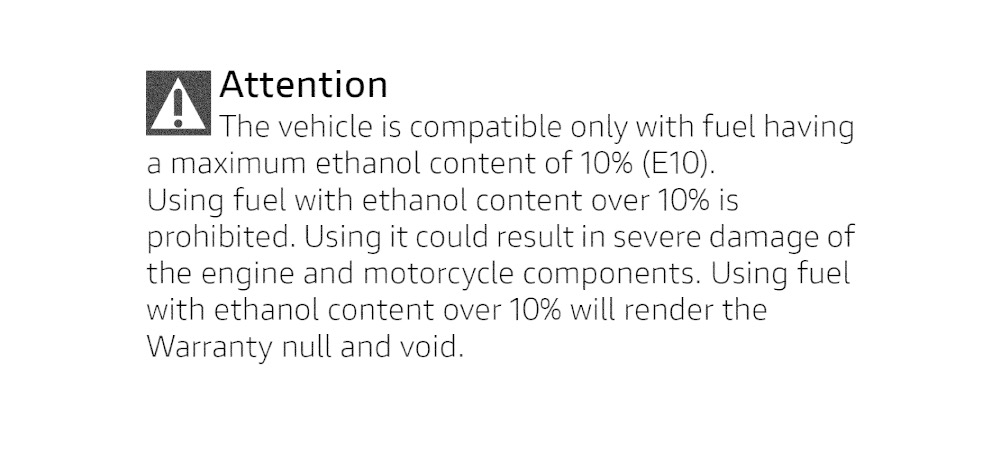

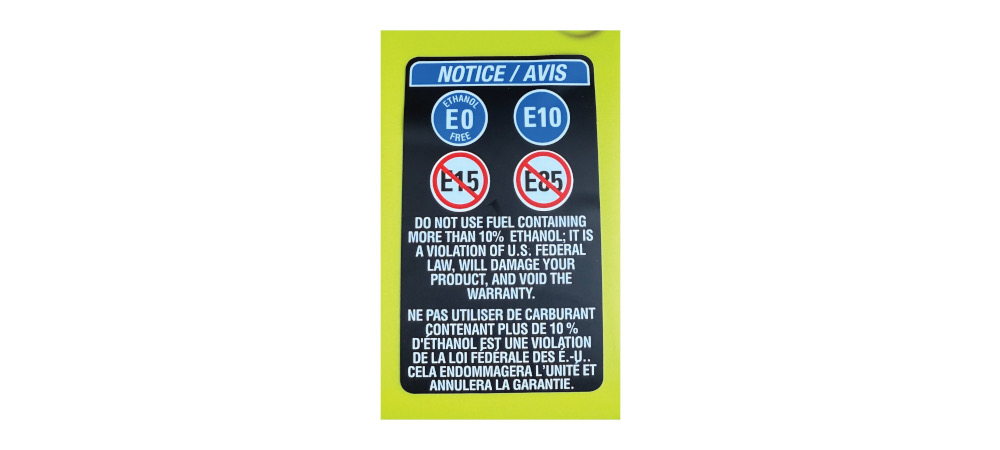
Well, it looks like we’ve been thrown a curveball in Quebec. As of last August 14, the province has approved 15 per cent ethanol (E15) gasoline as it works toward a mandatory minimum ethanol content of 15 per cent by 2030. Don’t think that you’re immune in other provinces, though; while federal law mandates at least 5 per cent ethanol content in gas across the country, several provinces already mandate E10 at the pumps, and will soon be rolling out E15 if they haven’t already done so.
From what I’ve seen, most gas stations in my area of Quebec are now selling E15, with gas pump sticker declaring, “May contain up to 15% ethanol.” I do suspect, however that E15 was actually introduced earlier in the summer. The reason I suspect this is because since I’ve taken my older bikes out of storage, I’ve been experiencing issues I hadn’t seen before. Primarily, my carbureted vehicles (as well as my lawn mower), have been harder to start, and they don’t idle smoothly until they reach operating temperature.
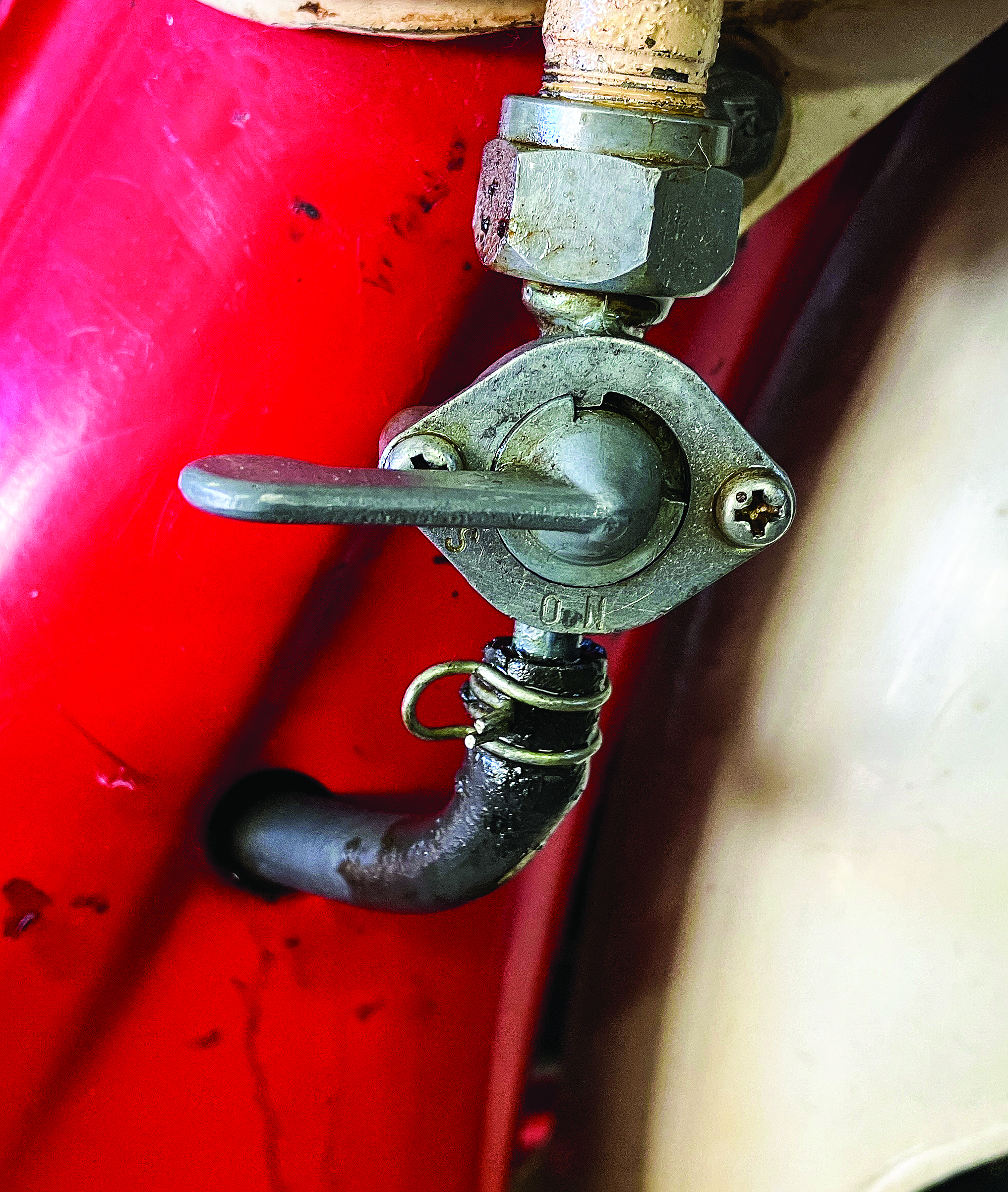
Even more telling are the issues my friend Carl has been experiencing on a number of his vintage Japanese bikes, all of which are carbureted. Many of his bikes refuse to start after sitting for less than a month, some after being parked for only two weeks. Many of the bikes that had no issues after recent service, have been experiencing carburetor leaks. Even more alarming is that a number of them now leak from the fuel petcock, something we would only see after years of storage. And while experience has shown me that leaky petcocks (and, in some instances, carburetors) usually stop leaking once rubber gaskets and O-rings swell up and reseal after gasoline begins to flow, they now continue to leak.
I had discussed the disadvantages of ethanol-blended fuel in the March 2025 issue, and had even demonstrated (unofficially) how it affects fuel consumption and performance. If you don’t have that issue handy, here’s a recap: My Honda CH80 scooter was easier to start and saw a 13 per cent increase in top speed, and the fuel consumption on my Mazda B4000 pickup improved by about one litre per 100 kilometres when filled with ethanol-free gas. And that was when comparing E-free gas to E10. E15 is worse, as it is even less energy-dense than E10.
Local news outlets reporting on Quebec’s change to E15 in August unanimously stated that it would be harmful to older vehicles, and would be especially bad for small engines, like those in snowblowers, lawnmowers, and a multitude of other machinery. I knew of the drawbacks of E15 even before the media reports, but what really surprised me was how quickly and how severely it affected older engines.
Corn-based ethanol was initially introduced as a gasoline additive to replace methyl tertiary butyl ether (MTBE) as an octane-booster, which itself was introduced to replace lead. It is essentially a less toxic octane booster, and it burns cleaner than gasoline, reducing slightly the overall emissions of gas. However, ethanol-blended fuel doesn’t burn as efficiently as non-ethanol gas, and fuel mileage suffers.
Aside from the reduced power and increased fuel consumption, there are a few bigger issues when adding ethanol to gasoline. It is hygroscopic, which means it absorbs moisture. Therefore, the higher the concentration of ethanol in gas, the more water that will be present in it after sitting for some time — and water equals corrosion.
This may be why the gas in Carl’s 1970 CB750 turned red after sitting for just a few months; it caused a layer of surface rust to form in the gas tank, which eventually worked its way into the fuel and into the carbs. The tank had been thoroughly cleaned last summer. Another issue is that it dries out and hardens rubber; fuel lines that were supple just months ago have turned as hard as plastic. Ethanol-blended gasoline also deteriorates quicker than non-ethanol gas. And while fuel stabilizer might help keep the gasoline from going stale a little longer, the ethanol in the gas will still wreak havoc on the fuel system.
For now, Carl has found a solution to the ethanol problem for his bikes. He bought, at considerable expense, a drum of Sunoco ethanol-free 95 octane race fuel. He won’t be using it as a regular replacement — at least not until we do further testing — but he will remove the bad gas and run Sunoco through his bikes when it’s time to put them away for the winter. We’ll only find out next spring if this solution works.I have noted that the premium fuel at a nearby Shell station is E10, so it’s what I now use in all of the non-injected engines in my garage. However, I’ll probably head to Carl’s place with an empty jerrycan just before winter arrives.





Thanks for Reading
If you don’t already subscribe to Motorcycle Mojo we ask that you seriously think about it. We are Canada’s last mainstream motorcycle magazine that continuously provides a print and digital issue on a regular basis.
We offer exclusive content created by riders, for riders.
Our editorial staff consists of experienced industry veterans that produce trusted and respected coverage for readers from every walk of life.
Motorcycle Mojo Magazine is an award winning publication that provides premium content guaranteed to be of interest to every motorcycle enthusiast. Whether you prefer cruisers or adventure-touring, vintage or the latest models; riding round the world or just to work, Motorcycle Mojo covers every aspect of the motorcycle experience. Each issue of Motorcycle Mojo contains tests of new models, feature travel stories, compelling human interest articles, technical exposés, product reviews, as well as unique perspectives by regular columnists on safety or just everyday situations that may be stressful at the time but turn into fabulous campfire stories.
Thanks for considering a subscription. The Mojo team truly appreciates it.
