

Rider Focused Roadster

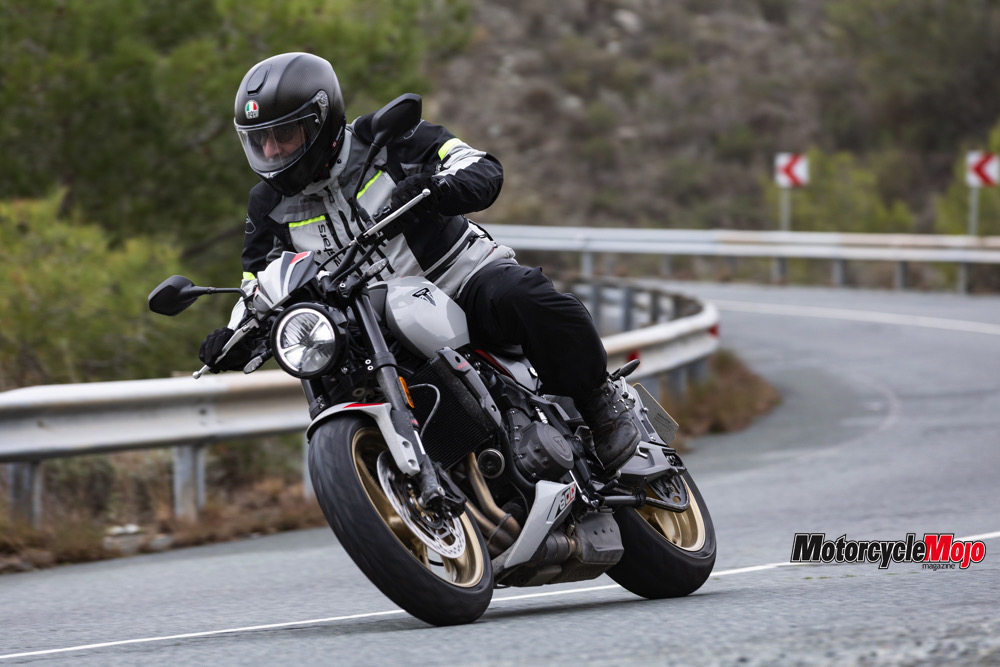
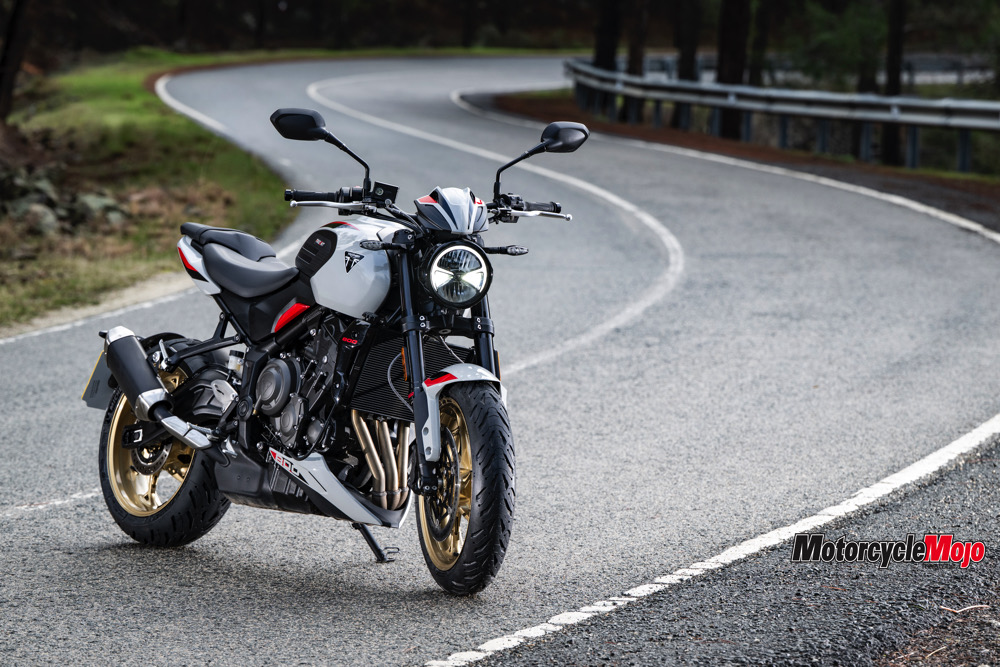
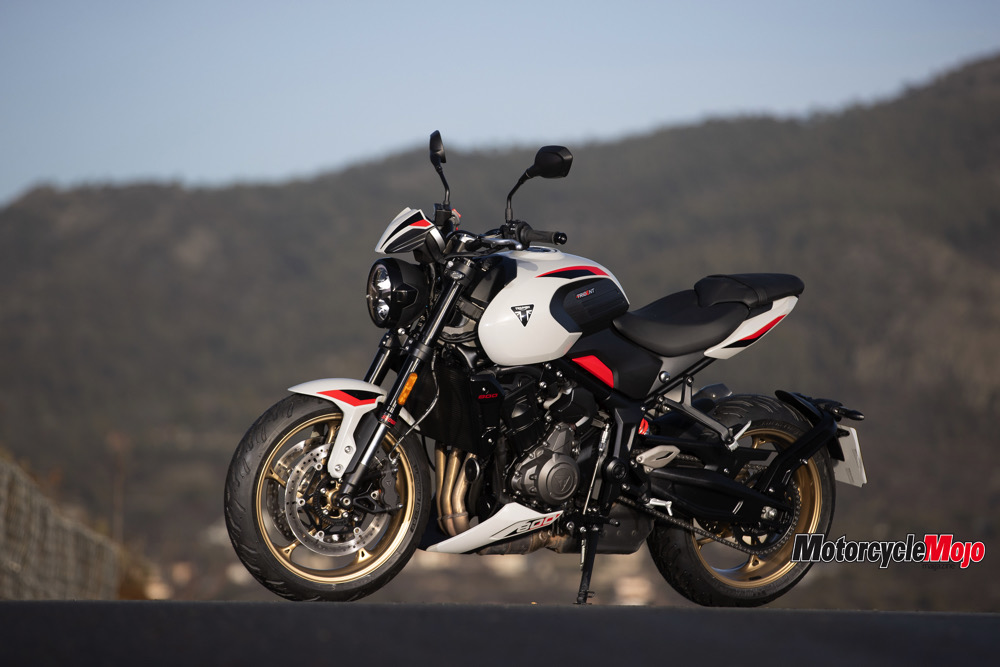


A less aggressive riding position and a sweet, very competent inline triple that is built for the masses.
Triumph’s first triple, the Trident 750, appeared the year before Honda’s legend-ary CB750 Four hit the market. While the two machines were quite different, they shared one thing: high performance. The CB750, however, had electric start that the Trident lacked, and it was more affordable. It also launched a new era of performance bikes from Japan. Struggling to compete, Triumph dropped the Trident in 1975, and with the onslaught of affordable high-performance Japanese motorcycles throughout the 1970s, Triumph eventually called it quits and went into receivership in 1983. History has proven that this was a very good thing for the British bike maker, because when it happened, John Bloor picked up the remnants of the company, and in the four decades since, has put together a team that has turned the company into a juggernaut.
After a 15-year gap in triple production, Triumph re-introduced the Trident in 1990, but this time it was a completely redesigned bike with a 900-cc liquid-cooled inline triple that eventually prompted Triumph to produce a variety of triples in multiple categories. The latest is the Trident 800, which we rode at the bike’s launch in Cyprus.
But why introduce the Trident 800 when there’s already a number of naked middleweight triples in Triumph’s line up? Well, because it now fills the gap between the track-focused Street Triple 765RS and the budget-oriented Trident 660. This gap in the lineup would have normally been filled by the Street Triple 765R, which is still available for now, but has been discontinued for 2026.
ACCESSIBLE PERFORMANCE
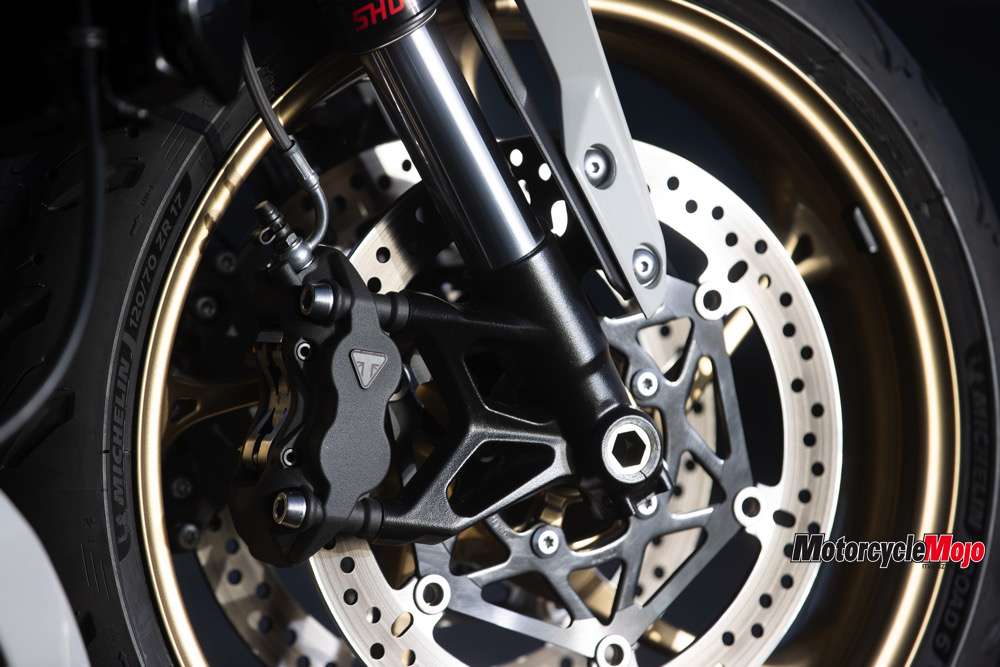
The Trident’s styling is less aggressive than the Street Triple’s, and it has less of a nose-down attitude — clues that it is designed to be a friendlier, more accessible motorcycle. It’s a logical step up from a smaller bike and makes a much more sensible all-around naked bike than the super-sporty Street Triple 765RS; not everyone needs or wants to pay for wheelie control, track modes, high-end suspension components and superbike-spec Brembos.
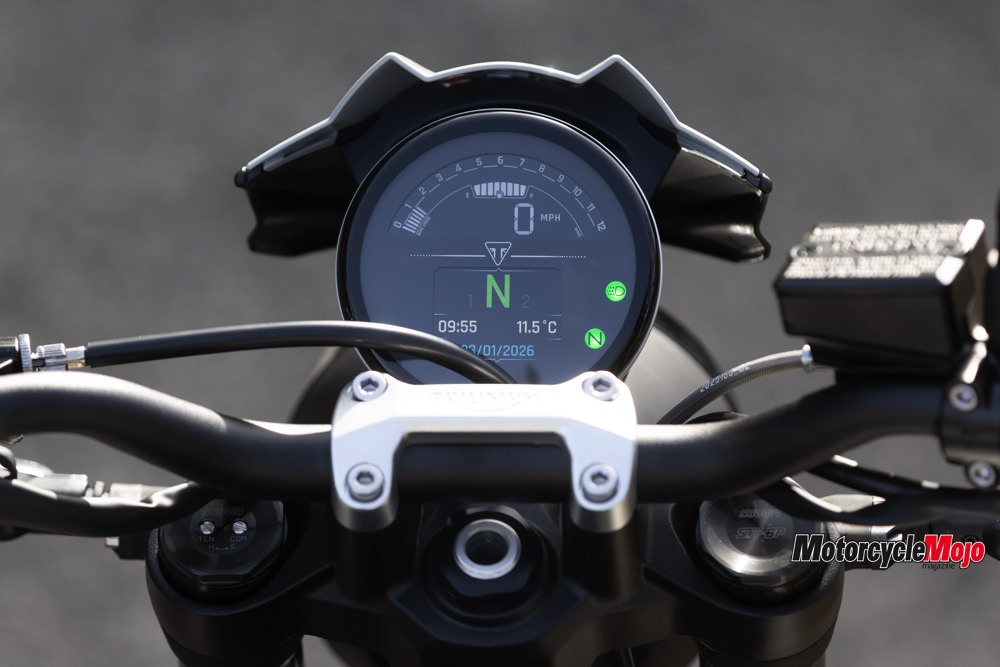
The Trident advanced electronics that include three ride modes (Sport, Rain and Road), single-touch cruise control, a bi-directional quick shifter, self-cancelling turn signals, and a six-axis IMU that enables adjustable (via ride modes) lean-sensing ABS and traction control. Ride modes and trip info are displayed in a 3.5-inch round instrument panel that incorporates an LCD and a TFT screen — not my favourite setup (I prefer old-school analogue gauges). but it is highly functional. The Trident also includes MyTriumph Bluetooth connectivity, which among other things displays…





Thanks for Reading
If you don’t already subscribe to Motorcycle Mojo we ask that you seriously think about it. We are Canada’s last mainstream motorcycle magazine that continuously provides a print and digital issue on a regular basis.
We offer exclusive content created by riders, for riders.
Our editorial staff consists of experienced industry veterans that produce trusted and respected coverage for readers from every walk of life.
Motorcycle Mojo Magazine is an award winning publication that provides premium content guaranteed to be of interest to every motorcycle enthusiast. Whether you prefer cruisers or adventure-touring, vintage or the latest models; riding round the world or just to work, Motorcycle Mojo covers every aspect of the motorcycle experience. Each issue of Motorcycle Mojo contains tests of new models, feature travel stories, compelling human interest articles, technical exposés, product reviews, as well as unique perspectives by regular columnists on safety or just everyday situations that may be stressful at the time but turn into fabulous campfire stories.
Thanks for considering a subscription. The Mojo team truly appreciates it.
