
Precision Measuring Tools


Proper care of these items is crucial to retain their accuracy.
I once owned several high-quality Starrett measuring instruments, including several micrometers, a dial caliper, snap gauges, small hole gauges, and a dial gauge. These tools were necessities when I was a technician, used to take precise measurements of cylinders, valve stems, valve-guide bores, and a multitude of other precise measurements needed when rebuilding an engine.
While a couple of the shops I had worked in had various sets of these types of tools, other techs would nonetheless ask to borrow mine, since the shop’s tools were generally in a sad state and mine were pristine. I would let others use my tools on the promise that they would be handled with care, be used in the manner for which they were designed — a caliper was not to be used as a wrench; a micrometer not as a press — and be promptly returned.
These highly coveted instruments took me several years and a few thousand dollars to acquire, and back then they were American-made — some Starrett tools are now outsourced elsewhere. Each tool was tucked preciously away in its carrying case or box, which was placed in a dedicated drawer of my toolbox. For the most part, I trusted the people I worked with, so I left my toolbox unlocked.
When I decided to make a career change roughly 25 years ago, I left my toolbox behind at the final shop I worked at, to be picked up a few weeks later, since it was big and heavy, comprising a top box, a middle box, and a wheeled base. In this case, I had locked it. I eventually brought my toolbox home.
It was only about a month after having retrieved it that I needed something in my toolbox. It’s then that I discovered it had been broken into. The only things missing were all my Starrett measuring tools. The crafty thief had pulled hard enough on the drawer containing only those items to bend the locking tabs, force it open, and empty it of its contents (he’d most likely borrowed them in the past, so he knew where to look).
He then pushed the drawer closed, but since the locking tabs were bent, it wouldn’t lock and it stuck out just a tiny bit. To mask his evil deed, he then wedged a small piece of wood between the drawer and the tool box frame so the drawer wouldn’t open accidentally if the toolbox were to be moved, and it held the compromised drawer flush with the other drawers so as not to draw attention to it.
After contacting the shop, where I had several friends, it was pretty much deduced that the culprit was a tech who’d left a couple of weeks after I did, to return to his home country, France. While unmarked, it would be too easy to identify my tools if they were to show up in that shop again, making them nearly unusable to anyone there. So, it’s very likely that my measuring tools left the country with him.
I’ve since replaced most of them, but with much lower-quality items, since I no longer wrench professionally — the cost of replacing them with equivalents is just too high to be justified. I do, however, maintain these cheaper tools the same way I did my Starretts, since the information they provide is just as valuable. If you have some precision instruments, here are some care guidelines.
I still keep my instruments in their original carrying cases to keep them clean and dust-free. If you don’t have a storage case, an enclosed cardboard box will do. I also insert a silica gel packet into each case to prevent corrosion. Another way to deter corrosion is to apply a light coat of high-quality, light-viscosity oil to the visible or sliding surfaces. Starrett 1620 instrument oil is made for this, at about $20 for 100 ml. Clean off the contact surfaces with paper when ready to use.
When you’re done with the tool, return it to its case; don’t leave it out to collect dust. If it is dusty, never blow it clean with compressed air. Use your lungs and a lint-free cloth. Don’t put your tool down on a dirty workbench; place it on a clean cloth or paper. And don’t leave it near anything magnetic, since it can magnetize and will then collect metal shavings, which is not good.
When storing a vernier caliper or a micrometer that measures to zero (the measuring surfaces contact each other when fully closed), store them with a small gap between the measuring surfaces, and leave the locking screw loose. This will help maintain accuracy since the body of the tool won’t be stressed by any temperature changes. And finally, keep them somewhere safe.
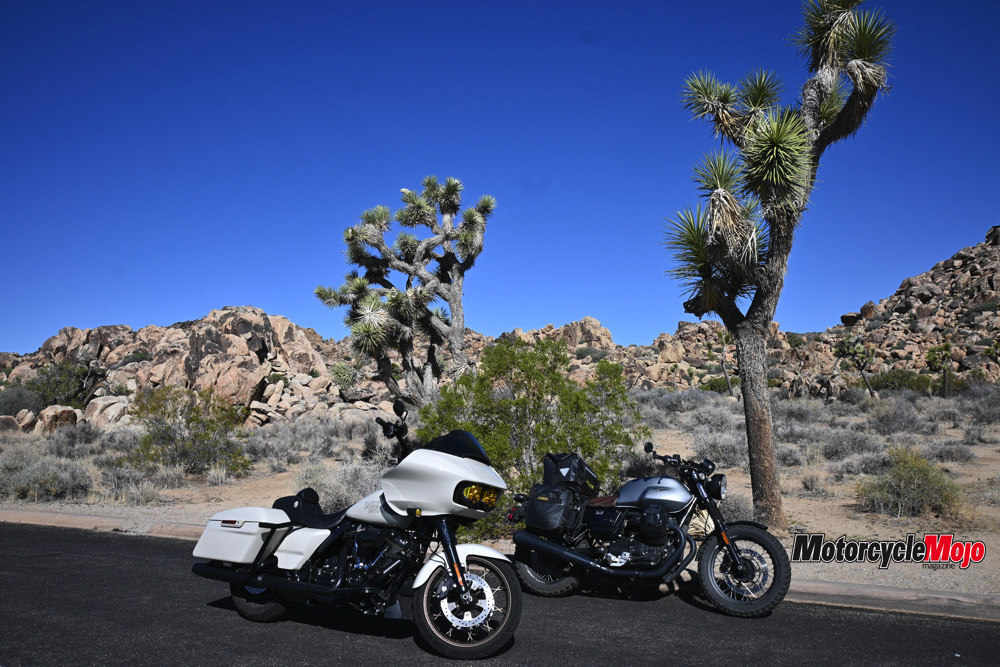


A long-awaited trip to Joshua Tree National Park finally realized.
I fell in love with the desert in the summer of 2024 when a group of us drove through a section of the Mojave Desert while in California. At the time, we were heading home to Alberta after spending the previous week riding the legendary Pacific Coast Highway on our motorcycles. The original plan had been to spend an afternoon exploring the desert landscape of Joshua Tree National Park, part of which is located within the Mojave Desert. But as we left Los Angeles the temperature started to rise, and as we neared Joshua Tree, the gauges on our bikes read around 45 C.
The heat was overwhelming. For our safety, and that of our bikes, we choose to postpone our exploring and instead drove straight to the air-conditioned hotel room we had booked earlier that day. Not being able to stop longer at the park was a disappointment, but I had seen enough to know the desert’s beauty was undeniable and that I wanted to return to see more.
SPRING TRIP PLANNED
I didn’t have to wait long. At the beginning of 2025, my partner, Spencer, and I were planning our motorcycle trips for the year and decided we needed to visit the desert again. This time we chose to try and avoid the summertime heat and visit in the spring — April to be exact. We set about creating a route that would take us through Las Vegas, Death Valley National Park and Joshua Tree National Park.
As anyone in Canada knows, springtime weather can be unpredictable, especially here in Calgary, where we call home. This is something we had to take into consideration when planning our trip. To keep things safe and simple, we decided to trailer my 2018 V7 Moto Guzzi and Spencer’s 2023 Harley-Davidson Road Glide ST to Las Vegas and set off from there. We would travel south through Montana, Idaho, Utah and Nevada — all states we had previously travelled through on our motorcycles, so it was familiar terrain.
We knew what roads we wanted to take and our favourite places to stop. When the date finally rolled around, we were ready. We left Calgary at dawn on April 18, with the motorcycles in tow. Beautiful weather with clear roads meant the drive went off without a hitch, and in only two days, we arrived in Las Vegas, tired but excited.
FIRST RIDING DAY
We woke early, eager to unload the bikes and get on the road. To start the day, we headed to Red Rock Canyon National Conservation Area to drive Red Rock Canyon Road. The road resembles a horseshoe, dipping into the canyons before ending up back in the city. Although not especially curvy, it was scenic, with towering ridges of red-coloured rocks lining the horizon. The ridges, although smaller…


Selecting the ideal canvas for your style.
A unique motorcycle can set you apart in a crowd. Merely owning a motorbike distinguishes you from the herd. But what if you want to further differentiate yourself from other motorcyclists by investing your time and hard-earned cash in eye-catching upgrades for your motorcycle?
Before rushing out to the garage and diving into your current bike or spending a lot of money ordering parts, you should carefully think and plan for the build — before the nuts and bolts start flying.
“Ask yourself a few questions,” said Chris Ranger of Ranger Cycles in Summerland, B.C. “Which motorcycle are you going to use? How do you want it to look? What paint scheme have you decided on? What does your money pit (budget) look like? But most importantly, do I have the mechanical, electrical, and some fabrication skills to pull it off? These are but a few questions that need to be pinned down.
PREPARE A REASONABLE PLAN
Throughout the history of motorcycling, a plethora of customization genres have emerged. From bobbers to café racers, from brats to rats to choppers, the goal of building a custom motorcycle is to take a stock bike and transform it into a one-of-a-kind creation that reflects the owner’s imagination.
“My favourite motorcycle engines are the Evolution engines from Harley-Davidson — although when running, they sound like ‘potato, potato, potato’ — coupled to an Indian five-speed transmission, and then tucked into a Trippoli wishbone frame,” said Ranger.
The world of motorcycle customization is vast and accessible. You can purchase virtually every part, whether used, new-old-stock, or reproduction. Tanks, seats, and custom parts are available globally, and they are pretty straightforward, mechanically and electrically. This accessibility should give first-time builders the confidence necessary for their custom build. As Ranger puts it, “The only limit is your imagination.”
Of all the various styles of customized motorcycles, the heritage of a bobber motorcycle provides an ideal canvas for your unique flair.
Let the gawking commence!
THE BOBBER’S ROOTS
A Bobber is a distinct and special type of motorcycle with a large following worldwide. Its quirky design elements and the riding experience it provides make it the ultimate classic bike for both the new generation and older bikers.
The bob-job evolved from an earlier type of American custom motorcycle, the “Cut Down,” which appeared in the late 1920s and was based on the Harley-Davidson J series V-twin. The cut-down was created to modernize its appearance and improve performance by removing the front fender and all excess accessories, significantly lightening the motorcycle.
A modified frame also characterized the cut-down, with the seat tube lowered and the wheelbase shortened. This resulted in a lower, shorter machine with a sweeping diagonal line between the…
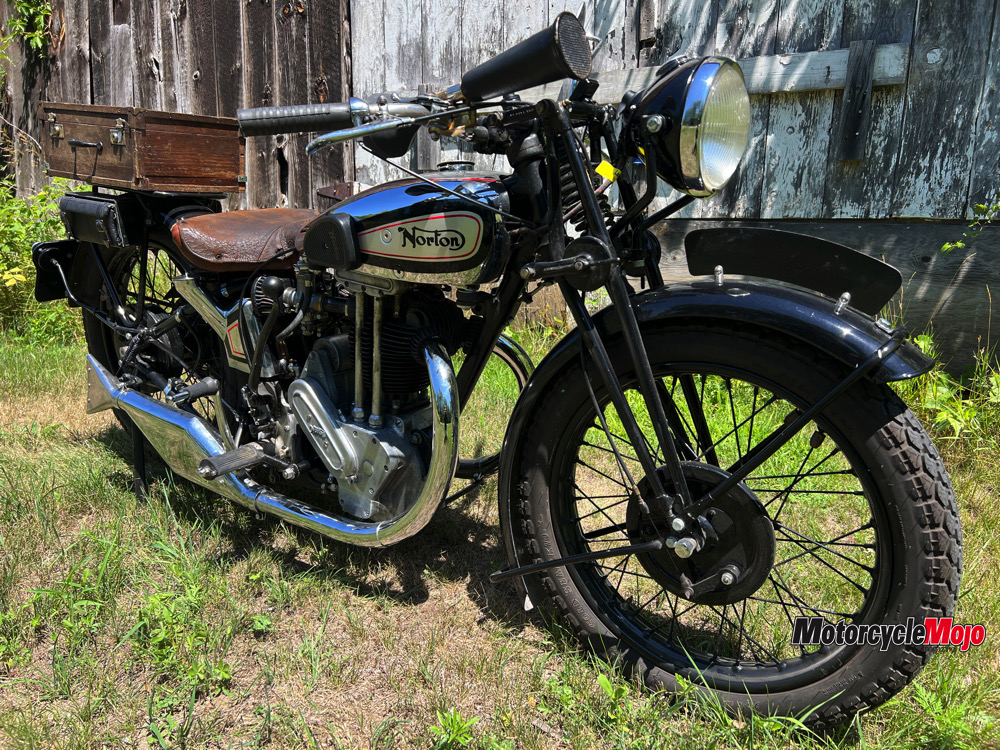
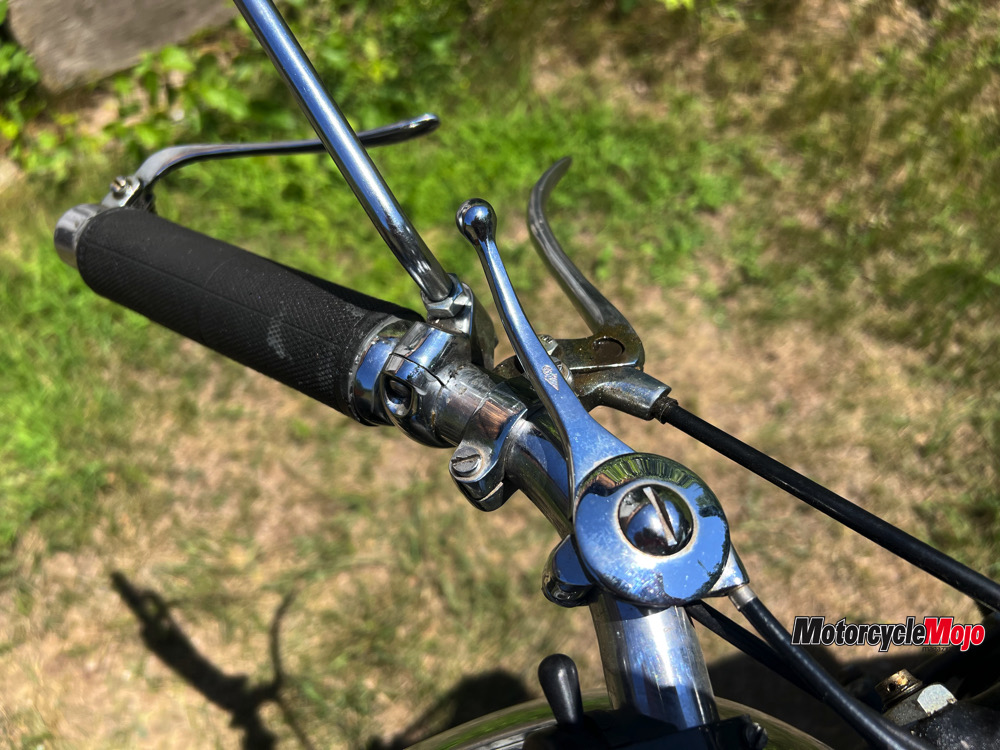


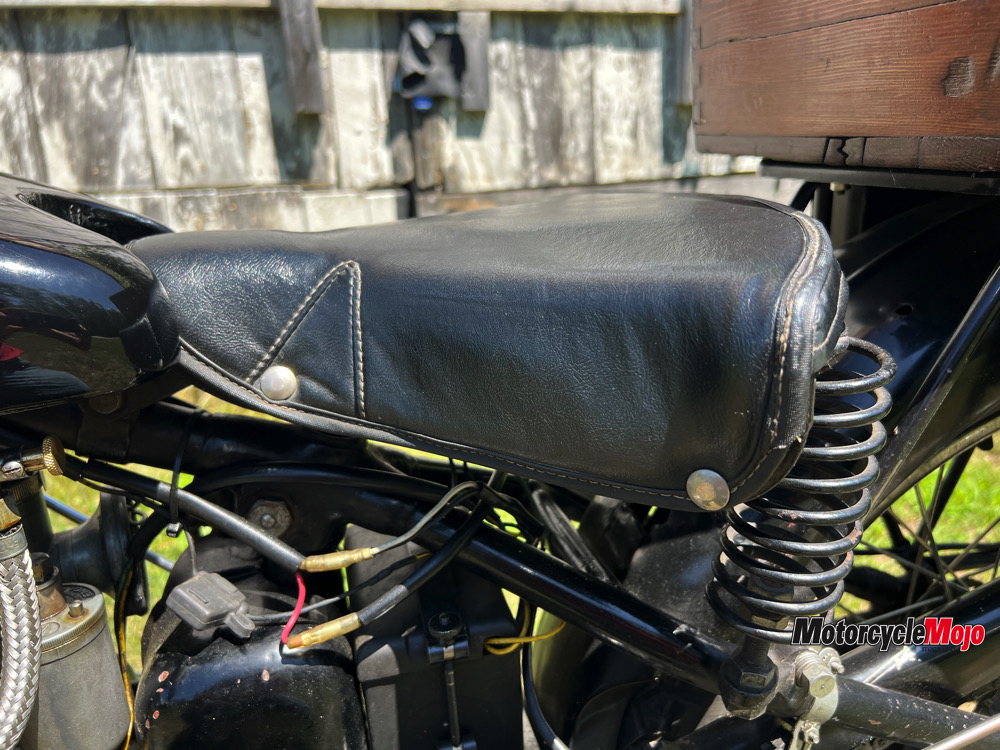
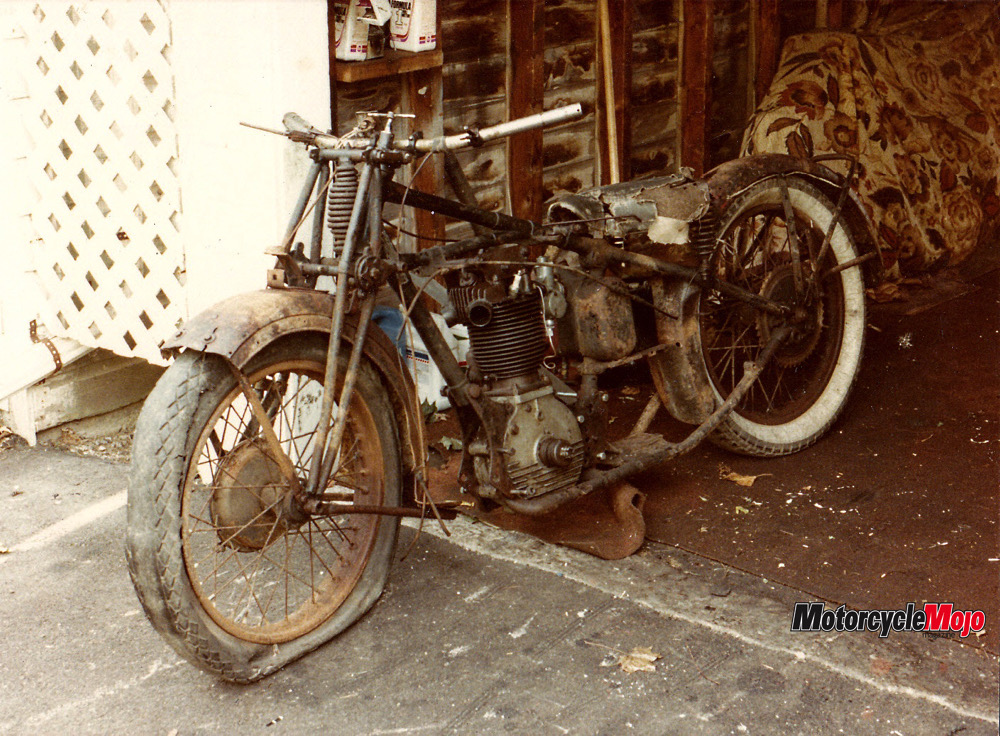
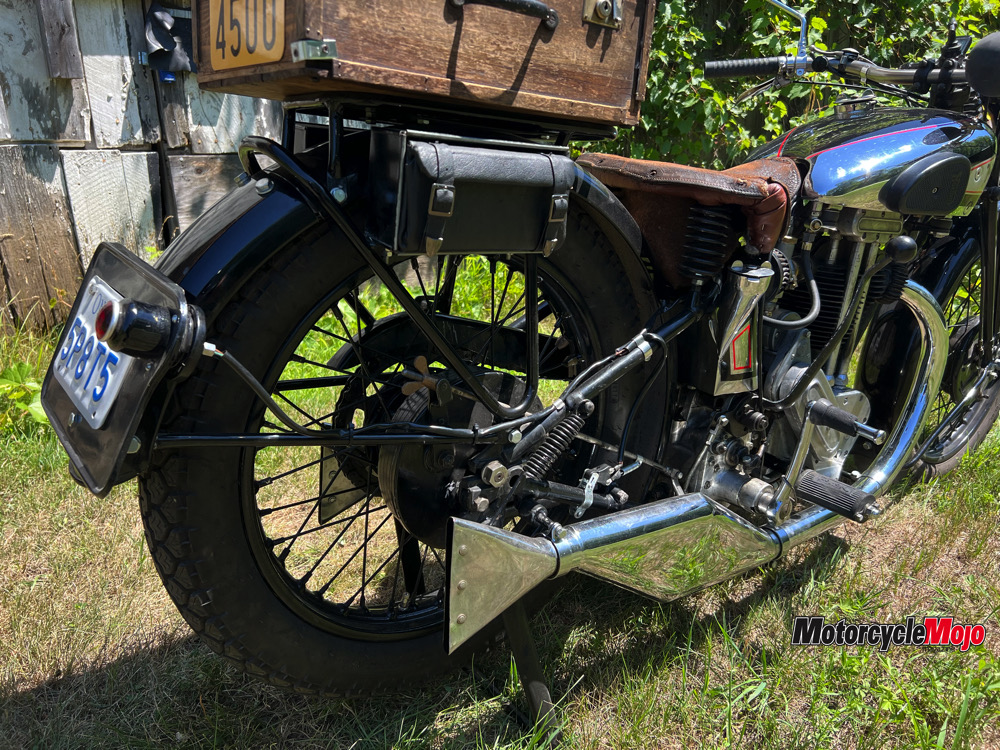
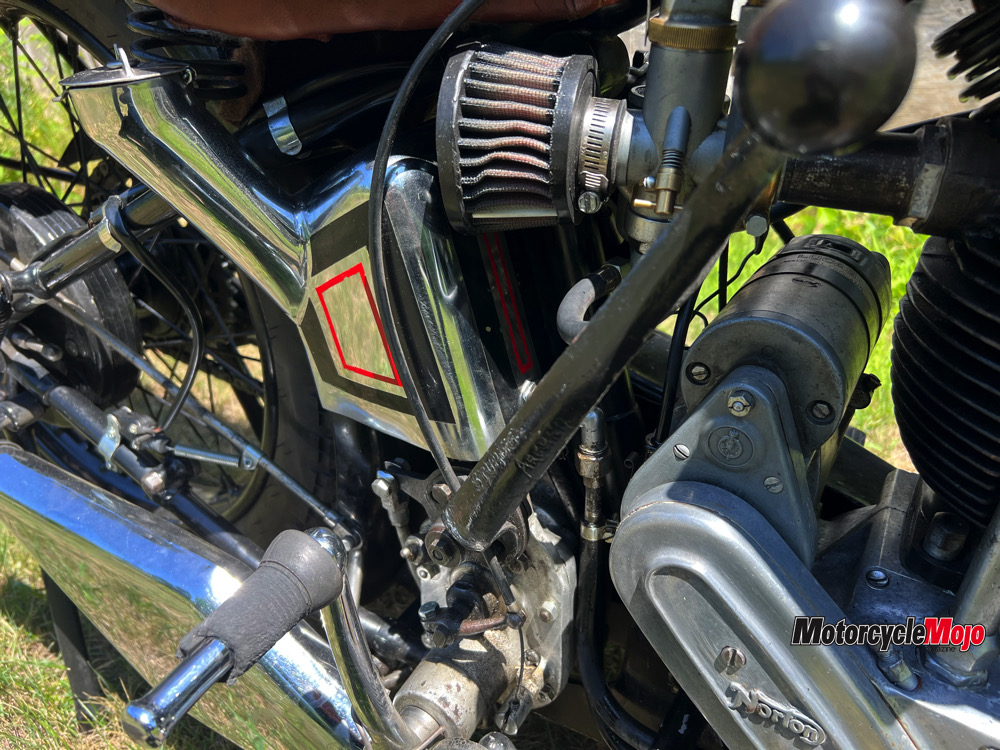
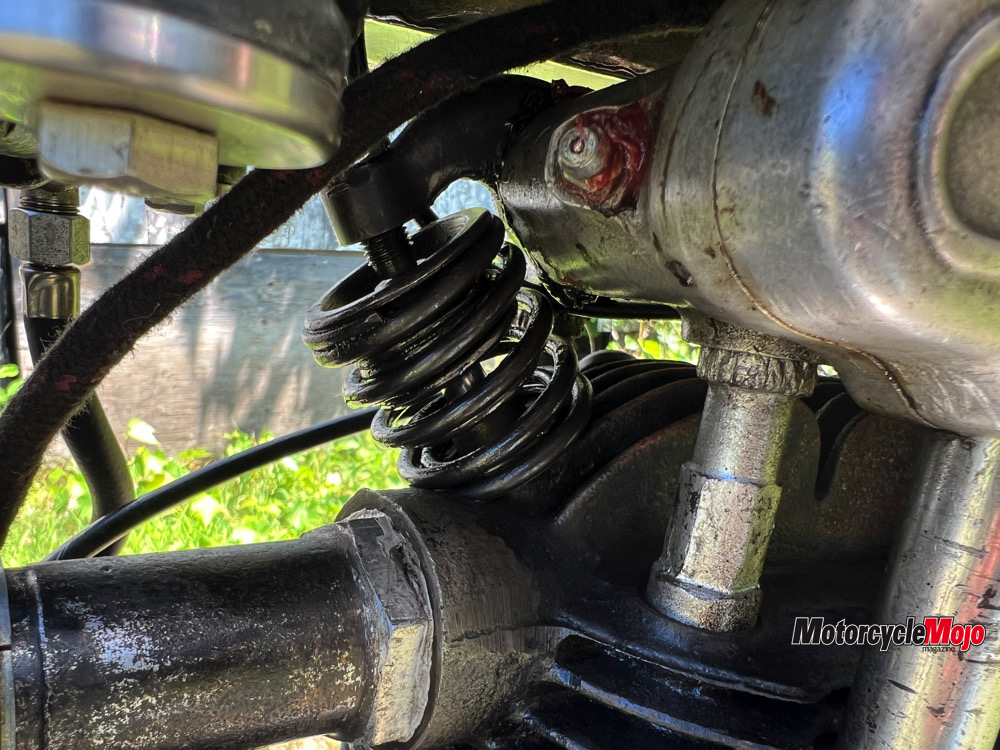
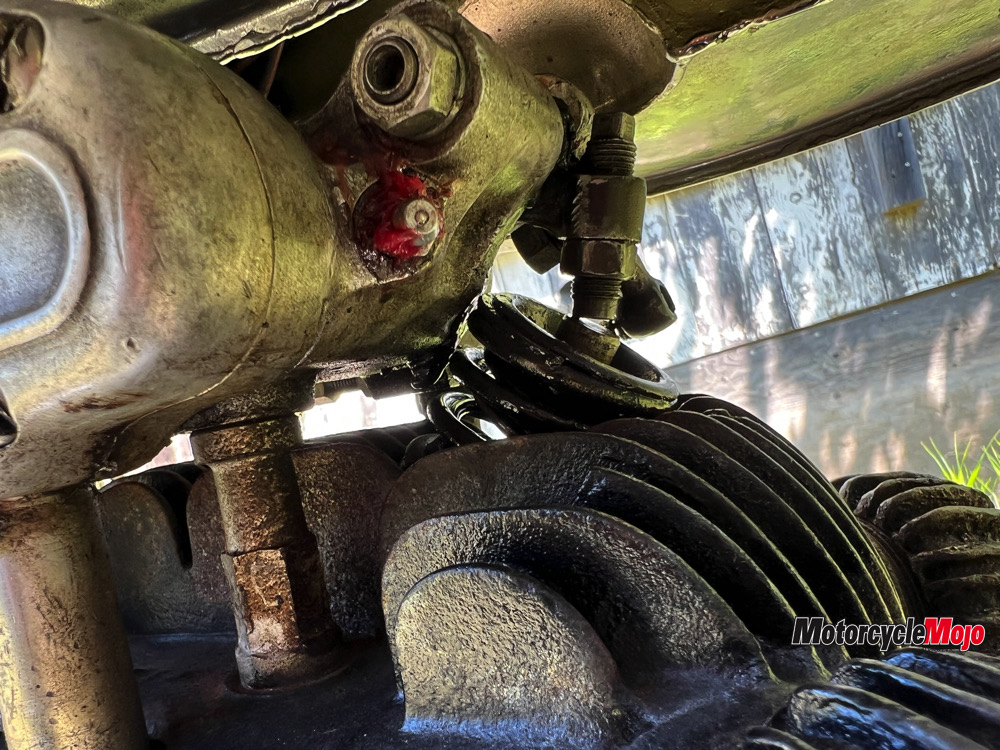
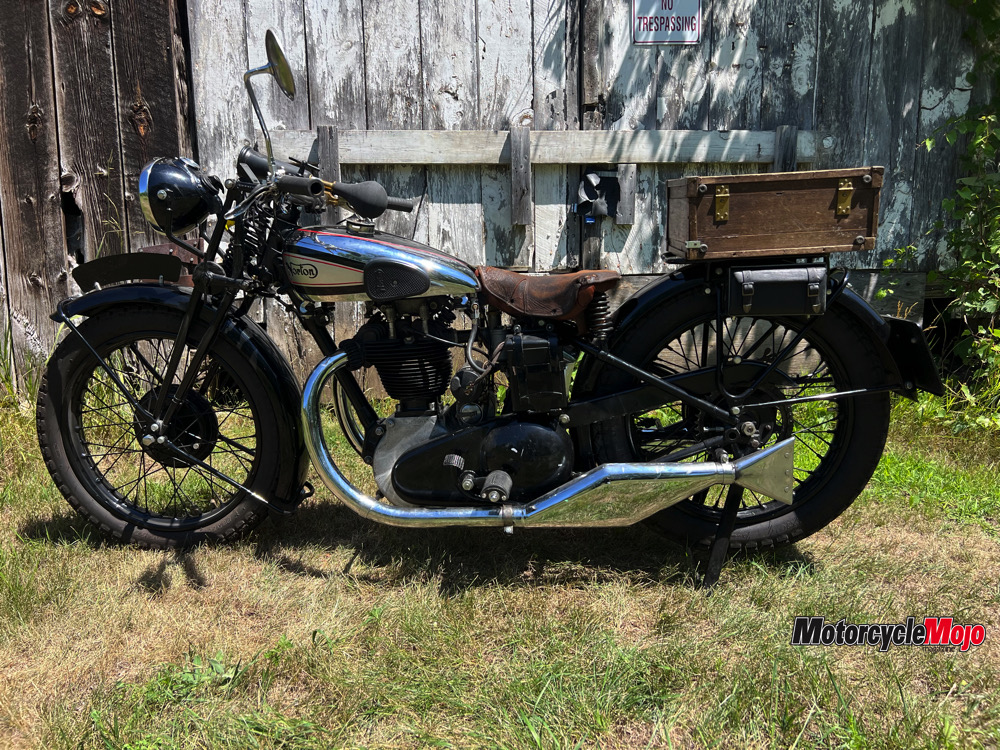

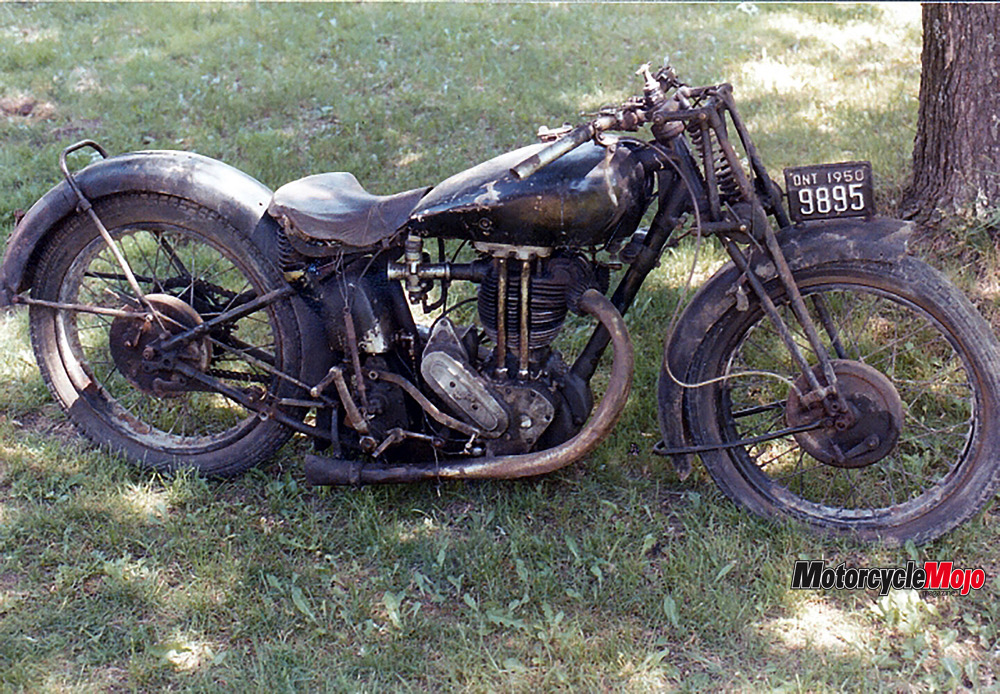
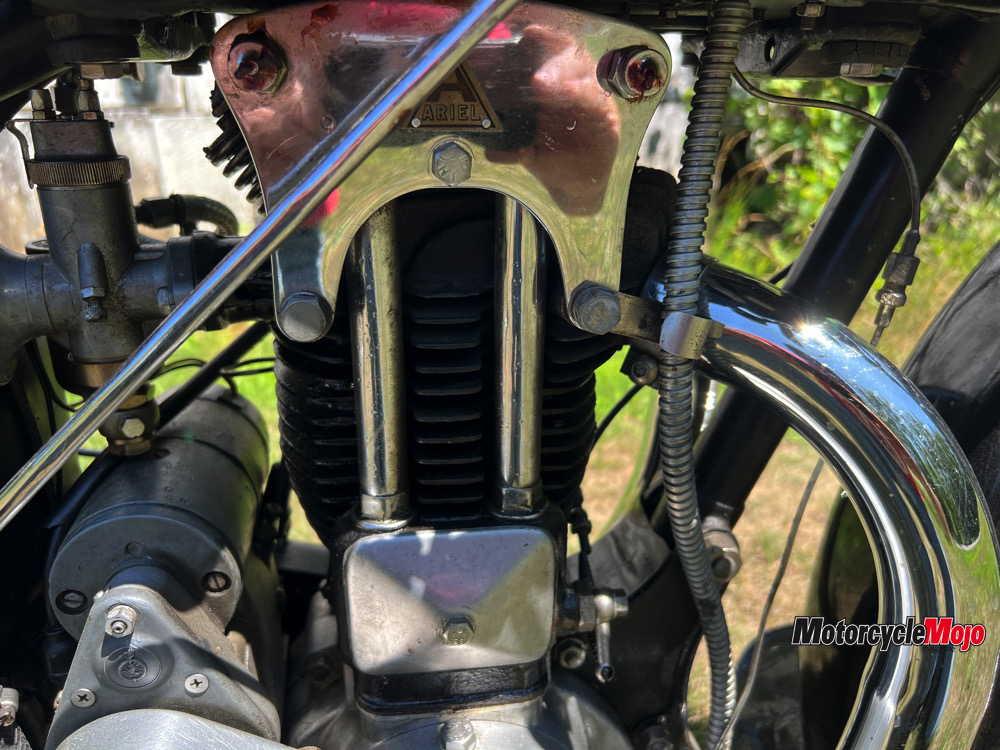
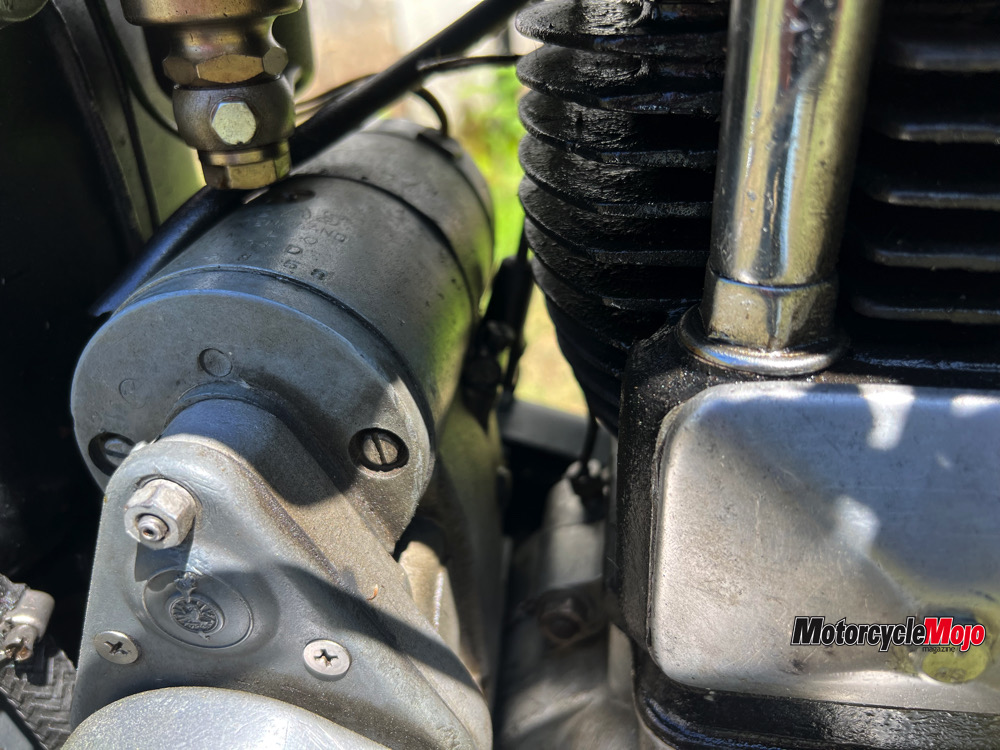

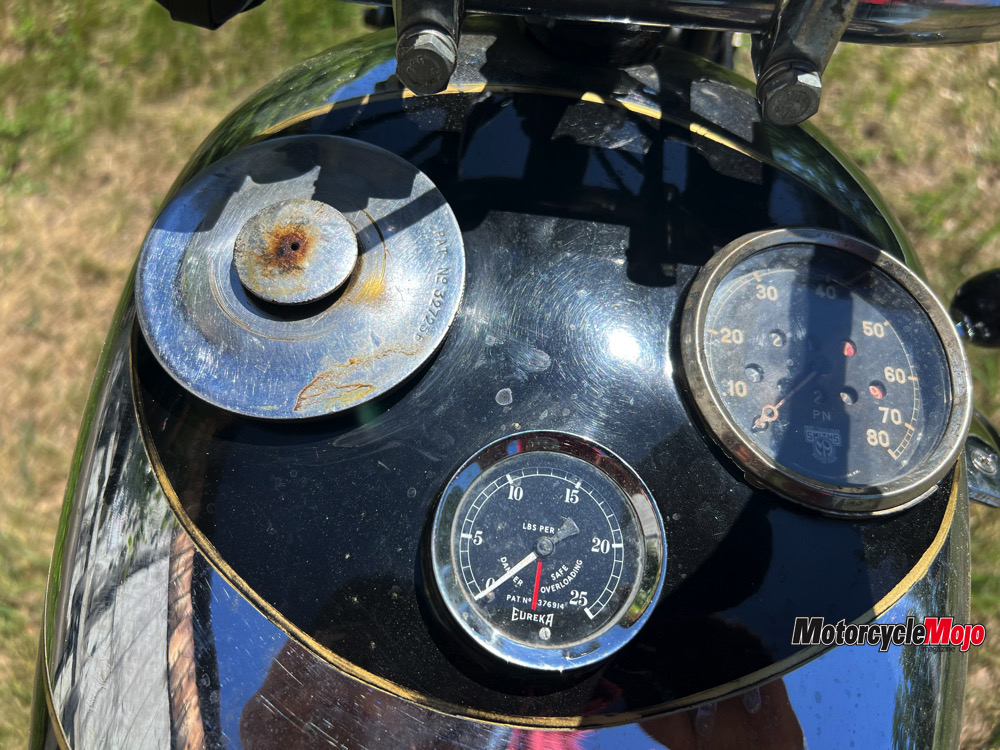


There is a certain charm to the simplicity of vintage motorcycles, and the girder fork is a large part of the appeal.
In the early 1970s, during his formative riding years, Ian Taylor had never experienced a girder fork motorcycle. In fact, his first machine was a twin-cylinder 1971 Kawasaki 250 cc two-stroke. Equipped with modern hydraulic telescopic forks, the Kawasaki’s front suspension — and the machine itself — was about as far from the more archaic girder technology as a young lad could get.
Taylor was raised in Belleville, Ont., and says his dad rode a 350 cc BSA in Scotland before emigrating to Canada. Although Taylor was aware the motorcycle had been in his dad’s past, he never knew much about it. “Dad never really talked about it, and I’d just seen the pictures,” Taylor explains, and continues, “But like any young kid back then, we’d put hockey cards in our bicycle spokes and go down the street to create the sounds of motorcycles. We couldn’t wait to get our own.”
As he grew older, Taylor first looked at a 90 cc Kawasaki. His dad told him it was too small. Then, his attention was captured by a 250 cc BSA single. His dad told him to stay away from those, perhaps recalling some hardships Taylor Sr. had suffered with his own BSA 350. Finally, he found the used ’71 Kawasaki at a dealership, and he and his dad went to look at it. “This was about 1974, and we bought it, and I’ve been hooked ever since,” Taylor says.
Catching the Vintage Bug
But Taylor’s attention, for whatever reason, soon veered to classic machines that were produced long before his earliest motorcycling years. He bought his first in 1977, when he answered an ad in a local buy and sell paper for a 1953 Ariel VHA 500 cc Red Hunter. Viewed at night in a barn, the motorcycle was barely illuminated by a single 60-watt lightbulb strung high in the rafters.
He took it home, however, and the next day, after seeing the Ariel in the daylight, questioned the purchase but never gave up on the project. Today, the machine is restored in Wedgewood Blue, is on the road, and Taylor continues to ride it.
Girder Fork Primer
Next, it was girder forks, and here’s a brief primer on what was once the most common front suspension system found on pre-Second World War motorcycles. By the mid 1910s, most motorcycles were fitted with a girder-style fork. In Britain, manufacturers included Brampton, Castle, Druid and Webb. Some motorcycle makers such as Ariel, B.S.A. and Triumph made their own girder forks, while others equipped their machines with supplied…


Discovering enduro cross-training skills for adventure riding.
Pain, sweat and fear — just a few of the physical and emotional battles I experienced while tackling a five-day stretch at Traction eRag’s XTADV cross-training enduro camp. Like most (but not all) adventure riders, I have slowly developed my experience riding off-road, mostly through trial and error and picking up pointers and hacks from fellow riders.
I wasn’t blessed to have grown up with dirt bikes, and I often wish I had formed that foundation when I was younger and nimbler because, as many road riders can attest, skills that are applicable to the asphalt and high traction environments don’t translate well to the dirt. It’s a well-known fact that it’s necessary to unlearn much of the road-biased rider techniques once you leave the tarmac. Without a doubt, my adventure-riding exploits have made my bike and my body suffer needlessly.
One evening I was perusing one of my go-to social media influencers on YouTube, a common practice of mine while I stave off rider despair as the cold and ice blankets my neighbourhood. “Dork in the Road” has a loyal and impressive following and, serendipitously, on this one episode he was raving about his unforgettable experience at XTADV, hosted by Traction eRag.
Ben Sell (a.k.a. “the Dork”) is based in Oregon, so I assumed the training camp was located south of the line, but when he referenced the high country near Kamloops, B.C., it obviously caught my attention. I was intrigued, and within five minutes of watching the piece I jumped on the computer to learn more about Traction eRag and check training dates on their website for the upcoming riding season.
Small Beginnings,
Expanding Future
Traction eRag had its origins as a digital magazine and producer of videos that dove into stories about what Dallas Shannon, eRag’s grand fromage, calls “the everyday hero” — riders who focus on “experiencing great adventure and uncertainty in their own backyard.” This foundation evolved into the eRag team hosting group riding events, such as extended dirt focused trips into the wilds of British Columbia, embellished with tantalizing descriptors such as The Outlaw Run, The Recon Run, and Big Rock-Candy Mountain.
Complementing the menu are off-road training opportunities, such as XTADV, with a specialized focus on adventure riders who make up a vast component of motorcyclists today (many of whom are riding bloated 180-to-225-kg steeds back at home), that are seeking to improve their skills and confidence in an off-road environment.
From Near and Far
Of the 10 participants in the XTADV course that I attended, I was the only local boy. For me, it was…
First, a confession of sorts. Back when the world was young and bikes wore carburetors, I wrote my engineering thesis on anti-lock brakes for motorcycles. I was 21 years old and, like all callow youth, I believed that future technology was all promise and no downside.
Anyway, the faculty’s head ball-buster, Julius “Luke” Lukasiewicz — who liked nothing more than seeing grown men cry as he demeaned, degraded, and/or destroyed a year’s worth of their research — said, in a manner you’ll have to take at my word was very threatening, “I don’t believe you [that such brakes can prevent motorcycle accidents].” My response — “Well, if you don’t believe me, then I guess I’ll never be able to convince you,” followed by “Next question!” — turned an otherwise unremarkable academic record into faculty legend.
It’s also a response that would seem to suggest a total belief in futuristic technology as well as a specific confidence in anti-lock brakes. And yet, fast forward, oh, barely three or four years, and I found myself driving the first motorcycle ever equipped with ABS — a blue-and-white BMW K100 RS as I remember — and all such confidence seemed to vanish. We may all now accept that anti-lock brakes do indeed work. And yes, I had done my homework in professing their efficacy. But back then, when no one — at least no other journalists — had tested ABS on public roads, trying to deliberately “lock” the front wheel at 120 km/h on a soaking wet German autobahn suddenly seemed a little more “iffy” than it had back in the Mackenzie Engineering building’s amphitheatre. I knew my computer simulations — or, at least, what passed for computer simulations back then — checked out, but it still took about 10 squeezes of the friggin’ BMW’s front brake lever before I mustered the courage to put my convictions to test.
Okay, that’s a pretty long-winded way of saying that not every novel engineering idea works out. Or, more pointedly, is worth working out. Nonetheless, while anti-lock brakes have been an incredible boon to rider safety, its sister in technology — traction control — is pretty much useless unless you spend all your time on the track. Quick shifters were, well, quick to catch on; e-clutches not so much.
Sometimes, said failure is because we bikers are a hoary old lot (take our disdain for funny front suspensions, for instance). Other times, the technology is simply not ready (see: the almost-universal bankruptcy of every electric motorcycle manufacturer ever). And sometimes said advancement, no matter how inventive, answers a question that no motorcyclist ever asked.
For instance, a couple of years ago, Honda released a patent for a computer-controlled windscreen for the Gold Wing. Now understand that a turbulence-free cocoon is the quest of everyone choosing a bike with a full fairing. And, truth be told, I think Givi’s Airflow windscreen is the single most effective aftermarket accessory I have tested in 41 years of motorcycling, turning my V-Strom’s absolutely horrific stock fairing into aerodynamic perfection. I’ll go even further: electrically-adjusted screens really are a boon to long-distance touring, allowing the height (and sometimes the angle) of a shield to be tailored to individual riders and conditions.
But when did we motorcyclists get too lazy to toggle a freakin’ button? Or, on a mechanical system, raise a lever or slide a latch? Especially when, according to MCN, said automatic windscreen needs a computer, two cameras and a microphone to eliminate the seemingly bone-tiring wiggle of your thumb. I’m reminded of automakers that, running out of things to automate, now feel the need to make all four doors of luxury sedans — like the Genesis G90 I recently drove — push-button-operated. It appears that there are people for whom closing a car door or raising a BMW R1300 RT’s windscreen is simply a travail too far.
Meanwhile Honda — along with Yamaha, a start-up called Lit and others — is also looking to perfect the self-riding motorcycle. Now, before I start ranting, let me first congratulate anyone who can engineer a rider-less motorcycle. Having spent the last decade reporting on the foibles of autonomous automobiles, making motorcycle riding autonomous is especially impressive considering the extra degree of freedom — i.e. cars don’t fall over. And furthermore, it is also categorically true that said research could provide some meaningful benefit; — for instance, giving new and infirm riders more confidence at low speeds.
That doesn’t change the fact that a fully self-riding motorcycle is absolutely useless. Who would want such a contraption? Oh, one can surely see the benefit of self-driving car that might allow us to text, fall asleep and, as I suspect the Gen Zers will soon popularize, have acrobatic sex in the back seat, but what exactly is one supposed to do on a motorcycle if one isn’t occupied by its control? You’re still stuck in the same riding position, still subject to the whims of weather, and there’s no way, unless you’re a world-class gymnast, you’re consummating any sex act on any motorcycle pillion seat I’ve seen. There is nothing you can do on a self-riding motorcycle that you can’t do on the bike you now ride. Nonetheless, patent-scrolling is becoming something of a metier amongst motojournalists. It’s worth remembering that for every one that actually proves useful — Honda’s adding an electric supercharger to a novel V3 engine — there’s someone who spent years working out how to make a computer-controlled windscreen. Now I know what made professor Lukasiewicz so cranky.
I’ve been hibernating; winter has helped make this happen. But moreso, I find myself frozen, waiting for the next big ride I’ll have. I had a great year in 2025. Aside from a broken hand in the spring, I committed to competition and ended up competing in the two biggest events of my life back-to-back: the Trials des Nations in Italy, then flying straight to Mexico to compete in the Baja Six-Day Rally. I was riding high, although I was burnt out from travel and training beforehand. The high carried me, the energy that was embodied in each of these events kept me focused on competition, and I found new clarity while riding.
Once I got back home, I went into a somewhat vegetative state. I thought it was because I was exhausted from a month of travel and competition, but I started to realize I was coming down from the high, I was in withdrawal. I had experienced this many times before when coming back from a long road trip on the bike.
You adapt and learn to see the unknown as a friend. You get used to being on the road, seeing new scenery and having the freedom a bike gives. But you must always get back at some point, right? And at the moment when you pull back into your driveway and realize you’ve made it home, it dawns on you: You have to adapt back to real life. The most exciting part of your recent life is over. How do you integrate back into your old routine when you have just had a life-changing experience?
That was how I felt, realizing that I had gotten so engrossed with racing and competition — working up the whole of 2025 for this big trip — that I never thought about what to do after. I had gone and competed with the best trials riders in the world, then onto my first rally race, where I pushed every boundary I had just to finish. Over the course of the previous weeks, my perspective had changed so much from my experience.
Now, back in the simple comfort of my living room, it would seem I had forgotten how to live my old life. I sat there looking at my schedule, scouring races that I would consider doing next. The iconic Steve McQueen once said, “Racing is life, anything before or after is just waiting.” And that hit me like a brick wall. Racing had become my life, something I’ve always strived for but hadn’t realized I had reached it until I finally had some downtime to reflect. I had wanted this so bad, I never stopped to think about how to let it go when it was finally over.
I think, as riders, we experience this in many ways, whether it’s a short or a long ride. Those moments alone in your helmet, secluded from all other distractions, allow you to dig deeper in your soul and find that bliss that we experience while riding. Or perhaps sometimes it’s just the ability to escape to a resounding peace anytime we’re riding. It can be tough to take the helmet off and integrate back with people and society.
I felt stuck. I was flying at light-speed while racing; now, being home, I found myself feeling like I was in quicksand. With that was another daunting realization: I had been avoiding some things in life that badly needed attention. I left them till after my travels, and now I was finding that I had left only problems to return to. I had to find some way to refocus and integrate back into my life … to be normal. I had to change “racing is life” to “work is life, with an ‘occasional ride’”. I decided that, although I can’t race again right away, I can train, I can reset my focus, and I can find joy in the less competitive things. I can move more slowly and still be happy.
Throughout life, we will experience these epic highs; the moments that make everyday life seem unimportant. However, the opposite is true: those mundane moments of everyday life are what make every great experience that much more special. Instead of dwelling on what you have just accomplished and hanging onto that high, make a plan, and give yourself a timeline for your next great experience.
It might be a month from now or years from now. Give yourself something to work toward in your everyday life to carry that high and build toward a new one. Among the many added benefits of motorcycling, my favourite is the escape. When you get on your bike it’s just you and the machine, on any road, going anywhere. Whether you feel like life is too fast or too slow, we all feel the same speed while riding.


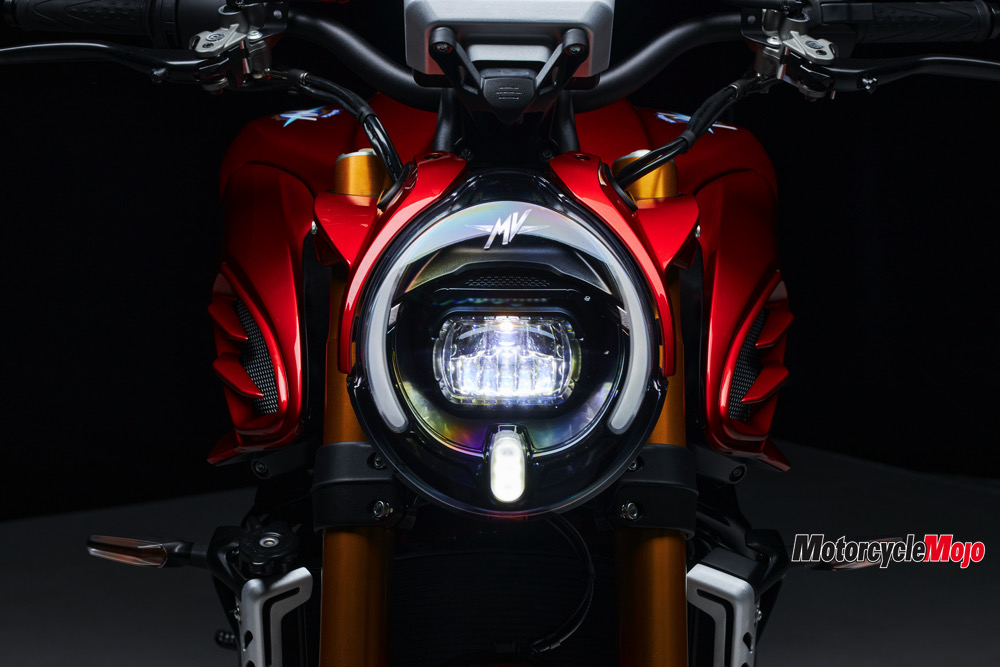
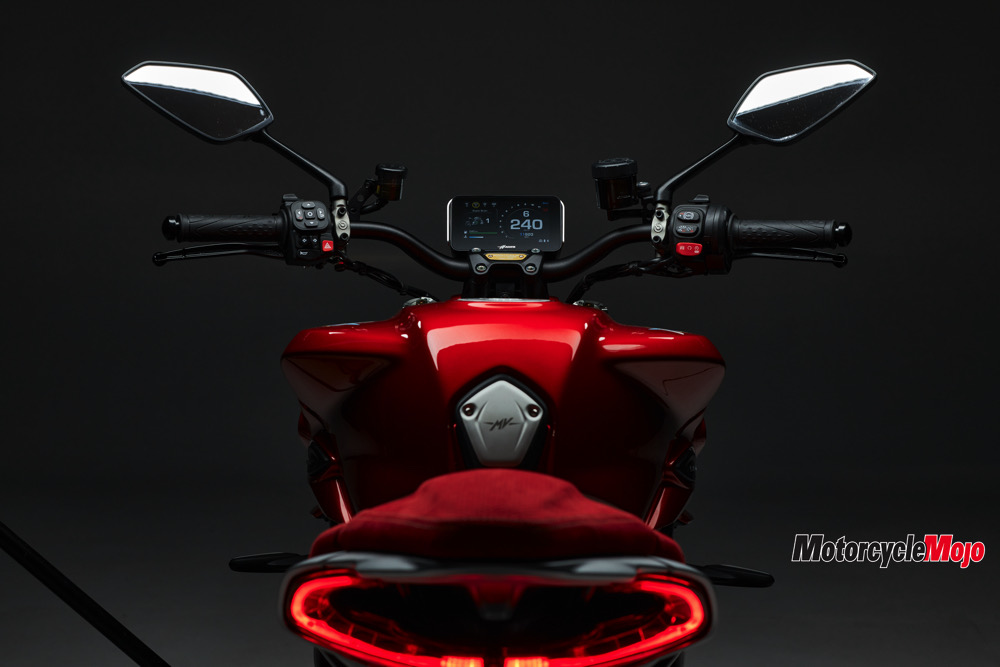

Riding the prototype promises a more refined and accessible customer version.
Mind-Blowing! That’s the expression that the marketing mob at MV Agusta has designated as the one they’d like to pass your lips when you see, and especially ride, the first new model of its born-again corporate existence. Born-again as in MV Agusta is a newly independent company, reborn for the umpteenth time after its latest escape from the last-chance saloon that it was consigned to by the 2024 collapse of its KTM/Pierer Mobility parent.
The much-anticipated, all-new Brutale Serie Oro is powered by a heavily revamped version of the all-new 931 cc three-cylinder engine equipping the Enduro Veloce, which arrived in MV dealers’ showrooms last year. Just 300 examples will be built of this limited-edition model that’s due to commence production this spring. But it’ll be followed almost immediately afterwards by the volume production version of the bike, which MV executives insist will be priced much more competitively than has been the case with any of their products in the recent past.
Happy Birthday Brutale
Coincidentally or not, the new bike is also MV’s way of recording a significant birthday for the Brutale model that’s become synonymous with the brand, for it’s exactly a quarter of a century since design legend Massimo Tamburini’s unique take on the Naked Sports sector (which his pupil Miguel Galluzzi had created in 1992 by concocting the Ducati Monster) was unveiled to mass acclaim in limited edition 300-off Serie Oro 750 cc four-cylinder guise at the September 2000 Intermot Show in Munich.
The exact quantity of Brutales made since then isn’t recorded officially, but company insiders say the combined total of all the different variants in terms of capacity and styling is well over 40,000 bikes. That makes its latest version worth paying attention to, because once again MV has reinvented one of its core models, and made the best better still.
I can make that judgement after being invited to MV’s Varese factory ahead of three other journalists for an exclusive look at — and first ride on — the new bike in pre-production prototype form. After being the first person outside the company to ride the Brutale 750 Serie Oro in March 2001, a couple of months before production began that spring, it was a nice way to square the circle 25 years on!
Testing the Prototypes
I had company along the way, though, with Federico Macario, MV Agusta’s Head of Business Development, and essentially the company’s Project Leader overseeing the Brutale project, riding alongside me all day as we headed out toward the Swiss frontier…
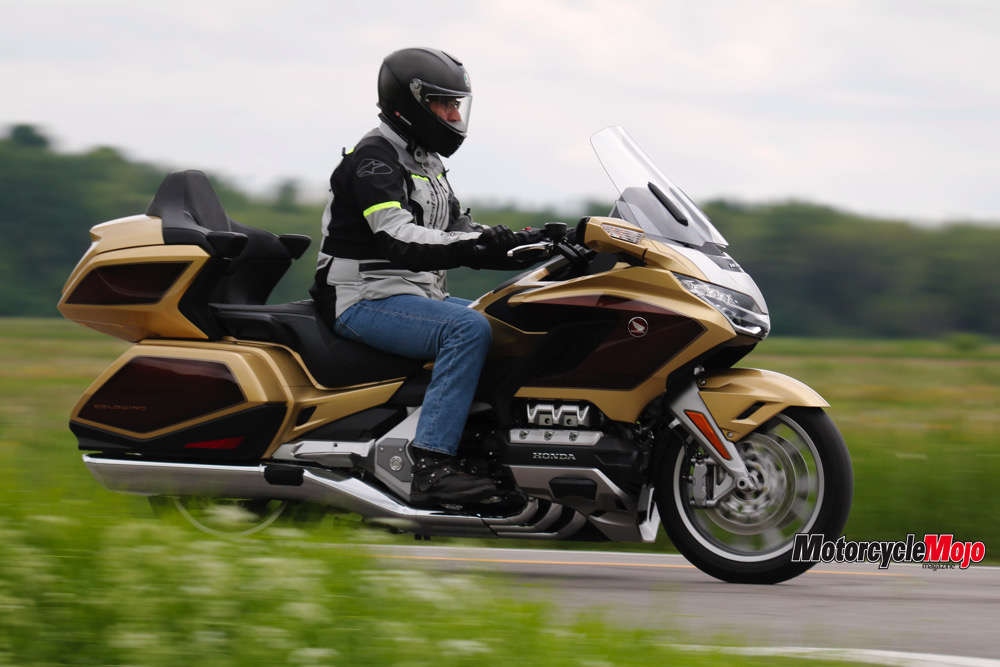
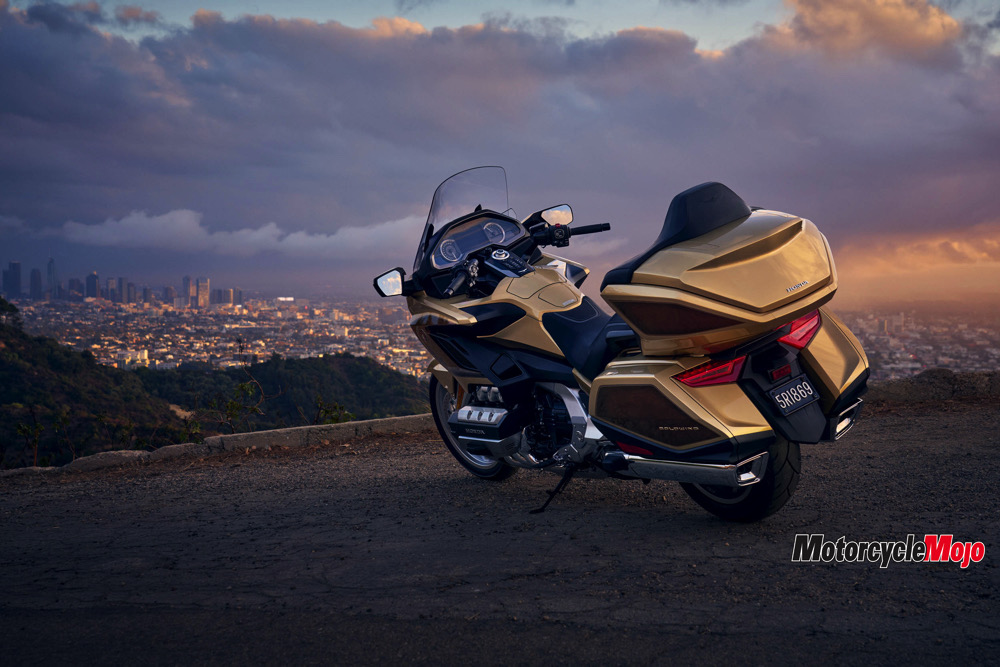
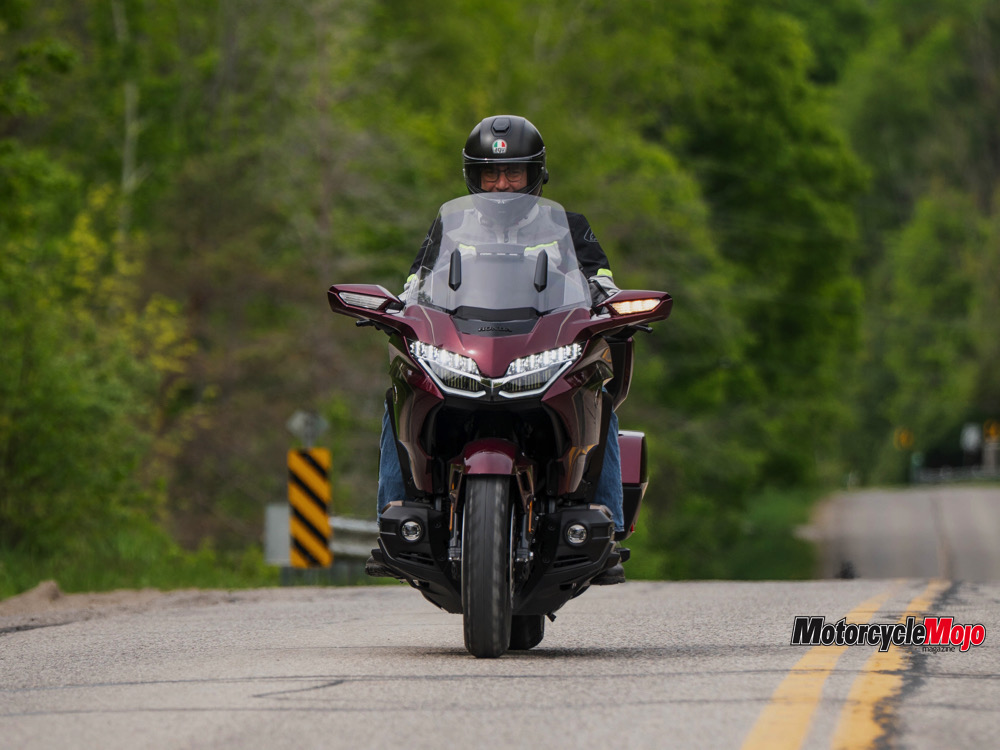
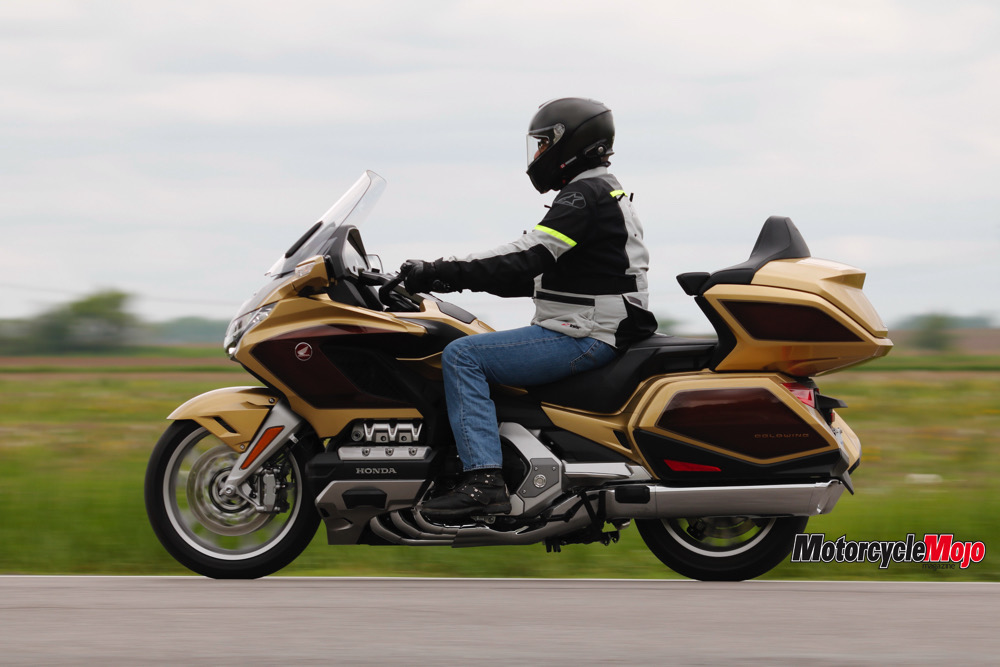
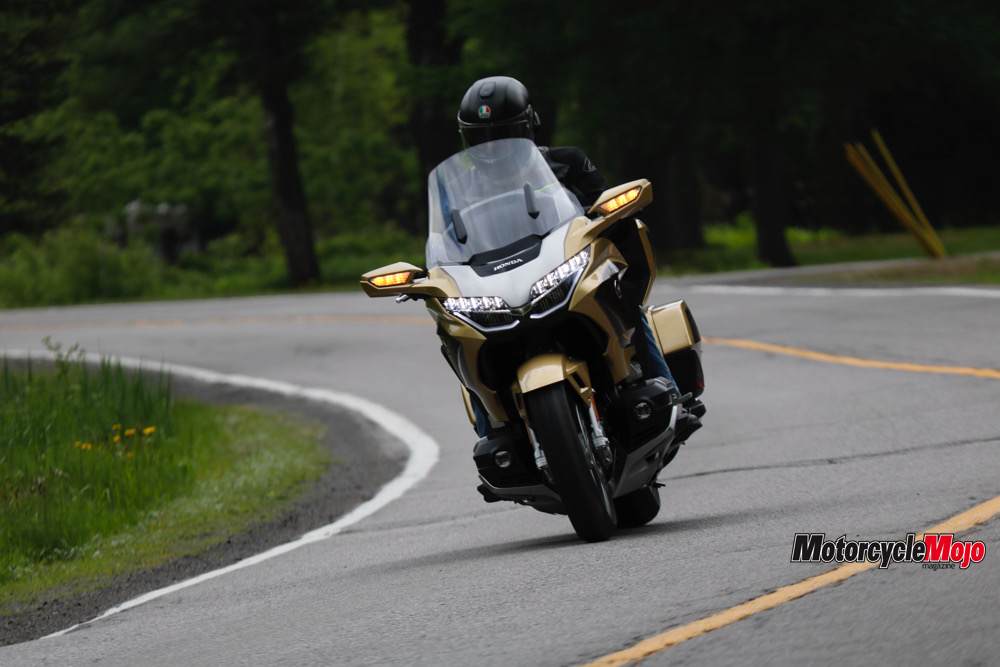
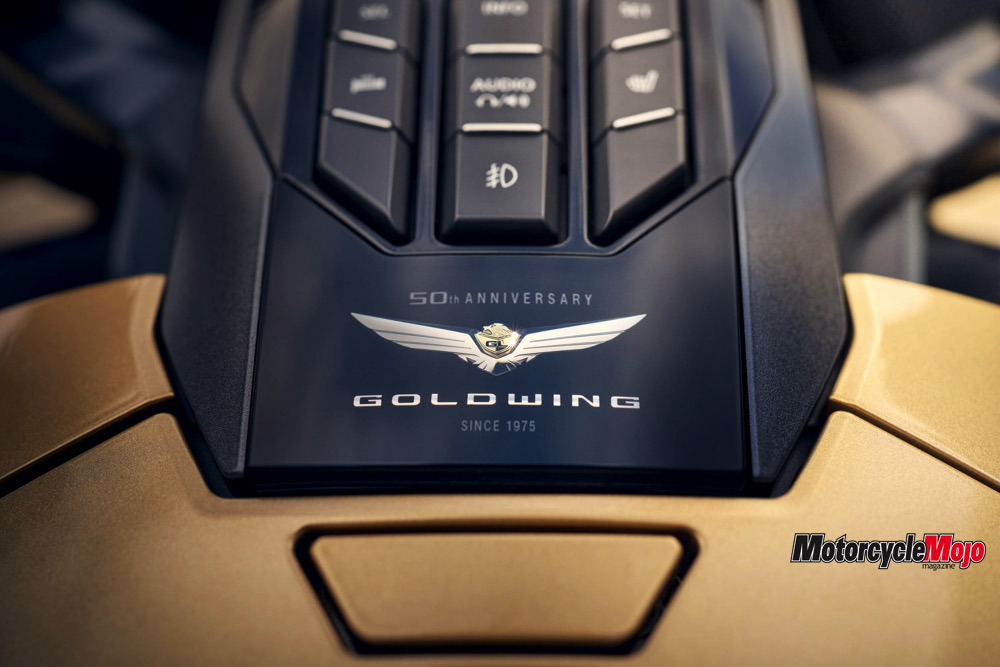
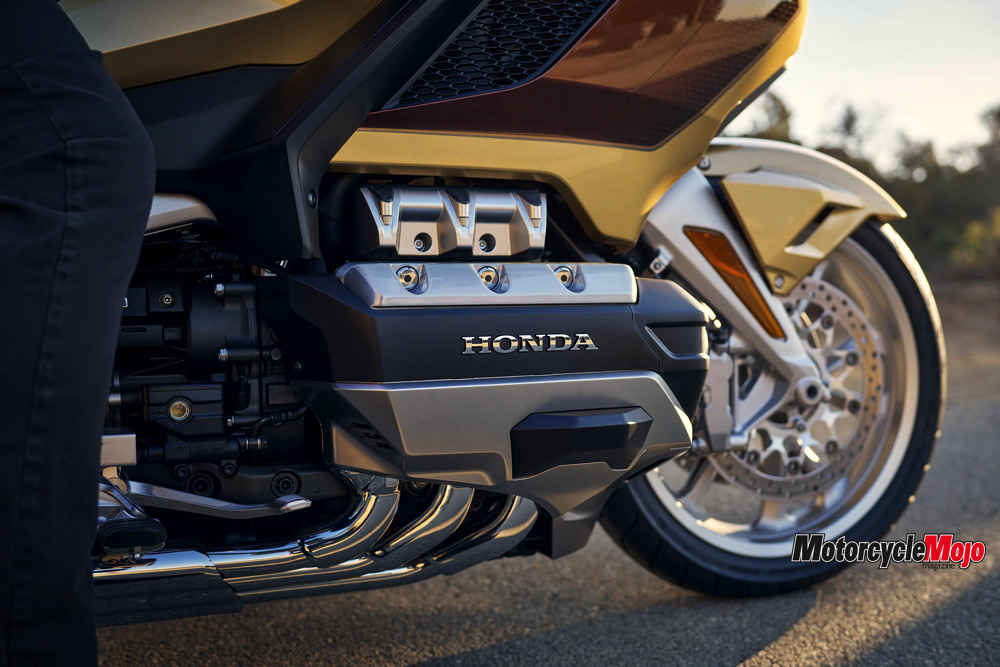
The original touring motorcycle turns 50 years old.
Honda was founded in 1948, and the Japanese manufacturer has since produced a number of milestone motorcycles. These are bikes that have been around for decades, and have had a significant impact on motorcycling. The Honda Super Cub, for instance; it’s the unassuming step-through on which you were likely to “meet the nicest people.” It has introduced millions to motorcycling, and more than 100 million have been made since it was launched in 1958.
Then there’s the pint-sized Z50 Mini Trail. Countless kids hit the trails for the very first time on this easy-to-ride, semi-automatic minibike. While today’s CRF50F has more contemporary styling, it is nonetheless a direct descendant of the original Z50M introduced in 1967.
The CB750 — Japan’s first inline four motorcycle — changed the motorcycling landscape in 1969. It offered unheard-of performance and reliability in an attractive, accessible package. The other three major Japanese manufacturers would eventually follow with inline four-cylinders of their own.
GOLD WING MILESTONE
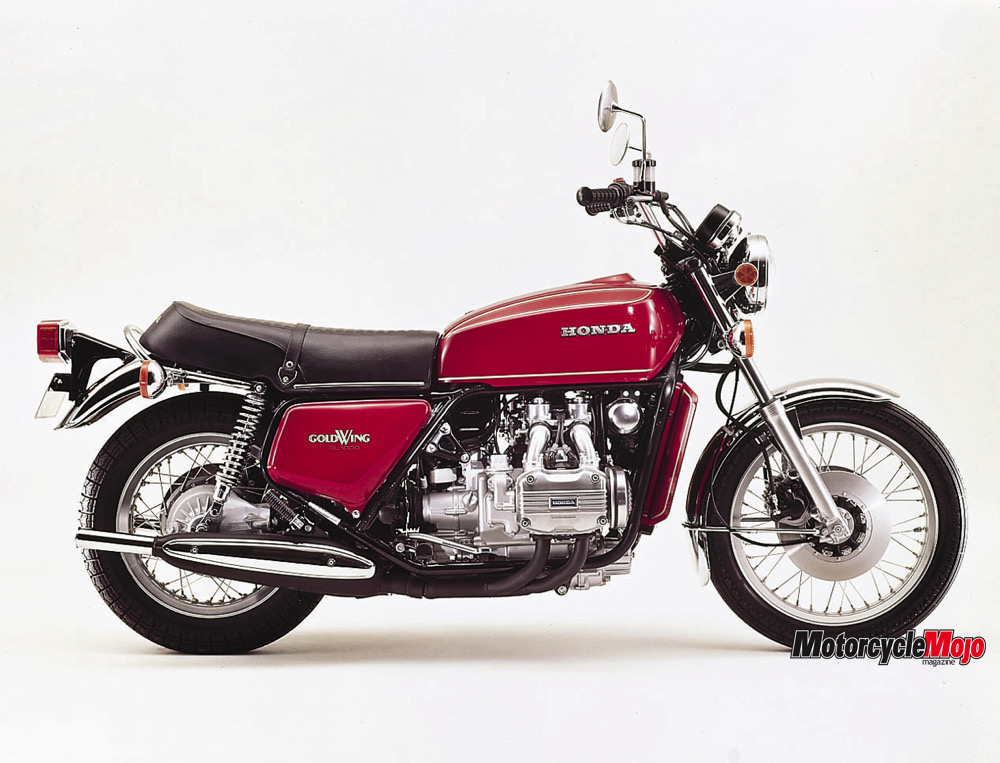
And then there’s the Honda Gold Wing. It revolutionized the touring category when it was introduced in 1975. This milestone motorcycle recently hit a milestone of its own in 2025: It turned 50.
The Gold Wing sits among the longest-running large-displacement motorcycles still in production, surpassed only by the Harley-Davidson Electra Glide, which preceded the Wing by a decade. Some might argue that the Harley Sportster outdates both of those bikes. However, while the new liquid-cooled, Revolution Max-engined Harleys carry the
Sportster name, the last true XL Sportster, which had an air-cooled 45-degree pushrod V-twin since 1957, left the factory in 2021, no longer able to meet emissions standards.
The original GL1000 Gold Wing was a naked bike with a 999 cc horizontally opposed four-cylinder engine. Aside from this unique engine layout, it also had a number of innovative features. It was the first Japanese motorcycle to feature a liquid-cooled four-stroke engine (the 1971 Suzuki GT750 “Water Buffalo” was the first liquid-cooled Japanese motorcycle but it was a two-stroke). The GL1000 was the first Japanese motorcycle with a shaft drive, BMW and Moto Guzzi being the only other manufacturers at the time to offer this maintenance-free drive system. And what looked like a fuel tank was in fact a trio of hinged panels. Beneath the right panel was located the engine coolant overflow tank, and a kick start lever to be installed and used in case the battery went flat; the left panel concealed the bike’s electrics. Beneath the flip-up top panel was a small storage compartment and the fuel filler cap. The fuel tank was actually located under the seat to lower the centre of gravity — in modern times, we call this mass centralization.
Another less obvious innovation introduced on the GL1000 was the location of the front brake caliper; it was…


The V4 Rally’s ergonomics, driveline and handling make it an easy bike to live with.
Remember the good old days when motorcycle brands had specialties? Kawasakis were a little mad (okay, a lot mad), Hondas were reliable, BMWs were the tourers and Ducatis were eccentric — that should be read “unreliable” — but beautiful, fast and, well, a little cranky. There was surprisingly little overlap which meant that, if you were shopping a specific kind of motorcycle, the choices were obvious.
I, for instance, owned various versions of the first three. A Kawi Mach III 500-cc triple two-stroke that was as barking mad as reputed. I also owned both a BMW R75/5 and, later, an R1100RS, both bought — no surprise here — for long-distance touring. I also rode a whole slew of Hondas for when I got sick and tired of being left stranded by the aforementioned two.
Oh, there were exceptions: An astonishingly reliable Laverda RGS1000 is to be found somewhere in my collection of old motorcycling memories, an Italian succubus that stole my heart for 97,000 surprisingly dependable, but extremely quirky, kilometres. As for Ducati, well, their impossibly contorted riding positions, exhausting maintenance requirements (I’m thinking desmodromic valve actuation here) and always-questionable build quality meant I never got around to parking anything from Borgo Panigale in my garage.
NOW A DESIRABLE MACHINE
So imagine my surprise in determining that the reason I now lust after the company’s Multistrada V4 Rally is a result of the very reasons I avoided them previously. To wit: Ducati now has the most sophisticated adaptive cruise control system in motorcycling. And, by sophisticated I mean that the Italian adventure tourer’s radar-controlled cruise control fairly emulates how you and I ride in almost every situation. It slows down at the appropriate time. Not too late, not too soon. More importantly — because this is where other systems, like BMW’s, fall down — it speeds up at the appropriate time and rate as well.
Unlike the Beemer system which, in a passing situation, waits until you’ve completely cleared the current lane before speeding up, the Duke system feels more natural, accelerating sooner in anticipation that you’ll have a clear road ahead. It’ll even keep cruise controlling when you up — or down! — shift through the gears. I liked it so much, I used it pretty much constantly on the highway, something I’ve never done with any comparable adaptive system.
ASTONISHING LINEAR POWER
Then there’s the engine. Now, for most the attraction of its 1,158-cc arranged in a compact(ish) V4, would be its…
Ducati guru Alan Cathcart releases his newest volume on the company’s legendary bevel-drive V-twins.
The creation of the Ducati bevel-drive V-twins, and the early days of their quixotic evolution into the kings of Formula 750 racing — able to defeat their British, German and Italian rivals as well as the latest and greatest from Japan in top-level competition — are recounted in this latest book by Alan Cathcart.
In it, the noted British racing journalist not only records the technical evolution of Ing. Fabio Taglioni’s unique designs, but also crucially tells us what they were like to ride via his own hands-on experience from the hot seat. This one-of-a-kind book features track tests of legendary motorcycles like the Ducati 750 desmo on which Paul Smart claimed victory at Imola in 1972, as well as its little-known predecessor, the Ducati 500 GP Bicilindrica. Cathcart also recalls his own half-century of racing one of the 401 examples of the 750 SS customer version of Paul Smart’s bike, which lends passionate authenticity and insight to his descriptions of this model. Also included in this volume is an interview with the late Smart who, together with Bruno Spaggiari, was the hero of Ducati’s historic triumph at Imola in 1972. Published by Edizione FBA Motoitaliane, this large format(30 × 23 cm), 152-page hardcover prestige volume, printed on high-quality paper with the text in both Italian and English, is richly illustrated with an array of full-page photographs. Many of them have never been published before, revealing little-known details of these legendary bikes, and include period photos of them in action. It’s available in a limited edition of 1,000 individually numbered copies and is a book that every Ducati enthusiast should have in their library. It costs €49.00, plus shipping costs, and is available for order now via the publisher’s website: motoitaliane.it
The V3R has landed. Or, at least, has almost landed, with Honda gracing this year’s EICMA show — the most important motorcycle exposition in the world — with a fully finished example of its unique vee-three sportbike.
Not only is the new Honda the first V3 four-stroke engine — there have been a few two-stroke triples including Kenny Roberts’ KR3 500-cc racer — but it is the first motorcycle to incorporate an electrically-powered supercharger.
Previously “blown” motorcycles have seen their forced induction come from traditional turbochargers or mechanically driven superchargers. The first relies on the exhaust gases exiting the cylinder to drive a turbine, which in turn spins an impeller that force-feeds intake gas into the cylinder. It’s a wonderfully efficient system that only suffers because there can be a delay between the time the rider calls for more power and when the exhaust gases have increased in sufficient quantity to spin the impeller faster. You know it as turbo lag.
Belt- or chain-driven superchargers, meanwhile, pretty much eliminate turbo lag. Anyone who’s ever driven any form of Kawasaki H2 can attest to their instant throttle response. That said, their mechanical driving system does create some drag, which hurts fuel economy. Worse yet, while turbochargers — because they are driven by exhaust gasses — provide “on-demand” boosts in power, a supercharger is always on. Another inefficiency.
If automotive experience is anything — electrically-driven compressors are pretty common in cars — electric turbochargers eliminate both of those problems. Because the compressor is driven by an electric motor, it responds instantly, eliminating turbo lag. And because it’s driven electrically, it suffers from none of the mechanical inefficiencies of traditional supercharging.
According to Honda, the V3R boasts the performance of a 1,200-cc motorcycle from a 900. Honda didn’t say which kind of 1,200 — there being a big difference, for instance, between a Kawasaki ZRX1200 and a ZX-12R — but it’s impressive, nonetheless. I suspect that the V3R, because the only weakness of electric compressors is that they can’t spin that fast, will be more ZR than ZX.
But that can be fixed. As much as we’d like to congratulate ourselves on all this high-techery, it shouldn’t come as a surprise that cars, at least Porsches, are way ahead of us. In fact, the legendary German automaker has been peddling a new kind of turbocharger — e-Turbo — that combines a traditional gas-powered turbocharger with an e-compressor’s electric drive.
Here’s the thinking behind driving a turbo both ways. Because there’s no more worry about turbo lag — again, the turbocharger’s electric motor guarantees it can spin up quickly — Porsche found that it could equip its flat-six engine with a larger traditional turbocharger than normally needed to optimize top-end power. In fact, according to Porsche, the turbocharger in its GTS is about the same size as those used on industrial trucks. Normally such a large unit would cause the kind of turbo lag that plagued motorcycling’s first attempt at turbocharging — Honda’s CX500T and Yamaha XJ650 Turbo — but that electric motor eliminates it. It really is the best of all worlds.
But that’s not all! Motorcycling is having a hell of a hard time electrifying. Electric cars may be struggling a little here in North America, but battery-powered motorcycles are dead everywhere and it looks like, barring some true hand-on-heart, there-really-is-a-technological miracle, they’re never going to get off the ground. If motorcycling is to remain modern, we’re going to have to look elsewhere for our electrification bona fides.
And one of those elsewheres may be hybrids like Kawasaki’s Ninja 7 Hybrid and a few projects Chinese motorcycle manufacturers are reportedly working on. That’s where the innovation of these e-Turbos really kicks in. Like the regenerative engine braking that powers all hybrids, the electric motor that drives the e-Turbo can reverse its polarity and turn into a generator. Yes, I’m saying that the turbocharger can be used to rejuvenate a hybrid system’s battery. In fact, according to Porsche, when the GTS’ turbocharger is in its regenerative mode, it can feed the electric motor directly.
The Germans call this a T-Hybrid and how it works is truly magical. Essentially, every time the turbocharger is spinning too fast and needs to slow down, the electric motor’s polarity is reversed and the turbo can generate as much as 11-kilowatts — the same as a home EV charger — for regenerative charging. It also means the turbocharger needs no traditional wastegate; if the turbocharger is producing too much boost, it’s that built-in electric motor that slows it down.
And this is where this innovation gets really interesting. Porsche deliberately made the turbocharger unit too large. So any time the engine is spinning really hard, the turbo is already producing more boost than the engine needs — or is allowed — and so its electric motor is feeding that extra energy back into the hybrid system.
In other words, rather than having the hybrid battery getting recharged only when you’re slowing down or braking, this system also “regenerates” when you’re on the gas and at full boost. And since it can charge the battery more often, it means a smaller — read: “lighter” — battery can be used which would be a huge boon to any hybrid motorcycle. It would also mean that middleweight hybrids — again, like Kawasaki’s Ninja 7 — could be decidedly more powerful as well as remaining lightweight.
So, while I congratulate Honda on this new technology, I hope its innovation doesn’t stop with the V3R.