
Riding in Italy
As you can see from that incredible Bimota on the cover, I spent some time in Italy this summer. Actually, truth be told, I spend some time every summer in Italy and it’s specifically because of the motorcycling. As in, after 42 years of testing bikes around the world, I have found no better place in the world to tour, commute and, yes, grind footpegs than the land of La Dolce Vita. Here are just some of the reasons why:
1. Imagine the ease of renting a car with the availability of some truly exotic machinery paired with enthusiast entrepreneurship. That’s what renting a bike in Italy from Hertz Rent-a-Ride is like. Go online to hertzride.com and you can book pretty much any bike you like. Certainly, any BMW you like, from mighty R1300 GS to lowly — as in a low, low seat height — F750 GS. Need insurance? Can do. Riding gear? They’ve got boots, gloves and helmets. Hell, you can even get them with an intercom system. They’ll even throw in a holder for your iPhone. Seriously, it’s easier and more convenient than renting a Toyota at Toronto’s Pearson International Airport. You can’t rent a Ferrari at Pearson, but you can get an MV Agusta Turismo Veloce from Hertz Rent-a-Ride in Milan.
2. Italians driving like maniacs is no mere stereotype — it’s a way of life. And you don’t need a supercar. Indeed, this year’s Mario Androgenous Driving award goes to some loon chasing me down the Forcola Pass in a 15-year-old Fiat Panda. Now a 60-hp Fiat up a mountain pass is a very sad thing indeed. But down? Well, in the right hands — i.e. the reflexes of Max Verstappen with a Magellan-like memorization of hairpin curves — it can pass many a superbike.
But, despite this apparent craziness, the fatality rate for motorcyclists in Italy is far less than that for North American bikers. In America, the land of 60-mph speed limits and oh-so-
vigilante policing, motorcyclists suffer almost five times as many deaths per 100,000 registrations than bikers in Italy. Credit better motorcycle training if you want. Perhaps motorcyclists in Italy take their craft more seriously. But understand that pretty much every Italian behind the wheel of a car has, at one point in time, ridden a bike, a scooter or even a moped, so is therefore very aware of your presence.
3. The above is made all the more amazing by the insanely high-speed “filtering” common to Italy. Ride pretty much any two-lane highway in Northern Italy and, if you should come up on a line of slower moving traffic, virtually everyone will pull onto the shoulder so you don’t have to wait for an opening in opposing traffic to pass. Half the time, the opposing traffic will pull to their right to give you even more room. It’s like some invisible Moses is parting the seas that you might be rid of these troublesome Pharoahs … I mean, cars.
4. Standalone Dainese stores are surprisingly common. Within 60 kilometres of my base of Bormio — which, rests at the very foot of the world famous Stelvio Pass — there are two such stores. Thirty kilometres over the aforementioned Forcola Pass in Livigno and another 60 kilometres distant in the other direction in Sondrio. Now, here’s the thing. Barely 6,000 people live in Livigno, by the way, and just 52,000 in Sondrio. I’ll remind you that there are no Dainese-only boutiques in Canada.
5. That is not, however, my favourite indicator of how ingrained motorcycling is into Italian culture. For that, we have to turn to cows. Cows, you ask? Yes, cows I say. Italian cows, you see, are different. Oh, they look pretty much the same and, indeed, serve pretty much the same purpose — which is to say: meat and milk with a side order of Dainese leather. But after that, they’re completely different to Canadian Daisys.
For one thing, they can climb like Billy goats up all those mountain passes bikers like to strafe. For another, they’re so used to Akropovic’ed S1000RRs jetting by at 10,000 rpm that they barely bat an eye. In fact, so blasé are these bovines about the speed of the motorcycles rushing by that they will eat grass right up to the edge of the road. Any road.
Where this gets interesting is when they do so at the apex of tournantes. Yes, that means if you’re rifling through such a switchback, you can get mighty close to Old Bessie. How close, you ask? Well, have you ever seen those pictures of Irish road racers getting so close to the walls inside the Northwest 200’s many corners that they have to lift their head lest they conk their noggin? I have been that close to a meeting of minds with Bos taurus.
Interestingly, sheep in the same circumstance have the good sense to scatter. But cows? Not so much. In short, in Italy, you might well find yourself scraping footpeg on a sweeping switchback with a cow as an apex marker. That, I’m pretty sure, sums up the vast gulf between motorcycling in Canada and the land of a thousand mountain passes.




Based on the price of soft-sided panniers, this writer set a challenge for himself.
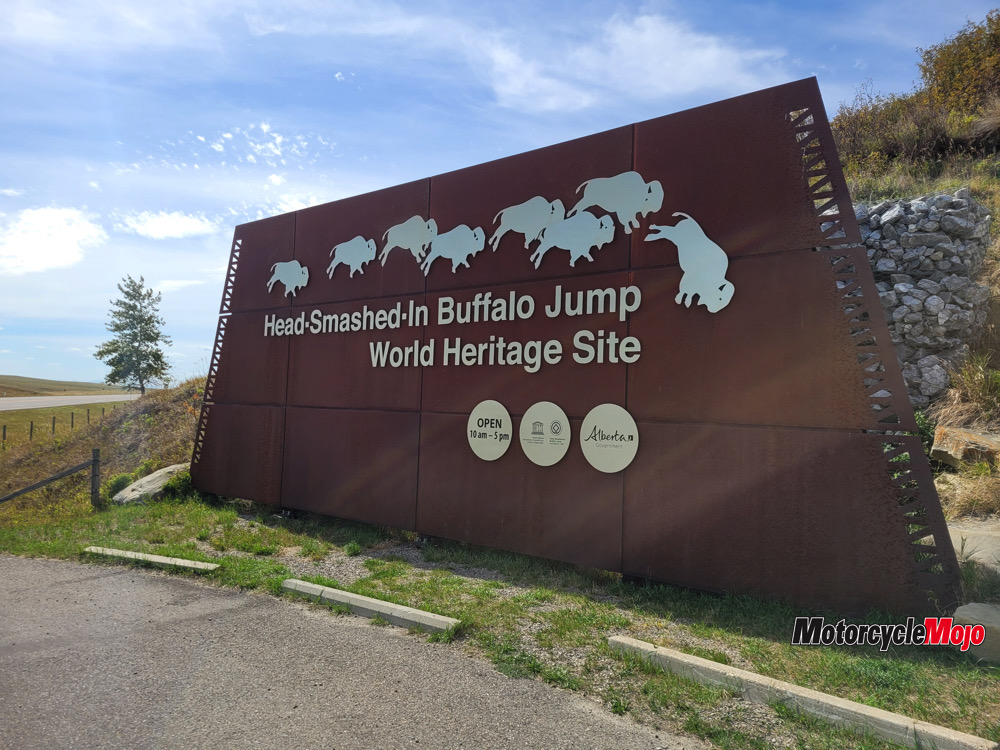
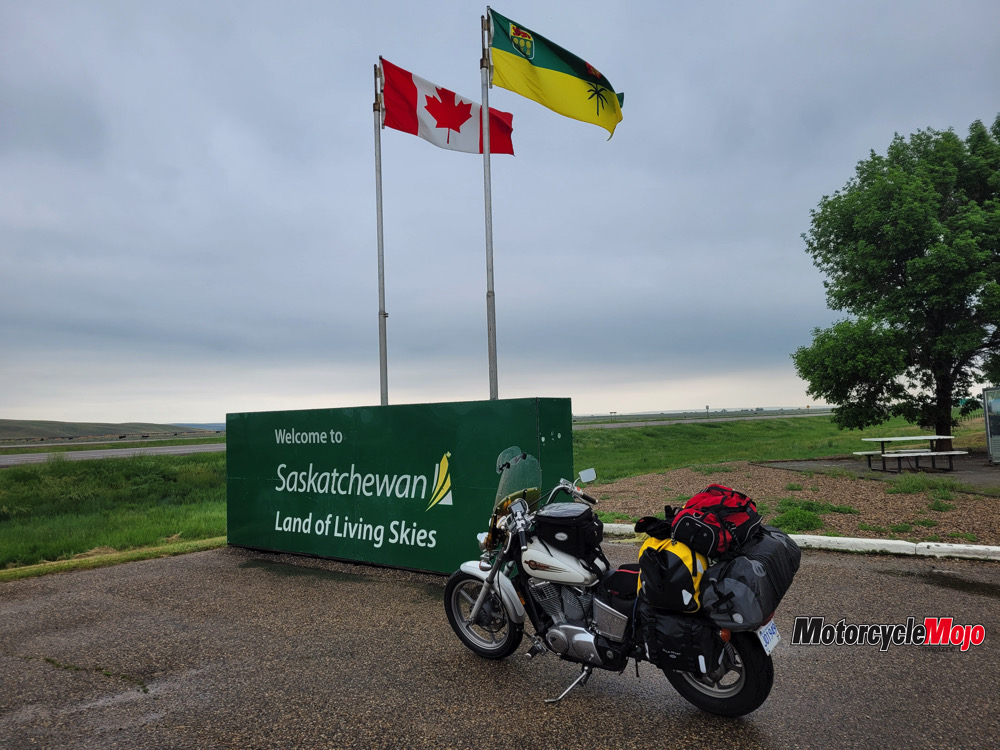
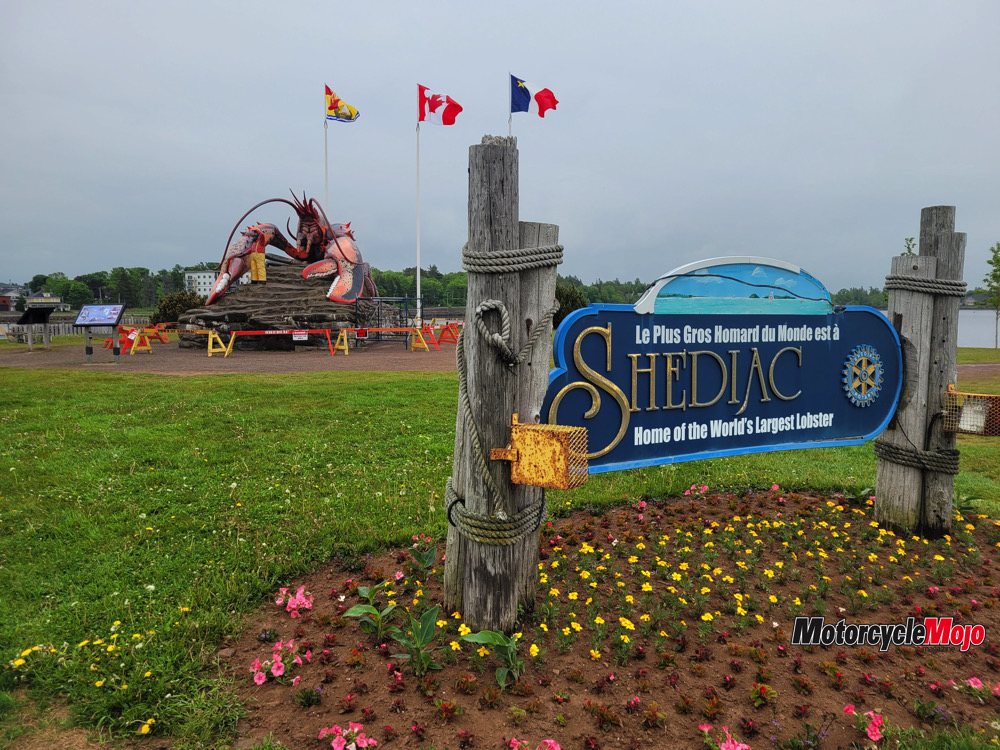
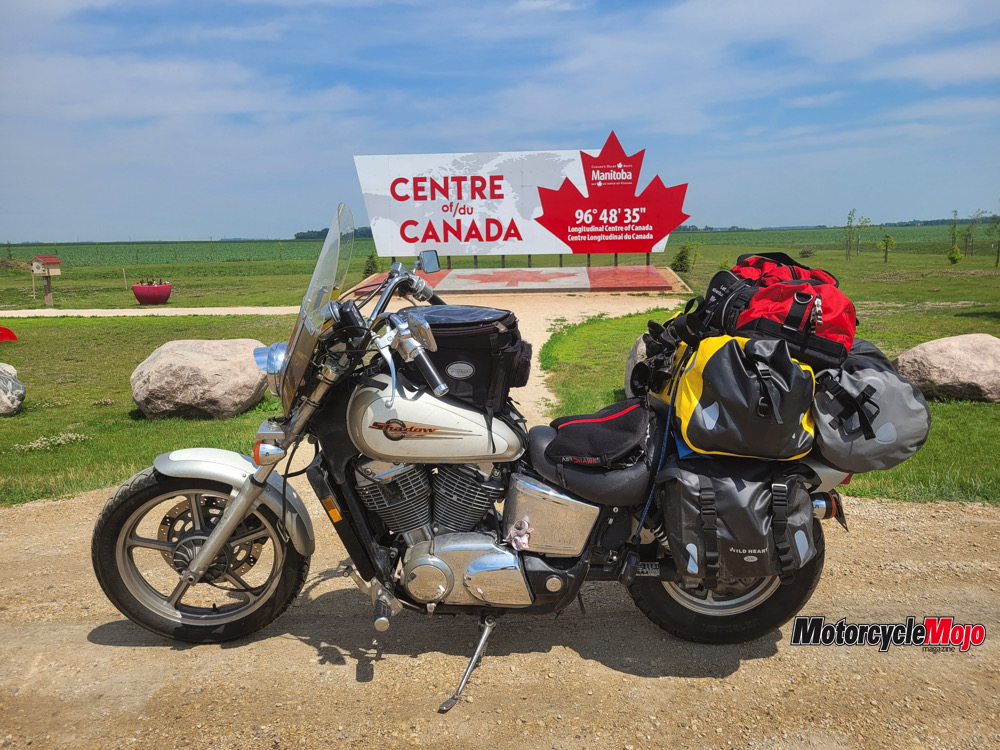
The long Canadian winter is a very favourable time to go over piles of bike magazines, read travel stories, and browse brochures, catalogues and maps, all in preparation for the next riding season. And then, of course, there are the seasonal motorcycle shows, which I never miss. And that’s how, while strolling the show floor, I stopped short in front of a booth and a great set of kaki soft-sided panniers. I thought they could be the perfect set on my next bike for a long trip. But at $2,000 for the set, that’s a budget in itself, and I’d need a bike to set it in motion.
I promptly came up with this crazy idea: what could be done with a $2,000 budget? Would it be possible to go on a long trip across the country — coast to coast — with a bike that’s worth the price of a set of panniers? The best way to find out is to take the plunge.
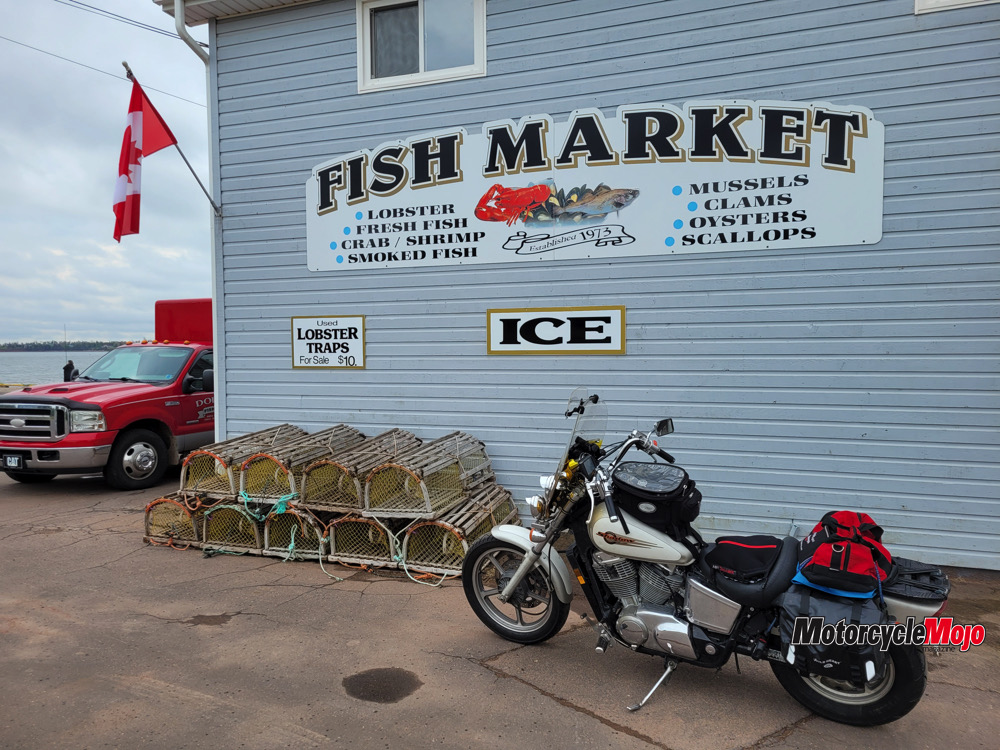
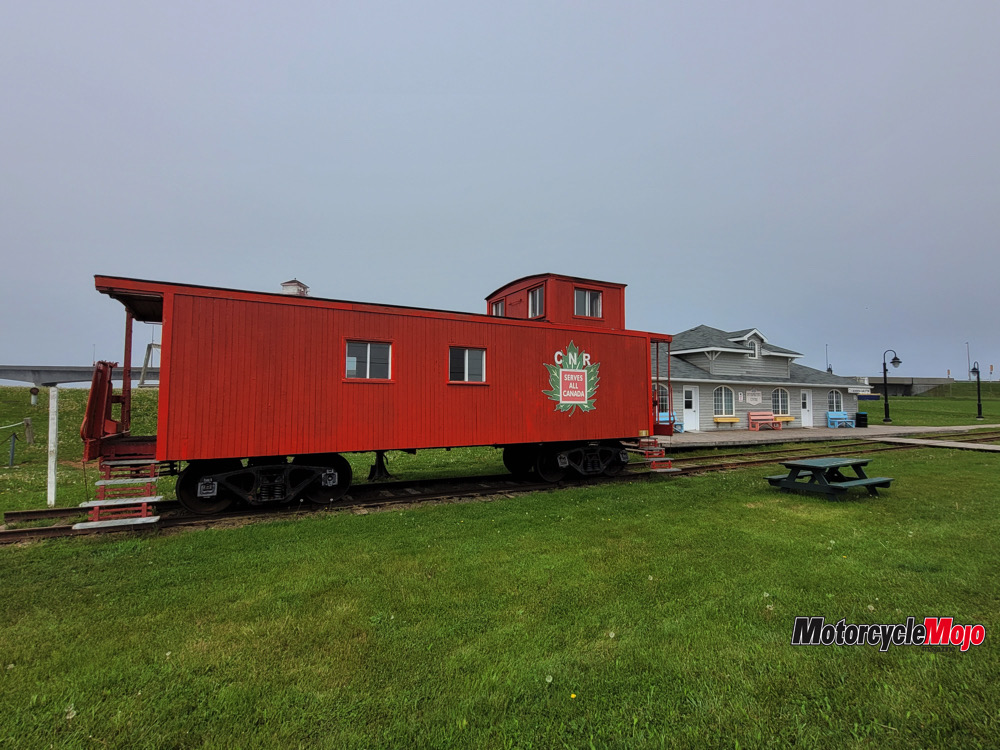
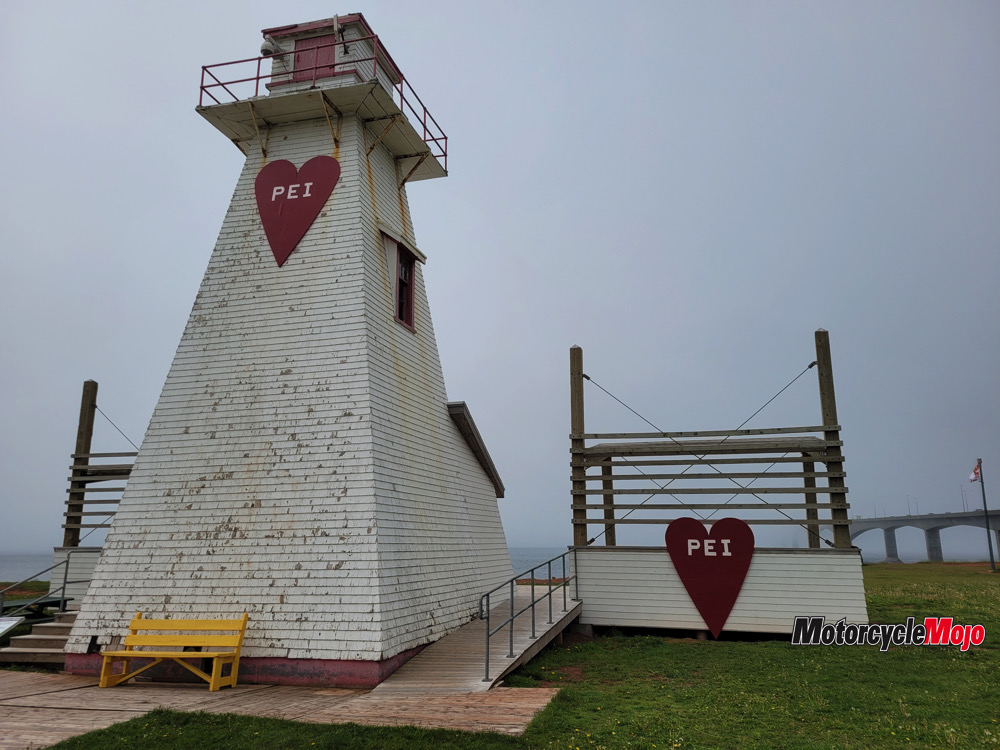
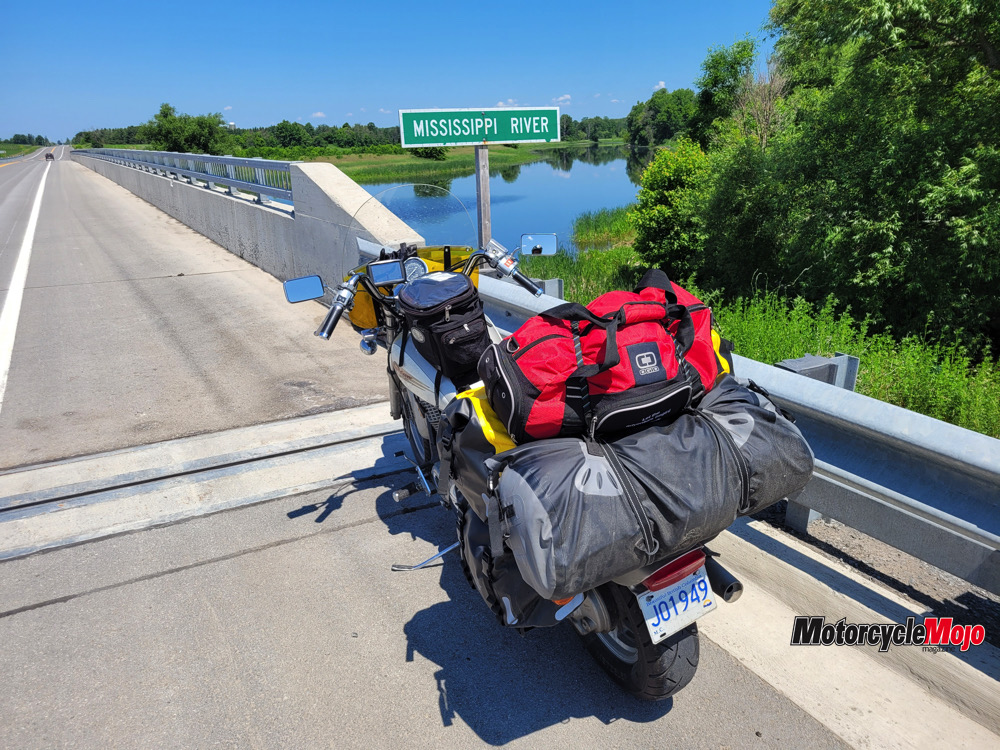
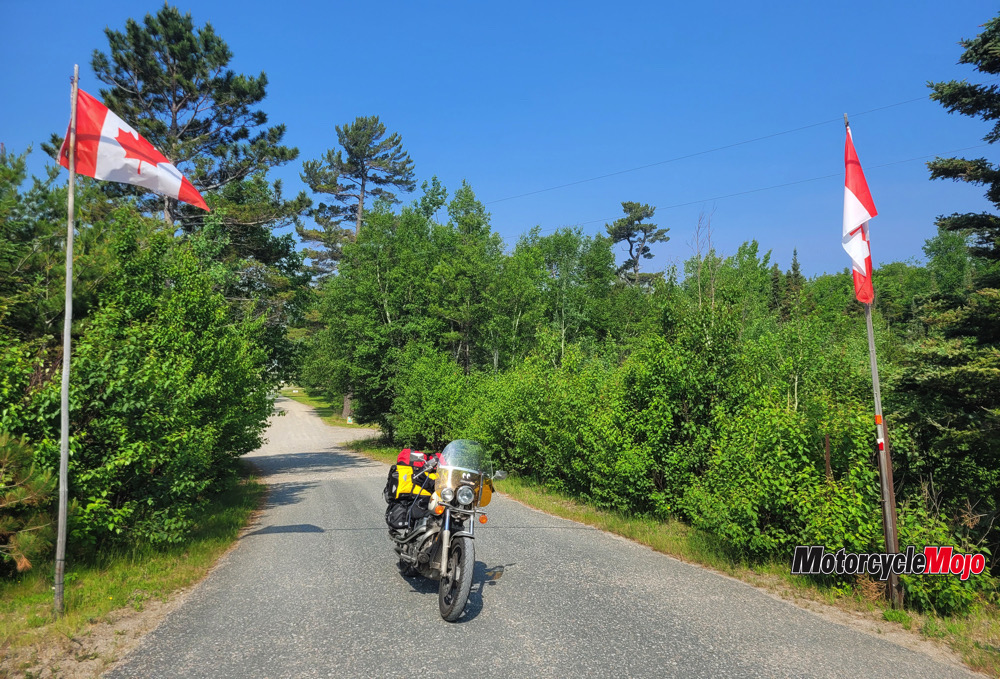
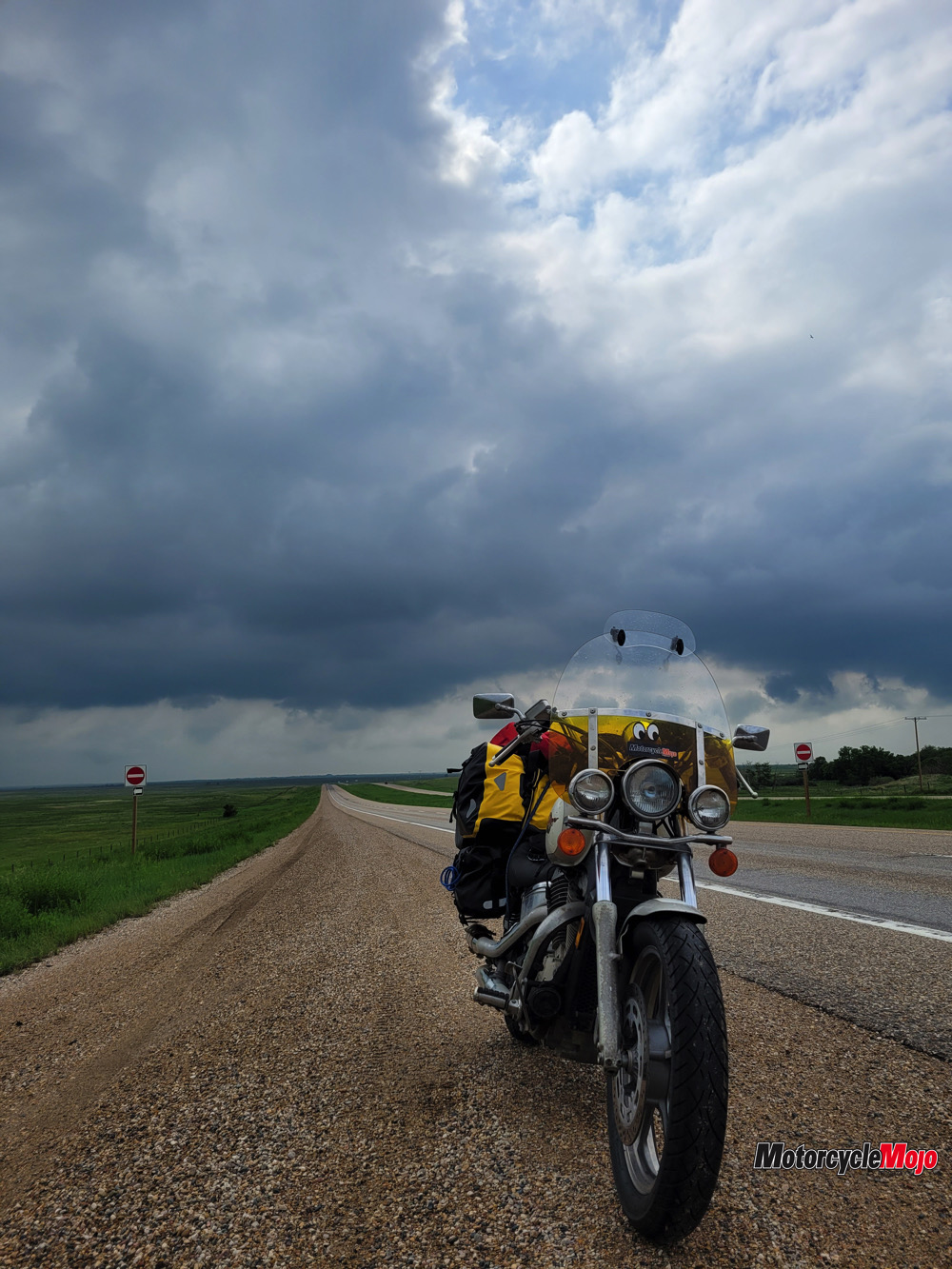
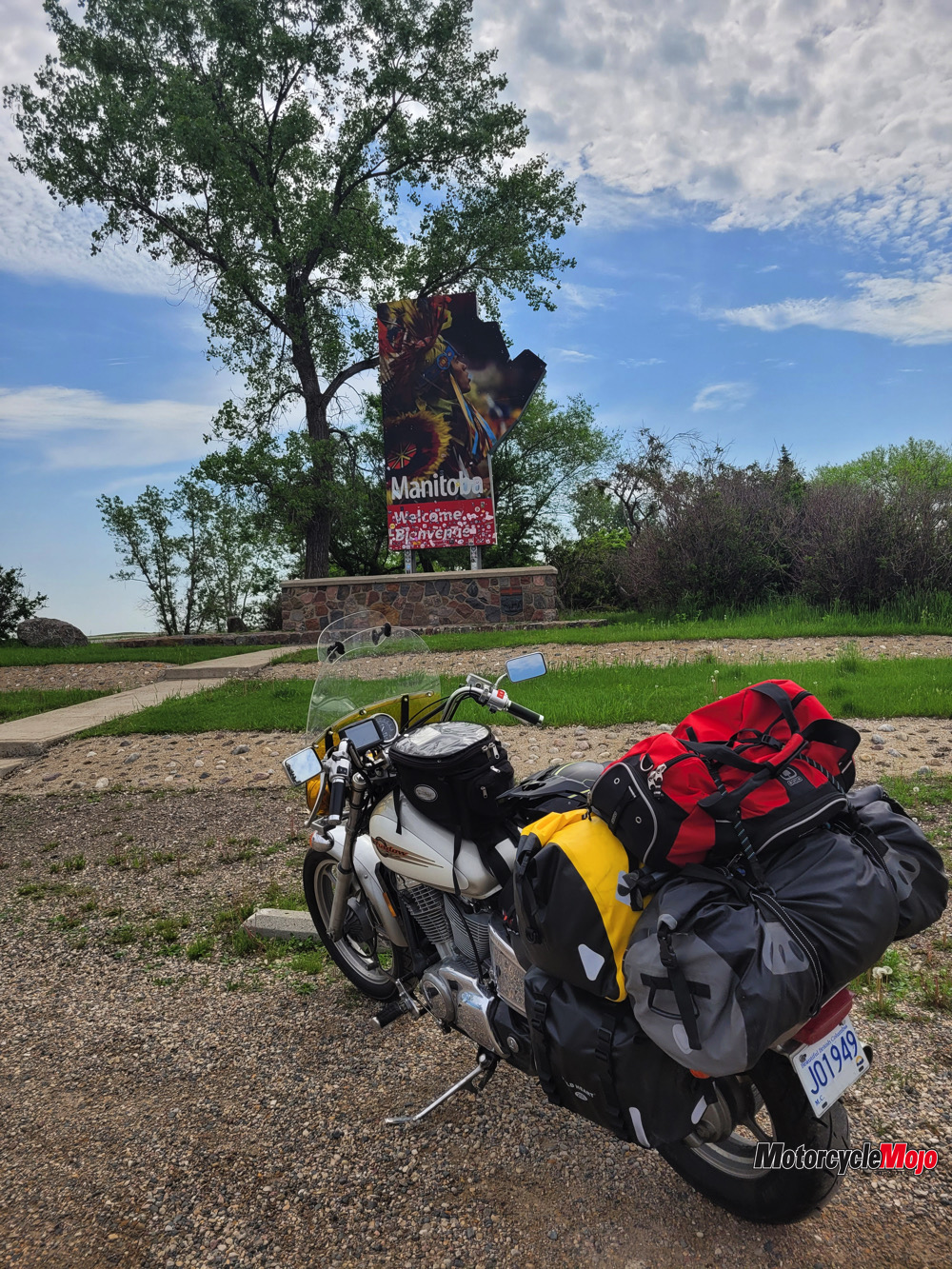
I didn’t have a type of bike in mind, just a budget of a couple grand and nothing smaller than 650 cc. As soon as I started the hunt, it quickly became apparent that the widest choice in this budget was a cruiser, so, a cruiser it would be. And that would be my first time owning such a bike. After a couple of weeks going through ads, I found my dream bike: a 1997 Honda VT 1100 Shadow with “only” 75,000 km on the clock. A good service, a couple of new electrical components, a set of long-range tires, and some decent shake-down rides around Vancouver during the spring to validate the reliability of the bike later, on the first days of June, I was on my way from the Pacific Ocean to the Atlantic Ocean.
FROM MOUNTAINS TO THE FOOTHILLS
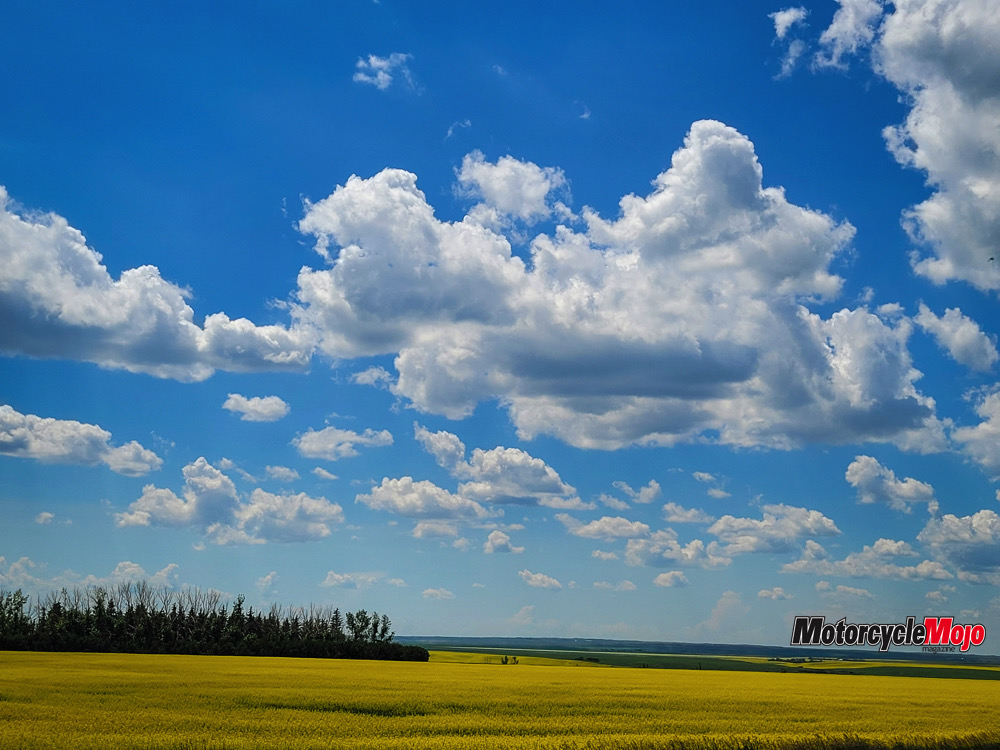
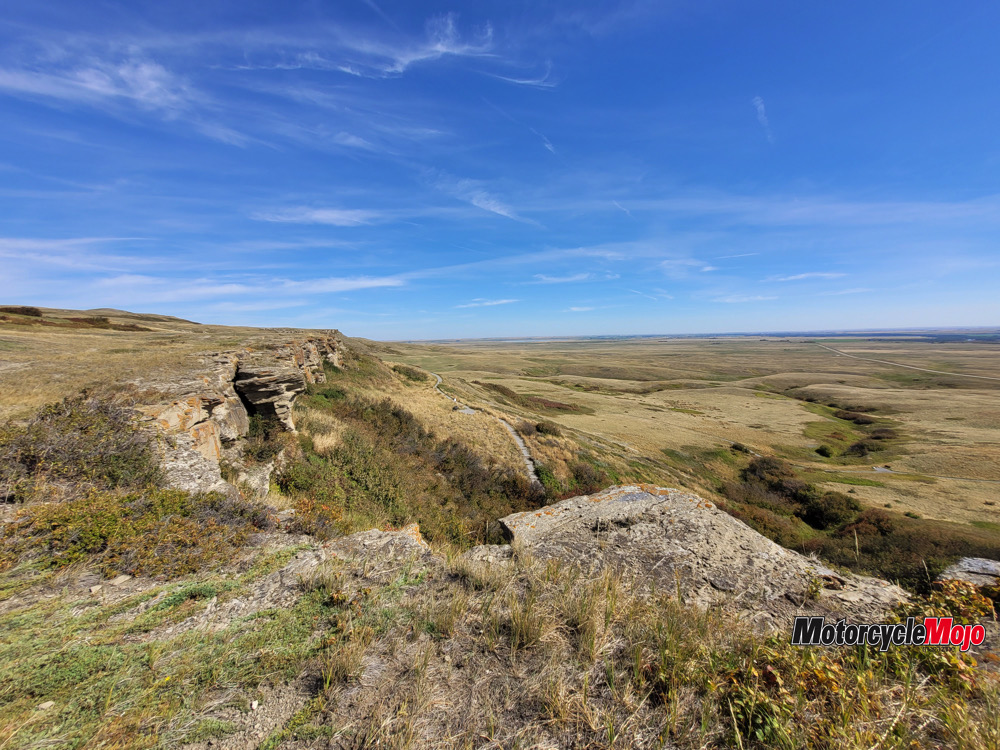
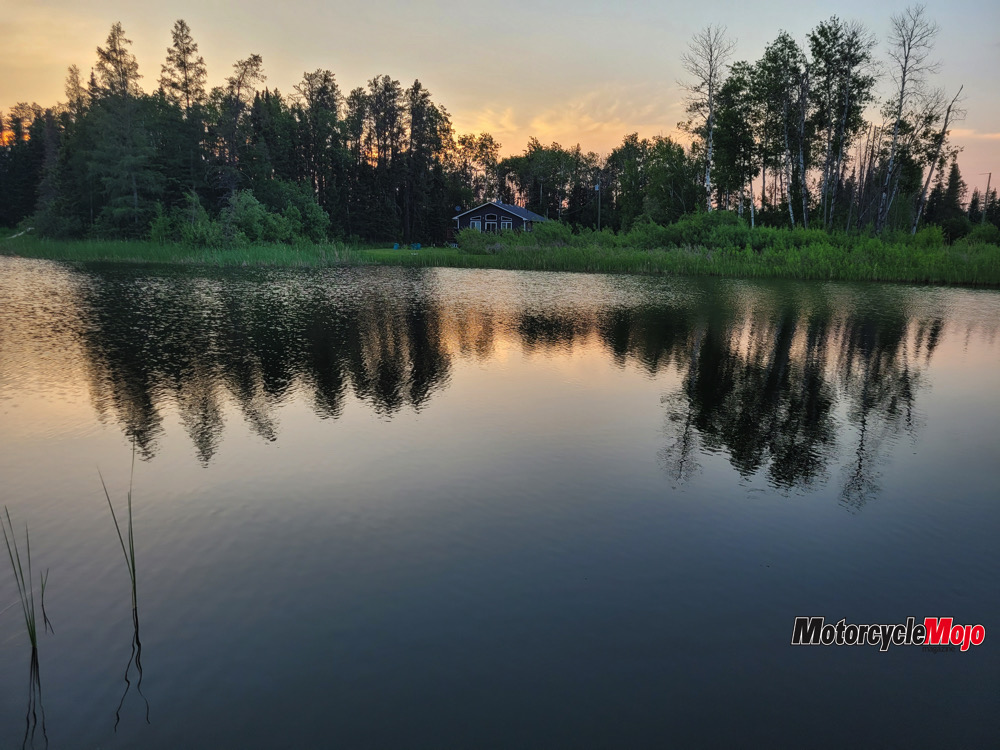
The journey began along the meandering Fraser River by Highway 7, and then on to Hwy 3 (the Crowsnest Hwy) and its curvy pavement by the Similkameen River. Those first few hundred kilometres brought me to Osoyoos, the warmest city in Canada, which was already very hot at the beginning of June. I made a quick stop to refill, refresh and get some supplies and headed off to Jewel Lake Provincial Park, a lovely park nestled by the water for what would be the long-awaited first bivouac of the season. A cool breeze and a cold drink on a quiet sandy beach marked the day.The journey continued on the wonderful curvy sections of Hwy 3; this highway is a true delight for motorcyclists. I crossed into Alberta at Island Lake and stopped for the night at its waterfront campground. Slowly, the landscape changed; I left behind the mountain ranges…


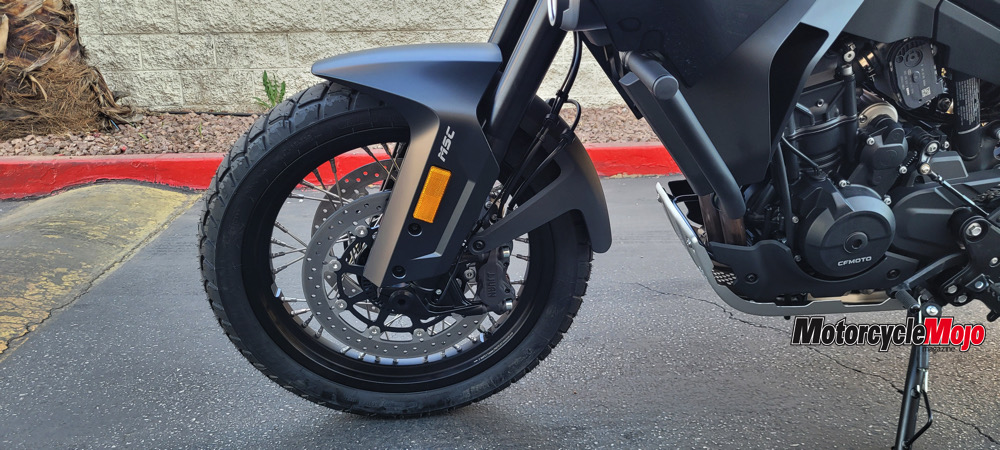
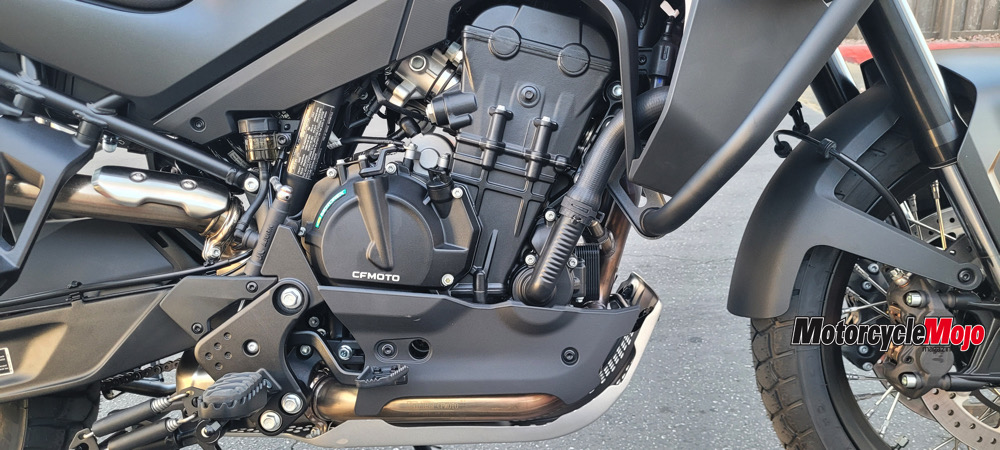

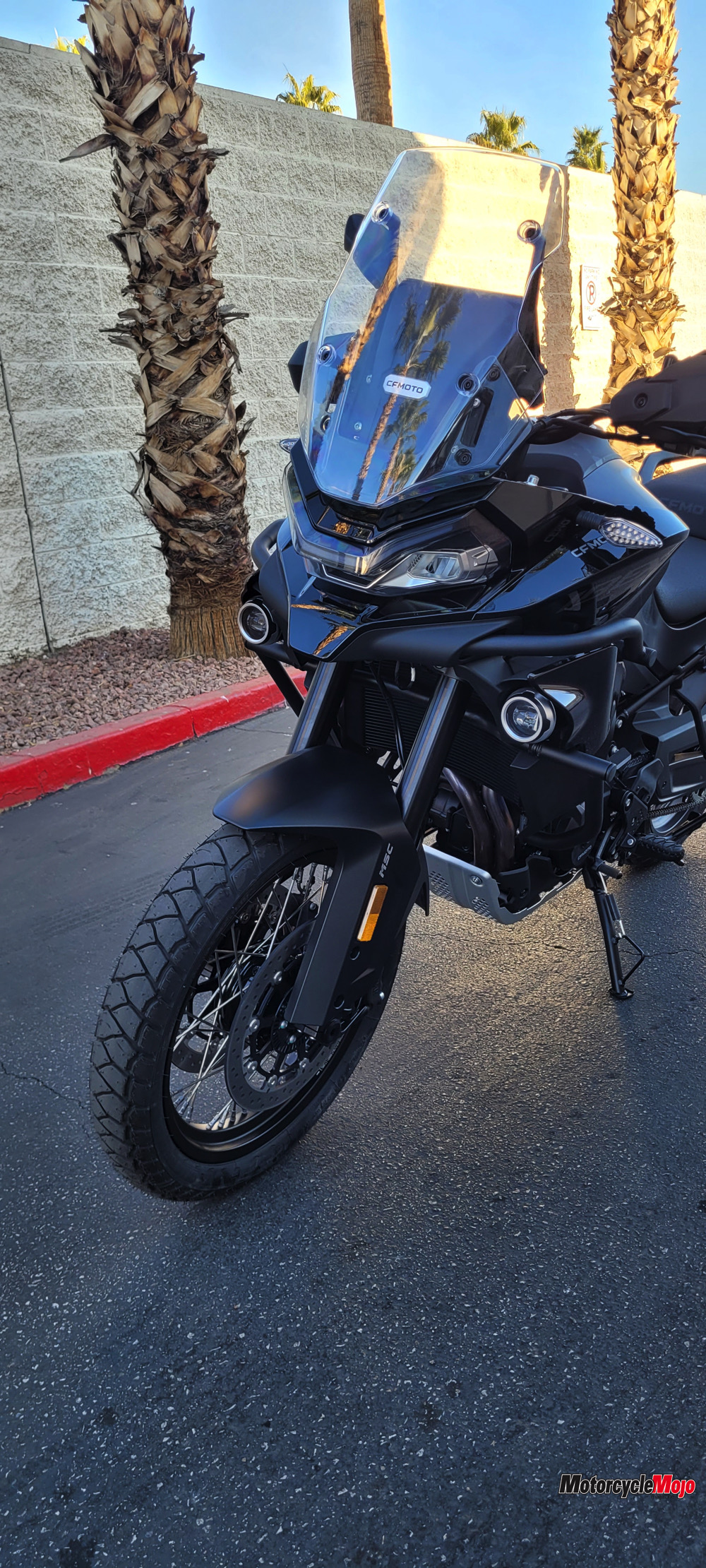
The Ibex 800 E makes a very good travel bike.
In case you haven’t noticed, Chinese motorcycles are here to stay, but not in the form in which they were first introduced to Canada. In the early 2000s, disreputable websites and salesmen in small-time powersports dealerships started pushing machines like the Konker KSM200 or the Lifan GY-5 — low-powered motorcycles, with an emphasis on dual sports, scooters and cruisers, with low price tags. Oh, and low quality, too. I would know: I spent years riding these bikes for various tests, and while I never had one blow up on me, I did spend a lot of time cleaning up rust and fixing basic problems that you’d never find on a Japanese bike, like a suspension linkage that worked to reduce shock travel, not extend it.
The new crop of Chinese bikes is much closer to machines from Europe and Japan. CFMOTO is actually a part-owner of KTM, and they build motorcycles for the Austrian manufacturer, including the 790 Duke and the 790 Adventure. The CFMOTO Ibex 800 E is basically a re-skinned version of the KTM 790 Adventure with minor changes to the chassis and electronics. I managed to get my hands on one for an extended test ride in the southwestern U.S. last winter, picking it up from a Las Vegas dealer to start the test.
FAMILIAR FOR A REASON
Pulling out of the parking lot, the CFMOTO Ibex 800 E felt very familiar, and that should be no surprise, because the parallel twin engine appears to be almost identical to the LC8c powerplant that KTM uses in the 790. Peak horsepower is about 94 hp at 9,000 rpm is basically the same, but the CFMOTO has a bit less torque (57 lb-ft at 6,600 rpm, versus the KTM’s 60 lb-ft at 6,600 rpm). I think the difference comes down to the CFMOTO’s Bosch EFI system, where the KTM uses a DKK Dell’Orto system.
Las Vegas traffic can be hectic, but the Ibex was easy to steer through the urban traffic as night fell, and the bike even kept an eye on my surroundings for me. Autonomous safety systems are all the rage on flagship motorcycles these days, and while CFMOTO did not put an adaptive cruise control system on this bike (maintaining a set following distance from the vehicle in front), it did put a proximity alert on the bike, giving me a visual flash on the dash when a…
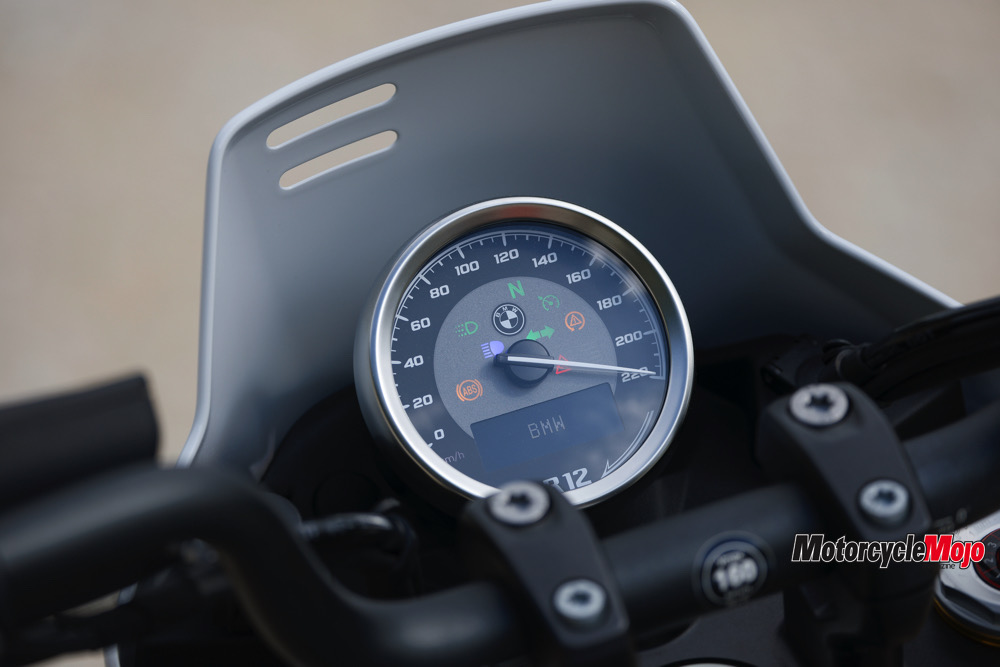
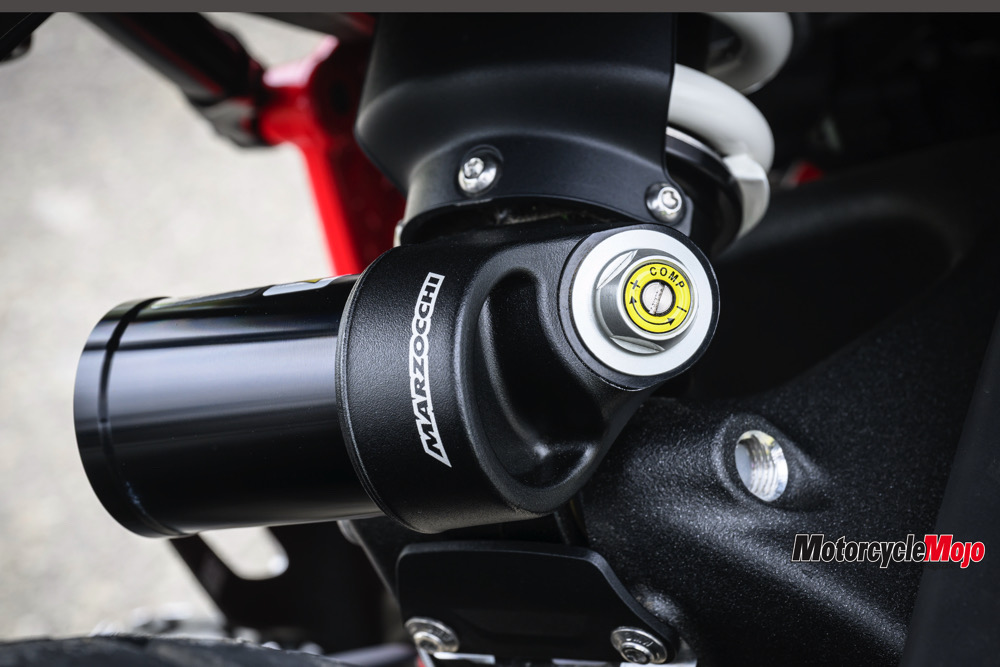
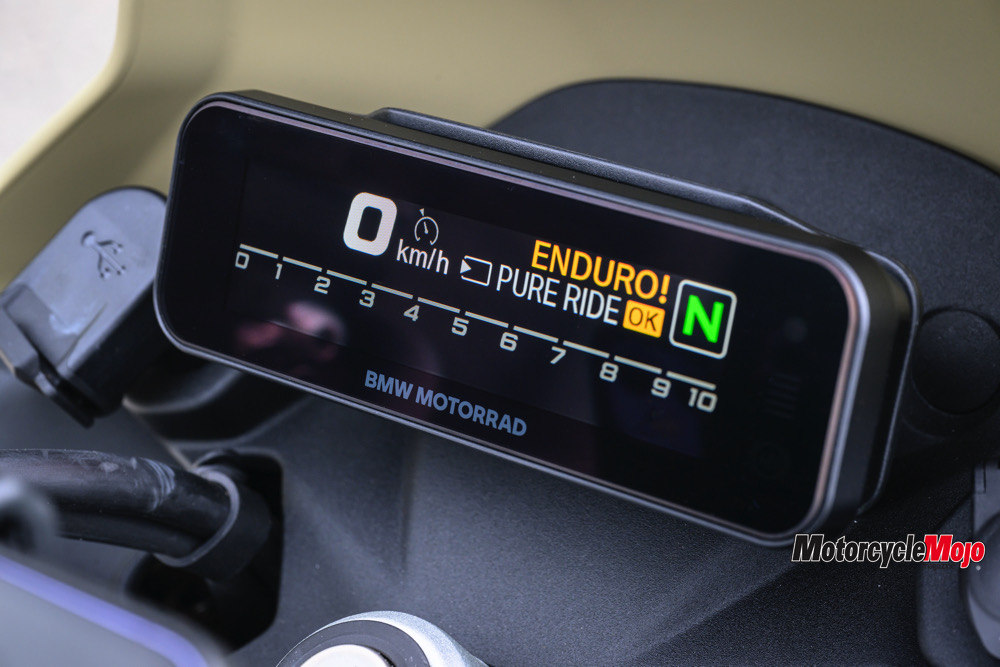

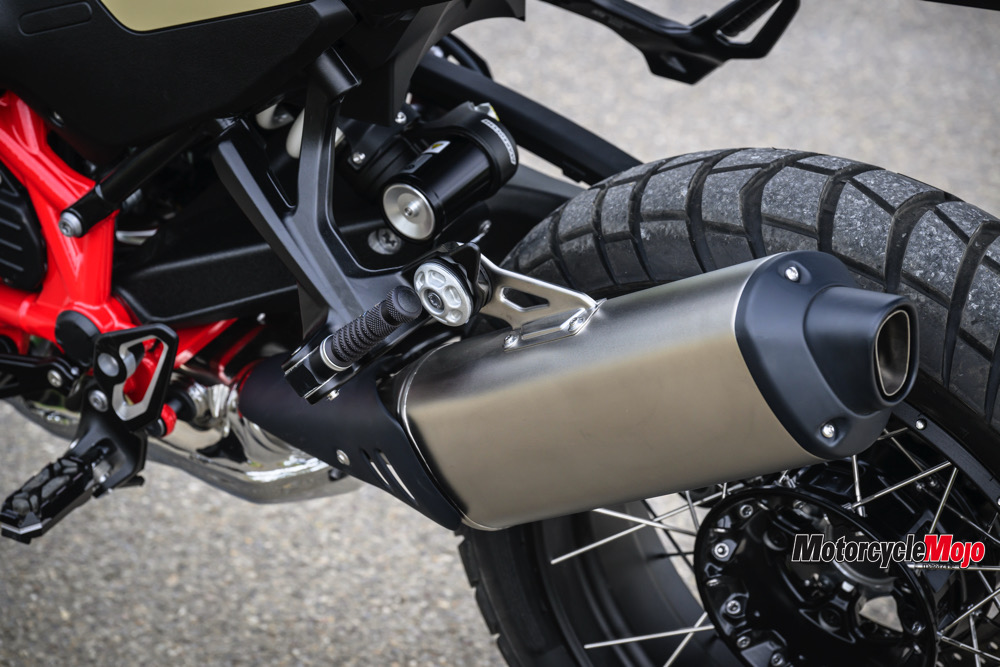
A skunkworks project that inadvertently established a new genre of motorcycling.
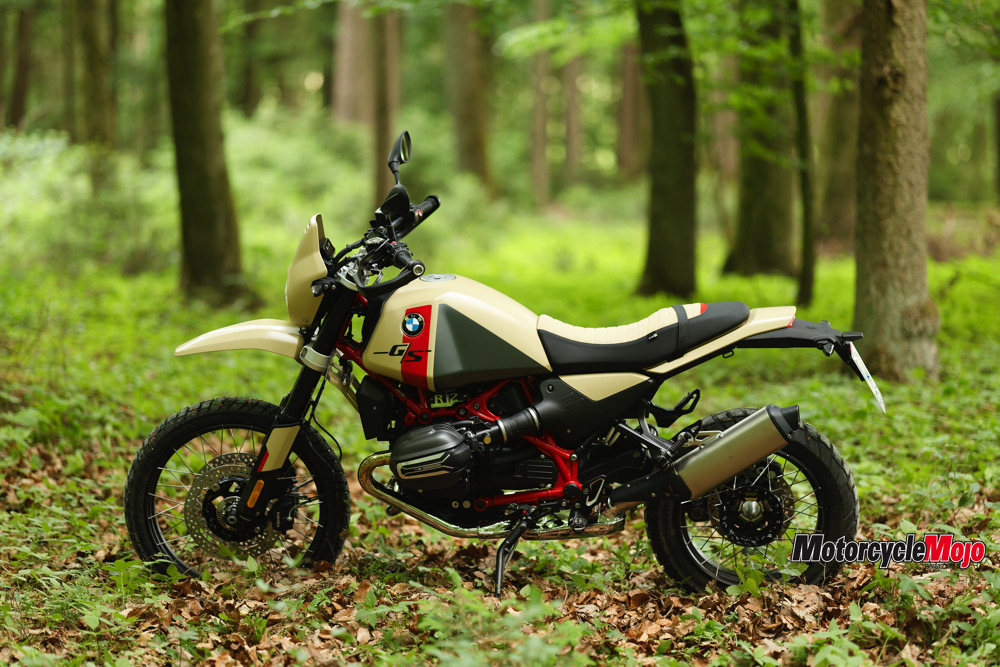
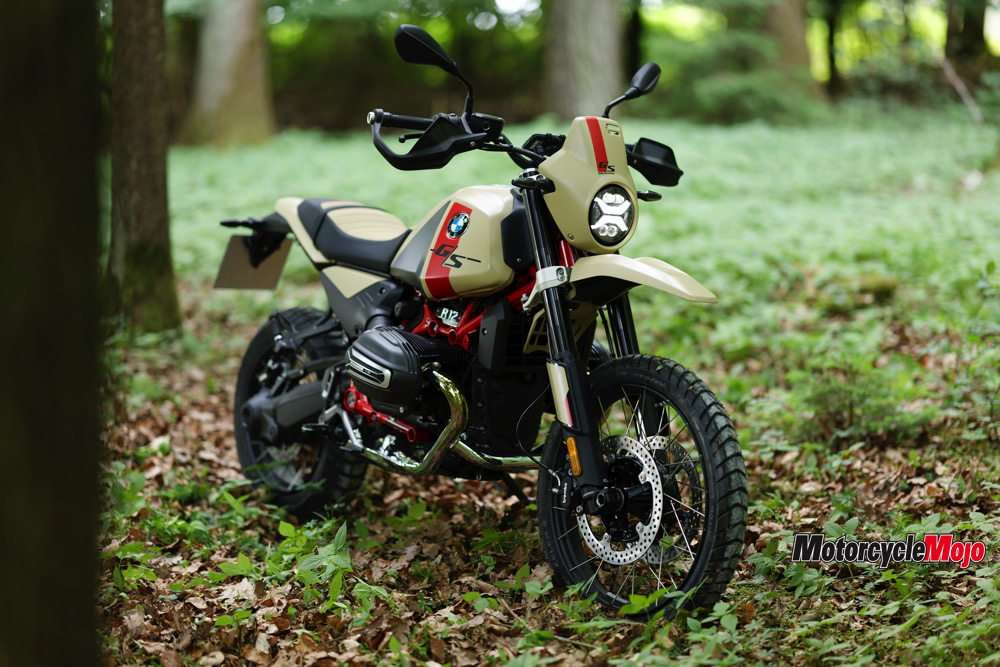
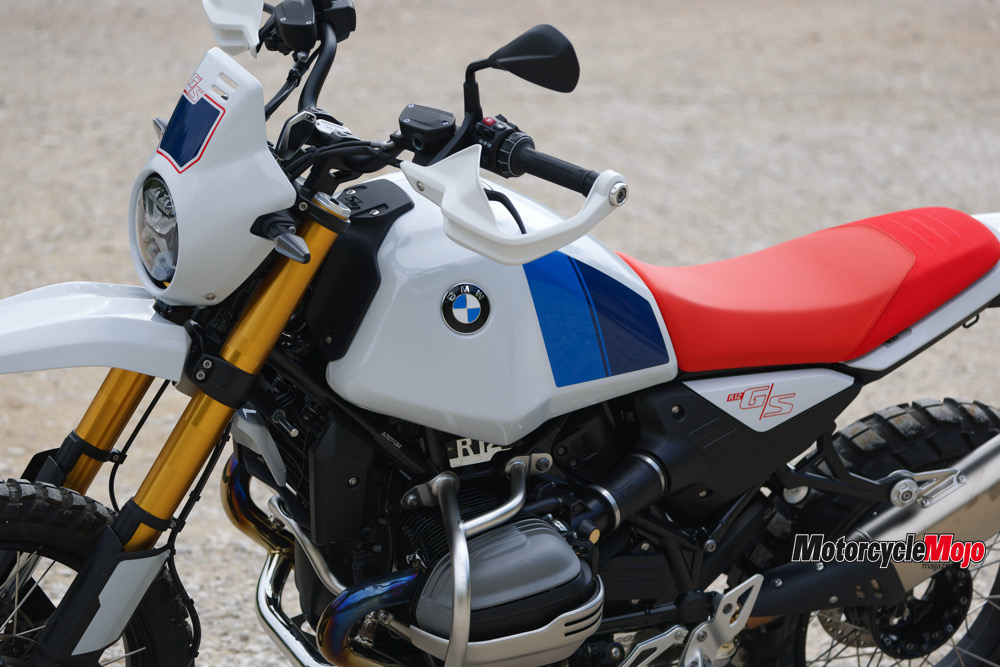
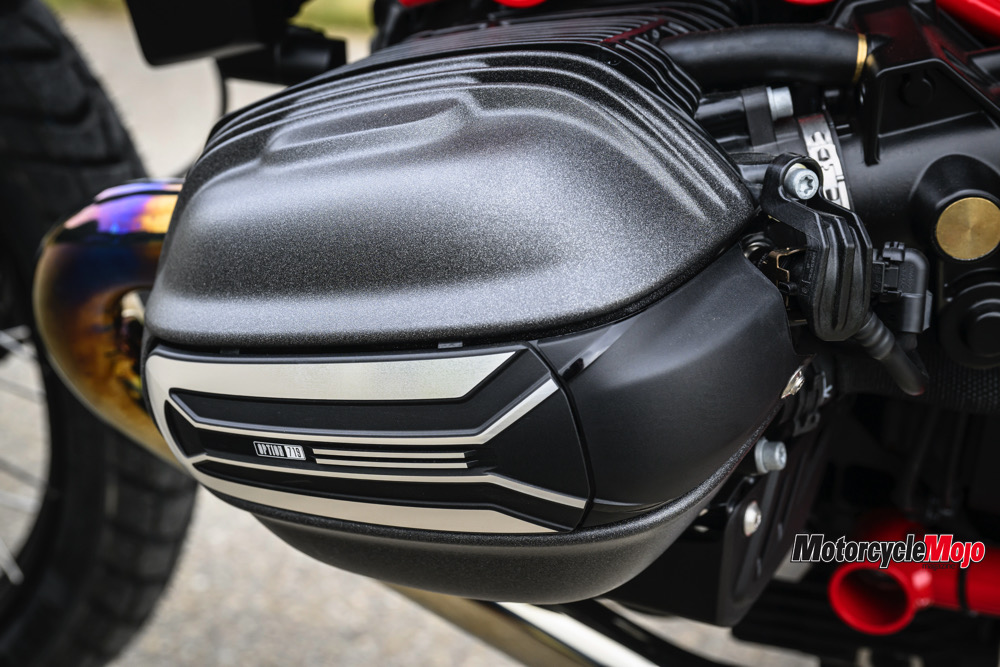
Like so many great discoveries — penicillin, Velcro and, yes, Viagra — BMW’s GS was an accident. Okay, not quite an accident: the act of shoving a 797.5-cc Boxer twin into a motocross chassis hardly a random bit of engineering. But, at the very least, its instigation was, even way back in 1978, a sideshow, and its eventual success — leading to what has become motorcycling’s fastest growing segment — was not remotely forecast. It was, in every sense of the word, a “skunkworks” project, the work of one or two men looking to conquer a racing series that almost no one today remembers.
THE ORIGIN OF GENRE
The common refrain is that the “Gelände/Straße” was created to take BMW into the then hugely popular Paris-Dakar race. And indeed, at its launch in 1980, the G/S — the slash only lasted until the end of 1986, being dropped for the second-gen R100 GS — did enter the then-Africa-centric rally. And yes, they were dominant almost right out of the gate, winning in 1981, ’83, ’84 and ’85 in the hands of Hubert Auriol and Gaston Rahier, both becoming legends in Paris-Dakar lore mainly for winning on what seemed then — and, truth be told, even now — a rather ungainly off-roader.
But that’s not the real why of BMW’s G/S. In fact, according to BMW Motorrad itself, the truth is far more pedestrian. In 1977, Germany announced an off-road sport class for over 750-cc motorcycles and the company decided to use this as an opportunity to get back into off-road sport. They tasked one guy — yes, one person — with the job of creating a suitable dirt-biking Boxer and gave him three months to shoehorn the boxer twin into a dirt bike that weighed less than 142 kilos (just 313 pounds!).
That one man, Laszlo Peres, was also the chief road tester as well as the first man to enter the famed G/S into competition. So while the Paris-Dakar may have created the legend of the G/S, it was not why the Gelände/Straße (off-road/street) was created.
Nonetheless, from such humble beginning has the GS gradually turned into BMW’s most popular model. Not only that, one can trace the origins of the entire adventure touring segment back to the original R80.
Pretty much every adventure bike since then — from KTM to Honda and Triumph to Royal Enfield — owes its being to that, again, skunkworks grafting of touring twin to motocross frame. And, oh, there’s also an entire industry — from luxury travel providers to adventure-oriented accessory products — based on, again, those BMW boys skunking about…


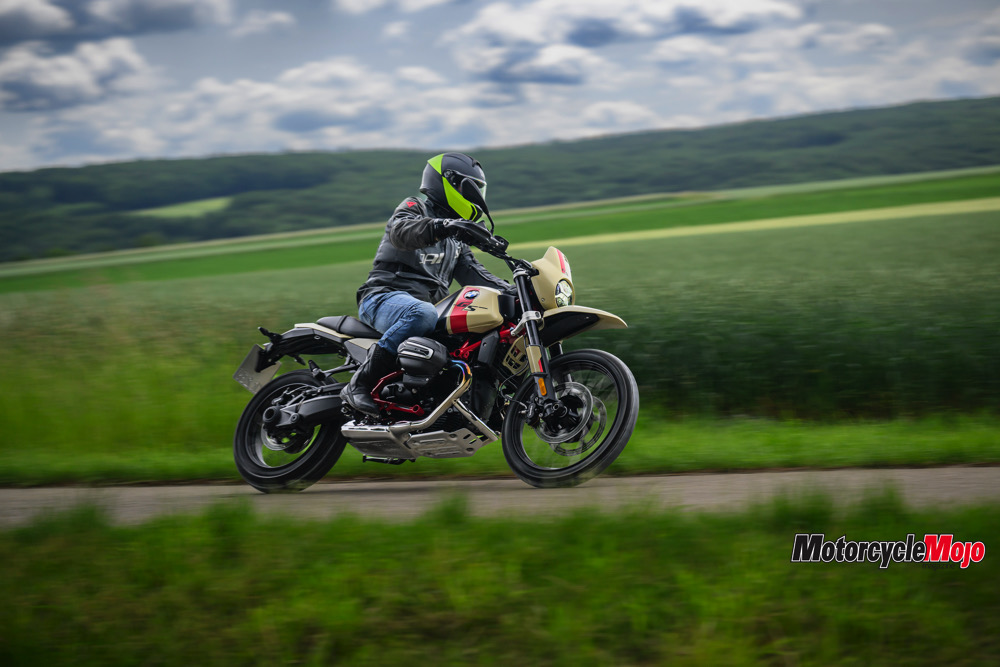
The Tesi H2 Tera uses an unconventional centre-hub and swingarm steering system.
Where to start is my big question. Do I lead with the fact that the new Bimota Tesi H2 Tera is a supercharged adventure tourer with 197 horsepower that weighs just 233 kilograms? Or is the big deal here the fact that, thanks to its compact “Tesi” hub-centre front end, the Tera’s wheelbase is more than 100-millimetres shorter than the best of current litre-plus adventure bikes and just a smidgen longer than the very best superbikes, and shorter than a good many. We’re talking Ninja ZX-10RRs and Ducati
Panigales here, folks, and the new Bimota is, again, an adventure tourer.
So, it’s a tough call as to which attribute reigns supreme. Let the Tera loose on the Autostrada Adriatica between Rimini and Bologna, for instance, and you’ll be totally convinced the engine — liberated from Kawasaki’s H2 SX SE — is what makes this latest Tesi so special, its supercharged 999-cc creating a seemingly never-ending reserve of power. But then, an hour later, when you’re unravelling the tournantes — that be Italian for hairpins — between Marradi and Palazzuola sul Senio, you’ll pledge undying fealty to the miracle of hub-centre steering for making a monster-engined adventure bike feel like a naked 600.
WHICH TO CHOOSE?
Thankfully, there’s no need. Assuming you have somewhere just north of $65,000 — that’s about how much the Tera costs when you do the conversion from €40,800 — you can just mosey on down to one of the select Canadian Kawasaki dealers that will become Bimota (by Kawasaki) outlets and find out for yourself. Here’s what you’re in store for:
Starting with the engine. Kawasaki’s 999-cc supercharged four — lifted, as I said, from Team Green’s H2 SX SE, to be exact — boasts no less than 197 horsepower and 102 pound-feet of torque. Of those two numbers, I think it’s those torques that most impress. Oh, to be sure, those 197 horses are why Ginaluca Gallasso, Bimota’s marketing communications manager, claims the Tera can hit 288 km/h. I never tested his claim, but considering how hard the Tesi pulls past 240 km/h — which I did manage on that blitz from Rimini to Bologna — I have no reason to doubt the former Formula 750 racer. Nonetheless, it’s those 102 pound-feet that dominate the Tera. You can roll it on at three grand in top gear and that supercharger will still get to those (almost) 300 klicks in a big hurry. In fact, Kawasaki’s supercharged four gets my vote for the widest — that should be read “most useful” — powerband in all of motorcycling. You can pull fourth or fifth gear at 2,000 rpm and the blower doesn’t shut down the party until…
The highlights outweigh any disappointments.
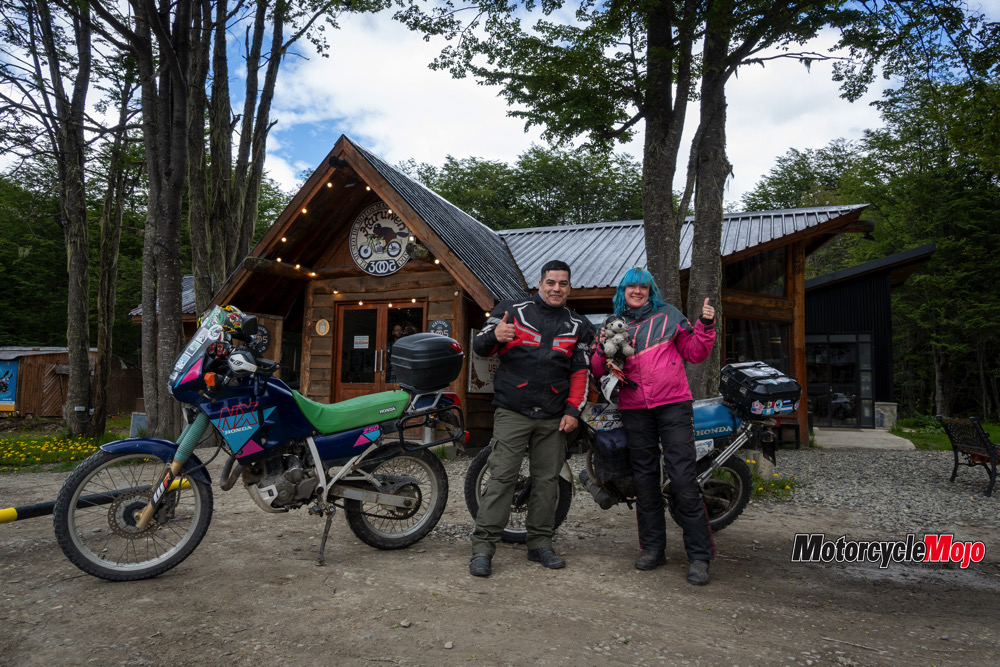
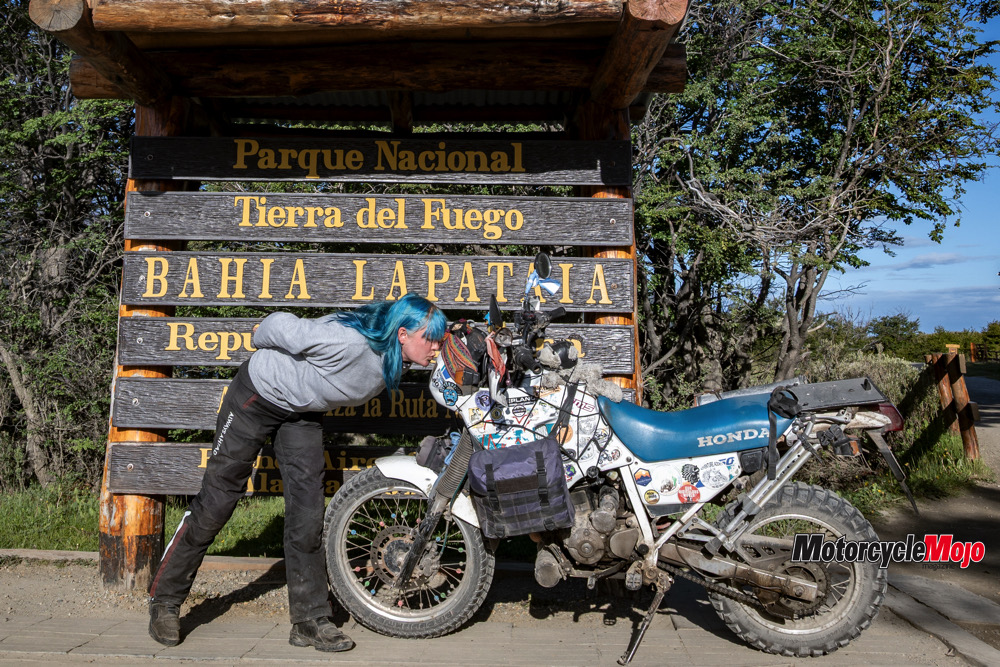
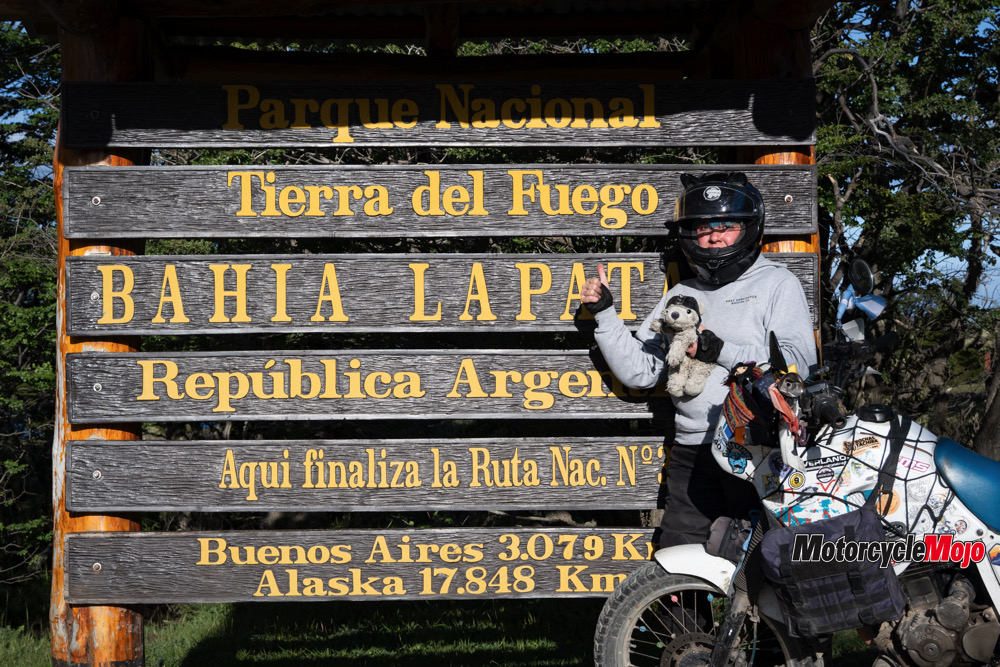
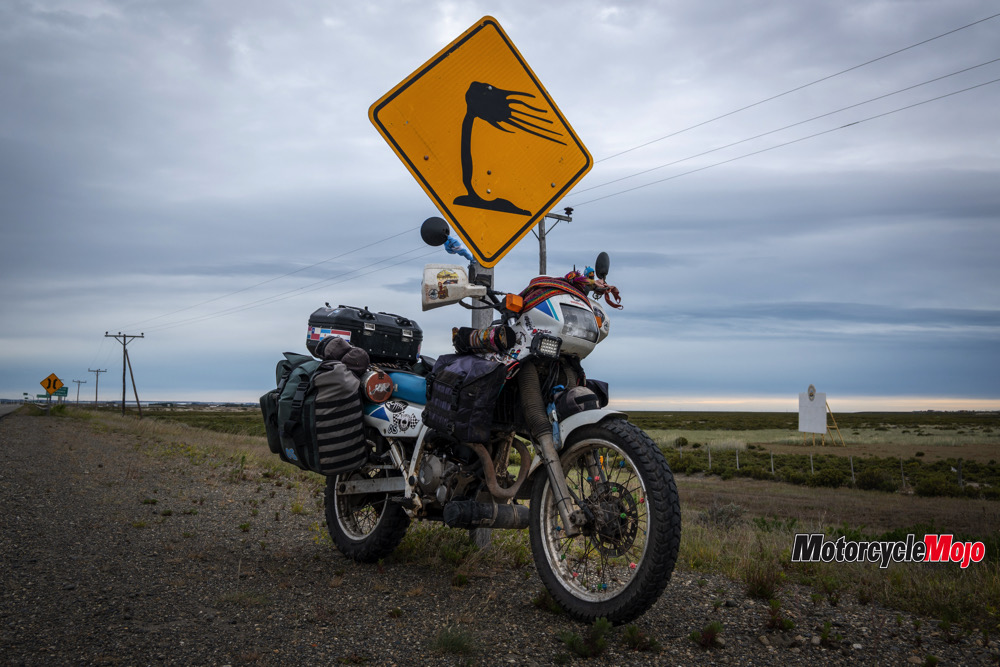
This was it, we had finally reached Patagonia. Time to face my biggest fear of our entire Canada to Argentina journey: the notorious winds. Back on Route 66, now over a year ago, 60 km/h side winds had scared the living bejesus out of me, throwing my little Honda NX250 around like a leaf, almost blowing me into oncoming traffic on several occasions. Even my partner, Aidan, on his sturdier BMW F650 GS, had battled to stay on the road. Unlike anything I always pictured, the wind hadn’t pushed me over top down, but instead had torn the wheels out from underneath me. How was I supposed to be leaning into that?
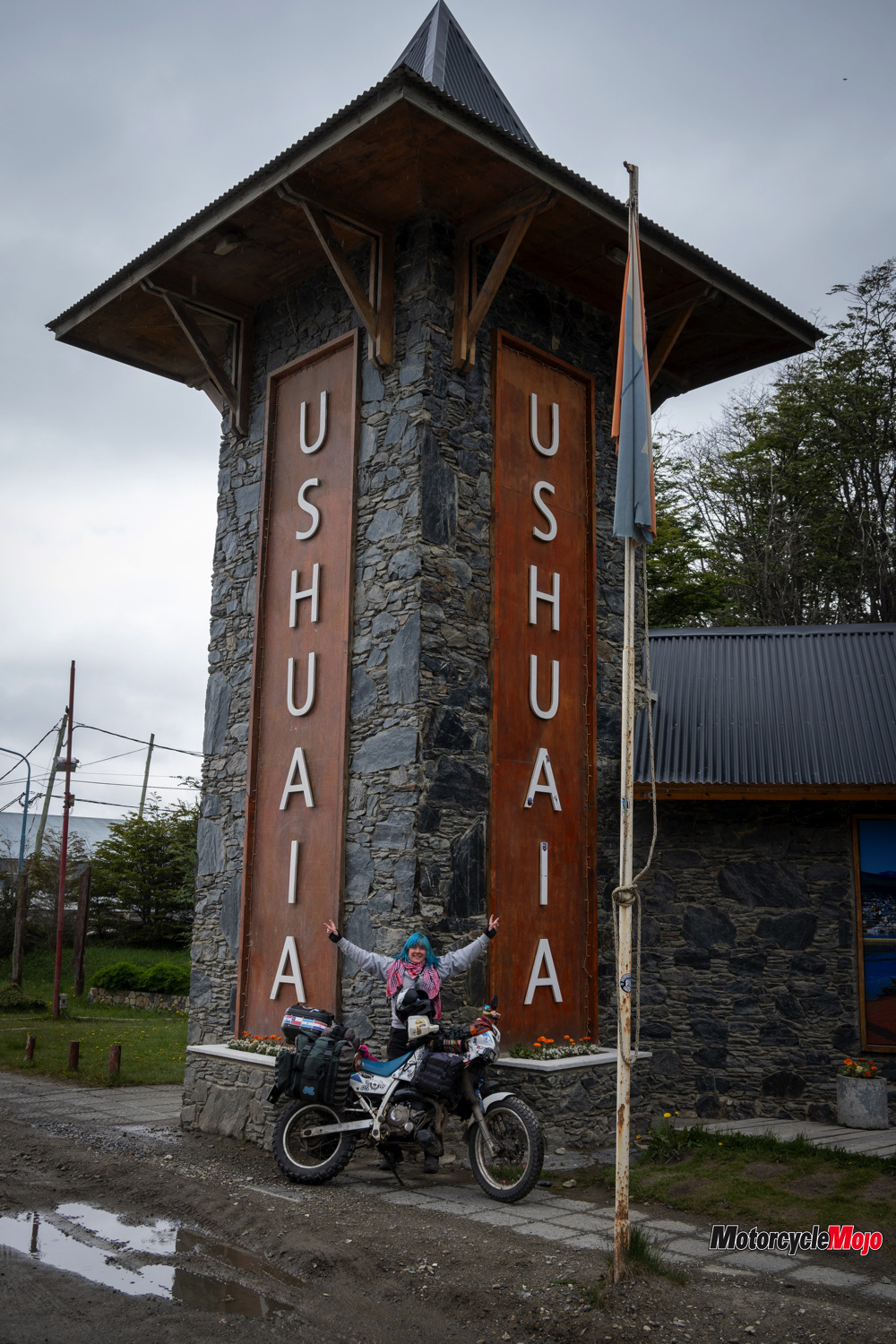
Since that day, a nagging fear had been simmering in the back of my mind and the videos of people being blown off the road did not fill me with confidence that I would ever be able to reach Ushuaia. I got so afraid that I began seriously considering giving it a miss. The only thing that persuaded me to try was the possibility of hopping onto a ship from Ushuaia to Antarctica.
SAGE ADVICE TO QUELL THE FEARS
According to three Argentinian travellers we met at the moto hostel El Clan in Las Grutas, the Patagonian winds would start in earnest from Puerto Madryn. Before they left, they had some excellent advice for me: Lean the bike, but don’t lean with it. Keep yourself seated firmly above the centre to ground the tires. Armed with that advice, I was ready as I would ever be to tackle the challenge. And the next day, the NX was ready, too: I’d done a full service and changed out the clutch plates.
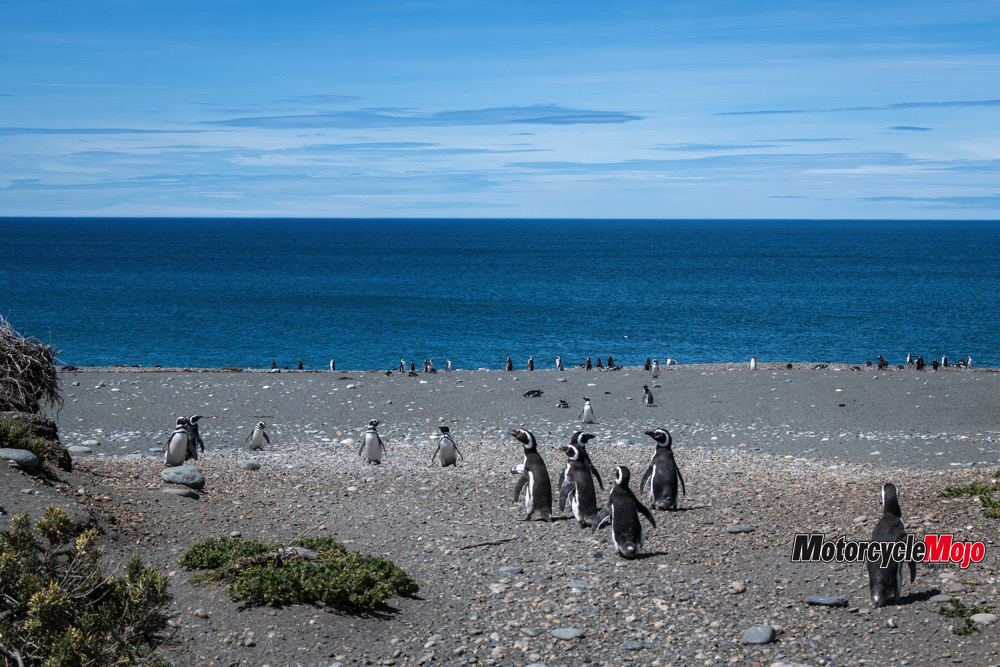
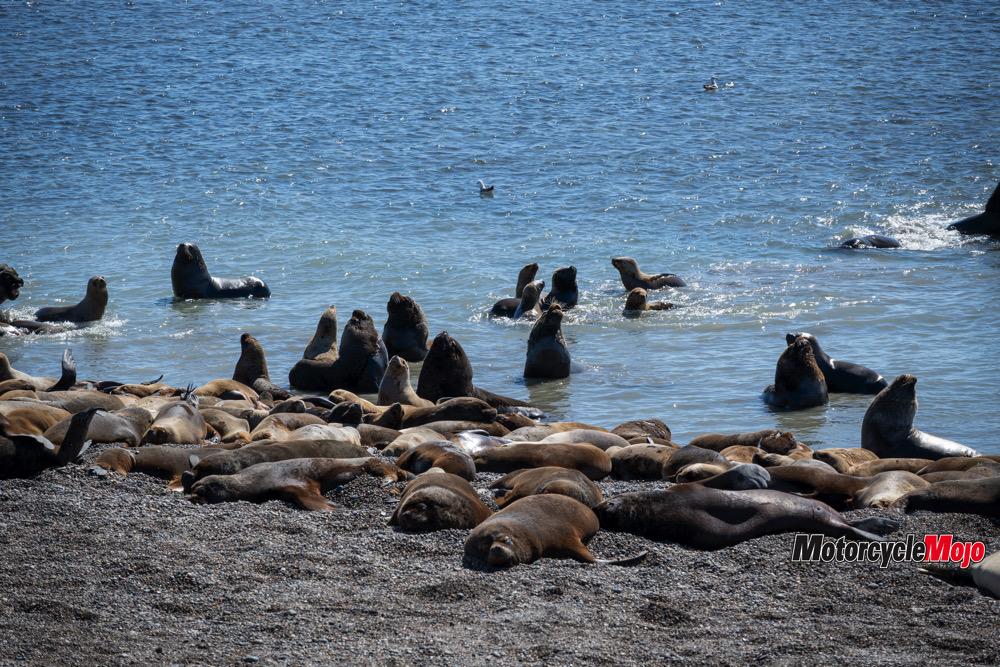
The moto hostel in Puerto Madryn already half-expected us, because the three Argentinian riders were already there. We had all planned to visit the Valdes Peninsula, famous for its elephant seals and sea lions, and for the orcas’ acrobatic feeding frenzy, temporarily beaching themselves to snatch their prey. But its dirt roads were closed due to flooding.
Unsure of how many miles the winds would allow us to make in a day — and keen to reach Ushuaia before it got snowed in again — we spontaneously decided not to wait for the roads to reopen on Valdes. After all, we would see lots of wildlife on the cruise. That also meant saying goodbye to our three friends, who were going to avoid the winds and cross west from here, toward the more picturesque Andes. A pretty ride free from threatening winds was tempting, but Antarctica was calling.
CUE THE WINDS
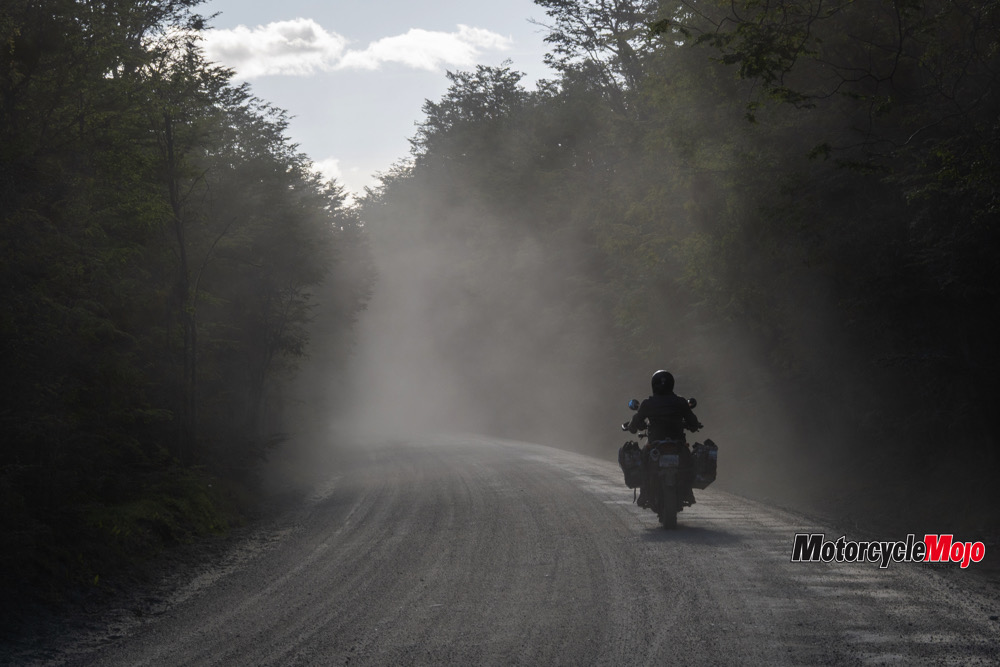
I had expected the wind to pick up with gusto, but it was a gradual transition that crept up on me unnoticed, until I suddenly realized that the brand-new clutch plates were slipping! The bike was fighting hard against the oncoming wind, and I had to switch down two gears to make any progress at all. Of all the reasons I might have considered the…
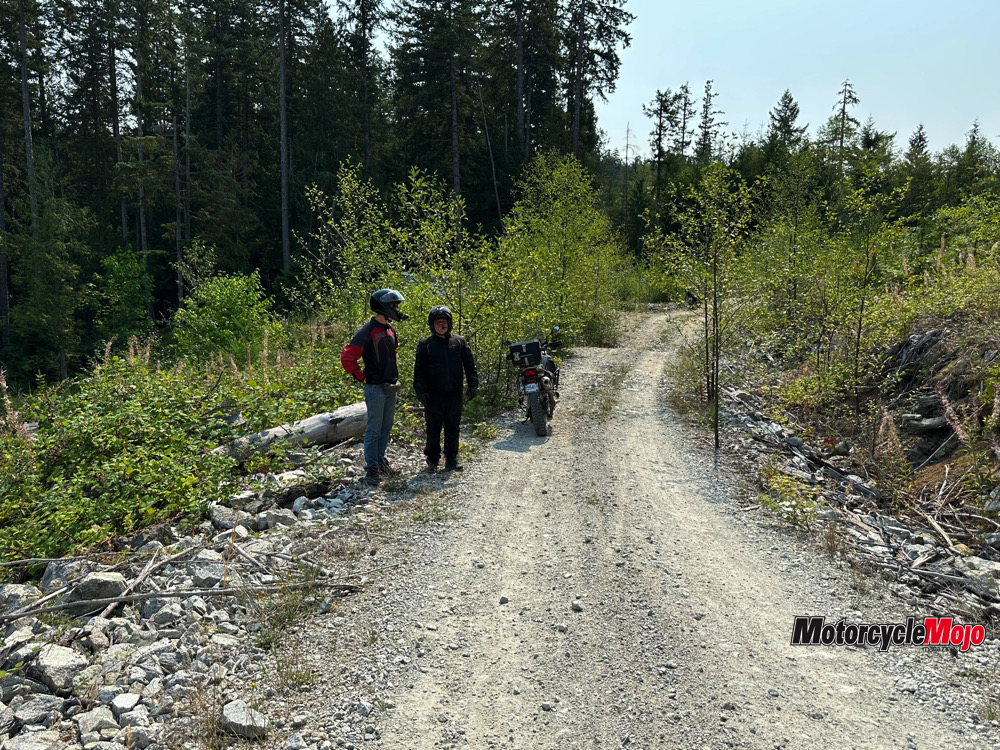
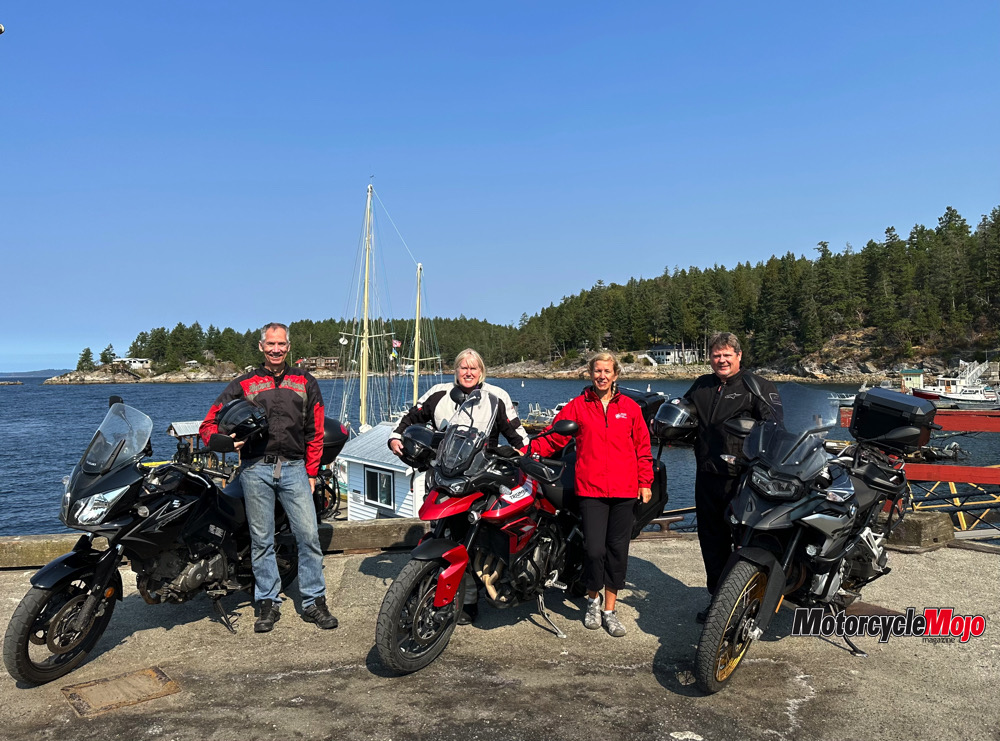

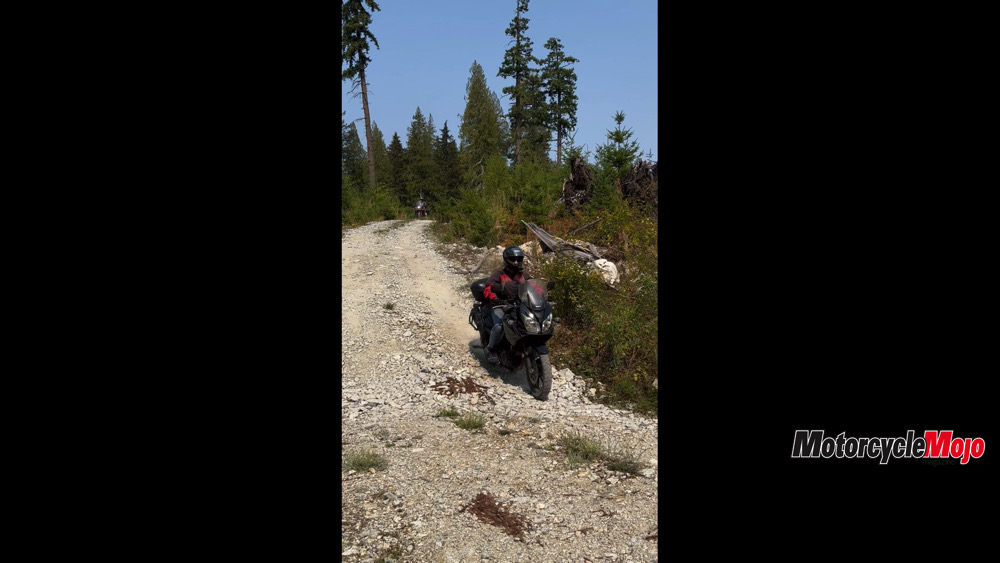
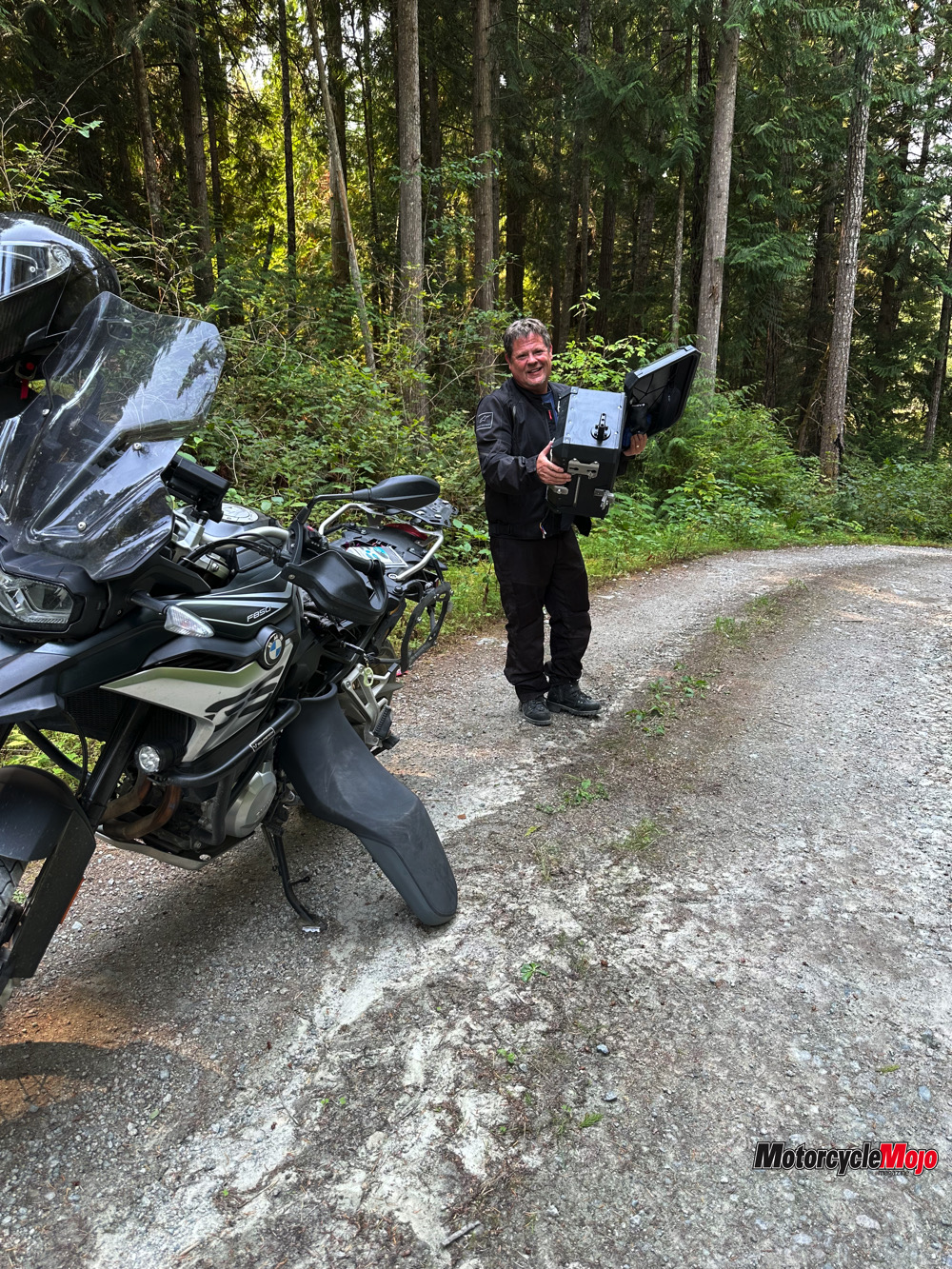
Three bikes, two couples, one wild ride on the Sunshine Coast.
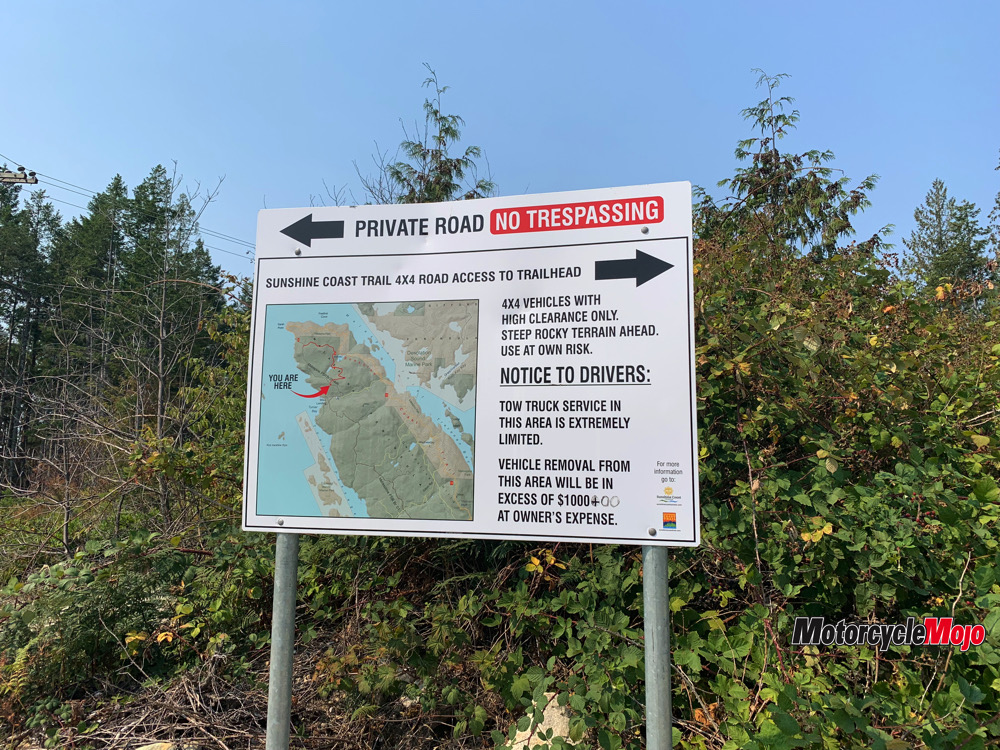
Explore the Sunshine Coast! It was time for our annual couples’ motorcycle adventure trip, and my turn to plan something slightly adventurous. I opened Google Maps and reviewed our options. I figured a good day trip from our base at Powell River (four and half hours northwest of Vancouver) would be to explore up through Lund to the Sunshine Coast Trailhead at the northern tip of the peninsula. This was one end of a rugged but well-established multi-day hiking trail, so I figured the forest service road would be reasonably maintained, the bay would be a scenic place to picnic on an isolated beach, and a great motorcycling adventure awaited. What could possibly go wrong?
The Sunshine Coast combines two peninsulas nestled between rugged fjords, starting approximately 50 km northwest of Vancouver. Despite its close proximity, access is restricted to air or ferry and the population is modest, with three small towns and a few quaint villages linked by a single paved highway and a smattering of dirt roads. The locals prefer it that way and the atmosphere is bohemian, much like the nearby Gulf Islands. We crossed from Vancouver Island to Powell River via the ferry at Comox, some 230 km north of Victoria.
Ferries can be busy during the summer, with sailing waits common, but motorcycles are always loaded first — thank you, BC Ferries! We even managed to spot a pod of humpback whales in the distance on the voyage across the strait, making a perfect start to the trip. Motorcycle trips are all about the experiences, where even fleeting moments can become lifelong memories.
LET THE ADVENTURE BEGIN
We were four adventurers on three bikes: a BMW F850 GS, a Triumph Tiger 900 GT, and my wife and I on my 2009 Suzuki V-Strom 650. While the other couple’s bikes had bash plates, crash bars, and reasonable tires, I rode a basically stock bike without such amenities on essentially street tires, but I knew the Strom enjoyed a romp over dirt or gravel just fine.
With the early sun mottling the pavement, we swept along gentle curves between tall Douglas firs with glimpses of the rugged coastline on our way north. My heart raced just a little in anticipation of the unexplored road ahead. None of us had been here before, and conditions were perfect to explore and drink in the natural beauty of the area. We were ready for adventure!
Our first stop was the picturesque village of Lund, the last bastion of civilization in these parts. We wandered briefly along the pier and picked up refreshments at The Stock Pile, where I mentioned our…
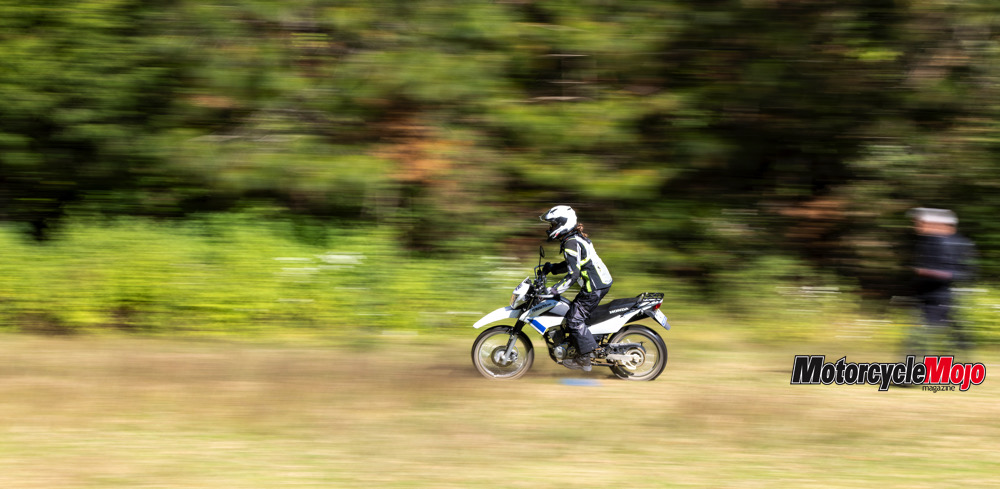

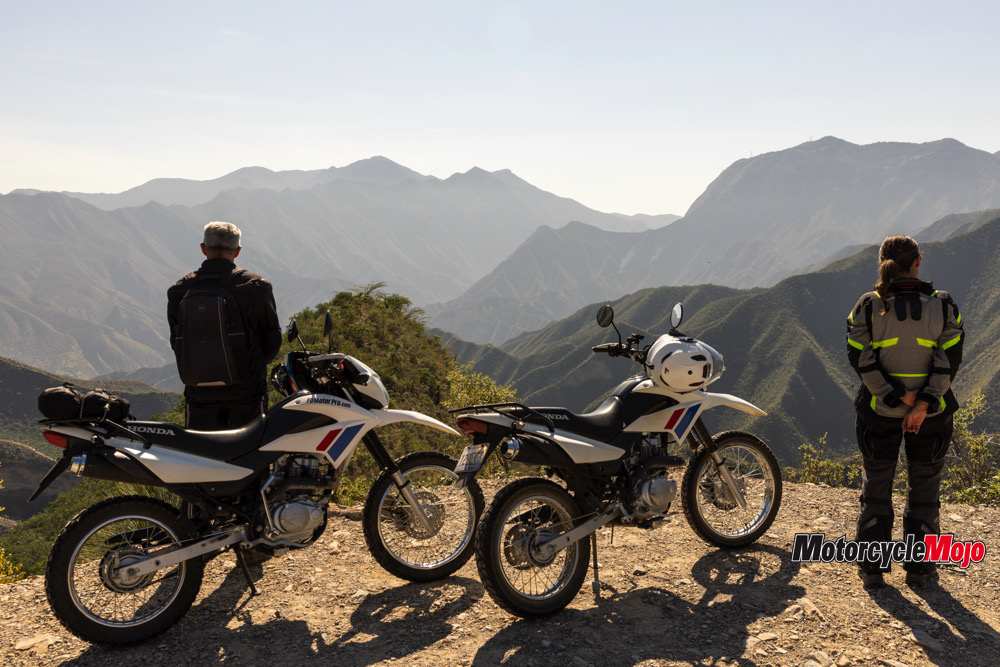
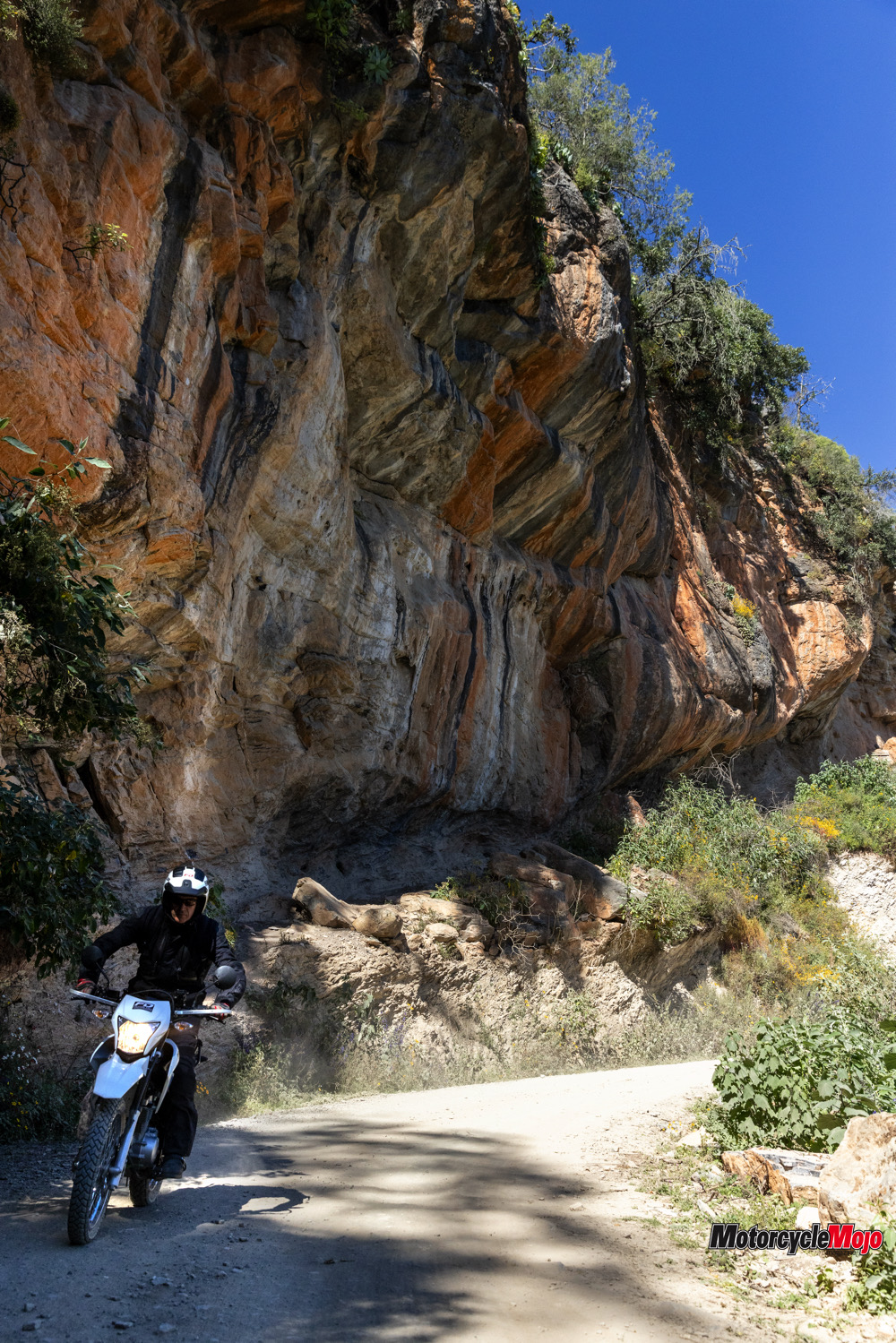

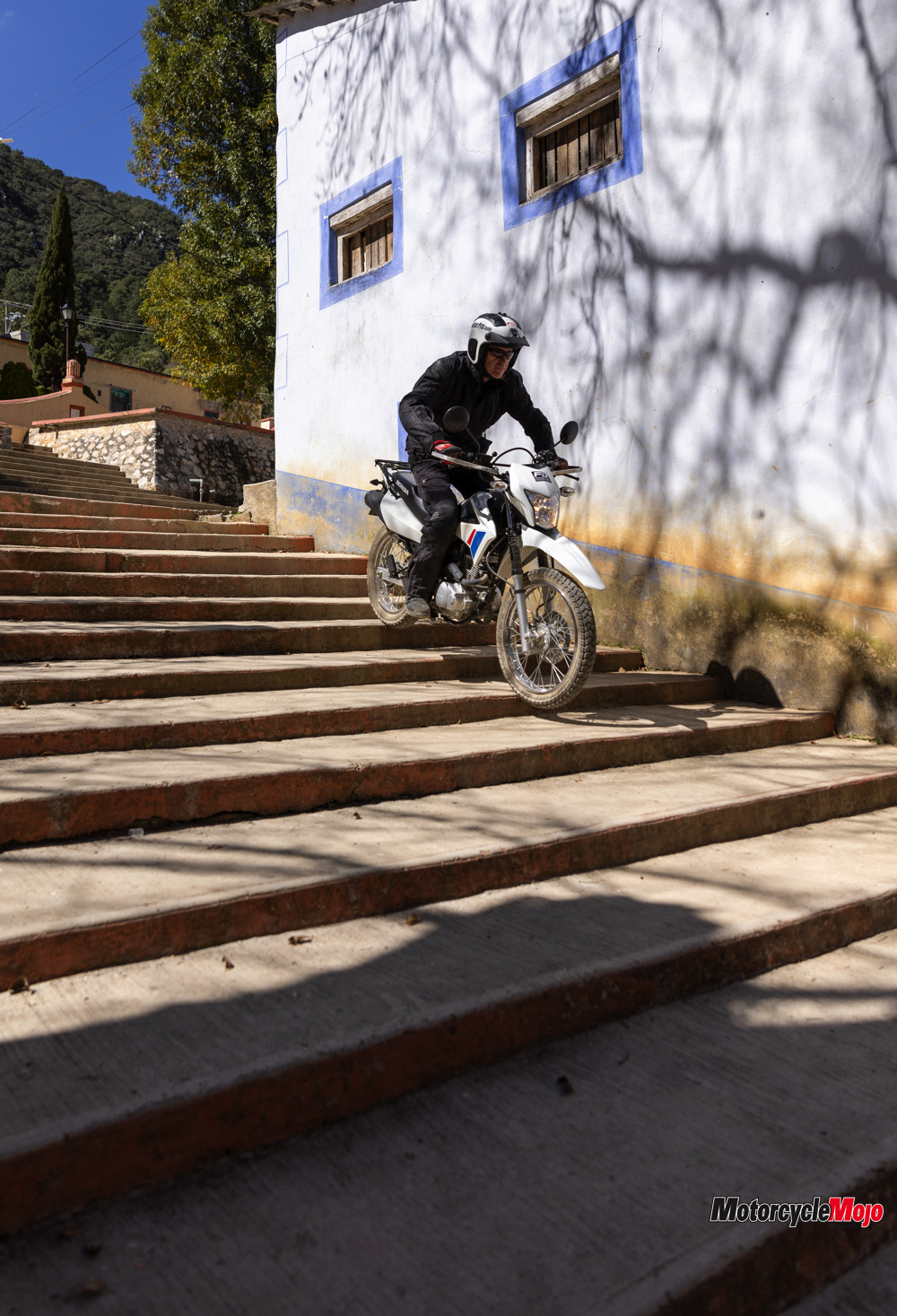

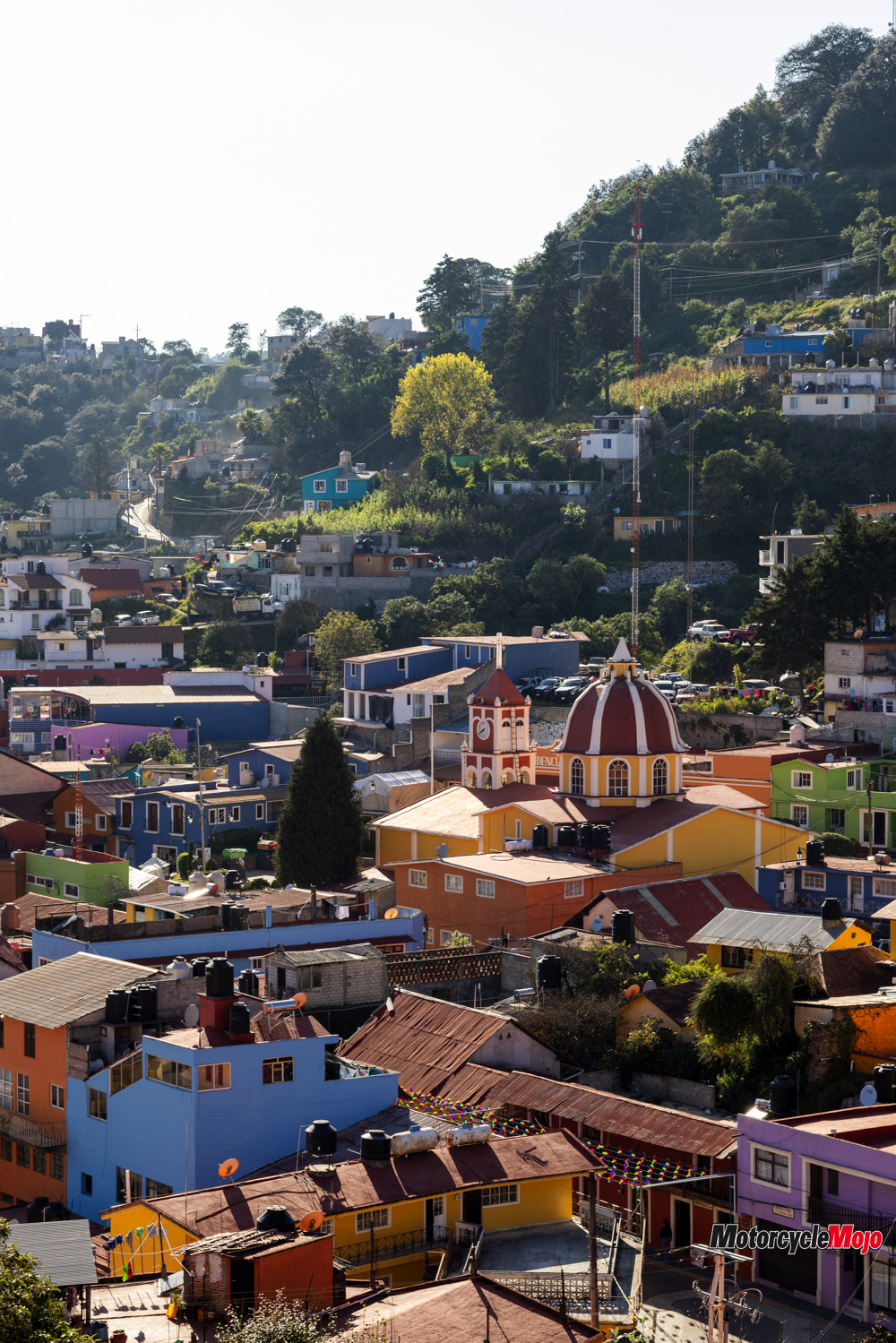
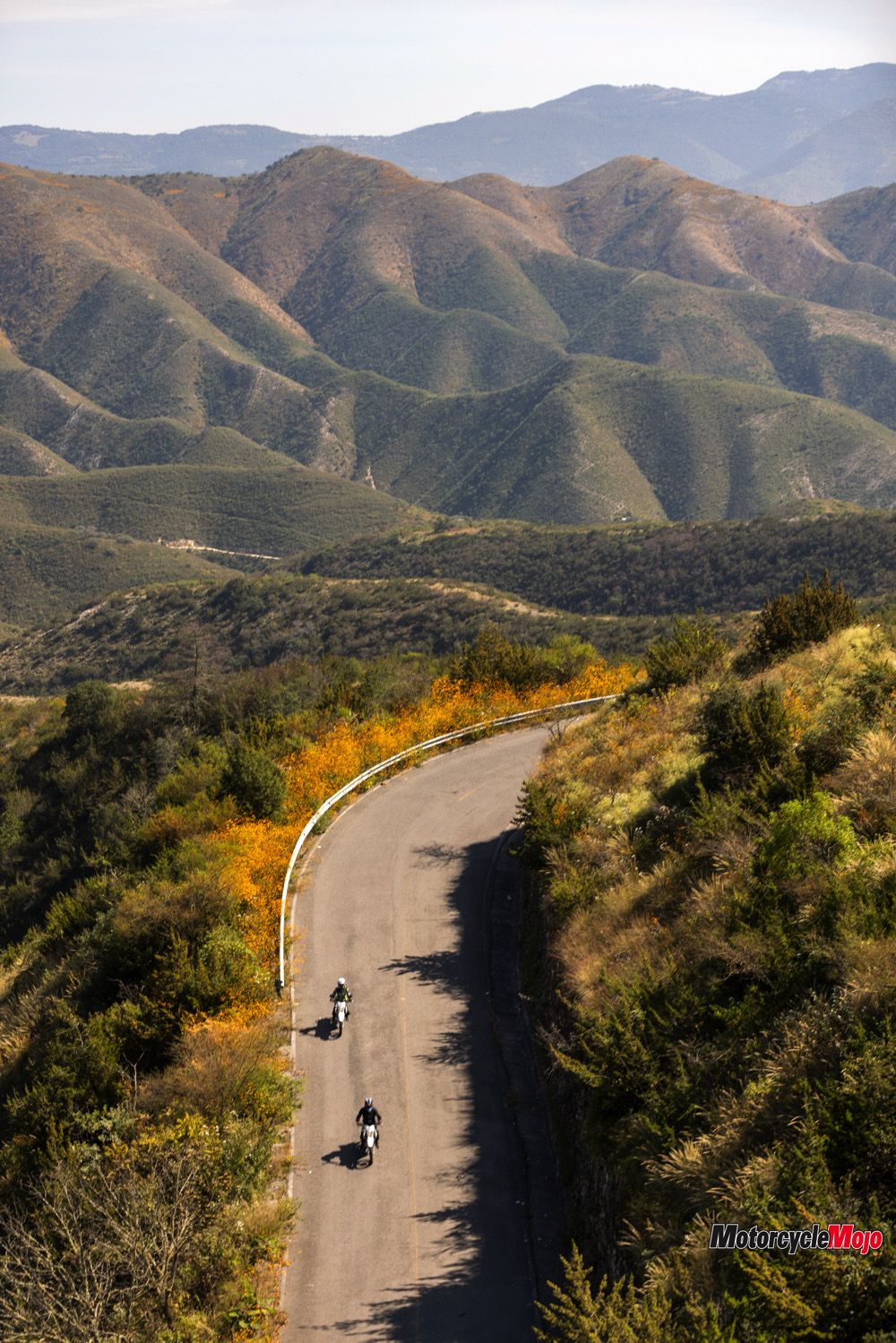

Hard things made easy – like learning off-road riding in Mexico’s Sierra Gorda.
I didn’t always do hard things. As someone with anxiety, my excessive worry about what my performance says about my place in the world combined with the impossible standards I set for myself used to keep me from even starting things I thought might be hard.
This behaviour came to an end when I met my now-husband, Dustin. In the early stages of dating, Dustin asked me to run with him. I declined, simply stating, “I can’t run.” I had tried running before: many of my friends ran and would encourage me to join. It was awful.
Unlike my gazelle-legged friends, my limbs were uncoordinated and heavy. To me, my inability to run was just a simple fact. In response to my statement on my inability to run, Dustin responded, “It’s all in your head. You need to learn to be okay with being uncomfortable. The only way you’re going to learn to run is by running.”
Learning to be okay with being uncomfortable — feeling awkward, enduring embarrassment and sometimes pain — has changed my life. The thing about doing hard things is that they are only hard things until they are not. Case in point: I now regularly run half-marathons.
YOU HAVE TO START SOMEWHERE
Learning to ride a motorcycle was a hard thing for me. I started riding three years ago, at the age of 42, and there was a lot for my adult brain to master: two hands, two brakes, a clutch (I didn’t know how to drive stick), speed, and navigating other vehicles on the road.
In the beginning, I messed up all the time. For example, on my first road ride, I stalled in the middle of a hill and couldn’t do a hill start. I constantly fumbled for the correct gear, causing the bike to lurch forward. I would drop the bike attempting U-turns. Everything that could go wrong went wrong for me. I was often scared and frustrated, and I didn’t think I would ever learn to ride; however, I kept showing up and I kept riding.
I probably have the unique status of being the only person to cry multiple times during my motorcycle training course and still obtain a perfect score on the MSA test. Since then, I have ridden my BMW G650 GS 21,000 kilometres across Canada from my home in British Columbia and back; completed several long road-trips in the U.S.; and, most recently, in November, spent 10 days on a motorcycle riding tour through Mexico’s Oaxaca state. Riding a motorcycle is no longer a hard thing.
Just like learning to run, Dustin was the impetus for me learning to ride a motorcycle. Dustin is an…



New Discoveries in the Buckeye State.
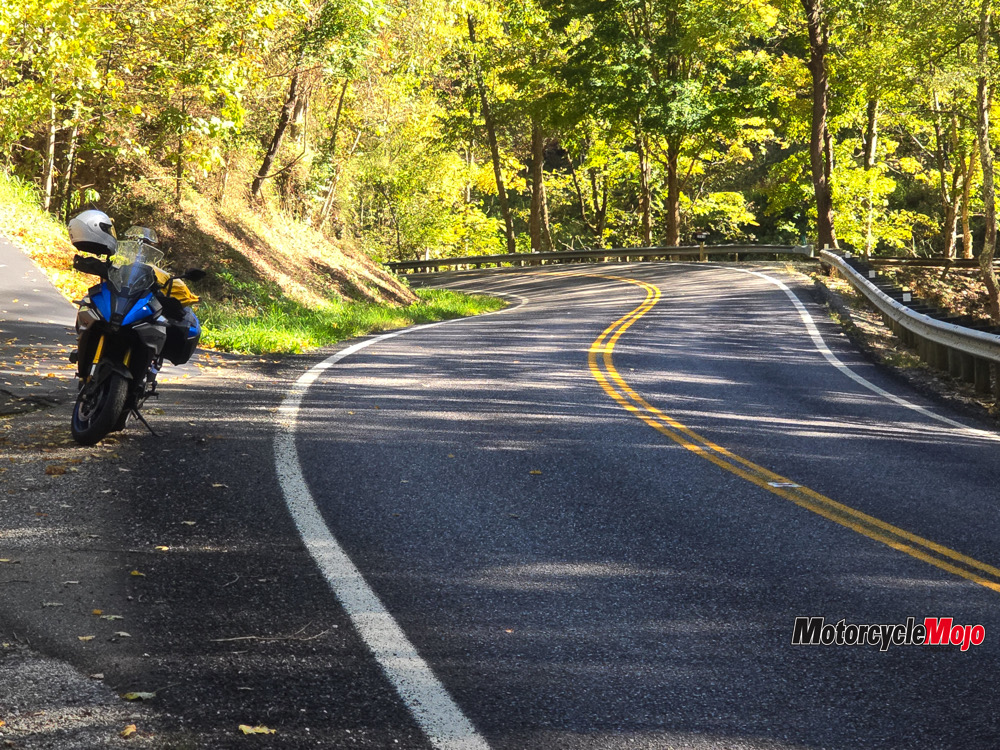
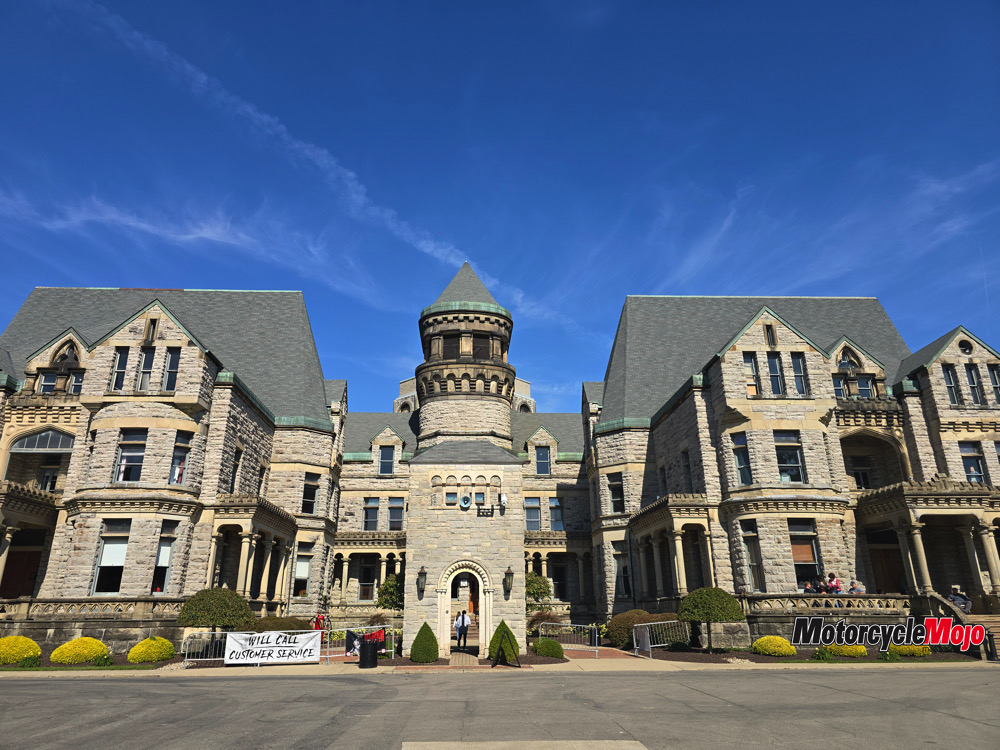
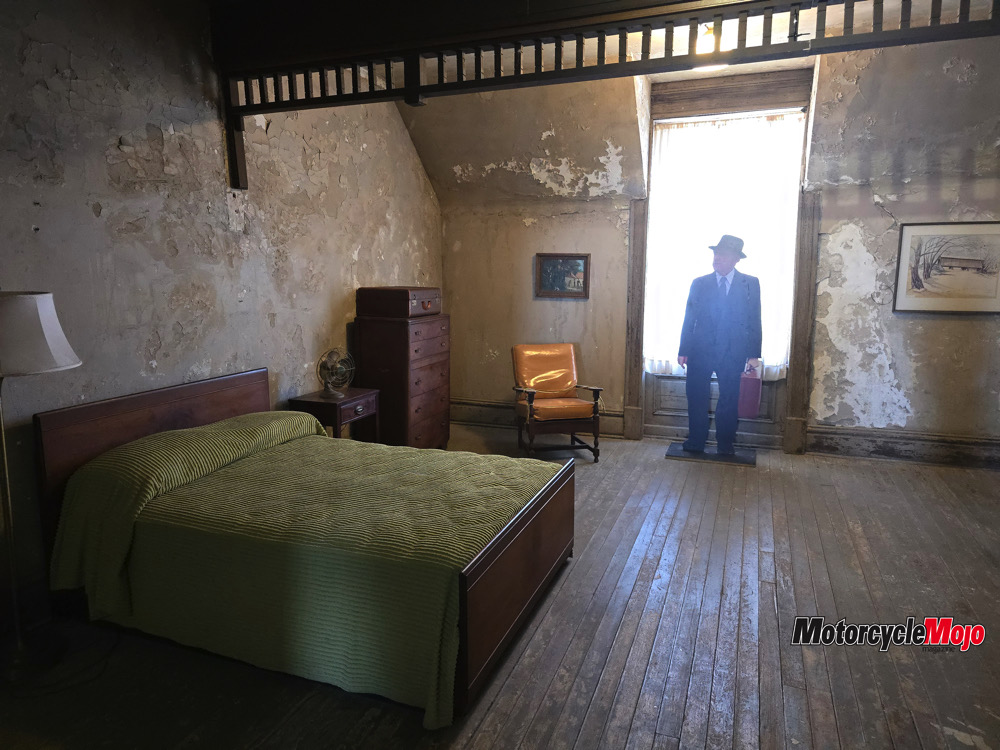
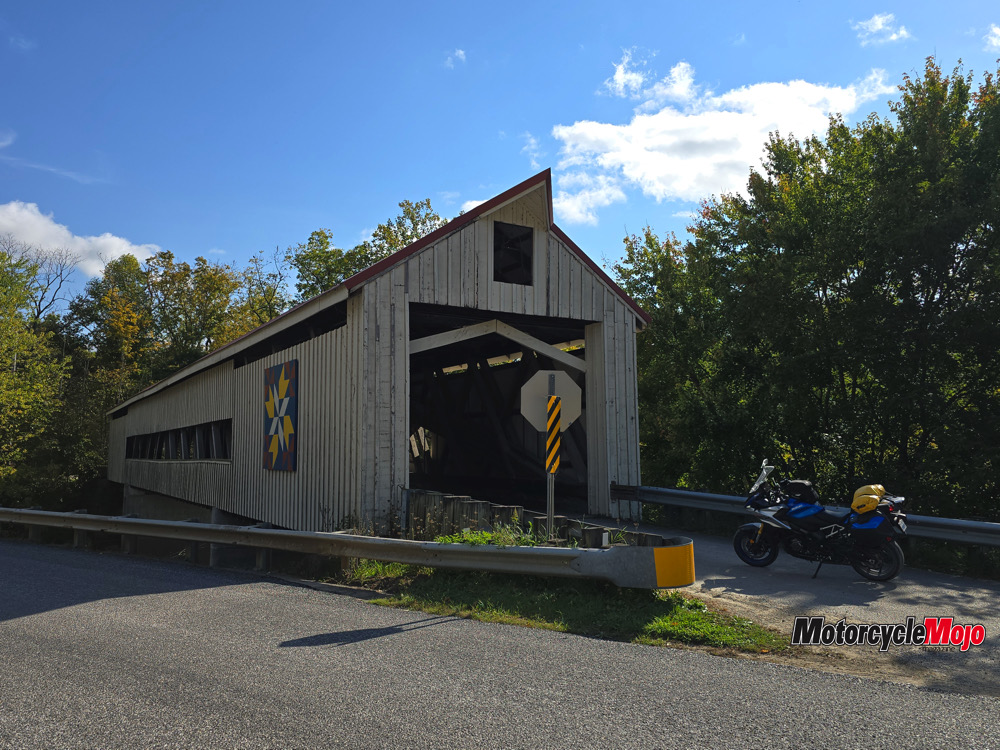
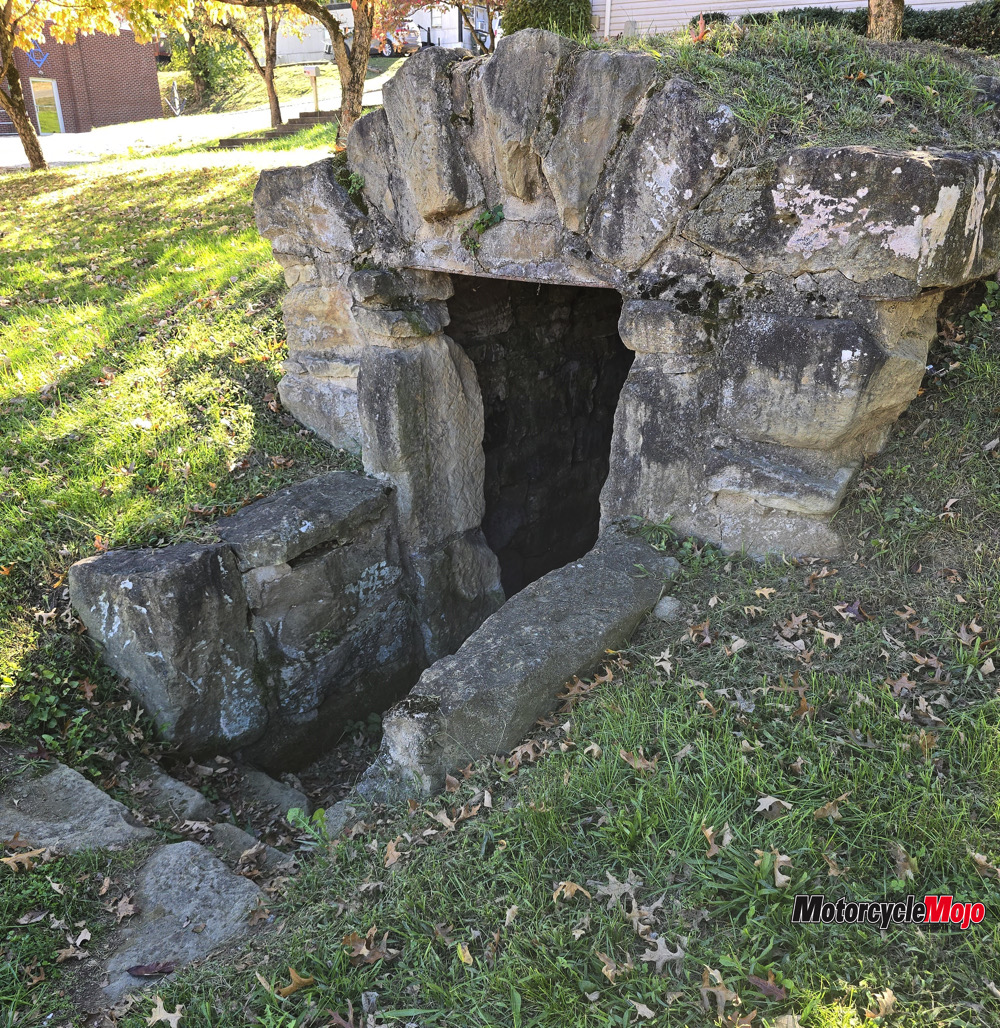
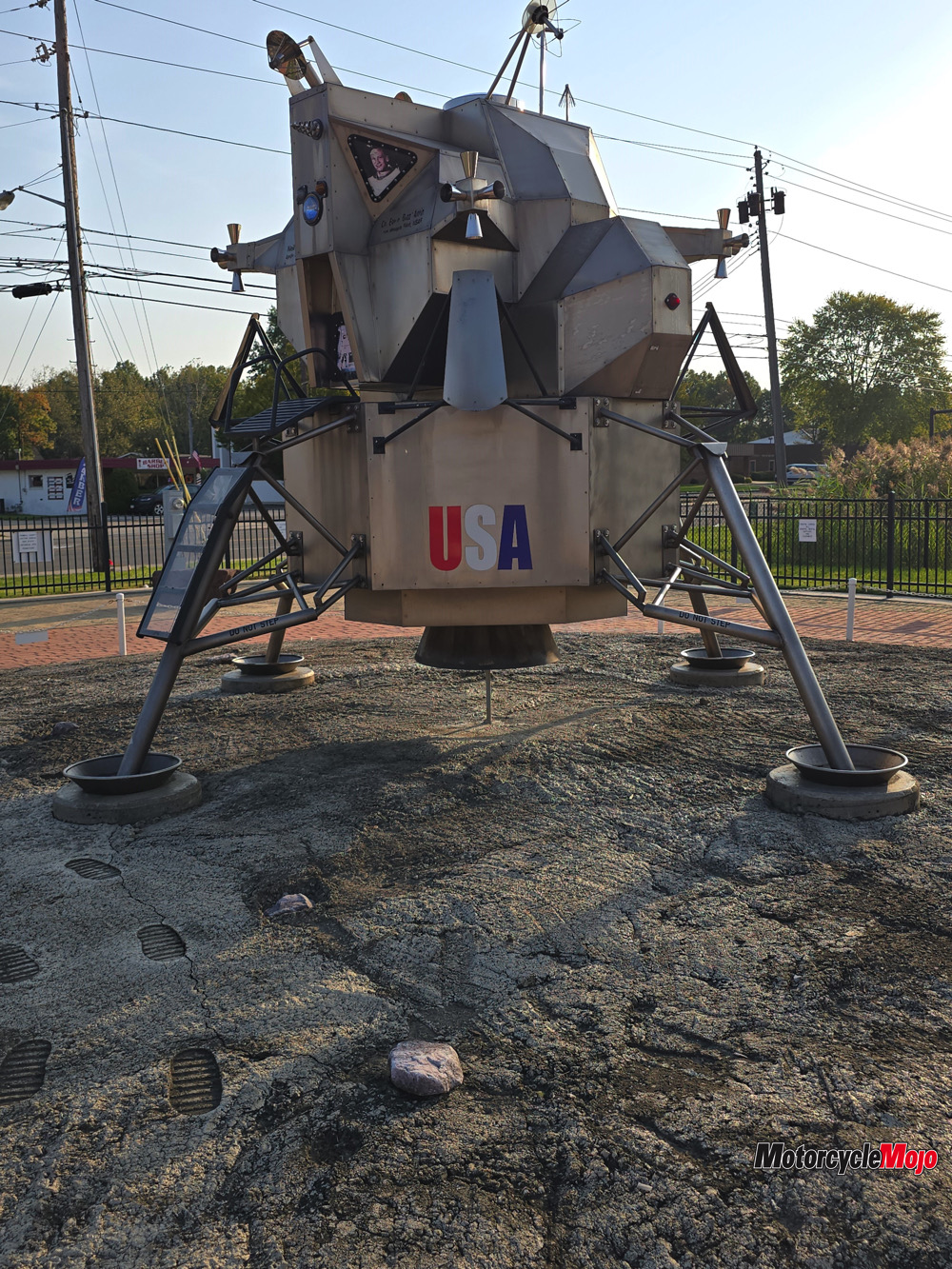
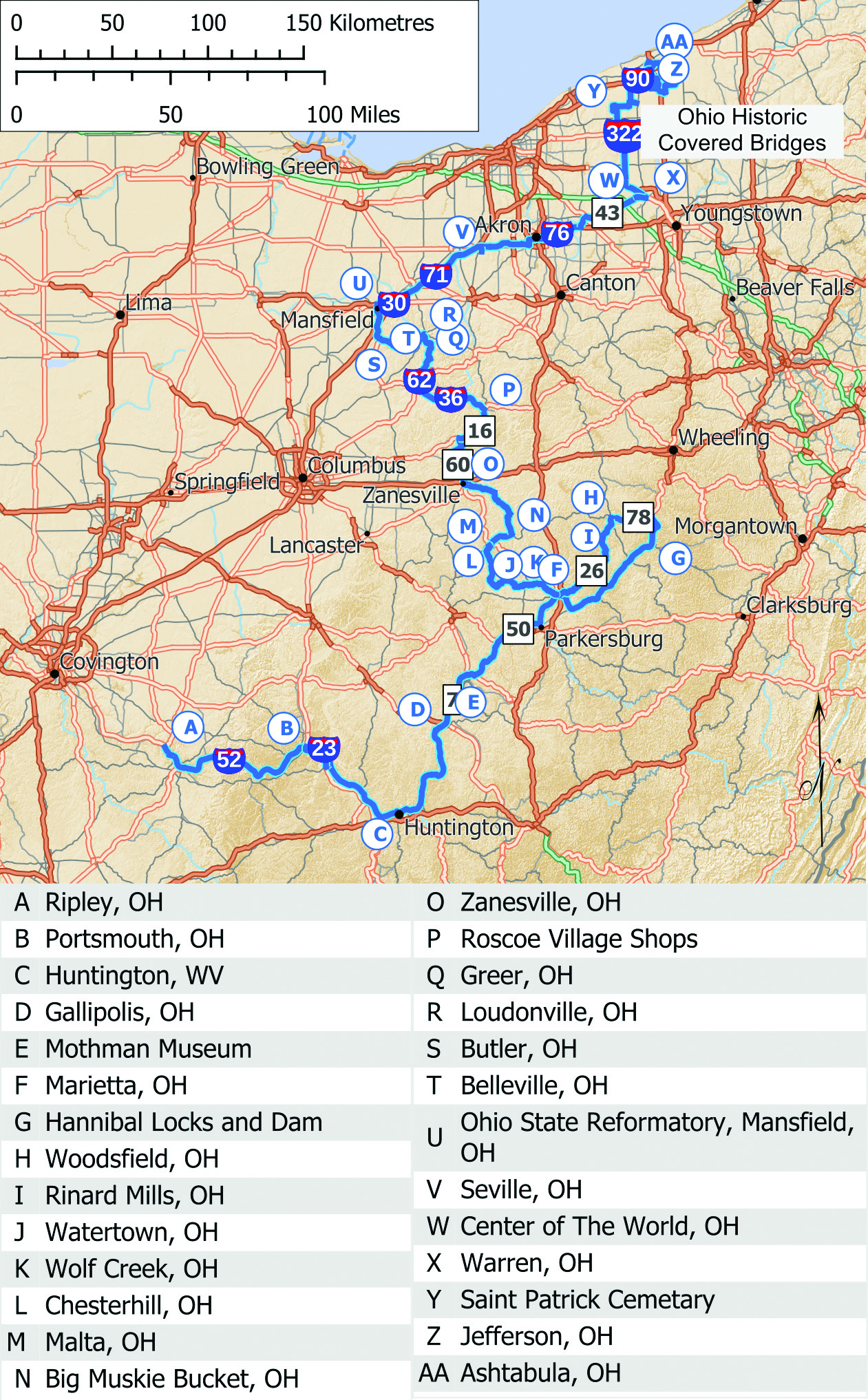
It had been years since I’d spent any time in Ohio, so returning home from a trip through the South seemed like the perfect opportunity to revisit the 17th state. I knew there is a lot of great riding in southeastern Ohio — it is, after all, just across the river from “Mountain Mama” West Virginia. And I knew the most famous routes are the Triple Nickel, which runs from Little Hocking to Zanesville, and the Windy 9, an exceptional collection of loops based out of Athens. But because I had enjoyed these on several previous adventures, I was on the lookout for something new.
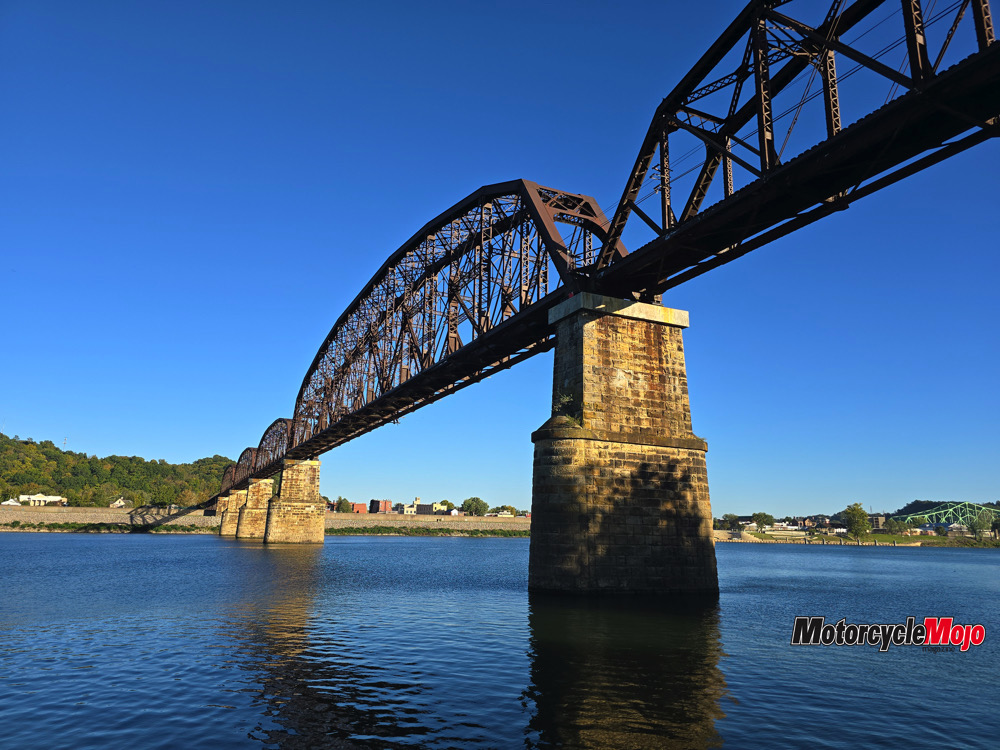
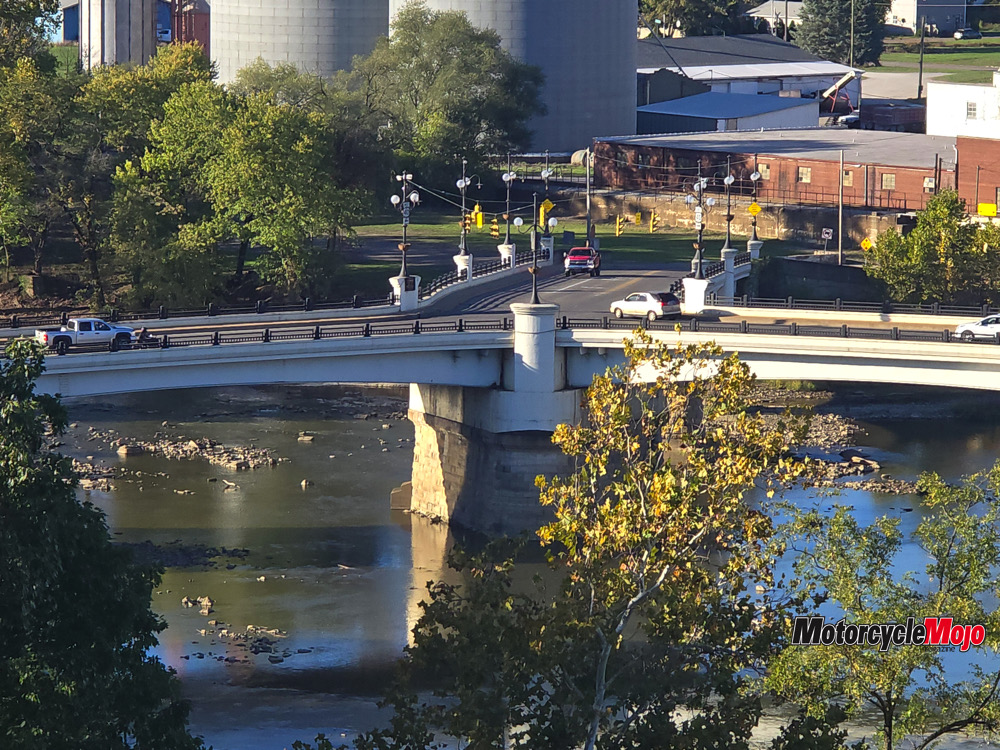
So after descending from the Kentucky hills, I crossed over the Ohio River and picked up the Ohio River Scenic Byway, a historic ribbon that meanders along the banks and offered almost continuous views of the water. The entire road runs over 1,517 kilometres and spans three states — making it an outing for another time. But my wandering homeward journey allowed for a byway sampling, and I began in Ripley.
The Underground Railroad
Positioned directly across the water from the slave state of Kentucky, Ripley had been home to John and Jean Rankin, two of the earliest and most active “conductors” on the Underground Railroad. Their solitary red brick house stood high on a bluff overlooking the village and the river. I toured their home and, as I stood on the front porch, I imagined the lantern they faithfully set in their front window every night as a beacon.
Then immediately below on the riverbank, I visited the home and iron foundry of John P. Parker, a freed slave who, by day, worked as a skilled tradesman and, by night, joined the Rankins in shuttling over 2,000 slaves north to freedom. While they necessarily kept a low profile, history would recognize the trio for their courageous heroism.
As I turned east, sunlight danced on the olive-green surface of the river. Through the blur of trees, I glimpsed a heavy barge moving slow under its burden of coal. And rolling through Portsmouth, I noticed that, like many Appalachian towns, it was pressed into an oblong shape between the steep slopes and the river.
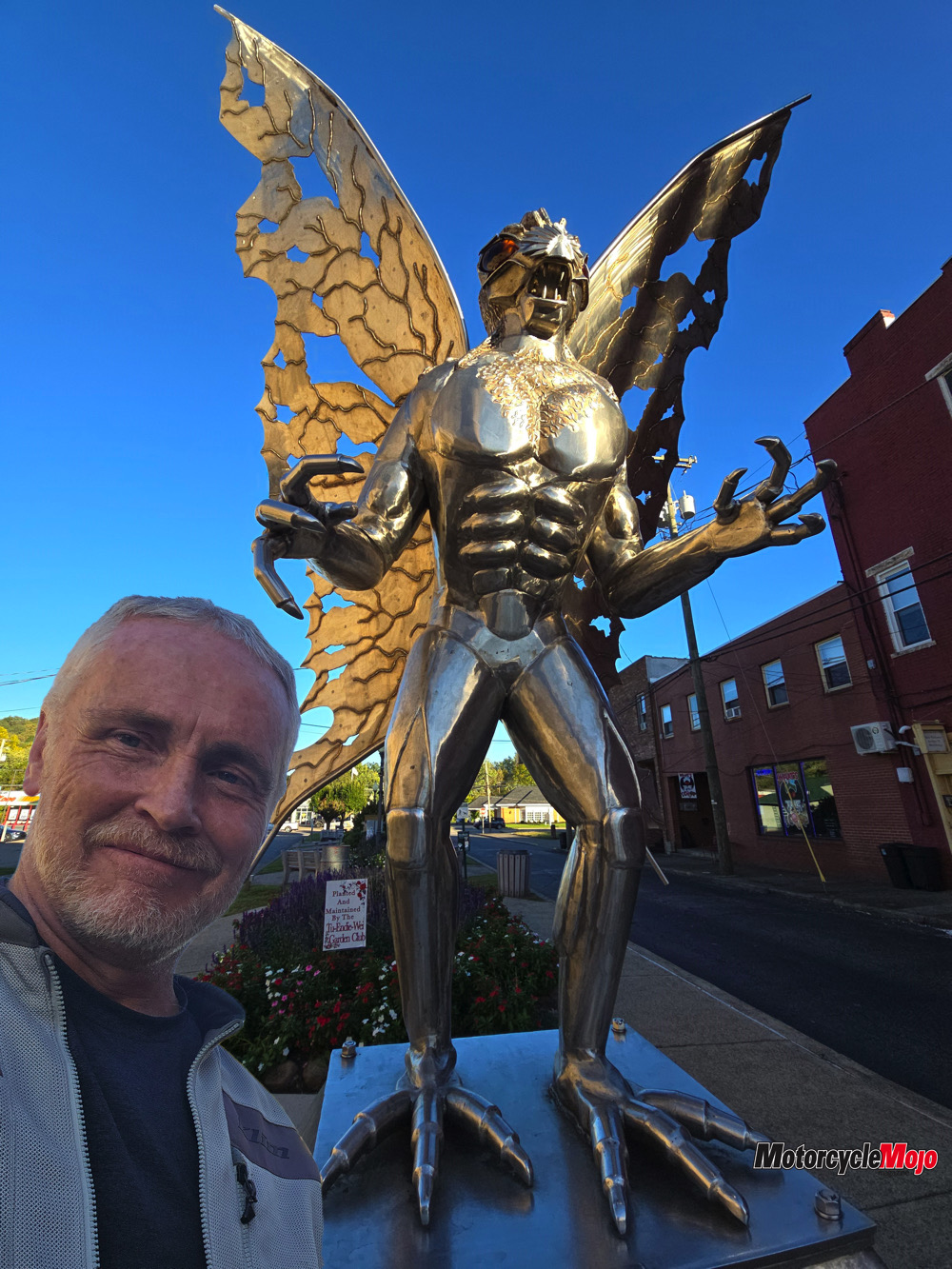
Mothman
In Gallipolis, I stopped to explore the Silver Bridge Disaster Memorial commemorating the 1967…
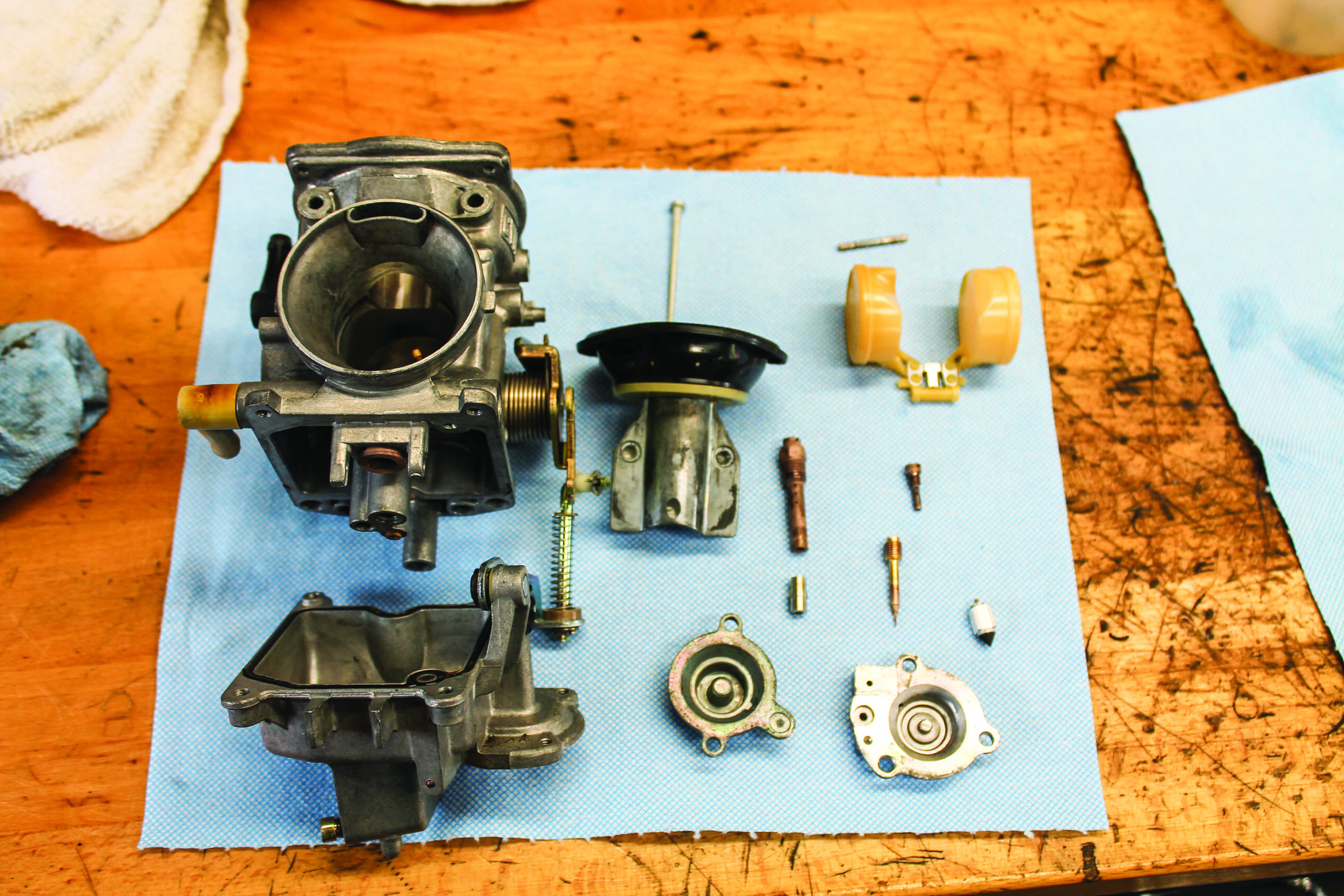
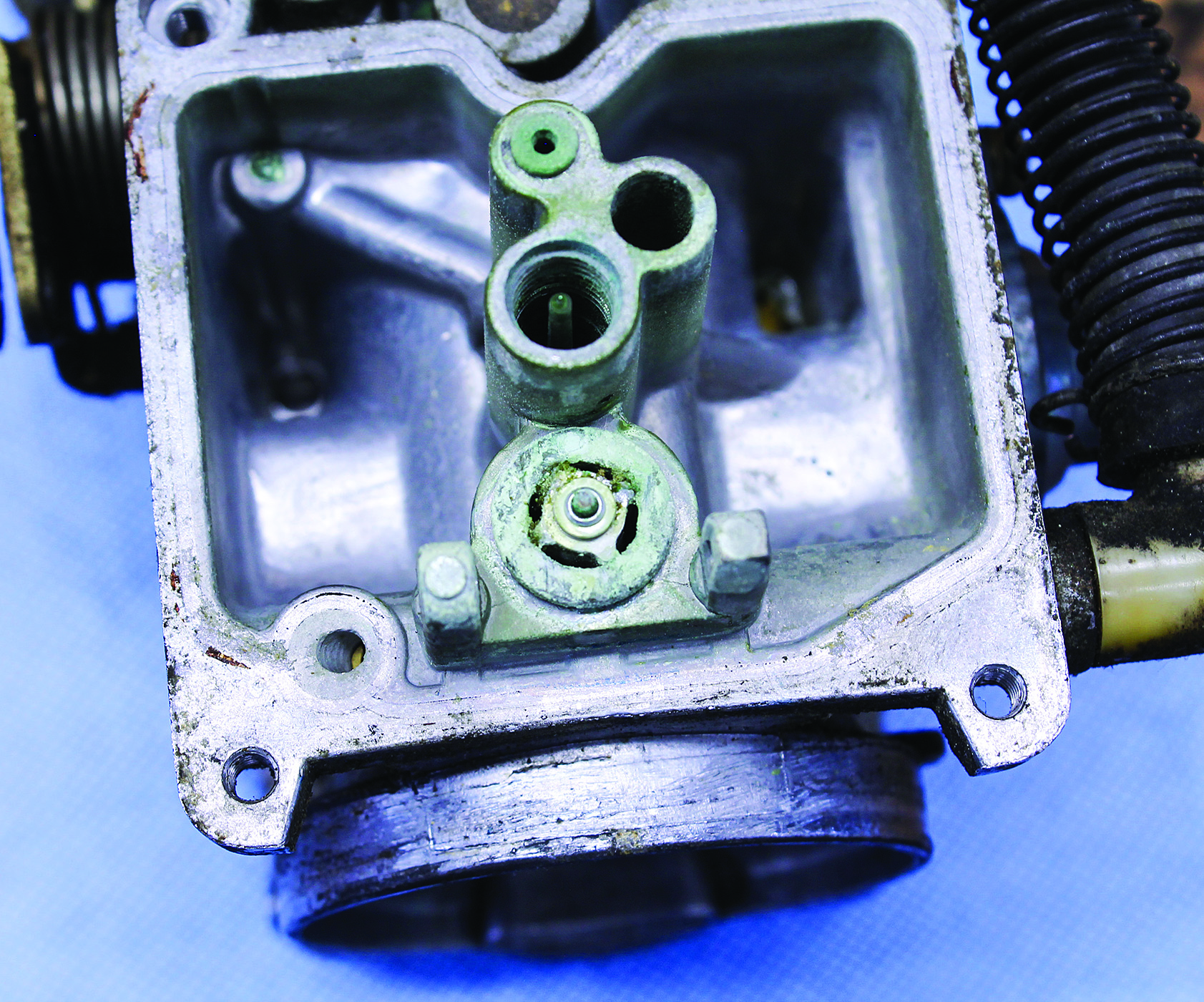
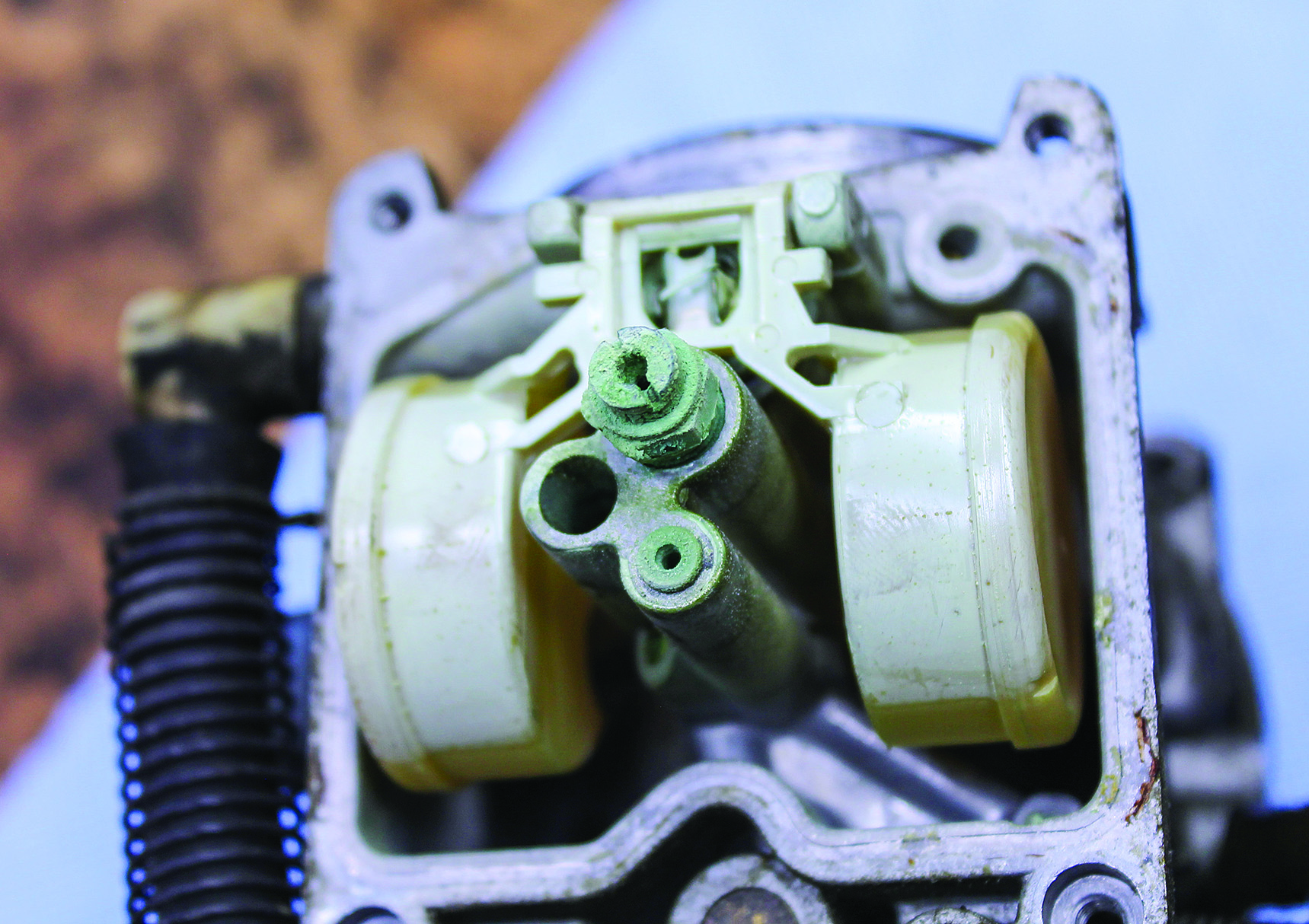
An efficient tool to clean plugged carburetor internals, as well as other small parts
A friend of mine recently got a great deal on two motorcycles as the result of an estate sale: a 2003 Harley Super Glide and a 1997 Kawasaki Vulcan 800. While both bikes are in good condition, neither has run in about 10 years. He plans on keeping the Super Glide, but will be selling the Vulcan (I’d do the same…), so we started working on that one.
The seller did not know the maintenance history of the bikes, nor whether they had been properly stored when put away a decade ago — draining the fuel, fogging the cylinders, etc. However, the bikes had been stored in a heated garage. We therefore assumed that they probably hadn’t been stored correctly, but that they would nonetheless be in good condition because they hadn’t spent a decade outdoors.
The first thing we tackled was the Vulcan’s fuel system; a decade of dormancy would have wreaked havoc on it. A look into the Vulcan’s fuel tank revealed that it was completely dry and in good condition — maybe the bikes had been stored properly after all. That proved not to be the case. Once the carburetor was removed, the lack of pre-storage prep became evident: a thick, hardened crust of long-rotted gasoline coated the jets, blocked internal passages, and jammed the float needle into its seat.
While light carb deposits are relatively easy to remove with a brush, and the inside of jets can be cleaned with solvent and compressed air, it is very difficult to clear the small passages bored into the carburetor body, especially if the buildup has solidified. This hardened crust would need a more effective removal strategy. That strategy included using an ultrasonic cleaner.
My ultrasonic cleaner was given to me by a friend, but they are readily available and affordable, and can be found online from about $50 to $250 depending on the capacity. My 6.5-litre unit can fit a couple of carburetor bodies at a time (I have to disassemble inline four carbs), and it cost about $120.
An ultrasonic cleaner has a container in which you add a cleaning solution, which is then bombarded with high-frequency sound waves. The sound waves agitate the cleaning solution, forming tiny cavitation bubbles that burst when they come into contact with whatever is being cleaned. This bursting action combines with the cleaning solution, which softens up the contaminant and removes the crud entirely.
Sound frequency ranges from 40 to 60 kHz; higher frequencies create smaller bubbles, which can get into very tight spots, but it takes longer. My 40-kHz cleaner is more than adequate for the type of work I do. Some ultrasonic cleaners, like mine, also heat the fluid, which further softens contaminants.
I already had a smaller ultrasonic cleaner to clean watch parts (watch repair is a hobby of mine), which I had also used successfully to clean carburetor parts. This larger one is more powerful, and I can fit larger parts into it. I have tried many cleaning solutions, including dishwashing liquid and water, acetone, lighter fluid, vinegar and water, and a few other home-brewed recipes. Some of them worked well, but none of them were as thorough as the dedicated ultrasonic cleaning solution I use now. This specialized solution is water-based, it doesn’t create toxic fumes, it doesn’t harm plastic or rubber, and it works wonders. There are several brands you can buy online; I use Allstar Performance 10644. The price is about $60 for a one-gallon jug.
To save on cleaning solution, for small parts I fill the tank with water and place the cleaning fluid and parts in a glass jar. The water and glass jar do an excellent job of transferring the high-frequency vibrations into the cleaning solution. If I have to clean larger parts I pour the solution directly into the ultrasonic cleaner, but once I’m done, I filter the used solution with a cheesecloth and reuse it.
After the carburetor was taken apart, I placed all the parts into the ultrasonic cleaner with the cleaning solution at full strength (it can be diluted with water). I set the timer to 20 minutes and the heat to 40 degrees Celsius.
The ultrasonic cleaner bussed away, and when the timer ran out, the parts came out looking almost like new. Clogged jets cleared up, and the float needle cleaned up and worked its way out of its seat. The cleaning solution made the aluminum carburetor body look almost pristine, but it did darken the brass jets and main nozzle. This had no effect on the carb’s operation, but you should test parts in the solution before cleaning them, especially if they are aesthetic parts. After rinsing all the parts with water and blowing them dry, I assembled and installed the carburetor. The bike fired up immediately.
Now that we’re done with the Vulcan, next up is the Harley’s carburetor.
I suppose not everything can work perfectly all the time; things tend to break — even new things.
Glenn and I were returning from the Horizons Unlimited CanWest meet in Nakusp, B.C. We had just finished a long gravel stretch and back on Highway 6 to return home (for anyone looking for twisties in B.C., Hwy 6 is a top-notch ride).We weren’t on the highway for 10 minutes before my new BMW F900 GS lost power — no engine, display, or lights. Everything just stopped. I signalled to pull over with my foot, letting Glenn know I was stopping.
We started trying to diagnose the issue by disconnecting and reconnecting the battery, pulling the main fuse and fiddling with the wiring. Nothing seemed to work. We decided it was time to call in a tow and work on other forms of transport to get back home. We called BCAA and were told it would be up to 90 minutes for a driver to be dispatched, plus travel time.
We waited in the blazing sun — the temperature reaching 34 C — and the road offered no shade, with only the passing of cars offering a slight breeze to help cool us.
We experienced many acts of kindness: some motorcyclists slowing to make sure we were okay, and a few locals stopping to offer help — one person returned with fresh water and fruit. Two others stopped, letting us know there was a person just down the road who could tow the bike. Glenn went to speak with Reese, the person who was able to tow us, while I sat with my bike and gear that was strewn along the shoulder of the road.
Glenn returned 30 minutes later with word that BCAA had sent the tow truck in the wrong direction and that the local tow truck driver was going to come and pick up my bike. We loaded it up and left it at his place, to be picked up by us later that night.
I hopped on the back of Glenn’s bike and off we went for a two-hour ride back to Vernon. Once there, I got my truck and hooked up a bike trailer, and we made our way back to Reese’s place to pick up the bike. After another four hours of travel, we had finally returned with the bike.
Thinking about my next steps, I remembered that BMW offers roadside assistance. I gave them a call to organize a tow to my local dealership, Kelowna Powersports. It was incredibly easy, and the best part was that I was speaking with a fellow motorcyclist on the other end. He arranged the tow for the next morning, and BMW sent me updates through text to let me know when the truck would arrive to transport the bike.
The bike was at the shop for just over a week to go over the whole electrical system on the F900 GS, and after reconnecting everything, it seemed there was a bad connection somewhere. Although my bike is now running reliably, I can’t help but feel a mix of emotions: frustration about my motorcycle and the knowledge I lack to fix it myself, and gratitude that I chose to go with a BMW, which offers services like this to help relieve the customer if and when something happens with their vehicle.
I’ll be going to pick up the bike in a few days and have asked the technician to go over the electrical system and connections with me. Hopefully after that, if it happens again, I’ll know how to go about fixing it myself.
It raises the question: why not keep it simple with barebones machines? Many of us rely heavily on the electronics offered in machines these days, but in doing so, we minimize the understanding we may have that allows us to work on them. Machines are inherently becoming less machine and more digital equipment, requiring specific computers for repairs instead of basic tools — much of which cannot be purchased by the consumer. Let me conclude by saying that this can happen with any machine; the downside with electronic systems in motorcycles is that you will be unable to even diagnose the problem let alone fix it yourself.
I’m hoping that I don’t have to experience a complete electronic failure again with my bike. Of course, there’s no certainty in the world, especially when it comes to things we don’t understand. As riders, we do a lot to ensure our bikes don’t break. However, in this day and age it would seem more worthwhile to brush up on your knowledge of electronic wiring and connections if you’re going to be riding a new motorcycle.
Did Donald Trump just kill the electric motorcycle? That’s not a rhetorical question. Or even, believe it or not, an inflammatory one. It’s a serious question for which — loyal readers prepare to be stunned — I profess no answer.
The reason I ask is that California’s electric vehicle mandate is well and truly on the rocks. Actually, it’d be fairer to say it’s almost surely going to be rescinded. I’ll try to keep the boring legalese as short as possible, but essentially, the breakdown is as follows:
California has long been granted the right to set its own emissions standard through its Air Resources Board (the famed — or notorious, depending on where you sit on the environmentalism fence — CARB) with permission from the Environmental Protection Agency. In the United States, the environment is a federal jurisdiction, but because the Golden State’s pollution was so bad in the 1960s it was granted a waiver to set its own emissions standards for automobiles and motorcycles. Two things are important about that: First, that 17 other states — representing about 40 per cent of American vehicles — have copied Cali’s emissions rules; and, secondly, that 13 of those have instituted its EV mandate.
Said EV mandate, as the news has often trumpeted, infuriates Donald Trump. This term, unlike his first, he’s actually managed to get Congress onboard, with both the Senate and the House of Representatives voting to rescind the EPA’s right to let California set its own state standards.
As one might imagine, all manner of lawsuits is pending. But the Republicans — or, at least, their advisors — have been smarter than usual, and they used a little-known procedure called the Congressional Review Act to perform their devil’s work. The only reason I mention such boring machinations is that the CRA explicitly says that its decisions can’t be challenged in court, even by the Supremes.
I’ve put way too much time into studying this and have concluded that save for one last Hail Mary — essentially a procedural definition of what a “rule” is — California’s EV mandate is done like dinner.
Why should that matter to we Canadians?
Well firstly, you need to know that California is not only the leader in emissions regulation; it’s the spiritual home of EV mandates. Quebec’s original EV mandate was a virtual copy of California’s translated into French and kilometres per hour. As I also said, a whole bunch of American states copy its rules. In other words, if California’s mandate is rescinded, so are all the other states’ which means, economies of scale being what they are, manufacturers — both four-wheeled and two — are not going to produce battery-powered vehicles for Canada alone just to meet our EV quotas.
Quebec has already accepted this reality, and announced, as I was writing this column, that it is slowing down its mandated transition to electrics. British Columbia, the only other province with a similar program, will probably do so as well and the only reason the federal government hasn’t pulled the plug on our national program is that Prime Minister Mark Carney is keeping the offer of eliminating it in his pocket as a bargaining chip for his tariff talks with Trump.
What’s the fallout from these sudden about-faces?
Well, obviously fewer electric vehicles are going to get sold. Automakers are already putting many of their EV plans on hold or scaling them back. That said, the electric car will survive, albeit in significantly reduced numbers compared with some of the fantastical projections bandied about. But they will survive.
Electric motorcycles? They would, at least in North America, seem doomed. As I have noted before in this column, the number of full-sized battery-
powered motorcycles — say, 250-cc
equivalents and larger sell in incredibly low numbers. Zero Motorcycles, the world’s largest manufacturer of zero-emission bikes, probably sells less than 4,000 units per year globally — they refuse to actually divulge numbers, probably out of embarrassment.
Some of the few actual registration figures we have access to suggest that, of the million-plus motorcycles registered in bike-mad UK, fewer than 0.04 per cent are electric. And, as loudly as introductions of new electric superbikes are trumpeted by the media — can you say Damon? — their inevitable demise passes largely unnoticed. The graveyard of failed electric motorcycle manufacturers is full and methinks we’re going to need more space.
So, what comes next?
That’s where we go back to my first paragraph. I, who likes to at least pretend to have all the answers, don’t know. If automobile manufacturers are cutting back their EV plans and venture funds are refusing to fund battery start-ups for cars, there’s certainly going to be no money for electric bikes.
Does the North American market just forge on with internal combustion? What about European motorcycle manufacturers? If the EU does keep its 2035 deadline for elimination of ICEs, will they keep putting money into combustion research so they can supply bikes to the U.S. market? Do American marques, Indian and Harley-Davidson, continue to try to meet foreign emissions standards more stringent than at home?
And, if the industry must continue reducing motorcycling’s carbon footprint, what are the alternatives to battery-power? Hydrogen? Not nearly ready for prime time. Hybrids? So far, motorcycle manufacturers have not, save for Kawasaki (and they’re only just starting), seriously looked into combining electric motors with piston power. Synthetic fuels? They could work, but unless the car-side gets onboard, it’s doubtful refiners will bother supplying the motorcycle market. So, like I said, I don’t know. If you have any ideas, let me know.