Triumph announces the 2020 Tiger 900
We’ve all been hearing about it, Triumph’s newest addition to the Tiger line-up – the Tiger 900. For 2020 we can expect to see the all-new, in-line 3-cylinder 900 cc (888 cc) engine, in three main models ranging from long-distance touring to technically off-road spec’d machines.
The Tiger 900 has been designed for urban adventure, commuting and touring. The Tiger 900 offers two different ride modes and a performance based road-focused ride. The Tiger 900 will be the base model for the new generation and is set to be priced starting at $12,500. The re-designed Tiger has a new chassis and engine producing 70 kW (93.9 hp) at 8,750 rpm. Triumph will also offer a Tiger 900 GT, GT Pro and GT Low with a heavy focus on on-road touring. The GT Low is somewhat self-explanatory with it being the lowered version of the GT. The GT has an adjustable seat height of 810-830 mm while the GT Low will offer comfort for those with a height disadvantage at 760-780mm seat height.
Tiger 900 Rally
The Tiger 900 Rally and Rally Pro claim to be capable of maximum off-road adventure while offering all-road comfort and style. Building on the GT’s long-distance comfort, the Rally range will have advanced focus off-road with dual-purpose spoked wheels, ABS and traction control along with full-adjustable Showa off-road suspension. The rally will offer four unique ride modes. Taking the 900 Rally one step further is the Rally Pro, with Triumph’s shift assist quickshift and six riding modes while still holding the focus on off-road riding.
As mentioned earlier we have only received pricing confirmation on the Tiger 900 starting at $12,500 but we hope to see pricing for the other 2020 models by early January. We also expect to see the bike hitting market in the first quarter of the 2020 year.
You can have a look at the all-new Tiger line-up on Triumph’s website here.
This modern classic – unchanged for 2020 – is just right for café racing
Back in the ’60s, the “British Invasion” forever changed popular culture as the music from bands such as the Beatles, the Stones, the Who and the Kinks created a fever of excitement that spread around the globe.
A similar sensation was happening in motorcycling during those years. Crowds of young riders in London, dubbed Rockers or Ton-up Boys (British slang at the time for riding above 100 mph) wore Brando-inspired black jeans and leather jackets as they raced across the city. Most famously, these riders dashed between London’s most popular cafés at the time – the Busy Bee in Watford and the Ace Café in Stonebridge – on stripped-down, highly personalized Triumphs, BSAs, Nortons and new-to-the-scene Japanese bikes we’d recognize as café racers today.
This design phenomenon – light, fast singles and twins with dropped bars, swept exhaust, rear-set foot controls and minimal bodywork – as well as the rebellious lifestyle it represented, dug its hooks in motorcycle culture and never let go.
The Anatomy of a Modern Café Racer
 Yes, that’s a long-winded introduction to Kawasaki’s W800 Café, but the truth is the model wouldn’t exist today if it weren’t for London’s Ton-up Boys. By the mid-60s, Kawasaki was sneaking up on the British brands with bikes such as its BSA A7 clone – the W1, the great-grandpappy of today’s W800.
What’s in this history lesson for me is the part about how café bikes are historically related to actually having coffee, making my plans to just hang out at some cool biker cafés in Los Angeles perfectly legit instead of racking up a ton of kilometres on the W800. Because if there is one thing that’s immediately obvious about this bike, its that it’s way more trophy than traveller.
And really, though, the W800, which has been available in Europe since 2011, is just so watchable – especially this Café version, with its tidy, retro-style headlight-mounted fairing, sparkling two-tone paint and stitched pleather saddle, black-rimmed 18-inch wire-spoke wheels and, of course, those long, slim tailpipes that end in a pair of peashooters.
The W800’s most fabulous beauty mark, however, is its bevel-driven overhead cam and exposed tower shaft situated against the two-toned retro finning of the air-cooled SOHC vertical twin, an engine with direct lineage to the original mid-1960s 650 cc W1.
Freeway Blues
 When I first picked up the Café, I was faced with some interstate riding. Unfortunately, the W800 is at a real disadvantage on the super-slab – first, because the sporty “bikini” fairing does little to block the wind and, worse, the fairing sends the wind blast up to neck level so that my helmet bobbled around. The standard W800 with its higher bar might feel better at freeway speeds, especially if a nice windshield is added.
The issue that’s more difficult to solve is vibration. While riding around town and I am all over the power band, the W feels pretty fun. But when I am running a consistent throttle, avoiding some nagging buzz is tough to do. What begins as a deep pulsation felt mostly through the bar and seat up through 4,000 rpm quickly spools up into a high-frequency vibration – imagine an electric toothbrush – above 4,000 rpm. Sadly, any sweet spot is right near the 7,000 rpm red line, when travelling at speeds in excess of 130 km/h.
To make matters worse – at least, for me, in Southern California, where the freeways have deep squiggly “rain grooves” – the stock Dunlop 300K GP tires, which look just like old-school rubber from the 1960s, track the grooves and shimmy the bike like crazy. Some journalist friends had warned me about this, and I thought them losers for being sketched out by rain grooves. The warning turned out to be no joke, making the tires the first thing I’d change on the bike. Luckily, grooved pavement is a rarity in the provinces.
Once in the heart of the city, I could more readily appreciate the W800 Café’s charms, including the dutiful purr slipping through its retro silencers. The bike, being so slim in stature, is easy to mount, although a lofty 790 mm seat height may limit accessibility. A hefty curb weight, listed at 222 kg, is well-centred and the bike feels light enough when I was shuffling around the parking lot.
That cool Clubman-style bar insinuates clip-on café-racer ergos, and does create a reach for the rider. And in what feels like engineering sleight of hand, the bike’s beautiful, easy-to-read analog instrument pods are situated high in the cowling, which gave me a feeling of being in a tank-embracing crouch at all times.
Foot pegs on the Café are high enough to feel sporty, yet were placed evenly under me, allowing my upper body to be supported – at least, partly – by my legs instead of my wrists.
Coffee Shop Racer Doesn’t Sound as Good
 The first coffee shop I hit in Southern California was the famous Deus ex Machina in Venice because I knew the W800 would find some retro friends to park with. Locals just say “Deus Café” – probably because listening to everyone mispronounce “machina” is so tiresome. (Hint: it doesn’t sound like “machine-ah”). What this Latin term meant in historical Greek culture is “god from the machine,” and it refers to a plot twist in playwriting where a god is introduced into a scene – at times, actually lowered onto the stage using a cable device (that is, a “machina”) to resolve entanglements in the plot.
Already well-caffeinated, I explained all this to a couple of non-riding tourists sitting near me on the back patio of the Deus Café overlooking a small sea of motorcycles, ranging from vintage rat to shiny new. However, my companions had already bought the $50 T-shirts and were happier with the café’s appropriation of the term. When I pointed out the W800 in the parking lot, they asked me if it was old or new – a question I would hear several more times on my tour of cafés, which told me Kawasaki had really nailed the bike’s styling.
I clutched my way out of the Deus parking lot just as an MV Agusta meet-up was getting under way and motored up Venice Boulevard to Alana’s Coffee Roasters, where I tossed back another cup of joe before “racing” up surface streets to bicycle-centric 10 Speed Coffee in Santa Monica. Of course, I was full of pastries and caffeinated to the gills by this point, so I headed up into the Santa Monica Mountains to burn off some energy.
Racing the Café
On these steep and twisty mountain roads, the W800 Café was pretty fun to ride at a moderate pace. While the power is nothing to write home about, torque in the low range is sufficient and there’s a pleasing amount of juice available between 4,000 and the 7,000 rpm red line.
The steering, which feels a bit heavy around town, lightens with speed and, if I was smooth, the bike tracks a true line through the trickiest of corners. Suspension, however, is on the soft side and a bit springy when I hit a bump or make adjustments with the brakes or throttle. The sensation is more rocking horse than rodeo, though, and dragging a smidgen of rear brake helps calm things down.
When stopping, the W800’s ABS-equipped single discs front and rear will do the job, although not quite to the standard we expect from modern brake sets. To be fair, even though the Café is styled as a “racing” bike, no one is going to buy one with the intention of winning races. The ironic thing is how the W800 Café feels just a little too much like a heritage bike, albeit one that won’t need constant wrenching.
The best “modern” feature on the W800 is its super-light, goofproof assist-and-slipper clutch, which allows for clutchless shifts and provides truly feather light clutch action when the lever is employed. The clutch also kept the rear wheel from hopping if I prematurely shifted into too short a gear.
The Trouble With Oxymorons
Late in the afternoon, I want to find one more neat café, but end up at a Starbucks instead. Nothing nostalgic here, but the efficiency factor of being able to order from the Starbucks app before I even walk through the door is satisfying. As with modern bikes, ease of use can outweigh lack of character – for me, at least.
If you’re in the market for a modern classic motorcycle, however, then character is high on your list of priorities. That the W800 Café has in spades. However, when you compare it to some of the other heritage bikes on the market, you’re going to need to triangulate style versus functionality versus expense.
I’d be more enamoured with the Café if I felt it were reasonably priced, but $11,499 is a big ask. Its basic sibling, the straight-up W800, which is the same bike minus the Café styling, is $1,100 less … and undoubtedly more versatile.
And then there are the British options, a resurgence of bikes coming straight from the country where café racing was born. A comparable heritage bike from Triumph – for example, the new Street Twin – may not be as period-perfect with its liquid-cooled, eight-valve, SOHC parallel-twin, but the heritage version is lighter and faster and $10,600. In fact, nostalgia comes in many modern flavours these days, from the classic Royal Enfield Continental GT ($8,240) to BMW’s extremely cool R nineT Racer ($15,050).
As I pulled up to my friend’s house, where I would spend the night in the Hollywood Hills, I parked the W800 Café in front of a garage that was literally spilling over with vintage European bikes and cars. And as I stepped off the Kawasaki, I felt a wave of reverence as it melted right into the cool scene.
The bike seemed to be saying, “Give me a break. It’s not easy being a ‘modern classic.’” And it’s true. Finding fault with a heritage motorcycle for feeling too retro is unfair. And here, in this garage, the W800 Café certainly seemed special … and not only for the fact it wasn’t leaking oil.
This grassroots track has been running for many years and caters to all skill levels, including those of children
Just off of Highway 99 between Whistler and Pemberton, B.C., is a little gem of a motocross track facility called Green River MX. Tucked into the shadow of snow-capped mountains, these family-friendly configurations offer riders of all abilities the chance to rip it up in a seriously relaxed environment.

If you’re heading north out of Whistler, a few minutes past the Welcome to Pemberton sign, look to your right and you’ll glimpse some rolling ribbons of dirt that wind their way though a dark green forest and then parallel the famed Sea to Sky Highway. Small to medium jumps, berms and whoops are visible from the roadside as the track curves back on itself and runs alongside an access road that is perfect for spectating and photo ops.
If you’re not paying attention, the turnoff can be easy to miss. A small sign indicates that there is a track at that location; an inconspicuous storage container serves as the “office.” Riders must sign waivers that are placed outside on a picnic table, then pay either a daily fee or write down their membership number before heading to the parking area. Everyone is greeted with a friendly smile or wave from whomever is helping out that day. And when I say “helping out,” I mean volunteering their time so the track can run.
Many Hands Make Light Work
 Green River MX is a non-profit community-run facility. All monies collected at the gate from rider and membership fees are funnelled back into the track. As Sean Holmes, member and volunteer, explained, “We as a group of people collectively run this place.”
The track has been in operation at this location for almost 18 years. The land is leased though a partnership among the Ministry of Transportation, BC Hydro and the Squamish Lillooet Regional District of Pemberton. “We have to keep all those parties happy,” explained Holmes. “That means we clear all the BC Hydro brush, we keep the rivers and waterways clear, and we have fencing across the river, which we also manage. It’s a lot of work.”
Kevin Labatte is the current president and has held the role for six or seven years, but he has been with the club a lot longer. Holmes and Labatte work together with many other generous people, including Jody Dean, who helps with Coastal Mountain Excavation and the heavy equipment used to prep and groom the track, Adam Gable, Nick Antol, Shea Stuart, Derik Bergan, and more. They continuously put in several hours of work to groom, water and maintain the track. “Everyone helps out at the gate and with track maintenance,” said Holmes. “It’s a community effort, entirely
volunteer-run. Every penny we get goes into the track or into the equipment used to keep the track safe and in good shape, such as sprinkler systems, equipment, water truck, et cetera.”
The Best Type of Community
 When I asked Holmes why he does it, he said simply “I love motocross. I love watching the women and the kids [ride]. I’ve played a lot of sports in my lifetime, and this community is by far the very best.”
Getting to Pemberton takes slightly less than two hours from our home in North Vancouver. We love the scenic drive and the kids are used to sitting in the truck, squished in between the dog and all the riding gear. Somehow we manage to fit four dirt bikes in the bed of the pickup – two YZ 125s, an RM 65 and a DRZ 70 – along with gas cans, camping chairs, tools, water and snacks for the day.
As you drive into the large flat setting up for dirt bike riding in the bush. Nature, trees, a little river, West Coast wilderness and mountains can be seen from the track.
Pickup trucks and cars with trailers line the back edge of the parking lot, where there are some nice trees for shade and some cut-up stumps that act as bike stands or seats. Riders range in age from tiny little kids with training wheels on their PW 50s to seasoned riders in their 50s and 60s. Dogs are allowed on the grounds, although a recent caution was sent out to keep them on leash as a Mama Bear and some cubs had been spotted on club property.
All Skill Levels Welcome
The parking area faces the entrance/exit of the big track and the start gate (when the latter is in use for races and events), and an orange ribbon serves to tell riders whether the track is open or closed for watering. There are no flaggers unless there is a special event, as there just aren’t enough volunteers to do flag, yet all riders look out for each other and stop to help if they see someone in need. There are no specific groups that rotate out at certain times unless it’s a Tuesday evening, which is reserved for family nights, kids and new riders. This is a time for parents to ride with their kids or for adults to ride with their beginner friends or novice partners. The track is open Tuesdays, Wednesdays and Fridays, from 5 p.m. to 9 p.m., Saturdays, from 10 a.m. to 6 p.m.; and Sundays, from 10 a.m. to 5 p.m.
To the left of the parking lot is a small kids-only track. A hand-painted sign states: Small Bikes Only, Big Bikes Get Lost! This fun little configuration is visible from the entire parking lot, so kids with enough experience can zip over from their pit areas and ride. I’m always amazed at the care and respect they have at such young ages, passing slower riders cautiously, helping others and often riding with impeccable skill and technique.
Laidback Track
This is the kind of chill motocross track that is friendly and relaxed, with jumps that aren’t threatening to newer riders, who can gradually progress in the height and distance of their airtime without needing to make a double or clear a gap. This is the kind of track where the kids can rip around in the parking area or on either the little or big track, or play in the forested area safely while mom and dad enjoy their own riding.
The track feels old-school – the way motocross should be: you show up and park next to your buddies and enjoy rolling out whenever you’re ready; without too many flags and rules and taking turns all the time; and without fear of riding with people who are too fast or too slow or who jump too high or who might land on you because, well, it is a track that is suitable for all levels of riders. As Holmes said, “We have very little equipment to work with, but we are a more beginner-friendly track. We’ve learned from experience and from some crashes, and have made the track considerably safer over the years.”
Camping is allowed at $20/night, but no campfires or drones are allowed – ever. Limited resources mean that Green River MX currently runs only one race per year under the sanctioning body Future West. (This year, a new record was set: more than 330 entries.)
If you’re keen to check out this facility, be sure to thank the volunteers for their time and effort in keeping and maintaining this awesome track. Like Holmes said, “We all do it just for the love of it. We do it to grow this incredible sport.”
For more information, check out: Green River MX on Facebook.
You don’t need to know the intricacies of GPS technology, but there are some basics you may find handy if you’re in the market for one
It’s happened to most of us. You’re riding, soaking up the sun with the wind caressing your face, when the realization hits that … you’re not lost; you just don’t quite know where you are. You pull off to the side of the road and scour your tank bag for your trusty map, only to find that the crease lines that you were so careful to use have now become your enemy and turned your map into various-sized puzzle pieces. On top of that, even if your map was still intact, you probably wouldn’t be able to figure out where you are anyway.

After experiencing this more than a few times, I decided to call on the expertise of Adam Meffe, general manager of Radio World, to impart his knowledge and guidance for us to better understand motorcycle GPS systems. Radio World has mastered the technology and is the largest Canadian retailer of all things radio, transceiver and location-related devices. You can find Radio World online at radioworld.ca
or at its location in Toronto.
Before you head over to the store and pick up your first, or next, GPS, here are some things you’ll want to know.
Some Things to Know First
GPS stands for Global Positioning System; this comprises 31 satellites orbiting in space at an altitude of 20,000 km
above the earth. All these satellites are owned and operated by the United States and were originally put in place for military navigation before being integrated into civilian devices. The first of these satellites was launched in 1990, and became fully operational in 1995. New satellites continue to be launched to maintain and improve location accuracy. GPS can be used around the world, as at least four to 12 satellites are “visible” at all times. No matter where you are in the world, you can be tracked with GPS; however, you may find that your GPS becomes slightly less accurate as you approach the Arctic Circle because there is only the minimum four satellites in use to determine your position.
What the Heck is GLONASS?
 GLONASS, or Global Navigation Satellite System (or Globalnaya Navigazionnaya Sputnikovaya), is Russia’s version of GPS. This system consists of 24 satellites orbiting around the earth. Although GLONASS began development in 1976, the system has just recently been used alongside GPS in our devices. GLONASS allows for better location coverage, especially in more northern areas and for mobile devices.
Tracks Versus Routes
You may think tracks and routes are the same thing, but they are quite different.
A route is a predefined path consisting of waypoints that are input, which determines a path. Routes are what we typically use to guide us on our journey and are created either on a computer or directly on our GPS. Routes provide directions from waypoint to waypoint, and your suggested route may change if you miss a turn or if there is traffic or other obstructions in your path.
Tracks act in a similar way as Hansel and Gretel’s breadcrumb trail: like following in someone else’s tracks. No waypoints – just a set path – and you will be directed back to the track only if you miss a turn. Tracks are often used in many navigation or adventure rallies to plan the ride for the day. Most new GPS units, especially models meant specifically for motorcycling, have the option for both track and route to be preset on the device. You also have the ability to share and adjust your tracks and routes.
How Much is a Motorcycle GPS?
Smaller-display models of Garmin or TomTom will start at slightly more than $500, while larger-display models can reach up to $899.
Okay, so there are some basics. Although, after seeing the price range for these GPS units, you may look at the pile of bills next to you and think that you’ll just buy a roll of two-dollar tape to reassemble your now 100-piece map puzzle back together. Or get a cheapie from the “everything store” down the street. Well, don’t. Having a reliable GPS is worth it, especially if you plan to travel long distances or participate in rallies.
Meffe’s customers often ask him why they should spend $500-plus on a motorcycle-specific GPS when they can go to Canadian Tire and buy a car GPS for $100. Meffe explains that motorcycle-specific GPS devices are waterproof, vibrationproof and offer glove-friendly displays. This type of system also includes a RAM mount and a power harness that you can hardwire into your motorcycle so the GPS will remain powered up through the day, along with features that car GPSes don’t offer.
What’s Your Riding Style?
You can set both tracks and routes on motorcycle GPS devices, and they even allow you to specify your riding style – you can choose modes such as curvy roads, hills, off-road, and so on. Not to mention the devices will connect to Wi-Fi and prompt you immediately for updates so you’re never left in the dark because of new software or changing roads.
Motorcycle GPS also offers features such as Bluetooth connectivity to your phone and receiving live traffic and weather updates (2017 models and newer). Bluetooth gives you the ability to read your text messages, answer phone calls and listen to music. “There’s a phone app that you can download. It’s important that people know that because some people don’t want to use their data, but that’s how their phone receives the traffic and weather,” Meffe states. If you’re travelling outside Canada, you’ll want to ensure that you have a good data plan to continue integrated use between your phone and GPS device.
Best of the Best
Meffe highly recommends the Garmin Zumo lineup, which offers two devices – the 396 LMT-S and the 595LM, as well as the TomTom Rider 550. However, he notes that the TomTom tends to fall short in mapping in Canada. Both brands of GPS cost the same and come with RAM mounts, a one-year warranty and a power harness for charging.
Notably, although GPSes have come a long way, they will still have issues tracking you without line of sight. Devices now try to predict if line of sight will be lost and adapt for those changes to stay as accurate as possible, but your position may become skewed after long distances in dense coverage. “Line of sight, canyons, tunnels, heavy tree coverage and even big cities can disrupt your GPS signal,” warns Meffe.
A Bluetooth headset from Sena and Cardo will integrate flawlessly with a GPS device and allow you to listen to music, calls or text messages directly from the GPS. “GPS are now multimedia hubs,” Meffe says. “You can download music to your GPS and listen wirelessly through your Bluetooth headset.”
Now that you have an idea of what features you’d like on a GPS, we hope you don’t get lost on your next trip. You have the knowledge. Now use it to keep yourself on the right track.
Discovering Nova Scotia’s western shore on the Bay of Fundy
Smooth as silk, the Fundy Rose ferry’s captain slides the ship into dock next to the Digby fishing fleet. This picturesque harbour town, originally called Conway, was renamed Digby in 1787 after Col. Robert Digby, who provided a home for the Loyalists escaping persecution in the U.S.
Gingerly, my wife Tina and I exited the auto deck and glided along the shoreline of the Annapolis Basin on our BMW R1200GS to a well-hidden break in the pines. As we rode up a meandering driveway, the scent of pine gum enveloped us as the Digby Pines Golf Resort and Spa, one of Canada’s grand old Canadian Pacific hotels, came into view. We covered the bike and got everything ready for tomorrow morning, then we enjoyed a sumptuous meal in the elegant old dining hall. The view across the manicured lawns, with the Annapolis Basin as a backdrop, is stunning and it took us back to an earlier time.
Waking up refreshed, we stepped out into the early morning sunshine under a cloudless blue sky. We mounted up and found the Evangeline Trail, a.k.a. Nova Scotia Route 1. As the GS thrummed along toward Yarmouth, we noticed that the unusually wet spring had birthed a brighter palette of greens than usual, punctuated by beds of lupins, daisies and buttercups and thickets of aromatic wild roses. Occasionally, through the evergreens, we would catch a glimpse of the azure briny water of Saint Mary’s Bay.
Guardians of the Light
After a white-and-red lighthouse grabbed my attention. I dodged gravel potholes on the way to the Gilbert’s Cove Lighthouse, which was completed in 1904. Her beacon of light guided passing lumber ships for decades; the Melanson family were the keepers of light here for two generations. The beacon was extinguished in 1984 and today the lighthouse is under the care of the Gilbert Cove and District Historical Society.
After crossing the Sissiboo River, I spotted a paved road and turned right. Riverside Road hugs the shoreline and wild roses line the road. On two wheels, the smells of spring and summer are there for the taking, so I breathed deeply. Cresting a knoll, a fawn stood in the road, looking at us wide-eyed, then trotted off into the bushes. Rounding a bend, we found ourselves back at the Evangeline Trail again without skipping a beat.
Ahead, harshly piercing the skyline, the twin towers of St. Bernard Church presented a stark change in scenery. Construction began in 1910 and took 32 years to complete. Eight thousand granite blocks were transported 195 km from Shelburne by ox teams. The stones were then cut and laid by hand, one row per year, so the church could be completed debt-free.
Unique Dish
 The Acadian culture in the Clare region is in evidence everywhere, with the Acadian flag often seen flying next to the Maple Leaf. Fish-processing plants, piers and tiny colourful fishing boats dot the shoreline as we rolled along. Acadian culture includes its unique cuisine – in particular, a dish exclusive to the Clare region called Rappie Pie. It’s not much to look at, but it certainly excites the taste buds of Acadians and others alike. Rappie is derived from patates râpées (grated potatoes), the main ingredient, which is mixed with boiled chicken, broth, chopped onions and loads of salt and pepper. Duck, goose, pork or even quahog clams are used in variations of rappie, all of which are acceptable. But using ketchup is a great sin.
Just down the road, we took another side route. Cape St. Mary’s Road winds along an expansive beach where clam diggers can be seen searching for the slimy, shelled treasures. At the dead end lies quiet, pristine Cape St. Marys, another tiny fishing community.
Back on Evangeline Trail, we arrived at Yarmouth Bar Road and followed the cape to Yarmouth Bar. The narrow road zigzags through a labyrinth of rocky outcrops, lined with fragrant roses, and we took a break at the Fishermen’s Monument. This pause gave us time to reflect on the hundreds of lives lost at sea. To this day, fishing remains one of the most dangerous professions in the world.
At the end of this road, Cape Forchu’s “apple core” lighthouse (the first of its kind in the world) soars 38 metres upward. The original lighthouse, built in 1839, was demolished in 1961 and replaced with this tower; it’s called an apple core because of its shape. From there, surrounded by acres of rocky hills, we could see The CAT ferry moored in Yarmouth Harbour. We had originally planned to cross the Bay of Fundy on The CAT, but like all cats, she had her own agenda and was not operating yet.
A Random Connection
We returned to riding along at speed on Highway 101. After sticking to its posted 90 km/h speed limit, we had our end-of-day meal at the Fundy Restaurant on the Digby boardwalk. There, we enjoyed the freshest of maritime delights and a magnificent view of the harbour. Later, strolling along the promenade, we enjoyed the music and storytelling of Al Dupuis, a one-man band. Between songs he rambled on and revealed his birthplace – Picton, Ont., in Prince Edward County – coincidentally the home of the very magazine you’re reading. Al, a treasure trove of local history, told us about the original Loyalist graveyard just up the hill from where we were standing. And not far from that, overlooking Digby, is another graveyard that accommodated people of colour. Many black people who supported the English king also came to Nova Scotia as Loyalists.
Digby is also home to the annual Wharf Rat Rally. Established in 2005, it spans five days each Labour Day weekend and attracts more than 10,000 bike riders and 30,000 people every year. Stunt riders, custom motorcycle builders, entertainers and motorcycle personalities perform and strut their stuff. The locals and merchants support the event, along with an army of volunteers.
The next morning, we took a ride through the wilderness down Digby Neck to the Tiverton Ferry, the first of two ferry crossings that took us to Brier Island and the home to Joshua Slocum. Slocum purchased The Spray, an old oyster sloop, from a retired sea captain as it lay derelict in a field. After a year and a half of work and $500 to make the boat seaworthy, Slocum set sail on July 3, 1895, from near Halifax to begin marking his place in maritime history as the first man to sail solo around the world. With only a tin clock and dead reckoning for guidance, the journey took him slightly more than three years. (Incidentally, Slocum could not swim a stroke.) His story is enshrined forever in his world-famous, bestseller Sailing Alone Around the World. Eleven years later, Slocum set sail for Venezuela from his home on Martha’s Vineyard. He disappeared at sea and his body was never found – perhaps a fitting end for a mysterious man.
Colourful Homes
 Because of the time involved in ferry crossings, we backtracked to Bear River, an artsy community built on stilts above the red tidal muck of the river bottom. Winding uphill on Purdy Road, we arrived back at the Evangeline Trail and Annapolis Royal to see the power plant that uses the tide to generate electricity. After a stop at the German Sachsen Café for a bowl of Heidi’s goulash (delicious!), we wandered along to Lawrencetown. Each town along the route is graced with colourful frame homes adorned with intricate gingerbread and fretwork that would cost a fortune today.
We wanted to see as many remote fishing villages on the western shore as possible. However, there’s no shoreline road, so we had to ride back and forth over North Mountain to see each village. While the ride over the mountain is always pretty, it is time-consuming. We chose to see Margaretsville, Port George and Hampton before riding on to Wolfville and our accommodations at the Old Orchard Inn.
The Grand Pré (literally, “large meadow”) UNESCO site is a must-see. This is the setting for the Acadian expulsion – Le Grand Dérangement – and Longfellow’s story about Evangeline and her expelled lost love, Gabriel. Acadians who refused to swear loyalty to the King of England were documented using church and census records. The British rounded up these people; their homes, farms and belongings were burned and they were shipped back to France or they fled to points south.
Holding Back the Sea
The Grand Pré Road, which cuts through 3,013 acres of prime farmland reclaimed from the sea by the early Acadians, led us to East Long Island Road and out to the dyke. Building this structure using the tools of the day was remarkable. The reward for all the effort was reclaiming some of the best agricultural soil in North America to this day. Just outside Grand Pré, we parked the bike at the Just Us Coffee Roastery, an artsy coffee pub and internet café, for an excellent brew before heading back to Wolfville.
Wolfville’s Main Street is lined with B&Bs, gorgeous old homes and plenty of shopper’s delights, restaurants and the Church Brewing Co., the last of which occupies a former United Church. Downtown, right on the Evangeline Trail, stands beautiful Acadia University, which was established in 1838.
 Just outside Wolfville, N.S. No. 358 takes us across the Cornwallis River. Then we rode along a couple of sideroads to the Fox Hill Cheese House, a savoury destination located in the most beautiful scenery of the Annapolis Valley. Getting back on NS 358, we began winding up North Mountain to the Lookoff. We joined the parked cars and motorcycles to see what the fuss was all about. And this vantage point is quite fuss-worthy indeed: standing 182 metres above the sea, we had a view like no other of the breathtaking Minas Basin and the Annapolis Valley.
We made our way out to where the road meets the sea again at Baxters Harbour, looking for the elusive Baxters Falls—which, unfortunately, we never found before we had to make our way to our last destination of the day. Over the mountain we went again, this time to Halls Harbour and the Lobster Pound and Restaurant, where the seafood is the freshest you’ll ever sink your teeth into. We spent several hours here, watching the boats in the dry fishing port slowly rise on the incoming tide.
After dinner, we took one last sunset trip over the mountain and down into the valley to our hotel. The next day, we were homeward bound on the Glooscap Trail over to Truro, where we stopped in for lunch with Bear Davis, my old motocross friend, and his wife, Pam. Then, once again, it was all over.
Life’s precious moments are so fleeting, but our memories linger on in perpetuity. The unique roads, scenery, people and food make this part of Nova Scotia a phenomenal experience for motorcyclists – memorable, indeed. There are plenty of curves and unforgettable scenes, the friendliest of people and the most delicious Nova Scotian and Acadian fare. If you have the opportunity to experience the beauty and charm of this region, take it. It’s a trip that will live on in your memory.
Could this three-wheeler be an alternative to two-wheeled, off-road camping?
I should have used my head. But in true Knucklehead fashion, I jumped right in without a thought to what a normal, sensible person would do. And now I was trying to hang on at 100 km/h while 18-wheelers swarmed me mercilessly and I couldn’t get this freaking thing to stay in a straight line. I felt like I was sitting on top of a go-cart with no wind protection and which was trying to throw me off its back. The ride was absolute chaos. I was terrified. And I had 45 minutes to go.
It seemed like a good idea when I first thought of it. Which is how I usually get into trouble. When I first saw the new Ryker from Can-Am, I thought it looked cool, sort of like a modern version of the old Morgan three-wheelers, but with no doors to hold you in. Or seatbelts. And the price was much better than the Spyder; the Ryker starts at $10,699. But then when I saw the Rally version, marketed as an Adventure-style three-wheeler at $14,499, I thought, “How many people would love to go off-roading or camping on a bike, but lack the training, skills or confidence to do so?”
A Safer Off-Road Alternative?
 Time and again, manufacturers told me that 80% or 90% of their so-called “adventure bikes” never go off-pavement for those very reasons. The Ryker Rally three-wheeler takes care of all those problems. It’s not going to tip over and pin you to the ground so that you can be eaten by dingos. You’re not going to be overcome by its weight and keel over with a heart attack. Your feet will touch the ground, even though they don’t need to. With the CVT transmission, you don’t have to shift gears while standing on the pegs in sand or gravel, as you would have to on other off-road bikes, to lower the centre of gravity. The Ryker Rally cares not a jot for gravity. It can’t fall over. For all these reasons, I contacted Can-Am HQ in Quebec and proposed taking a Rally version to do some wild camping in British Columbia to see whether the trike really could live up to the Adventure designation. They agreed.
There are courses designed to teach people how to handle these machines because they are so different from motorcycles. Reverse trikes don’t lean in corners, for example. I was to discover that this attribute would lead to one of the greatest core workouts of my life. Because when you go around a sweeper at 80 km/h, rather than leaning into the turn, the Ryker tries to throw you off into the weeds. I should have taken the course. Or driven the trike around the parking lot for 10 minutes. But two minutes after getting the key, I was on the highway, as noted in my opening paragraph.

My ride shouldn’t be terrifying, so time to take stock. No wind protection means that the wind is tugging at my arms, messing with straight-line stability. So relax and allow for that. But something else is going on. Whenever a bike inexplicably doesn’t feel right, I think, “tire pressure and suspension setup.”
As soon as I got home (I did survive, against all odds), I broke out the manual that is housed in the handy glovebox in front of the fore/aft-adjustable handlebar (itself quite handy: just flip up a lever and slide the handlebar back and forth). I discovered that the suspension was set up for a payload of more than 200 kg and none of the tire pressures were right. With these matters resolved, the trike settled down considerably on the highway. Also of note, I had the fore/aft-adjustable pegs (again, just flip them up and adjust them forward or back) all the way forward for legroom. The better play is to bring pegs into a middle ground between forward and mid-mounts. This gives your knees more bend and creates a more natural position for them to grab the tank, which you need to do in every corner.
Packing For Adventure
 Time to go camping. There is only one decent-sized pannier and a small luggage rack behind the seat. That’s all you get, I was told. Clothing went into the pannier and all my camping gear went into a large drybag, but I couldn’t attach it across the rack; it had to go lengthwise because the only way I could see to attach the bag was to wrap my ROK straps around the bag and rack, like tying a mattress to the roof of a car. But the bag was twice the length of the rack, so half the bag was unsupported. So I strapped it down as best I could and hit the road.
This was my second day with the Ryker, and I was getting used to handling it. Enough to relax and have some fun. Riding at speed is a workout because of the manual steering and having to hang on tight in the turns. And the trike still wasn’t rock-steady in a straight line with the wind tugging at my arms. However, we made camp, which meant I could dump my luggage and hit some forest service roads.
This thing is an absolute hoot off pavement. Put the Ryker in Rally mode (there are also Eco and Sport modes), and the throttle response is sharp – to the point that the slightest twist of the throttle sends the back wheel spinning in dirt – and if you really get into it, you better be practised at countersteering if you want to keep the Ryker heading down the road in your intended direction. Rally and Sport both alter the traction control to allow for hilarious amounts of rear wheel slippage. I can’t remember the last time I’ve done so many doughnuts and so much drifting in one day. On dirt and gravel, the Ryker was an absolute blast! It took me back to my old car-racing days, and that experience actually came in quite handy when riding the Ryker.
Lessons Learned
Off-road riding on the Ryker is sort of like racing a sports car. A wildly powered sports car. With handlebars. And no seat belts or doors to hold you in, as I may have mentioned. With all this hooliganism, I did learn something useful to pass on: when you are approaching something like a pothole or other disturbance in the road, you have a choice of either taking it with a front wheel or straddling the hazard and letting the rear wheel take the hit. After being thrown in the air a couple of times, I learned it’s best to let the front wheels do the heavy work.
Fortunately, I learned this lesson before the wooden bridge. The one that had a big hole in it through which you could look down and see the rushing water beneath. I thought I was pretty sharp, seeing that hole in time to straddle it. And just as the front of the Ryker was passing over the hole, I realized that the rear tire was going to drop through the hole. Good ABS brakes on this thing. Using the lever in front of the left foot peg, I shifted the transmission into reverse, backed up and rode around the hole.
During the time I had the Ryker, it was certainly a conversation starter. In fact, an elderly woman stopped to ask me what it was because she thought that it was some sort of fancy new mobility scooter. I have to say I was a bit offended that she would assume that I would need such a thing. Perhaps some hair dye is in order.
And my teenaged son and his friends went crazy over it. They thought it looked like a transformer and were very interested in how easy it is to ride versus a motorcycle. And there may have been a major burnout involved when I was demonstrating Sport mode…
An Alternative Off-Road Machine?
So, when all is said and done, is this the Adventure bike alternative that many have been waiting for? Almost probably. However, my drybag almost fell off three times on the trip home. You can’t go adventuring if there’s no way to transport your gear. Apparently there is a vertically expandable-top case that can be mounted behind the seat, which could hold a helmet and provide a nice backrest, which this thing dearly needs. But that case is certainly not large enough to hold all of your camping gear.
And apparently there is a small adjustable windshield available, which would provide some wind protection – and be very welcome for more comfort and in controlling high-speed stability. Unfortunately, these options weren’t available on my test bike, so I can’t make a definitive statement about their efficiency.
Otherwise, this thing is a riot. Acceleration is exhilarating. And the Ryker is so easy to ride after I spent a bit of time in the saddle. You want to just ride around town? Easy! CVT transmission means no shifting or clutch to slip; three wheels means there’s no slow-speed balance issues. Stop-and-go traffic? Who cares! Just about anyone can ride this trike. Twist and go, baby. But at 100 km/h, I felt like I was trying to hang on to the wing of an airplane. I’ve been on sport bikes that felt better at double the speed.
Can-Am may be on to something with the Ryker. In my small-sample survey, teens loved it, other motorcyclists were interested in learning about it and the pricing was very attractive to those same teens, who may be looking at the price of a compact car. But, please, Can-Am, give us more luggage capacity. And I’d love to try the windshield.
Then you’ll definitely maybe get my Adventure-worthy stamp of approval.
More than any other present-day BMW motorcycle before it, the Concept R 18 translated the essence of famous Motorrad classics into the modern era. The heart of the R 18 is a completely new 2-cylinder Boxer engine, the highest capacity 2-cylinder Boxer of all time; the “Big Boxer”.
Most BMW fanatics have spent the last few months gawking over the first glimpse we’ve had of the R 18, raw, classic and without mistake captivating. It’s not full of tech, or futuristic really in any sort of sense; it’s filled with emotion and plays on the basic instincts of our deepest motorcycle fantasies. The new “Big Boxer” ties in with the traditional boxer engines that were synonymous with motorcycles from Munich and Berlin-Spandau for around 70 years, from the beginning of BMW Motorrad production in 1923 through to the appearance of the air/oil-cooled successor.
The “Big Boxer” has structural similarities that focus on the very first BMW Boxer, with the OHV valve drive and separate engine and transmission housing. The engine output is 90 hp at 4,750 rpm. The maximum torque of 117 ft-lb is already available at 3,000 rpm. This ensures enormous pulling power and – in conjunction with a generously sized flywheel mass is said to create an exceptionally smooth ride. The maximum engine speed is 5,750 rpm.
The “Big Boxer” is air/oil-cooled, has large ribbed cylinders and cylinder heads, weighing 110.8 kg including gearbox and intake system. The “Big Boxer” crankshaft and two connecting rods are forged from quenched and tempered steel. With the crankshaft having an additional main bearing at the centre, which was needed due to the enormous cylinder volume to prevent bending vibrations of the crankshaft.
The wet-sump lubrication system consists of a two-stage oil pump through a sleeve-type chain driven by the crankshaft. The Classic OHV valve drive with two camshafts is combined with modern 4-valve technology and dual ignition. Although the “Big Boxer” has four valves, dual ignition, a modern combustion chamber architecture, intake manifold injection and the BMS-O engine management system, it uses the classic OHV configuration for its valve drive, respecting the practice from over 70 years ago.
It is apparent that when BMW created this engine they were inspired by their previous boxer designs, especially by the valve drive from the R 5/R 51 in production from 1936-1941, and the R51/2 from 1950-1951 and the first BMW Boxer after the Second World War. Keeping with its inspiration, the “Big Boxer” is a “twin camshaft boxer”, the two camshafts are positioned left and right above the camshaft, allowing for shorter pushrods, reducing moving masses, and minimizing deflections and lower linear expansions. The outcome, being a stiffer valve train with improved precision and higher speed stability.
In contrast to today’s widespread engine technology, valve clearance compensation is not affected through hydraulic elements, but, again taking from previous generations can be adjusted via one adjusting screw with one lock nut for each valve. As was formerly the case in the classic 2-valve boxers, valve clearance adjustment in the R18 “Big Boxer” is also achieved very quickly.

As in most BMW Motorrad boxer engines for decades, a single-disc dry clutch transmits the torque generated by the engine to the transmission. For the first time, it is designed as a self-reinforcing anti-hopping clutch, thereby eliminating unwanted stamping of the rear wheel caused by engine drag torque in the event of hard downshifting.
The constant-mesh 6-speed transmission is located in a dual-section aluminum housing behind the clutch and is designed as a 4-shaft transmission with helical gear pairs. An output shaft is provided to bridge the distance and reverse the direction of rotation. The reverse is an optional extra and is driven by an intermediate gear by an electric motor.
Here’s a tip for all you DIYers looking to beef up your suspension with a new Fancy Dan multi-adjustable rear shock: all the damping adjustments in the world won’t matter a whit if your spring rate isn’t in the right ballpark.
I learned this the hard way. I recently splurged big time on a shock for my woefully underdamped V-Strom 1000. The shock is top of the line and features 22-way adjustment for high- and low-speed compressions damping and the same number of clicks for rebound.
The problem was none of them made a difference. Full hard or full soft? Nada. Ditto for low- or high-speed compression. I could play with the entire range and nothing made an improvement; the big Suzuki still banged off bumps. My wife, who had complained about the stock shock, was apoplectic: “You paid how much for that damned thing and it still doesn’t work? And you’ve been futzing with it for how long?
Turns out my new shock’s spring was way too soft. I took the whole kit and kaboodle up to John Sharrard of Accelerated Technologies and he quickly determined that the supplied spring – 550 pounds per inch – wouldn’t hold up my 80 kilograms, let alone the (I dare not mention how many) kilos added when She-Who-Must-Be-Obeyed climbs on.
Once I slipped in a 625-lbs-per-inch affair – yes, a stiffer spring for a better ride – and, presto, what was once “bottom and wallow” is now smooth sailing.
So sensitive to adjustment was the damping now that Herself required no more than a couple of clicks from my baseline setting before she was happy as a clam. And, guys, when your wife, who mightn’t know a shim stack from a damper rod, asks – nay, tells – you to remember a specific high-speed compression-damping setting, there’s a lesson you need to learn.
Now, here’s the thing: this article isn’t about suspension. It’s about seats – probably the only thing motorcyclists complain about more than suspension. What I learned in my year-long quest to make that same 2018 Stromtrooper comfortable is that seeking the ultimate in seating has the same circuitous path to satisfaction as optimizing suspension.
To wit: the most important thing about finding solace for aching buttocks is not foam density. Nor is it seat shape. Nope, the most important thing to alleviate distressed glutei is…
The seating position. Yup, what I am saying is that just as the aforementioned shock that required the spring be in range before damping adjustments had any significant effect, your posterior has to be in the right position before any difference in firmness of foam will make a significant improvement.
Now, I know at least a few of you are thinking to yourself: “Duh, Dave, that’s obvious!” But the fact is that biker forums are rife with owners seeking advice about foam formulations and/or gel inserts, but the only question they never seem to ask – “Where are you sitting on the seat?” – is the only one that matters.
I gleaned this information the hard way, having spent the past 12 months sifting through four seats – stock, Shad, Sargent and Luimoto gel – without finding much salvation despite their difference shapes, sizes and firmness. Fed up, I decided to concentrate on the other comfort problem I has having – namely the 2018 XT’s handlebar being too low for my aging lower lumbar.
Well, lo and behold, every time I tweaked the amazingly adjustable Gilles 2DGT risers – adjustable for height in five-mm increments and four-mm in rearward travel – my butt hurt less until one day, seven rearward adjustments later, my backside found hindquarter heaven. Fantastic, thought I, the Sargent – the seat I was testing at the time – finally is broken in – and is it comfy or what! But no, then I slapped on the Shad and, wow, when did it get so good? Crap, the stocker isn’t half bad either.
So, now I am testing all four seats again. All are far more comfortable than before. Thanks to the Gilles’ 28-mm setback, my rump, once aching after but an hour in the saddle, is now happy to be riding for a whole tankful without stopping.
So, what have I learned? Well, for one thing, I think that owners claiming one particular seat solved all their problems will find it has less to do with “wonder foam” and more with the fact that they now just happen to be sitting where the seat manufacturer meant them to sit. And the rider with the same seat who hates it completely? Well, that may have less to do with his compatibility with stiff Corbin foam than the fact that, thanks to foot peg and handlebar location, he’s sitting in the wrong spot.
In other words, the solution is not what you’re sitting on but where you’re sitting that counts. The lesson to be learned here? Get your seating position right and only then begin spending the big bucks on fancy seats.
There are a number of factors that determine the best octane rating for your engine.
A common misconception about octane is its relation to power. Many people believe that the higher the octane, the more power the engine will produce. However, the grade of gas you put into your fuel tank is entirely dependent on the engine’s compression ratio. If the engine in your bike does not have a compression ratio high enough to require premium fuel, then filling up with it will only cost you more. In some cases, high-octane fuel may even be detrimental to performance. Let’s see what factors determine what grade of gas you need to use – it might save you money.
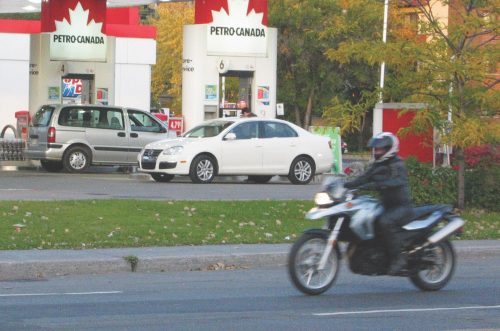 The more air is compressed, the more heat it generates. In an engine, air is mixed with fuel and, as the piston rises, it squeezes a relatively large volume of this mixture into a small combustion chamber prior to ignition. As compression squeezes the air and gasoline molecules together, this enables a quicker and more complete burn; the more a given quantity of fuel is compressed, the more energy can be released. This boosts power output, which is why high compression ratios are synonymous with high-
performance engines.
Ignition isn’t an explosion; as a spark plug ignites the fuel mixture, that produces a “flame front” that works its way across the combustion chamber. Ignition is timed to fire early enough that as the flame burns across the combustion chamber, it reaches peak pressure just as the piston begins its downward stroke, thus maximizing the efficiency of the burn.
 However, if a fuel mixture is compressed enough (thus generating a lot of heat), the mixture can self-ignite elsewhere in the combustion chamber. This will then produce two flame fronts, which cause unwanted pressure waves that pound against the combustion chamber and cause a condition known as engine knock or detonation. This is that metallic pinging noise you may hear when your bike is under acceleration. The problem with detonation is that it causes pressure in the cylinder to peak before it’s supposed to, which pushes on the piston too soon and effectively tries to push the piston in the opposite direction. Only the momentum of the crankshaft prevents this from happening, but the result is increased heat in the combustion chamber (thus increased potential for detonation) and loss of power.
Compression ratio alone doesn’t determine an engine’s tendency to knock. Another factor is cylinder bore. Larger bores require more time for the flame front to travel across the combustion chamber. This allows more time for the fuel mixture to detonate. This is why larger-bore engines generally have lower compression ratios. Another factor is cam timing. Aggressive cams reduce the effective compression ratio: the longer the intake valves stay open, the later the piston begins compressing the fuel mixture on its way back up the cylinder. This is why high-performance engines can get away with higher compression ratios. Also, the higher the altitude at which your bike is running, the less dense the air is – and, therefore, the less air there is for the piston to compress, which produces less heat and less risk of detonation.
Detonation differs from pre-ignition, which is the result of high-heat areas in the combustion chamber, such as carbon deposits. These deposits can ignite fuel before the spark plug fires. Sustained detonation or pre-ignition can cause serious engine damage. Your first tool to reduce detonation is gasoline. Gasoline contains additives that inhibit detonation; tetraethyllead was used in the past, but that’s been replaced with less toxic chemicals, including ethanol.
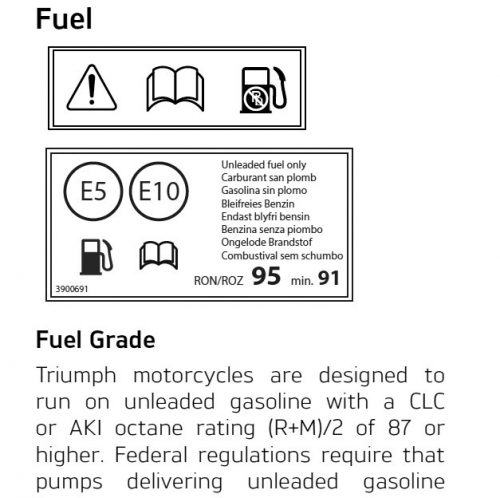
A gasoline’s resistance to detonation is indicated by its octane rating. There are three measurements for obtaining octane numbers. The research octane number (ROM) is achieved by simulating light loads, such as city driving or highway cruising, and provides the highest octane number. The motor octane number (MON) simulates extreme conditions, such as hard acceleration or driving uphill, and provides the lowest number. The anti-knock index (AKI) is an average of those two values and is what you see displayed as (R+M)/2 at the pump. Typical AKI grades that you’ll find at the pump are regular at 87, mid-grade at 89 and premium at 91. Gas stations blend low- and high-octane fuels at the pump to achieve mid-grade blends.
Some engines use knock sensors to detect detonation and reduce it by retarding the ignition timing, and these engines are most likely to see a drop in performance if a lower than recommended octane is used, as retarding the timing also reduces power. However, using a high-octane fuel can be detrimental to performance. To achieve a high-octane rating, the maximum allowable percentage (10% per volume) of ethanol may be blended into fuel. Ethanol has very good anti-knock properties, but it also lowers gasoline’s energy content. According to Natural Resources Canada, gasoline with a 10% ethanol blend contains about 97% of the energy of pure gasoline. This not only reduces power, but it can also increase fuel consumption by 2%– 3%. Ethanol also harms rubber and metal components in the fuel system, so avoid using fuel containing this additive.
Unless you own an older bike and the recommended fuel is no longer as effective at preventing knock due to excessive carbon buildup and lack of modern anti-knock devices, there’s no advantage to using a higher-octane fuel than recommended in a bike that doesn’t require it.
Technical articles are written purely as reference only and your motorcycle may require different procedures. You should be mechanically inclined to carry out your own maintenance and we recommend you contact your mechanic prior to performing any type of work on your bike.
Kawasaki has announced that they’ve purchased shares in Bimota, a luxury Italian brand most well-known for its hub-steering motorcycle design.
 Kawasaki motors Europe and Kawasaki Heavy Industries announced a new venture reviving the Bimota Italian motorcycle brand. Kawasaki established Italian Motorcycle Investment S.P.A. (IMI) on April 16, 2019 to purchase 49.9% share of Bimota with 50.1% being retained by its current owners. The goal, to manufacture and sell motorcycles under the BIMOTA brand in Rimini, Italy. Bimota has been known as a premium brand since the release of the first model in 1972, Bimota S.A. will now be renamed as Bimota S.P.A.
Hiroshi Ito, Kawasaki Heavy Industries’ general manager, spoke at EICMA, explaining that a prospective deal has been in the works for three years. Marco Chiancianesi, president of Bimota said Bimota received several offers but Kawasaki ultimately stood out. Marco Chiancianesi and Daniele Longoni gained control of the brand in 2013, but in 2017, the small factory in Rimini was closed and remaining models shipped to Switzerland where the last of the Tesi 3 models were assembled.
“As you know, I am a motorcycle enthusiast, and I love this Italian-born brand. In fact, I love it too much to have bought the company itself,” said Chiancianesi. “But riding a motorcycle, and running a motorcycle business is different. As you are aware, Bimota has been facing some difficulty. We received many offers, but I thought that Kawasaki’ was the best. Through the communications with Mr. Ito, (Kawasaki Motors Europe Manager Masanori) Kinuhata and other Kawasaki staff, I understand we may share the same passion, emotion and values.”
Kawasaki is excited to take on the new investment, showcasing collaboration models at the EICMA show this year. The new Tesi H2, formed from the Bimota Tesi technology and the high-performance H2. Engineer Pierluigi Marconi designed a new Bimota Tesi model with the Kawasaki H2 supercharged inline-Four engine. The Tesi H2 uses bodywork and a chassis designed by Bimota, including the front swingarm and hub-steering system. Marconi says the Tesi H2 offers electronic suspension, traction control ABS and other electronic systems, likely inherited from the H2.
Ito stressed that Bimota will remain an Italian company, based in Rimini and employing Italian designers and craftsmen. In the past, Bimota licensed engines from different manufacturers, but moving forward, all Bimotas will be powered by Kawasaki engines. Paired with members like Pierluigi Marconi, the father of Tesi, IMI will revive the Bimota brand and expand its operations, developing, producing and selling Bimota motorcycles for its fans around the globe. Through the supply of engines and other key components, Kawasaki Motors Europe N.V. , will support Bimota’s revival for 2020.
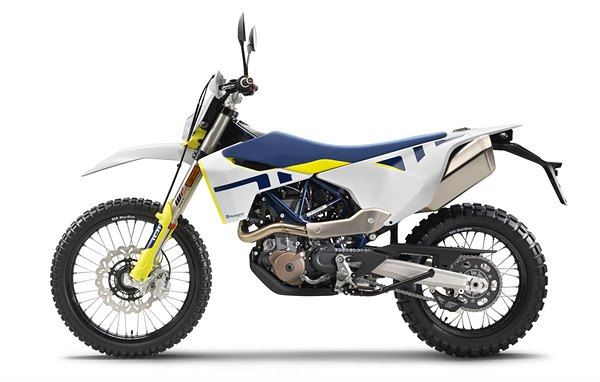
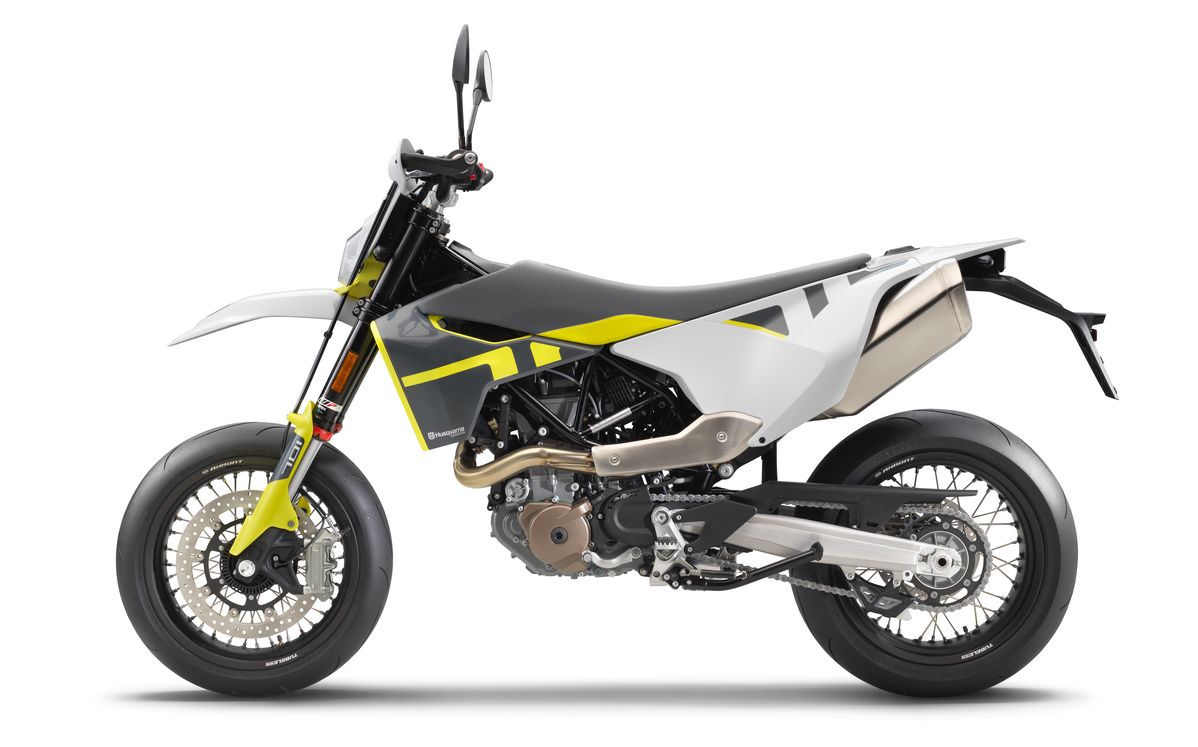
Husqvarna Motorcycles unveiled the 701 Supermoto and 701 Enduro, which are thoroughly revised including massive electronic and tech updates with the models.

Cornering ABS, lean-angle sensitive traction control, ride modes and easy shift are featured as standard on the 701’s, and Husqvarna says that both models are extremely well-balanced, offering outstanding levels of agility and handling. The renowned, torquey single-cylinder 692.7 cc engine features ride-by-wire throttle, offering a perfectly linear power delivery.
TECHNICAL HIGHLIGHTS
• New switchable Ride Modes – change power characteristics while riding
• New Bosch cornering ABS – lean angle specific braking technology
• New Easy Shift function – shorter shift times & improved rear wheel traction
• New lean-angle sensitive Motorcycle Traction Control – perfect rear wheel traction
• New graphics & slim bodywork – carefully engineered ergonomics
Husqvarna also released new colours and graphics for the Vitpilen and Svartpilen 701 and 401. We have not yet heard new pricing or when we can expect to see the 2020 models in dealerships.
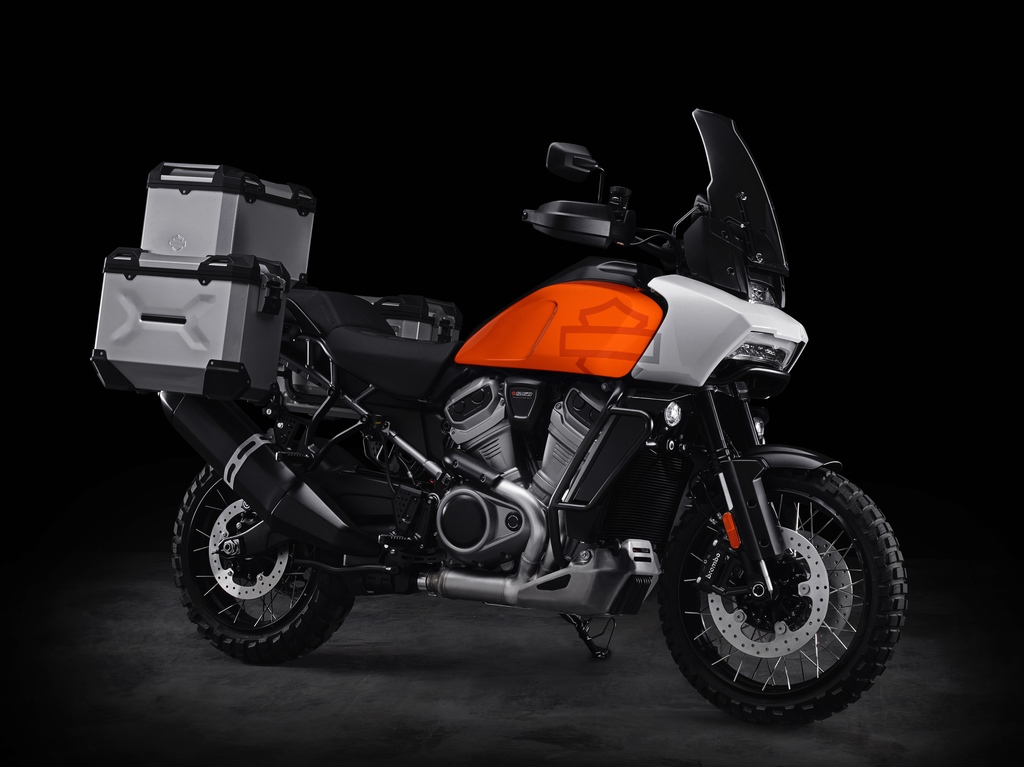
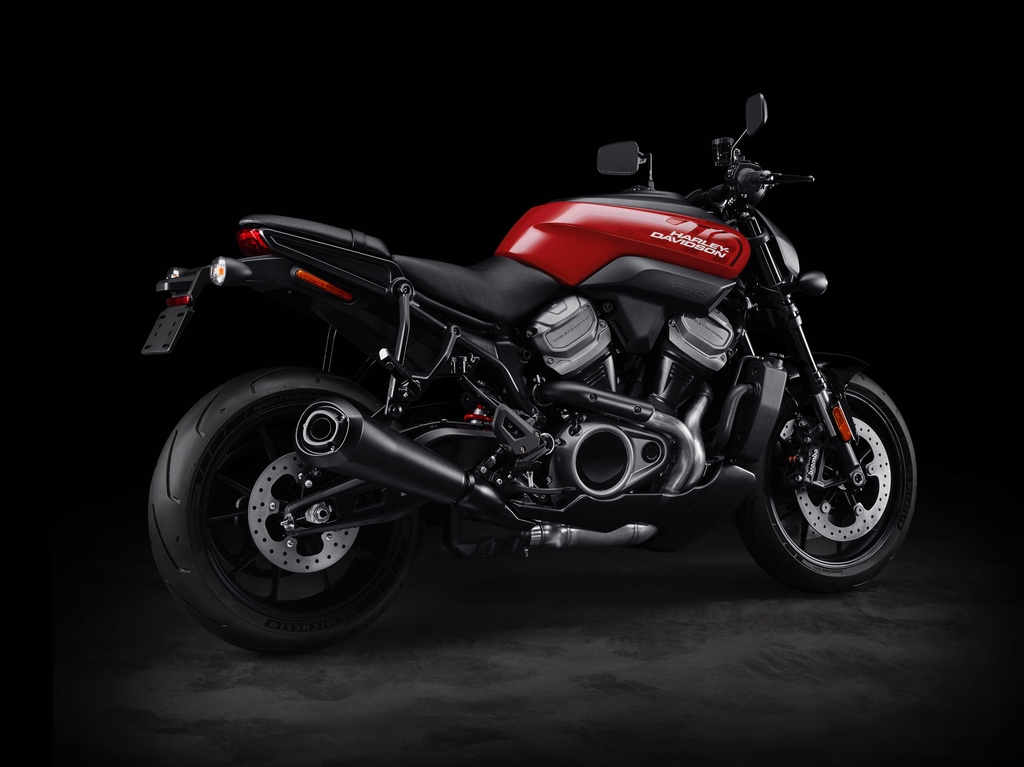
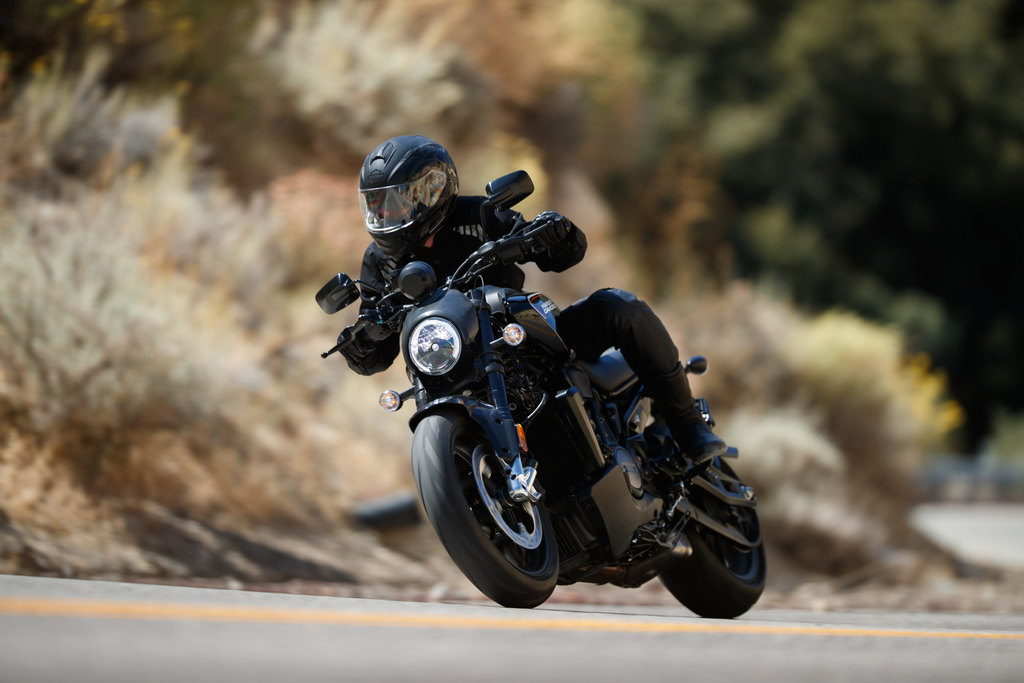
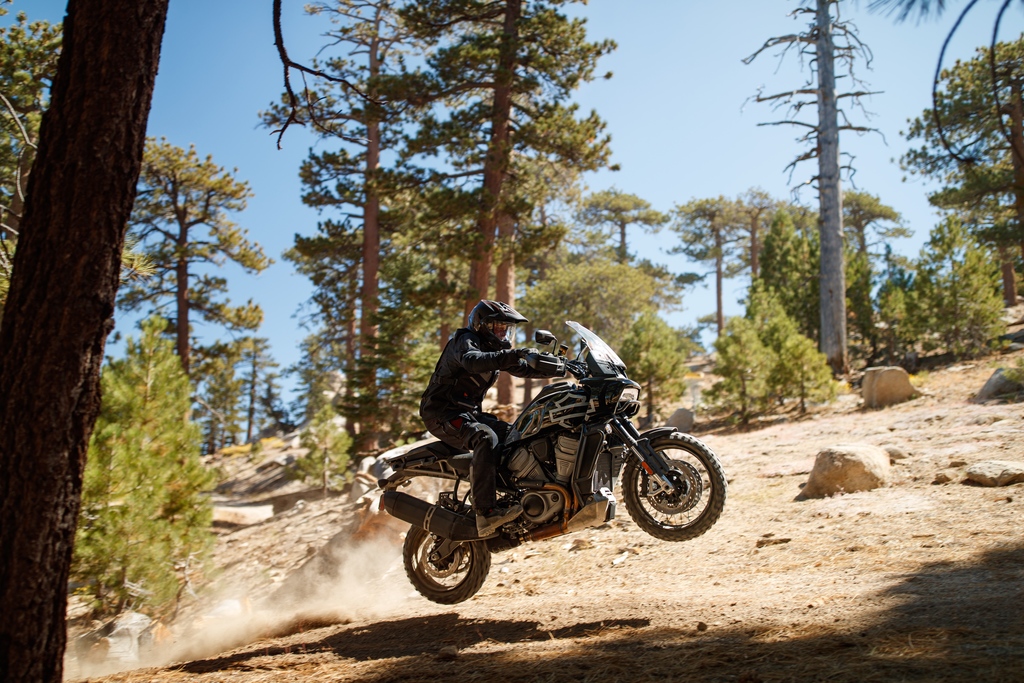
Harley-Davidson releases the Pan America Adventure Tourer and the Bronx Streetfighter for 2020.
Harley-Davidson showcased the Pan America and the Bronx both with the new Revolution Max V-Twin at the EICMA show in Italy. With Harley-Davidson first announcing its plan for expansion into other motorcycle styles in July 2018 it was no surprise we’d be seeing the Pan America in real form for 2020. Although there is still a long wait to get your hands on both bikes as the models will launch in late 2020.
The Pan America 1250 produces over 145 hp with its Revolution Max engine. The overall style and look of the model is very similar to the concept look we got back in 2018, and Harley-Davidson says that the Pan America is an advanced adventure touring multi-purpose motorcycle equal parts campfire, wanderlust, and grit. The Bronx 975 is Harley-Davidson’s middleweight Streetfighter with over 115 hp and 70 lbs of peak torque.
The all-new 60-degree liquid-cooled V-Twin has been designed for a new range of Harley-Davidson motorcycles in two different guises – 1250 cc in the new Pan America and 975 cc in the Bronx. Creating 90 lbs of torque in the 1250 cc and 70 lbs of torque in the 975 cc. Harley-Davidson assures that the Revolution Max offers flexible performance with a broad powerband that builds to a surge of high-RPM power, minimizing weight and maximizing performance. The fully balanced powertrain has an internal counter balancer that mitigates primary engine vibration to enhance rider comfort and improve vehicle durability.