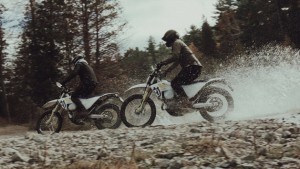
Yamaha Ténéré 700 Pricing and Availability

Yamaha Motor Canada has announced pricing for the 2021 Ténéré 700. The new generation of Ténéré will be priced at $11,999 (early deposit price) and will be available in North America fall 2020. Yamaha is currently offering an early-deposit special on bike orders till the end of December this year.
The Yamaha Ténéré 700 is promised to be a lightweight, rugged and nimble adventure bike with its roots embedded in the 1976 Yamaha XT500 enduro-adventure model. Yamaha’s high-torque, 689 cc CP2 twin-cylinder engine, and is expected to have great fuel mileage with a 16L tank and a 350km plus range. The 2021 North American model will be built in Japan while the European model will be built in France, due to differing government standards.
We’re excited to see how the Ténéré 700 will perform compared to other mid-sized bikes currently on the market, not to mention its competitive pricing. Below we’ve listed some other pricing of other comparable adventure bikes.
Yamaha Ténéré 700 $11,999
KTM 790 Adventure $13,499
KTM 690 Enduro R $12,899
Honda Africa Twin $16,499
Honda NC750X $9,199
BMW F850GS $16,200
BMW F750GS $14,800
Video of Lawrence Hacking getting to go for a first ride on the Ténéré 700 in Canada.
Want to see it up close? Click here for the dealer schedule of the Ténéré 700 tour.
Roads that repeatedly twist and turn and rapidly rise and fall are worth every ounce of energy to navigate despite the blast-furnace temperatures and bone-dry land
“There’s no law west of Dodge and no God west of the Pecos.” As I crossed the Pecos River just beyond Del Rio, Tex., the land certainly looked like the old western aphorism could be true. A thread of patched tarmac ran across an arid sheep and cattle range where the soil was little better than crumbled limestone. Aside from the scattered creosote bushes and smaller scrub brush, which somehow persisted despite the climate, I had an entire 160 km of highway to myself. More than once I had to swerve – or duck! – for vultures that were reluctant to leave their coveted roadkill breakfast.
As if to bring me back to the 21st century, a white pickup with green lettering stating “U.S. Border Patrol” appeared on the horizon, and traffic (I was the only one on the road) was being funnelled through a checkpoint on Highway 90. The guard, upon learning I was Canadian and after seeing the gear strapped on my Suzuki V-Strom 650, asked if I was heading to Big Bend, then wished me a safe trip. At Sanderson, the self-described Cactus Capital of Texas, a gas station attendant commented on the overcast morning. When I asked about the forecast, she said, “Ten per cent! Anytime they say 10 per cent, I get my hopes up.”
I turned south at Marathon – a lonely gas station and a few houses – to make the final 100 km to Big Bend National Park. Stopping to view a display of large dinosaur fossils, I was surprised to learn that Big Bend shale has preserved some of the most diverse fossil records in North America. Paleontologists have unearthed the remains of Tyrannosaurus Rex, Triceratops and Alamosaurus, one of the last and largest of the dinosaurs at up to 25 metres in length.
From Deserts to Mountains
Big Bend, part of the massive Chihuahuan Desert that extends to Arizona and Mexico, receives less than 25 cm of rainfall annually. In summer, midday ground temperatures can reach above 80°C, and both plants and animals have been forced to adapt. I knew that hiding from view were large-eared jackrabbits, kangaroo rats, mule deer and bobcats. I kept my eyes peeled just in case.
Arriving around noon at the visitors’ centre, I asked a warden to recommend areas to explore. When she learned I was on a motorcycle, she advised against canyon exploration – “It’s already 46 C down there” – and suggested I head up to the Chisos Basin. The Chisos Mountains rise to 2,387 metres, more than 2,000 metres above the surrounding desert floor, and temperatures would be 10 C to 15 C cooler there. The basin is like an island for flora and fauna that cannot survive the desert heat, and there are species wholly unique to this basin. I found a campsite and, to escape the heat, which was still 33 C, stretched out on my bivy under a mesquite tree and listened to a mockingbird run through its repertoire of calls.
That evening, I joined several other people to marvel at a spectacular West Texas sunset through “the window,” the only gap in the mountains that surround the basin. Ever-richer golds and deepening blues infused the buttes below. The mercury dropped with the sun and I went digging in my pannier for warmer clothes.
Rude Awakening
Morning came abruptly at six a.m., when I was awakened by something crawling on my head. I exploded out of my bivy in order to send it scattering, so I never did see what it was. I kept telling myself it was one of those cute little lizards I had seen and not some trigger-happy scorpion. I’m certain the critter was not the tiny bat that swerved and darted around my site as I watched. I am not educated enough to tell if this was one of the specialized long-nosed bats that drink nectar from the park’s cacti, pollinating them in the process.
Mornings in West Texas were mercifully overcast until 10 or 11, when the desert sun burns the clouds away and the heat returned. On this morning, however, the desert welcomed a life-giving shower and almost immediately turned a vivid green. On my way to Rio Grande Village at the southern border of the park (and of the United States), I encountered two small roadrunners picking at roadkill. I pulled up to admire a large brown tarantula crossing the pavement; he was quite accommodating as I took his photo, getting as close as I dared.
Where the road ended at the Rio Grande River, a lone border guard explained that for US$5 locals will shuttle visitors in a rowboat across to Boquillas del Carmen, a tiny Mexican town that relies almost solely on U.S. tourism for its existence. For an extra US$3, you can ride a burrow from the river up into town.
Modest Souvenirs
I opted to remain stateside and proceeded to an overlook above the surprisingly diminutive river below. In amazement, I watched a young man wade across the border and back again. It was then that I noticed, at my feet, a collection of small trinkets set out on display alongside a plastic Coke bottle with a few dollar bills inside. On the bottle was a written invitation to buy these souvenirs “handmade in Boquillas.” Most poignant, perhaps, were the change purses with “NO WALL” stitched on them.
Retracing my route past the Chisos Basin, I continued for another 40 km to Terlingua, where the landscape became even drier (if that was possible). Terlingua, a defunct mining town, is now home to an eclectic assemblage of artists and hippies. I visited a well-stocked trading post, complete with a toothless old cowboy strumming his guitar on the porch. I also snapped a photo of “Passing Wind, the only submarine in West Texas,” as well as the Terlingua cemetery, where loved ones still are laid to rest beneath mounds of sand and rock, most with homemade tombstones or markers.
Finally, in the afternoon heat and knowing I needed to be wary of heat exhaustion, I refilled my Camelback and set off on Farm Road 170 toward Presidio. This was a fabulous ride hugging the Rio Grande: a striking corridor of deep green squeezed between barren mountains of rubble and sheer cliffs. Through the towns of Lajitas and Redford, the paved road surface was in excellent condition, twisting and turning, rising and falling rapidly and repeatedly. Indeed, the crests of hills were often so steep, they obscured what lay beyond, and encountering a tight turn at the last moment was common – all of which were a lot of fun but required my complete attention.
A Break From the Heat
Temperatures were rising quickly under a fierce sun, and soon I felt like I was riding through a blast furnace. I made a point of sipping a lot of water and, counterintuitively, staying covered up. In Presidio, I stopped at an air-conditioned restaurant for a burrito and lots of ice water to bring down my body temperature. By late afternoon, I was ready to set out again.
North of town, the road wound through low hills, and I pulled over to watch a herd of aoudad sheep stampeding across the grasslands. I was even more amazed to see what looked like some type of African antelope grazing near an outbuilding. I later learned it was an oryx, and that indeed both these species had been imported from Africa for hunting. As is often the case, their growing populations have become a nuisance.
At Marfa, I returned to laser-straight Hwy. 90 West – 120 km of flat, dry plain with no services but with dust devils dancing on either side. Thirty kilometres on, I came across a massive white blimp tethered to the ground. This blimp, part of a radar system to combat drug smuggling along the Mexican border, can survey an area of up to 400 km in diameter. At Van Horn, I turned toward El Paso to meet up with Chris, a college friend with whom I had recently reconnected.
Chris, eager to welcome me, deliberately took me to an authentic Tex-Mex restaurant in a sketchy part of town. He assured me, however, that El Paso is one of the safest cities in the United States, which seemed odd, as Juarez, the city just over the border, is a dangerous centre for drug trafficking. The two facts are connected, Chris said, because the drug lords do business in Juarez, but live and raise their families incognito in El Paso. No one wants to run afoul of the cartels, so petty crime is almost non-existent. “An unfortunate reason,” he admitted, “but many of us feel comfortable never locking our doors.”
The Ultimate Training Facility
Chris modestly told me of his career in the U.S. military, recounting his time in Iraq, of flying as a paratrooper and troop commander, and having served in both the FBI and the Secret Service. He had special clearance to bring me into Fort Bliss, a 1.12 million-acre training facility with every weapon and vehicle available to the U.S. military. We watched soldiers practising their accuracy using machine guns, and we peered into a gutted training building that looked like something straight out of Call Of Duty.
Chris spoke of the soldiers he was training now as if they were his children: “Above all, when they head overseas, I want to know I did all I could to ensure they will be safe.” As I listened to his stories, I simultaneously felt my naive status as a civilian and my gratitude for the untold sacrifices our soldiers make for my freedom.
“Let’s go four-wheeling!” he said, changing the subject. “My Jeep Rubicon is new, and I love to get out in the desert and throw some dirt around.” So, off we roared into a scrubby desert region far outside the city limits. As dark fell, we crested a sandy knoll, our headlights illuminated a red pickup that was buried to the axles. Pulling alongside, Chris asked the driver if he needed help, switching to Spanish when it was clearly necessary. Turns out a four-wheel drive on the end of a tow strap was all our friend needed and, having thanked us repeatedly, he soon was on his way.
“Everything in this desert either wants to stick you, stab you, sting you or bite you,” Chris shouted as we bounced over the dunes. “It’s a good thing we came along, or he’d have spent a long, lonely night out here.”
The next morning, I said goodbye to the good officer as he headed off to the base and I struck out to the north. Highway 54 led me past tank ranges where dust flew high in the air as desert military vehicles – behemoths, really – thundered about. Again, I felt a surge of gratitude – this time for life, for renewed friendships and the chance to experience Far West Texas – maybe no longer lawless or godforsaken, but still rare and remote; a land of unbending beauty.
The Honda CB750 Four’s technological advances are akin to putting a man on the moon – both of which celebrate a 50th anniversary this year
Fifty years ago, Glenn Turple was riding his motorcycle in central Alberta when he stopped in the small town of Killam for lunch at a diner. Sitting on the counter was a black-and-white television set tuned to the news, and Turple learned that the Apollo 11 mission had successfully landed on the moon. For centuries, humans had dreamed of reaching the lunar surface, and Apollo 11’s accomplishment awed the world.
Just one week later, Turple was riding a brand-new 1969 Honda CB750 Four. The two events are forever linked in his mind – and, not to downplay the importance of landing a man on the moon – and to the motorcycle community, the CB750 was no less a groundbreaking achievement.
“The CB750 was an exciting motorcycle that started the four-cylinder revolution,” Turple explains. “Riding that Honda for the first time was an eye-opening experience.”
And Turple should know. His first motorcycle was a non-running 1926 Harley-Davidson bought in partnership with his late brother, Rex. Turple didn’t help get the Harley-Davidson running and have a turn behind the bars, though, as he left the family farm at Olds, Alta., to work an autumn harvest in Ontario.
“Rex got the bike running while I was away, and by the time I came back it was broken again,” Turple laughs.
A Lifelong Passion Begins
In late summer of 1946, the brothers ordered a new 350 cc Panther by mail from Nicholson Bros. Motorcycles of Saskatoon. By 1947, Turple had sold his share of the Panther to Rex and bought a 1939 600 cc Ariel, a machine Turple rode from Olds to Saskatoon, Moose Jaw and Rouleau, Sask., to visit family. For Turple, motorcycle touring became his most enjoyable activity, and although some of his early machines weren’t fitted with speedometers, he was soon recording his mileage.
“I got about 3,000 miles on the Panther, about 10,000 on the Ariel and, in 1948, about 8,000 on a 350 cc Triumph,” Turple explains.
In 1949, he bought a brand-new 500 cc Norton ES2 from English Motorcycle Sales in Calgary. He rode that single-cylinder motorcycle for 23,000 miles, including a journey to Los Angeles.
By this time, motorcycles were a passion for the Turple brothers. They set up Olds Motorcycle Sales in a small shed on the family farm. They were a subdealer for Norton through English Motorcycle Sales; for BSA through Fred Deeley Motorcycles in Vancouver; and for Triumph through Nicholson Bros.
The brothers earned money by supplying parts and service and selling new bikes. Glenn Turple bought a 1950 BSA 650 Golden Flash, and the odometer soon read 22,000 miles. He once rode the BSA on a journey to New York, Boston and New Hampshire.
Expansion
After the harvest in 1956, the brothers moved their business off the farm and into Red Deer, changing the company name to Turple Bros. Motorcycles. Powered two-wheelers might have been a part-time business for the brothers before the move, but once in Red Deer, Alta., they focused their attention full-time on motorcycles, selling new British and German makes as well as many used war-surplus Harley-Davidson 45s.
But, at a dealer meeting in Calgary in the late 1950s, Glenn Turple was introduced to Japanese motorcycles – specifically, to Honda.
“At a downtown Calgary hotel, Trev Deeley showed off the new BSAs, Triumphs and Ariels,” Turple says. “After discussing the British bikes, Deeley said, ‘I’ve got a surprise for you.’ In another room, he showed us some new Hondas: a step-through 50 and a Dream. We all looked at him funny, and there weren’t many takers.”
However, some dealers, including Bob Kane Sr. of Calgary, did take the little Hondas. To everyone’s surprise, the Japanese motorcycles sold quickly.
Taking on Honda
“That meeting was in the spring of 1959, and we took on the Honda line in August of that year,” Turple says.
Alongside the larger British motorcycles, Turple says, the brothers successfully sold small-bore machines such as the Honda 50 and the Dream in 250 cc and 305 cc sizes, followed by the 250 cc Hawk and the 305 cc Superhawk.
“The British-built 650s were the largest bikes we sold, and people who moved up from a 305 Honda to a 650 Triumph were often disappointed at the maintenance costs of the Triumph compared with the Honda,” Turple says, adding, “and people were also surprised at how the 305 could come close to the 650 for speed.”
Then in 1965, Honda introduced the CB450 with its 43-hp double-overhead cam, twin-cylinder engine. In comparison, a 1966 Triumph Bonneville, with its twin cylinders and twin carburetors, was rated at 47 hp. Turple bought a CB450 in 1966, a motorcycle that he says could outrun and outpull any of the British-built 650s. He toured on the electric-start 450 and put 45,000 miles on the odometer –in fact, that was the bike he rode to Killam when he heard about the moon landing.
Introducing the CB750 Four
Then, on July 24, 1969, Turple was aboard the brand-new CB750 model K0, Honda’s first mass-produced transverse (across the frame) four-cylinder machine.
There had been other mass-produced four-cylinder motorcycles built in the decades before Honda began producing the CB750, including the Belgian-made inline-four FN and several U.S.-built machines such as the Pierce, Henderson, Militaire, Cleveland, Ace and Indian. Each of these, along with the British-made Vauxhall and Wilkinson, plus the Nimbus from Denmark, had their engines mounted in line with the frame, like the FN did.
Ariel, too, produced a four-cylinder machine, but those four pots were arranged in a square, like two parallel twins mounted fore and aft. Ariel produced the Square Four from 1931 to 1959, and that was the last mass-produced four-cylinder machine until Honda’s CB750 appeared on the scene.
Honda, acquiescing to North American demand in 1967 for a larger, more powerful motorcycle, laid out certain “engineering targets” for the CB750. According to an article about the model on the Global Honda website, these targets included the motorcycle’s ability to remain stable while maintaining speeds between 140 km/h and 160 km/h; a better braking system; less noise and vibration combined with ideal rider ergonomics; reliable lights and instruments; long service life, with ease of maintenance; and efficient use of newer materials and production techniques.
The Bike That Changed Motorcycling
The CB750, as launched in January 1969, featured a transverse-mounted 67-hp, 736 cc SOHC four-cylinder engine with electric start. Fuel and air mixed in a set of four 28-mm Keihin carburetors, and spent gases were expelled through an unmistakable set of four-into-four header pipes and mufflers. The CB750 also was the first mass-produced machine with a front disc brake.
The first of the CB750 K0 machines were dubbed “sandcast” models simply because the casting technique used to produce the engine cases left a rough finish. After Honda realized it had a winner on its hands, it quickly changed its engine case-casting methods.
Turple’s 1969 CB750 bears the frame number CB7501000972 and, he says, the engine number is slightly above 1,000. This puts the bike early in the run of sandcast models. Many sources state the last sandcast-engine number is 7414.
“[The 1969 CB750] was a tremendous motorcycle, and it severely outperformed the competition,” Turple recalls. “There was so much more horsepower available, and the 750 would rev higher and take sustained revs without vibrating apart. And I’d wondered why a disc brake would be a big deal. But after my first ride, I knew. It was such a better brake than any of the drum brakes I’d had on my previous bikes.”
The Making of a Touring Bike
Shortly after Turple got his CB750 in September of 1969, he added a handlebar-mounted windshield and soft saddlebags, then rode to San Diego, Calif. Accessory manufacturers took some time to introduce products to fit the Honda, but when Wixom launched a fairing, hard saddlebags and top case package, Turple added them to his CB750.
“[Touring is] so much more relaxing when you’re not pushing that air with your body,” he says about his reason for fitting the fairing and bags.
Of the CB750’s ability to handle, Turple says, “They weren’t race bikes; there were other bikes that could handle better. But for long-distance touring, the CB750s were great. They were all about performance and overall reliability.”
Turple explains it this way: after he rode a Triumph 650 for some 9,000 miles, the engine had to come apart and the cylinders showed .011” of wear. On his CB450, at 45,000 miles the cylinders showed some .006” of wear. On his CB750, however, when it was pulled apart at 103,000 miles, the cylinders showed only .002” of wear.
“That was remarkable to get that kind of longevity,” Turple says.
Not All 750s are the Same
After the K0 of 1969, in 1971 Honda brought out the CB750 K1. These first two generations of the CB750 are known among Honda enthusiasts as “the performance models,” as they featured larger jets in the carbs and a less restrictive exhaust system. Also, the spark-advance mechanism was a quick advance unit – meaning full advance was happening at 2,000 rpm. These machines produced about 67 hp at the rear wheel.
In 1972, Honda detuned the CB750 engine when the K2 model was introduced. The cam was changed, the jets were smaller and a five-chamber baffled muffler was employed. Horsepower at the rear wheel dropped to 58 from 67. Chrome fork ears and a seat lock were added.
By 1973, when Honda introduced the K3 – which had an even more restrictive muffler, new style gauge mounts, a disc brake splash guard and a broad stripe down each side of the gas tank, much of the lustre had worn off of the CB lineup. And other Japanese motorcycle makers hadn’t taken very long to catch up. In 1971, Suzuki brought out its two-stroke liquid-cooled triple-cylinder GT750,; in 1973, Kawasaki delivered its Z1 900 four-cylinder motorcycle. The “superbike” era of Japanese machinery got hot fast.
Although Honda introduced the CB750 K4 in 1974 and the CB750 K5 in 1975, there were no major changes to the CB750 lineup in those two years, apart from colour options. Honda had further detuned the 736 cc powerplant to help increase fuel efficiency, but this resulted in approximately 38 ponies at the rear wheel.
A More Powerful Super Sport
Honda lost much of the performance market the company had created and, as a result, developed the 1975 CB750F Super Sport. In reality, this machine wasn’t radically changed from the K-series. The new model featured a new chassis with shorter trail; lengthened rear swingarm with a rear disc brake; a four-into-one header and muffler system; a longer gas tank; and a new seat, complete with a cowl. The engine was given back some of its initial oomph, and horsepower increased to 58 – the same state of tune found in the earlier CB750 K2.
The CB750 K6 of 1976 was the last of the “classically” styled Honda CBs. That year was the final one for the slightly bulbous gas tank and the rounded, pleasantly shaped side covers. Only one colour, Candy Antares Red, was available.
The CB750 carried on with a cosmetically redesigned K7 and K8 model in 1977 and 1978, respectively, both with a large and angular fuel tank and different frame and forks. Honda also continued with the CB750 F Super Sport, and the 1977 and 1978 Super Sport engines had increased power, thanks to larger intake valves, higher compression ratios, different high-lift cams and revised carbs. These latter bikes are commonly referred to as “black-engine bikes,” thanks to the black finish on external engine components.
Another note to the CB saga is the 1976 Honda CB750A – a mass-produced automatic-shift motorcycle that while much loved by those who bought them and those who continue to ride them, never became a commercial success. The CB750A was discontinued after the 1978 model year.
Then, in 1979, Honda replaced the SOHC engine with a DOHC engine, and the models so equipped include the CB750 Custom and CB750 Nighthawk.
Still a Treasured Stablemate
Turple rode his sandcast CB750 exclusively from 1969 to 1975, including several trips to California and one to Mexico. When the original odometer reached 99,999 miles, he added a second instrument instead of allowing the first to simply roll over. This is a common tactic used by those who enjoy logging the mileage on their long-term motorcycles.
When Honda launched the GL1000 Gold Wing in 1975, Glenn made the switch to the larger touring machine. He then rode the CB750 only occasionally, but it remains in his stable of favoured machines and is, in his estimation, as important as putting a man on the moon.
The Yukon and Northwest Territories offer travellers beautiful and remote landscapes and rich history. This is especially true when travelling with a born and bred local
“The true north, strong and free” – a motto many Canadians take to heart. However, very few of us will have the chance to make it to Canada’s remote Far North in our lifetime. As motorcyclists, we have a leg up on the average Canadian, given our passion to travel and explore new places. This summer, Glenn (my dad) and I were able to fulfill our dream of experiencing the rugged North together after talking about it for more than 10 years. Both of us have travelled separately through parts of Yukon before, but we always have talked about riding the Dempster Highway together.
When we met Lawrence Neyando, a local resident and former band chief from Inuvik, N.W.T., this past year, we found a missing piece of our puzzle. Lawrence had been working on making his passion a career for the past few years; he now combines his love of motorcycling with the region, its history and the culture of his people. This year, he launched Arctic Motorcycle Adventures, with tours ranging from one to three days riding through Yukon and N.W.T. and north to Tuktoyaktuk, N.W.T., and the Arctic Ocean.
Our biggest hurdle was finding the time to do the long ride to Tuk. Glenn would have to take a staggering 80 non-stop hours one-way to ride from his home in Ontario to Tuk; I would take 48 hours to ride from my home in B.C. Time constraints meant our only option was to fly to Dawson City, Yukon, where Lawrence met us with a pair of Kawasaki KLR 650s for our trip. (Having a bike waiting for you is one of the huge benefits of using Arctic Motorcycle Adventures.)
A Day in Dawson
We spent the day in Dawson, taking in the rich history of the community built by settlers along the shore where the Klondike and Yukon rivers meet. This area held promises of gold and wealth that attracted more than 43,000 people in its heyday – from 1896 to 1899, an estimated $29 million worth of gold was pulled from the ground surrounding Dawson City. Visiting the museums and attractions in the preserved old parts of Dawson gave us a glimpse into the extremely harsh conditions that many gold-seekers withstood and the riches obtained by few.
Following dinner and drinks at the Greek-inspired Drunken Goat was a stop at Diamond Tooth Gerties’, a casino packed with old-fashioned gambling entertainment complete with cancan dancers.
The famous sourtoe cocktail at the Downtown Hotel was the cherry to end the evening – if you’d consider a mummified human toe to be a cherry. I let Glenn go first, of course – I drank a sourtoe cocktail years ago and I was having second thoughts about another. Glenn’s drink of choice was whisky and he slung it back to let the decrepit toe touch his lips as if it was nothing. I hesitantly received my cocktail and tipped my glass of whisky with its side of toe to my mouth. The whisky went down, but the toe became wedged in the bottom of the glass. I gave the glass a little wiggle to dislodge the toe and, before I knew it, I had the full toe in my mouth. With the tart taste of toe still lingering in my throat, we settled in at Klondike Kate’s Cabins, excited about what the next day’s ride to Eagle Plains, Yukon, would bring.
Finally on the Dempster
We headed down a gravel road that is Dawson’s Main Street with the sun sitting high. As we rode along that highway, which hugs the course of the Klondike River, we could see billowing smoke from a distant wildfire southeast of Dawson. Forty kilometres east of town, we turned north onto the Dempster Highway and left the last stretch of pavement that we would see for most of our trip.
We had a great crew to ride with. Lawrence brought a genuine local Gwich’in perspective to our ride. He reminisced of stories from his childhood, such as when he would be sent out to hunt alone when he was only 10 years old.
Also riding with us was Kurt, a local Inuvialuit (an Inuk from the western part of the territories) and lifelong friend of Lawrence who came along with us as our sweep rider. Kurt brought a unique outgoing and storytelling dynamic to our group, riding with his half-helmet and slightly customized BMW R1200GS that he rode like a hot rod. Connor, a young local followed us in the chase truck; he was a quiet and humble addition to our group.
The Dempster led us into the heart of Tombstone Territorial Park. I had long waited to see these beautiful plains, covered with a muted green blanket of tundra as they stretched to purple-hued jagged mountains in the distance. We made our way winding northeast and wrapping around those grand peaks. There are many scenic stops along the Dempster, many of which are easily missed if you don’t have a local guiding you.
An odd feeling crept over my soul as I looked out onto the aged landscape, seeing only the beautiful but remote landscape as the Dempster faded into the horizon. Every moment we experienced with wilderness on this trip is incomparable. The land seems pure and untouched, and this impression is absolute. Glaciers and volcanoes scar the landscape – a unique geology with epic formations mixed with vast open plains landscaped by muskeg layered atop permafrost.
The Decision to Push On
We filled the bikes in Dawson, keeping in mind that fuel is hard to come by throughout the route; at times we grew weary of wondering whether the bikes would reach the next pit stop. We rolled into Eagle Plains with 410 km on our trip meters and no sign of a “low fuel” light. We parked beside a gentleman cleaning his bike and, before I even got off the KLR, he said, “Emily? Is that you?” He then quickly recognized Glenn once our helmets came off. The gentleman was John Hecht, a long-time reader of Motorcycle Mojo who was travelling south from Tuk.
Eagle Plains is interesting – not in any special sense, but just because it’s a parking lot with a repair shop, motel, campground and restaurant set into the feral landscape of Yukon.
Our original plan was to stop here for the night, but as we took a break in the restaurant, we could see the concern on Lawrence’s face with news of rain expected overnight. At Rock River, Yukon, just north of Eagle Plains, rain makes the road treacherous, so this stretch will often be closed for safety. A decision to continue on or not is just another benefit of riding with a local who knows the area. Lawrence made the executive decision to carry on; we weren’t fighting the daylight, but we might have to battle exhaustion, as we had another seven hours of riding to reach Inuvik.
We continued along the ever-deteriorating gravel road, moving closer to the N.W.T. border as the mist crept in above us. After crossing the border into the N.W.T., the condition of the Dempster improved greatly. Road maintenance here creates lots of fresh, deep gravel, making our ride technical in places, especially when encountering oncoming traffic.
As we rode, the bikes danced under us, trying to find any resemblance to traction. Becoming comfortable with the feeling of instability while riding at speed is essential or the risk of arm exhaustion becomes a very real concern. In particular, after a long downhill stretch, we approached the apex of one left-hand corner that had been collecting the gravel on the outside of the corner just as an RV approached from the opposite direction. The timing of our meeting couldn’t have been worse: we had to throttle through the wet, sloppy gravel soup on the non-existent right lane of the bend. Luckily, we all kept our bikes up, but I believe we would’ve benefited from a change of undies afterward.
Land of the Midnight Sun
We followed the road down into a valley while following a small River, where the permafrost has been carved out by running water beneath the valley floor. The temperature dropped as the rain grew heavy during our ride toward Fort McPherson, N.W.T. Little did Glenn and I know that we had been racing against time to catch the last ferry of the night that crosses the Mackenzie River. Lawrence had a Plan B if we missed the ferry, but he was confident we wouldn’t. We arrived just as the ferry approached the landing on our side of the river.
Dark clouds hung above us after our seven-hour ride in rain and mist, and we felt as though the “midnight sun” was just a cruel slogan to entice naive tourists. Then something truly spectacular happened: 30 minutes out from Inuvik, we could see the silver lining of the clouds indicating they were breaking up. Peach, purple and pink colours streaked through the ominous clouds. We were instantly reminded that our 14-hour day was worth every tired and incredible moment. Our welcome to sunny Inuvik was very spiritual as we rolled in at 2 a.m. – Land of the Midnight Sun, indeed.
Inuvik is a unique community that was once a booming oil and natural gas town now displaying its memories throughout the downtown core. Closed-up hotels and restaurants indicate what the town once offered to locals and visitors. Tourism is now an option, but that industry needs help: the day we were leaving for Tuk, we couldn’t find a single restaurant to have breakfast. We should have stocked up on granola bars. Instead, Lawrence and his lovely wife Trina and son Blaze invited us into their home for breakfast before heading out to Tuk.
Trekking to Tuktoyaktuk
We continued our journey, absorbing the morning sun in the 6°C, when suddenly we spotted a creature running alongside us. “A reinbou off in the brush,” said Lawrence. We cocked our heads sideways at that, so he explained “reinbou” is a term used when you’re unsure whether it’s a reindeer or caribou. (These are the same critter, but the former is domesticated versus wild caribou.) We stopped to watch the animal, and quickly understood the horrendous rumours about mosquitos being the territorial bird of the North. The rumours are true. Mosquitos hadn’t bothered us from Dawson to Inuvik, but the annoying little vampires immediately swarmed us on the Tuk highway.
We enjoyed the new road, which had lots of fresh gravel, while taking in the unique terrain leading to Tuk. From the weathered Arctic spruce trees growing on the tundra and muskeg to expansive fields of invasive Arctic cotton, past the Arctic tree line and thousands of lakes – some frozen – leading to the coastal peninsula that cradles Tuk. The landscape was diverse and extraordinary in many ways, with parts of it reminding Glenn of Mongolia and of Scotland to me.
Experiencing Tuk
We rode to the farthest point in the settlement, where the Arctic Ocean surrounded us on three sides, before we headed over to Grandma’s Kitchen. This small restaurant is run out of John and Joanne’s home and offers traditional food such as muktuk, dried fish and beluga jerky. John explained the process of fermenting and drying of these staple foods and the importance of these meals for locals. Grandma’s Kitchen is not easy to find — unless you know where you’re going, asking someone is best. The restaurant sits by a sheltered bay of the Arctic Ocean, where there is a great swimming spot for crazy nutters like myself.
I felt our journey would be an incomplete experience if I didn’t dive into the Arctic Ocean, so I quickly stripped down to my undies and ran into the water while trying not to slip on the rocks. It was cold! As I ran back out, Glenn said jokingly: “Wait, I didn’t get any photos yet!” Clearly, I missed the sarcasm: I turned around and ran in for a second swim! With sand in my toes and the Arctic Ocean on my skin, I believed our experience was now complete. We ate, laughed and toured the little town at the end of the road and learned about the culture and history of Tuk.
As we departed Tuk, we stopped at the Welcome to Tuktoyaktuk sign for one last picture and there we were once again recognized by a Mojo reader: Harry (sorry, didn’t get the last name) from Port Perry, Ont. Then we rode back down the gravel highway en route to Inuvik, where we completed our trip while trying not to suffocate on the mosquitos.
As mentioned earlier, restaurants are rare in Inuvik, but if you are there for supper, be sure stop in at Alestine’s. The food is great, but get there early or be prepared to wait for a table.
Lawrence ensured that we were immersed in the culture during every moment of our journey from Dawson to Tuk. He is soft-spoken, genuine and exudes his love for the region – he’s a real class act.
As we watched planes come and go at the airport in Inuvik, Andrew Clayton, another Mojo subscriber who just arrived from Edmonton, introduced himself while clutching the July issue, which he was reading on the plane. I suppose third time recognized is a charm.
There was truly no better way to fulfill our dream of experiencing the Dempster and the highway between Inuvik and Tuktoyaktuk than with Arctic Motorcycle Adventures (arcticmoto.ca). If you decide to ride the route we took in order to save several weeks of travel time, give Lawrence Neyando a call and tell him I sent you.
Canada’s true North, undoubtedly strong and free.
For additional information on this area go to:
www.spectacularnwt.com/what-to-do/road-trips/dempster-highway-1
KTM’s long-awaited 790 Adventure bikes hit the sweet spot between smaller dual-sport bikes and larger adventure bikes.
KTM is best known for its single-cylinder dirt bikes and for its larger, V-twin-powered road-oriented bikes, including the Adventure models and the Dukes. The firm’s new middleweight adventure bike, the 2019 790 Adventure, breaks new ground for KTM: it’s the Austria-based bike maker’s first-ever off-roader to feature a parallel-twin engine. KTM launched the new 790 Adventure and its off-road sibling, the 790 Adventure R, in Big Bear, Calif., where we sampled both machines in their natural habitats — on winding mountain roads and on rocky, sandy trails.
The 799 cc liquid-cooled twin first appeared on the street-oriented 790 Duke last year. Unlike the parallel twins of other manufacturers, which feature either 180-degree, 270-degree or 360-degree crankpin layouts, the KTM twin features a unique 285-degree crankpin arrangement. This gives the KTM twin a 75-degree firing order, which gives the 790 a familiar KTM sound and feel because that’s the same firing order as the firm’s 75-degree V-twins. KTM claims the engine produces 94 horsepower and 66 ft-lb of torque, which is right on par with the 790’s principal competitors, the Honda Africa Twin and the BMW F850GS.
Made in Austria
Before we dig further into the machine, we need to refute a rumour. Contrary to some early online reports that claimed KTM’s 790-series bikes were to be built in
China as of 2020, this will not be the case. While KTM did form an alliance with China-based motorcycle manufacturer CFMoto in 2018 and the latter will produce small-displacement singles in China, we received confirmation that all 790 models will be manufactured in Austria.
One of the main reasons that KTM chose the parallel-twin layout for this new middleweight was to achieve a low seat height – at least by adventure bike standards. The 790 Adventure’s two-position seat sits at either 830 or 850 mm from the ground; the taller Adventure R’s perch sits at 880 mm and is not adjustable. While the latter is only 10 mm lower than the 1090 Adventure R’s seat, the 790 also has a narrower midsection, which makes planting both feet on the ground easier.
The earlier comparison to the Africa Twin and the F850GS wasn’t random; like those two machines, both 790 Adventure models utilize 21-inch front wheels, which is the ideal wheel size if you plan on veering off the pavement and riding where few bikes go. Large-diameter wheels roll over rough terrain with more ease than smaller 19-inch wheels found on bikes such as the R1250GS. The 790 also has an 18-inch rear wheel, which facilitates tire selection when choosing aggressively treaded off-road tires. Among the 790’s competitors, only the Honda rolls on an 18-inch rear wheel; all others use 17-inch rears, which narrows knobby tire choices.
Sounds Familiar
We began our ride on the Adventure R. Among the first things I noticed on startup was how much the 790’s parallel twin sounds like one of KTM’s V-twins – again, due to the cylinders’ firing order.
I didn’t take long after hitting the dirt to realize that the Adventure R is just about the best adventure bike I’ve ridden to date. Yes, that’s a bold statement, but we hit rough gravel roads with the fuel tank filled, and those roads quickly turned to rocky, undulating trails and, eventually, to sandy tracks. The bike is remarkably light at 204 kg, undercutting the fully fuelled BMW and Honda by 25 kilos – and that’s a lot. And that’s with the Adventure R’s larger 20-litre fuel tank filled (versus 15 litres and 18.8 litres, respectively, for the BMW and Honda).
Unlike other adventure bikes, which have a conventional fuel tank atop the engine and feel top-heavy and cumbersome when full, the KTM’s fuel tank is a unique design that slings over the frame and has two bladder-like compartments hanging low to either side of the engine. KTM did this to maintain a low centre of gravity when the bike is filled to capacity, and that design works as claimed. The Adventure R also is narrow between the knees. However, the tank does look as if it could be easily damaged should you take a hard spill. Despite trying to be as thorough as possible when testing motorcycles, I didn’t test the 790 Adventure’s crashworthiness, so I’ll rely on KTM’s claim that the bike survived extensive, severe off-road testing without issue. Replaceable plastic covers protect the tank, and there’s also a large aluminum skid plate to protect the bike’s undercarriage.
Precise Steering and Suspension
Where the Adventure R really edges out its rivals is in its suspension, which is provided by KTM-owned WP Suspension and is fully adjustable. The R’s tall suspension easily soaked up even the biggest bumps without bottoming during my test ride and allowed a surprisingly quick pace. The controls are very precise, and the bike steers sharply enough to allow time to react to obstacles at an expert-level pace without me busting a sweat.
You usually have to tread with a relatively wide margin of error when riding big adventure bikes, but on the Adventure R you can attack with almost the same vigour you would on a dedicated off-road machine. And that’s on the R’s standard Metzeler Karoo 3 tires, which proved adequate on our ride, although not exceptional. The tires worked great on rocks and hard-packed dirt; not so well on the sandy sections. Spooning on a set of DOT knobbies would probably transform this machine into a twin-cylinder enduro bike.
The foot pegs feature removable rubber inserts, which expose serrated edges for off-road grip when removed. Another off-road touch is a flippable brake-pedal pad that changes height to facilitate stand-up riding. The bike also has a few very handy storage compartments: the Adventure has a watertight smartphone compartment under the passenger seat; both the Adventure and Adventure R feature a storage compartment under each side cover that are large enough to carry a 500-ml bottle of water – very handy during our ride in the desert west of Big Bear.
Ride modes are standard on both models: include rain, street and off-road. The R also has a rally mode as standard ($240 option on the Adventure), which has more aggressive throttle response than off-road mode and maintains selected ABS and traction control settings when the bike is switched off. (Those rider aids default to the “on” position in the other ride modes.) The Adventure R also has eight-level slip control, which adjusts the amount of allowable rear-wheel slip.
The Non-R Adventure Model
When we switched bikes and hit the roads that wind through the mountains surrounding Big Bear, the non-R 790 Adventure proved to be an exceptionally well-handling machine. At an elevated sporting pace that would shame sport bike riders, the non-R model flowed fluidly through high-speed sweepers and charged effortlessly into tight bends. Despite the standard Avon Trailrider tires’ adventure-like appearance, they felt as smooth as – and grip like – good street tires.
The Adventure’s suspension sits a bit lower than on the R and is adjustable only for rear preload. Settings are nonetheless a fair compromise: perhaps a bit too soft for hard charging on pavement and a bit too firm for serious off-pavement excursions – but good enough to handle both situations adequately for most riders. Only the front-end dove considerably under hard braking, but it did so smoothly without upsetting the chassis, and the bike responded very well to deep trail braking, which isn’t usually a characteristic shared with other adventure bikes.
The bike remains vibration-free up to and beyond highway speeds, and the gearbox is light and precise. Our test bikes were equipped with an optional quick-shifter, which is a $430 option I’d do without. It increased shifting effort and didn’t operate as smoothly as some other systems I’ve tried.
Off-Road Mode
One feature that could be improved on is the ride-mode selection process. While selecting from among the ride modes is relatively easy, ABS has to be set to off-road mode separately (this disables rear-wheel ABS). Unless the bike has rally mode, the ABS defaults to “on” every time the ignition is switched off, so you to have to switch the mode back to off-road mode every time you fire up the bike. To avoid this, the ABS setting should be automatically selected within the ride modes, as on other adventure bikes.
The 2019 KTM 790 Adventure and Adventure R have been greatly anticipated, and neither disappoints, although one is better than the other. Handling is very forgiving, but especially so when riding off-road on the R. With that new middleweight adventure bike, KTM seems to have hit the sweet spot between smaller dual-sport machines and bigger adventure bikes – the KTM bikes have excellent power with smooth delivery for long-distance street rides. The bikes also are excellent off-road machines that will easily handle all but the roughest trails – and will even take those on if the pace is slower. The KTMs boast relatively low prices too: the Adventure starts at $13,499, while the R starts at $14,599. The higher-spec R even comes in below the BMW F850GS’s $14,800 and the Honda Africa Twin’s $15,199.
Even if you’re short of inseam and extreme off-roading isn’t a priority, you should nonetheless choose the 790 Adventure R over its road-oriented sibling. The R is better equipped than the Adventure for not much more money; it gives up very little in terms of street worthiness; and it has all the qualities of a proper off-road motorcycle ready to take on real adventures.
After more than a century of internal combustion, the Harley-Davidson Motor Co. is looking at its future with a whole new technology.
You know times are changing when the biggest manufacturer of large-displacement motorcycles in North America produces a two-wheeler propelled by electrons. The Harley-Davidson LiveWire is the Motor Company’s first-ever emissions-free electric motorcycle, and it is an important new direction for a company that has been relying on gasoline-powered internal-combustion engines to power its products for more than 115 years.
Harley held the international launch of the LiveWire in e-friendly Portland, Ore., where, despite my initial aversion to fume-free motorcycles, I discovered that this electric bike actually makes sense – well, mostly.
Electric Heart
The heart of the LiveWire is its 78 kW (105 hp) electric motor that produces 86 ft-lbs of torque. The fascinating thing about electric motors is that they produce their peak torque as soon as they begin to spin. From the rider’s seat that means you’re getting litre-bike torque right off the start. The electric motor uses reduction gears to transfer power to the rear wheel, and Harley designed the gears to produce the LiveWire’s unique whine. The electric motor and various other components are liquid-cooled, so there is a small radiator mounted behind the front fork. The motor is an aluminum-coloured unit that sits at the very bottom of the bike.
The bike has two batteries. A small 12-volt battery powers ancillaries, such as the lights and the ECU. The main 15.5 kWh lithium-ion battery is contained within a big, finned aluminum case that also contains the battery-management electronics; it’s the single largest component on the bike and is visible behind the frame. The entire assembly is called a renewable energy storage system (RESS), and is manufactured by Samsung. The 250-volt RESS is a stressed component of the chassis, combining with bolt-on frame channels and a separate steering head assembly to provide rigidity.
Fill ’er Up
The RESS takes 12.5 hours to charge fully from empty when using the provided 110-volt charger (a Level 1 charger), which plugs into a standard wall outlet. Using a publically accessible 24 kW DC fast charger (Level 3), the RESS can charge to full from completely empty in an hour. You can also plug the LiveWire into a Level 2 charger, but because of the way the bike is configured, it will charge at the same rate as when using a Level 1 charger, so there’s no advantage to doing so.
I initially was skeptical about Harley’s use of only Level 1 and Level 3 charging, as most people who drive an electric car use a 240-volt Level 2 charger at home. These chargers provide a much quicker charge rate than 110-volt Level 1 chargers, and are much more affordable and practical for home installation than Level 3 DC quick chargers are. After almost 10 years of LiveWire development, though, Harley’s engineers discovered that for the LiveWire’s intended use, Level 1 and Level 3 charging makes the most sense. Harley reps at the launch mentioned repeatedly that the LiveWire should not be regarded as a conventional motorcycle
– and if a long-time rider does so, he or she probably is not the right customer for this machine. It’s designed for mostly daily rides within a specific proximity to home and, in that context, the LiveWire’s range is good enough.
After an overnight charge, for example, you can ride off with a full charge. When a top-up is needed during the day, a Level 3 charge during a coffee or lunch break will recharge the battery with enough energy to continue your ride. The problem is that Level 3 chargers are not as common in Canada as Level 2 chargers are yet – at least not in any province outside of Quebec, where the former are plentiful. Authorized LiveWire dealers, of which there currently are 17 in Canada, will be equipped with Level 3 chargers.
Regenerative Braking
Claimed battery range is impressive nonetheless: 235 km in the city (regenerative braking helps extend range) or 152 km of combined city and highway riding. Unlike gas-powered vehicles, electric vehicles get better mileage in the city because they can recuperate energy when slowing down, which you do often in city traffic. The LiveWire has regenerative braking, which can be adjusted from practically nothing to a level high enough that you can almost ride without ever touching the brakes. Because the LiveWire slows quite hard when the regeneration is cranked up, the brake light is also triggered by G-forces generated when slowing down, and the light can come on without touching the brakes.
The LiveWire has lean-sensitive ABS and traction control, as well as rear-wheel-lift mitigation, which prevents the rear tire from lifting under heavy braking. The rear wheel also has drag-torque slip control, which prevents the wheel from hopping when braking hard with the regeneration dialled up.
The LiveWire has seven ride modes: four of them are factory presets – sport, road, rain and range – and three others are programmable. The preset modes adjust throttle response, traction control and other parameters, just like on a conventional bike; range mode is designed to extend the bike’s range by softening throttle response and cranking up the regeneration braking.
Another bit of high-tech trickery is H-D Connect, which connects the bike bike to a cellular network and combines with the H-D App to offer many useful features. This connectivity allows you to monitor the bike’s charge status using your smartphone. The app also provides alerts if the bike is being tampered with; gives service alerts (although those will be quite infrequent since there’s not much that needs tending); locates charging stations and displays their locations on your phone’s screen; and via your phone’s Bluetooth connection, displays turn-by-turn directions on the bike’s display screen.
Riding Electric
There’s a small adaptation to make when riding an electric motorcycle. The LiveWire turns on via the kill switch when you have the key fob in your pocket. The bike has a start button that turns on the electric motor before you can ride away. The LiveWire is easier to ride than a conventional motorcycle is because the lack of a gearbox provides a twist-and-go riding experience, but the bike’s high torque doesn’t mean this is a beginner bike; you can, however, adjust it to ride like one using a custom mode. There’s no engine noise, although the LiveWire isn’t completely silent. It produces a slight gear whine when accelerating, which is actually tuned into the motor’s reduction gear. Another slightly odd characteristic is the “pulse” the LiveWire produces through the handlebars when you’re at a stop. The pulse is very subtle, but it’s there to let you know the bike is running.
The LiveWire feels heavy when lifted off its side stand because a 100 kg chunk of the bike’s 249 kg weight is contained in the centrally located RESS. The gauges are displayed within a 4.3-inch TFT touchscreen that has a multitude of functions, and the touchscreen pivots on its mount to adjust for riders of different heights. The riding position is almost naked bike-like but with a slightly forward lean to the low handlebar – the LiveWire actually feels similar to a Ducati Monster from the saddle – at least at standstill.
A Silent Hooligan
Twist the right hand grip and you get a seamless rush of acceleration that doesn’t really stop until upward of 160 km/h. Rolling on the throttle is among the LiveWire’s most redeeming features, providing a forceful forward rush that is free of gear changes. Adding to the bike’s tempting “twist me” throttle is a mostly silent operation that stealthily facilitates delinquent behaviour. Claimed top speed is 177 km/h, and the LiveWire seems quite capable of attaining that speed.
Steering is light, and while the LiveWire turns in with relative ease, it requires some effort at the handlebar to maintain a lean or to tighten up mid-corner – almost as if the bike was rolling on an excessively wide rear tire. The LiveWire is fitted with supersport-sized 17-inch wheels, with a 120/70 tire up front and a 180/55 on the rear. The fully adjustable Showa suspension could have easily come off a supersport machine; it was set up too firm for me, and I would have set it softer if a screwdriver had been readily at hand.
After a 100 km ride within Portland and on the surrounding winding roads, the battery’s level dropped to 34%, or good for about another 50 km. This is bang on Harley’s claim. I did nothing to try to conserve energy, and was actually quite hard on the throttle.
But it’s Oh, So Pricey
There’s no doubt that the 10 years of development that went into the LiveWire has produced a refined first attempt at electronic propulsion. The bike’s performance is on par with at least a middleweight four-cylinder sport bike or a sporty twin. The LiveWire’s range and charging rate are reasonable enough that you can enjoy weekend rides with your buddies who are riding conventional machines, as long as they don’t mind waiting while you charge back up.
Harley is renowned for its big twins, and there’s no need to worry that the company is going to stop producing them anytime soon despite the introduction of the firm’s first electric bike. Harley will continue to cater to its traditional big-twin customers, but it also needs to introduce a new breed of rider to U.S.-made motorcycles. The LiveWire is part of this strategy, but there also is an upcoming new platform based around an entirely new liquid-cooled V-twin, which will include a naked bike, a bobber and an adventure bike.
One thing that’s hard to justify is the LiveWire’s price; at $37,250 it is the most expensive non-CVO model in Harley’s lineup. And the LiveWire is entering a category that already includes some stiff competition from Zero. The Zero SR/F is a stylish electric naked bike that boasts an impressive spec sheet, claiming a range of 259 km in the city and 198 km on the highway, 140 ft-lb of torque and a price of $24,890. Probably the weakest link in Zero’s formula is its dealer network, which currently stands at 10 locations.
Aside from the LiveWire’s exclusive pricing, though, the bike makes sense – even among conventional internal-combustion motorcycles. Some of my recent rides on my own bike covered about 200 km, which is easily achievable on the LiveWire, as long as a Level 3 charging station is available and conveniently located. For personal daily use and considering the way I ride, I could ride the LiveWire regularly and I wouldn’t miss stopping at gas stations one bit.
A world-class racetrack in the heart of B.C.’s wine country.
Nestled in the centre of Okanagan wine country among spectacular rolling hillsides is a racetrack called Area 27. This stunning world-class members-only facility lies just five minutes east of Oliver, B.C., 30 minutes south of Penticton and roughly 4.5 hours from Vancouver. Visiting it has been on my bucket list for a few years now.
Construction of this unique facility began in February 2016 and the first laps were completed on Aug 30 of that year. Since then, all I’ve been hearing from people in the motorsports industry is: “You’ve gotta ride that track!”
I was finally able to find time last summer to ride it, and I was not disappointed. I loved it so much that since then, I’ve been hoping to get invited back. When a last-minute opportunity came up earlier this year, I jumped at it.
The Coveted Guest Pass
The first time I rode Area 27 was July 2018. I was given a guest pass to ride the track from Craig Fernandes, a friend of mine who has been a member since the facility opened. I borrowed a 2001 R6 from Mike Salary, another friend, and had help in the pits from Marbod Kern. I packed my car with bicycles, snacks, food, bathing suits and my two children – aged 7 and 9 at the time (promising them fun and adventure) – and began the pretty drive.
After winding past some stunning West Coast scenery and through the heart of wine and produce country, we came upon a tiny little sign: Area 27. If you didn’t know that it was a motorsport facility and racetrack, you might assume it was simply the name of one of the dozens of vineyards or wineries along the same route.
We turned up the road and fresh, dark pavement led up and through a barren but beautiful hillside. When we crested the rise, we got our first glimpse of the track.
Pleasantly Surprised
I’m not sure what I was expecting. Everyone had told me that Area 27 was huge and amazing, with a fast-flowing layout. However, after driving up the windy road and by grapevines and windmills, I didn’t expect to come upon such a sprawling, large and professional-looking racetrack seemingly in the middle of nowhere and surrounded by vineyards. I was in awe at the enormity of the facility.
Immediately. I was excited to get out and ride. The kids were excited too: off in the distance in a large parking/paddock area, we could see about a dozen luxury race cars – ones that my nine-year-old son Ashton knew all the names and stats of.
Three co-founders – Jacques Villeneuve (Canadian professional race-car driver), Trevor Siebert and Bill Drossos – designed Area 27 as a 4.83-km circuit with 16 turns and elevation changes of up to 107 metres.
The track is an extremely technical one with some seriously blind corners, fun drops and challenging double-apex corners that require precision riding and driving skills to navigate quickly. The track is 12.2-metres wide, with the longest straightaway being 800 metres. The super-fun carousel turn sports 11 degrees of banking. The grip is fantastic and the layout is smooth and flowing, with decent run-off area, gravel traps, tire walls and signature blue-and-white painted curbs. My first few times around were challenging for me to pick up the track quickly, but I was determined and my friend Craig did an excellent job of showing me around.
Thrill of a Lifetime
The staff was incredible as well, with assistant general manager Felicity Johnson taking me and both kids out for a few fast-ish laps in a minivan so they could see and experience the track. It was the least I could do for them, seeing as they were hanging out all day in 38°C weather while I rode motorcycles and left them to their own devices. And then, Bill Drossos, the president and co-founder and who has been a motorsport enthusiast his entire life – took Ashton out for a really fast rip in the Academy 27 coaching car – a shiny red Porsche Cayman. How exciting and cool for a nine-year-old to get a few laps around the track in a full-blown race car? And how considerate and generous of Bill to take time out of his day during the lunch break to give a young kid the thrill of a lifetime.
Area 27, which is referred to as an exclusive, membership-based luxury motorsports club on its website, gives people the opportunity to buy memberships that entitle members to ride or drive anytime during the club’s lapping days. Membership includes eight guest passes per year, which can be used for friends and family and the passes accumulate if they don’t get used during the given year.
Craig Fernandes and his wife, Leeanne Rae, purchased a membership in order to “get in on the ground floor of something pretty special in our province,” he says. “The exclusivity of a membership is pretty rewarding. It’s like having your own personal twisty road through the countryside with no speed limits and no traffic.”
Craig is 55 this year and not sure how much longer he will be able to ride a motorcycle fast, so he was willing to make the financial investment, calling it more of an “investment in our love of motorcycles than a financial one.” Area 27 restricts itself to 330 members and that roster currently is sold out, although the club is accepting wait-list inquiries and continues to build infrastructure. The clubhouse – which has air-conditioning, member lockers, a large dining room, an outdoor patio and classrooms, – is complete and plans for a smaller go-karting track and on-site fuelling stations are works-in-progress.
Round 2 at the Track
This year, I was the guest of Scott Ferriss, Area 27’s superintendent. The members’ lapping day to which he invited me was expected to be teeming with motorcycles. When I asked the kids if they wanted to do another road trip to Area 27, they practically packed and jumped into the truck on their own, remembering the fancy race cars, watching motorcycles on the track, riding scooters and even the waterpark and flea market we found in downtown Oliver.
Tony Porter, a friend, generously loaned me his 2015 Yamaha R1 fully-prepped race machine (a rocket of a ride); Eric Atkinson, a long-time friend, shared his home and 1.5-hectare yard with us; and Craig once again let me pit next to him and he supplied all necessary tools and shade. This time, there were 24 motorcycles set to ride and Scott was excited about the turnout. “This is the most motorcycles we have had on track during a members’ lapping day!” he said.
During members’ lapping days, cars and motorcycles share the track in alternating sessions, depending on the type of car. The day I was there, only one group of cars was present, so I had 20 minutes on track and 20 minutes off – a jam-packed day of riding.
What was so incredible was that even with 24 bikes on track (which can be crowded at some places), it felt empty! In fact, unless I was following Craig or being pressured from behind by Scott, I was riding the track on my own. The experience felt like my own private track day! Area 27’s circuit is such a big, sprawling track that twists and turns around so much that you hardly even see any other bikes – let alone catch up to them or have to deal with any passing.
No Membership Needed
In order to ride on the track, you need to be invited by a member to ride as his or her guest for the day and pay a $100 fee. Other ways to get on track would be to take the Area 27 Academy driving school; a 2.5-day intensive driver training course; or sign up for any of the public motorcycle track days that are run by either OPP Racing or Hard Nox. Guests are restricted to three riding days per year, although the driving- or riding-school days don’t count against that three-day maximum.
Area 27 offers private facility rentals, product media launches, client appreciation events, private testing and more. Its website states: “Area 27 is surrounded by breathtaking scenery in Canada’s warmest climate – the motorsport equivalent of Pebble Beach. Area 27 is a driving (or riding) enthusiast’s dream.”
Agreed.
For more information, visit area27.ca.
Jean Paré, editor of Cycle Canada magazine announced to the magazine’s subscribers recently that it will no longer be printing Cycle Canada. With the vastly growing online industry Cycle Canada has decided to change to a fully online platform.

It is no secret that publications have a lot more competition these days. Information is at our finger-tips 24/7, and sometimes it’s just easier to look online. With endless information at our finger-tips it does bring up the ever-growing concern of reliable and reputable information that magazines offer.
With its last printed issue of Cycle Canada sent out two months late it was expected that the publication was preparing to swap platforms. Cycle Canada sent an e-mail to its subscribers notifying them of the changes it’s made and how it will continue with an online-only presence. This email went to all subscribers who had given their email to Cycle Canada. We are unsure how others were notified.
Jean Paré had this to say in the e-mail “Change can be destabilizing, I agree. It takes us out of our habits, our comfort zone. However, it is stimulating and adds a little spice to our daily lives. Cycle Canada is transforming and improving, and it is with you, faithful readers, that we wish to continue this great adventure.”
We here at Motorcycle Mojo wish Cycle Canada all the best in its chosen direction.
A film that depicts how a life-changing catastrophe was be altered by the generosity of the motorcycling community. German-born filmmaker Jean Pierre Kathoefer’s (JohnnyPuetz Productions) short documentary film, The Distinguished Gentleman, is an inspiring modern tale of how a community can come together in a time of crisis.
The Distinguished Gentleman’s world premiere will be at the Toronto Motorcycle Film Festival on October 4. The film documents the story of beloved men’s health fundraiser Vincent Nicolai’s survival of a disastrous propane accident in his Queens, New York home. Though the accident left him with burns covering over 40% of his body, he not only survived, but persevered. The resulting support of his family, friends and the New York City motorcycle community was a life-changing experience, which speaks to the triumph of the collective human spirit.
Sunday, February 10, 2019 was just another ordinary day in Sunnyside, NY, but for Vincent Nikolai it would be the day that his life would change forever. In a freak propane tank explosion, he felt a huge ball of heat heading toward him before being engulfed in flames in mere moments. Nikolai was rushed to the hospital, with skin hanging off of him, where doctors told him just how life threatening his accident had been. The explosion was so bad that it left the garage door of their family home burned and warped off its hinges, melted from the intensity of the heat. In the aftermath of the tragic event, $77,000 was raised by the NYC motorcycle community to help Nicolai recover, something which astonished him.
Having devoted his time to raising money and being a voice for men’s health awareness with The Distinguished Gentleman’s Ride, Nikolai makes efforts to de-stigmatize health issues critical to men today, and encourages open discussion of these issues. He likely never imagined that one day, the community he worked so hard to help support would turn around and repay his efforts, big time.
The film will premiere at the Toronto Motorcycle Film festival on October 4th, and the festival will be showing unique and inspiring motorcycle films from the 3-6 of October. The film’s production team, along with Vincent Nikolai, will ride motorcycles up to Canada in a two-day ride to watch the premiere. The film’s title comes from the global fundraising event The Distinguished Gentleman’s Ride which will happen this year on September 28 around the world. To learn more about the Distinguished Gentleman’s ride click here
To learn more about Kathoefer’s filmaking company, JohnnyPuetz click here.
On September 27th, Riding the Continent will be launched. The memoir by motorcycle-naturalist Hamilton Mack Laing, on his 1915 tour from New York to San Fransisco.
Laing’s previously unpublished manuscript had been hidden away for over a century, until Trevor Marc Hughes, a motorcycle travel writer, uncovered Laing’s account and edited the material into a book. In Riding the Continent, Laing, one of Canada’s first environmentalists, records his experiences as he rides an early Harley-Davidson on a 1915 North America tour from New York to San Francisco — exploring the bird life, scenery and people he encountered along the way.
Laing enjoyed travelling by motorcycle to access the natural world, believing it gave him a distinct advantage over other forms of transportation. Sleeping outdoors most nights, Laing travelled light and brought only those essentials that fit in his three panniers.
The Launch will be held at the Deeley Exhibition in Vancouver on September 27th, 2019. The doors will open at 7:00 p.m. for a reception with light refreshments and for guests to view the Trev Deeley Motorcycle Museum. At 8:00 p.m., Hughes will provide an illustrated presentation of the journey. A Q&A period and book signing will follow, with copies of the book available for purchase.
The Deeley Exhibition is located at 1875 Boundary Road. Free parking is available.
You can find more about the book here
September 14th marked the start of the Women Riders World Relay (WRWR) in Canada.

The WRWR was created in late August 2018, with the goal of completing what would be the largest international motorcycle relay ever done, and all with women riders. The WRWR started on February 27, 2019, and has currently travelled through 53 countries, with another 28 planned through the coming months.
The first day of their Canadian route lead 63 women from Vancouver to Revelstoke. This concluded the first two legs of the relay Vancouver to Kamloops, then Kamloops to Revelstoke. The WRWR stayed in Revelstoke for the night before departing for Calgary on the 15th and Calgary to Moose Jaw on the 16th. The women arrived in Revelstoke with a strong feeling of achievement and camaraderie to fellow riders and people who’ve supported them through the first day of the Canadian Relay. One recalled locals lining the streets through towns, cheering them on with homemade signs to show their support.
The WRWR plans to ride across Canada and end in St. Stephen, NB on September 24th, then starts their portion of the US Relay. You can find their Canadian route here (https://womenridersworldrelay.com/project/canada-draft/) and follow along on this unique ride. They currently have 19,007 members around the world and are growing daily. Their vision: “To be the global “eye-openers” of women in Motorsport.”
Ducati has announced a charity auction to support the newly established Carlin Dunne Foundation, in which a limited edition Panigale V4 25° Anniversario 916 will be on the block. The auction will run until September 15, to commemorate the memory and preserve the legacy of Ducati racing legend Carlin Dunne funding the start of the foundation. Among Carlin’s many accomplishments, he was a four-time champion of the Pikes Peak International Hill Climb and his loss has been felt throughout the international motorcycling community.
In addition to the Panigale V4 25° Anniversario 916 – which is numbered 5 of 500, in order to honour Carlin Dunne’s race number – Ducati World Superbike pilot, Chaz Davies has donated his leather racing suit from his 2019 World Superbike WeatherTech Raceway Laguna Seca race weekend as part of this auction. This leather suit was specially designed as part of the unveiling of the Panigale V4 25° Anniversario 916 and inspired from those of Carl Fogarty’s leathers from the era of the 916 Superbike. All proceeds from this auction will go toward the Carlin Dunne Foundation. The Panigale V4 is valued at $42,500 and the racing suit at is valued in excess of $3000.
The Carlin Dunne Foundation was created upon Dunne’s passing to carry on his legacy. The foundation aids in the developement of preventative resources and rehabilitation programs supporting extreme sport athletes diagnosed with and/or at risk of acquiring Concussion Syndrome, Chronic Traumatic Encephalopathy (CTE), and traumatic brain injuries. You can learn more about The Carlin Dunne Foundation here.
Bidding for the auction can be found here
The Panigale V4 has been sold for $48,600 USD