
Racer Carlin Dunne Killed at Pikes Peak
Carlin Dunne, four-time Pikes Peak Hill Climb winner was killed in crash at the 97th edition of the race.
Dunne, Ducati Team Spider Grips driver fell just a few meters before the finish line, after having dominated the first three sessions of the race on the Prototype Ducati Streetfighter V4. Dunne previously finished more than five seconds ahead of the nearest competitor in the lower section and was hoping to set a new record on the legendary Hill Climb.
The following is the official announcement from the Race Organizers, Colorado Springs community and Ducati North America: “The collective hearts of the Colorado Springs community and the Board of Directors of The Pikes Peak International Hill Climb, along with Ducati North America, share the grief and pain of Carlin Dunne’s family, friends and fans over his untimely death.”
The Board of Directors of the Pikes Peak International Hill Climb made this statement. “Throughout the 97 years that this unique race has been conducted on America’s Mountain, we have experienced the ultimate joy in victory, the disappointment of failure and now, the unexpected heartbreak of the loss of a competitor, whose love of the race brought him to Pikes Peak. We mourn the tragic death of Carlin and he will remain in our hearts forever as part of the Pikes Peak International Hill Climb family. Carlin will be remembered as a warm-hearted mentor with a competitive spirit. He was a gentle and thoughtful man who touched everyone who met him. We will always remember his contagious smile and genuine love for sport”.
“There are no words to describe our shock and sadness. Carlin was part of our family and one of the most genuine and kind men we have ever known. His spirit for this event and love of motorcycling will be remembered forever as his passing leaves a hole in our hearts,” said Jason Chinnock, CEO Ducati North America.
Accurately setting the points is critical for proper engine performance.
If you own a bike that’s more than four decades old, chances are it has ignition points. Electronic ignition systems replaced mechanical points in the early 1980s, and with that change came relief. Ignition points need constant servicing for trouble-free running. Neglecting points causes problems, from a hard-starting engine to an engine quitting in the rain. Servicing the points isn’t very complicated; taking a little time to do it once a year will prevent a roadside breakdown.
How does a points ignition system work? For simplicity, I’ll describe a single-cylinder system. The main components in a points ignition system are the spark plug, ignition coil, condenser and points. A coil is what generates the high-voltage electricity needed to jump the gap at the spark plug and ignite the fuel mixture in the cylinder. There are primary and secondary windings of wire within the coil that wrap around a metal core. When current passes through the outer, primary winding, that generates a magnetic field. To generate a spark, power must be cut off at this primary winding, thus causing the magnetic field to collapse toward the metal core. As the field collapses, it passes through the inner winding, which generates a brief high-voltage jolt of electricity, which then flows to the spark plug.
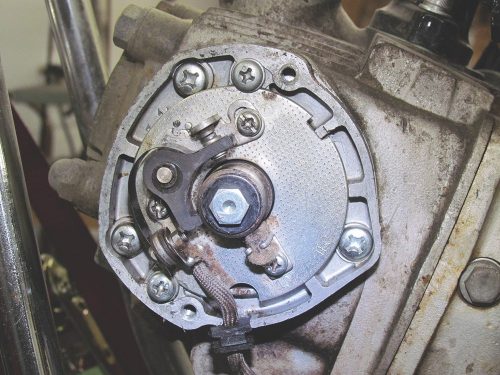 Timing this cutting-off of the current to the primary winding of the coil is critical, because this is what sets the ignition timing. This is where the points come in. When the points are closed, they complete the electrical circuit to the primary winding of the coil, allowing electricity, which comes from the battery, to create that magnetic field. Power is cut to the primary winding as soon as the points begin to open. The points operate via a lobe that pushes them open and a spring that shuts them. That lobe is either located the end of the crankshaft or, as in the case of the Honda ST90 used here, on the end of the camshaft.
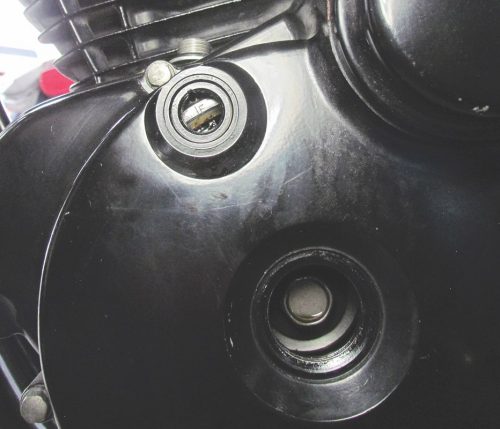
Timed properly, the lobe pushes the points open as soon as the timing mark on the crankshaft aligns with its mating mark on the crankcase. These marks usually are identified by a T (for top dead centre [TDC], which is when the piston is at the top of its stroke) and by an F (for fire, which signifies the time the spark should take place in the cylinder). The F mark will always precede the T mark by several degrees, since combustion must begin before the piston is at TDC.
The first step in servicing the points is to inspect the contact surfaces for pitting and to see if they are burnt; in either case, they must be replaced. Also replace the condenser, because its job is to protect the points from surges in voltage when they open; otherwise, they burn. Points having a grey, dull finish is normal, and it can be cleaned off with a very small, fine file or with 400-grit sandpaper, although the points must then be cleaned thoroughly.
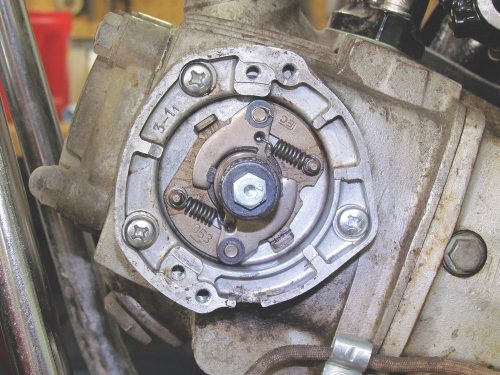
Whether new or freshly resurfaced, the next step is to set the gap when the points are open. To do this, you must turn the engine slowly by hand (using a wrench on the end of the crankshaft) until they are fully open. These specs are found in the service manual; on the ST90 the gap is .012 to .016 inch. Setting the gap requires loosening the points’ mounting screws and tweaking the points using a small, flat screwdriver on nubs and notches dedicated to this purpose. Once the gap is set, you can adjust the timing.
To do that, you must line up the F timing mark with the cylinder on its compression stroke by placing your finger over the spark plug hole and feeling for escaping air as you turn the crankshaft and align the timing mark.
 The easiest way to time the points accurately is to disconnect the wire coming off the points that eventually leads to the primary side of the coil, then use an ohmmeter to test for continuity by connecting one lead of the ohmmeter to the end of the wire and the other lead to ground. I use an ohmmeter that beeps when there is continuity so I don’t have to look at it while I set the points. Set the timing by pivoting the entire points-mounting plate – again, use a flat screwdriver. I’ve hit my mark as soon as I hear the beeping of my ohmmeter stop, indicating the points have just opened. After tightening the mounting screws, the timing is set. On multicylinder bikes with more than one set of points, this entire process must be done for each set of points.
While you’re in there, remove the entire mounting plate before adjusting the points and inspect and clean the advance mechanism. Replacing the points cover gasket also is a good practice.
Technical articles are written purely as reference only and your motorcycle may require different procedures. You should be mechanically inclined to carry out your own maintenance and we recommend you contact your mechanic prior to performing any type of work on your bike.
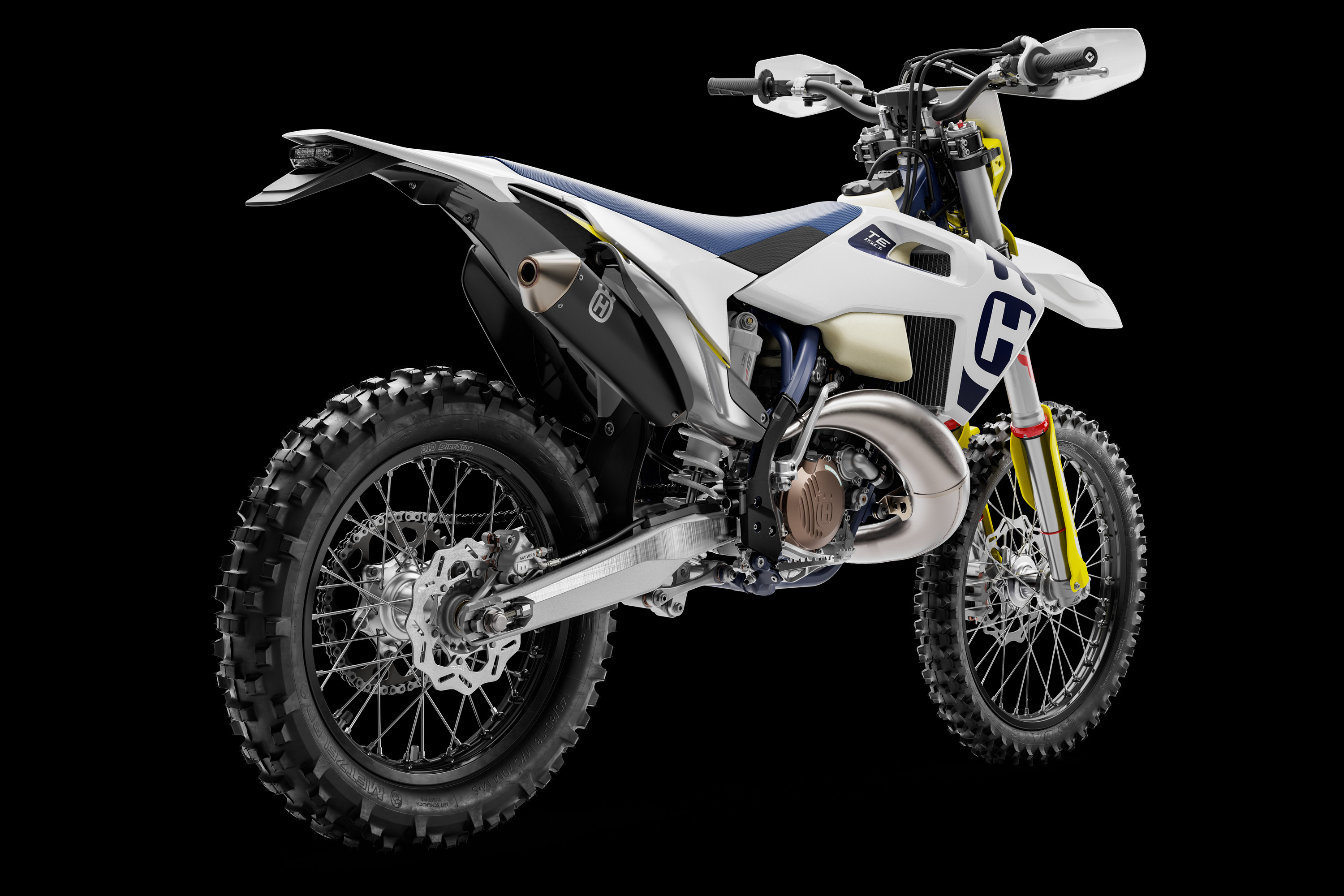
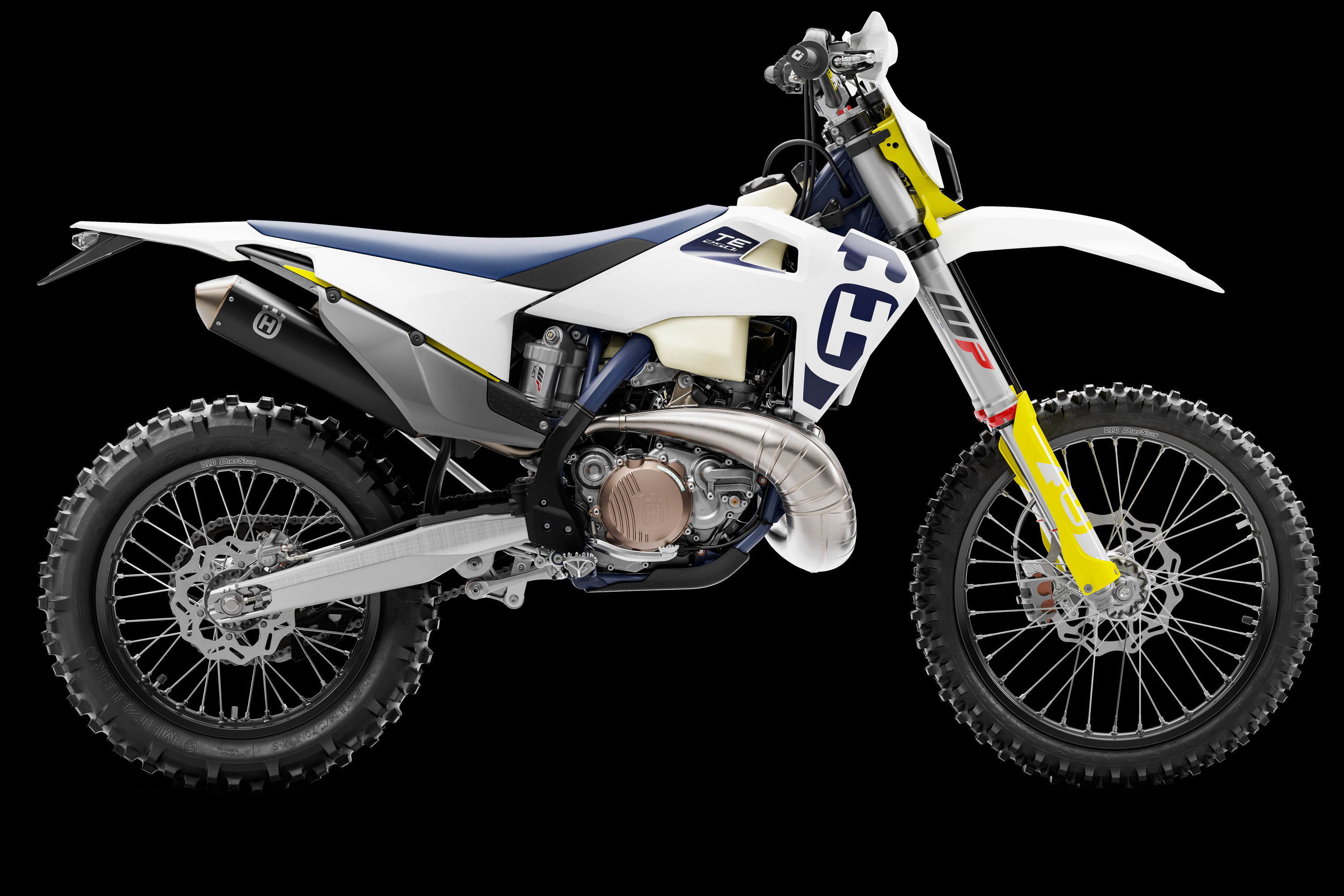
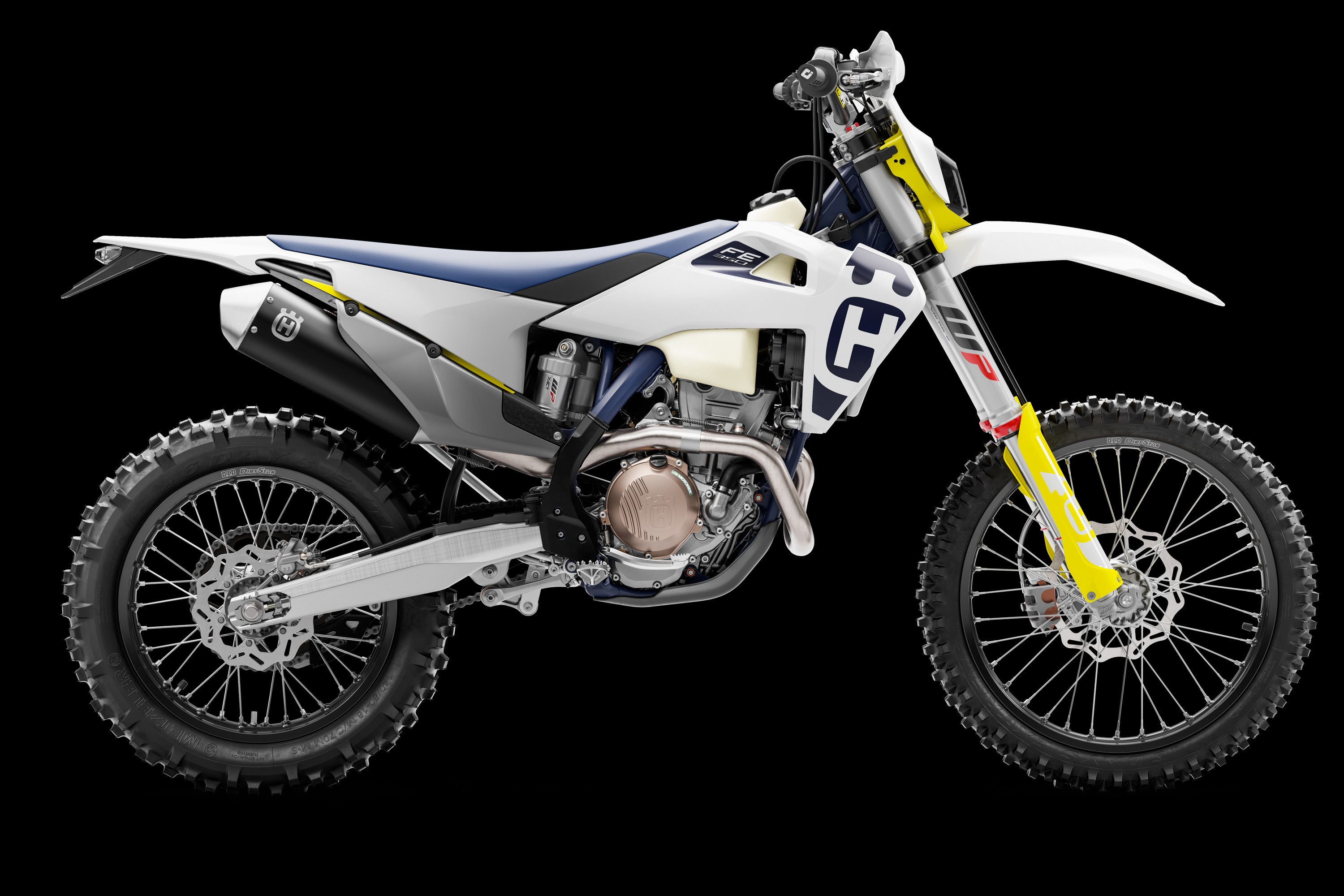
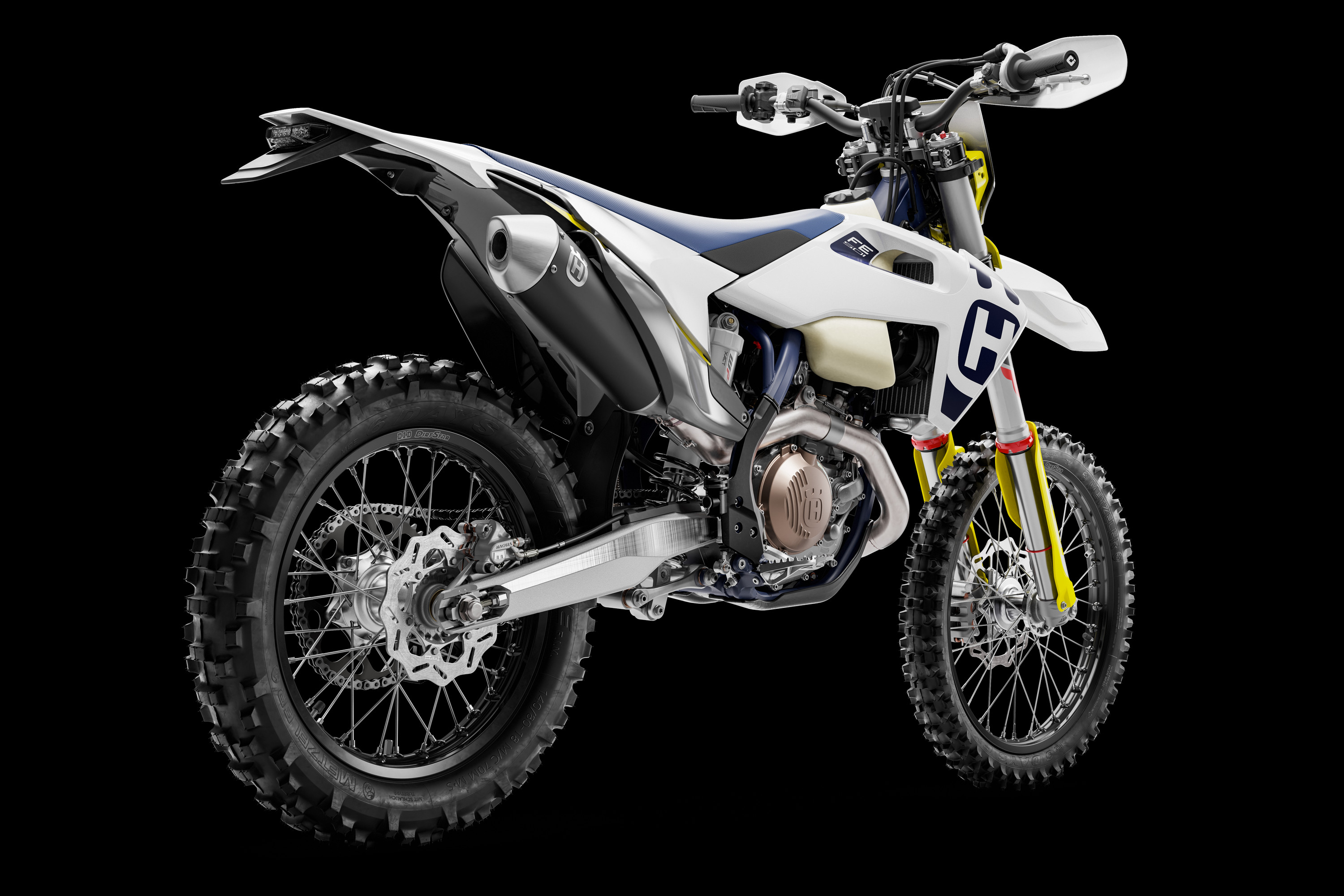
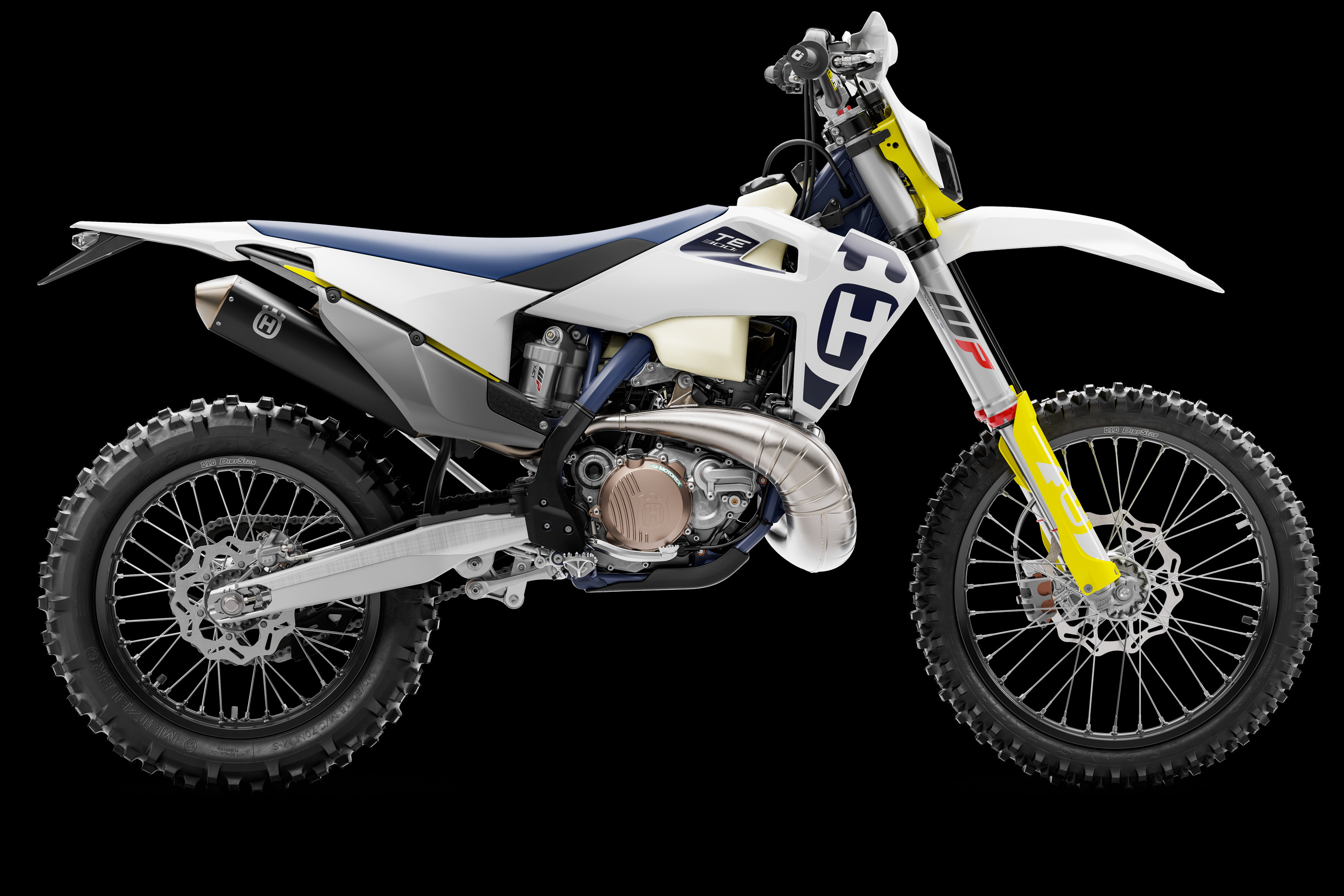
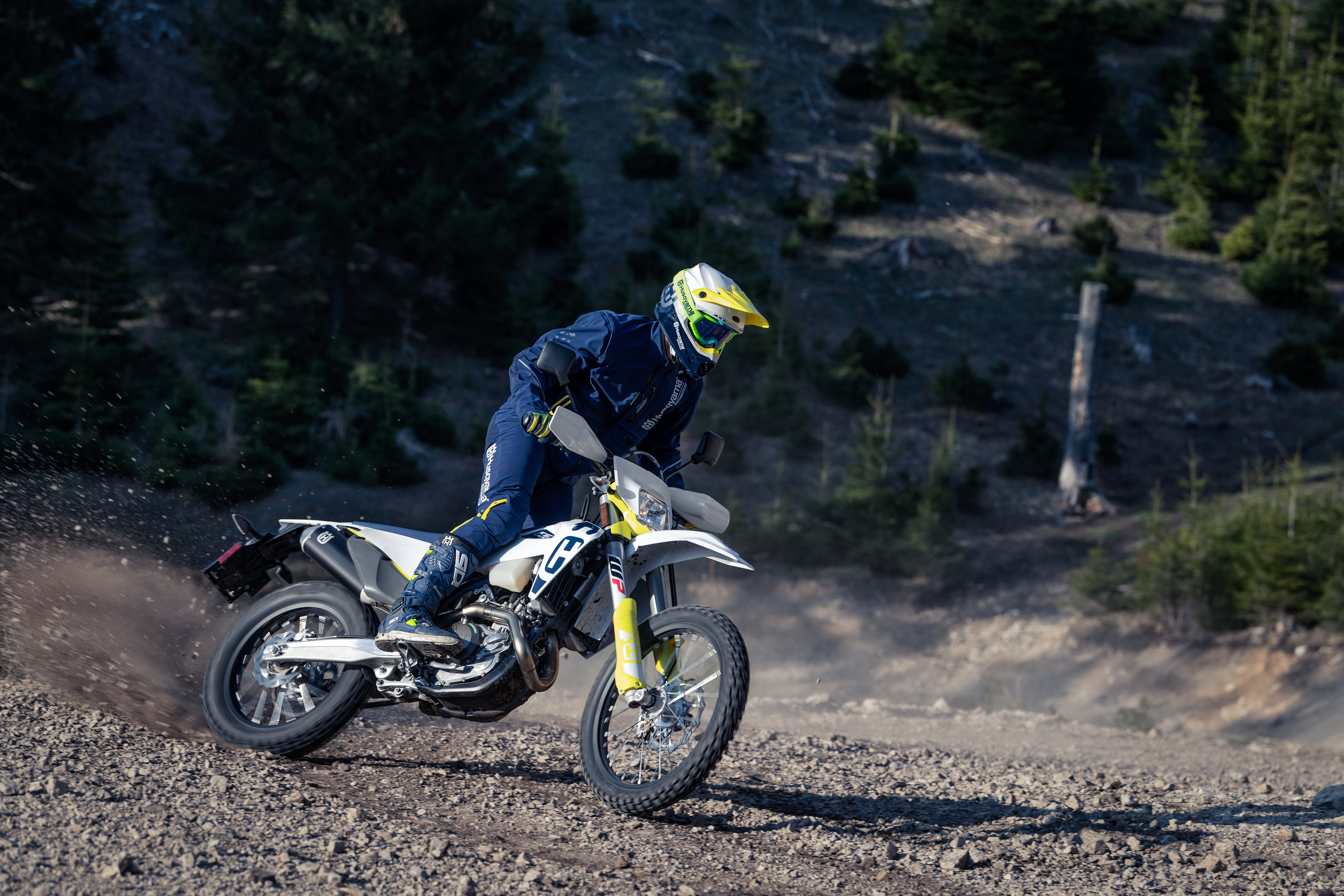
Husqvarna Motorcycles has announced the launch of the complete range of MY20 TE, FE and FEs models.
The revamped 2020 line-up of competition, off-road and dual-sport machines introduce key chassis, suspension and engine developments. Along with a new frame, subframe, shock linkage and bodywork, updated fork and shock settings. The entire Husqvarna Motorcycles off-road and dual-sport range promises to create more flow and confidence while riding.
FE 501 and FE 350
All-new for 2020 is the off-road only FE 501 and FE 350. These models are stripped down versions of their dual-sport counterparts, the FE 501s and FE 350s. They feature more aggressive mapping and a less restrictive power pack, resulting in a lighter overall weight (by 3.4-3.6 kg) and more usable power. The bikes come with handlebar-mounted select switch’s that allows the rider to select between two EFI maps, and Traction Control.

Quick List of changes
- New frame on all models offering increased longitudinal & torsional rigidity
- TE 150i featuring electronic fuel injection
- New 250 g lighter 2-piece subframe across the model range
- Updated WP XPLOR fork with new mid-valve piston & setting
- Updated WP XACT shock with new main piston & setting
- New shock linkage dimension providing reduced seat height & added control
- All-new exhaust systems for optimal performance & durability
- New seat places the rider 10 mm closer to the ground
- Improved cooling circuit with radiators mounted 12 mm lower
- Progressive new bodywork design offering new and improved ergonomics
- Updated 4-stroke engines offering improved performance & rideability
- Off-road only 4-strokes with Map Select switch and Traction Control
- 1° lower mounting on TE 250i/300i engines for improved front end traction
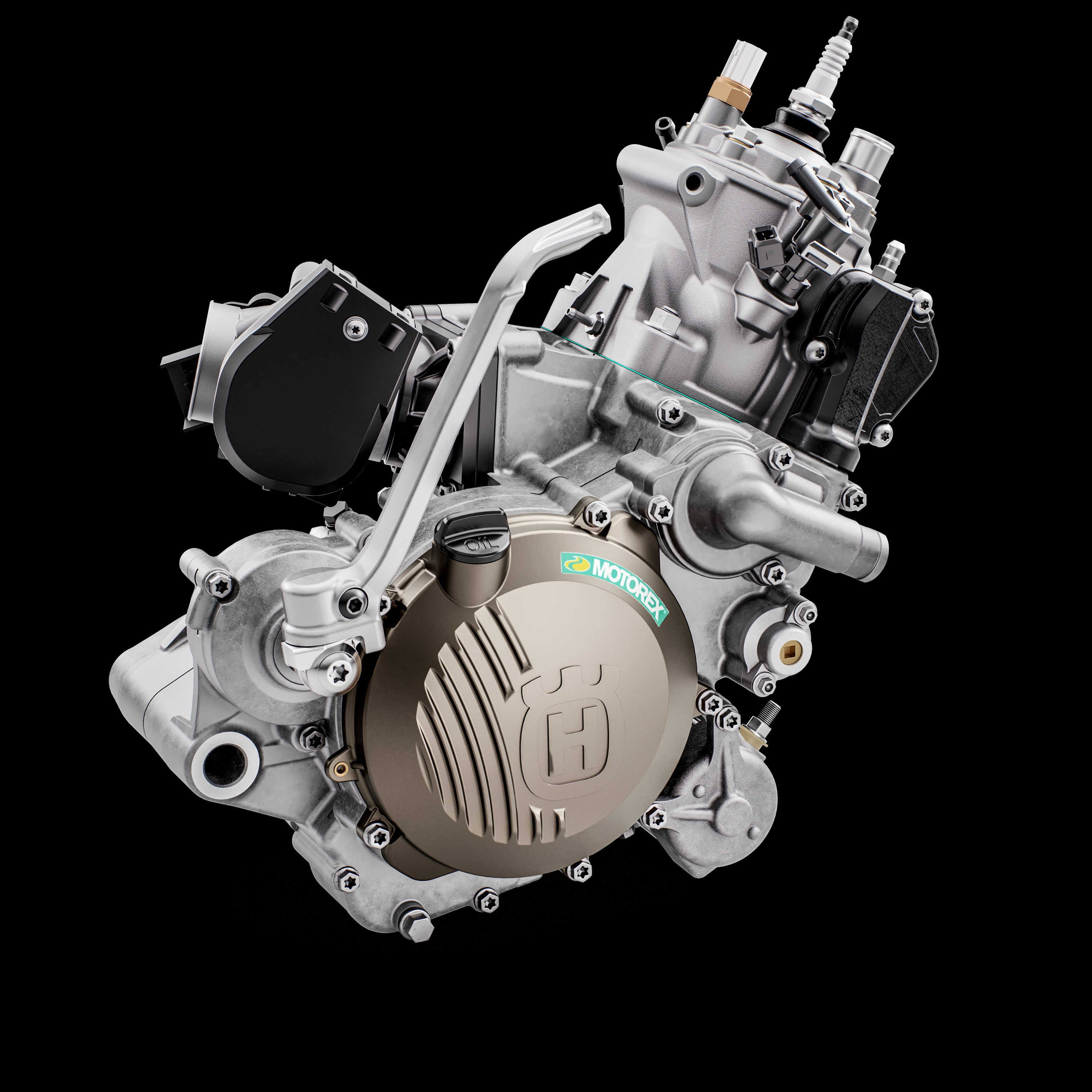
- Updated TE 250i/300i cylinder for superior 2-stroke performance
The Chassis
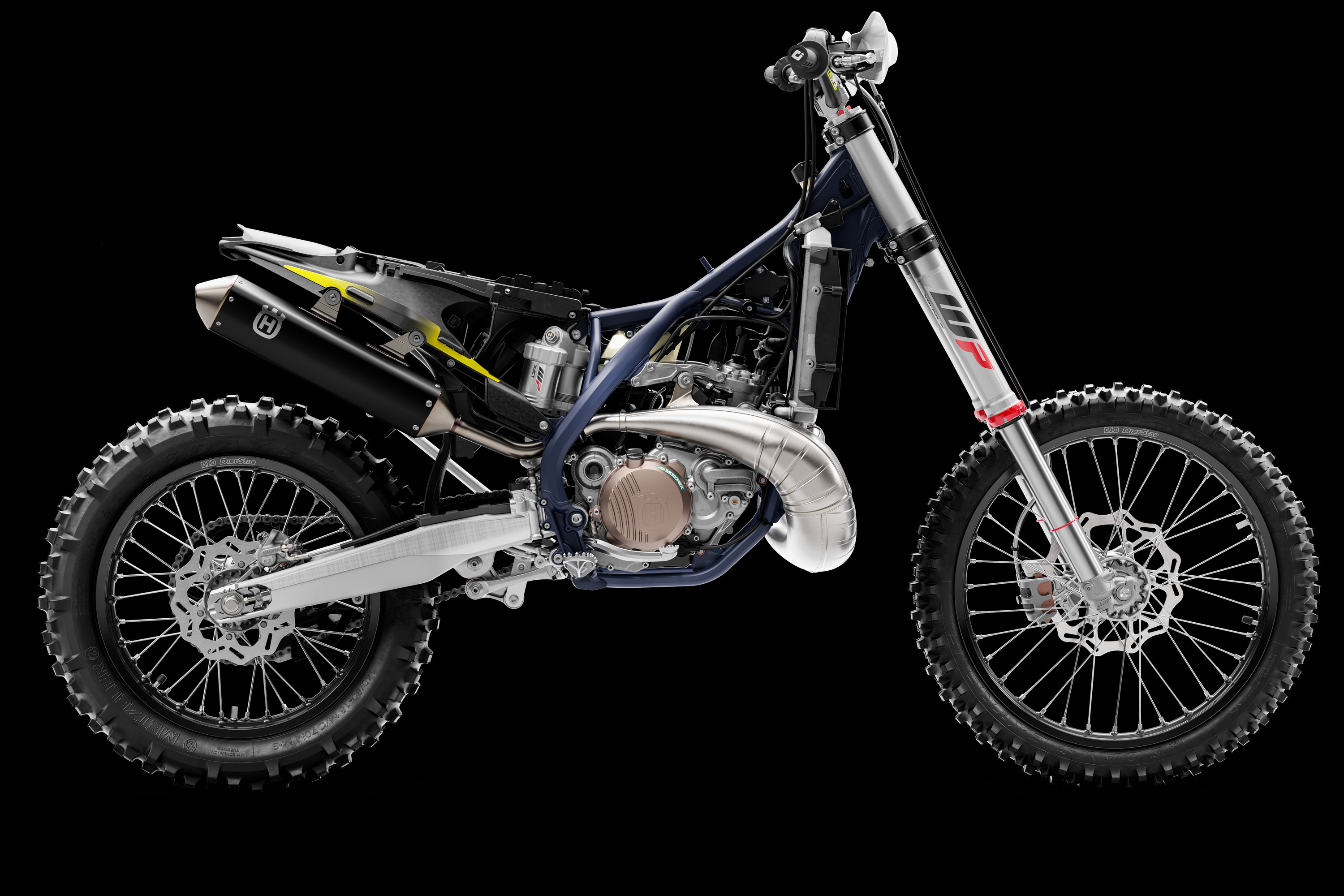
The entirely new generation of MY20 machines features new frames, subframes and bodywork and updated suspension and engines. All frames feature increased longitudinal and torsional rigidity and have a lighter composite carbon fibre subframe. As well as new aluminum cylinder head mountings which provide reduced vibration and optimized flex to further improve handling.

WP Suspension on all models
Updated 48 mm WP XPLOR front forks and WP XACT shocks offer simple adjustment, more consistent damping and better resistance to bottoming. Performance, comfort and traction are further enhanced thanks to the linkage system that reduces seat height.
The Engines
Husqvarna Motorcycles MY20 off-road and dual-sport models are primed for performance with new engines across the range, as well as revised exhaust systems and wiring harnesses.

An all-new TE 150i now stands beside the pioneering TE 250i and TE 300i, sharing the same proven 2-stroke fuel injection technology. Giving all the convenience of a modern 4-stroke at a fraction of the weight, the machine mixes a nimble and lightweight chassis with a compact and powerful engine.
The entire 4-stroke range features extensive engine upgrades for increased performance and rideability, with the FE 501 and FE 501s receiving a new cylinder head, as well as extensive revisions to the FE 350 and FE 350s engine.
Showcasing Husqvarna Motorcycles pioneering design direction, the MY20 off-road and dual-sport range features distinctive, new bodywork and graphics. Allowing riders to perform at the highest level for extended periods, the slimmed down bodywork and 10 mm reduction in seat height deliver ergonomics that ensure easier movement on the bike.
The new Husqvarna 2020 TE models will be available at authorized Husqvarna Motorcycles Dealers starting in July of 2019, while the 2020 FE and FEs models arrive in September of 2019. Visit Husqvarna Canada for more details.
Achieving a higher state of consciousness and spiritual awareness amid the unpredictable desert sands
If Los Angeles is the City of Angels, then the Mojave Desert is her dark mistress. Hot, seductive and mysterious on one hand; cold and dangerous on the other. The Mojave holds secrets that many men have gone in search of – some never to return. The Eagles, the Doors and the Band all went in search of her magic and muse and shaped a generation. The Mojave indigenous people would take devil’s weed and wander her endless plains in a rite of passage to achieve a new state of consciousness. But we, we are a different breed. We seek wilder things: not just to wander, but to conquer. We seek to achieve a new consciousness in only one way – we ride.
On paper the plan looked simple: three friends, four days, four stops, four amazing adventures. And as a professional musician, travel is pretty standard fare for me. After 15 years of making records and touring the world, I would hope I got this travel thing down. Just book your flights from northern Alberta, jump on some British custom Triumphs provided by our friends at International Motorsports in Vancouver and go for a ride, right? Wrong! On the map, Los Angeles to Joshua Tree National Park, then to Las Vegas and on to Death Valley, then back to L.A. looks like four easy days of riding. But we found out nothing is easy in the desert and you never know what you will get one day to the next.
Leaving La-La Land
 I landed in L.A. and met up with my friends Zach Graham, owner of International Motorsports, and Travis Nesbitt, videographer and filmmaker. We were fired up to shoot some music videos for The Congregation, my new band, and have some fun. We hit the road with a vengeance and ready for our spiritual awakening with all the fanfare and bravado of young warriors ready to accept our trials and claim our manhood. Only we didn’t realize what dangers lay ahead.
The temperature that day was 13 C and a nice departure from the -23 C that I’d left behind in Canada. But with the wind riding on my T-120, I was hard pressed to find any comfort in the California sun. We rode out of the city, leaving the last vestiges of safety, out into the wilderness and the mystery of Joshua Tree.
The ride out of town, for the most part, was probably the most dangerous. Navigating the five-lane freeway and dealing with nervous drivers and the high-speed lane-splitting bikers were so foreign to us as Canadian riders. What we thought would be an easy two-and-a-half-hour ride exiting L.A. quickly turned into four, thanks to the traffic escaping the city core for the weekend.
Pioneertown
 As soon as we left the main roads, civilization began to melt away. By dusk we were winding up a mountain road into Pioneertown and the famous Pappy & Harriet’s Pioneertown Palace. Established in 1946, Pioneertown was built as a living movie set of a 1870s frontier town; more than 50 feature films and several TV shows have been filmed there. The stage inside the Pioneertown Palace, recently brought back to its glory days, has hosted legends, from Paul McCartney to Robert Plant.
The smell of the barbecue and the hippie rock ’n’ roll coming from the bar was a welcome blast to the senses after the long, cold ride. We ate and drank our fill and made quick friends with the band, an activity that turned into a late-night jam session that meandered into the early morning hours until we retired to our rustic lodgings in “town.”
We rose early on the second day, shook off the fog from the evening before and were greeted with even more cold and more wind. This time we outfitted ourselves for the journey, donning our layers and leathers, and prepared for battle with the elements as we headed north through the Mojave Reserve toward Las Vegas. Despite the crushing wind blowing us sideways at times, I was awestruck by the scenic beauty as we rode deeper into the wasteland. Like an endless scene from your favourite movie, we rolled past the hoodoos, cactus and Joshua trees at a furious pace, using all the daylight we could to make miles in the warmest parts of the day.
Sand Isn’t Always Soft
 We stopped at the halfway point to eat at a truck stop touting the “Best Burgers in the Universe” – and they were! We asked the locals for a place to ride in the desert and were escorted to a place where we could leave the pavement for a while and put our bikes to work in the sand. The sand was deep and heavy and the rooster tails flew three metres into the air as we tore through the backcountry.
I found out the hard way that the back roads are not all sand as I high sided my 225 kg motorcycle across the trail when I hit some sand-covered but hard rock. The result was a bruised ego, a squashed tail pipe and a broken mirror. I was reminded that even though my scrambled-out T-120 can be taken off-road, it is not a dirt bike. And that extra weight will throw you for a loop if you are not careful.
After some great pictures and laughs, we decided to cut our day short and stopped in Primm, Nevada, instead of Vegas. This town, right on the California-Nevada border, boasts three large casinos and a wild-looking roller coaster. We managed to get into the restaurant right before closing and had the place to ourselves save for a weary gambler.
Good Samaritans
As fate would have it, we were talking about first aid and the Heimlich manoeuvre when Travis looked across the restaurant and yelled, “Sir, are you choking?” To the surprise of all of us at our table and the staff, the lonely gambler was choking badly. Travis and I ran to the man’s aid. I proceeded to administer the Heimlich until his blockage had cleared while Travis directed me, yelling, “Hit him again, Clay!” until the man was breathing again. Zach gave him a gentle belly rub until he settled down. We shook hands and headed back to our rooms in utter disbelief at the series of events.
As if the desert was smiling on us for our random act of kindness the night before, we woke to a hot sun blazing down and the wind completely gone. We peeled off our layers and raced onto the highway west into Death Valley.
Often touted as one of the hottest places on the planet, it did not disappoint. The heat was palpable, drying our bones, and our pasty Canadian skin burned in the sun. Any vestiges of roadside civilization slipped away as we passed through Baker and past the military “no fly” zones and into the vast expanse of dry lakebeds and sand dunes. At one point, we rode over a hill to expose an 8 km stretch of empty road across what could have been an ocean a million years ago.
The Devil Says, “Twist It”
The spirit of the devil’s weed took hold of our throttle hands as we opened up the Thruxton 1200 and T-120 for all they were worth across the lakebed. Speed blurred the lines on the road and the bikes were barking between high-rpm shifts until the rev limiters kicked us back into reality.
As the sun began to set on the third day, we made our way to our Airbnb lodgings, the Villa Anita. In a place called Death Valley, where people usually go to escape and not be found, the villa was an oasis. Billed as a living art museum, the villa is owned and run by a group of artists and can only be described as a hippie art commune.
We were greeted by two beautiful angels of the desert and I wasn’t sure if I was being led to salvation from the heat or into the Hotel California. But all the amazing patrons at the villa and the incredible vibe and food quickly put us at ease. We ate and drank and walked the five-acre compound, which is covered completely in paintings and sculptures and creativity. We sat by the fire and reminisced with our new friends as we looked at the stars. We were now as deep as we would be in the desert’s desolation and we could feel the magic seeping into every part of our bodies – and sand into every crack and crevice.
On the last day of our journey now, we bid our new friends and the desert oasis farewell and rode out into another windless day of dry heat. The temperature was a beautiful 25 C and I could only imagine rolling through here in the dead of summer with temperatures reaching 40 C. The air seemed to suck every ounce of moisture from our bodies and I was so grateful for every water stop along the way.
Back in the Sand
We were sidetracked once again by an open expanse of Sahara-like sand dunes with bikes and quads and buggys rolling all over them. We couldn’t resist one last opportunity to put the T-120 to task, so we pulled off and tore into the desert flesh one last time until we had sand in every part of our bodies and the clutch was slipping from the heat. We cooled the bikes as the roads wound back south and we could almost feel the shift in the air pressure as we approached the coast and the call of the ocean.
Santa Monica, California, was our final destination on the map. And as the water and beaches called our names, we rolled on the gas hard the whole way. We were dry and we were dirty; but most of all, we were transformed. The ocean would make us clean and replenish us, but the desert was deeper than that now. It was under our skin; in our bones. Our eyes could see farther, our spirits could reach higher, our throttle hands were stronger and, just like the young Mojave warriors, we had achieved a higher state of consciousness.
We had found our mojo.
Clayton Bellamy is a singer/songwriter who has won multiple awards while playing with the Road Hammers and is a lifelong motorcycle enthusiast. Follow him on Instagram @claytonbellamy or listen to Clayton Bellamy & The Congregation’s music online.
In Europe it’s common to ride small bikes. Why not in North America?
“So, let me understand this better,” I said to my student. “You and your 6’2” [then] boyfriend, bought a 1983 Honda CM250 Custom in Vancouver and rode it
6,000 km two-up across Canada to Kentville, Nova Scotia?”
“Yes,” said Justine Sturgeon, one of my students on the motorcycling basic course in New Minas, N.S., in the spring of 2012. They were out in B.C. planting trees in 2011 and decided to load up their camping gear and belongings on a trusty, small (17 hp) Honda and ride it across Canada.
Justine and Nathan Mentink’s fun 10-day adventure crossing Canada on a small-bore bike made me think that maybe many North American motorcyclists are missing out on a fun segment of riding. Often, over the eight years that I taught as a motorcycle instructor with Nova Scotia Safety Services, I was surprised and concerned about the large number of beginners going to big bikes right out of the course.
What is a Small-Bore Bike?
 For the sake of this article, I will use bikes 500 cc and under as my definition of small-bore bikes. Today’s technology combines lighter materials with amazingly powerful fuel-injected engines. I look back on my own motorcycling since 1982, and note that the 250 kg, air-cooled 1981 Yamaha 750 cc Virago I rode for 14 years had almost the same power-to-weight ratio as my 175 kg, liquid-cooled 2017 Kawasaki Versys-X 300, with the same top end speed of 170 km/h.
British motorcyclist Ted Simon, who wrote Jupiter’s Travels, went around the world for four years beginning in 1973 with a 500 cc Triumph Tiger 100, which has the same 40 horsepower as my Versys-X 300. He wrote that the smaller bike allowed him to get through tight areas easily and most of his riding was at 80 km/h anyway, so the smaller bike was all he needed.
Small Bikes’ Advantages
 Let’s look at some of the advantages of a lightweight bike. They are easier to ride and handle. They are less expensive to buy and insure. In terms of maintenance, tires are usually cheaper and last longer. As well, a lighter-weight bike usually equates to being more economical on fuel. If you drop a lightweight bike, you can manage to lift it easily on your own. Lightweight bikes are usually less prone to theft compared with their chrome-covered big brother cruisers. Riding a lightweight bike for a couple of years is great training before moving up to a heavier and faster class. A smaller bike offers you great manoeuvrability. Finally, a lighter bike also means you are less likely to get a speeding ticket.
Buying a big bike to keep up with your friends may get you in trouble faster if you are new to riding. Buy what you need, and not what your ego needs. I went out riding last summer in Nova Scotia’s Annapolis Valley with two friends on their 1200 cc and 1600 cc Harleys. I easily kept up all day while getting twice the fuel economy. I cannot think of any downsides to starting off with a lightweight bike. You will have a lot of fun without the stress of handling a big beast.
Buying a lightweight bike to build up experience will allow a new rider to move up confidently to a heavyweight later on with ease. Maybe you will find that a lightweight bike is all you need. My wife and I toured Europe for three years out of Belgium on a Kawasaki Vulcan EN500. A lightweight bike is also easy to sell.
For those experienced riders with a shiny 360 to 400 kg cruiser in their garage, having a spare 135 kg dual-sport, for example, is a nice option. Motorcycle Mojo editor Glenn Roberts discovered during his research for a previous article that 60 per cent of Canadian roads are gravel. The lightweight dual-sport allows more dirty fun minus all the worries!
What more incentive do you need?
A spur of the moment detour has Jeff Davison exploring New Orleans’ French Quarter, its unique cemeteries and the full length of the historic Natchez Trace.
The route was just obscure enough that there was not even a Welcome sign. But the Cajun accent that greeted me at a roadside stand serving shrimp and crawdads told me exactly where I was. Other clues were that a county was now a parish, a dentist’s office was in a house trailer and Linda Ronstadt’s “Blue Bayou” was playing in my head. It was not on my itinerary to explore Louisiana, but as I traversed its northern width, a siren song began calling my V-strom 650 south toward New Orleans. The conversation between the voices, murmuring into each ear from my shoulders, went like this:
“It’s a four-hour ride one way on the bike.”
“Yeah, but it’s a four-hour ride one way on the bike.”
And that settled it. Highway 71 led through small towns like Montgomery and Colfax, as well as through the congestion of Baton Rouge. Approaching “Nawlins,” I began to see moss hanging from every tree and the highways became long, low bridges that skimmed above the spillways and bayous below. I checked into India House Hostel, where I found a comfortable bed and, even more important, air conditioning. In the humidity of the Deep South, that alone was worth the $20. But first, I paid a visit to the French Quarter, where I enjoyed historic Jackson Square and the bustling nightlife of Bourbon Street. Even on a weeknight, the clubs were jumping and the buskers were hustling, and an ambitious speaker of Creole convinced me that my boots needed shining. In the downtown core, I rode past a small tent city of homeless people taking shelter under a tangle of overpasses, then past the sports dome where thousands had taken shelter during Hurricane Katrina.
Ahead of the Storm
 At 5:30 a.m., I was awakened by a roll of thunder and suddenly remembered some of the guests discussing a tropical storm forecast for the weekend. I decided to get up and on my way, hoping to see a few more sights before I headed north and, hopefully, out of the storm’s path. I arrived before the gates opened at Lafayette Cemetery No.1 in the Garden District. The district is famous for its antebellum-style houses with white columns and iron railings on second-floor balconies.
The cemetery is an old one, but the defining feature of most cemeteries in the Big Easy is that loved ones are “buried” in crypts aboveground. This is due to the very high water table (the city is largely below sea level) and buried caskets used to find their way to the surface – not exactly the hoped-for resurrection. A stroll through the cemetery was like wandering narrow streets between tiny stone apartment buildings.
Following River Road north, I crossed straight canals that were dredged and named like city streets leading out into the swamps, and I passed an airboat or two docked on the banks. The sight of Oak Alley Plantation stopped me in my tracks. Twenty-eight massive Virginia live oaks in two columns stretched from the mansion to the Mississippi River. Established as a sugar cane plantation in 1830, Oak Alley once enslaved more than 220 African-Americans. A tour of the Big House, followed by the slave quarters, gave a glimpse into the injustices that occurred on these grounds.
Beyond the towns of New Roads and False River, I rode through thousands of hectares of sugar cane, giving way gradually to corn and soybeans. Often the road ran along the top of the 12-metre-high levee, so that on my left I had an overview of the crops growing in the rich delta soil and, on my right the mighty Mississippi heavy with laden barges.
A Deep South History Lesson
 Crossing the state line (and the river) into Mississippi, I was about to deepen my education. At Natchez National Historical Park, I was introduced to the new Enslavement Markets Exhibition detailing the largely untold story of America’s internal chattel trade. It was both shocking and heartbreaking. Congress had enacted legislation in 1808 making it illegal to bring captives directly from Africa, so “slaves” were imported from northern states. Stolen men, women and children were marched sometimes from as far away as Maryland and Virginia to be sold in the markets at Natchez, a centre of the domestic slave trade until the Civil War.
Natchez Trace, the trail they followed, had been an old Native American trading route. Later used to deliver the U.S. mail, it also served as a military road for moving troops during the War of 1812. For many years, Kaintuck farmers floated their crops downriver to markets in New Orleans, then had to walk the Trace up to 800 km to return home. It was a dangerous journey, braving heat, mosquitoes, poor food and sucking swamps. Not to mention thieves who were well aware that these travellers carried their entire year’s earnings with them.
Today, the National Park Service administers the Natchez Trace Parkway, which approximates the path of the original Trace through a protected corridor of forest and field. Had I not carried maps, I would have been unaware of civilization nearby. The road is a narrow two-laner with no shoulder and a relaxed 70 km speed limit. The pavement was almost always in perfect condition, and what it lacks in curves, it makes up for in historic stops every few kilometres. It was lightly travelled – even on Memorial Day weekend – and the ratio of bikes to cars was better than average.
I stopped at Mount Locust, the only remaining of more than 50 inns once found along the Trace. At Route 552, I turned west and followed Rodney Road, a wonderfully winding back road through thick forest to see Windsor Ruins, an 1861 plantation mansion that survived the Civil War only to be destroyed by fire in 1890. All that remains are crumbling columns and rusting ironwork.
Enough For One Day
Light was beginning to fade as I pulled into Rocky Springs, one of three free but primitive campgrounds on the parkway. The night was so clear that even the half-moon cast shadows, and so many fireflies filled the oak and hickory trees that it looked like Christmas. Two owls asked each other “Who?” far into the night.
I awoke well rested to a choir of songbirds, complete with the percussion of a woodpecker. The unmistakable whistling of an elk rounded out the opus. In Port Gibson for my morning coffee and fuel, I found myself immersed in southern black culture. The matronly woman behind the counter said, “What you want, baby?” and “Yo change is 45 cints, baby.” And when three loitering older men began to flirt with the female customers (whom they all seemed to know), she said to me with a smirk, “Ah ’pologize fo’ de reg’lars.”
North of Jackson, dark clouds began to threaten, so I pulled over to button, zip and Velcro every opening in my gear. Almost immediately, however, my waterproof boots were filled to the ankles. At Jeff Busby Campground, the second free campground on the Trace, I called it a day. The tropical storm had caught up with me and I hunkered into my bivy to wait it out.
I awoke to a misty, overcast morning, concerned that the storm in the Gulf of Mexico may be following me north. But by 10 o’clock, the sun was shining and cotton puffs adorned a bright blue sky. I put on my walking shoes and strapped the wet boots on top of my luggage, tongues to the wind, and by afternoon they were completely dry.
A Rich Musical History
At Tupelo, I veered off the Trace to visit the boyhood home of Elvis Presley. A museum stands between the house and the (relocated) church where Elvis absorbed his first musical influences. I also dropped into Tupelo Hardware, which continues to operate much as it did in 1946 when his mother bought him his first guitar for $7.90.
Farther north, the Trace cuts through a corner of Alabama and I detoured again, this time to Tuscumbia, the birthplace of Helen Keller. It was inspiring to hear in detail how this amazing young woman overcame incredible disabilities and obstacles. Before I left town, I also had to visit the Alabama Music Hall of Fame. The list of talent is striking, from Emmylou Harris to Lionel Richie to Tommy Shaw of Styx. It was too late in the day to visit the famous studios in Muscle Shoals, but I began to hum the tunes of artists who recorded there, including the Rolling Stones, Bob Dylan, Paul Simon, and, of course, Lynyrd Skynyrd.
When Opportunity Knocks
Nearing the end of the day, I stopped on the banks of the Tennessee River, where, in the early 1800s, a half-Chickasaw entrepreneur named George Colbert ran an inn, farmed and operated a ferry. Where travellers of the Trace had no alternative, Colbert saw opportunity, once charging Andrew Jackson $75,000 to ferry his Tennessee Army across the river.
Arriving at Meriwether Lewis Campground in Tennessee, the third and final free campground, I discovered a memorial to Lewis, the talented secretary to Thomas Jefferson and half of the Lewis and Clark duo that mapped a route to the Pacific. This was the location of Lewis’ mysterious death in 1809 at the age of 35. A light sprinkle kept me looking skyward as I unrolled my bivy and cooked dinner on my camp stove. I soon found myself in conversation with four neighbouring campers who between them had 74 years of trucking experience and, by their own description, were “as redneck as Tennessee makes ’em.” As we said our goodnights, one of the wives handed me her flashlight/billy club.
“Here. You should have this, travelling alone,” she said. Then taking my hand in both of hers, she added, “Be safe.”
Morning came early but it was clear and sunny. I was on the Trace before 7 o’clock and almost as quickly turned off the road. I had heard about Yoder’s Homestead Market, and I thought I’d get breakfast there. But when I pulled up, it was closed.
“I thought the Amish got up early,” I said to myself. “I saw Witness.”
Then I realized it was Sunday. Of course they were closed!
So I continued on to Leiper’s Fork, one of the oldest American villages on the Trace. It was a picturesque little gathering of shops, including Puckett’s Grocery, where I intended to stop for fuel and coffee. But when I smelled the biscuits and gravy, I had to settle into a booth and place an order. Several bikes were parked out front, and riders sat at the open-air tables enjoying the morning sunshine.
After riding through days of forests, centuries of history and little to remind me of modern civilization, I came at last to Mile Marker 447, the northern terminus of the Trace. That brought me to the city of Nashville with all its rush and glitter – which could be an adventure in itself. But as I turned my front wheel toward home, I knew I’d be thinking back longingly to the quiet nights and pensive days along forgotten paths.
If your riding buddies think they can keep up with you when you ride the Niken GT in the rain, you might want to warn them not to try.
If you’re an experienced rider like me and get more satisfaction from motorcycles than any other type of vehicle, you probably looked at the 2019 Yamaha Niken GT and wondered: “Why? What’s the point of a leaning three-wheeler when two-wheelers have been leaning successfully for more than a century?”
I had no idea what to expect when I arrived in California for the North American launch of Yamaha’s new “leaning multi-wheel motorcycle.” I had no clue about whether I had to steer in the direction of a turn like on a conventional three-wheeler (for example, Can-Am’s Spyder or Harley’s Trike) or if I had to countersteer into turns like on a conventional motorcycle.
Well, I won’t keep you guessing and address that one right now: the Niken leans, steers and feels just like a motorcycle. You therefore must be versed in the operation of a motorbike to ride it. You have to push on the same side of the handlebar as the direction in which you wish to turn – you want to turn right, push on the right handlebar. The Niken leans as freely as a bike and will fall over if you neglect to put a foot down at a stop. If you were to sit on a Niken with your view of the front wheels masked (otherwise, you can see them if you lean your head a bit to either side) and ride away, you would take some time to figure out there was something different about it — if you’d even pick up on that at all. For the most part, the Niken rides like a motorcycle except for a couple of distinct, yet subtle differences – and one really big one.
Ties to the Tracer 900
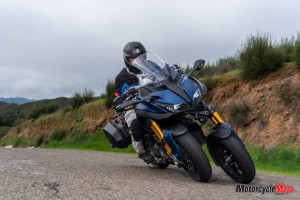 The Niken shares its 847 cc inline-triple with Yamaha’s Tracer 900, but with a slightly heavier crankshaft, and transmission gears made from more robust steel. Yamaha Canada does not publish horsepower numbers, but in Europe the Niken claims 113 horsepower and the same 64.3 ft-lb of torque as the North American model, so the horsepower figures should be pretty close.
If you look at the Niken’s spec sheet, you’ll see numbers that are much like those of a motorcycle. Chassis geometry is aggressive by two-wheel standards, with a steep rake angle of 20 degrees, trail at 74 mm and a wheelbase of 1,510 mm. The only motorcycle that comes to memory that had a rake almost as steep as the Niken’s is the Buell Firebolt’s, at 21 degrees. The wheelbase is only 10 mm longer than the Tracer 900’s. The only spec that’s outstanding is the Niken’s front wheel’s track, at 410 mm, which is the width between the front wheel centres. That last spec is significant because it is what legally distinguishes the Niken from other three-wheelers for licensing purposes: because it’s less than 465 mm, the Niken isn’t classified as a three-wheeler, and therefore requires a motorcycle licence to operate.
The riding position is naked-bike upright, with a relaxed reach to the foot pegs and a broad, cushy seat. The riding position and seat proved remarkably comfortable after two days of riding, and the seat, in fact, is one of the better perches I’ve sat on recently. Seat height is 15 mm lower than the Tracer 900’s, at 835 mm, and fuel capacity is 18 litres. Claimed wet weight is 267 kg, or 40 kg more than the Tracer 900 GT’s.
A Long-Distance Runner
 Yamaha touts the Niken GT as a sport tourer, so it includes some touring amenities, such as a tall windscreen; a pair of quick-release, 25-litre semi-hard saddlebags with waterproof liners; heated grips; and two 12-volt accessory outlets, one mounted by the instrument panel in the fairing and the other mounted on the left side of the bike above the passenger foot peg.
ABS and two-level traction control are standard, as are three ride modes that adjust throttle response. I had two issues with the Niken, one of which was abrupt throttle response in the most aggressive Mode A, although switching to the softer Mode B easily cured that. My second gripe is that you must use two buttons to set the heat level for the grips. A button located on the forward-facing side of the left switch assembly calls up the grip heat menu in the instrument display, then a thumb-adjusted rocker switch turns on the heat and you select one of three levels of heat. A single button could do all the work.
The Niken GT also has an electric quick shifter, although it only works on the upshift and only above 4,000 rpm. The bike shifted smoother when using the clutch, so I resorted to using the quick shifter only when riding at an elevated pace.
That Third Wheel
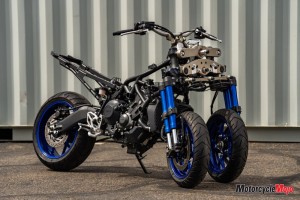 One of the Niken’s more subtle traits is the lack of any jarring jolts coming through the handlebar when hitting bumps. This is because the handlebar pivots on the frame (just like on Honda’s new Gold Wing) and connects to the front wheels (or wheel, in the Gold Wing’s case) via linkages. This feature isolates the Niken’s handlebar from road irregularities while providing ample feedback when steering and requires an appropriate, motorcycle-like amount of effort to steer – unlike non-leaning three-wheelers, which require near-Herculean strength.
Another subtle trait is that while the Niken flicks easily from side to side at lower speeds, the effort to do so increases exponentially as speed increases. I attribute this to countering the gyroscopic effect of three wheels instead of two. There’s also a very minute lag between what you input at the handlebar and what the bike does, although the lag is negligible; I’ve ridden cruisers that reacted much slower.
Then there’s that one, not so subtle trait: “Man, can this thing turn!” I did things to test the Niken’s aptitude to change direction that would have had a conventional bike bucking me off the saddle in disgust. I rode the Niken in a way that went against my natural instincts as an experienced rider, and yet it carried on without protest.
Wet Weather Friend
California usually is temperate, even during winter, but the forecast called for highs of 10 C, overcast skies and lots of rain during the Niken’s two-day press test. As it turned out those were just about the best conditions in which to test the bike.
On drenched, waterlogged pavement, I rode the Niken through corners at what would have been an aggressive pace in dry conditions on a motorcycle. I trail-braked hard into tight turns and leaned at angles that normally would have caused a motorcycle’s front end to tuck into disaster. I hammered the front brake mid-turn, just to see when this thing had had enough and booted me off the seat. Well, it didn’t. I didn’t really try anything dangerous or attempt to crash the Niken, but I did push it harder than I have any motorcycle on wet pavement, and it rallied on without a wiggle.
Needless to say, I was awestruck. The thing is, the Niken returns all of the sensory feedback and stimulation that makes riding a bike so much fun while, at the same time reducing any discomfort you may feel about tucking the front end to almost nil. In fact, only years of instinct and reflexes honed on two wheels kept me from pushing the Niken further than I did. It just seemed unnatural the way it handled everything I threw at it.
What’s It Like on Dry Pavement?
Fortunately, the second ride day was mostly dry. This is when I discovered that the Niken can easily keep up a fast pace to match any sport bike on winding roads. At an elevated pace, the three-wheeler railed along, steering sharply and with unwavering stability almost regardless of what was happening beneath the front tires. I hit mid-turn bumps at speeds that probably would have caused a two-wheeler to at least shake its head, but bumps passed beneath the Niken unnoticed. This certainly raises the confidence level and may cause you to push harder than you would on two wheels.
I even encountered mid-turn damp patches that would have caused me to slow down when on a conventional motorcycle, but I did nothing to readjust my speed on the Niken. The confidence generated by the added stability and traction up front will not, however, transfer well if you get accustomed to the Niken and then switch to two wheels; you’ll have to remember to tone it down when riding on the latter.
And if your riding buddies point fingers at you and laugh because you’re riding a bike equipped with training wheels, let them laugh, then ride circles around them when it rains. You should, however, be sure to warn them not to try to keep up with you on wet pavement. Seriously. Trying to keep a quick pace with the Niken on wet pavement eventually will lead to disaster for them. Call it a cheater bike in the rain.
So, Back to Why
I was partially expecting to dislike the Niken. But, after riding it, I discovered that Yamaha is onto something here: the Niken GT really works. It works especially well when the pavement surface is compromised by bumps, rain or occasional sandy patches. You can almost ignore what is happening beneath the Niken’s wheels and just carry on.
At $20,999, the Niken GT is pricey, but the peace of mind that the extra front wheel provides might be just the thing for a rider who may have tucked the front end on a two-wheeler once and never really got over the trepidation of relying on a single contact patch to maintain control up front. If you’re a high-mileage rider and your riding season stretches from early spring to late fall, no other machine will return the consistent handling throughout the less temperate seasons than the Niken.
So, why? Because while the Niken feels like a conventional motorcycle for the most part, what sets the three-wheeler apart is its ability to handle unsavoury road conditions. Heck, it had me wondering if Yamaha hasn’t just invented a better motorcycle.
After a decade of keeping the performance bar set high, BMW ensures this third-generation S1000RR remains a favourite supersport machine.
When BMW introduced the S1000RR in 2009, it raised the supersport performance bar considerably despite being the German motorcycle maker’s first attempt at a high-performance superbike. It was BMW’s first motorcycle with a transversely mounted inline-four, and the bike entered a class dominated by machines from Japan. Despite being entirely new, it entered the category with class-leading power, claiming 193 hp, when the best of its competitors from Japan were topping out at about 180. But, the S1000RR also brought a slew of technology changes into the category; it was the open-class supersport machine to feature advanced traction control and ABS as standard features in Canada, and did so at a very competitive price.
BMW’s S1000RR enters its third generation later this year as a 2020 model, boasting the biggest changes since its introduction a decade ago. BMW held its international press launch at Circuito do Estoril in Portugal.
New Tech
 The first thing you notice when looking at the new S1000RR is that it no longer sports those polarizing asymmetrical headlights. They were hallmarks of the German-made supersport machine since its introduction, although they weren’t unanimously appreciated; some people liked them, some people didn’t. There’s no denying that the new symmetrical headlights have given the S1000RR an entirely new look. While I found that the former oddly shaped headlights gave previous incarnations of the bike a distinctive look that set it apart from the masses, I like this new design.
From the saddle you’ll see a new high-resolution TFT instrument panel, controllable via handlebar-mounted switches and multi-function thumb wheel. There are several display options and seemingly endless parameters you can adjust via the screen – many more than I had the chance to sample during a day of track riding. The interface is relatively user-friendly, although I would have needed more seat time to get accustomed to accessing all of the functions available via the new screen.
The S1000RR now features advanced six-axis sensors, which provide much more intuitive and precise traction and wheelie control than before. There are four ride modes – Rain, Road, Dynamic and Race – although real tuning is available in the optional Pro modes. With Pro modes, you get three sub-modes – Race Pro 1, 2 and 3 – each allowing you to select from three levels of each parameter – including throttle response, traction control, wheelie control, engine braking and ABS – and save them to the mode’s memory. You therefore can have three customized maps to select from when riding on the track, although they must be selected before you ride, by using the menu in the TFT screen. There is a button on the left handlebar switch assembly that does allow you to tune the level of ABS and traction control further, on the fly, within the parameters you’ve already selected in Race Pro mode.
On a Diet
 Weight has been taken off everything – the engine, chassis, exhaust, electronics – for a total of 11 kg, dropping the weight to 197 kg wet for the S1000RR; when equipped with the optional M package, which we’ll get to later, the weight now is 193.5 kg.
The 999 cc inline-four is entirely new, and like the new R1250 boxer engine, it incorporates BMW’s ShiftCam technology. This system provides variable lift and duration at the intake valves, much as if the engine had two different intake cams. There’s a set of electronically controlled cam lobes that boost low-end torque and another that enhances top end. The high-power lobes always work above 9,000 rpm, while engine load determines which lobes operate below that engine speed.
North American bikes must adhere to slightly tighter sound regulations than European bikes do, and therefore there is a small difference in engine output. The factory claim is 204 hp for Europe and 202 hp for North America. BMW’s Canadian website publishes the European kilowatt numbers but uses the North American value, which translates to 207 hp – which is generous. In any case, the new engine is roughly four per cent more powerful than before. However, the big gains are at lower revs, a result of BMW’s ShiftCam. At least 73 ft-lb of torque is available beginning at 5,500 rpm, peaking at 83.3 ft-lb at 11,000 rpm. Fuel economy is said to be four per cent better.
M Package
 The aforementioned S1000RR M package adds track-oriented items, such as the Pro ride modes with adjustable traction.
control, wheelie control and engine braking, launch control and a pit-lane speed limiter. The package also includes adjustable ride height and swingarm pivot, and carbon fibre wheels, among a couple of other race-oriented bits, for $4,875 above the $18,900 starting price.
If you prefer all of the electronics and the chassis adjustability but without the carbon fibre wheels, a Race package also is available for $2,075. Also optional, for a $1,525 premium, is BMW’s Dynamic Damping Control (DDC) electronically adjustable suspension, which has completely new internals that provide a much broader adjustment range. This last package also includes heated grips and cruise control.
On The Track
My test bike was fully loaded with the M package and the DDC suspension. The bike was equipped with the OEM Bridgestone Hypersport S21 radials for the morning track sessions, which were switched to Bridgestone racing slicks for the afternoon.
On my first session I followed Jürgen Fuchs, a former 250 cc and 500 cc GP rider, at a much faster pace than I’d normally go on my first time out. However, with the bike set to Race mode, it responded with confidence-inspiring feedback, allowing me to go from zero to 95 per cent of my capability with remarkable ease. We rode fast enough in that first session to feel the OEM tires squirm around through the very fast and long right-hand sweeper that opens up onto the kilometre-long front straight.
Trust in Technology
During my second session, I experienced a 160 km/h rear slide when riding through that sweeper on those same OEM tires. Skill has taught me to stay on the throttle when experiencing a rear-wheel slide, which is what a rider must do now on open-class supersport machines that have advanced traction-control systems. Closing the throttle when in a slide throws off the system, so you must learn to trust the intervention and, in the case of the S1000RR, adjust to your riding style and let it do its work. Despite the eye-opening slide, the rear tire just came back into line and the bike straightened out with no indication that electronics did anything to intervene, although they most likely did.
Those first two sessions really emphasised what I’ve always appreciated about BMW’s S1000RR: it is forgiving, it is easy to ride and it is blistering fast without being too demanding. In comparison, a Ducati Panigale is also blistering fast, but it taxes your mental and physical strength.
After lunch, I hopped onto a bike equipped with slicks and I selected Race Pro 2 mode, which doesn’t back off traction control and ABS to minimum, but backs them off enough to allow traction to give in a controllable manner. I reset the wheelie control to Level 2 because I prefer to have both wheels on the ground most of the time. The difference between wheelie control levels 1, 2 and 3 is the amount of lift the bike will permit before intervening; Level 2 allows about 5 cm of lift.
Grip was much higher on the slick tires, and their slightly different profile also quickened turn-in. And despite going faster through the same right-hand sweeper where I’d experienced a slide earlier, this time I felt no slip whatsoever. Throttle response was aggressive yet still manageable in Level 1, and although the front wheel lifted off the ground occasionally while exiting the track’s first-gear chicane, that occurred very smoothly, returning the front wheel to the ground with no further intervention on my part. None of this was felt from the rider’s seat, although the level of some of the electronic intervention was set a bit too low for me to trigger. I saw the traction control light flash only in the earlier sessions when I was riding on the OEM tires and in the non-Pro Race mode; set at a lower level of intervention and on the slick tires, lighting it was beyond my skill level.
Still a Favourite
Fortunately, I have some experience on various S1000RR models on this very racetrack, so I can make direct comparisons among the old, the new and the exotic. The last time I rode a bike on this track was to ride the $95,000, carbon fibre-framed HP4 Race model. I also rode the previous-generation S1000RR during that test. While the S1000RR always has been my favourite of the open-class supersport machines because it is easy to ride fast, it felt almost truck-like next to the ultra-lightweight HP4 Race. This new S1000RR –when equipped with the M package electronics and DDC suspension, at least – sits somewhere in between. That’s a big leap from the previous model and insures that – for now, at least – the BMW S1000RR will remain my favourite litre bike.
Resurrecting a vintage bike is not for the faint of heart.
Last year I acquired a 1980 Kawasaki KZ550A. It belonged to a friend who has a rather large collection of motorcycles. Although we’d initially agreed on a monetary amount, we ended up agreeing to settle the debt through work to be done on his bikes.
 The KZ550 is almost completely original, except for the handlebar and tires. Its odometer reads just over 23,500 kilometres, and I have no reason to believe the mileage isn’t genuine. Although the bike could use a good cleaning, it’s in otherwise excellent condition. Despite its stellar shape, years have a way of aging a machine, and it’s going to need a good going over before becoming roadworthy. Normally I save such projects for the winter, but I thought I’d get a head start by at least listing all the items that’ll need attention. And the list is long.
The bike hasn’t run in at least five years, and the original owner never took precautions to store it properly, so I won’t even attempt to start it until I get some work done. Of course, I can shortcut the work and probably get it running in a few days, but I wouldn’t really get the satisfaction of a job well done.
The biggest item on my list is a top-end job, which means lifting the cylinder and head. Normally, I wouldn’t have to do this due to the bike’s low mileage, but the head gasket is seeping oil. Once the cylinder head is off the bike, I’ll determine if it can use new piston rings and a fresh cylinder honing, though it probably won’t need this, again, due to the low mileage – at least I’m crossing my fingers that this will be the case. It will get new valve seals, since at 39 years old, the originals have probably hardened. I’ve already gathered an aftermarket gasket kit, made by Athena, for $160. I’ll also check the valve clearance upon reassembly, and of course the engine will get new oil and a filter.
 Since the carburetors will be coming off, they’ll get a complete overhaul. Because of the bike’s improper storage so many years ago, I’m almost frightened to look inside, but I’ll gather the courage and dig in, in due time. I’m just hoping that corrosion hasn’t made them unusable, since these mechanical-slide carburetors are hard to come by.
The front brake will also get a complete overhaul, despite seemingly working well. Brake fluid accumulates moisture with time, which causes components to corrode. Crud also builds up beneath the piston seal, which reduces the piston’s capacity to retract when the brake is released, thus creating drag. Refreshing the front brake will be a purely preventive measure, though new brake pads made of modern material will replace the current originals. The rear brake is a mechanical drum, which will get appropriate service and lubrication.
The suspension will get refreshed. The forks will be taken apart, cleaned and reassembled with new seals and fresh fork oil. Again, this is a preventive measure, since the seals are not leaking. Not yet, anyway. They probably will by the time they hit 40. The shocks are not rebuildable, but they are not leaking. They can be disassembled, though, and since the rubber stops have completely degraded, I’m going to have to find suitable replacements; otherwise, the shocks will bottom on metal, which will destroy them.
I have sourced a handlebar that is close to the original in shape, since a wider, flatter handlebar had been installed at one point. The new handlebar and a set of OEM grips set me back $65.
 About the only modification I intend on performing is to swap out the original ignition points with a more reliable and maintenance-free electronic ignition. Dynatek makes a direct replacement for the points, though it also requires a new set of compatible ignition coils. I haven’t yet pulled the trigger on these items, since together they cost about $440, which represents about a third of what I paid for the bike. I may start the bike with its points intact, and make the swap at a later date. Curiously, the KZ550LTD of the same year came with an electronic ignition system, so I might try to find a used one. A new battery is also in order.
Finally, I will put on some fresh rubber, though sourcing something that’s period correct might prove a bit challenging. The front tire is readily available from several tire makers, but no one makes a direct replacement for the 3.75H-18 rear, so I’ll have to settle on a 120/80-18. They’ll likely be Bridgestone BT-45s, since they’re affordable and they have a tread pattern that looks somewhat appropriate.
Although my KZ550 won’t be ready to ride this summer, it will provide countless hours of pleasure next winter, because working on bikes is next best to riding them.
Technical articles are written purely as reference only and your motorcycle may require different procedures. You should be mechanically inclined to carry out your own maintenance and we recommend you contact your mechanic prior to performing any type of work on your bike.
Two Wheel Sunday one-day motorcycle street festival is happening June 2nd in Calgary.
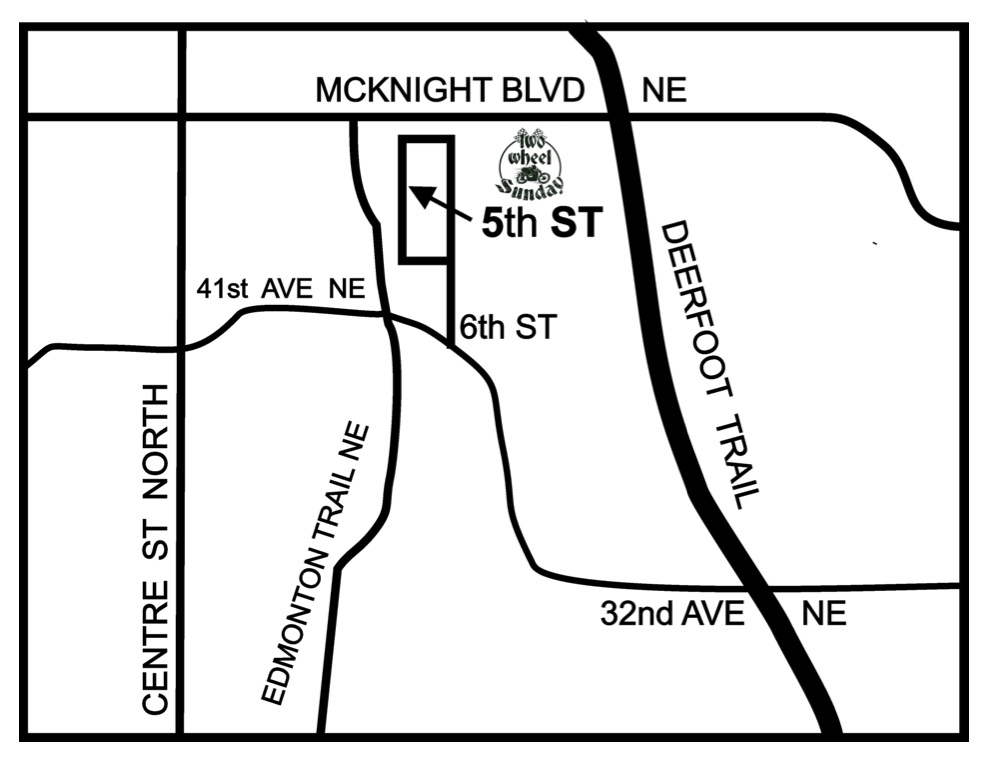
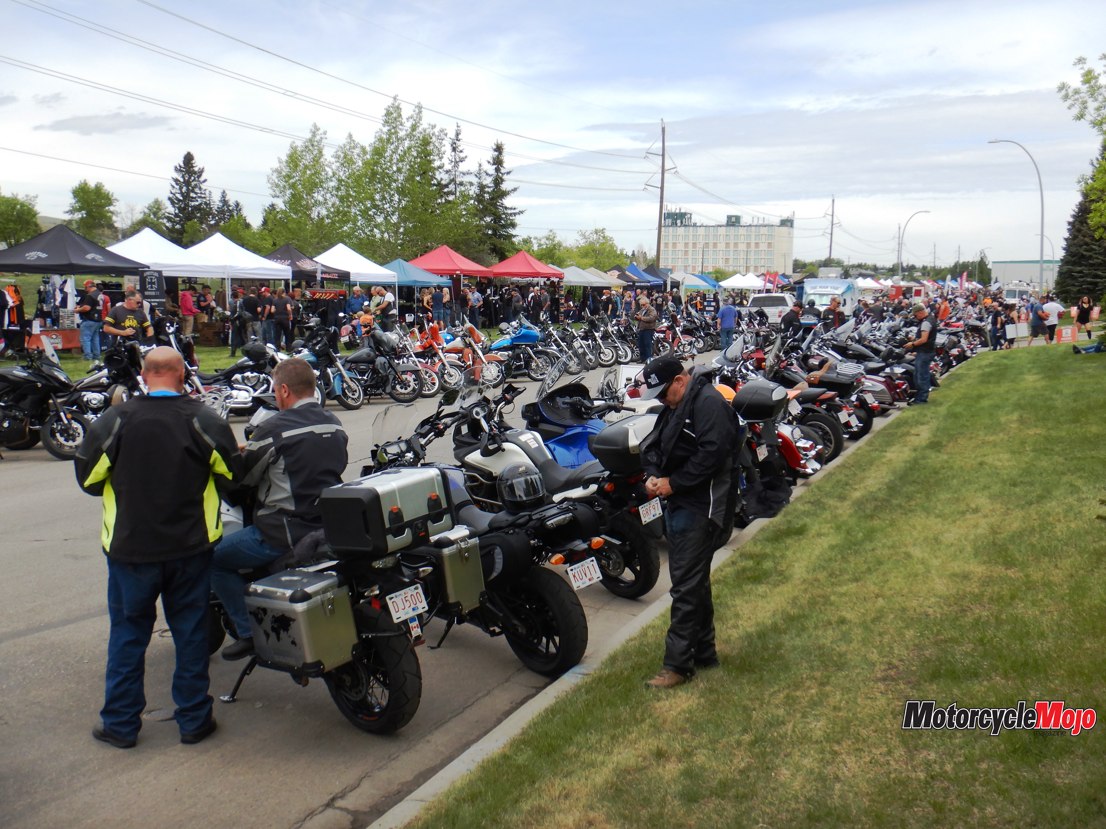
The sixth annual Two Wheel Sunday (2WS) takes place on a four-block stretch of Fifth Street N.E. from 10 a.m. to 3 p.m. Sunday, June 2 (see accompanying map). This family-friendly festival celebrates all-things motorcycle and two-wheeled.
“Two Wheel Sunday has grown each year to become one of Western Canada’s premier motorcycle events,” says Steve Grover, Two Wheel Sunday Chairman. “It’s a free, family-friendly event where riders, non-riders, or those who are simply curious can come together to share their common interest in motorcycling, whether that’s sharing stories, discussing bikes, or simply asking questions of other riders to learn more. If you’re an experienced rider or someone who is just thinking about getting involved in the sport, this is definitely the place to be on June 2.”
The stretch of Fifth Street N.E. dedicated to 2WS will be open to motorcycle traffic only during the event, which will see more than 100 vendor sites representing dealers, merchants, clubs, charities and industry-related displays. While non-riders are strongly encouraged to attend, those arriving by car are asked to park off-site nearby.
2WS highlights this year include Harley-Davidson Canada’s Softail Experience demo rides, a Show & Shine, motorcycle parts and accessories garage sale, food trucks and live music. Pro-Am Motorsports & Adventure Honda will be doing demo rides of Kawasaki, Yamaha and Honda motorcycles. Indian Motorcycles of Calgary will be holding its demo rides adjacent to the site.
“The motorcycling community in southern Alberta has enthusiastically embraced Two Wheel Sunday since its inception in 2014,” says Grover. “It’s grown from 3,000 participants in year one to nearly 10,000 last year. Displays and representatives keep increasing too, and include all aspects of the bike community from scooter culture to custom-built motorcycles,” he says. Calgary-based NUUT, a world leader in motorcycle electronics, will be showcasing its products in a special display area. Blackfoot Motorsports, Universal Cycles and Cycle Works Foothills will be among the motorcycle dealers and shops represented at the event, in addition to countless other vendors catering to the motorcycling community.
Two Wheel Sunday has raised more than $25,000 for local charity at past events. This year’s designated charity is Fresh Start Recovery Centre.
Triumph Motorcycles announced the collaboration with UK industry experts and academic leaders to develop specialist motorcycle technology.
Triumph Motorcycles is collaborating with Williams Advanced Engineering, Integral Powertrain Ltd, and WMG at the University of Warwick. Project Triumph TE-1 is a two-year project aimed at developing and refining electric motorcycle capabilities for Triumph’s future electric motorcycle offerings. “This new collaboration represents an exciting opportunity for Triumph and its partners to be leaders in the technology that will enable the electrification of motorcycles, which is driven by customers striving to reduce their environmental impact, combined with the desire for more economical transportation and changing legislation,” said Nick Bloor, Triumph CEO. “Project Triumph TE-1 is one part of our electric motorcycle strategy, focused on delivering what riders want and expect from their Triumph, which is the perfect balance of handling, performance and usability.”
Triumph Motorcycles will be heading the project with advanced motorcycle chassis design, engineering, manufacturing and safety expertise. Williams Advance Engineering will be creating industry-leading lightweight battery design for the project along with battery management system and vehicle control unit. While Integral Powertrain Ltd. will lead the development of bespoke power-dense motors and a silicon carbide inverter. R&D, simulations, and expertise will be provided by WMG at University of Warwick, while Innovate UK will be supporting the project through funding with goals of promoting science and technology programs.
The project will be divided into four main phases, with one of it’s key goals to deliver sophisticated electric motorcycle systems which reduce mass, complexity and package requirements. Steve Sargent, Triumph’s Chief Product Officer said “Our future product strategy is focused on delivering the most suitable engine platforms for the changing landscape of customer needs, and we see a Triumph electric powertrain as a significant requirement alongside our signature twin and triple cylinder engines. As part of our electric motorcycle initiative, Project Triumph TE-1 represents an exciting collaboration that will provide valuable input into our future line-up. We are incredibly pleased to have the support of OLEV and Innovate UK, and to be working together with the UK’s electrification experts and academic leaders, in an endeavour that ultimately is focused on the future prosperity of British industry, and the future of motorcycling.”
From partyers to racers, it takes all kinds of people to make Bike Week the festival that it is.
The people who annually make the trek to Daytona Beach to cruise the streets call it Bike Week, while those who go for the racing call it Speed Week. Which is right? I think the official term is Bike Week, and the event’s history is traceable as far back as 1937, when riders would come to race on the beach.
 The racing on the big banks of the Speedway is why I go. As a photographer, I love the challenges that this expansive track presents. I also like the challenge of trying to find a new and interesting photo that is different from those of the photographer standing next to me. The challenges I don’t care for are the strict rules and the long walks with heavy telephoto lenses to places that have no protection from the sun. And once the racing is done, I will always find the time to check out as many of the social events that I can.
Over the last 45 years of attending Bike Week, I’ve noticed that much is the same and just as much has changed. On the racing side, my biggest disappointment is the lack of international flavour of the races. This used to be the first big international race of the year, a place where the factory teams would come with some of the fastest machines on the planet, ridden by the best riders to challenge this great racetrack. Today, the racing is still competitive, but without the international crowds and the factory teams. It has become just another short endurance race. Saying that, this year’s race proved to be one of the more exciting races I have seen here in years.
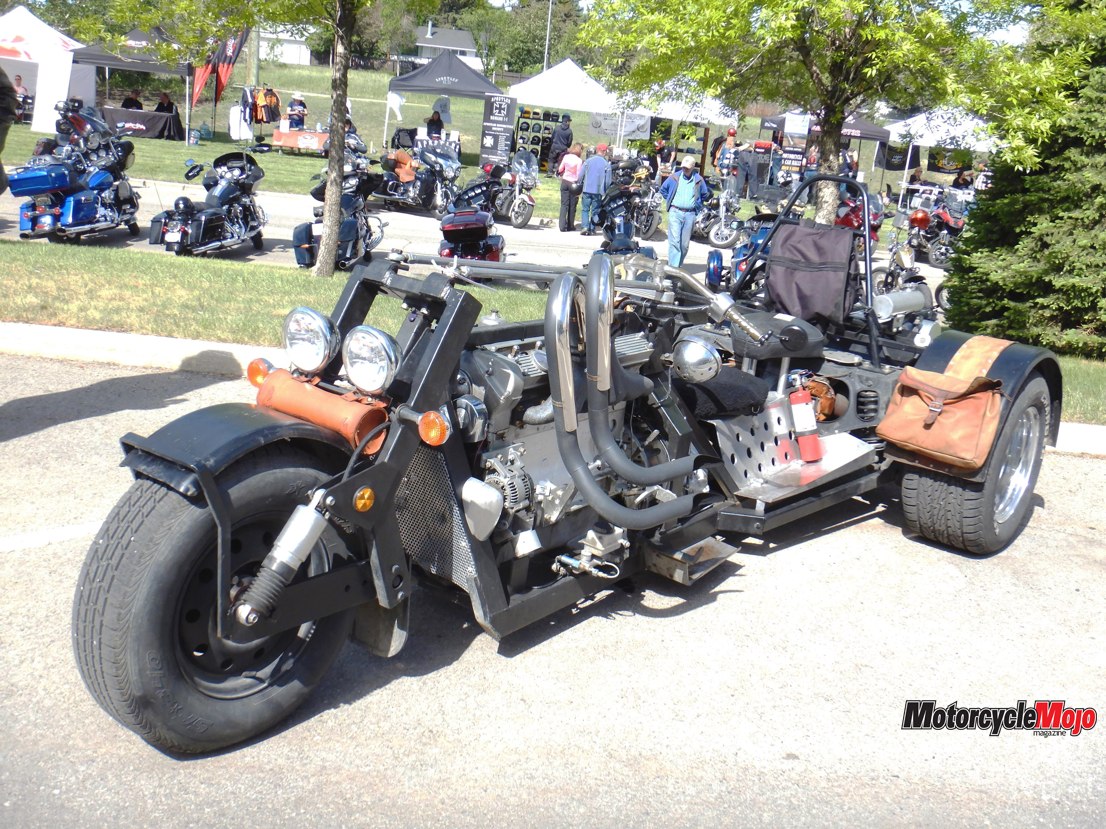
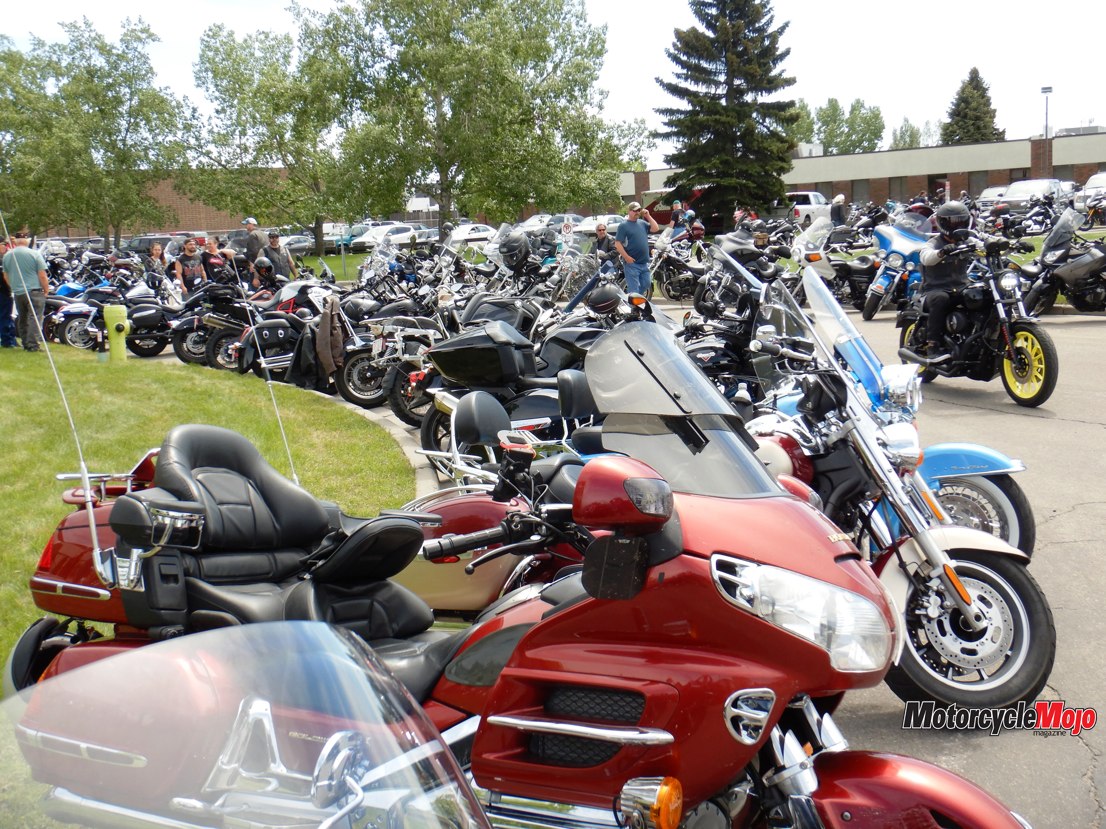
On the social side, nothing has changed – it’s still a place for motorcycle enthusiasts of all kinds to gather and have two-wheel fun. The current custom trends tend to be introduced here with much fanfare, while past trends fizzle into the mix. The massive parking areas are filled with hundreds of motorcycles of every type imaginable.
Regardless, I’m always amazed at the many ways that we motorcyclists express our love for our ride. No matter what your fancy is, you will no doubt drop your jaw more often than you can imagine…