
Texas Variety
Exploring the Lone Star State
Big hats. Big boots. Big oil. Big guns. Perhaps more than any other state, Texas has its clichéd accretions. I had been here before, but not to explore. This time, as I traversed the second largest of the U.S. states over the course of several days, I would see that open range and nodding oil pumps were only a fraction of the story.
The first sign (other than the sign) that I was crossing into the northeast corner of Texas was the abundance of large, fenced properties with arched iron gates proudly displaying names like Mystery Ranch, Diamond 5 Ranch and Flying L. The early-May temperature was already 35 C and the humidity was stifling. Hope lay in my direction of travel: over the coming days, I would be riding generally west, and that would mean drier, more tolerable air. Here, however, the moisture meant the fields were deep and green, and tall dogwoods, live oak and tulip trees adorned the roadsides.
Riding south through Paris and Terrell, I skirted the heavy traffic of Dallas and arrived at the home of my sister and her family in Red Oak, conveniently in time for dinner(!). After an evening of laughter, stories and laundry (my sister may have begun suspecting my motives), together we played tourist to many local sights, including the Sixth Floor Museum at Dealy Plaza at the corner of North Houston and Elm Streets in Dallas. In 1961, this building was the Texas School Book Depository, where, from a sixth-floor window, Lee Harvey Oswald shot President John F. Kennedy as his open-aired motorcade passed by on the street below. Displays present an overview of JFK’s presidency, with details focusing on the assassination, as well as subsequent inquiries and conspiracy theories.
Outside the museum, we were drawn in by one of several hustlers trying to make a buck by offering their own tours and conspiracy theories. “Arthur” was a fast-talking charmer who tried to demonstrate that Vice-President Lyndon B. Johnson himself was behind the assassination. He was entertaining, if not convincing, and I didn’t mind giving him the “suggested donation.”
Visiting the Old Town
 After a day to rest and do maintenance on my 2006 Suzuki V-Strom 650, I hugged everyone goodbye and headed out on Highway 67 through Cleburne. At Glen Rose, I turned south on Hwy 281 through Lampasas, and across the Colorado River at Marble Falls to Johnson City. This route led me through the heart of Texas Hill Country, a rolling green swath that extends south from Dallas to Austin, San Antonio and Fredericksburg, the last being a quaint German town that is listed in the National Registry of Historic Places. Fredericksburg attracts visitors for its beauty, cultural charm and – a surprise to me – its wineries. The Pioneer Museum features German homesteads and artifacts, while the town square, or Marktplatz, is home to the Vereins Kirche, the first public building in the town, which served as a town hall, school, fort, and church for all denominations. The entire “old town,” with so many bright limestone buildings, gives the feel of old Texas and German heritage all at once. Seemingly out of place, but impressive in its own right, there is also the huge National Museum of the Pacific War, which is very popular and exceptionally well done.
Fredericksburg would be my destination for the night. But first, I stopped at Lyndon B. Johnson National Historic Park along 290. Vice-President Johnson was called to the presidency upon the assassination of JFK, and he took the weight of that responsibility seriously. Over the next five years, he enacted over 200 bills, including – as might be expected of a former school teacher – many related to education and environmental conservation. The park itself maintains Johnson’s boyhood home, as well as his grandparents’ and the large house in which he and his wife, “Lady Bird,” raised their family.
The Texas Whitehouse
 Johnson conducted so much presidential business from this home that it became known as the Texas Whitehouse. To facilitate his travel back and forth to Washington, D.C., an airstrip was constructed in the middle of his ranch. The park service continues to operate the ranch as it was, raising descendants of his prize-winning Hereford cattle, which graze freely about the property.
My home for the night was at the Lady Bird Johnson Municipal Park Campground on the outskirts of Fredericksburg. Adjacent to baseball fields and hiking trails, the park accommodates RVs as well as tents. For $10, I had a grassy site with water, and nearby washrooms and showers. Wi-Fi was free, so I took the opportunity to connect with loved ones back home. Then, I cooked dinner on my dual-fuel stove, and chatted with fellow campers before nestling into my bivy under a deep, starry sky.
I avoided major highways wherever possible in order to see more of the countryside. Road conditions were always good to very good, with some nice sweepers. Much of the time, posted speed limits were 70 to 75 mph (112 to 120 km/h) even on two lanes, which made the distances seem shorter and the riding more thrilling. Throughout this rolling landscape, the live oak trees were covered with “ball moss,” which appeared to overwhelm and kill them. It even seemed to grow on overhead power lines.
More Than a Pile of Rocks
 I was halted in Ingram by the sight of Stonehenge II, which was built on a whim by two friends in 1989. The structure is slightly smaller than the original in Wiltshire, England, but an impressive – and surprising – replica nonetheless.
From Kerrville west, the Hill Country gets serious. Almost immediately, the roads become twisty and steep. At Medina, I began to ride the Three Twisted Sisters (and no, you’re not the first to consider the innuendo). The route follows Ranch Road 337 to Leakey (pronounced Lākey, so as to readily identify foreigners, I’m convinced), then 336 north to Hwy 41 and, after a short jaunt west, turns south on Ranch Road 335. Largely a coarse tar and chip surface, the roads were in good condition as they wound their way over and through steep hills with switchbacks, twisties and sweepers.
Ubiquitous signs warned “Steep grades and sharp curves,” “Water may flood the road” and “Beware cattle guards” – which are grates in the road that allow vehicles to pass without stopping, but prevent cattle from crossing as they range freely on the ranches that cover the area.
The soil is so poor and the terrain so steep that flash floods, while infrequent, are a danger. I was impressed to see roadside water gauges that measured flood depth to over 1.5 metres, giving motorists a sense of whether to proceed through a water-covered dip. As I carved the hills, I breathed deeply to catch the scent of mesquite and creosote bushes, and drank in the beauty of prickly pear cacti in full yellow bloom. Deep red flowers known as Indian blanket lined the roadsides, and I paused to get a photo of the last of the Texas blue bonnets, most of which had succumbed to the season’s heat.
Photo Ops
Just west of Leakey is the Frio Canyon Motorcycle Stop and the Bent Rim Grill. The Sisters draw riders from a wide radius, and I met several just in the 30 minutes I spent at the Grill, all friendly and with helpful advice on things to see and do in West Texas. It’s also popular enough that Texas Motorsports Photography sets up on a tight corner on 337, taking photos of the numerous bikes that roll by. As with the famed Tail of the Dragon, riders can order their photos from the company’s website. That said, I rode the Sisters on a Saturday and didn’t find the traffic a hindrance, as is often the case on the Dragon.
Riding west to this point, I had watched as the live oak slowly gave way to lower scrub brush. From Camp Wood, the official end of the Three Sisters, the soil en route to Del Rio became progressively poorer, and even grass had trouble growing on much of the ranch land. In all of Texas, I had only encountered significant traffic in the Dallas area, and as the population became more sparse to the west, traffic became almost non-existent. Daytime temperatures were now in the 37–40 C range, but, as I had hoped, it was a “dry heat.” Sweat was whisked away quickly, helping to keep me cooler. But it also increased the possibility of unwitting dehydration. I sipped frequently from my camelback.
In Del Rio, I was surprised to see palm trees lining many of the streets, and I assumed they must be imported. In fact, I learned the Rio Grande palm, also known as the Texas palm, is native to the area. A stocky tree that can grow to a height of 15 metres, it has a continuous range extending from the lower Rio Grande Valley in Texas through eastern Mexico to Guatemala. I stopped in the downtown for a late lunch and then rode to the border, guarded by a tall, metal fence, just to peer at Mexico on the other side.
Finally, I rode north out of town to Amistad National Recreation Area. A 10 km-long dam on the Rio Grande River creates the large Amistad Reservoir, which allows for boating, waterskiing, fishing and camping. For $4, I had a primitive campsite with a shelter and picnic table – and the entire grounds to myself. As I settled in for the night, a chorus of birds sang in the trees, and a scissor-tailed flycatcher darted and swerved around me, catching its evening meal. It seemed strange that it found enough to live on, as not a single insect bothered me – another advantage of the dry climate.
Dangerous Wildlife
As much as I love to spot wildlife, I hoped that on this night I would not encounter any of the area’s bobcats, mountain lions, or javelina (a particularly nasty cousin of the wild boar). A light breeze blew most of the night, making the high temperatures a little more bearable. I lay on top of my bivy until about 2 a.m., when it was finally cool enough to cover up. As I looked up at another diamond-filled sky, I considered my journey through the Lone Star State. Had I seen cowboy hats and boots? Sure ’nuff. Oil wells and guns? Yessir.
But I had seen so much more.
I tried to recall Mark Twain’s quip that “travel is fatal to prejudice and narrow-mindedness” (I didn’t have Google to help me out, but I had the gist) and I was grateful to have encountered so much variety. Green and dusty. Flat and rolling. Harsh and serene. Walt Whitman once observed, “Do I contradict myself? Very well, then I contradict myself, I am large, I contain multitudes.” As I drifted back to sleep, I thought to myself, Perhaps it is in this same sense that the grandest of all the clichés – “Everything is big in Texas” – is most true.
How the author became his own risk manager and started riding again.
This is a story about my motorcycling journey: how I started, why I left and how I was able to come back to ride with greater joy and sense of adventure than I’d ever had before.
On a sunny day in June, the midday traffic on the Metropolitan Autoroute in Montreal was pretty typical. It was moving along briskly – until it wasn’t. It was during one of these “until it wasn’t” moments that an elderly lady missed the changing pace of traffic and rear-ended a BMW motorcycle. The rider spent the next six months in the hospital, four of which he was in a coma. That event would change the course of my motorcycling career.
When I was 15, a family friend asked me if I wanted to climb on his old Honda 150 and give it a try. My answer was an enthusiastic yes. I can’t remember if I always wanted to ride a motorcycle or whether I got hooked that day, but hooked I was. This is the clutch, these are the brakes and this is the throttle. Lesson over, I tore around the roads and paths on his farm for the next three days. I loved the freedom I had to roam and explore, and the concept of risk never entered my mind. It was pure joy. I didn’t have to become a motorcyclist. I was one from the moment I threw my leg over the seat. I decided that one day I would buy a motorcycle. And I did – I bought a brand new red Honda Shadow. She was a beauty.
The Day Disaster Struck
 I had only ridden 8,000 km on my new bike when my girlfriend got a phone call. Her brother, a vice-president of a large technology company, was in a riding accident in Montreal. (Yeah, that one.) I had never met him, but from what I’d been told, he was a very experienced rider. In theory, I knew motorcycling had risks, but whenever I envisioned a serious crash, it didn’t involve a mature, intelligent, upwardly mobile professional – a description that fit us both. Even though I had only experienced the trauma and aftermath of the crash vicariously, it was so close to home it shattered my confidence. I had metaphorically fallen off my horse. Afterwards, I made the classic mistake: I didn’t get back on. I left my moto-steed in the garage, unridden, and eventually sold it.
But I guess I was still a motorcyclist at heart, because every spring I got the itch to ride and longed to have a motorcycle again. For years I put it off. I wasn’t afraid, per se, but I was in a kind of motorcycling limbo – a strange place where my joyful memories of the freedom of motorcycling were in constant battle with the vivid memories of the trauma I had gone through with my girlfriend after her brother’s crash. I was now all too aware of what could happen. Losing my life, or my ability to walk, or my ability to continue doing my livelihood or other joyful activities were all beyond my risk tolerance. But my reservations about riding were soon overpowered by the regret I feared I’d have if I never rode again. I decided, come hell or high water, I was going to get back on two wheels.
Risk Management Implemented
 To overcome my reservations, I’d do everything I could think of to reduce the risk. I would always wear ATGATT (all the gear all the time) to protect myself from injury. I would wear a hi-viz yellow jacket to make myself more conspicuous. I would enroll, as a citizen participant, in a two-week Police Motor Officer Certification course to hone my riding skills. I detected a “motorcyclist as risk manager” theme. I realized that every decision I’d ever make with respect to my riding, my motorcycle, my gear or my training would all be informed by my tolerance for risk, and as such, would be risk management decisions.
This motorcyclist-as-risk manager idea gave me a feeling of control and suggested a way of thinking – a mindset – that could guide my decisions and actions. Evel Knievel said, “You are the master of your own ship, pal. There are lots of people who fall into troubled waters and don’t have the guts or the knowledge or the ability to make it to shore. They have nobody to blame but themselves.” If I was going to have the guts to ride again, I’d have to make sure that I had the knowledge and the ability to address and manage the risks and perils of motorcycling.
Personal To-Do List
The first thing I would do is become “master of my own ship.” I would accept 100 per cent responsibility for all eventualities, however and by whomever they were caused. This would involve removing the word “blame” from my motorcycling lexicon and accepting that the buck stops with me. No one on the road is going to look out for me. They are too busy looking out for themselves, or looking at their latest text or trying to get to work on time. Sure, they may be in the wrong. It doesn’t matter. They don’t wish me harm. I’m simply not on their mind, and quite possibly not within their conscious visual awareness, either. I had to accept a basic truth of motorcycling: If I’m not managing the risk and looking out for me, then no one is.
The second thing I would need to do is identify all the known risks of motorcycling. I learned that motorcycling is more predictable than not, and that 100 per cent, absolutely, guaranteed, car and truck drivers are going to pull out in front of me, lose me in their blind spots, lose me behind poles and other structures in the city landscape, lose me among competing traffic and sometimes follow me too closely. And that while I’m riding, I’ll come across traction hazards, corners that are tighter than expected, deer on the road, ruts in construction areas, and cars stopped over crests and around blind corners. (And a lot more.)
The third thing I would need to do is make sure I could keep myself safe in spite of all of these things. I’d have to learn the skills and strategies needed to prevent, reduce and avoid the risks inherent in riding.
Since I really wanted to ride again, this was a course of action I was willing to adopt.
Risks Make It Enjoyable
 Whether I am off-piste skiing (skiing in the backcountry in avalanche-prone unmarked areas) in the French Alps or rappelling into the depths of an underground cave in West Virginia (two other pastimes I’ve enjoyed), it’s not about eliminating the risk, but rather managing it. The risk is what makes it fun. For motorcycling, I knew it was the same thing. I’d just fallen off the horse. I felt that if I could manage the risks, I would have the confidence to get back on.
From this, I developed a moto risk management approach. If I had to put it on paper, it might look something like what’s depicted in Diagram 1. It’s not meant to be definitive, but it does serve to illustrate that managing risk is not a one-time endeavour; it’s a mindset and a process.
I still use it today. It helps me reduce, prevent and avoid the inherent risks of motorcycling. It reminds me that my safety is up to me and steers me toward learning the strategies and skills I need to continuously improve my riding. See Diagram 2.
I also have a post-ride ritual. In a notebook, I capture my thoughts about any incidents that have occurred during my ride about which I feel I can learn. I debrief both positive and negative incidents – reinforcing my positive riding habits and skills and providing an opportunity to develop a course of action to improve any areas that need work. It does several other things, too. It gets me asking questions about how I might have handled the situation better. For example, “How might I have avoided the incident altogether?”
It helps me identify patterns in my riding. For example, after several uncomfortable incidents, I noticed they all occurred while I was in a rush. I learned immediately that if I took it easy, I would avoid these types of potentially risky incidents. It also creates a great reference to go back to, especially at the start of a new season.
Observe and Act
If I do my job as a moto risk manager well, I see only a few scenarios: nothing happens, and my strategies keep me out of trouble; something happens, and because I am aware of the hazard, I have the skills and knowledge to deal with it; something happens, and its impact is reduced because I checked my speed or I was wearing ATGATT, etc. What I never want to see happen is a crash, caused by totally foreseeable events, that happens because I didn’t do what was necessary to stay safe.
Now you know why I became a little particular about managing risk. I wanted to ride again. Developing a risk management approach was key to getting me back on the horse. It gave me back the feeling of control I needed and suggested a mindset that would guide the strategies, decisions and actions I needed to take before, during and after my ride to keep me safe.
Today, I love throwing my leg over my moto-steed and riding hundreds of kilometres, often for days or weeks on end. I’m now having more fun on my motorcycle than I’ve ever had before. That’s what a little purposeful thinking about risk management did for me.
Ride safe. I hope to see you on the road sometime. Look for the rider in the hi-viz yellow jacket.
What better way to spend 13 days off work than to tackle B.C.’s backcountry with your adventure bike and a fishing rod?
I leave central Vancouver Island mid-August on my 2013 KTM 990 Adventure Baja, heading south and over to British Columbia’s mainland. This kicks off a 13-day roundtrip adventure through the southwest coastal mountains, north up the Fraser Canyon, west through the Cariboo Chilcotin region to Bella Coola, and returning to northern Vancouver Island via ferries and weaving my way south back home. The trip will consist of roughly 1,100 km of gravel roads from maintained double-wide to deactivated single track, 800 km of various paved roads and 400 km of ferries on three different vessels and routes, and I’ll be tested by changing road conditions, gear failure, forest fires and temperatures between 3 C and 33 C.
The Fraser River Canyon offers remote, rugged beauty with its impressive carved slopes up to 1,000 metres deep and nearly 300 km long. The lower half of the canyon is easily accessible via Highway 97, but it’s the remote northern half I am exploring. I’m planning on four days and 500 km of gravel back roads from Pavilion to Tatla Lake. I can already taste the dust and fresh trout I’m going to eat!
Focus on the Road
 On High Bar Road, I descend 750 metres in elevation over 4.5 km with five hairpin turns. The rock is loose and sharp, and the single-lane, gravel road edge is abrupt and deadly. My peripheral vision picks up the stunning views, but all focus is on the descent and brake control. Reaching the bottom, I’m reminded of the local perils by a half-buried horse skeleton. The next 25 km are slow with a hundred turns and wide open canyon vistas.
This may be the crux, the impasse. I smell and see smoke billowing in the distance; the B.C. interactive wildfire map stated Poison Lake and Meadow Lake Roads were closed. This would cause me to backtrack, cut off my route through Gang Ranch, lose a day at minimum and ride hundreds of paved kilometres toward Williams Lake. Luckily, one hour later, I have skirted the fiery crux and am on route to Gang Ranch.
Beautiful Meadow Lake Road descends from the east Cariboo Chilcotin plateau and back into the Fraser Canyon. After crossing the Fraser River on a rustic suspension bridge, I find an overgrown trail littered with small cacti close to a creek. This becomes my prickly desert camp for the night and gets me close to Empire Valley Forestry Service Road (FSR) for tomorrow morning’s adventure.
Double-Check Your Tie-Downs
Near disaster! My rear wheel has locked in third gear and I am doing an emergency slide on a steep gravel corner. It happens so fast, only riding instinct can react – years of dirtbiking skills save the day. I jump off the KTM, fearing my chain has broken and locked my rear wheel. But something looks odd. It takes a few seconds for my eyes and brain to evaluate what I’m looking at. In my haste to leave camp a few kilometres back, I forgot to secure my top bungee cords. My sleeping pad caught on the bungees, rolled off the back of the bike and got sucked into the rear wheel, locking up the tire. It takes immense force to dislodge it. My nights just got a little longer with no functioning sleeping pad. Safely back on my bike, I reach my destination.
Gang Ranch is the second-largest ranch in Canada and has a rich history. To this day, it remains a working cattle ranch with dozens of gravel roads, ATV tracks and single-track criss-crossing over its one million acres. I make a stop at the ranch office to talk “ranch life” and get some directions. Once on the less-travelled 2700 Road, I’m standing on my pegs, visor up with the cool wind in my face. From the north end of 2700 Road, Farwell Canyon and the hoodoos are a stone’s throw away. Farwell Canyon is exceptional – a quick break from the sun under the canyon bridge and some seasonal entertainment watching the local First Nations dip-netting for sockeye salmon.
Heed the Warnings
 My next target is a pleasant-looking FSR called Chilko-Newton Road. A brief stop to fish the upper Chilcotin River results in two beautiful rainbow trout for dinner. The rancher whose land I crossed to fish the river makes contact with me. We share some laughs, a few stories and a handshake, and I get an offer to tent on his pristine backyard lawn for the night. Mike and his family join me in the backyard under the stars, where strangers bond for one night. The next morning, Mike leaves me with an ominous warning about Chilko-Newton Road.
Finally, exhausted man and machine exit Chilko-Newton Road. It had washouts, mud holes, kilometre after kilometre of sandy, loose soil or pounding hard-packed river rock and zero signage with many confusing spurs. It took me four hours to ride 75 km, which proved to be one of the hardest tracks of the trip. With fuel, panniers and trip gear, my KTM 990 Baja is pushing over 272 kg. Combine the motorcycle weight with up to nearly 120 peak horsepower and that makes for an unwieldly beast on a very slow, rough track. I find out two days later Chilko-Newton Road has been deactivated for years due to the washouts and deteriorating conditions.
More Sleeping-Pad Troubles
Chilko Lake makes for a great stop and is B.C.’s largest lake over 1,000 metres in elevation. I take a short break at Chilko Lake Lodge, talk with some Fish and Wildlife officers and enjoy a freshly made lunch with a cold draft beer in the lodge bar. But before I get too comfy, I gear up and start the remaining 70 km that day to Horn Lake campground. Not far from the lodge, I glance over my shoulder and realize my sleeping pad has fallen off! So first I crush it, then totally lose it two days later. The pad had a foam core, so by folding it in half, I at least had a torso-only sleeping pad; now I really have nothing.
Deeper into the South Chilcotin Mountains is a set of lakes: Sapeye, Horn, Bluff and Middle. Many kilometres down Mosley FSR, I come across a curious, abandoned cabin with some old, abandoned 1950s vehicles. To be more exact, a Chevrolet 3800 one-ton flatbed, an International Harvester R100 and a rare Chevrolet delivery van. The vehicles and log house speak of a different era out here.
Time to Rethink the Route
 Farther down the FSR and uphill on a spur road, I find myself high over Middle Lake on a deactivated secondary FSR. The riding is fun and fast with overhanging bushes, small washouts, smooth grass, hard gravel and a couple of creek crossings for extra heart pump. Prior research indicated this area was an old approach route to B.C.’s 4,016-metre-high Mount Waddington, only 40 km away from my location. Some 45 minutes later, I decide that it’s time to turn back. I’m alone, far into the backcountry on an unnamed spur road with no communications, nobody knows my whereabouts and I’m on a fully loaded adventure motorcycle. Knowing when to turn back comes with experience, maturity and some close calls.
In the first week of my trip, I would develop an excellent routine that provided fish meals and cleanliness. I would always choose a campsite on a lake or river, stop by 6 p.m. and fish the evening time while also enjoying a refreshing outdoor bath. With fresh trout and moderately cooled beer, I’d enjoy evenings looking at my trip photos and studying the Backroad Mapbook for the next day.
You’re on Your Own
Until I leave Anahim Lake, I didn’t know that from near Anahim to the start of the Bella Coola River Valley, this 60 km stretch of the highway is gravel. When you reach Heckman Pass at 1,524-metre elevation you can see the glacial-covered coastal mountains before you. It’s an awe-inspiring sight. Locals call the subsequent loose gravel road “The Hill.” It requires caution and defensive driving as you lose 1,224 metres in elevation over several kilometres. It should be noted that from Pavilion to Bella Coola, I have zero cell service for five days, which proves to be a pleasant surprise for someone looking for isolation and adventure. Also, most of the 450 km Highway 20 corridor from Williams Lake to Bella Coola has no cell service.
In the Bella Coola Valley, the surrounding mountains tower up to 2,500 metres above and continue along the whole 75 km-long river valley. For a lover of and climber of mountains, these glacial-covered mammoths capture all my attention and reduce my riding pace to dead slow. En route, I come across two small sibling grizzlies grazing on the roadside vegetation.
While in the valley, I stay at Rip Rap Campsite for four nights. In the subsequent days, I tour and take in all that Bella Coola Valley has to offer. The back roads around Bella Coola are your typical hard rock, steep, water-worn, west-coast gravel roads. This makes for fun technical riding on my now unloaded KTM. Clayton Creek, Cacoohtin Creek, Nusatsum River, and Talchako FSRs each make for some fun half-day adventures.
Sounds Like a Fish Story
Using my four-piece salmon spin rod, I try my luck on the upper Bella Coola River. I hook into 15 pink salmon, two spring salmon, two rainbow trout and two Dolly Varden trout (no fishing tale here – I’m hammering the fish). The larger Dolly Varden, my biggest ever, provides me with two excellent meals.
Grizzly bears are ever-present – twice I have a grizzly come within 25–30 metres of my river fishing spot. The bears are after the thousands of salmon. Still, with air horn and bear spray in hand, I take no chances. In the end we want the same thing, fish, but I back off and give them space, respect and priority. Another win in Bella Coola: in a tiny one-stop shop, I find a really compact and good-quality sleeping pad for $60 – my achy back rejoices!
With the direct-route Bella Coola to Port Hardy Northern Sea Wolf ferry commissioning delayed, the smaller, barge-like Discovery Coast Connector ferry is a traveller’s only option. It makes a 10-hour trip into 16 hours, but it adds on the more remote route to Ocean Falls, Shearwater and Bella Bella. With so few vehicles and guests, we all mingle and share in the voyage. The captain even does a U-turn at one point to put us smack in the middle of a pod of Pacific white-sided dolphins – how’s that for service? From Bella Bella, a switch is made to the large and impressive Northern Expedition vessel, which completes the journey to Port Hardy.
Island Exploration
Back on Vancouver Island, and two days from home, I intend to explore a few areas of northern Vancouver Island. First, I ride the short distance from Port Hardy to Coal Harbour, then some connecting FSRs to Port Alice, where I enjoy the picturesque seaside town. I pick up supplies and decide my route through the northern island mountains heading south. Again, fire closures threaten my route, but with new confidence of my last fire-avoidance triumph, I carry on with the Alice Lake loop. On the loop, a lonely barricade guard holds the key to my success. Upon my reaching the barricade, the gatekeeper wants to know where I’m heading. He’s happy for the company; we chat for some time and he lets me pass. I assure him I’m quickly riding through the area, heading to Keogh Lake for my last night on the trip.
The next morning, I cross over the Nimpkish River on one of the longest wood trestle bridges I have ever seen in B.C. As I complete the last FSR on my trip and begin the remaining 230 km and three hours of paved highway south, I ponder the trip’s successes and the great memories, photos and stories that will carry on.
It may not fall into the touring or even daily rider category, but it definitely fits nicely into the segment of head-turner.
When the first Harley-Davidson Softail hit showrooms in 1984, I was working as a technician in a Harley dealership. This was just a few years after the company split from AMF, a sporting-goods company that bought Harley in 1969, and through the 1970s had attempted to make the Motor Company more profitable by cutting costs and increasing production. Unfortunately, combining those measures was rather counterproductive, and the result had a detrimental effect on product quality. I remember the Shovelhead-powered Harleys I worked on at the time as being unreliable; they also leaked and vibrated so hard that parts broke.
The Softail changed all that. With twin shock absorbers hidden beneath the bike, it featured a hardtail look, and also introduced a then all-new engine, aptly called the Evolution. The engine proved more reliable and performed better than the Shovelhead it replaced, and the bike’s retro styling struck a chord with both traditional Harley riders and non-Harley riders, so it sold very well. It was popular enough that it helped turn the company around, and if you ask me, it is one of the most significant bikes ever produced by the Milwaukee bike maker. That original FXST Softail eventually became the foundation onto which an entire platform was based, and from which dozens of models have since been spun off.
Softail Consolidation
 The Softail platform entered its third generation last year entirely redesigned. It was the biggest change Harley made to the platform since its introduction. However, the American bike maker also did something else quite significant last year: it silently dropped the Dyna platform, which was originally introduced in 1991. Until the end of 2017, all big-twin models, except the company’s touring bikes, were split between the two platforms: the Slim, Fat Boy, Heritage Classic, Deluxe and Breakout were built on the counterbalanced, hardtail-look Softail platform, while the Street Bob, Low Rider, Fat Bob and Wide Glide were based on the rubber-mounted, twin-shock frame of the now defunct Dyna platform.
Harley consolidated its big twins with the new Softail, and all the aforementioned models except the Wide Glide are now built on an entirely new frame, and are powered by the new, counterbalanced Milwaukee-Eight V-twin. The engine is rigidly mounted to the frame, making Harley’s big touring bikes the only ones remaining with rubber-mounted engines. While the Wide Glide has been discontinued, Harley has introduced two new Softail models: the Sport Glide and the FXDR 114.
Harley-Davidson Canada extended an invitation to ride the FXDR 114 in the hills and canyons northwest of Los Angeles, California.
Harley’s Most Radical Softail to Date
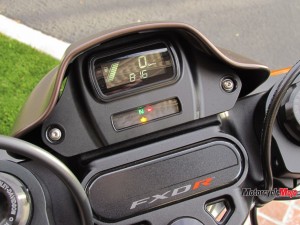 The FXDR 114’s styling was inspired by drag racing; its stretched-out silhouette is complemented by a low 713 mm seat height, forward-mounted foot pegs, relatively flat clip-on handlebars, and a fat, 240 mm-wide rear tire. The air filter juts out the right-hand side of the engine, its filter element exposed and pointing forward. Below it is an attractive two-into-one exhaust that’s tinted a golden brown hue. Everything about the FXDR’s styling says performance.
Of the six available colours, only the base Vivid Black has some sheen to it; otherwise, all the other colours are matte. Also, you won’t find a single bit of chrome on the bike, unless you count the inner lever portion of the shifter. The price is $26,499 for the Vivid Black model, while any other colour will cost an additional $450. It’s the priciest Softail model in the lineup. As on all big-twin Harleys, ABS is standard.
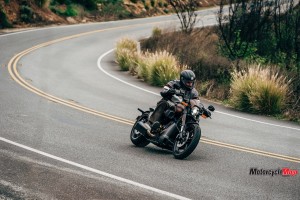 Harley makes two versions of its new Milwaukee-Eight V-twin engine. There’s one that displaces 107 cu. in., and one that displaces 114 cu. in. While the 114 engine is optional on other models, it comes standard on the FXDR. Harley doesn’t publish horsepower numbers, but the company is liberal with torque figures, which are usually quite impressive. The FXDR’s engine claims 119 ft-lb of torque at just 3,500 rpm. In practice, that translates into mountains of low-end torque, and the engine doesn’t give up too much of it even as it approaches redline. All that bottom end means you won’t be shifting through its six gears too often, but when you do, the gear changes are light and the shifter feel is solid.
Riding with T-1000
We began our ride heading north out of Marina del Rey on a Sunday morning, where 45 minutes later, we pulled into the parking lot of Santa Clarita Harley-Davidson. The dealership would normally be closed on a Sunday, but on this day, there were a few bikes in the parking lot and the front door was wide open. As I swung the side stand down and dismounted my bike, a stocky guy in jeans and a plaid shirt reached out and greeted me with a firm handshake. “Hi, I’m Robert Patrick, great to see you!” he said enthusiastically, while I tried to figure out where I’d seen him before.
It took my brain just seconds to connect the person in front of me with the character he’s most famous for: The metallic, morphing robot killer in the 1991 sci-fi flick Terminator 2: Judgement Day. I initially figured that our Harley Canada hosts had invited the actor, who has more than 150 films in his portfolio, to the dealership to awe us with his star power, but I was completely off base with my assumption. Patrick is actually part owner of the dealership, which he bought in August of 2018, with his associate and owner of Glendale Harley-Davidson, Oliver Shokouh. After giving us an enthusiastic tour of his dealership, Patrick, a long-time member of the Boozefighters motorcycle club, led us on a ride in the surrounding canyon roads on his Road Glide.
Now, it didn’t take long in the saddle to find the FXDR’s Achilles heel (or more appropriately, mine). It is its extreme riding position, which is designed more for short blasts than for piling on the miles. Even at six feet tall, I found the foot pegs are mounted too far forward, and the reach to the handgrips stretches even farther forward than that. Unfortunately, the handlebars cannot be swapped out easily, since they are clip-ons, and installing mid-mounted foot pegs from another model is out of the question, as you’d also have to swap out that sweet-sounding and stylish exhaust system for clearance. On the plus side, mounting the foot pegs forward provides lots of cornering clearance, more than on the Harleys with floorboards or mid-mounted foot pegs.
Once seated, you’ll find a small and tidy LCD instrument cluster that displays speed, trip meter, odometer, gear position, fuel level and range, time, and engine speed, though you have to select some of those functions to be displayed independently.
Long, yet Nimble
Chassis geometry suggests that the FXDR should be a handful on a winding road, but surprisingly, it’s not. Rake is a stretched-out 34 degrees, trail is 120 mm and wheelbase is a lengthy 1,738 mm, which would normally translate into lazy, cruiser-like handling, especially when combined with the FXDR’s 240 mm wide rear tire. Now, while the FXDR does not by any means handle like a point-and-shoot sport bike, Harley has done a very good job of masking its relaxed chassis specs through very competent handling and relatively light steering. Unlike previous Harley models I’ve ridden with a fat rear tire, the FXDR has almost no tendency to want to stand upright through turns, and steering is neutral. Wet weight is a rather hefty 303 kg, though the FXDR has a low centre of gravity, which again makes it handle better than the spec sheet would suggest.
As a former technician, one thing I’d do is lower the final gearing, since the FXDR is geared very tall to meet emissions and noise regulations. This would make it much stronger off the line than it already is without suffering in top gear. As is, the engine revs at a relaxed 2,500 rpm at 110 km/h.
The FXDR 114’s radical drag-bike styling appeals to my impulsive side, its V-twin is a brute and it handles way better than its long wheelbase and fat rear tire would lead you to believe. Sure, its riding position will take a toll on your body if you take it on extended tours, but the FXDR is neither a daily rider nor a touring bike. For most potential buyers, the purchase will be based on the bike’s styling, and it’ll probably occupy a second spot in the garage next to a primary bike. However, it backs up its sinister appearance with competent road handling, which isn’t always the case when looks take precedence. In that respect, Harley has really nailed its kick-ass styling, and the bike will certainly turn heads.
The big news here isn’t as much about the bikes as it is about the upgraded engine
Aah … sunny, balmy Palm Springs, California. We’re here for a couple of days to ride the 2019 BMW R1250GS and the R1250RT, in a combined media introduction. The climate here is normally hot, dry and mostly desert-like. However, Mother Nature seems to be in a bit of a fit lately, and the Golden State has recently experienced unseasonal cold in the north, drought and fires through the middle, and heavy rain in the south. Some of that weather has been altering the landscape, quite drastically in a few cases.
A week before we arrived here for the launch, a record rainfall dropped 94 mm of water on Palm Springs within a 24-hour period. Typically the area receives an average of 100 mm of rain a year. Almost a year’s worth of rain in a day washed out and closed many local roads, so organizers had to scramble to change the original ride routes, which produces some unforeseen consequences during our ride, especially when we venture off-road. But we’ll get to that after you first read about the changes made to BMW’s class-leading R1250GS adventure bike, and its highly functional R1250RT long-distance tourer.
An All-New Boxer
 Aside from a couple of added tech items, the chassis on both bikes are unchanged. The biggest change is a new engine, and it’s now in all of BMW’s liquid-cooled Boxer twins, and not just the GS and RT. While the previous engine was very good, with lots of power and very good fuel economy, it has nonetheless been improved for 2019. This has been done in part to meet stringent Euro 5 standards, and in part because everyone likes even more power.
The new engine boasts a 1.5 mm larger bore and a 3 mm longer stroke, which now measure 102.5 x 76 mm. This bumps displacement from 1,170 cc to 1,254. Power is now at a claimed 136 hp and 105.5 ft-lb of torque, up from 123 hp and 92 ft-lb. The R nineT models will continue to use the 1,170 cc air-cooled twin.
ShiftCam Technology
However, the biggest gain in torque is in the lower revs, which is a result of BMW’s new ShiftCam technology. ShiftCam varies intake valve duration and lift by shifting the camshaft so that separate lobes operate each valve (there are two intakes per cylinder). One set of cam lobes has low lift and low duration, which enhances torque at low revs, while the other set has normal lift and duration. The low-lift lobes actually open each cylinder’s individual intake valve at a slightly different lift, which is said to enhance intake charge swirl and improve combustion.
The intake valves operate on the normal lobes above 5,000 rpm, while engine load determines cam position below that engine speed. A computer-controlled solenoid actuates pins, shifting the cams within milliseconds. According to BMW, this new system has changed neither the valve adjustment procedure nor the adjustment intervals, which are at 20,000 km. Aside from boosting bottom-end power, other benefits of the ShiftCam include a smoother-running engine, reduced emissions, and between a four and six per cent improvement in fuel economy.
Other internal changes include replacing the roller cam chain of the previous model with a quieter, more robust toothed chain, and the engine now incorporates knock sensors, which allows the use of low-octane fuel without the risk of engine damage, though it still requires premium fuel for best performance.
No Rolling Backwards
 Hill Start Control, which used to be an option, is now standard on the GS and RT, a feature that lets you lock the rear brake to hold the bike still on an incline by squeezing and releasing the brake lever (the brakes are partially integrated). This makes it easier to launch a fully loaded bike up a hill. Optional is Hill Start Control Pro, which engages the hill-holding feature automatically when the bike is stopped on an incline.
A new option on both bikes is dynamic braking control. This rider-assist feature shuts the throttle automatically in an emergency-braking situation should you inadvertently stay on the gas while grabbing a handful of front brake – an error that mostly afflicts inexperienced riders.
The changes have added five kilos to the R1250GS and three kilos to the R1250RT, now claiming 249 and 279 kg wet, respectively. The R1250GS Adventure, which has a larger 30-litre fuel tank (20 for the GS), taller suspension and protective crash bars, among other off-road items, tips the scales at 268 kg wet.
The R1250GS: Adventure Bike King
The first thing you’ll notice when seated on either the R1250GS or GS Adventure is a new, 6.5-inch, high-resolution, colour TFT instrument panel. It’s easy to read and relatively easy to negotiate its various menus, though it doesn’t boast the most intuitive interface. One example of this is that you can’t see the fuel gauge unless you select it, and when you do, you can’t see other trip info such as trip odometer, fuel economy or fuel range – only one item can be displayed at a time at the top of the screen. Parameters that are permanently displayed include engine and road speed, gear position, ride modes and the time, while you can tailor what you want displayed in the lower left corner of the screen; my choice was ambient temperature.
You can also use the multi-controller dial on the left handlebar to scroll through different pages on the screen, which offer vehicle info such as tire pressures, coolant temperature, odometer and battery voltage, among other items. The screen also enables Bluetooth connectivity, so you can connect a smartphone and helmet communication system to the bike, and control various functions via the multi-controller. While this new screen might excite tech-savvy riders, it can be somewhat overwhelming for someone accustomed to standard gauges. Also new is an LED headlight.
A Proven Off-Roader
 Despite being quite porky by pseudo trail bike standards, BMW’s biggest GS model is nonetheless a very accomplished off-roader. We ride the R1250GS and GS Adventure on the first day of the press intro, on a 290 km loop that includes a rather challenging off-road section. As I mentioned earlier, the heavy rain that preceded our arrival forced a change to the original route, and now includes, among other places, Joshua Tree National Park. This new route also has a few surprises for some of the less-experienced riders.
The first thing I do before getting on the bike is lift the passenger seat and plug a dongle into the wiring harness. This dongle, which comes with the bike, allows access to Dynamic Pro and Enduro Pro ride modes, which have more aggressive settings than the non-Pro modes, and also retains selected traction control (TC) and ABS settings after the bike is switched off; otherwise, they default to on. I also raise the adjustable rider’s seat to the higher of two positions (850 or 870 mm) for more legroom.
The R1250GS feels instantly familiar, with its tall, upright riding position and characteristic exhaust drone. What’s immediately noticeable is that the engine is mechanically quieter than the older one, and once you pull away, it’s smoother, too. It has gobs of low-end torque in Dynamic mode (Road and Rain are softer), and with the TC off (ABS can be switched off as well), the bike will lift its front wheel effortlessly in the lower gears.
Let the Fun Begin
The gearbox is ultralight, and my test bike is equipped with an electric shift assist, letting me make clutchless gear changes, albeit with increased effort at the shifter. I resort to normal clutch-engaged gear changes on the road, and use the electric assist when we veer off-road, since ratios can be selected without losing any momentum along critical sections. The fun really begins – well for some riders, at least – when we steer off the pavement and onto a sandy track. The conditions are dry, but long sections of the track are covered in loose sand and gravel, and some sections are rocky.
Lowering the tire pressures would have been very helpful, but I decide to leave them as they are, as do most riders. The higher pressures cause the bike to squirm around more than it would have otherwise on soft, sandy sections, though it is still quite manageable. Now, you’d be silly to try to throw the big GS around like a lightweight dirt bike, given its mass counters your every move. It nonetheless manages off-road excursions quite well, yet takes skill and foresight to handle it well enough to avoid disaster.
Trouble in the Sandbox
After a few kilometres along this improvised sandy trail, we encounter the first victims of the unpredictable conditions: tipped-over GSs. The deep, soft sand proves perhaps a bit too challenging for some of the less-experienced riders on this launch, and several of them lost their fight with gravity. I help a few riders right their machines and continue on.
However, the groups riding behind us have even more difficulty, and the ensuing sand bog damages at least one machine, as an R1250GSA begins leaking oil from a valve cover. A rock poked through its valve cover after a fall, despite the added protection of a crash bar. The saving grace is that the cover can be removed easily for a temporary fix on the trail, as long as you carry some quick-curing epoxy. There are no injuries aside from some bruised egos.
Now, the R1250GS, like the R1200GS that preceded it, has a few inherent weaknesses if you waver off-road, especially if the conditions are challenging. With cylinder heads jutting out the sides of the bike, they are prone to damage, as we saw on that GSA. The other weakness is that since the GS doesn’t have frame tubes running beneath the engine, the crankcase can be damaged if bottomed onto something solid. Even though there is a protective skid plate installed on all the big GS models, it’s mounted directly to the engine; a big enough blow will transfer energy directly to the crankcase through the mounts, and as a friend of mine who owns a late-model R1200GS discovered, it can be very costly. If you plan on taking serious off-road excursions on an R1250GS, invest in an aftermarket skid plate that mounts to the engine guards.
On-Road Manners
On the road, the GS offers good wind protection that’s almost free of buffeting, especially with the windscreen in its highest position. It’s easily adjustable while riding via a knob. Our bikes are equipped with Continental TKC80 knobby tires, which favour off-road riding, though they still return neutral steering on pavement and have enough grip for a sporting pace.
The new R1250GS is very much like the outgoing one, but with more, useable power. If you ride a low-mileage late model, it might not be worth trading up just yet. The starting price is $21,400, up from $20,300, and that’s not a bad markup considering the extra power and added tech; otherwise, the rest of the machine is mostly the same. The R1250GSA starts at $23,800.
The R1250RT: Near Perfection
The weather takes a turn on the second day, and by the time we hit the mountains south of Palm Springs, the temperature drops to 9 C and it begins to rain. While perfection is practically unattainable, for me, the R1250RT is as close to perfect as a touring bike can get. It handles like a sport bike, it’s comfortable enough to easily cover long distances and it has the best fairing in motorcycling in terms of weather protection. And as much as the RT is a solid, sharp-handling motorcycle on everything from divided highways to switchback-riddled mountain roads, it really shines in poor weather.
With the RT’s electric windscreen adjusted to the sweet spot, the wind protection is better than most convertibles I’ve driven. There’s no buffeting or backdraft, and the cockpit becomes uncannily quiet for a motorcycle. The mirrors combine with wind deflectors to protect your hands, and when the grip heat is on, your hands are toasty warm. The seat is also heated. There are five levels of heat for each – level two is ample for the grips, while full heat does it for the seat. My only gripe with the bike is that there’s no dedicated button for the grips or seat (there is on the passenger seat). You have to scroll through a menu in the dash to turn them on and set the level.
Is It a Sport Bike or Touring Bike?
Despite its size, the R1250RT exhibits sportbike-like agility on winding roads when in Dynamic ride mode and with the ESA suspension adjusted to Sport mode. Before the rain hit, we had a chance to experience the RT’s agility on some twisty roads. It steered effortlessly through tight-turning transitions, and charged forcefully into corners unperturbed. If you prefer to tone it down and enjoy the scenery instead, setting the suspension to Comfort and the ride mode to Road turns the RT into the cushy, comfy long-distance tourer for which it has become renowned.
The R1250RT can come equipped with one of two possible OEM tires – either the Metzeler Roadtec Z8 or the Michelin Pilot Road 4. My test bike rolls on the latter. These Michelins provide enough grip, feedback and confidence on wet pavement to let me maintain a pace that would be considered quick on dry pavement.
While the RT’s added weight takes away some of the new engine’s forceful punch experienced on the GS, it nevertheless pulls remarkably hard from low revs. Dropping a couple of gears from sixth at highway speeds is necessary if you want to blast by slower traffic; otherwise, it has enough power to get you by relatively quickly without touching the shifter.
After completing our 325 km loop in a mix of cool, wet weather and desert heat, I still feel fresh enough to take on at least another couple hundred kilometres. And that’s the R1250RT’s raison d’être: It’s designed to cover long distances, and it can do it whether you’re scraping foot pegs along winding roads or droning along long stretches of highway. Pricing starts at $22,050 – up only slightly from the preceding R1200RT’s $21,750.
The much-anticipated, all-new Triumph Factory Custom Rocket 3 boasts a massive new 2,500cc Triumph Triple engine with 168 HP.
Triumph’s legendary Rocket 3 launched in 2004, and was renowned as a pure original with more muscle, presence and torque than any of the competition. Now the next generation Rocket 3 Triumph Factory Custom (TFC) is set to be available in December 2019, with only 225 units available in North America and 750 produced world wide. Orders are able to be placed now, with this machine set to cost you 33,000 CAD. This Rocket 3 TFC is 88 pounds lighter than the previous generation and the engine delivers 168 HP with it’s 2,5000cc Triple engine; making it the largest production motorcycle engine in the world.
The Rocket is equipped with Top-spec Brembo Stylema® monobloc brakes - High specification adjustable Showa suspension - Brembo MCS span and ratio-adjustable lever. As well as state-of-the-art components such as lightweight titanium inlet valves which allow for even higher revving than the previous Rocket, and tailor-made features including the unique Arrow silencers with beautiful carbon fibre end-caps.
Increasing rider safety, the Optimized Cornering ABS and Traction Control set-up maintains the optimum braking performance and level of traction. Additionally, four riding modes (Road, Rain, Sport and Rider-Configurable) adjust the throttle map and traction control settings to suit riding conditions or rider preference. The Rocket 3 TFC also comes with Triumph Shift Assist and Hill Hold Control as standard. The Triumph Shift Assist allows for clutch-less up and down shifts, shortening the times compared to manual gear changes, while the Hill Hold Control feature enables maximum rider control by preventing the bike from rolling backwards when stopped on an incline.
The Triumph Factory Custom line is created to evoke the passion and styling of the custom motorcycle scene. It’s a passion demonstrated time and again through a host of customized machines created by a small group of highly skilled design professionals. Each and every machine showcases the world-class talent of the Triumph Factory Custom team.
Check out Triumph Motorcycle’s Website for more information.
Although carburetors have been replaced by more efficient fuel injection on modern motorcycles, there are still plenty of older, carburetted bikes out there. Carburetors require some periodic adjustments, and one item that needs to be verified occasionally on multi-cylinder engines is carburetor synchronization. On bikes that have more than one cylinder, synchronizing the carburetors allows the cylinders to work in unison as the throttle is opened, thus allowing all cylinders to operate with the same output (some V-twins use only one carburetor, so this is unnecessary). The engine therefore operates smoothly and efficiently. Carburetted engines that are out of sync will vibrate, possibly lack power, and sound, well, off.
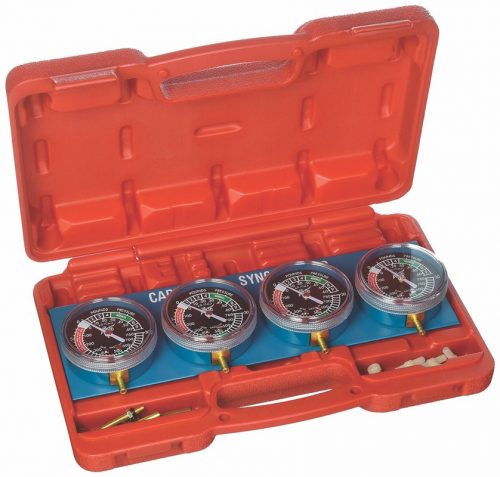
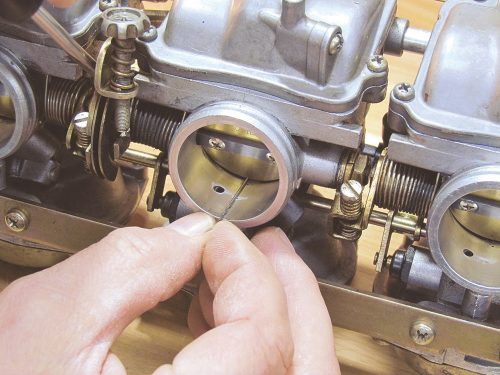 The ideal way to synchronize carburetors is by using a synchronizing tool, which plugs into the individual intake manifolds and measures intake manifold vacuum as the engine runs and the throttle is operated. The tool will display the vacuum level for each cylinder simultaneously, either on a set of gauges or in a series of fluid-filled transparent tubes. If the throttles are not set equally, the vacuum will not read evenly; the vacuum will be higher on the cylinder or cylinders on which the throttle valves are slightly closed, compared to the cylinders with lower vacuum readings. The more the throttle is closed for a given engine speed, the higher the intake vacuum will be.
Adjusting the throttle valves varies depending on the carburetor configuration. If the individual carburetors are far apart, as on a boxer twin, the adjuster will be at the throttle cable going to each carb. Parallel-twins and inline-fours have individual carburetors lined up side by side, with screw-type adjusters connecting the throttle valves between adjoining carburetors. Some older slide carburetors have adjusters atop each slide.
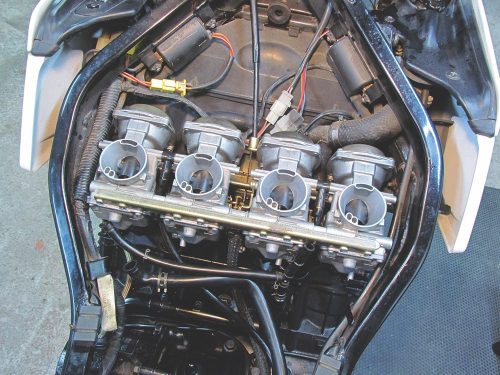 If you don’t have a synchronizing tool, you can still synchronize carburetors accurately, though to do so, it’s best to remove the carburetors from the bike to allow access to the butterfly valves or mechanical slides from the rear. It’s important to note that you must use the butterfly valves on CV carburetors, since the vacuum slides don’t move unless the engine is running.
On a twin, there will be one adjusting screw; on a four cylinder, there will be three. On a bank of four carburetors, each outer screw adjusts the throttle valves of the adjoining outer carburetors, and the centre screw adjusts the throttles of the left- and right-paired carburetors to each other.
To set the throttle valves equally, you can use a solid wire or a very small drill bit as a gauge to measure the gap between the throttle valve and the carburetor bore. The smaller the wire or drill bit, the more accurately you can adjust the throttle valves, since at small throttle openings it requires a very small adjustment at the screws to see a measureable difference, as opposed to when the throttles are opened wider. A wire or drill bit that measures less than 1 mm is ideal; I used a number 65 bit to adjust the FZ750 carbs pictured here.
On a four-cylinder engine, the carburetors can be adjusted in pairs. The best way to hold the throttle steady while synchronizing is to turn in the idle speed screw until you feel a slight drag on your measuring gauge at the throttle valve of the “base” carburetor. The base carburetor is the one connected directly to the throttle cable linkage, and on a four-cylinder engine, that’s usually cylinder number two. Note the number of turns of the idle screw from the starting point so that you can put it back after you’re done. You can further readjust the idle to spec once the engine is warmed after reassembly.
Begin by setting the gap at the base carb, which won’t change when the other carburetors are adjusted. Next, adjust the throttle gap at its adjoining carb (number 1) accordingly, using the adjusting screw. Move to carburetors 3 and 4, setting their throttle valves evenly, without, at this point, taking into account the adjustment of carburetors 2 and 3. Once you’ve adjusted carbs 3 and 4 evenly, you can use the centre adjusting screw to balance out the two outside pairs of carburetors. All you need to do at this point is to check the gap at carbs 2 and 3, since carbs 1 and 4 will follow their mating carburetors.
Done carefully, the carburetors will need no further synchronization once back on the bike. However, this does not mean you’ll get even vacuum at the intake manifolds should you verify it. If the engine is in excellent condition, the vacuum readings should be spot on. However, if the vacuum readings are uneven, this indicates that the cylinders with low intake vacuum are low on compression, which means there’s likely more work to do down the road.
Technical articles are written purely as reference only and your motorcycle may require different procedures. You should be mechanically inclined to carry out your own maintenance and we recommend you contact your mechanic prior to performing any type of work on your bike.
Triumph Motorcycles was excited to announce their return to the off-road endurance racing world with accomplished stunt rider and racer Ernie Vigil riding the groundbreaking Scrambler 1200 XE at this year’s NORRA Mexican 1000 Rally.
Vigil is one of Triumph’s official factory riders, an experienced off-road racer, and now fully recovered and fit for action following an injury suffered during training in October 2018. Vigil has spent the last three weeks in Southern California with the race-ready Scrambler 1200 completing his final preparations for this gruelling challenge.
Vigil’s Scrambler 1200 XE is in near-standard condition, with only the addition of a desert racing seat, lights, grips and extreme profile sand tires. Vigil, who was selected for both his experience and his incredible commitment to this project, and has now been in full training to prepare for the race. Vigil Said “After nine months of training, the injury, and over 6,000 off-road miles in the saddle, I’m excited to be getting to the final stage of prep for one of the most challenging off-road races you can do. I literally can’t wait to get to that starting line and fire the Scrambler up! The bike has been performing amazingly well and I’m raring to go.”
The NORRA Mexican 1000 started in 1967 and will happen this year on April 26-May 3, riders are challenged to over 1,000 miles of rugged Baja terrain. This year’s race begins in Ensenada, Mexico, and is broken up throughout stages on the 1,000 mile route. This is considered a bit of a homecoming for Triumph as it was the same harsh Baja terrain that made the Scrambler so famous in the 1960’s.
Paul Stroud, Triumph’s Chief Commercial Officer said “Everyone at Triumph is rooting for Ernie, his commitment to returning to race fitness following his injury has been amazing and we just can’t wait to see the Scrambler 1200 in action. Baja desert racing has played such a big part in the history of scrambling and it was the spark that kicked off of our whole iconic Scrambler line-up.”
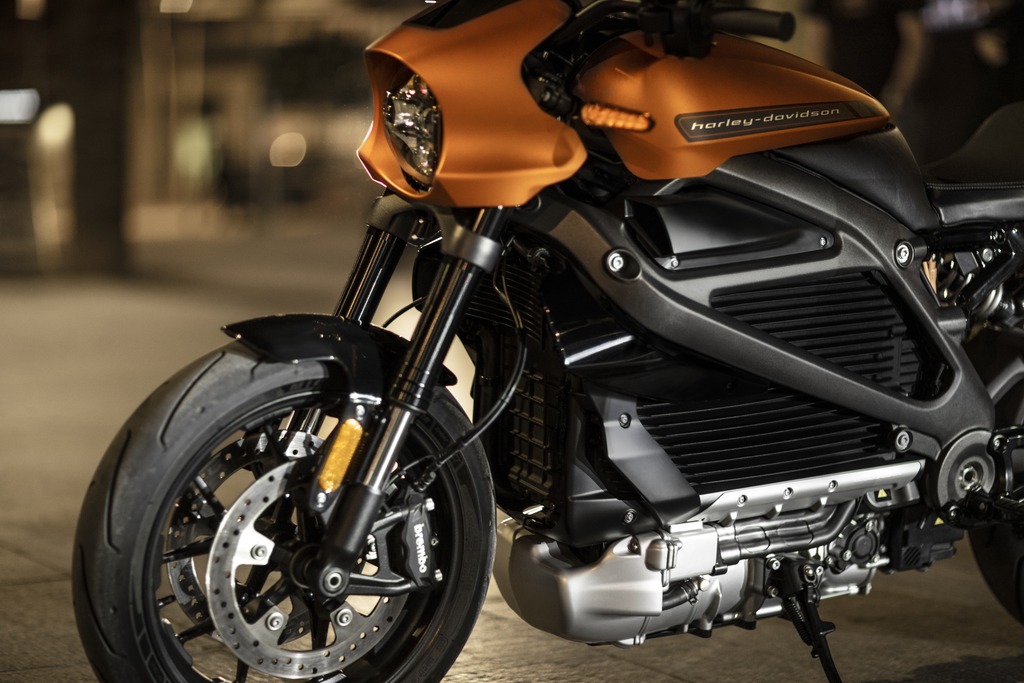
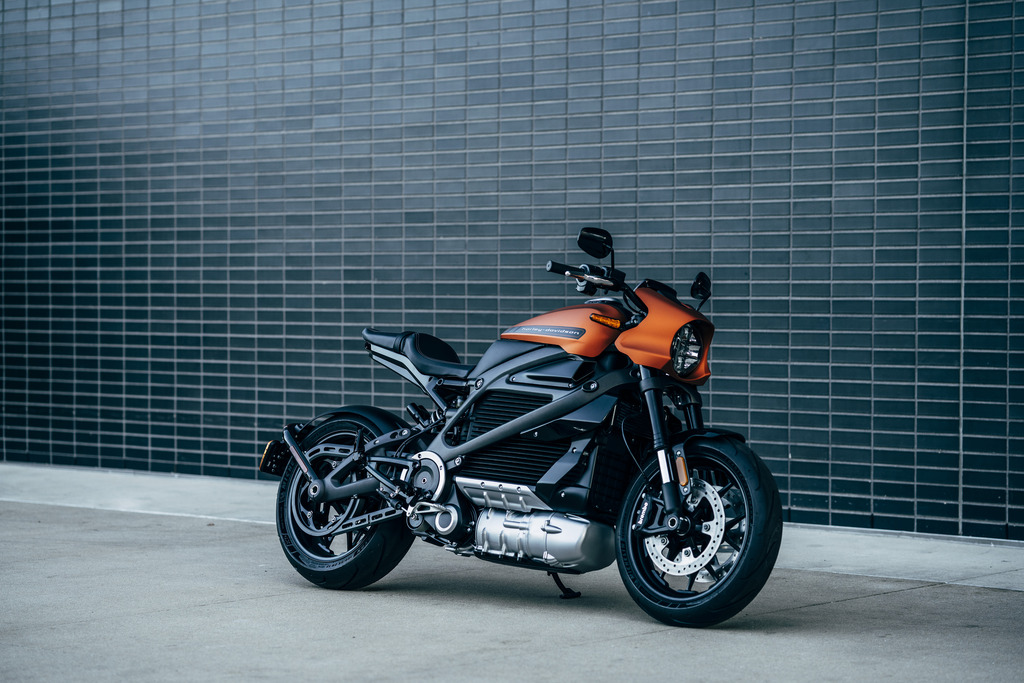
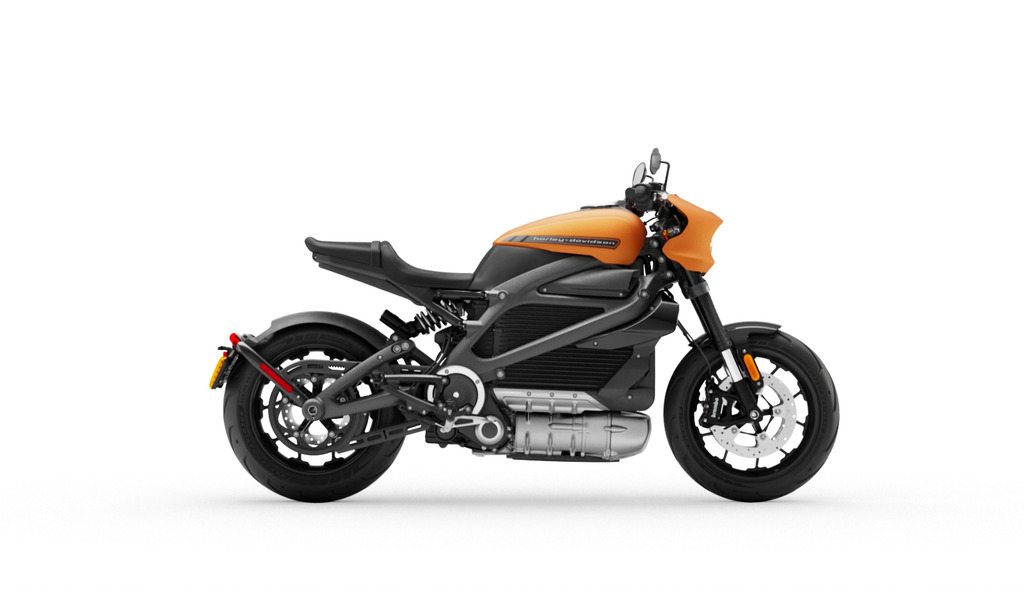
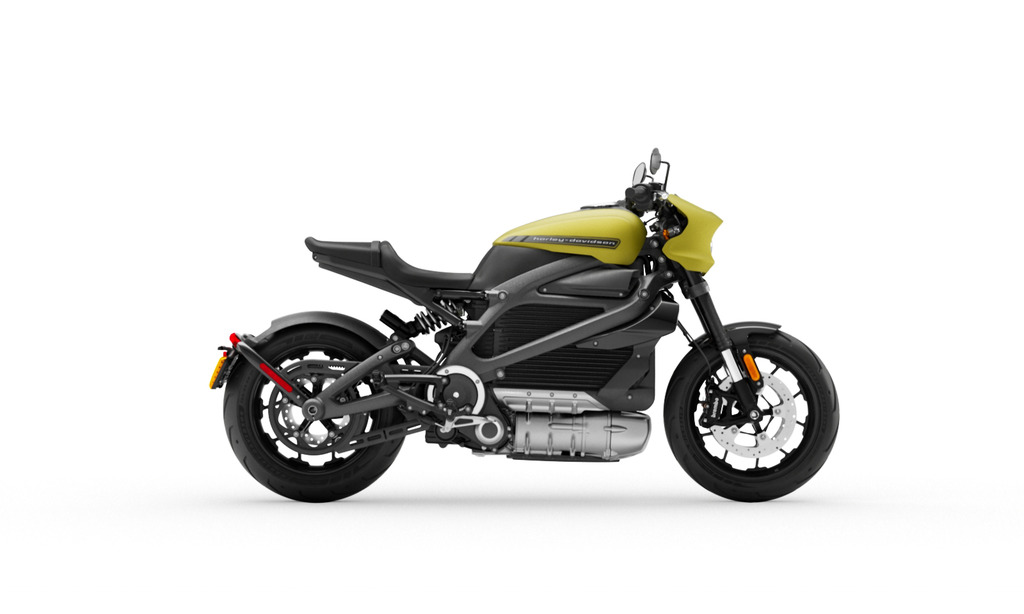
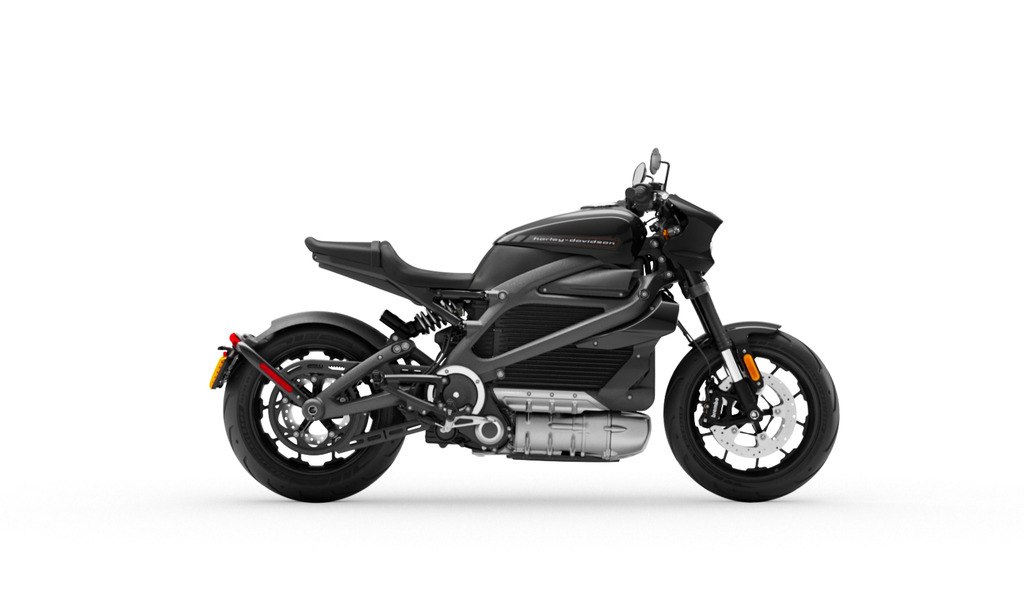
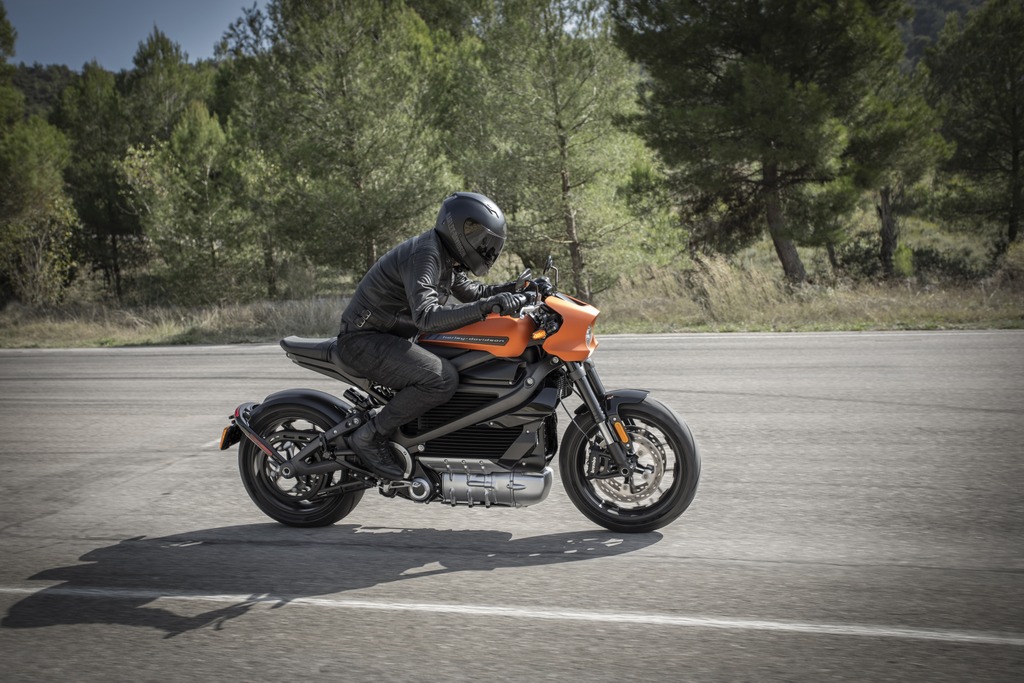
Harley-Davidson® has announced that Canadian pre-order period opened April 17 for the all-new electric LiveWire™.
The highly anticipated release of the LiveWire has come, with pre-orders open and delivery set for fall. The LiveWire promises to pair high-performance handling with electric technology. The motorcycle is expected to cost you $37,250 Canadian MSRP and can accelerate from 0 to 100 km/hr in 3.0 seconds and 100 to 129 km/hr in 1.9 seconds. Speed, coupled with High-end SHOWA® front and rear suspension and an extremely rigid lightweight cast aluminum frame sound like an exciting match.

The motorcycle is equipped with an Electronic Chassis Control (ECC) system that utilizes the cornering-enhanced Anti-lock Braking System (ABS), Traction Control System (TCS) and Drag-Torque Slip Control System (DSCS) to monitor and manage front and rear brake torque as well as motor torque to the rear wheel to enhance rider control and balance vehicle performance across diverse riding environments. The system is fully electronic and utilizes the latest six-axis inertial measurement unit (IMU) and ABS sensor technology. The separate functions of ECC work together to give the rider more confidence and control in less-than-ideal situations.
The high-voltage battery provides 225 km of range city or 142 km of range combined, measured using the MIC City and MIC Combined use cycle at 70 mph. The liveWire’s power is replenished through one of two charging options. An on-board “Level 1” charger that can be plugged into a standard 120 or 240 volt household outlet with a charging time of 21km per hour, which is expected to receive a full charge overnight. Or, a “Level 3” (DC Fast Charge) charging station, which all Harley-Davidson dealers who sell the LiveWire will be able to offer. The Level 3 has a charging time of 309 km for each hour, meaning full charge within an hour.

Steve Lambert, International Marketing Director comments “We’ve had an unprecedented level of interest in the bike with so many people wanting to be first to get their hands on it. We’re looking forward to delivering the new LiveWire to those lucky owners in autumn. LiveWire is not only an exciting new product for the company, it is an incredible riding experience. We’re confident in its future and how it will help shape the two-wheeled electric vehicle market.”
For more information on the new Harley-Davidson LiveWire motorcycle, as well as updates on future additional bikes, visit Harley-Davidson.com/Electric or the brand’s Facebook, Twitter or Instagram channels.
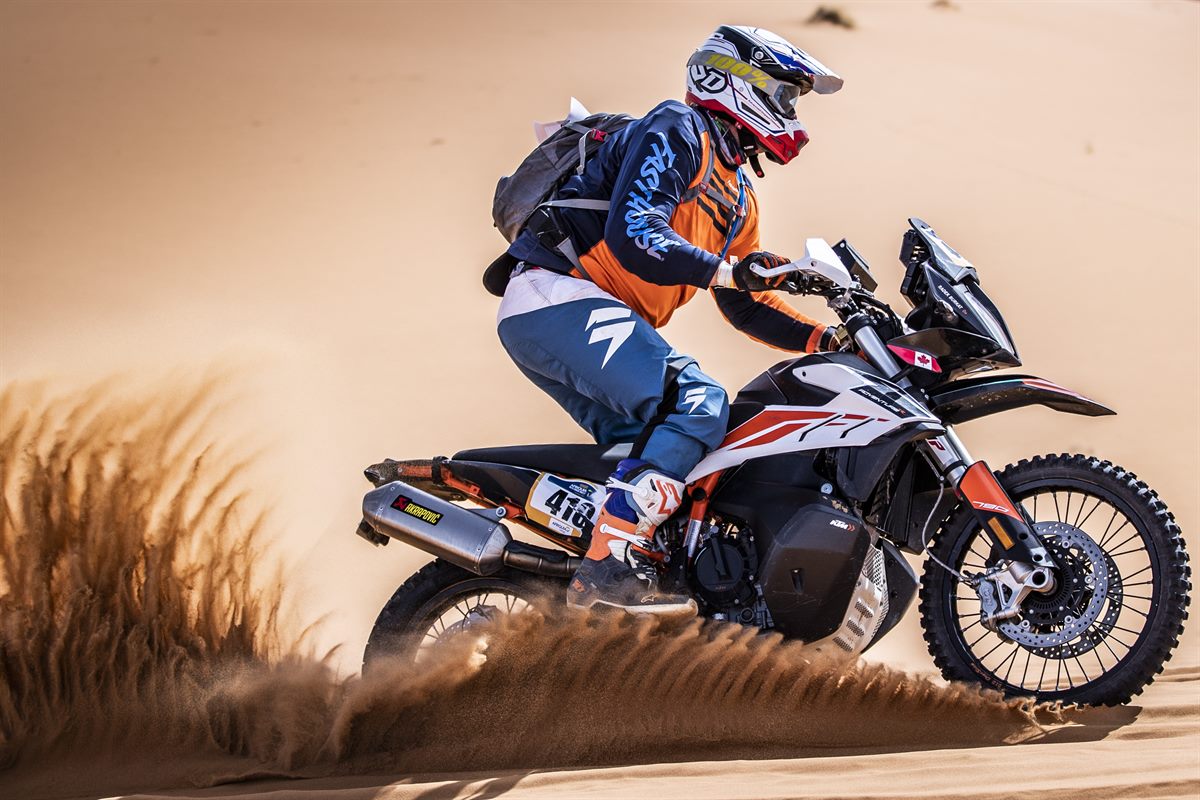
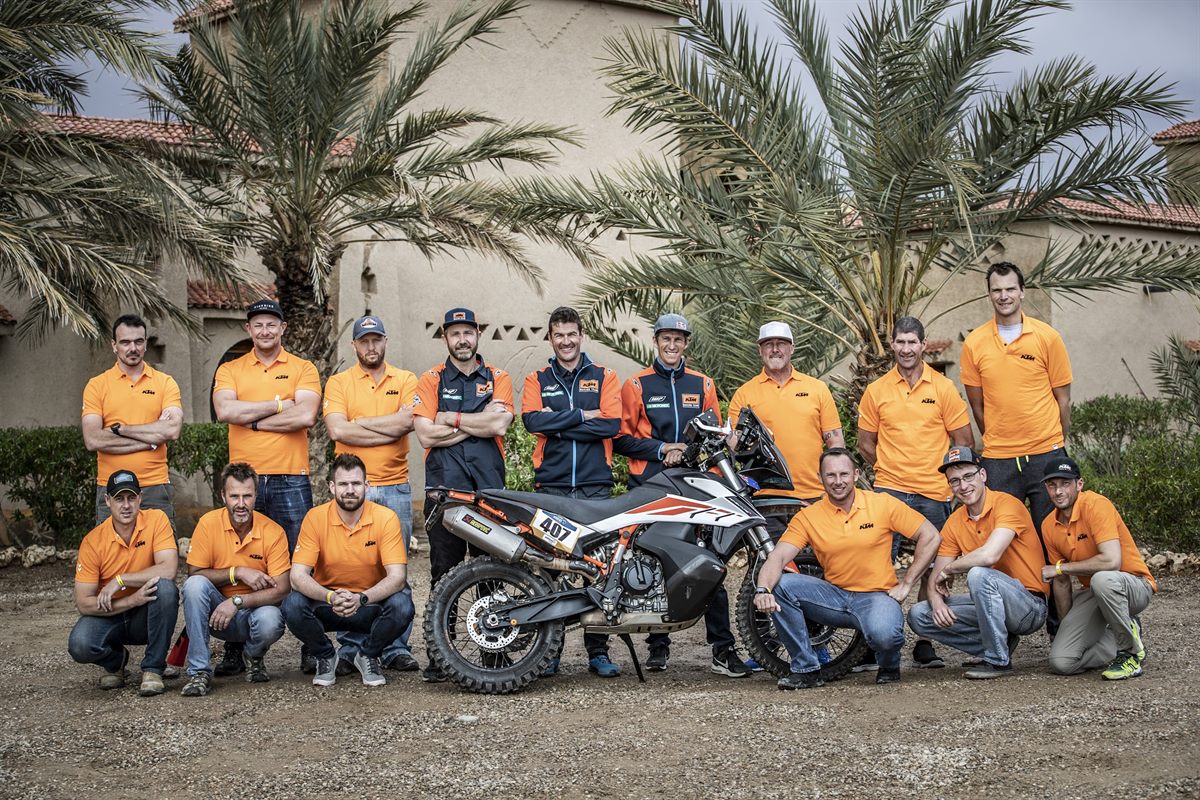
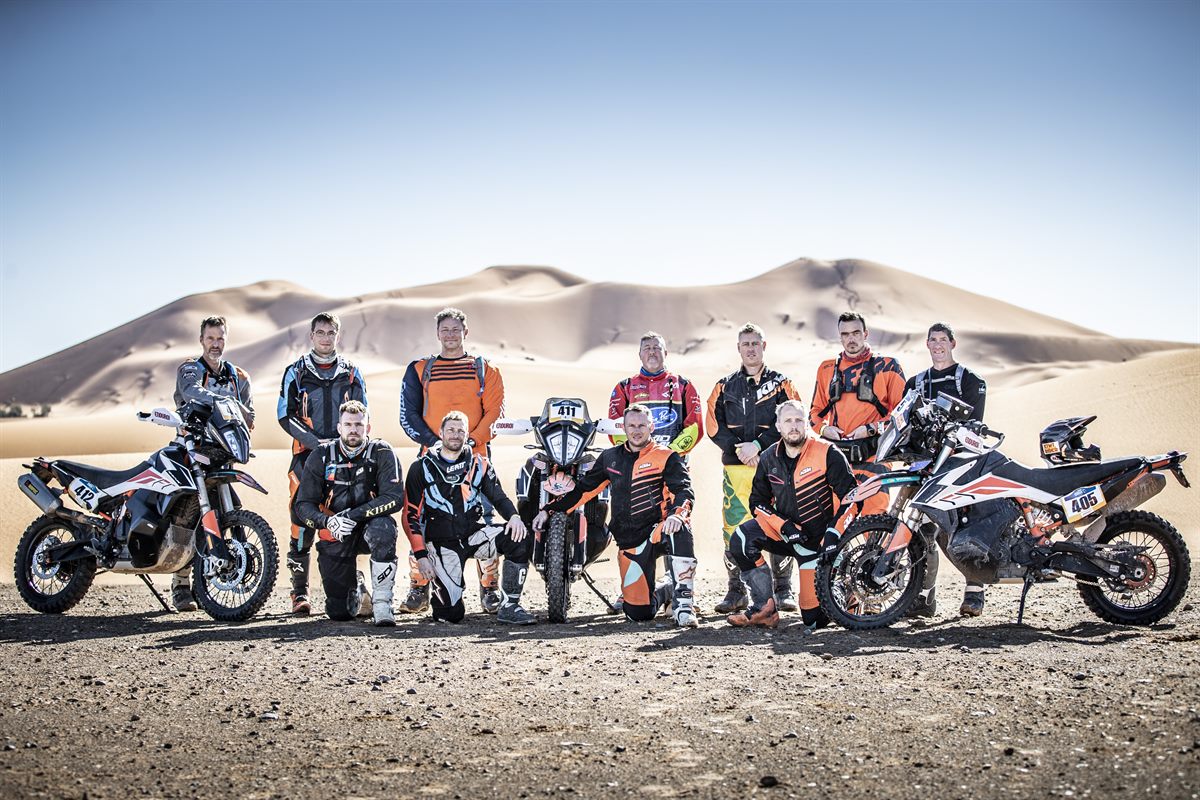
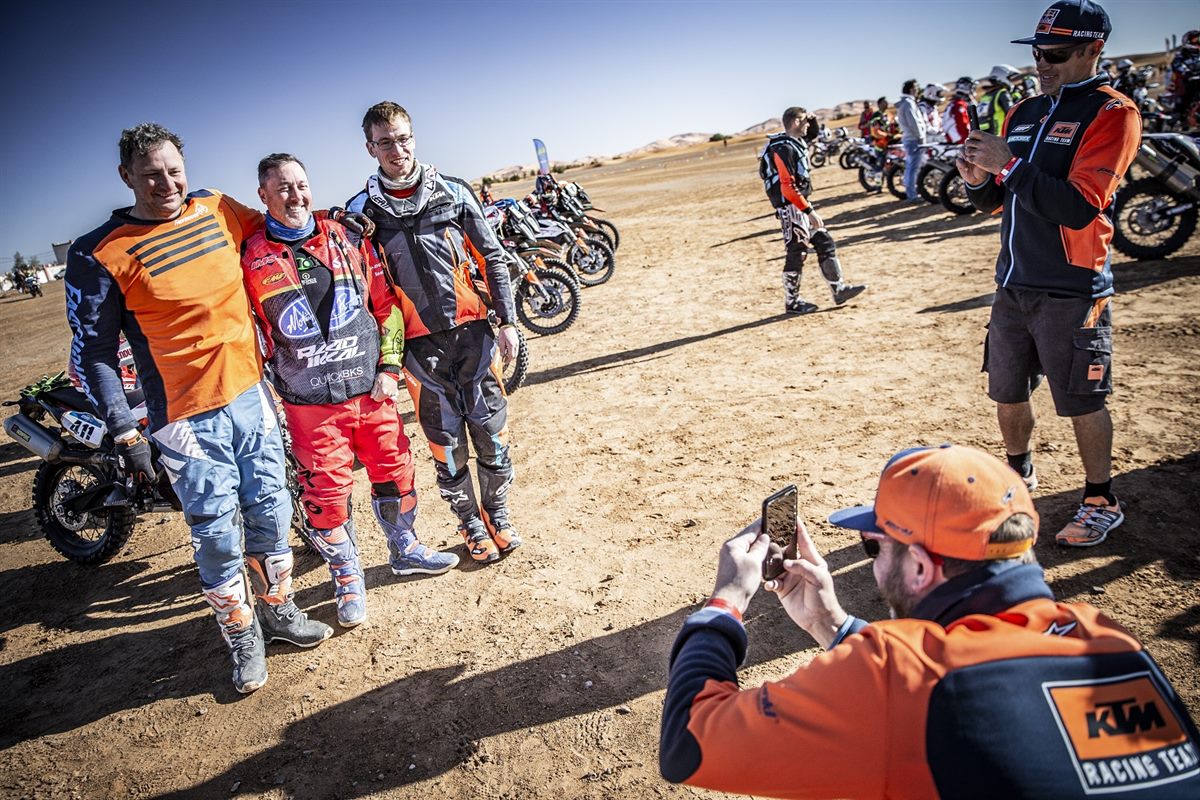
The KTM Ultimate Race 2019 put 12 riders from around the world through six days and over 1000 kilometres of harsh riding. Canadian riders did us proud, Radek Burket received second place and Vasile Scurtu placed eighth in the tough competition.
Scott Myers from the USA took the desert by storm in order to become the winner of the first ever KTM Ultimate Race. The 50-year-old raced in the Moroccan sands as part of the Merzouga Rally racing on equally prepared KTM 790 ADVENTURE Rs.

The Ultimate Race is a special class at the Merzouga Rally, very similar to the main event riding most of the same route, however, instead of being on 450 dirt bikes, riders raced on the 790 Advenure Rs. The rally consists of five stages throughout six days, with stage three and four being an overnight marathon stage. Like the pros, throughout the rally, riders received help from the team mechanics except for in the marathon stage.
The riders qualified to race at the rally by winning the top two positions in one of the six KTM Adventure rallies held internationally throughout the year. The Canadian Adventure Rally was held at Silverstar Resort in British Columbia this past September and will be in Rossland for 2019. Riders Radek Burkat and Vasile Scurtu blew away the competition and won their spot in the Merzouga Rally there. Scurtu said “It was a experience that I will never forget for the rest of my life. To qualify for the ultimate race with my best riding buddy and race the Sonora rally together one week before Merzouga then travel here made it even better.”
Radek did well throughout the first day of the rally but Scurtu had a bad crash on day one injuring his knee, a pain that he would feel throughout the remainder of the competition. “I managed to finish the stage but for the next couple of days my left knee was really sore.” said Scurtu.
KTM ULTIMATE RACE 2019 RESULTS
1. Scott Myers (USA)
2. Radek Burkat (CAN)
3. Jordan Huibregtse (USA)
4. Sebastian Blum (GER)
5. Christiaan Odendaal (RSA)
6. Kevin Archer (NZL)
7. Elliot Kent (NZL)
8. Vasile Scurtu (CAN)
9. Greg Hodgskin (RSA)
10. Steve Robertson (AUS)
11. Stefano Sassaro (ITA)
12. Robert Nowak (AUS)
Myers was chased hard throughout the stages by second place finisher Burkat. He was a mere 59 minutes and 55 seconds back. “This was the first KTM Ultimate Race so no one knew what to expect. KTM pulled all the stops. None of us imagined we would be treated to such an experience. The KTM Ultimate Race is the pinnacle of what you can do on an adventure bike. It’s not just about being the fastest rider, but about learning quickly, having good navigation, keeping your cool, making good decisions, along with a good amount of luck.”

The final stage of the rally started with a mass start of riders, rallying through a sea of sand dunes. Luckily the 790 performed the task at hand beautifully. Scurtu gave us his first take on the bike. “The 790 it’s so amazing in the big dunes. Awesome feeling to ride a big adv bike in the dunes and pass rally bikes. The 790 is mind blowing. It is so much better than my 990 Adv R that I highly modified, and this 790 was stock.” He continued, “So stable at any speed and terrain, the low center of gravity keeps the bike glued on the ground. Suspension on the bike is so good in stock form all you have to do is take it out and ride it hard. Another highlight of the 790 for me was the engine power and throttle control. This will eliminate a lot of clutch work for me and arm pump at the same time, riding the technical single track we have up in Canada.”
Radek felt the same about the 790 saying, “Out of the box this is the most complete and dialed package I have ever ridden. To put it in perspective, on the most aggressive dune stage some of the 790R bikes came in in the top 20 per cent of all the rally competitors racing $60,000 custom developed and tuned rally bikes and dirt bikes.”
Now it’s time to prepare for next year, if you’re thinking of heading to the Rossland Adventure Rally brace yourself for hard riding and meeting incredible people. Upon winning Myers said, “This is the best feeling in the world. You have no idea how happy I am right now. It was extremely tough, especially in the last stage. I just kept watching and thinking this has got to end! It was so hard. I was following Jordan (Huibregtse, USA), he crashed, then he followed me, then I crashed. And we just kept doing that for the whole stage. But what an awesome experience. So cool.”

Although both mountains can be explored on one trip, in this case, Keith Baric felt two separate journeys were better to take in the amazing riding and spectacular scenery.
We tend not to think of volcanoes much, especially here in the Pacific Northwest – until, of course, they start weeping copious amounts of steam or, even worse, popping their plug with devastating consequences. These sleeping giants tell us much about the origins of the landscape here: a landscape that is likened to a thin phyllo pastry crust sitting atop constantly shifting dinner plates. It’s the by-product of earth building that has been ongoing since the dawn of time.
Two of these magmatic goliaths, Mount Rainier and Mount St. Helens, are part of a chain of active volcanoes in what is known regionally as the Cascade Volcanic Arc, and globally as the Ring of Fire, a 40,000 km horseshoe-shaped region of considerable seismic activity that stretches from New Zealand up to Alaska and down to the tip of South America. Washington State is home to five major volcanoes, but what makes Mount Rainier and Mount St. Helens most unique are the relatively easy access roads that seem tailor-made for motorcycle tourers and place you near their molten hearts.
Another factoid is that they were named by the explorer Captain George Vancouver, who frequented the west coast in the late 1700s. Both Alleyne FitzHerbert, aka Baron St. Helens, and George’s close friend Rear Admiral Peter Rainier, were fortunate enough to have their names immortalized on every map since.
A Tale of Two Trips
 I tackled Mount Rainier on a solo ride in September 2017, while this past September, my fellow V-Stromer, Vic, decided to join me on an excursion to Mount St. Helens. Although the iconic mountains are a mere 21-litre tank of gas apart from each other, I decided that it was best to explore these tectonically active destinations on separate trips, and from a strictly experiential perspective, I’m glad I did.
The approach from the Canadian border to Mount Rainier can be tackled by riding toward the coast then heading south. As with many of my trips from the interior of B.C. to points west, I lean toward the picturesque (if you hit it during daylight hours, of course) Highway 20 through Cascade National Park. Thankfully I had travelled this route before, because on this one particular trip, I didn’t reach the historic town of Winthrop on the leeward side of the mountains until close to five in the afternoon, and with darkness quickly ascending, posing with the bike for photos was out of the question.
My journey through the pass was like riding under a dark blanket, black silhouettes of trees on the backs of jagged ridges, heading toward a near full moon creeping slowly upward between the Early Winter Spires. Truly a surreal experience, and despite all the cautionary tales of riding at night, this particular adventure will be forever etched in my visual cortex of motor-
cycle memories.
Timing Is Everything
 Marblemount is well positioned on the western flank of the Cascade Range; as long as you get there earlier enough to set up a tent, get your fuel gauge off the last bar, and find a restaurant that’s open, you’ll be fine. Or else be like me – eating a one-course meal of crackers in your tent at midnight. The Glacier Peak Resort has great tent sites once you can see them in daylight, and offers a good place to fill your belly at breakfast.
Travelling paved roads on the windward side of the Cascades forces you to get relatively close to the major cities of Seattle and Tacoma, so the arterial connector routes are rather congested and a bit too much stop-and-go for my liking. However, once far enough south, approaching Mount Rainier (the fifth national park established in the lower 48) from the west does have its advantages, as passing through the iconic park portal at Nisqually is like stepping back through time.
The twisty ascent to Paradise requires full attention on the handlebars, as the road is narrow and scenery-focused cagers heading down tend to drift over the centreline, undoubtedly awed by the towering old-growth fir and cedars that encircle the volcanic centre of this 95,600-hectare park jewel.
The Henry M. Jackson Memorial Visitor Centre and general viewscapes that greet tourists at Paradise demand at least a few hours to appreciate, but being on a motorcycle does have its disadvantages. Although appealing, the thought of trekking up the alpine from the immense parking lot was not in the cards for me. There was just too much gear strapped on the bike to worry about. Rather, I admired the engineering marvel of the Paradise Inn, built in 1916 (the same year as the creation of the U.S. National Park Service): its crisscross of timber beams and vaulted ceilings are both visually impressive and yet also practical, as they prop up massive amounts of the white stuff every winter.
Various Access Points
 Descending Mount Rainier, again snaking through tall trees and lush understory, is in an easterly trajectory toward the Stevens Canyon entrance. From there, three options are presented: north, to where another popular attraction to the park, the Sunrise Visitor Centre (the second-most visited site in the park and the highest point to be reached by vehicle), resides; east for taking in stunning views of the mountain from Chinook Pass; or south on Hwy 123 toward Packwood and Mount St. Helens.
As mentioned earlier in this tale, Mount St. Helens is relatively close to Mount Rainier. However, it’s best to budget an extra day or two if you want to absorb the spectacular attributes of both. Nevertheless, because of the various approaches to both volcanoes, breaking the explorations up into separate trips is a good idea, even if they are a year apart.
Mount St. Helens, covering an area of 44,520 hectares, is a national monument, as compared to a national park. Some pro-park advocates argue that its upgrading to national park status is long overdue and would create further opportunities for funding, something even the U.S. national parks have lost under the current political regime.
Regardless of annual operating budgets, Mount St. Helens offers excellent amenities. The Spirit Lake Highway (State Highway 504), which my riding mate Vic and I travelled via the west entrance to the monument, is a relaxing, wide and well-maintained route that provides commanding views of the North Fork Toutle River. When Mount St. Helens erupted on May 18, 1980, and for the following four months, this river channel transported 140 million tons of forest debris, ash, sand and gravel toward the Columbia River several hundreds of kilometres away.
A Deadly Eruption
The Spirit Lake Highway terminates at the Johnston Ridge Volcanic Observatory, which honours the memory of likely the first person (researcher David Johnston) to be fatally impacted by the outward searing heat blast of
300 km/h winds. The low-profile, concrete building, partially embedded in the hillside facing the north flank of the mountain, has myriad displays, as well as various trails to absorb the destructive magnitude of the eruption. To the east, Spirit Lake is visible, a waterbody forever changed by one of the world’s largest known landslides, which consumed not only the lush forest surrounding the lake, but also that of the Mount St. Helens’ Lodge, home of Henry R. Truman. Truman, along with 56 other souls, was lost in the aftermath of the eruption.
Camping near the volcano is not really an option, as overnight accommodations are offered only on the periphery of the national monument. Vic and I tried our luck at the Kid River Campground, just off Route 504. Although the forested site had the basic amenities and a charming old caretaker, the early-morning Jake brakes from a nearby logging road nestled carefully below the campground serenaded us at six in the morning. Best to check out the Eco-Park Resort (unfortunately closed this particular week), which is about 15 minutes west of Kid Valley, replete with cozy cabins and private tent sites in an “off the grid” setting.
There is an equally scenic, albeit more mountainous, approach to Mount St. Helens, and that is Forest Road 25, which travels through the Gifford Pinchot National Forest to the Windy Ridge Viewpoint. We had attempted this approach first before heading on the Spirit Lake Highway, but this paved, ubiquitously potholed route seems plagued by spring washouts and ongoing repairs, and the visit to the Ranger Station outside of Packwood confirmed that access was once again closed due to a bridge reconstruction. Another bonus about this less-travelled route is viewing Mount Adams, another potentially active volcano, which rises out of the west and beckons further exploration, albeit in a more wilderness setting.
Columbia Plateau – A Rider’s Dream
The leeward side of the Cascade Mountains presents a variety of options for north and south travel to and from the volcanic destinations described here. I must admit, this farther-inland route has a great many benefits. Not only is traffic lighter and more sporadic, but the landscape here is primordial, as most of it resides on the Columbia Plateau, or scablands, as the laymen geologists call it. Shaped by prehistoric glacial movements and megafloods, it’s a rider’s dream both visually and technically. Vic and I took in the Yakima River Canyon via State Route 821, which is a blissful alternative to Interstate 82 as you head north to Ellensburg.
Another must-ride, which I convinced Vic to experience, is the short section of Old Blewett Pass. This very twisty and narrow paved secondary road has been maintained (even if we didn’t pay heed to the “road closed” barriers) to a standard just perfect for adventure bikes, even though the main highway takes a much easier approach over the 1,250-metre mountain crest.
Now strictly on a northward trajectory from the Mount St. Helens volcano run, we fuelled up both bike and body in Ellensburg, and rather than push ourselves any further, made Wanapum Recreation Area our destination for an evening. Just south of Vantage, the small park offers a well-maintained venue to pitch a tent along the banks of the much-manipulated Columbia River. I say this because even the town of Vantage, now situated a considerable distance upslope, was inundated by the rising waters from dam construction in the 1960s. The Ginkgo Petrified Forest State Park is located here as well, and is a site worth taking a few hours to explore.
Comfortable Accommodations
After funneling through the coulee country, admiring the giant escarpments of columnar geology, a suitable stop for either a Mexican meal or a relaxing overnight, Lake Chelan is one of my preferred layovers. We discovered an inexpensive, well-maintained and isolated accommodations sweet spot situated high above the lake. The one- and two-bedroom cabins at the Chelan Rentals Resort, adorned with all the necessary provisions – comfy bed (extra blankets), fridge, heater and small TV (you can rent DVDs in the office) – made for a memorable and restful sleep.
So, if you are contemplating a ride south to appreciate the scenic wonders of the Pacific Northwest, be sure to budget time and energy to visit both Mount Rainier and Mount St. Helens. They are indeed impressive reminders of the tenuous balance of nature, restless fortresses that continue to shape the land and memories of those who visit them…
May is Motorcycle Safety Awareness Month, so we thought it prudent to offer up some sobering facts and a few tips that may just save your life.
The sun sank behind the horizon as the rain grew heavier. I could only see the red glow from the taillight of the bike ahead and the meek scope of illumination that my bug-plastered headlight offered. A silhouette appeared from the ditch and crept onto the road. The bike ahead blocked my vision of the creature until it was too late. I could hear the sounds of sliding rubber and could feel it vibrating through my bones as my wheels locked up, and I felt a crushing impact on the front of my bike. I tried to scream, but all that came out was a distorted whimper. I knew instantly what I had hit; I didn’t want it to be true. My heart racing, I looked at the front of my bike immersed in blood and wisps of brown fur jamed into crevices, including my front tire and rim.
I did what every motorcyclist dreads: I hit a deer. I was lucky enough to kill the animal, keep the motorcycle up and ride away with a small fracture on my foot from the animal swinging around and smashing my foot against an engine case. I also rode away with a stark idea of the overlooked risks associated with motorcycling.
A recent study from Transport Canada stated that motorcyclists made up 10.9 per cent of fatalities in Canada, even though they only make up about two per cent of road users. The romanticism of motorcycling wears thin with the thought of how quickly one of many factors can change our lives through one ride. Motorcycling can be unkind to many.
Thinking of Warmer Days
 I’ve sat and stared at my motorcycles for countless hours this winter, as I’m sure we all have. Before we pull our machines out of hibernation, though, it’s important to consider the risks and factors we are faced with, especially in spring.
To get a well-rounded scope of what injuries motorcyclists often deal with, I spoke with Adam Calver, a motorcyclist who spent most of his career working as a firefighter and paramedic. Needless to say, he’s seen a lot. More recently, Calver has started a motorcycle-specific first-aid course called Head-On First Aid and Safety, and it revolves around the most common motorcycle-related injuries.
“Some of the most common injuries that first responders see are road rash, shoulder and rib injuries and, of course, lots of fractures,” Calver says, noting the most common involve tailbones, wrists, legs and arms. “We’ve all been warned of road rash, and if you’ve ever had it or seen treatment for it, you can understand why nobody would wish this upon their worst enemy.”
Shoulders are arguably the most vulnerable joint in the body; torn ligaments or dislocated shoulders are quite common – an injury I’ve experienced multiple times after a bad crash on a Timbersled.
Calvers advises, “If you don’t have first-aid experience, I’d highly suggest taking a course no matter how basic it is. It’s valuable knowledge and gets you acquainted with dealing with intense situations.”
So, now that your body aches with the thought of potential trauma that hitting the ground can cause, let’s talk about some of the things we can do to ensure we can provide ourselves with the best care, and in some cases prevent the crash in the first place.
Take a Riding Course
 It doesn’t matter what you ride or how long you’ve ridden, there is nothing more important than improving your own skills. Riding in a controlled area with experts homing in on the bad habits we’ve gained over years is invaluable. Taking a course will improve your confidence and situational awareness, whether it’s on the street or dirt.
Know Your Gear
There are so many types of gear on the market now. Do your research and pick the gear that suits your riding style and offers well-placed protection. Don’t put a price tag on your well-being or your life; it’s worth it to spend the money on gear that offers real protection.
Helmet
Your head is the most important body part to protect. Know your helmet – is it modular? open-faced? full-faced? Can someone access your face easily after a crash? Paramedics are trained to remove helmets, but having to pull off your helmet to ensure your airway is open could increase the possibility of a spinal injury. If your helmet is a modular or open-face type, your mouth and airway are much more accessible in emergency situations. If your helmet is full-face, check to see if it has easy-to-remove cheek pads, and would therefore be easier to remove in an emergency.
Does your helmet fit your head properly? There are three main head shapes; learn which shape of helmet fits yours best. Arai, for instance, designs helmets based on these three shapes. You can definitely feel the difference in a helmet that fits properly. Make sure there is no additional space in your helmet. Any space can amplify the force of the impact into your skull. Having a helmet that’s too large can actually cause you to have two impacts: one when the helmet hits a solid object or pavement, and the other from your head hitting the interior of the helmet.
Jackets and Pants
 Most riding gear will have some sort of integrated armour included. Some use D3O flexible armour or have their own brand of armour, while others just have Kevlar patches in easy-to-wear spots. The most important areas to have armour are your back, shoulders, elbows, hips and knees. Aerostich and Klim are great examples of gear that is well thought out when it comes to being waterproof, with protection and ventilation where most needed. They also have taken the time to ask the ultimate question “What do women want” and have addressed those issues with gear specifically made for women of all shapes and sizes. Companies like Dainese, Alpinestars and Helite make vests and jackets that offer airbag protection in crash situations.
Boots
Get a motorcycle boot that covers your ankles at minimum. For me, the taller the better. It’s best to find something with rigid ankle support, but be sure it doesn’t hinder the movement of your foot.
Gloves
Instinctively when we fall, the first thing that goes out is our hands. Gloves with an abrasion-resistant palm is important. On the top of the hand, it’s best to get something with hard knuckles to protect from falls and levers that could crush your hand.
Going Digital
Get a safety app or locator beacon. We are lucky to live in a technological world these days. There are some great apps available for your smartphone that offer crash and fall detection in addition to tracking your ride, such as EatSleepRIDE. Instead of you potentially waiting injured on the side of the road or in a ditch, an alert instantly goes out to emergency services with your location once the app senses a crash, as determined by complex algorithms.
If you’re travelling to more remote areas, you might want to look into purchasing a satellite beacon like a SPOT satellite GPS messenger or a Garmin inReach unit. A location beacon can be more useful, especially if you find yourself on the dusty trail more often than not and out of cell reception. You can set up key contacts who will receive your location in set intervals. Additionally, you can let them know if you’ve had a breakdown, stopped early, need help or will just be late.
However, they will not sense if you’ve had a crash – you’ll still need to physically press a button to notify emergency services.
First-Aid Kit
Anticipate the worst but hope for the best. Start off with buying a generic first-aid kit, as this will supply with you most of the equipment you’ll need. Then adapt the kit to your needs and activities. Some extras that I carry are things an antibiotic ointment, a pain reliever, an antihistamine and any prescribed medications.
Above all else, the most important thing we can do as riders is focus on the road and our surroundings. I often think about that moment I rode away from the deer carcass stretched out on the side of the road and about the split-second choices I made that placed me in that fateful situation. In the end, I made my choice and came out all right – I was lucky. The most important thing is to learn from others and ourselves in moments like that. We ride to live and live to ride, but becoming a statistic is not our end goal.