
Loserpalooza
Where every bike is a Winner-palooza – or something like that
The fall weather was perfect when I illegally parked my dusty Harley by the main entrance to the Pipe Shop, a 929-square-metre venue on the waterfront in North Vancouver. I was pretty sure that this was going to be a great weekend. Forty-something choppers on display, food, beer, music, tattoos, art, beer, hammocks, custom patch-making, and hundreds of bike lovers from places as far-flung as Oregon, New Jersey and California made for a heady mix that filled my old heart with joy. Being old enough to have been around when bikes like these were first invented created some real anticipation.
Loserpalooza 2018 took place during the third weekend of October. We don’t often see shows like this here, so I asked organizer Becky Goebel (@actuallyitsaxel) how she came to be the Queen of Loserpalooza. “Two years ago, I wanted to throw a party in Vancouver cuz not much cool stuff happens in this city. I stumbled upon a perfect venue, and because of my background with motorcycles and my involvement with social media, it was easy to put together a night of bikes, beers, art and music. I never really thought the party would turn into a bike show like it did, but it kind of happened naturally. Loserpalooza is a full-on vintage chopper show now because I love old choppers and I just want to put on an event that I’d want to go to.”
What’s in a Name?
 But where did that name come from? Becky explained: “I made a Facebook status that said: ‘Good name for the biggest/best motorcycle show/beer party ever?’ There were lots of comments, but one from Mike Babz said Loserpalooza. He told me I had to give him free beers at every event if I wanted to use the name, so that’s what happened.” Made sense to me.
It was time to wade in and let it wash over me. Take a deep breath. Feel the good vibes. There were so many incredible things to look at; it was hard to know where to start. The choppers were large, shiny objects (well, some were shiny), so they grabbed my immediate attention. I’m a sucker for such things. Becky had told me that all the bikes were here by invitation only, with her friend Curtis Douglas helping her find and select the participants. And they had to be hardtails, so I was expecting some very cool, old-school chops, and I wasn’t disappointed.
It Started with a Tank
 Kenneh was a well-bearded middle-aged rider from Portland, Oregon. His bike was listed as a ’48 Harley FL, but like most of these bikes, it was an amalgam of parts, some dating back to the 1940s and some as new as the 1970s. And then there were actual new parts that he had made himself to look like old parts. “The bike was built around the tank,” Kenneh said. “I saw that tank and said, ‘Yes, I need to make a bike from that.’ I left it as it was, except I painted the tiger on it in 1950s style, but made the painting look old to suit the bike.”
He did an amazing job. Kenneh pointed out various parts and their ages – all old – and then he pointed to one part in particular. “You see that hand shifter? That shifter I made from a part from an elevator door mechanism.” It was impossible to tell the difference between what was old, what was new and what he had made himself. I pointed to the mufflers. “Copper Triumph mufflers. I had never seen them before. You know, copper is usually the base when chroming, but these were left copper. I had to have them.” Kenneh cut them to be a slip-on fit, because he doesn’t like the look of clamps. I asked him where he got the beautifully aged seat. “That leather is from an old couch that I found at the side of the road. I cut out the leather and used it to make the seat.”
As I walked past the hammocks set up in the centre of the venue for anyone to use, I saw a young guy with a joint in his mouth (weed had just been made legal in Canada). I asked if I could take his picture. “Sure, go ahead,” he said. I asked if I could have his name for the photo. He told me his name is Brendan. “What’s the picture for?” he asked. I told him I’m doing a story for Motorcycle Mojo magazine. His face lit up. “My dad reads your magazine! He’ll be so proud,” he said with a laugh. He gave me his email address to make sure he doesn’t miss the story when it comes out.
A First Time for Everything
 One chopper that deviated from the sea of Harley-Davidsons (there were also a beautiful Indian and a Triumph) was an ’81 Yamaha XS650 built by young Johno Love. I asked him about the build. “Well, a friend of mine says, ‘Let’s go to Born Free.’ I figured you gotta ride a chopper to Born Free. So this is my first build. In fact, it’s my first bike. I had never ridden before.”
I was somewhat flabbergasted by this.
He continued: “Well, I had a friend who had an engine and a frame, and another friend had the springer front end. So, we just kind of put it all together. It took six weeks to build.” Pretty impressive first-time effort! I asked him about the lighting: how good are those rectangular headlights? And I really like that mini-spot that he had placed behind the forks. “I don’t even know what those headlights are. They’re really pretty useless,” he said, laughing. “But the spot works pretty good. I don’t know what that’s from either.” On the way to Born Free, in the middle of nowhere and the middle of the night, the main relay blew, leaving him with no lights. But that’s life on a chopper.
I told him that I’d never ridden a chop with rabbit-ear handlebars, because I always figured I’d crash. “Yeah, all my friends told me, ‘Don’t use rabbit ears!’ But they just suit the bike. I looked at the bike, and it had to have them. But when I first rode it, I was all over the place.” What’s next? A friend of his had a Knucklehead with tranny taking up space in a closet. So, he gave it to Johno for his next project. You can’t make this stuff up, kids.
More than Just Bikes
Aside from the bikes, there was art. Some in the form of photography from Liz Leggett (lizleggettphotography.com), who is here from New Jersey to show her work and cover the event for a chopper mag. She turned out to be a gem with an eclectic variety of interests. She’s been shooting hot rods and bikes for years, but she and her husband also share a love of steam locomotives and military vehicles. And she’s working on fixing up a hearse for Halloween. Her photographs were beautiful, and she proved to be good company over the weekend during the periods we both needed a break from our work.
AJ was here from Noice Paint (@noicepaint). He was wearing many hats this weekend. He had a bike in the show, and beautiful helmets and gas tanks on display that he had painted, and he was hand-painting all the signage for each bike. His work was superb and he chatted amiably, even though he was buried in his hand-painting work.
Bikes Everywhere
Because the event lasted all weekend, I inevitably ran into some friends from the Vancouver motorcycle community, which gave us a chance to catch up. I mentioned to one friend that some of the chops, like Kenneh’s, looked as if they’d been dragged out of a river. But in a good way. She mentioned it to Kenneh when he stopped to say goodbye on his way out. He laughed and said he was leaving to go and look for more bikes in rivers.
After dark, I went outside in search of food. There were dozens of bikes surrounding the area, all parked illegally. No one bothered us about our haphazard parking lot. Some of the bikes were as nice as the ones on display inside.
The weekend progressed. Apparently, at the Saturday after-party, someone rode a chopper into the bar that’s hosting the party. Regrettably, I missed this.
Sunday was largely a repeat of Saturday. I got to spend more time with Kenneh, who turned out to be a fascinating, gentle soul. We talked of the vagaries of life, family, owning your own piece of land and, of course, bikes. His parting words to me were to look him up the next time I’m in Portland. He’ll be around. I look forward to it.
The Weekend Winds Down
Sunday afternoon things wrapped up. People started loading bikes in trucks and trailers, or just riding them off. They had places to be on the Monday. I felt a bit lost after two long days of intense chopperdom.
After the chaos of the weekend had died down, I asked Becky about the future. “As of now, Loserpalooza is an ‘every second year’ chopper show. It gives people time to build bikes or come out of the woodwork to put something together in a place where there isn’t a ton of choppers.”
And what was her favourite part of the whole thing? She couldn’t choose just one.
“A truck full of young dudes from California came up to the show with a van they were sleeping in and a trailer full of choppers. It was pretty cool to have people come from far away and party hard – that’s what this shit is all about. We also had a vintage tintype photographer at the event this year developing pictures live. There was also a DJ spinning records, two tattoo artists and a chain-stitch embroidery vendor who stitched names onto jackets with her old machine.” She continued: “All this stuff is just hobbies my friends do and come together to make the event cool, so it was a pretty good vibe around there that weekend!”
If you have a bike to finish building up or are interested in having your chopper in a future show, email loserpalooza.van@gmail.com or follow on Instagram at @loserpaloooza.
Getting together with family and friends in a safe atmosphere of beginner to advanced off-road trails
During a long weekend last May, I was invited by some new friends to go dirtbike camping. “Dirtbike camping? Such a thing exists?” I asked.
The next thing I knew, my two kids (aged six and nine) and I, along with some great friends, were heading to Nickel Mine for three nights of camping and dirtbike riding. I was in heaven and I was being introduced to a world that I never knew existed, and learning about the long, complex history of dirt biking in the area.
The Hope Nickel Mine Riding Area is a network of riding trails near Hope, B.C., that has been maintained by the Fraser Valley Dirt Riders Association for the past 30-plus years. Enjoyed by motorcycle and ATV enthusiasts alike, it’s made up of forest service roads, abandoned mining roads and approximately 100 km of trails, many of them uniquely suited for beginner and younger riders. Many more trails are being recovered, created and improved through the efforts of the FVDRA, which had not been allowed access to the area for the past two years.
Until 2015, the club, which regularly had more than 150 family memberships (for a total of 350–400 members), enjoyed the vast area of trail systems that offered terrain ranging from easy green trails for beginner and younger riders up to more challenging terrain for the more advanced riders. The campsite was situated near the tailings pond, which featured a small motocross track, built by FVDRA members, so the kids could ride and practise while their parents’ supervised and relaxed nearby at camp. There was even a big, open riding area where they used to play dirtbike soccer, a made-up event similar to polo. It was a place enjoyed by riders of all abilities from surrounding areas.
Disaster Strikes
 However, on August 4, 2014, a breach of Mount Polley tailings pond in central B.C. created an environmental disaster that prompted the government to require all tailings ponds be inspected and raised to proper standards. This included the tailings pond at Nickel Mine, and so access was restricted for the FVDRA, with camping, and dirtbike riding on some trails still allowed.
During this time, more and more logging occurred in the valley, which devastated a fair number of the well-maintained trails. Some agencies, however, were good at maintaining communication with the FVDRA. These agencies would receive GPS tracking information and try to avoid or re-establish trails, but they didn’t usually reach the standard that the FVDRA would want for safety and for the events it had been hosting with the Pacific North West Motorcycle Association for so many years.
Every weekend there was a lot going on in the area of Nickel Mine, and it was slowly on the decline due to these mining and forestry developments.
Then in November 2015, an unfortunate logging accident occurred in which a truck and driver were swept off the road in a storm-triggered landslide, causing the closure of the area to all recreational users. For the entire 2016 year, FVDRA members weren’t allowed in the area at all. In 2017, after the area was surveyed and certain parts were fixed, access was again granted, but the forestry district now required more paperwork, including a letter of understanding authorizing the association to maintain the trails.
A New Start
 For 2018, FVDRA members and administrators were permitted to come back and start fresh to make progress in repairing and creating new trails. A new, unofficial, temporary area on public Crown land is now set up for riders to camp. Anyone can ride the area, and camping is free for paid FVDRA members. The association is considered to be the stewards of the area, because it has been doing it for so long and because its members are the ones that now have proper authorization to do work by the First Nations and Forestry Services.
The goal is to bring the area back to how it used to be. It’s about an hour away from downtown Vancouver and is one of the only riding areas that have low-gradient trails. Many other areas nearby have very few green and beginner trails, whereas Nickel Mine is perfect for families. The FVDRA is all about regaining membership and reviving the club and the entire dirtbike-riding experience. An annual membership is only $20 per family.
A Family Affair
During my first weekend dirtbike camping with the kids, I was thankful that I was to be meeting my new friends in the remote area. It was a little daunting to be doing it all on my own with two little kids, so I drove slowly and carefully and was happy to see familiar faces as we rolled into camp. There was our friends’ fifth wheel (which helped us tent dwellers enjoy a slightly more glamorous camping experience), along with maybe seven or eight more trucks and trailers and various-sized campers and tents. Dirt bikes were rolling in and out of the area, and as soon as my kids saw some others their age riding, they flung the doors open and ran outside to make new friends.
 After we set up camp, the kids dressed quickly into their riding gear and spent the next few hours riding up and down the camp access road over and over again. I was introduced to several FVDRA members and instantly felt a part of the riding community. I was amazed that in all my years of riding, I had never gotten wind of the existence of dirtbike camping.
For the next few days, we enjoyed taking turns and riding in different configurations of groups, depending on who wanted to ride and their abilities. At one point, for the first time ever, I was able to ride a length of logging road with both my kids. My daughter, Kai, at six years old, had improved her riding so much in just one day of exploring around the campsite with other kids that she was able to manage an hour of adventurous riding up a logging road, through some little creeks and up and down some decent hills, on a little Yamaha PW50 no less.
The scenery, lush West Coast forest (although quite sparse in areas due to extensive logging), was stunning, and the feeling of being able to share the dirtbike riding experience with my children was indescribable. My son, Ashton, and I had a few higher-level rides through trails that varied from tight and technical single-track rides to wide open trails alongside stunning hillsides. Occasionally, I’d leave the two kids in the care of willing adults back at camp and enjoy an adult-paced rip around a few of the more challenging trails.
Friends Helping Friends
When we had difficulty starting Ashton’s KTM 50, the family across the camp from us generously let him ride their daughter’s PW80. When I heard a family talking about wanting to teach their five-year-old son to ride, I offered to help him, and in only 30 minutes he had joined the rest of the kids in their parade of riding up and down the length of the camp.
On the final day, some of the members surprised the kids with a scavenger hunt that had them cheering and laughing and working as a team to find eight hidden balls around camp that earned them a loot bag full of candies, bubbles and games. We had a rib fest dinner one night, and traded many stories about motorcycles and adventures by the fire while we drank beer and roasted marshmallows. By the end of the three days, we were dirty, happy and tired, and had made many new friends along the way.
Another Camping Location
As we were rolling away from camp, a couple of the members sauntered over and mentioned that they were heading to a different camp in a month’s time. “Would you like to join us?” Having just experienced one of the most memorable weekends ever with my kids, I couldn’t possibly say no to another opportunity for adventure, and so only four weeks later I packed up the truck again and this time drove four hours to Duffy Lake near Kamloops, which is another dirtbike-friendly campsite that many FVDRA members frequent.
This camping experience was quite different from the one we had at Nickel Mine, mostly due to the lake and the extra activities Duffy Lake offered, but the basics were all the same: dirt bikes, the great outdoors, exercise, fresh air, exploration and adventure. We saw some of the same faces and met many new ones, and with different terrain and trail options, my son and daughter improved their riding and their endurance, and my heart glowed with the sharing of my passion with them.
I am so thankful that I was able to meet the members of the FVDRA, talk to them about their 30-plus years of running the club and hearing their plans for the future, all the while getting to enjoy riding and adventuring on my dirt bike. The goal for the next few years is to grow the club membership back up to what it used to be and to continue to offer riding experiences for families and friends for many years to come.
If you are interested in becoming a member, please visit fvdra.com.
Reflecting on my motorcycle upbringing
I remember when my mom enrolled me in Irish dance class – I was excited, yet there were so many other things to do. Like riding a dirt bike. She would squeeze my feet into small leather shoes and watch every class. I hated it at the time, but I became good enough to compete and I won many medals in the 10 years I danced. That was until my teacher pulled me aside one day after class and explained to me that I was very good, but it was too risky for me to continue dirtbike riding and dancing competitively.
That was the day I quit Irish dancing.
 I couldn’t tell if my mom was upset or delighted that I had decided to quit. She put so much time into helping me become a great dancer when all I wanted to do was ride my bike. I think it was a bit of a relief knowing that she wouldn’t have to wrangle me into going to dance class anymore.
Moms are funny in that sense. You never realize how good their intentions are when you’re a child, but as you get older, you notice little things that you start to do instinctively because your mother drilled it into your subconscious. Like a bear raising her cubs, a mother’s nurture is the most integral factor of survival. Reflecting on my childhood, I see the amount of endless love and encouragement my mom had given me. Like most children, I never looked at the greater picture and realized how much she did just to make sure I could do what I loved.
So this Mother’s Day, I wanted to simply say thank you to all the mothers out there and women who have inspired us on our journey.
Whether we live near or far from you, know that we are a better version of ourselves because of you.
Thank you for staying strong when we came home with our first street bike, thinking we were the coolest kids in the world. Watching us ride away for the first time not knowing what the future would bring for us on these two-wheeled beasts called motorcycles.
And thank you, Mom, for letting me borrow your motorcycle with only 5,000 km on it when I was 18 years old. I vanished down the road into the horizon, only to come back three months later with another 20,000 km on the speedo, a few scratches, bent forks, three new tattoos and an undying desire to continue travelling.
My mom never forced me to do anything, but rather sometimes just steered me in one direction or the other. Now that I think about it, this might have been part of her master plan, because to this day, I continue to break out in a little jig whenever I get excited.
Triumph has created the next generation of a retro, high-pipe, off-road desert sled that works equally as good on the street.
Crossover cars are becoming ever more popular, as passenger car platforms are increasingly used to create a multipurpose vehicle with the space and practicality of an SUV, but the comfort and handling of a sedan. The same thing with bikes – the most obvious example being BMW’s succession of bestselling GS models, or Honda’s NC750X and CB500X, all attempting to deliver the best of both worlds without one compromising the other.
But now Triumph has delivered a pair of crossover models that seek to answer a different question: how to combine retro cool with modern functionality in a dual-purpose motorcycle. Call it a crossover Crossover. That’s the conundrum that faced Triumph’s chief engineer, Stuart Wood, and his R&D team three and a half years ago when they began work on creating the new-for-2019 Scrambler 1200 XC and XE variants. To do so, they took the all-new 1,198 cc, liquid-cooled, parallel-twin T120 engine they’d just launched to power the new generation of larger-capacity Bonneville models, headed by the Thruxton café racer.
Rather than concocting a powered-up version of the 900 cc Street Scrambler, which, just as it says on the label, has only minimal off-road pretensions, Wood’s design brief was to develop a pair of crossover bikes with the Bonneville family’s traditional twin-shock neo-classic styling, and that were just as adept both on- and off-road as the company’s thoroughly modern 800XR/XC dual-purpose triples. So in this way, Triumph is seeking to restate the genuine nature of the Scrambler nametag that it first laid claim to years ago, long before BMW or Ducati ever used the name today on what amount to custom street models.
Scrambler History
 In doing this, Triumph has taken another long look in its corporate rearview mirror to launch these modern classics as a tribute to one of the most successful models in its 1960s classic-era lineup, the go-anywhere Trophy street enduro. Amid all the furor when Ducati launched its Scrambler sub-brand back in 2014, it was conveniently overlooked that it was actually Triumph that invented the street-legal scrambler category back in 1949 with the TR5 Trophy, so named after the three Speed Twin-based bikes that the British company built for the 1948 ISDT in Italy, winning three gold medals and the Manufacturers Team trophy in that gruelling event.
Purchase the issue to continue reading
Ducati’s newest plaything is sure to liberate your inhibitions.
The town of Maspalomas on Gran Canaria in the Canary Islands has a one-two punch to sweep any motorcyclist off his or her feet – a small but very entertaining race circuit right next to the ocean, and some of the most amazing mountain roads imaginable just a few kilometres inland. What better place for the worldwide launch of Ducati’s new-for-2019 Hypermotard 950 and Hypermotard 950SP? The cost of entry for the bike is $15,295 ($18,795 for the SP) – getting to Maspalomas is all on you.
Ducati bills these bikes as being made for hooligans, but I might counter that the bikes are even better at turning riders into hooligans, as much as they cater to existing rabblerousers. Ever since someone had the bright idea to bolt road-race rolling stock onto a dirtbike chassis, showboating wheelies and lurid slides have been the trademark of the Supermoto/Supermotard genre. The new Hypermotard twins deliver the performance and technology to make such shenanigans accessible to mere mortals, while still allowing the Rubén Xauses of the world to punch holes in the laws of physics.
Legendary Ducati
 The magical formula for these mythical beasts starts with Ducati’s signature trellis frame, L-twin motor and Desmodromic valve actuation, so no surprises there. These elements, however, have been reworked from the previous-generation Hypermotard to produce a machine that is four to 6 kg lighter and 4 hp stronger. New pistons with a higher compression ratio, a new exhaust cam and a new 53 mm throttle body combine with new engine mapping to produce the power increase along with a healthy torque plateau between 5,000 and 9,500 rpm. The Testastretta 11° engine (indicating an 11-degree included valve angle) is liquid cooled, and displaces 937 cc, just like the previous Hypermotard, despite the new bike’s 950 designation.
Reducing the steel tube wall thickness in strategic areas on the frame, magnesium cylinder head covers, and some aluminum bits in the suspension and brakes all contribute to the weight savings for the base Hypermotard, while carbon timing-belt covers, front mud guard and forged Marchesini wheels help shave a further 2 kg from the SP model. The engines and frames of the two versions are identical, but for your extra hard-earned dollars, the SP comes with fully adjustable Öhlins suspension front and rear with increased travel, an excellent quick shifter (optional on the base Hypermotard), the aforementioned Marchesini wheels and carbon bits, and Pirelli Diablo Supercorsa SP V3 tires instead of the base 950’s Diablo Rosso IIIs. The increased travel of the suspension allows for three degrees more lean angle compared to the base 950, but does raise the seat height 20 mm (more on seat heights later).
The Circuito de Maspalomas is laid out next to an airport that is seemingly right on the beach, with some track configurations incorporating the airport tarmac and runway. There is a small elevation change as you approach the end of the front straight and exit the first set of corners, but the rest of the circuit is pancake flat. The configuration we used consisted of four second-gear hairpins and two chicanes, all joined by short straights. It was a perfect playground for the more track-focused SP, allowing for tail-sliding corner entries, surprising lean angles and power wheelie exits.
SP Model on the Track
 My first sighting lap, however, was a slightly jerky affair as I adjusted to the sharp throttle response metering out that meaty mid-range when in Sport mode. A slight brain-to-throttle-hand re-calibration and things smoothed out by lap two, and by the first flying lap, things were dialed in. The torque curve is flat and broad, with no dramatic steps, and power wheelies were a firm twist of the wrist away in any of the four second-gear corner exits.
The electronics package consists of a Bosch six-axis IMU (inertial measure-ment unit) controlling cornering ABS, Ducati traction-control EVO, wheelie-control EVO, and Ducati Quick Shift, with varying degrees of customizability via the left handlebar switchgear. Sport, Touring, Urban and a track mode are available. The lowest level of ABS intervention (it can’t be completely turned off) activates Ducati Slide by Brake, which allows for a degree of rear-wheel sliding mid-corner using the rear brake.
The Diablo Supercorsa SP V3 tires warmed up quickly and provided fantastic grip and stability. The bike is tall, as supermotos are, but the bike tipped in smoothly and predictably, and tackled the quick left-right transition of the first chicane with athletic ease, although the suspension wallowed very slightly here. With a little more time, I might have asked for some adjustments to the Öhlins to suit my weight and help prevent that wallow, but out of the box, the setup was already quite close.
Accelerating and Stopping
 The SP’s quick shifter is a must for serious track duty, taking the clutch and throttle modulation out of the equation when hustling in and out of corners. The Ducati’s gearbox was smooth and crisp, although I did encounter a false neutral or two over three sessions on the track. These can likely be chalked up to low-mileage gearboxes and me not being quite firm enough on the shifter on occasion. A slight adjustment to the shift lever to better suit my foot position may have helped as well. Otherwise, the shifting and gearing were spot on.
The Brembo brakes were certainly powerful, but I did find them just a tad mushy for feel. Speaking to a few of the other journalists, I learned some had the same feeling, while others did not, so it may have been a nuance between bikes, or possibly a tiny bit of air in my tester’s brake lines. In comparison, I found the rear brake slightly on the touchy side, but these are very minor nitpicks for a brake setup that is quite good overall.
By the end of the track sessions, I was struck by how effortless it was to ride this bike at a decent pace and start getting loose and lofty. It is an extremely capable bike that takes the complication out of the equation using advanced technology. It almost feels like cheating.
Base Model on the Street
On a base Hypermotard for the street ride, the 20 mm shorter seat height difference is noticeable. Ducati went to great lengths to design the saddle, frame and rear of the tank to be narrower than the previous generation, such that the rider’s feet could reach the ground easier than the tall seat height measurement (870 mm base, 890 mm SP) would suggest. Make no mistake, this is a tall bike, but Ducati’s efforts do make the bike feel much shorter than others with similar seat heights (the Yamaha Super Tenere, at 870 mm in the high setting, comes to mind).
Coming off the SP, frantically banging up- and downshifts with the quick shifter on the track, the lack of said quick shifter on the base Hypermotard on the street is a bit of a letdown. My, aren’t we spoiled? That said, the Hyper’s new hydraulic clutch is near perfect, and the gearbox is superb even without the quick shifter. When switched to Touring mode for the street ride, the throttle response is dialled back by the RbW (ride by wire) system, which was just right for the endless tight switchbacks on the glorious roads above Maspalomas.
Normally, the street-ride portion would put a lot less stress on brakes, chassis and suspension, but the truly sensational roads here, and the pace of our group ride, legitimately put the Hypermotard to the test. The bike has an exquisite combination of stability and agility that allows for hard braking, quick turn-in, and the all-important mid-corner corrections, without drama. The tall riding position allowed me to peek farther ahead, over guard rails and rock outcroppings, than a butt-up, head-low supersport would ever allow. The Hypermotard’s wide handlebars, now angled even wider, gave the mechanical advantage needed to muscle the front end around when a BMW grille filled my visor’s field of view from around one of the infinite blind corners we encountered – I don’t think there is a better bike on the planet for roads like this.
Dual Personality
On the road, spending more time in the lower half of the rpm dial, the motor revealed a little more dual personality than on the track, where the rpm remained more in the upper reaches. There was no pronounced step in power delivery, but there was a transition from hurried to frantic around 7,000 rpm, both in feel and in aural delight. Keeping an eye on revs and what gear I was in was easy with the 4.3-inch digital TFT instrument panel with Panigale-inspired graphics. Switching riding modes was a simple task once I got the hang of it, and could even be done on the fly as long as I had the opportunity to shut the throttle for a moment for the settings to kick in.
The Marzocchi fork and Sachs rear damper on the base Hyper performed very well, and, like the SP’s Öhlins units, were very close right out of the box. The corners were tight, the pavement grippy and the pace rapid, but the bike remained composed and light on its feet. We did not ride the base Hypers on the track, but it would be interesting to see how well the lower-spec suspension and tires would do there. My guess is, with some minor tuning, the base model would be no slouch.
I can’t give much feedback on the comfort of this bike, as my butt barely remained in the saddle over the course of our ride; the saddle could be filled with cotton balls for all I know. This is not a bike for touring, that is fairly certain. There’s no windscreen, and if you try to put one on, I will scream bloody murder in your ear until you take it off. There’s no tank space to speak of to put a tank bag. If you put a tail bag on, I might look at you sideways, but I’ll concede that loading up the rear might help for wheelies. I know some will buy this bike and commute on it, or even ride it distant places unsupported, but these are not this bike’s true calling, so I’ll just leave it at that.
Design Masters
Pierre Terblanche penned the original Hypermotard, and I don’t know if he had a hand in this most recent version, but it looks just as brilliant and purposeful. It doesn’t have the flowing beauty of a 916: it is more brutal like a DeTomaso Pantera, very Italian and definitely Ducati. Speaking of the 916, the Hypermotard features twin exhaust pipe plumbing inspired by Massimo Tamburini’s superbike masterpiece – oriented vertically on the right side and up under the tail. Fit and finish are first rate, and Ducati offers a suite of optional accessories for customization, frame protection and performance enhancement.
The base model comes in classic Ducati red, while the SP features a more sporty red and white colour scheme with black accents on the duck bill (Duc bill?), and the gold Öhlins forks and piggyback shock also differentiate the SP from a distance.
The mechanical improvements of these new models aim for refinement, performance and control, increasing accessibility without dumbing things down, and it works magnificently. If you’re going to the track, the SP is the clear choice, but a base Hypermotard with the quick shifter option would still likely fare very well. For the street, the SP might be overkill, since the suspension and tire upgrades make less sense, but I would still opt for the quick shifter on the base model even if you don’t go to the track. Your only job now is getting you and your new Hyper to Gran Canaria.
Even a professional race instructor can learn a few new tricks when she becomes a student again
During an incredibly amazing Leod Escapes international tour with track time through the Spanish Pyrenees, our group of 15 motorcyclists had the opportunity to ride the famous MotoGP Circuit MotorLand Aragon for two incredibly exciting days.
 These weren’t typical track days either – Leod Escapes clients were joining the Race Academy School for two days of instruction from none other than two-time World Superbike Champion Troy Corser! For me it was a challenge, after 14-plus years of coaching with the California Superbike School (CSS), to put aside my teaching hat and be a student once again.
The Race Academy has a fleet of 2018 BMW S1000RRs, the same bikes we use at CSS, and I was assigned bike 31 and given permission to start in Race mode instead of the usual Sport. I was put in a group with Eskil as my instructor and two other riders, not part of our Leod group, who were assumed to be of similar speed and skill level as me.
Famous Track
The day began with an overview of track rules and flags, followed by a briefing session with Eskil that consisted of going over the track map and points of reference. Then, we rolled out onto the track.
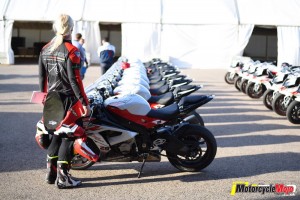 Aragon! Wide and fast, with many technical and blind corners that also challenged the eyes with colourful curbing in red, yellow and green. I followed my instructor for most of the first session just trying to make out the finer details of the track.
Our first tech briefing was on throttle steering, using the throttle to control the line; the second briefing, delivered by Corser, was all about vision, loosely covering such topics as picking out reference points and looking ahead to your next point. The format of the day: seminar, ride, debrief with instructor (often with video footage), and repeat.
On the third track-riding session, while I was just beginning to learn the tricky circuit, Corser blasted by, giving the “follow me” signal, so I rolled on the gas in an attempt to match the pace he apparently believed I was capable of. His hand gestures were strict and deliberate: “Move over!” he seemed to be shouting. “Follow me exactly on this line,” his hands demanded.
Training by a Master
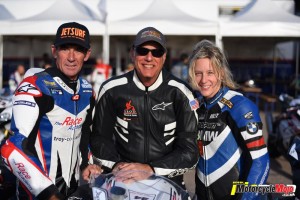 “I’m trying!” I wanted to scream back as I altered my lines attempting to do exactly as shown. While his hands dictated where I should be on the track, they were also simultaneously announcing what gear I was supposed to be in – four fingers, three fingers, two fingers! It was all I could do to try and keep up, but there I was, slightly star struck following Troy Corser around Aragon in Spain! In the end, he dragged me along nearly three seconds faster than my previous time, a 2:17 on my third session ever at that track.
Corser is the kind of guy who doesn’t mince words and says it as it is. “Yeah, you go quick,” he said after, “but your body position needs work. You also have to use the index and middle finger for braking instead of the middle and ring,” he said wiggling his two fingers in my face. “Power and feel,” he said, almost smirking, “or you’ll never master trail braking.”
He also suggested that I do a session as a passenger on the back of his bike with him. “You’ll learn more in three laps on the back with me than in all the seminars I can give you.” Yeah, not happening, I thought to myself. Nothing sounded more terrifying than a pillion ride. Nope.
For the last two sessions, we worked on body and foot positioning, trying to sit closer to the tank, hips and thighs jammed in tight, heels on the pegs, legs out. This proved excessively difficult for me, but I did my best to be a good student and found some usefulness in the position, for certain corners, in certain situations.
That night, while dining and drinking in a large, medieval banquet hall with all my riding companions – now close friends – I re-evaluated my fear of riding pillion with Corser. I’m in Spain, I thought to myself, and Troy Corser is offering me a ride on the back of his bike. I damn well better take it!
A Reluctant Pillion
The next morning, during the first riding session, with shaking hands and trembling from head to toe, I climbed on the back of his bike. “Trust me,” he said. “You’ll be able to feel for yourself. Really, really feel what the bike and I are doing.”
As we took off around the track, with me gripping the custom handle attached to the tank, I tried to follow his instructions – look up track, hold tight but not too tight, remain relaxed.
I held my breath as we turned into the “corkscrew” much earlier, way faster and carrying a longer, slower, straighter line into the coloured apex than I would have figured. I could feel the weight of both of us on the bike, and yet I could also feel the unwavering grip of the front tire, stable as we braked into the apex, turned quickly, braked hard and deep again before rocketing out and accelerating so hard that a quiet squeal of terror erupted from my lips. I completed two full laps without making a sound audible enough for Corser to have heard, a feat I was quite proud of even while he rode the entire back straight in sixth gear on one wheel until we approached Turn 1, when the bike pitched sideways as he slid the rear, leaving a long black darkie, and I couldn’t help but scream, “SH*T F*CK F*CK F*CK F*CK!!!” He roared out of Turn 1 after a rider had dared to pass and he hunted him down, I think forgetting that I was on the back, and passing him and others so closely I could have touched them.
When we pulled off the track, Corser laughed at my trembling hands and the profanities he had heard me shouting, but he also said, “You were a really good passenger! I could hardly feel you behind me. You were like a little backpack.” And henceforth I was referred to as “Backpack” for the remainder of the tour.
Continuing Education
The next two seminars were on engine braking and gears, and trail braking, and it’s here that I got the most pertinent information for improving my own riding. Corser discussed how late and very hard braking causes the rear to get light and too much weight to be transferred to the front tire, inhibiting steering and challenging traction. He taught us about how downshifting – often much earlier than you think you can – and braking “sooner, softer, longer” helps create more overall grip.
When you downshift sooner, you use the engine for braking and the chain force helps to pull the rear tire down, evening out the weight distribution on the tires, smoothing everything out and maintaining the most possible grip. His physical demonstration of a rider waiting to brake late, grabbing a fistful, having the rear tire get light, even lifting off the ground, and struggling to keep weight off the bars was pretty much a direct mimic of how I used to race so many years ago.
In the session after riding pillion, I took a full three seconds off my “regular (not being dragged along by Corser) time, and then another three more after the engine-braking seminar for my best time of 2:13.2. I was able to put a few new techniques together and gain a new-found confidence in front tire grip because I understood it better, and also had a chance to actually feel it working.
All in all, it was a great experience to shed the teaching role and be a student once again. And of course it was a super-badass experience to ride the insane track of Aragon with a World Champion as my coach!
Yamaha Motor Company is proud to announce that the NIKEN motorcycle, featuring Leaning Multi-Wheel (LMW) technology, has been honoured with a “Best of the Best” 2019 Red Dot Award in the Product Design category.
If you’re an experienced rider like me and get more satisfaction from motorcycles than any other type of vehicle, you probably looked at the 2019 Yamaha Niken GT and wondered: “Why? What’s the point of a leaning three-wheeler when two-wheelers have been leaning successfully for more than a century?”
I had no idea what to expect when I arrived in California for the North American launch of Yamaha’s new “leaning multi-wheel motorcycle.” I had no clue about whether I had to steer in the direction of a turn like on a conventional three-wheeler (for example, Can-Am’s Spyder or Harley’s Trike) or if I had to countersteer into turns like on a conventional motorcycle.
Well, I won’t keep you guessing and address that one right now: the Niken leans, steers and feels just like a motorcycle. You therefore must be versed in the operation of a motorbike to ride it. You have to push on the same side of the handlebar as the direction in which you wish to turn – you want to turn right, push on the right handlebar. The Niken leans as freely as a bike and will fall over if you neglect to put a foot down at a stop. If you were to sit on a Niken with your view of the front wheels masked (otherwise, you can see them if you lean your head a bit to either side) and ride away, you would take some time to figure out there was something different about it — if you’d even pick up on that at all. For the most part, the Niken rides like a motorcycle except for a couple of distinct, yet subtle differences – and one really big one.
Ties to the Tracer 900
The Niken shares its 847 cc inline-triple with Yamaha’s Tracer 900, but with a slightly heavier crankshaft, and transmission gears made from more robust steel. Yamaha Canada does not publish horsepower numbers, but in Europe the Niken claims 113 horsepower and the same 64.3 ft-lb of torque as the North American model, so the horsepower figures should be pretty close.
If you look at the Niken’s spec sheet, you’ll see numbers that are much like those of a motorcycle. Chassis geometry is aggressive by two-wheel standards, with a steep rake angle of 20 degrees, trail at 74 mm and a wheelbase of 1,510 mm. The only motorcycle that comes to memory that had a rake almost as steep as the Niken’s is the Buell Firebolt’s, at 21 degrees. The wheelbase is only 10 mm longer than the Tracer 900’s. The only spec that’s outstanding is the Niken’s front wheel’s track, at 410 mm, which is the width between the front wheel centres. That last spec is significant because it is what legally distinguishes the Niken from other three-wheelers for licensing purposes: because it’s less than 465 mm, the Niken isn’t classified as a three-wheeler, and therefore requires a motorcycle licence to operate.
The riding position is naked-bike upright, with a relaxed reach to the foot pegs and a broad, cushy seat. The riding position and seat proved remarkably comfortable after two days of riding, and the seat, in fact, is one of the better perches I’ve sat on recently. Seat height is 15 mm lower than the Tracer 900’s, at 835 mm, and fuel capacity is 18 litres. Claimed wet weight is 267 kg, or 40 kg more than the Tracer 900 GT’s.
A Long-Distance Runner
Yamaha touts the Niken GT as a sport tourer, so it includes some touring amenities, such as a tall windscreen; a pair of quick-release, 25-litre semi-hard saddlebags with waterproof liners; heated grips; and two 12-volt accessory outlets, one mounted by the instrument panel in the fairing and the other mounted on the left side of the bike above the passenger foot peg.
ABS and two-level traction control are standard, as are three ride modes that adjust throttle response. I had two issues with the Niken, one of which was abrupt throttle response in the most aggressive Mode A, although switching to the softer Mode B easily cured that. My second gripe is that you must use two buttons to set the heat level for the grips. A button located on the forward-facing side of the left switch assembly calls up the grip heat menu in the instrument display, then a thumb-adjusted rocker switch turns on the heat and you select one of three levels of heat. A single button could do all the work.
The Niken GT also has an electric quick shifter, although it only works on the upshift and only above 4,000 rpm. The bike shifted smoother when using the clutch, so I resorted to using the quick shifter only when riding at an elevated pace.
That Third Wheel
One of the Niken’s more subtle traits is the lack of any jarring jolts coming through the handlebar when hitting bumps. This is because the handlebar pivots on the frame (just like on Honda’s new Gold Wing) and connects to the front wheels (or wheel, in the Gold Wing’s case) via linkages. This feature isolates the Niken’s handlebar from road irregularities while providing ample feedback when steering and requires an appropriate, motorcycle-like amount of effort to steer – unlike non-leaning three-wheelers, which require near-Herculean strength.
Another subtle trait is that while the Niken flicks easily from side to side at lower speeds, the effort to do so increases exponentially as speed increases. I attribute this to countering the gyroscopic effect of three wheels instead of two. There’s also a very minute lag between what you input at the handlebar and what the bike does, although the lag is negligible; I’ve ridden cruisers that reacted much slower.
Then there’s that one, not so subtle trait: “Man, can this thing turn!” I did things to test the Niken’s aptitude to change direction that would have had a conventional bike bucking me off the saddle in disgust. I rode the Niken in a way that went against my natural instincts as an experienced rider, and yet it carried on without protest.
Wet Weather Friend
California usually is temperate, even during winter, but the forecast called for highs of 10 C, overcast skies and lots of rain during the Niken’s two-day press test. As it turned out those were just about the best conditions in which to test the bike.
On drenched, waterlogged pavement, I rode the Niken through corners at what would have been an aggressive pace in dry conditions on a motorcycle. I trail-braked hard into tight turns and leaned at angles that normally would have caused a motorcycle’s front end to tuck into disaster. I hammered the front brake mid-turn, just to see when this thing had had enough and booted me off the seat. Well, it didn’t. I didn’t really try anything dangerous or attempt to crash the Niken, but I did push it harder than I have any motorcycle on wet pavement, and it rallied on without a wiggle.
Needless to say, I was awestruck. The thing is, the Niken returns all of the sensory feedback and stimulation that makes riding a bike so much fun while, at the same time reducing any discomfort you may feel about tucking the front end to almost nil. In fact, only years of instinct and reflexes honed on two wheels kept me from pushing the Niken further than I did. It just seemed unnatural the way it handled everything I threw at it.
What’s It Like on Dry Pavement?
Fortunately, the second ride day was mostly dry. This is when I discovered that the Niken can easily keep up a fast pace to match any sport bike on winding roads. At an elevated pace, the three-wheeler railed along, steering sharply and with unwavering stability almost regardless of what was happening beneath the front tires. I hit mid-turn bumps at speeds that probably would have caused a two-wheeler to at least shake its head, but bumps passed beneath the Niken unnoticed. This certainly raises the confidence level and may cause you to push harder than you would on two wheels.
I even encountered mid-turn damp patches that would have caused me to slow down when on a conventional motorcycle, but I did nothing to readjust my speed on the Niken. The confidence generated by the added stability and traction up front will not, however, transfer well if you get accustomed to the Niken and then switch to two wheels; you’ll have to remember to tone it down when riding on the latter.
And if your riding buddies point fingers at you and laugh because you’re riding a bike equipped with training wheels, let them laugh, then ride circles around them when it rains. You should, however, be sure to warn them not to try to keep up with you on wet pavement. Seriously. Trying to keep a quick pace with the Niken on wet pavement eventually will lead to disaster for them. Call it a cheater bike in the rain.
So, Back to Why
I was partially expecting to dislike the Niken. But, after riding it, I discovered that Yamaha is onto something here: the Niken GT really works. It works especially well when the pavement surface is compromised by bumps, rain or occasional sandy patches. You can almost ignore what is happening beneath the Niken’s wheels and just carry on.
At $20,999, the Niken GT is pricey, but the peace of mind that the extra front wheel provides might be just the thing for a rider who may have tucked the front end on a two-wheeler once and never really got over the trepidation of relying on a single contact patch to maintain control up front. If you’re a high-mileage rider and your riding season stretches from early spring to late fall, no other machine will return the consistent handling throughout the less temperate seasons than the Niken.
So, why? Because while the Niken feels like a conventional motorcycle for the most part, what sets the three-wheeler apart is its ability to handle unsavoury road conditions. Heck, it had me wondering if Yamaha hasn’t just invented a better motorcycle.
It can be a complicated process to determine a compression ratio.
Power transfers to the rear wheel of a motorcycle by burning an air/fuel mixture in the combustion chamber of a cylinder, and the expansion of the burning gasses pushes on the piston, which turns the crankshaft that eventually propels you forward. The more efficiently the fuel mixture burns, the harder the push on the piston will be, and the more power that will be produced.
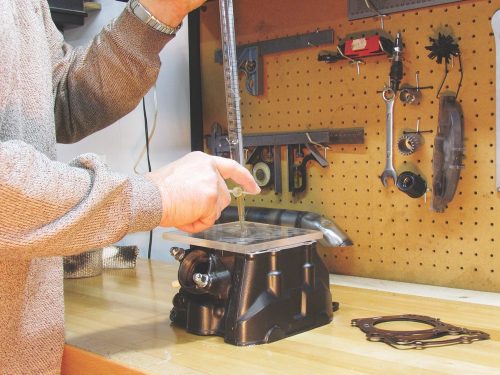 Aside from factors like cubic displacement, and intake and exhaust design, an engine’s compression ratio has a great effect on output and fuel efficiency. The compression ratio is the ratio between the total volume of a cylinder when the piston is at the bottom of its stroke and the volume of the combustion chamber when the piston is at the top of its stroke, including the head gasket thickness and the shape of the top of the piston. Therefore, if the total volume of the cylinder is 100 cc, and the volume with the piston at top dead centre (TDC) is 10 cc, you have a mechanical compression ratio of 10:1.
Put simply: the higher the compression ratio, the more power will be produced for a given displacement, and for a given amount of fuel. This is because the more a fuel mixture is compressed, the more complete it will burn and expand. However, it gets a bit more complicated than that in practice, and there are more factors working against a high compression ratio than there are benefits.
The biggest detrimental factor is “detonation.” This is when a fuel mixture ignites elsewhere in the combustion chamber other than at the spark plug when it fires. So, instead of a well-timed expansion of gasses that begins burning when the spark plug fires as the piston nears TDC, and continue expanding as the piston begins to move back down, there’s a blast that hits the piston like a hammer blow while it is still on the upstroke. This is where engine “knock” comes from, and it is very damaging.
A mixture can ignite prematurely due to the type of fuel (higher-octane fuels resist detonation), ignition timing (advanced timing gives the mixture more time to experience detonation as the piston moves upward) and how much the mixture is compressed (compressing a gas creates heat). Cylinder bore size is also a factor, and the bigger the bore, and subsequently the combustion chamber, the more time it takes for the flame front to travel from the spark plug to the farthest areas of the combustion chamber, thus giving the mixture more opportunity to detonate. For a given engine displacement, an engine with a smaller bore and longer stroke will be less prone to experience knock, because the flame takes less time to fill the combustion chamber. This is why big V-twins and singles are more likely to knock, and why they have lower compression ratios than multi-cylinder engines of similar displacement.
However, it’s not the compression ratio that is the problem, but the higher combustion chamber pressures that are produced by higher compression ratios – higher pressures are conducive to detonation, since as mentioned earlier, compressing a gas creates heat. Compression ratios on modern motorcycles range from as low as 9.5:1, like that on the Suzuki DR650SE, to as high as 14:1, such as on the Ducati Panigale V4. The Kawasaki Ninja H2 has an even lower compression ratio than the DR650, at 8.5:1, but its combustion chamber pressures are very high, because the intake charge is pressurized by a supercharger.
There is no easy way to calculate compression ratio without disassembling the engine. The following are needed to calculate the compression ratio: the actual cylinder bore and stroke measurements, the head gasket compressed thickness, the piston dome volume, the piston deck-height volume (where the top of the piston is in relation to the head gasket surface at TDC) and the combustion chamber volume.
The best way to measure combustion chamber volume is by recording how much liquid it takes to fill it using a 100 cc burette. Piston makers sometimes include piston dome volume, which must be subtracted from the combustion chamber volume; otherwise, you must install the piston and rings into the cylinder and measure the volume with a burette. The formula for calculating the cylinder volume alone, without the combustion chamber, is bore x bore x 12.87 x stroke = volume in cc (bore and stroke measurements in inches). Once you have that volume, and the combined volume of the combustion chamber, head gasket and piston dome, you can calculate the compression ratio by dividing the total cylinder and combustion chamber volume by the combustion-chamber volume (including the head-gasket and piston-dome volume).
Aside from removing material from the head or cylinder, you can raise the compression ratio by installing high-compression pistons or thinner head gaskets, or by replacing the base gaskets with a sealing compound like ThreeBond gasket maker.
Technical articles are written purely as reference only and your motorcycle may require different procedures. You should be mechanically inclined to carry out your own maintenance and we recommend you contact your mechanic prior to performing any type of work on your bike.
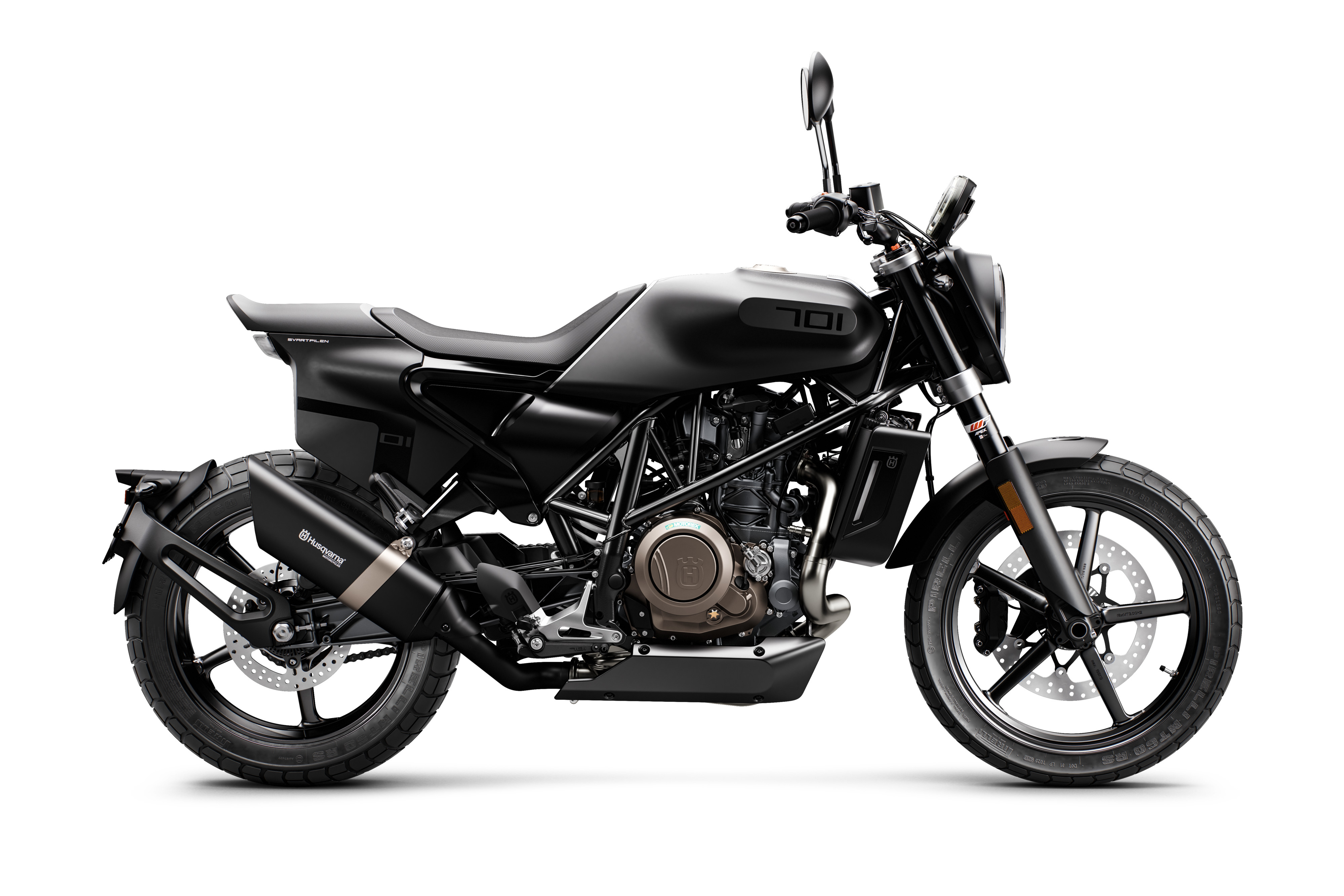
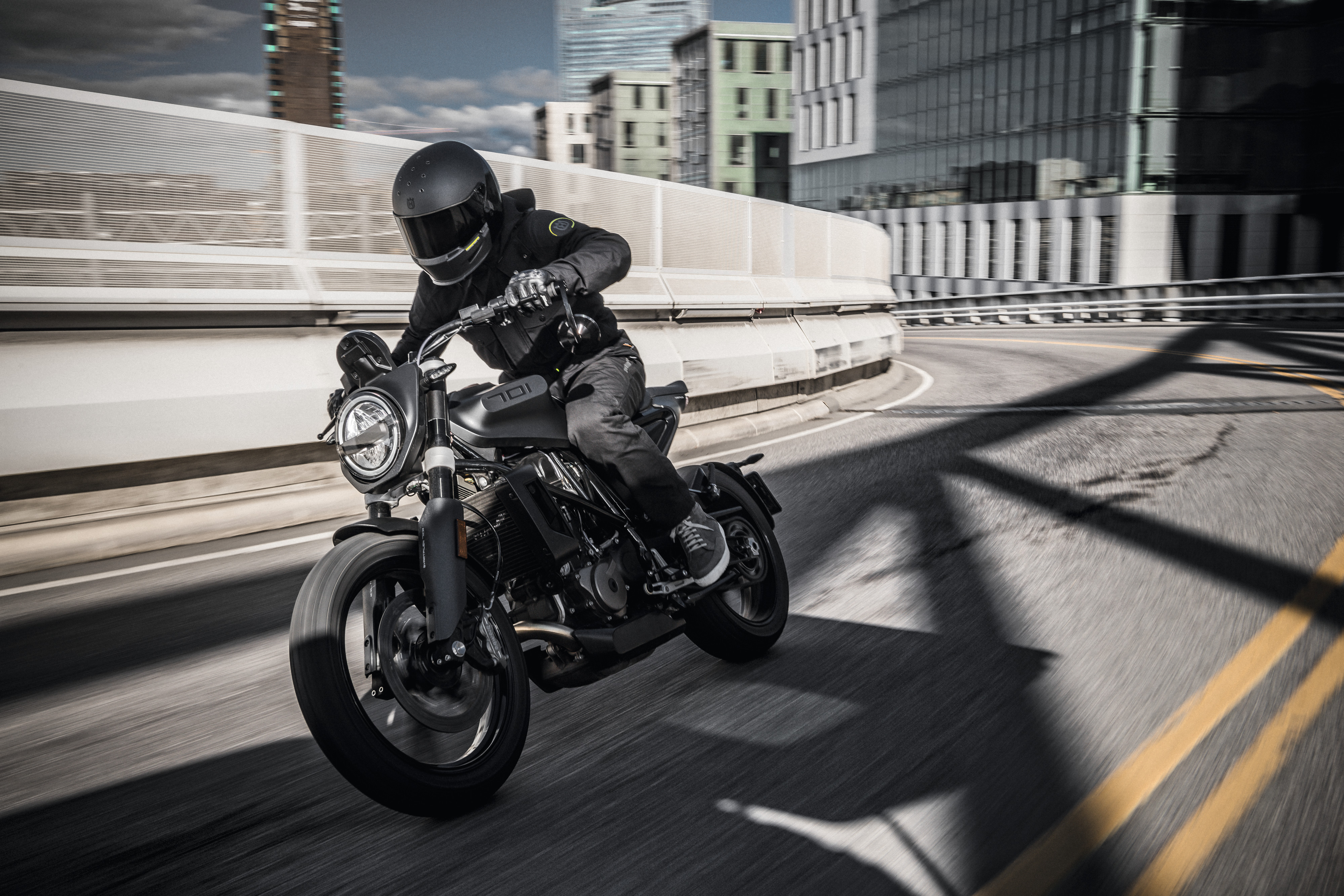
Husqvarna Motorcycles takes a further step towards fulfilling their progressive vision of street motorcycling by announcing the release of the SVARTPILEN 701, available in dealers April this year.
This thrilling new model, which was first introduced during the 2018 EICMA International Motorcycle show in Milan. A flat-track inspired street explorer, the SVARTPILEN 701 is the latest addition to the pioneering VITPILEN and SVARTPILEN motorcycle range. With the SVARTPILEN 701 offering an exciting riding experience both within the city and beyond, Husqvarna Motorcycles is poised to make this inspiring new model the highlight among the brand’s 2019 ‘Real Street’ model line-up.
The SVARTPILEN 701 – Black Arrow, in Swedish – is designed to appeal to style-conscious motorcycle enthusiasts while offering outstanding performance in all riding conditions. Featuring a sleek, flat-track inspired design, the SVARTPILEN 701 is built around a powerful single-cylinder engine that offers outstanding power and torque.
Some of the features on the Svartpilen 701 include:
-Fully-adjustable WP Suspension
-Brembo brakes and Bosch ABS technology
-Traction Control
-Slipper Clutch
-the most advanced single cylinder engine on the market (692.7cc)
For more information on pricing, and details on availability contact your local Husqvarna dealer.
A mean, green racing machine left its impression on this builder.
Steve Willgoose was 17 when Kawasaki launched its KZ1000R Eddie Lawson Replica in 1982, and he never forgot the first one he saw.
 “I was getting into racing, and that was all on two-stroke Yamaha RD350s,” he says. “I was at the track, and a fellow showed up with an Eddie Lawson Replica. They were rare. They were expensive. And to me, it was a big and daunting motorcycle.”
Willgoose is originally from Calgary. He left school at 15 and became a woodworker, but he also had mechanical talent fostered by his early love for dirt biking. After the dirt bikes, he raced two-stroke street bikes on the track. Then, several other larger and faster machines entered his universe. But Willgoose has never been satisfied to keep any one motorcycle for a long period of time.
He’ll buy something, fix it, get bored (his words), sell it and move on. Chances are good, however, he won’t do that with his latest project, a 1982 KZ1000R S1 clone.
The S1 itself was something of a replica, as it simulated the Kawasaki motorcycle raced by Eddie Lawson to take the 1981 AMA Superbike Championship.
A Period-Correct S1
 When introduced in 1982, the S1 was a Kawasaki factory race bike sent to the U.S. for AMA Superbike racing, and only 29 were said to have been built. While Willgoose remembers the rare Eddie Lawson Replica from his own racing days, the S1 is an even more uncommon motorcycle, and it’s the one he wanted to recreate.
“My goal was to build a period-correct 1982 KZ1000R S1 race bike in street trim,” Willgoose says. “And that got started with a 1982 Kawasaki GPz1100 restomod I bought out of Ontario. It had been modified with 2008 Kawasaki ZRX parts, such as the forks, brakes and wheels, all scabbed onto it. I got it here and rode it a bit, but soon got to work.”
“Here” for Willgoose is the Sunshine Coast of British Columbia. He relocated there approximately 15 years ago and continues to blend his love for wood and metal. He operates Willgoose Wood and reclaims large logs to mill for live-edge fireplace mantels and slab tables. The table bases are often produced of wood, but just as often he’ll turn to metal to create something a little different.
Because of Willgoose’s affinity for wood, some of the custom parts he makes for his motorcycles are prototyped in the natural material before he advances to crafting the one-off components in metal. We’ll get to an example of that in a few moments.
The Transformation Begins
 His first decision, though, concerned the wheels. Kawasaki used three-spoke Dymag rims on the S1, but Willgoose preferred the look of seven-spoke Marvic magnesium wheels – an Italian-made reproduction of the Morris mags originally used on Eddie Lawson’s works racing bike. He ordered a set, and then proceeded to strip the bike down to the bare frame. Centre-stand tabs were shaved, and to help stiffen the frame, Jeremy Clement of Venture Fabrication in Gibsons, B.C., fabricated and welded into the lower frame area near the swingarm mounts a pair of triangular-shaped braces.
On the Kawasaki works race bikes, there is a noticeable gap between the rear of the gas tank and the top of the side covers. To recreate that look, Willgoose had Clement fabricate and weld a horseshoe-shaped bracket to the very rear part of the frame’s top tube, where it supports the tank. Willgoose also made up a bung to create a breather for the gas tank and had this welded in place, just in front of the filler lid.
Up front, Willgoose initially installed a stock Kawasaki fork, but soon realized it was too short for the correct look of the race bike. He proceeded to build up new forks, acquiring parts such as reproduction lowers from Japan. The 7.6 cm extended tubes came from Frank’s Forks out of Illinois, while the replica triple tree also came from the U.S. and the rare internal damping rods were sourced from South Africa. To mate the AP Racing calipers to the fork legs, Willgoose prototyped mounting brackets out of wood.
“I cut them out and bolted everything up to see how it all fit,” he says. “Once I was happy with the fit, I got a block of aluminum and had a slot milled in, then I made the holes and cut out the shape on a metal utting bandsaw before doing lots of file work and using an edge sander to make them match my wooden prototypes.”
With the front suspension completed, including fitting a hollow titanium axle to mount the 3.0-18-inch Marvic mag, Willgoose turned his attention to the rear suspension. For this, he’d purchased a handcrafted swingarm from the same seller who had milled up the triple tree. The swingarm was made to accommodate the 4.5-18-inch Marvic wheel, and Willgoose had Sprocket Specialists in Utah machine up a custom final-drive cog. Having searched for months for an original set of Works Performance shocks, Willgoose finally found a pair on eBay, bought them and had them rebuilt by a suspension specialist who’d built shocks for race teams in the 1980s.
Inside the Engine
The four-cylinder 1,089 cc engine of the GPz Kawasaki had already been modified for performance with a Wiseco big-bore kit, taking it to 1,136 cc. To put his stamp on the powerplant, Willgoose removed the cylinder head and shipped it to Larry Cavanaugh of Cavanaugh Racing Heads in Pennsylvania for larger intake valves, and porting and polishing. Cavanaugh also supplied a set of his race cams. When all the pieces came back, Jason Penner at Penco Motorsports in Sechelt, B.C., installed the head and cam using a special gasket and heavy-duty APE studs and nuts to keep the high-compression engine together. Penner also set the ignition timing.
To match the larger intake ports, Willgoose enlarged the rubber carburetor mounting boots and installed 33 mm Keihin CR carbs. The Kerker exhaust came with the project bike, but Willgoose fabricated correct-looking spring mount tabs, and welder Clement joined them to the header. After hearing about his project, a Kerker representative sent him the correct 1000R collars and springs to mount the exhaust system.
While the engine was out, Willgoose took the time to paint it with a 2,000-degree ceramic coating. He set up a spray booth in his shop and painted not only the engine, but the exhaust system and handlebar controls in the ceramic coating as well.
Bodywork and Paint
For its black finish, the frame was sent to Fred’s Autobody & Painting in Sechelt, where Ryan Redman laid down the paint. Redman was also responsible for the bodywork, and priming and painting the gas tank, fairing and tail section. Before the clearcoat was applied, Fred Gower placed the decals.
An attempt was made to rescue the wiring harness that was with the bike, but Willgoose finally bought a new old stock loom from a seller on eBay. A couple of final touches were a custom-made seat cover from the U.K., and the rare side-louvered smoke brake lens came from Japan. The further into the project Willgoose got, the more he obsessed about the build details. Instead of reusing old fasteners, the entire bike was assembled with formed thread titanium studs and bolts. He’s shaved a few pounds off, as the finished bike, with approximately four litres of gasoline in the tank, weighs 226 kg.
It took Willgoose about two years to build, and he’s been doing some fine-tuning. He says as the jetting improves, the Kawasaki continues to become more powerful; he plans to put it on the dyno to get an accurate idea of its performance. Willgoose plans to ride his custom Kawasaki on “nice days,” as well as take it down the quarter-mile drag strip and around the pavement at Mission Raceway on track days.
“It’s a rider, but you’ve got to be careful because it’s a handful, and that’s how I like my bikes,” he says, adding, “They need to have an edge to keep them challenging.”
Remembering a man who dedicated his life to promoting the sport he loved
I first met Wally Klammer at the Greater Vancouver Motorcycle Club (GVMC). I had just finished an evening talk at the clubhouse about Nearly 40 on the 37, my first book about riding into northern British Columbia, when a bespectacled man with a big smile and a grey beard approached me and warmly shook my hand. He was a writer too, as well as a rider. We hit it off, as people do with common interests, and we exchanged copies of our books.
 We began emailing. He told me about how he had reserved a table at the Classic and Vintage Swap Meet and Show N Shine, a huge event in Surrey, B.C., with vendors selling many things motorcycle-related. He had sold his books there for several years and asked if I’d like to share his table. I was honoured. But before we could finalize plans, I received some bad news. Wally had passed away on September 5, 2014. Colon cancer.
It was hard to believe that the generous, creative and talented motorcyclist whom I had met months earlier was gone. I would soon find out what a huge impact he made on the motorcycling community in B.C. and about the many people who would miss him.
“Want to go for a ride?” Dwight Harris remembers Wally saying over the phone, one week before his passing. Harris has been a member of the GVMC since 1959, and he and Wally were good friends who had worked to develop off-road trails in B.C.’s Lower Mainland. But on this day, Wally had called him just to go on a day ride.
“He loved his red Ducati Multistrada,”
Harris says of his friend’s speedy tourer. “I’d really like to have some apple pie and ice cream in Hope,” Harris recalls Wally saying. And so they set out, Wally on his Ducati, Harris on his Yamaha FJR1300. “The sun was coming out,” Harris remembers. At a restaurant in Hope, he heard Wally declare: “I’m feeling pretty good. I think I’d like to go further, to Manning Park, maybe out to Princeton.” Once they had gotten to Princeton along the Crowsnest Highway, Wally thought a change of plans would be good. “I’d like to go a different way, maybe through Merritt,” Wally told him. “We finally got to Merritt, had a banana and a piece of pizza, went through to Spences Bridge, down along the Fraser River and back home. Eight hundred kilometres in a day,” Harris remembers fondly. “Wally had a grin from ear to ear. He died a week later.”
Involved in All Things Motorcycle
 In his many years of motorcycling, Wally competed in ice racing, trials, motocross, enduro and cross-country events. With the GVMC, he organized many off-road, dual-sport and street ride events. He joined the club in 1974, and developed a reputation as a daring rider with a never-say-die attitude to life; he was also known for his quick wit and friendly smile. Once with the GVMC, he traded his Triumph chopper for a red Bultaco and would begin a 30-plus-year journey of amateur off-road competition. And he encouraged and supported many others in their endeavours to ride.
“I remember Wally taking me out to show me some Vedder Mountain trails when I got my first dual-sport bike,” GVMC member Wes Jamison says.
“I had the notoriously solid but heavy Suzuki DR-Z400. Wally had a Yamaha WR250, which made him more nimble a rider off-road.” Wally’s encouragement fuelled Jamison’s interest in riding off-road. “We rode Vedder, Church, Chipmunk, Tamihi, Onion Lake, the Dead Zone and many other places over the years, both with DualSport BC and the GVMC.”
A Volunteer by Nature
 Supporting others seems to have been an ongoing theme in Wally’s life, and it wasn’t limited to B.C. He helped Team Canada as a volunteer at the International Six Days Enduro events staged in Brazil in 2003 and New Zealand in 2006. He was instrumental in setting up the Pacific Northwest Motorcycle Association’s off-road race series in the mid-1980s (his work with the association was topped off with an induction into its Hall of Fame). Wally advocated for future generations of off-road riders by helping to create trails and securing their ongoing existence, including the Chipmunk Creek Riding Area (whose staging area is named after him in his honour), south of Chilliwack, B.C.
Wally left his mark on the sport of motorcycling. The Chipmunk Creek Riding Area was where the GVMC’s Piston Run Hare Scrambles would take place, which he organized for 20 years. In fact, after Wally’s passing, his ashes were scattered there in a unique way with his widow, Marg, and daughters, Jen and Megan, in attendance. “We were all standing in the Wally Klammer staging area,” Jamison recalls. “They had two cannons, I believe. A small one and a larger one, and in the barrels was our dear Wally Klammer. His ashes were blasted out of the cannons.”
Marg Klammer, who supported her husband’s riding endeavours, tells how Wally also encouraged family to pursue riding. “The kids started on dirt bikes when Jenny was six and Megan was four,” Marg says. “Both of Megan’s sons rode with Wally as they grew up. It was certainly Wally’s influence that they all rode.” He was clearly enthusiastic about riding, whether he was doing the riding or watching others hop on their motorcycles, no matter what type they rode.
Real-Life Experiences
Dwight Harris says that it was 11 years ago that Wally, he and some other riding friends created the Full Throttle Tour. It’s an annual end-of-riding-season tradition that continues in his honour every September. “We take two weeks and tear out on a long-distance tour at the end of the riding season,” Harris says. “We’ve been to Vegas, Utah, Colorado, Wyoming, ridden the Tail of the Dragon. We’ve been all over. We’re running out of ideas now!” It was on these rides that he noticed Wally heading back to the hotel room in the evenings to write while his riding buddies would chat over a beer. “Ideas for his books were something he’d collected along the way. He’d scribble notes, and then when he was home, he’d put them in a book,” Harris says.
Throughout his motorcycling days, Wally would write. His style of writing included a combination of off-beat humour and daring adventure. His stories included travel features and off-road event news for various motorcycle magazines. He wrote regular columns and worked as an editor. But Wally’s books show an enthusiasm for the sport of motorcycling that went beyond riding, through the adventures of a fictional motorcycle club called the Coast Mountain Riders. A Rally at Castle Rock, A Happening on the Sunshine Coast, A Rally in Falkland, Dirt Bike Chronicles and A Night at the Dancing Loon were all created with an adventurous style and a uniquely West Coast setting that would frame much of his fiction writing.
“He always wrote, mostly for himself,” Marg says. “But motorcycling gave him the stories and a voice.”
A persistent invitation leads to a trip to the Ozark Mountains and some really good riding.
“If you come to Arkansas in May,” he cautioned, “just be flexible with your schedule. It’s tornado season down here.” Randy and I were college buddies who had kept in touch through email, but hadn’t seen each other in a decade. An Arkansas native now living in Little Rock, he had been relentless in his invitations to come visit. So, I packed my rain gear – as if that would help – and set off on my 2006 V-Strom 650.
The story begins in Memphis. (Yes, it’s in Tennessee, but West Memphis is on the Arkansas side of the Mississippi River, so it counts.) I stopped for lunch at the Kooky Canuck. (Yes, it’s a Canadian-themed restaurant, but the fact that it was so displaced – and the fact that they challenge customers to eat their four-pound burger and it’ll be free – means it also counts.) I opted for a more reasonably sized portion, but I must say, it was one of the best burgers I’ve ever had. On a full stomach, I did a little walking tour, paying particular attention to the famous Beale Street at the heart of all things “Blues.” I also stopped at Sun Records Studio, now a small museum, where Elvis recorded his first hits.
Heading west over the mighty Mississippi into Arkansas, I followed back roads through towns whose populations were measured in two and three digits, and which punctuated vast tracts of flat delta soil being sown to grow cotton or rice. There were nicer homes, to be sure, but what stood out to me was the preponderance of tired, worn-out houses surrounded by old vehicles and furniture and other refuse, and I wondered at the lives of those who lived there. Arkansas is ranked sixth-poorest state in the nation, and big farming has forced smaller operations out of business. Many homes were completely abandoned.
On Tour
 I arrived in North Little Rock just as rain set in for the evening. Randy welcomed me and offered to be my tour guide for the weekend. We began with “The Old Mill,” which figures prominently in the opening scenes of Gone with the Wind.
Then we visited Little Rock Central High School, where, in September of 1957, nine courageous African-American students enrolled in the formerly all-white school. When the governor of Arkansas, in defiance of the U.S. Supreme Court, used armed guards to block their entry, President Eisenhower was forced to deploy federal troops. The advent of television meant the mob violence and military control were seen nationwide, and Little Rock became the face of the country’s struggle for desegregation. So significant was this event that 50 years later, Barack Obama would say that it was because the Little Rock Nine had the courage to ascend the steps to Little Rock Central High that he could aspire to ascend the steps to the White House.
Standing on the front lawn, Randy described his own memories of that time as a young boy. His parents, he regretted to say, were proponents of the “equal but separate” dogma. He recalled the nuanced position that his parents were not bigots. “In fact, they were generous and helpful to our black neighbours.” But they believed each ethnic group should remain separate in their institutions. “It’s hard to completely see beyond your culture,” he reflected, “but I wish they had.”
Lunch was at the Flying Fish, where we ate fried catfish with hushpuppies and drank sweet tea. Dessert was “fried pie,” a common local treat most often made with apple or peach filling folded in a pie crust and deep-fried. “We southerners can take any food,” Randy explained, “and make it bad for your health. Eat up!”
We then traveled on tar and chip roads through flat farmland past the town of Bald Knob (stop laughing) to his childhood home of McCrory. Prime cotton once grew here, but when prices dropped to unsustainable levels 30 years ago, local growers turned to rice and soybeans. It was interesting to see the way farmers now use GPS to build winding berms that create perfectly flat paddies for flooding the rice fields. An aerial shot must look exactly like a topographic map.
Don’t Swim in the Levee
 Water moccasins, which are highly poisonous, love the warm 30 cm-deep water. And muskrats do a lot of damage to crops by burrowing through the levees, causing water to drain away. A decade ago, Randy told me, the state of Arkansas began stocking alligators in all 75 counties to combat these pests. A “natural” solution to be sure, but it reminded me of the old lady who swallowed a spider to catch the fly – and that didn’t end well.
I had planned to explore the town of Hot Springs the next morning, but decided to heed Randy’s advice to be flexible. Not because of weather, but because, even though there is a National Park with hot-spring spas, the town is also home to several casinos and “Oaklawn,” a well-known thoroughbred racetrack. This weekend happened to be the Kentucky Derby, and although the race was in Kentucky and only going to be shown on live monitors at Oaklawn, I was advised that unless I wanted to experience the crush of thousands of drunk Arkansans who would be in town, perhaps I should save Hot Springs for another time.
So, after a hearty breakfast, I bade my friend farewell, thanking him for his southern hospitality, and left Little Rock for Russellville, where I caught Highway 7 north, one of Arkansas’ Scenic Byways. A beautiful twisting road, it climbs into the Ozark Mountains and Ozark National Forest – the original home of The Beverly Hillbillies before Jed and all his kin struck it rich with Texas Tea. The thick forests and steep hills soon had the TV series’ theme song playing on a loop in my helmet. It didn’t help that I passed side roads with names like Granny Gap and Lower Jethro (I’m not making this up).
Lots of Good Riding
 At Sand Gap, I stopped at a shuttered diner to chat with some other riders who were taking a break. Two local guys asked me about my journey and where I was headed. They readily agreed with my choice to ride Hwy 7, but said, truly, there were nothing but good riding roads in the Ozarks. “We recently rode over a thousand miles and were never more than a hundred miles from home,” they said, beaming.
On their advice, I took a detour onto Hwy 16 through Deer, Arkansas, and followed the wonderfully winding pavement up and down the mountains and through Boxley Valley. At Route 43, I took a left only a couple of kilometres to Ponca (population: 9) on the Buffalo National River. Raft and kayak enthusiasts come from miles around to run the river as it flows between massive limestone cliffs. It’s also a centre for the rehabilitation of the local elk population, which was decimated in the 1930s, and travelers can often get an up-close roadside look at these beautiful animals. After watching some rafters, I rode Hwy 74 to Jasper, completing my detour and returning me to Hwy 7.
I carved more curves north to Harrison, the first town of significant size I encountered since leaving Russellville. While it was a clean, modern-looking town with all the amenities, I couldn’t forget what Randy had told me. “Harrison is the national headquarters of the Knights of the
Ku Klux Klan,” he said. “And what bothers me most is what they are teaching their children. At rallies, their children often wear T-shirts that say ‘Klan Kids Kare.’” That sent my imagination and moral indignation spinning. And I couldn’t reconcile this with the large number of churches I was seeing in the area. To be fair, I learned that a majority of the town opposes the KKK and the alt-right, and conflict among whites is a constant source of tension. Nevertheless, the white supremacist organization remains undeterred.
Bible Belt
My final stop for the day was in Eureka Springs, which stands in complete juxtaposition to Harrison: an eclectic community for old hippies, same-sex couples and the culturally curious. The main road was lined with quirky shops, bars and restaurants, and unique hotels. Perhaps not surprisingly for the Bible Belt, on a bluff overlooking the town is a 20-metre-tall statue called Christ of the Ozarks, reminiscent of the giant icon in Rio de Janeiro, but smaller.
Alongside the Arkansan Jesus is a life-size replica of a gate into Jerusalem, beyond which visitors can take a tour of many of the Gospel stories recreated with live actors. Originally intended to rival Disney, the project ultimately turned out much smaller in scale. On the edge of town, I also visited the topically related but much more serene Thorncrown Chapel, an award-winning glass oasis in a beautiful woodland setting.
Finally, I set off southward on Hwy 23, “the Pig Trail,” named for the Arkansas razorback, which is an ill-tempered wild hog with tusks and a high, hair-covered backbone. It is also the mascot for the University of Arkansas (and the state, generally). For years, a fierce rivalry has raged between the Fayetteville-based school and Louisiana State to the south. The Pig Trail is the road most traveled by both teams as they compete for dominance. It is also a magnificent moto route.
At McIlroy Wildlife Management Area, I descended a rough, red gravel road toward a campsite I expected to find at about the 3 km mark. At 2 km, however, the increasingly primitive road was completely washed out, so I conceded and rolled out my bivy right there on the road. No one would be coming through on this night. I set my pannier full of food at some distance from my bivy (there were, after all, bears and, yes, alligators in the area), and I drifted off to the sound of a whippoorwill and the dance of fireflies in the trees overhead.
I’m Outta Here
Around 1 a.m., I was awakened by a spectacular show of lightning, and my first thought went to my location: on the ground beside a washout was perhaps not ideal. And rain could make my morning ride out of this hollow a slippery, muddy prospect. So, I hurriedly packed up and, a little apprehensive of tackling the road in the dark, I successfully employed my limited dirt skills for the 2 km back to higher ground. I’m not sure when, in my haste, I had decided I ought to leave the food pannier behind, but as I prepared to bed down for the second time that night, I realized my mistake. Bumping and sliding back down the trail to retrieve it, I thought, “I can always use more practice on loose surfaces – but preferably not at 1:30 in the morning.”
At first light, peering out of my bivy, I could see that the storm had blown over without releasing a single drop; I wasn’t sure whether to curse or be grateful. I opted for the latter, however, and by mid-morning, as I was crossing the western state line, I smiled: I was looking back on an adventure of exploration, friendship and flexibility – another great ride. And hey, there had been no tornadoes…