
Two Wheel Sunday
What started out as just an idea at a motorcycle show has become an important date on the calendar for Calgary motorcycle riders of all stripes
In Calgary, Two Wheel Sunday (2WS) is quietly becoming the largest one-day outdoor motorcycle event in Western Canada. Held the first Sunday in June, the gathering of all things motorcycle has grown in five years from an idea to an event with 9,000 participants, mostly riders.
“It started from a conversation over coffee at the Calgary Motorcycle Show in January 2014,” says Bobby Baum, one of the event’s founders and site coordinator. “Someone said, ‘Wouldn’t it be great to bring the entire Calgary motorcycling community together in one place at one time?’”
Calgary has an extremely active bike community with more than 40,000 registered motorcycles, but it is highly segmented, as evidenced by the staunchly independent Harley groups, a Victory club, Gold Wing riders, a Women in the Wind chapter, a strong BMW community, Star Riders, sportbike groups crossing manufacturer lines, dirtbike riders, trikes, customizers, veterans and religious clubs, garage builders and racers of all stripes. Rarely, however, would these riders be seen together beyond the season-
starting Awareness Ride or season-ending Christmas toy runs.
Grassroots Beginnings
 The little organizing group quickly became a committee and began talking it up. The idea of a family-friendly, one-day street festival for motorcycles turned into a snowball rolling downhill. Soon clubs, dealers, rider-training schools, vendors, charities, veterans’ groups and individual riders started getting involved. For a site, organizers picked a two-block-long side road in an industrial area of northeast Calgary that was close to several of the major motorcycle dealers and shops.
Within a few months, the 2WS Motorcycle Association was formed and the first Sunday in June 2014 was set as the date for the inaugural event. A website and social media presence soon followed. Becoming an association was a legal necessity to apply to the City of Calgary to close the road for the day. The plan was to only allow motorcycle traffic on the street once the vendor tents and other displays were set up.
Unanimous Support
 Because the event was on a Sunday, most companies along the street were to be closed. They were asked to let the event take over their parking lots, and although it meant moving vehicles and finding parking elsewhere, all agreed to support it. One hitch was the only business on the street that normally stayed open on Sunday, a bottle recycling depot right in the middle of the block. Cycle Works Calgary came up with an ingenious motorized solution. It donated the use of a quad to pick up the bottles and cans from people at the end of the block and transport them to the depot.
The site plan called for tents and displays to be in the parking lots with both sides of the street reserved for motorcycle parking. Doing it all by the book, 2WS followed the city permit to the letter, arranging for porta-potties, garbage cans, cleanup and event insurance. Blue Circle Insurance, a local company known for its work with motorcycle riders, stepped up to handle that requirement, while Lucid Moto provided graphics and signage for the 2WS kickoff.
Victory Riders Calgary (VRC) volunteered to put together a people’s choice show and shine with the public voting on the best customs, cruisers, baggers, vintage, sport bikes and scooters. James Hamling of the VRC executive led the organizing. “[VRC] saw right away the value of getting the entire motorcycle community together, so we were 100 per cent behind it from the beginning.”
 Organizers seeking community support soon found widespread acceptance of the idea and applications for display space at the event started coming in. The cost for a display booth was set at a modest $50, with vendors providing their own tents and tables. The price was reduced if the organization promised to send two volunteers to help out with the event. Those volunteers would join the small army of volunteers who made sure the event ran smoothly. (Most wore bright orange T-shirts with “Voluntold” stencilled on the back.)
Inaugural Year
When 2WS opened the gates on a sunny morning on June 1, 2014, there were 33 vendors and displays lining 3A Street Northeast. Even before the 10 a.m. scheduled opening, motorcycles began rolling in.
Bikes of every description soon lined 3A Street. A veterans’ riding club, 3 CAV Ypres (Calgary), organized a barbecue at the event with all proceeds going to support the Veterans Food Bank, which is 2WS’ designated charity.
That first year, 2WS was expecting 500 visitors; when it was over at 3 p.m., 3,000 visitors, most having arrived on bikes, had attended. Organizers declared the event an unqualified success, with a promise to do it again next year.
In 2015, the number of visitors hit 4,500, and continued to grow each year: 5,000 in 2016, and then 6,500 in 2017. The number of vendors and displays also grew to 57. After the 2017 event, it was obvious 2WS had outgrown its 3A Street location. It needed more room to accommodate the increasing number of displays and visitors.
New Location
Organizers turned their attention to a five-block-long strip of city-owned green space along 5th Street NE, a few blocks from the old site, where nearby sat a series of industrial warehouses with large parking lots. Negotiations began with the city and Pockar Management, owner of the industrial properties. Pockar is well known for its support of motorcycling in Calgary and came on board immediately. Because 2WS had built a good relationship with the City of Calgary, it received the green light, albeit with a few extra stipulations about protecting the greenbelt.
With almost triple the space available, 2WS increased the number of vendors to 85, with room for more, and brought in some additional attractions, including food trucks. At the 2018 Calgary Motorcycle Show, Harley-Davidson Canada approached 2WS about the possibility of opening its 2018 demo ride season at the event. With Honda and Yamaha also coming forward, demo rides became part of the event for the first time.
When the day wound down at 3 p.m. on June 3, 2018, an estimated 9,000 people (most on motorcycles) had wandered through the vendor exhibits or simply enjoyed a food truck snack while ogling the amazingly diverse range of bikes packed in along the route. Before taking the summer off to go riding, the organizers scheduled the sixth annual 2WS for June 2, 2019.
The more things change, the more they stay the same
As a kid, the promise of a summer’s drive up Vancouver Island to camp was gold. It would get me through the last month of school in Victoria, knowing that I’d be travelling along the Malahat Highway in my parent’s four-door Ford, then joining up with Hwy 19A – what I knew then as the Old Island Highway – for the scenic drive to either Miracle Beach or Rathtrevor Beach. Once we arrived, we’d pitch a tent or put up the tent trailer and savour a week of simplicity in the woods, with a glorious beach nearby where we’d beachcomb for sand dollars and walk forever along the sand. Hwy 19A was the road to paradise for a kid who loved scenic drives and the great outdoors.
Recently, I brought my two sons to camp with their poppa at my old stomping grounds at Miracle Beach. Sometimes I even get the chance to ferry over on my BMW F650GS and ride the road to paradise. I’ve developed a new appreciation for the road as a motorcyclist and try to ride it once a season. Its curves, slow pace and scenery have given this motorcyclist a thankfulness for its being there. It’s something of a pilgrimage for me, Hwy 19A.
New Highway
 Change is inevitable, though. At the turn of the 21st century, Hwy 19A was superseded by Hwy 19. With the opening of this new highway, vehicles could now haul at 120 km/h
along straight, dull asphalt all the way to Campbell River. Hwy 19 went inland, avoiding the towns, parks and scenery I’d so enjoyed as a kid travelling up island to summer’s paradise.
A discovery on a recent Hwy 19A ride made me a little concerned. My favourite Old Island Highway fuel station wasn’t pumping gas anymore; the old pumps had been switched off. I couldn’t believe it. I was surprised and disappointed. The Fanny Bay Service Station was a little north of Qualicum Beach and always made for a good stop to stretch legs and feed the tank.
With my favourite gas station closed, I wondered: Was business along the 19A suffering as a result of the new speedier highway? It seemed a good time to do some two-wheeled research.
At Parksville I countersteered off speedy Hwy 19 and geared down to cross railroad tracks for the deactivated E&N Railway, already allowing the slower island pace of life to seep into me. I pulled up next to a characterful wood cabin. I’d arrived at the Parksville Museum, an outdoor park containing classic buildings from the town’s seaside resort past. Craig’s on the Sea Auto Camp was a common retreat where, between the 1930s and 1980s, you could pull up on a motorbike or in a car and set it in a lean-to shelter that was part of the cabin. Craig’s Camp would set the stage for the many modern resorts by the water I saw as I rode on toward Qualicum Beach.
The area is known for its sea air, and it revived me as I opened up the throttle. Pulling inland for a bit, it wasn’t long before I rounded a corner and trees gave way to a free descent to the sandy crescent of Qualicum Beach. I geared down and passed many cruisers stopped for a break by the sea.
An Old Watering Hole
I pulled into a place I’d always associated with motorcycles. The Shady Rest has made for a popular mid-ride stop for riders to wet their whistles. It’s been open since 1924, and judging from the bikes leaning casually out front on their side stands, business wasn’t suffering.
The Old Island Highway passed through several towns right on the water, communities that have been built up because of their proximity to the sea. Taking a wide curve back from another inland stretch, I rejoined the water at Qualicum Bay and decided to turn off onto the gravel of an old service station lot. What was once the foundation for fuel pumps had become the base for a giant piece of public art. An impressive green fish in a canoe seemed to have swallowed a fisherman at the entrance to the Sandbar Café and Art Gallery. It was an example of how businesses seem to have diversified from the days in which 19A was my childhood road to paradise.
As eye-catching as the massive green fish was, it wasn’t as jaw-dropping as the number of motorcyclists rumbling along 19A on a sunny Saturday in early summer. My left hand was tiring from all the waving it was doing. I wound along the treed highway, an occasional passing lane appearing, but for the most part a simple two-lane road. I steered north away from the beachside, smelling smoke from a driftwood fire. Arriving at the Fanny Bay Service Station, I took a few snaps for old time’s sake.
Oyster Farm
 Once again, my parallel twin engine hummed next to the seaside. At Fanny Bay, a motley collection of anchored watercraft ranging from sailboats to a rusting ferry surrounded oyster farm beds, laid out neatly in several rows above the waves. In the distance, I spotted a two-storey building nestled between piles of oyster shells and I twisted the throttle a little more to get to it. This was always a place of interest for me as a kid driving up-island with my family.
Mac’s Oysters opened in 1947. Gordy McLellan is the grandson of Joseph McLellan, the founder of the business, and he now operates it. I asked him if the faster highway has cut into business. Fanny Bay is now famous for its oysters, and Gordy told me he sends two trucks of oysters to Seattle a week. “Many businesses did close due to the opening of the new highway,” he said. “Our store here is a minor part of our business now, so it didn’t matter so much.” Gordy told me he sees “loads of motorcyclists” along 19A. Before 19 opened, there was too much traffic, he said. “It was bumper to bumper through town. Now that the dust has settled, there’s a fair amount of traffic.”
I thanked Gordy, and with a glance at nearby Denman Island, I mounted up, put on my gloves and aimed the F650GS northeast.
Soon after passing through the intersection at Buckley Bay, where a ferry takes vehicles to Denman Island, I cruised past the old schoolhouse at Union Bay: an aging coal-mining town with stories to tell along its heritage row. Then it appeared. The Highwayman Saloon. It always had plenty of big Harley cruisers out front, as it did on this day. As a kid, I thought it looked pretty intimidating. What if I were to pull over and find out more about it? Hey, I’m an adult now. Would my orange GS be welcome among the dark cruisers? Maybe on the way back?
The Final Section
 I zipped through Royston, where the Comox Logging and Railway Company line stopped and logs were boomed in the harbour. Comox and Courtenay seemed like major metropolises compared to the towns I’d passed through earlier. I rattled over an open-grate bridge, Comox Bay to my right and farmland straight ahead as I veered inland to ride the final section of 19A.
This straight section, which I rode during the afternoon’s magic hour, passed through the lush farms of the Comox Valley. Off to the west were the snowcapped peaks of Strathcona, Vancouver Island’s largest provincial park.
It wasn’t long until I leaned into another corner and there were gentle ocean waves again, lapping against the beach at Oyster Bay. I pulled over at Oyster Bay Shoreline Park, one of my favourite rest stops, and breathed in the rejuvenating salt air.
At Campbell River, I slowed down in the mid-island traffic and spun around outside the terminal for the ferry to Quathiaski Cove on Quadra Island. The shadow of me astride my GS was cast to my left.
Upon my return to Union Bay, I decided to pull into the lot at The Highwayman. I wanted a picture of my GS among the hardened cruisers in the old coal town. With a little trepidation and a nod to my childhood self, I nestled the GS between two large Harleys. While I was snapping photos one of the owners of the cruisers approached me and commented on how much he liked my F650GS. His only surprise, he said, was the absence of a boxer engine, it being a parallel-twin. John wished me a “shiny, orange side up, rubber side down.”
I rolled away from the saloon in the evening glow. Clearly, the Old Island Highway, my road to paradise, was doing just fine. The kid I used to be would approve, I think…
Many experienced riders realize that in the right environment, small bikes are a lot of fun
Throttle pinned on the back straight, butt shoved against the rear cowling hump, chest slammed as close to the tank as I can get it and my left thumb pushing up on the chin bar of my helmet so I can see the track ahead. In the periphery of my vision I see him coming up on my right – trying to edge in front before the 300-metre mark, where it is verboten to pass. I tuck even tighter and attempt to stretch the throttle cable past the stop. Ha! Andrew is forced to chop his throttle and file in behind me before the sweeping right-hander.
From there, we are banded together snakelike in a picture-perfect racing line. I’m in the lead, nailing every apex as we have been so meticulously trained to do throughout the weekend. The only thing that spoils the party is Jeff, another member of our Red Group, drafting and passing Andrew and me on the back straight and then never giving us a chance to respond. Still, if it were a race, which it’s not supposed to be, I’d be on the second tier of the podium at the end of the weekend!
The above snapshot is courtesy of my old friend and riding mate of 35 years, Richard Seck. Over the sweltering Canada Day holiday weekend, we participated in Racer5’s introductory program at Grand Bend Raceway in Ontario for three full days of road-racing instruction. This unique riding school teaches everyone – from the most sprightly to the most spongy – to be one with the track, and one with the 125.
You read that right – 125 cc motorcycles. If you think you won’t fit on one or that it won’t be possible to have fun on one, you’d be wrong on both counts. One of the students taking the course was over six and a half feet tall, and if you can’t tell from the pictures, everyone had a blast!
Beyond the sheer fun of it, what Richard and I discovered was that if you want to improve your road riding, try track riding and maybe even racing, then Racer5 may be the ideal venue to do so.
Baby Steps and Training Wheels
 Class started on Friday at 8:15 a.m. Riders were placed into three groups based on experience. Ages ranged from 17 upward, with brand-new riders and some with 40 years under their belts (albeit expanded to the last notch in some cases). I was heartened to see 25 per cent of the attendees were women. Liz and Tammy were two capable female riders in our more experienced Red Group.
With rider to instructor ratio not exceeding 6:1, you are guaranteed a close relationship with your teacher as well as the fellow riders in your group. We were fortunate to have Angela Hiba leading our group. Angela has some serious racing experience, having campaigned 125 GP bikes as both an amateur and a pro, and bringing home championships in a male-dominated sport. She is also passionate about her teaching. You quickly get an idea of her skill when you get on the track and she rides the perfect line while mostly looking behind at her students.
Instruction is set up in a progressive manner, regardless of riding experience. You have to walk, literally, before you can ride. And that’s exactly what we did after discussing course safety, flag meanings and general track etiquette. Our single-file track walk, which is said to help lock your brain into the correct line, had Angela pointing out markers purposely placed for our training: orange cones denoting braking, turn-in and exit targets, along with ones racers use when they don’t get the luxury of orange cones, like pavement gouges, surface repairs and skid marks.
Momentum Is Your Friend
 Using these markers is one of the keys to being smooth and consistent on any size bike, but more so on a 13 hp 125, where momentum is paramount and every wrong move you make is instantly transferred to the light bike.
Little 125s on this track required no countersteering. Cornering can easily be accomplished by weighting a peg. Emphasis was placed on body positioning: sliding sideways off the seat, head forward and offset above the mirror mount in the corners, sliding back and tucking for accelerating in the straights, foot placement to maximize cornering clearance and not shredding your boots unnecessarily, adjusting your grip to hang farther off the end of the bar, knee placement, elbow placement, etc. It’s all a bit of a dance, and I dance like Elaine from Seinfeld.
To assist in learning how to do this dance more elegantly, Racer5 has built a “leaning bike” to teach each rider to optimize body positions for the straights and the corners. Angela ensures that everyone gets it right and that bad habits are eliminated. Back on the track and with a few laps under my belt, it all started to make more sense. (Despite this, I’m still a terrible dancer off the track, but that’s not Racer5’s fault.)
After every riding session, during which Angela follows each rider, pointers are given to address issues and improve everyone’s skills. This is the true gold of the course. Having a highly experienced instructor chipping away at all your bad habits and you seeing the benefits of applying the advice in the next riding session – priceless.
Curb Your Enthusiasm
 Our pace progressed as the weekend did. Jeff, an experienced and enthusiastic member of our group, went too hot into the last corner leading onto the back straight and had to brake hard to avoid crashing into the slower rider in front of him (me). He tucked the front and slid into the runoff area. He was fine, and we were far safer than on the street, but it was a reminder that anything can happen on a racetrack.
One of the bonuses of riding Honda CBR125s is that an off is not going to break the bank. At the end of the weekend, Jeff paid $65 for the various bits that broke off the bike in his low side.
As the speed increased, so did the challenge of orchestrating everything that we learned. Practice is the key, and we got plenty of it with this three-day program.
Did I Mention It Was Hot?
It was possibly the hottest weekend of the summer, with the humidex reaching 44 C at one point. By Day 3, Fatima, Richard’s lovely wife and newly appointed track photographer, had had enough and decided to spend the last day at the private beach back at our hotel. Thankfully, Marcel of finalvelocity.ca – the Racer5 track day photographer, stepped in to offer his services.
Interestingly, I observed that despite the scorching temperatures, Angela did not sweat, thus adding to her mystique.
Richard, however, was showing signs of having some heat-related misfires. Upon hearing the call for Day 3’s first track session, he freaked out – “Someone stole my riding suit! It was hanging on the canopy just a second ago!”
He was wearing it. Yes, better hydrate some more.
Sunday Funday
By the afternoon of Day 3, we were practising passing techniques on the long back straight. Riding in a faster procession was fun, but passing was the real deal. Bike parts were beginning to touch down. That’s actually a sign you are doing something wrong, but it does mean you are now gaining momentum. In the afternoon session, I finally strung a few corners together using Angela’s desired line. Oh my goodness, what a feeling. Carrying the momentum from the straight into the carousel and into some ess-bends was a yell-in-the-helmet moment of exhilaration!
The last two sessions of our long weekend brought more freedom. We got to pass on the back straight and then find our own pace. These final sessions were basically what a Racer5 track day session is like, which I have since done at the Canadian Tire Motorsports Track. Highly recommended.
What Richard failed to mention in the opening paragraphs is that in the first of these two sessions, I took full advantage of the drafting technique we learned and got a chance to lead the group and ride at my own pace – reasonably interpreted as “ride over your head,” which I did. I was like MotoGP Champion Valentino Rossi, and could remember focal points and turn-in points and holy cow, it was great! No one passed me from our group (including Richard, who did eventually get close enough to try), and I actually caught the second group of riders in our session and passed them!
In the last session, I was actually leading the pack again and was passed by Richard. But could I pass him? Hell no. Did I try? With all my might! He’s 18 kg heavier than me. What was happening? It’s all about drive and momentum, and my friend’s technique entering the passing area was better than mine. So after 35 years of riding together, Richard and I remained tied for who is the fastest. Until the next time.
Whether carving canyon roads or cruising through town, these low-tech bikes do the job very well.
Founded in 1901 in Redditch, England, Royal Enfield began making motorcycles a couple of years before Harley-Davidson. Similar to its American counterpart, Royal Enfield has traded hands over the years, but unlike Harley, which has been in constant operation to this day, the British bike maker closed its plant in the U.K. in 1971. The story doesn’t end there, though, because before that plant closure, in the mid-1950s, the company had licensed a motorcycle manufacturer in India called Madras Motors to assemble Enfield-branded motorcycles for that country’s armed forces. It is this Indian-based company that has evolved into today’s Royal Enfield, now owned by commercial truck maker Eicher Motors.
Several years ago, the company began exporting the Bullet, a 500 cc single with styling derived directly from its ancestral bikes of the 1940s. Unfortunately, it also had a reputation of not staying together very well. Royal Enfield sales have been marginal outside India, and the company wants to change that. It’s banking on the new Continental GT 650 and Interceptor 650 parallel twins to grow its global market share. The bikes will be built on a dedicated assembly line at the Indian plant, and the company has completely overhauled its quality-control process to improve reliability.
A Pair of Twins
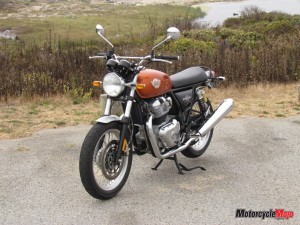 The Interceptor name might be familiar if you grew up around bikes in the 1980s, when Honda had given the name to its VF500, 750 and 1000 V-four sport bikes. You might think Royal Enfield borrowed the name from the Japanese company, but in fact, Royal Enfield had first used the name back in 1960, on the Interceptor 700 twin. The modern Interceptor is styled like a traditional Brit bike with a tall, wide handlebar; a long, flat seat; 13.2-litre teardrop gas tank; and upswept mufflers. Like all proper classic bikes, it also has a centre stand.
The original Continental GT was introduced in 1965; in response to the custom bikes springing up in the U.K. at the time, the company had modified its 250 cc Crusader model to produce the first-ever factory café racer. The new Continental GT 650, which replaces the current single-cylinder Continental, is styled like a café racer, with low clip-ons and rearset foot pegs, and it has a slimmer fuel tank that’s 1.2 litres smaller than on the Interceptor. Aside from those cosmetic differences, chassis geometry, suspension and engine specs are identical between the two machines.
The development of these new twins was a collaborative effort between Royal Enfield’s U.K.-based designers and designers in India. Several of the engineers and test riders who worked on the project are British; some were formerly at Triumph. The main fuel-injection engineer is Japanese and came to Royal Enfield from Suzuki.
One Spec for the World
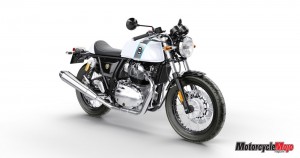 The bikes are simple in design, and there’s nothing on the Royal Enfield engine that is groundbreaking, but there’s an elegance to their simplicity, as well as many benefits. The engine is an air-cooled, 648 cc parallel-twin with a single overhead cam and four valves per cylinder. Output is modest at 47 hp, and torque is rated at 38 ft-lb. To save on development costs, only one specification of bike will be produced for all markets globally, so bikes being shipped to Thailand share the same engine tuning, emissions and chassis specs as Canada. Despite air-cooling, the engine meets Euro 5 emissions standards, and will reportedly meet Euro 6 standards in the future.
The reason the engine was not made larger, like maybe 800 or 900 cc, is that Royal Enfield’s largest market is India, and in India a 350 cc bike is considered a big bike. The company did not want to overwhelm Indian riders moving up from something smaller with too big a step in engine output, and since there is one global spec for the machine, the rest of the world also gets a 650.
Low Tech for High Reliability
 The pistons have a friction-reducing coating, and while the valve train is simple, it’s designed for reliability; the rocker arms incorporate rollers on the cam side and tappet followers on the valve side. These items reduce friction, and thus reduce valve-train wear. Valve adjusters are locknut and screw, so even someone with moderate mechanical skills can adjust the valves at home. A forged crankshaft drives the clutch via a primary gear, which is quieter and lighter than a chain, and is not prone to loosen with time. The clutch is mechanically assisted for light lever effort, and the same mechanism provides the slipper function when decelerating and downshifting.
During the development phase, Royal Enfield built and tested engines with a 180-degree crankpin layout (like Honda’s modern CB500s and Kawasaki’s 400 and 650 cc parallel-
twins), with a 360-degree layout (like the first generation of Triumph’s new Bonneville) and with a 270-degree layout (like current Triumph Bonnies and Yamaha’s MT-07 twins). Test riders unanimously agreed that the 270-degree crank provided the best torque characteristics, with a broad spread of power throughout the rev range, and it also produced the best sound.
Bosch provides the fuel management system, and the engine breathes through Mikuni throttle bodies. Bosch also supplies the ABS, which is standard. The exhaust features double-walled exhaust headers, so the pipes don’t change colour with heat.
The engine is powerful enough to satisfy experienced riders, and tractable enough to make novice riders feel entirely at ease. It also sounds great, emitting a throaty, syncopated rumble. As for reliability, time will tell, but what lies beneath the engine covers is simple and proven, and not particularly prone to failure.
A Solid Undercarriage
The twin-downtube steel frame is not a marvel of technology, but like everything else on these new twins, it is well executed. It was designed in conjunction with famed U.K.-based chassis builder Harris Performance. The counterbalanced engine is bolted rigidly into the frame, which makes for an unyielding chassis. Chassis geometry is surprisingly sporty, with a 1,400 mm wheelbase, 24 degrees of rake and 105 mm of trail — specs that are very similar to a middleweight supersport machine. A 41 mm conventional fork is non-adjustable, and the twin shocks are adjustable only for preload. Seat height is beginner friendly, at 793 mm for the GT and 804 mm for the Interceptor. The GT weighs 197 kg without fuel, while the Interceptor adds four kilos to that. By comparison, the Triumph Street Twin weighs 198 kg dry. Company president Rudy Singh insists that the new 650 twins are not meant to compete with the Triumph, or with the Ducati Scrambler or any other modern retro bike. “We are not here to take market share away from anyone,” Singh says. “We are here to grow the market.”
The tires are narrow, and 18-inch wheels were chosen to maintain visually appropriate proportions. According to company CEO Siddhartha Lal, modern retro bikes with 17-inch wheels look great, but for a true retro, they “just kind of look off.” Narrow tires also promote neutral steering. After riding the bikes, I cannot find fault with his reasoning. Brembo’s Indian subsidiary, Bybre (BY BREmbo), provides the brakes, which include a 320 mm front disc mated to a twin-piston caliper, and a 240 mm rear disc with a single-piston caliper; brake lines are braided stainless steel. If the name sounds familiar, Bybre also equips KTM and BMW bikes made in India.
Cruising Santa Cruz
We rode both bikes at an international press launch in Santa Cruz, California, beginning the two-day event on the Continental GT, and switching to the Interceptor on the second day, logging more than 200 km on each bike. The mountain and coastal roads varied from smooth to very bumpy, and from sweeping top-gear esses to second-gear hairpin switchbacks.
Regardless which bike was ridden, the lack of vibration was immediately noticeable after pulling away from a stop, and remained vibration-free up to and beyond highway speeds. Clutch pull is beginner-bike light, and the six-speed gearbox is probably the slickest-shifting unit I’ve tried in a long time, with short, solid shifter throws. In 400 km of riding, some of it at elevated speeds, neither bike missed a shift.
Gearing feels tall, with the bottom four gears used to handle most of the tighter roads, though the powerband is wide enough to pull the gearing with ease. Top gear was engaged only at highway speeds, with the engine revving 4,000 rpm at 100 km/h; dropping one gear got me by slower traffic quickly from that speed. The bike cruised effortlessly at 130 km/h. While the narrow Pirelli Phantom Sportscomp tires hark back to the 1980s, they exhibited excellent grip over a variety of paved surfaces, and even on loose gravel.
A Stable Platform
Whether putting about town or carving canyon roads, throttle modulation is excellent. The engine pulls in a linear manner to redline, and if you’re willing to use the gearbox and let the engine rev, you’ll probably surprise your sportbike-riding buddies on winding roads. Steering is light and neutral, and either bike is very nimble, yet stable at speed. The chassis is surprisingly rigid and forgiving, returning confidence-inspiring feedback even when ridden at an expert-level pace. It’s only at a very fast pace that the Interceptor began to wallow a bit, induced mostly by the tall, wide handlebar and the suspension, which is designed for everyday use and not for knee-dragging frivolity; the Continental did prove a bit more sure-footed thanks to its narrower handlebar. Neither bike did anything surprising, even when hitting relatively big bumps, mid-turn, at high speed. The suspension works remarkably well despite its limited adjustability, revealing its limits only when hitting big, sharp bumps, and despite wearing the tires to the edges, nothing ground out, not even the centre stand.
On the road, the biggest difference between the Continental GT and the Interceptor is the riding position. The former has a slightly forward leaning riding position and the foot-peg-to-seat distance is tighter; the Interceptor has a classic, upright riding position. While I really like the look of the GT, I’d choose the Interceptor to appease my aging joints.
Scant Dealer Network
So far, all seems well with these new twins. About the only hiccup is the dealer network – there are currently only 12 dealers across five provinces. While the plan is to expand the dealership network in North America, it will be demand for the product that determines just how much it will expand. Royal Enfield has no plans to flood North America with new dealers, but rather wants to see who is interested in taking on the brand, and working from there. And according to Lal, interest in the brand is increasing worldwide. “It is the first time that people are knocking on our door and asking about selling our bikes, rather than the other way around,” he says.
Pricing for the Interceptor 650 starts at $7,499, and the Continental GT starts at $7,749. The base price is $1,900 less than the Yamaha XSR700 and almost $3,000 less than the Triumph Street Twin. That is remarkably affordable, and it includes a three-year, unlimited-mileage warranty. There will be a small premium for the custom colours, and a bit more still for a chrome gas tank. In all, 11 colour schemes are available between the two models.
These new bikes will likely represent a paradigm shift for Royal Enfield, and you’ll likely see a lot more of them on the road in the next few years. If you judge these twins by their spec sheets alone, you’ll be missing out. While they are low on frills, what is there is very good. These bikes are charming and they have character, and although those terms are often used to qualify something that has quirks and doesn’t quite work right, these bikes work very well. They offer ease of operation for novice riders, while experienced riders can ride them hard and have fun, and as an added bonus, they look great, too.
A short errand turns into a two-day excursion worthy of a return visit
There is something intangibly quaint about so many small towns in Western New York, so when a friend needed a
one-hour errand done just over the Niagara River, I made the most of the opportunity. I had never been to the Finger Lakes, and this was all the impetus I needed to create an overnight getaway. The region is easily identifiable on a map: 11 narrow lakes all running north-south and looking like a pair of open hands (albeit with an extra finger). I threw my passport and enough gear for overnight in the panniers of my V-Strom 650 and I was off.
I took I-90 and 290 just to get through Buffalo quickly, but at North Boston, I turned east and immediately found myself in Chestnut Ridge Park, one of the largest county parks in the U.S. With water and trail mix in hand, I hiked 2 km, descending through old-growth deciduous forest to see Eternal Flame Falls. The waterfall itself was unremarkable, reduced to a trickle by midsummer, but at its heart was a small, flickering flame caused by a steady emission of natural gas from the water-soaked shale. According to geologists, gas shouldn’t form in this kind of shale, and according to, well, everybody, fire doesn’t mix with water. Yet, here the impossible burned on.
I worked up a sweat on the ascent, but, back on the bike, the 25-degree breeze through my mesh riding jacket made me comfortable again in no time. I rode Genesee Road (Hwy 39) as it rose and fell dramatically over deeply rolling farmland that offered panoramic vistas from the crest of each new hill. Just beyond Sardinia, I paused for a drink and a stretch at a characterful fruit market hosting goats and a freshly shorn alpaca that I was sure felt a little ridiculous.
Grand Canyon of the East
 Within the hour, I arrived at Letchworth State Park, winner of a national poll as America’s #1 State Park. Often called the Grand Canyon of the East, Letchworth is an arrestingly beautiful preserve that follows the Genesee River for 27 km from Portageville to Mount Morris. The river has carved a gorge that is over 180 metres deep and winds photogenically between the sharp cliffs. I cruised the entire length of Park Road, stopping to admire three unique waterfalls, the middle of which is 32 metres high, all near the southern end of the park, and Mount Morris Dam at the northern end. The dam was built in 1952 to control severe flooding that had occurred almost every seven years since the early 1800s.
Leaving the park at Mount Morris, I happened upon a simple white frame house with a historical marker on the lawn indicating that this was the birthplace of Francis Bellamy (1855–1931), author of the U.S. Pledge of Allegiance. I then followed back roads – 63 and 415 – to Bath, where I turned north toward Hammondsport at the southern tip of Keuka Lake. Highway 54 rose sharply out of town, hugging the steep shoreline. The view was glorious in the light of late afternoon. I had read about the Windmill Farm and Craft Market on Highway 14A north of Dundee: a farmers’ market with 200 vendors and weekend attendance over 10,000. By the time I had arrived, however, it was closed for the day. Nevertheless, I walked around its streets, making a mental note should I return at some future date. There was a significant population of Old Order Mennonites in the area, and I encountered several horses and buggies, plainly dressed families and farmhouses with no power lines running to them. Woodworking shops and produce stands were in abundance.
Wine Country
The Finger Lakes are the work of ancient glaciers that gouged out deep trenches before retreating and leaving behind moraines and drumlins that form extreme contours. Two of the resulting lakes – Seneca and Cayuga – are among the deepest in North America and have bottoms below sea level. Their depth helps to moderate the local microclimate, making it perfect for grapes, which have been planted on the steep hillsides overlooking the lakes. Over 100 vineyards dot the landscape, producing world-class Riesling, Pinot Noir and Chardonnay rivalling California’s. I visited Miles Wine Cellars on the shores of Seneca Lake, noteworthy because of its Greek Revival architecture – and because it’s haunted. The owners themselves claim to have seen apparitions about the place, including a young couple on their porch, after whom they’ve aptly named one of their white wines, Ghost.
Turning south, I traced the western shore toward Watkins Glen, but swung west again on CR-23 for Sugar Hill State Forest, where I found a secluded, free campground – perhaps the best free site yet that I have discovered. Sugar Hill Recreation Area had running water, flush toilets and picnic tables. It was also the staging ground for the Six Nations Trail System that was primarily designed for horses and snowmobiles. In the late 1930s, the Civilian Conservation Corps (CCC), established to provide employment opportunities during the Great Depression, constructed roads and planted thousands of pine and spruce trees in this region, as well as built the 20-metre fire tower on Sugar Hill. This night, there were a couple of horses in the covered stalls. I stretched out my Thermarest cot and bivy sack and lay under a canopy of stars, all the brighter because it happened to be new moon.
The Workout
 The first rays of sun peeking over the trees awakened me the next morning, and before I set out for the day, I climbed the fire tower just to enjoy the view of valleys all around Sugar Hill. Then I rode into Watkins Glen, where I was surprised to find the very modern Watkins Glen State Park welcome centre right in the middle of downtown. There was an automated paid parking lot along the street, and I was pleasantly surprised to find the $8 fee also covered admission to the park, as well as access to all other New York State Parks for the day. The glen was directly behind the welcome centre, and I eagerly set forth up the stone stairs. Little did I know there were 832 of them and the trail ran 3 km uphill. On this hot July day, I would regret both not bringing water and failing to keep up my winter workout routine.
The gain, however, was worth any pain, as the gorge was stunning. If Letchworth canyon was bigger, Watkins Glen was perhaps more interactive. The CCC, charged with making park improvements, had arrived just two days before the Great Flood of 1935, when 280 mm of rain fell in 48 hours. The park was closed for the rest of the year while crews laboured to repair the extensive damage to park and village. At the same time, however, they built the naturalistic stone stairs and bridges that enabled visitors to experience the depth and beauty of the gorge up close.
Arriving atop the cliff, I discovered that Watkins Glen operated a shuttle; lacking water, I swallowed my pride and let the park service do the work of getting me back down to the main gate. I lingered in the air-conditioned welcome centre while I drank two full bottles of water. Once again, I was grateful for my mesh gear as I rode lovely back roads, all in very good condition, through Odessa and then winding toward Robert H. Treman State Park just 35 minutes east. Here, Lucifer Falls was the main attraction, and I set out on the 1.6 km loop to see the 35-metre cascade. A dizzying stone staircase led me, this time descending, into Enfield Glen. It was breathtaking in every sense. There were a total of 12 waterfalls to explore in this gorge, but it was already mid-afternoon, so I chose to move on. In Buttermilk Falls State Park, just up the road, a lifeguard looked on as bathers swam in the 18 C water at the base of the falls. A few shivering children were even taking swimming lessons.
Passing through Ithaca, by far the largest city in the region, I turned the Strom north and began to follow the western shore of Cayuga Lake. To my right, directly below me, were the roofs of homes and cottages that hugged the steep grade as it rose from the water. Above me to my left were forests and vineyards almost the entire 64 km length of Cayuga Lake. The Cayuga Wine Trail, I learned, was the first organized wine trail in America, and includes not just wineries but distilleries, a meadery and a taproom.
Impressive Waterfall
 At Taughannock Falls State Park, I used my all-day pass one last time to see the tallest single-drop waterfall in the northeast (taller even than Niagara Falls), plunging 65 metres past rocky cliffs that towered 123 metres above the gorge. From the top, I watched as tiny people milled about on a viewing platform far below. In the small visitors’ centre, I picked up several brochures and a guide to the Finger Lakes.
“Do you have any questions?” asked the park ranger.
“Just one,” I said. “How do you pronounce the name of this waterfall?”
“Ta-GAN-ick,” she replied, and at my raised eyebrows, she added with a grin, “Exactly!”
Further north on Highway 89, at Interlaken, I detoured right down to the shore and discovered O’Malley’s Cabin on the Lake, a restaurant with a dock on the water. I sat and observed boaters coming in and tying up for lunch – a seemingly common occurrence.
Finally reaching the northern tip of Cayuga Lake, I rolled into charming Seneca Falls, believed to be the inspiration for Frank Capra’s It’s a Wonderful Life. And I toured the Women’s Rights National Historic Park on the site of the first Women’s Rights Convention, in 1848. As a father of two daughters, I found it indeed sobering to review the conditions that women were subject to only 100 years ago, and to recognize the courage of women – and men – who willingly braved “no small amount of misconception, misrepresentation and ridicule” in the fight to gain equality for fully half the population.
Due to the late hour, I had to bypass iconic Smith Opera House and Belhurst Castle in Geneva. Over dinner, I flipped through the guide to the Finger Lakes I had picked up at Taughannock Falls. Along with the several sights I had just enjoyed, as well as those I had to skip, the guide highlighted so many more: NASCAR racing in Watkins Glen, the Curtiss Museum in Hammondsport, Corning Glass. I had already been thinking I’d like to come back sometime, but this confirmed it. There was still so much to see and do. As I saddled up for the ride home, I was already planning my return to the hands of 11 fingers…
As luck would have it, our daughter, Emily, was visiting Ontario from British Columbia for a couple of weeks last summer, and fortunately the last time she was here, she had left her Suzuki SFV650 Gladius behind. Her plan was to ride it back west when she headed home, and she wondered if I’d be interested in riding part way back with her.
I’d have been a fool not to accept her invitation, so I jumped at the chance to go on an extended ride, considering earlier that year I underwent shoulder surgery that involved a six-month recovery period. That meant no motorcycle riding until the end of August.
It had been seven years since we had done a similar trip, when we rode west via South Dakota to Revelstoke, B.C., where she lives. We took this route because I wanted to show her some of my favourite roads in the Black Hills National Forest.
A Very Loose Plan
 We had a break in our Mojo schedule and I told my wife, Gwen, I’d be back in time for the next issue. I didn’t know how long I’d tag along with Emily, but we had made a very general plan of attack that basically consisted of heading west and staying off the Trans-Canada Highway as much as possible. Who needs more detail than that?
I’ve been across the country a few times by motorcycle and I’d be the first one to agree that the Trans-Canada is good for moving people. There is nowhere in that description that says it’s entertaining for the motorcycle rider, although there are some exceptions that are worth the experience – between Banff, Alta., and Sicamous, B.C., comes to mind – but for the most part, the exceptions are few and far between.
With map in hand, Emily would be our navigator. In my cross-country travels, I’ve ridden both on and off the Trans-Canada, but this trip with my daughter would turn out to be vastly different from any of my previous rides west.
Late Departure
 Keeping in mind our very loose plan, we were to leave eastern Ontario on the Thursday, but that turned into a noon-ish departure on Saturday due to some electrical gremlins in Emily’s bike. Clearing up some out-of-the-way loose ends forced us on the Trans-Canada in order to make up some lost time. It wasn’t a perfect start, but we were on the road nonetheless.
Leaving New Liskeard, Ont., the second morning of our adventure meant it was time for backcountry riding. We continued westward at the end of County Road 560 as it turned from pavement to gravel, and unbeknownst to us, this is what much of the trip would consist of. Our only plan was to head west on as many secondary roads as we could find. This 80 km stretch of gravel that would take us almost to Chapleau turned out to be a private road belonging to a logging company but open to the public. In other words, watch out for logging trucks.
I was fully committed to taking my own Triumph Tiger 800 XC, but during a last-minute, unrelated conversation with Rob Dexter at BMW Canada, he offered a 2018 R1200GS demo that was eager for a ride. The GS is an amazing all-around bike that handles anything you can throw at it, and it took on that stretch of gravel without skipping a beat.
Emily is as happy riding on pavement as she is on gravel or taking on single-track in the bush. While she is no stranger to taking her street bike up mountain logging roads in B.C.’s Interior on street tires, she recently installed a set of oversized Heidenau K76 dual-sport tires, giving her more traction on loose terrain. I don’t think there is anything that would stop her from going where she wanted to, regardless of tire style.
Rugged Beauty
The Canadian Shield – which created the rocky shoreline of thousands of lakes and islands, some of which are barely big enough to hold a single, windswept pine – had been prevalent for most of the trip so far, and contributed to the rugged, beautiful scenery that northern Ontario is famous for. On the opposite end of the scale was the monotony of the vast tracts of forest for hours on end.
After Wawa there aren’t any road options heading west other than about 1,000 km of Trans-Canada until you get to the Manitoba border. And it can be desolate, so be sure to get fuel when you have the chance.
After Thunder Bay, we stayed off the truck route and took Hwy 11 toward Fort Frances, and then Hwy 71 through Lake of the Woods to Kenora. Lake of the Woods is another beautiful ride, but again, lots of forest and some long, desolate stretches with just the occasional driveway for a wilderness lodge or a hunting camp. There are a couple of opportunities for fuel on the 150 km stretch of road, though.
It’s possible to take a shortcut through Minnesota before getting onto Hwy 71 that could shave off a bit of time, but the border crossing might use up any time saving. My intention from the start was to not go into the States, but the unpredictability of the massive wildfires in B.C. could have possibly blocked our way and forced us south of the border.
Back on Smaller Roads
 After three and half days just to get out of Ontario, Emily noticed our first realistic exit off the Trans-Canada and onto Hwy 44 just inside the Manitoba border. This road would allow us to bypass Winnipeg and drop us back onto the Trans-Canada west of the city, alleviating the ring road and the traffic that goes along with it. Highway 44 was a fun road full of twists and turns, but the pavement was in pretty rough shape for much of it. Emily made do on her Gladius dodging potholes and frost heaves, while the GS took it all in stride. My demo GS came with Dynamic Electronic Suspension Adjustment, which adjusts spring preload and damping on the fly according to surface conditions – it always delivered a smooth ride.
During our zigzag back to the Trans-Canada, we came across more long stretches of gravel that were bone-dry and extremely dusty. I took the lead and Emily stayed way back to allow time for the dust to settle. The road was centre-bare with two skimpy additional tire tracks on each side of semi-hard-packed gravel, but the gravel was loose and about 20 cm deep between the tire tracks. The traffic was light, but when a vehicle would approach, moving over through the very loose gravel took extreme caution. At one point, Emily caught up to me as I waited for her at a stop sign and she enthusiastically yelled out, “I almost biffed it so many times!” It’s funny what gets some people excited.
I just put the GS in Enduro mode, which softens the throttle response, adjusts its traction control for loose terrain and retains ABS on the front wheel while allowing the rear tire to lock up – it was perfect. Once back on pavement, changing to Road or Dynamic mode was easy as pushing a button on the right switchgear and gave me responsive access to all 125 ponies.
We had only been on the Trans-Canada for about 15 km when we stopped in a small town called Elkhorn and set up camp at the local fairgrounds, which used the honour system via an inconspicuous box on a fence post. I have no problem at all supporting these kinds of places and appreciate the effort the town puts in to keep the area open to travellers. It was $15 well spent. I think we met all of Elkhorn’s residents at the town’s only café the next morning.
Goodbye Trans-Canada
As it turned out, that last short stretch of Trans-Canada would be the last time we’d be on the highway for the duration of the trip.
Many people find the prairies boring but I didn’t. As mentioned earlier, I found northern Ontario very monotonous because of not being able to see anything except for forest. On the prairies you can see to the horizon – farmers working the land, herds of livestock, fields of golden wheat or yellow canola swaying in the breeze, and hay bales that fade in the distance to the size of pinheads.
It helps to keep yourself entertained by making a game out of it, like determining the percentage of black cows to brown cows, or wondering how far a grain elevator is off in the distance and taking note of your odometer to see how close your guess is. (The latter game only worked once in a while, though, since it took so long to get to the elevator, I was forgetting to check the odometer when I’d reach it because a hundred other “games” had already played in my head.) I counted 178 rail cars as we crept past a train traversing the prairies.
By the time we got about a third of the way across Saskatchewan on Hwy 13 (the Red Coat Trail) and the town of Pangman, I was getting tired of arrow-straight roads. We had passed through a lot of one-horse towns, most of which I think the horse had already left town. Pangman was slightly bigger than those with maybe two or three horses at one time. The exceptionally faded sign in front of the Wild Horse Café drew us in – and the fact that it was the only place in town to stop for lunch and a look at the map. Judging by the barely legible sign, the place had been there forever, but to our surprise, it was run by a young Asian couple, and the Chinese food they offered was remarkably tasty.
Is That a Curve Up Ahead?
After hours of straight road, I was excited to see a curve on the map just west of town, and then another one, and another. I was developing a flat tread on the GS’s Michelin Anakee III tires and was looking forward to hopefully giving them a radius again. This is where a paper map earns its keep – to see the big picture of what might be happening in the near future. Unfortunately, maps can also be deceiving. At curve number eight we had ridden about 200 km. I was ready to move on from the flatlands. Luckily for me, the GS is a comfortable machine to spend several hours on.
I found it strange to see passing lanes in the prairies, thinking they were mostly used for long hills that slow down transport trucks in other provinces. I also saw “Watch for moose” signs. I had only ever seen these in northern, heavily forested areas, and never thought they would be on the wide open flatlands where you could see a moose coming for hours before you actually had to take evasive action.
Thankfully to alleviate the boredom were the hundreds of kilometres of gravel road we encountered, and once around Frenchman River Valley, you would no longer think you were in the prairies, as it was reminiscent of the Badlands area of Drumheller, Alta. I had ridden through this area on a prior trip and was as impressed then as I was this time.
We welcomed this break in the flatlands as much as the hospitality that small-town residents offer. Emily and I were both running on fumes, and a co-op store owner was nice enough to open up her gas pumps for us after the store had already closed.
Next Province, Please
Most of the provinces seem to be proud of the border crossing, with substantial signs announcing your entry into that province, but the sign leaving Saskatchewan was several times larger than the sign announcing Alberta, which was essentially no bigger than a common street sign. In all fairness, we were on a skinny gravel road with no fences, and signs warning of free-range livestock. We were in the middle of nowhere and couldn’t have explained to anyone where we were, but we weren’t lost. We were following the setting sun, and that’s all that mattered.
It was cold when we rolled into Lethbridge at around 10 p.m. – much later than we anticipated. That evening in southern Alberta, we began to see deer and antelope fairly regularly, and I knew it was a concern to Emily. It was seven years earlier when we rode west together that she hit and killed a deer on a rainy, pitch-black night in South Dakota, and she has tried to avoid riding at night ever since. She was on her Gladius then, too.
Good brakes are important at any time, but we once had to brake hard to avoid hitting a few antelope that had darted out from the ditch in front of us. The pair of Brembo four-piston radial calipers on the front of the GS offers immense stopping power, and at that time I was grateful for ABS.
Into the Smoke
We realized the following morning that the setting sun that had hung on the horizon like a massive fireball the night before was so magnificent because the smoke haze seemed to magnify it. This morning was our first realization that we would be now riding in wildfire smoke for the rest of the trip.
On Hwy 3 just outside Lethbridge, I could barely make out the shape of a mountain against the sky and wondered what the visibility distance was. I took note of the odometer and it was only 3 km, give or take, until we were beside the mountain. And visibility continued to worsen the farther west we went.
Highway 3, the Crowsnest Highway, is a fantastic road as it leaves southern Alberta and continues through southern B.C., and a stop at the Frank Slide is both unbelievable and sobering as you view a valley of mammoth boulders left behind after the side of Turtle Mountain let go in 1903 and buried some 90 residents under 110 million metric tonnes of rock. It remains Canada’s deadliest rockslide.
It was obvious that the smoke was definitely pushing the animals out of the forest. We spotting more deer before reaching Cranbrook, B.C., and even saw one walking on a sidewalk in town. In fact, Emily and I were riding between Cranbrook and our night’s destination of Nelson when we came upon a small fire just starting at the roadside, no doubt started from a spark from a fire just 100 metres ahead that was fully involved on a large hillside. We could feel the intense heat from it as we rode by. We were constantly checking drivebc.ca for road closures due to the fires.
We left the unique and historic city of Nelson for a relatively easy ride on our last day to Revelstoke. Nestled between the Selkirk and Monashee mountain ranges, Revy is surrounded by mountains, but because of the smoke, I couldn’t see a single one. I felt sympathy for all the people who were displaced or who lost everything due to the devastating wildfires of 2018.
Overall, it was amazing to chase the sun with Emily again on this seven-day, 4,400 km ride west. Based on her navigation, we figured we had ridden approximately 2,200 km of secondary paved roads, 1,000 km of gravel roads and 1,200 km on the Trans-Canada Highway – the last only because at times there was no other option.
At this point, my trip was only half over. I stayed in Revy for two days before turning around and heading back home.
Indian’s third brand-new engine design is destined to take on the world
Had to happen. After Indian Motorcycle’s two full seasons of utter supremacy in the 2017-18 American Flat Track (AFT) racing seasons on its return to competition after a 70-year absence – in which its FTR 750 race bike has earned the No. 1 plate in successive years, winning 17 of the 18 races held in the 2018 AFT season – America’s oldest motorcycle manufacturer has almost predictably now launched a street spinoff of that title-winning racer. Clearly inspired by the FTR 750 in terms of both styling and engineering, the base model 2019 FTR 1200 (costing $15,999) and the FTR 1200S (from $18,499, depending on colours chosen) broke cover at Germany’s Intermot Show last October and will inevitably usher in a series of Street Trackers from several other manufacturers. Okay, Harley already tried to do it once before with the relatively short-lived XR1200 back in 2008, but nothing since. Fuelled by its racing sister’s two seasons of dirt-track dominance, the tag line that the new Indian was “Born on the dirt, built for the street” rings true when you ride it.
The FTR 1200 and 1200S are the real deal, and a visit to the Minneapolis headquarters of Indian’s parent company, Polaris Corp., for an exclusive ride on the pre-production prototypes on the roads of Minnesota and Indian’s R&D centre’s test track six weeks before their Intermot launch revealed these to be only the first of several future Indian models to be powered by the FTR’s all-new liquid-cooled, 1,203 cc V-twin engine. Delivering a claimed 120 hp at 8,250 rpm with 85 ft-lb of torque peaking at 6,000 rpm, this third Indian engine platform under Polaris ownership following on from the Chief and Scout shares little beyond a general overall format with the Scout motor, which it’ll inevitably be compared to, Indian CEO Steve Menneto says.
A Flat Tracker for the World
 “It’s a totally different engine than what the Scout’s is, and I think you could say that it’s a very flexible platform for us to go forward with,” Menneto says. “We have many opportunities in front of us with this potential family of models. It’s exciting how we’re going to stretch Indian way beyond Cruiser/Bagger/Tourer – and the FTR 1200 is a perfect example of how that’s going to happen. Our focus is not only on the North American market, but about Indian becoming a global brand.”
So while rather ironically this all-new engine is making its debut mounted in something as quintessentially American as popcorn, baseball and apple pie, its future will see it powering models aimed at a world audience, with an adventure tourer to rival the BMW R1250GS likely to be up next, then maybe a streetfighter or sport tourer – take your pick. To realize their vision of Indian becoming a global brand, not merely a producer of modern American-style V-twin motorcycles of various types, however excellent, Menneto and his colleagues on the Polaris board are counting on this engine as the platform they’ll use to achieve this.
Purchase the issue to continue reading
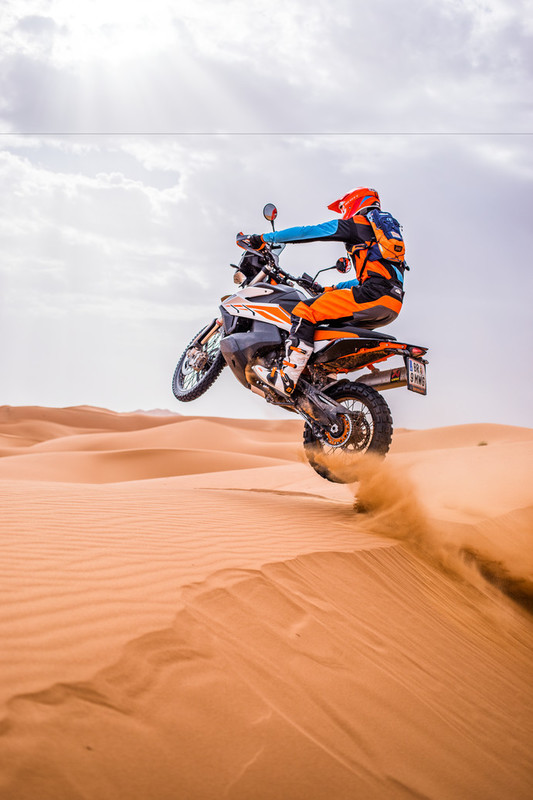
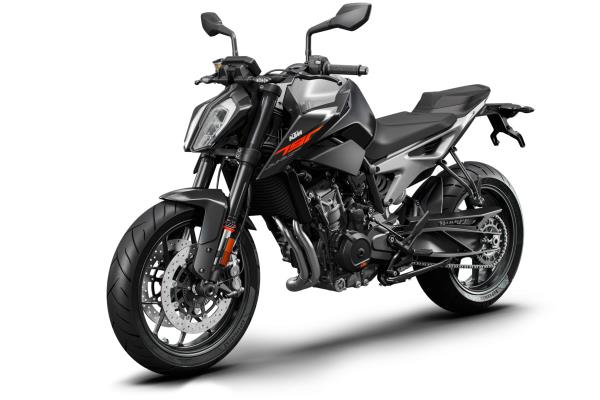
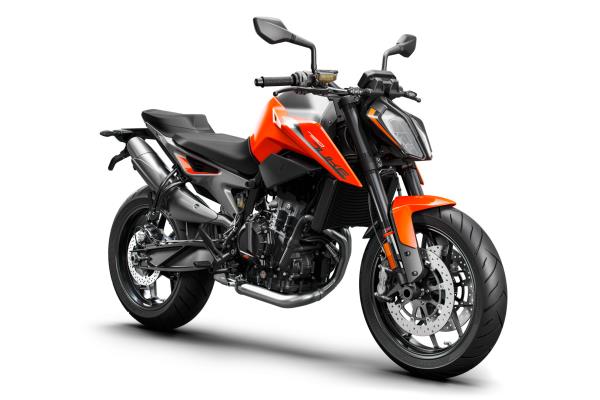
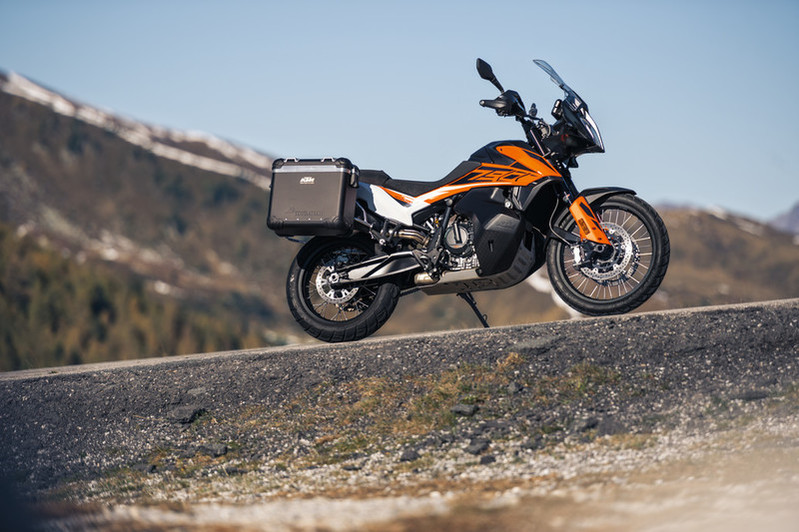
If you’ve had even the slightest hankering for the KTM 790 Duke or 790 Adventure R we have no doubt you’ve spent the last weeks tossing and turning throughout the night wondering what the pricing will look like for these beastly machines.
 At last, a peaceful sleep is awaiting you, as KTM has set Canadian pricing for the motorcycles. We still have yet to find out exactly what the availability for the Duke and Adventure will look like, but you can start counting your pennies and saving for the highly-anticipated machines.
We’ve listed the pricing below:
790 Duke: $11,499
790 Adventure: $13,499
790 Adventure R: $14,599
The above pricing does not include destination charge, pre-delivery, taxes or warranties (prices are subject to change without notice).
You’ll also be able to catch the 790 models at the upcoming motorcycle shows in Toronto and Montreal.
While we wait to learn more about availability for the models, you can check out https://www.ktm.com/ca-en/ for specs and more information.
“Destination Paradise” is the motto of the seventh edition of the BMW Motorrad International GS Trophy which will commence in early 2020. The GS Trophy will take place in New Zealand – just another dream destination for most adventure riders worldwide.
The participating nations now face a busy time, hosting their qualifiers and selecting their teams for this exciting and unique global adventure competition. 18 international teams, plus, as in the 2016 and 2018 editions, an international female contingent will be selected during the next months.

Confirmed teams for 2020:
Australia, China, Female Team(s), France, India, Italy, Japan, Latin America, Malaysia/Philippines, Mexico, Middle East, Nordic (Sweden, Norway, Denmark, Finland), North Africa (Morocco, Algeria, Tunisia, Egypt), Russia, South Africa, South Korea, Thailand, UK, USA
BMW Motorrad International GS Trophy Oceania 2020.
After the long days on the vast Mongolian Steppe of the 2018 Central Asia edition, New Zealand is going to provide a very different riding environment and experience for the qualifying GS riders, as Ralf Rodepeter, Head of Marketing and Product Management BMW Motorrad explains: “After Tunisia, Southern Africa, Patagonia, Canada, Thailand and most recently Mongolia, BMW Motorrad were again looking for a location that offers perfect ‘GS terrain’. Lots of legal off-road kilometres are required, with demanding route profiles, passing through fascinating landscapes and with plenty of exotic flair. New Zealand is a perfect fit on those terms. The variety of astounding landscapes from sea to volcanoes to high-altitude mountains, combined with the most beautiful vegetation and the rich Maori culture provide the perfect setting for what we think will be one of the most exciting Int. GS Trophies ever held.
About the Intl. GS Trophy.
The International GS Trophy is a celebration of the spirit of the BMW GS motorcycle, bringing together those elements of leisure, adventure and challenge that this bike engenders. This edition will see 19 teams – maybe even 20 – competing, meaning 54-57 riders, from around the world.
The event is not a race but a team competition, pitching the GS-riding international contingent against each other in a series of challenges – and not all involve riding. With the competitors camped nightly in a bivouac, the event also fosters a sense of brotherhood, sisterhood and camaraderie. Equally the GS Trophy is a celebration of culture and nature, the riders learning about and understanding the peoples and the terrains of the regions they encounter. So the successful team will be respectful of the environment, skillful and sympathetic with their machinery and understanding of team-mates.
At this time Canada will not be providing a team for the International GS Trophy challenge. However, we might be able to expect one happening for the 2022 Trophy Challenge.
You can find out more about the event and the teams at the dedicated website gstrophy.com.
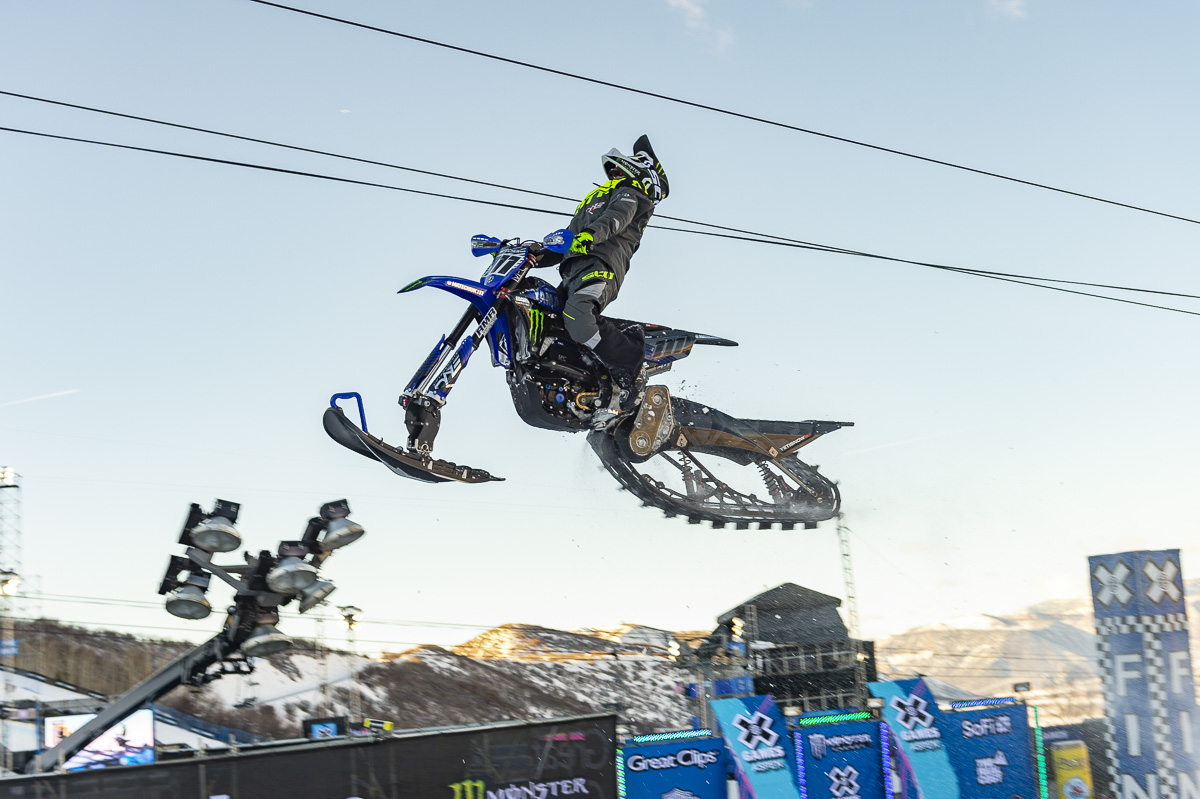
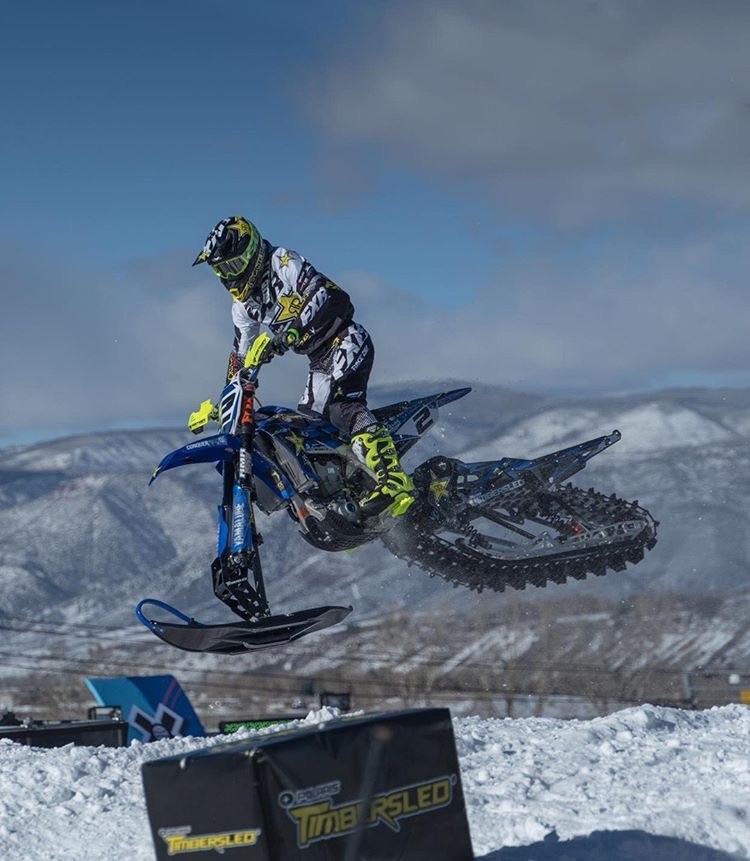
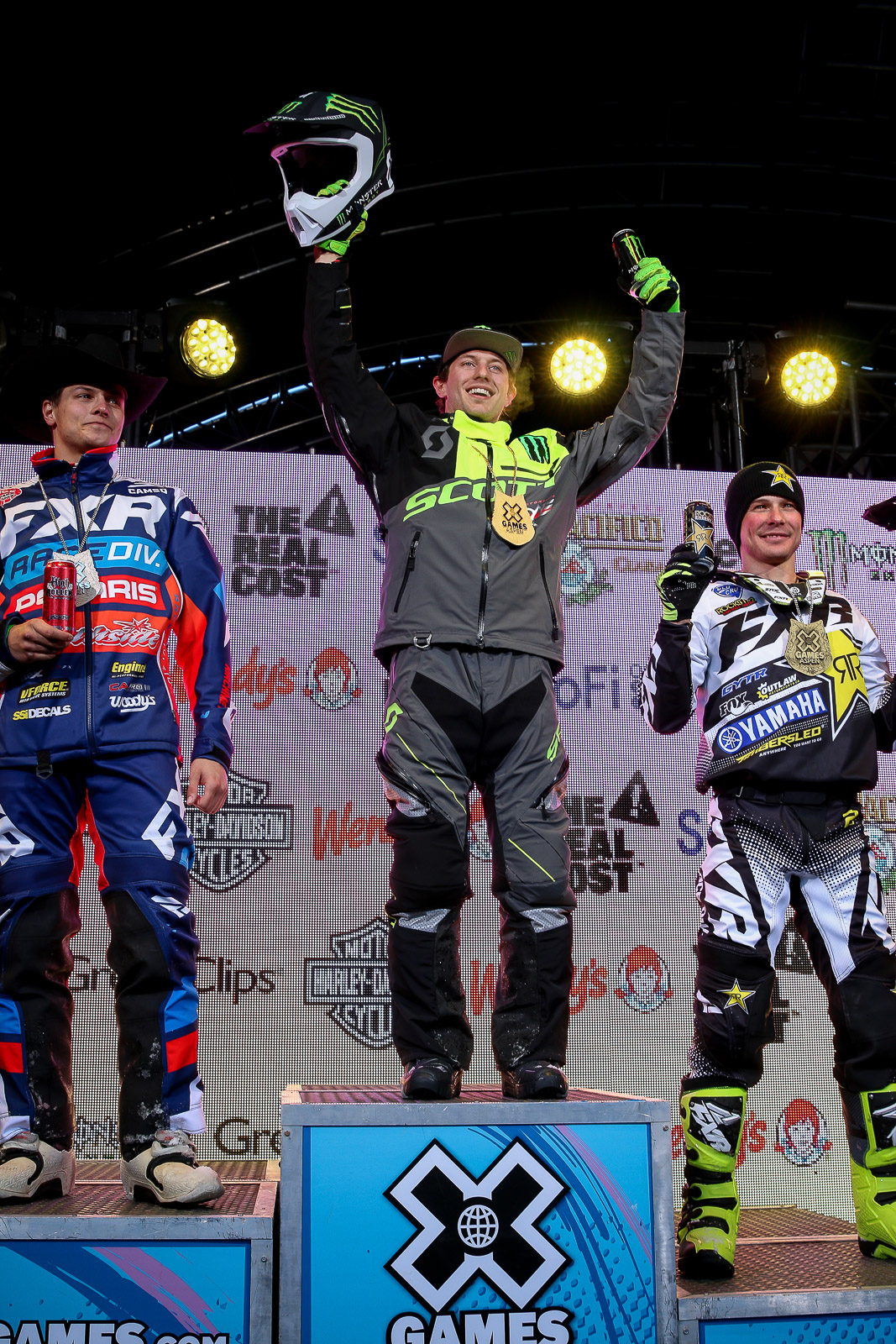
It was a suspenseful race as Yamaha Motor Canada ambassador Cody Matechuk crossed the finish line at this year’s X Games. For the second year in a row he’s stood atop the podium after winning Gold in the Snow BikeCross competition in Aspen, Colorado, on Saturday, January 26.
Matechuk and fellow Yamaha Motor Canada ambassador Brock Hoyer are no doubt top contenders again in 2019 on the circuit at Colorado’s Buttermilk ski area after winning Gold and Silver in 2018. Both riders won their heat races and had the top two grid selections going into the 14-lap final round.
Hoyer, the 2017 X Games Snow BikeCross Gold medalist, grabbed second place on the first lap of the finals and started hunting down race leader Jesse Kirchmeyer (USA). After a poor start, Matechuk eventually moved up to third and continued to make ground on Hoyer each lap. On Lap 6, a fall by Hoyer handed second place to a hungry Matechuk. Impressively enough Hoyer was able to remount the bike only dropping to third and able to maintain that for the remainder of the race.
Matechuk went in for the kill with three laps to go, slicing around Kirchmeyer with an outside pass that caught the American rider off-guard. With an open track ahead of him, Matechuk quickly distanced himself from the challengers, winning by 4.45 seconds.
“I’m super stoked to win Gold again this year,” said Matechuk, who earned Bronze in 2017 before last year’s breakout win. “It was a very tough race, but I was able to show just how much hard work went into the preparation for this race from every part of our team. It was a crazy weekend, and I’m stoked for more.”
It’s rewarding for Canadians watching to see our nation’s riders dominating the sport. The final standings were Cody Matechuk (CA) in first, Jess Kirchmeyer (USA) in second and Brock Hoyer (CA) in third. Well done boys!

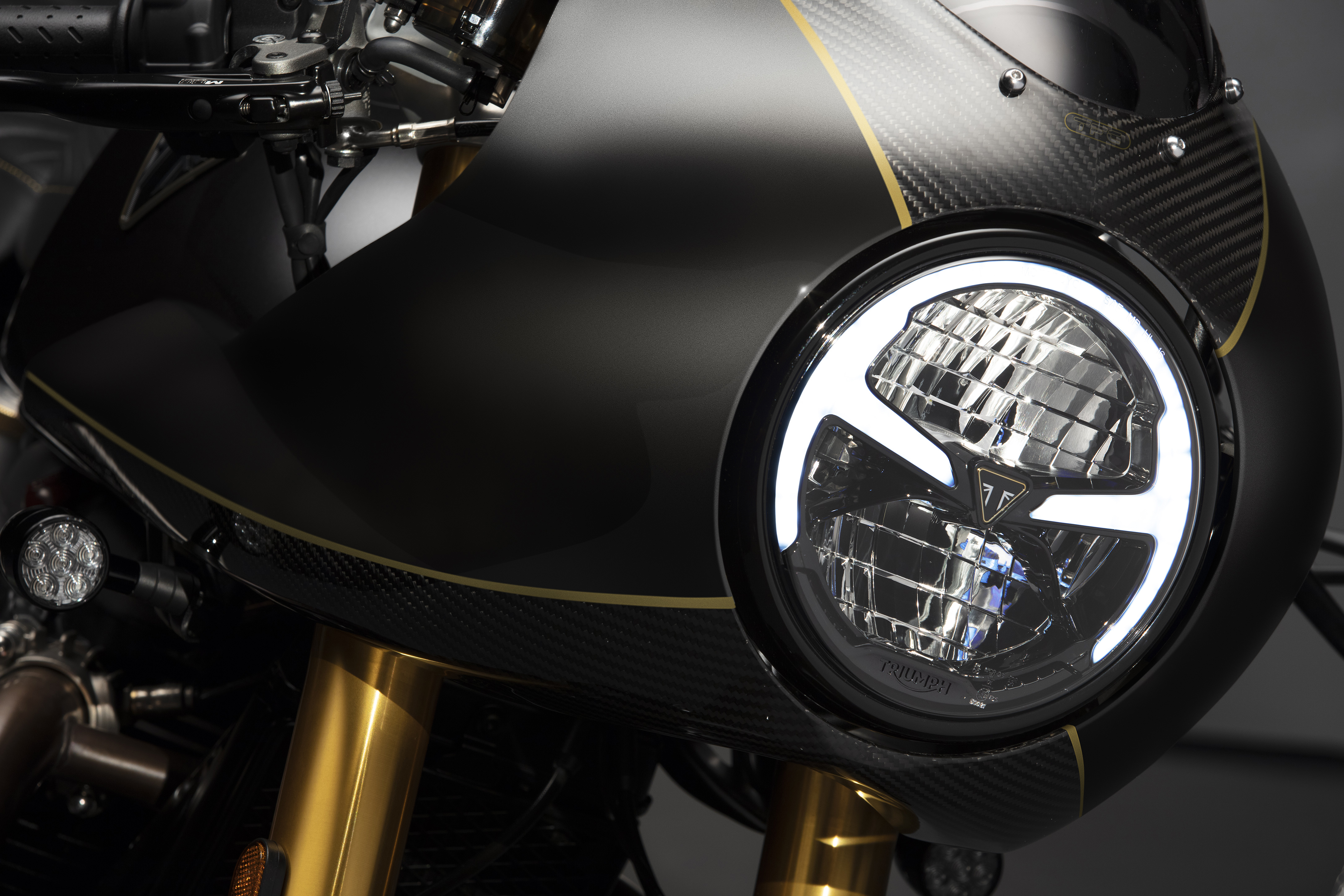

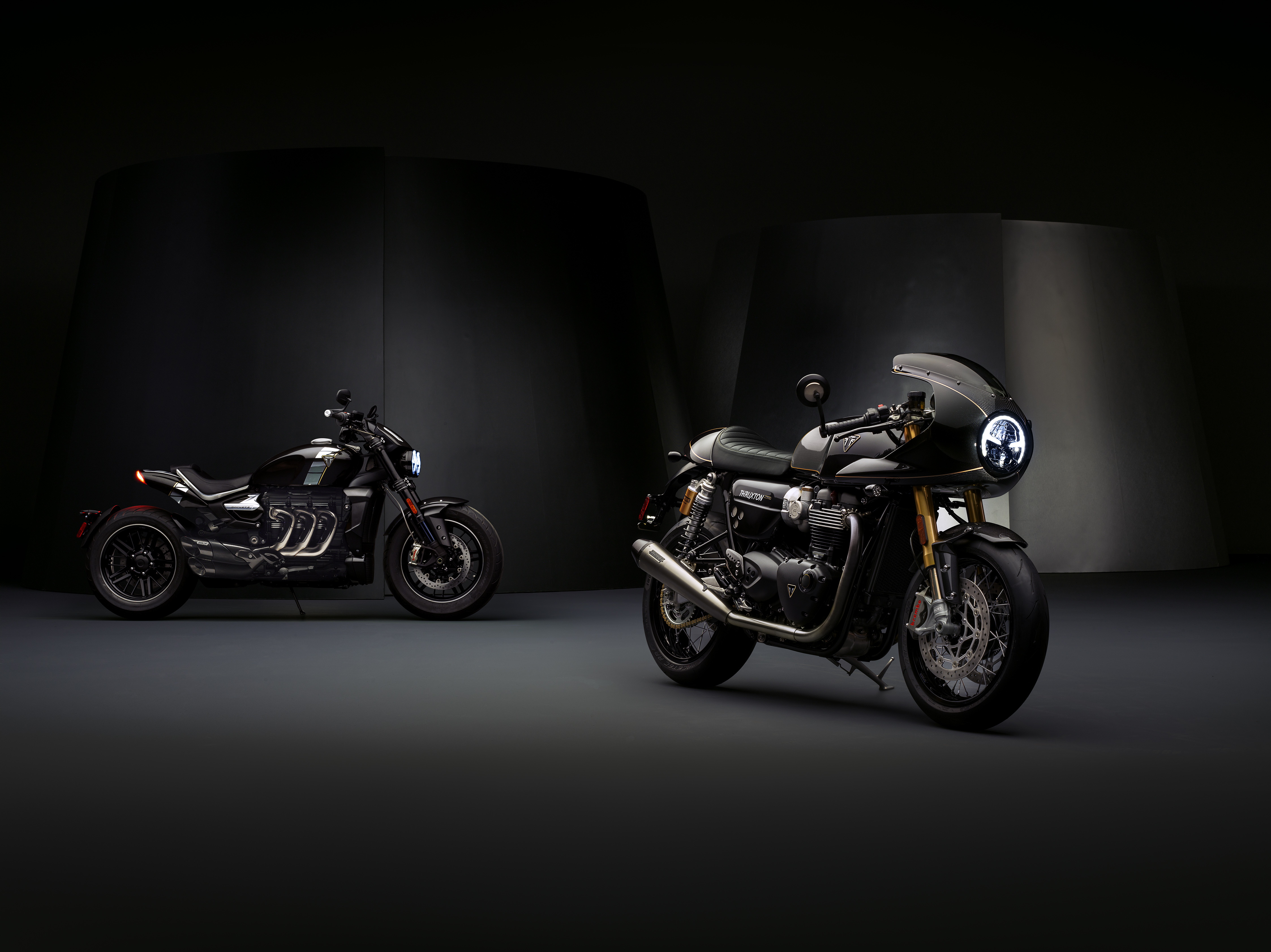

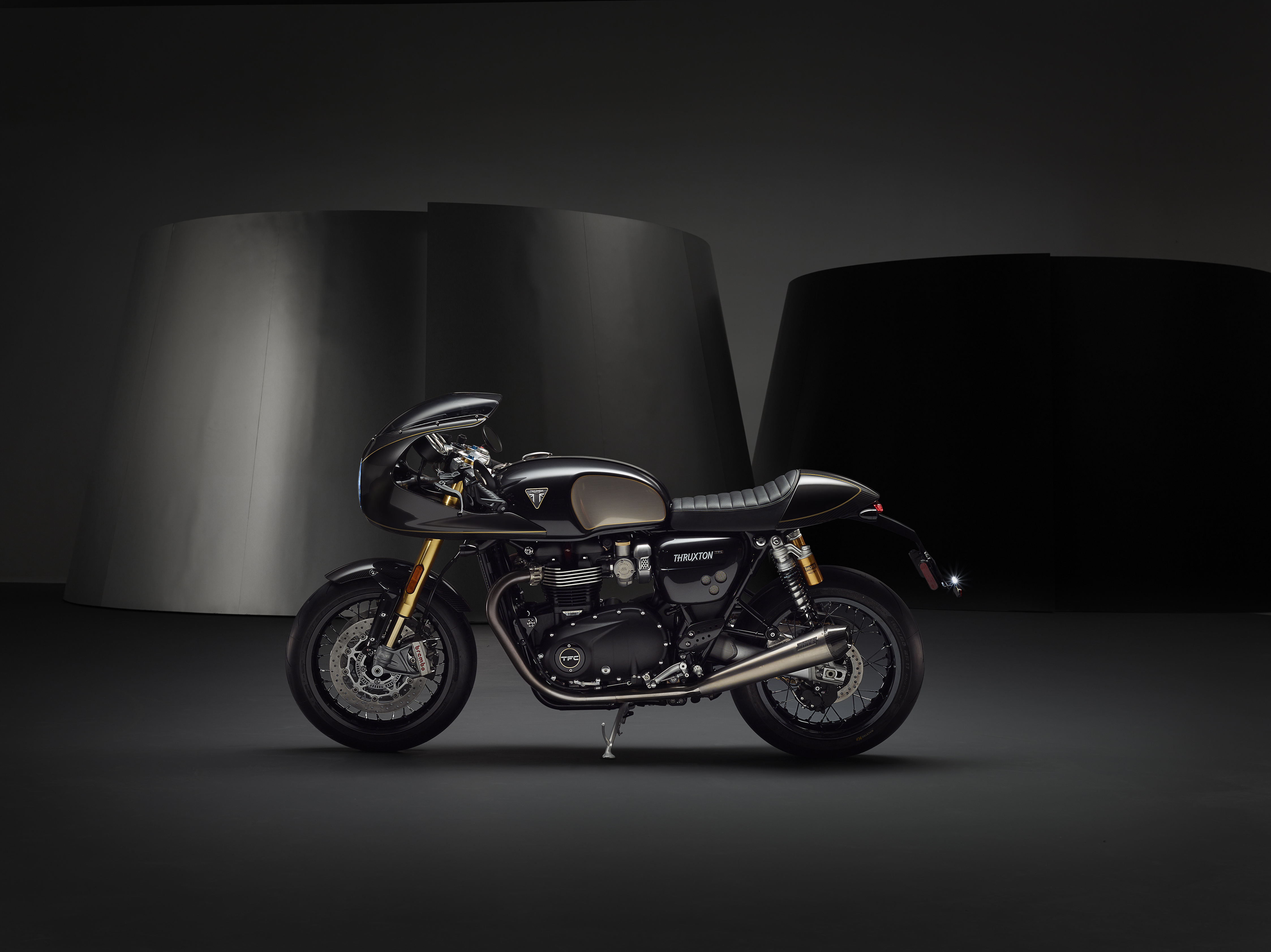
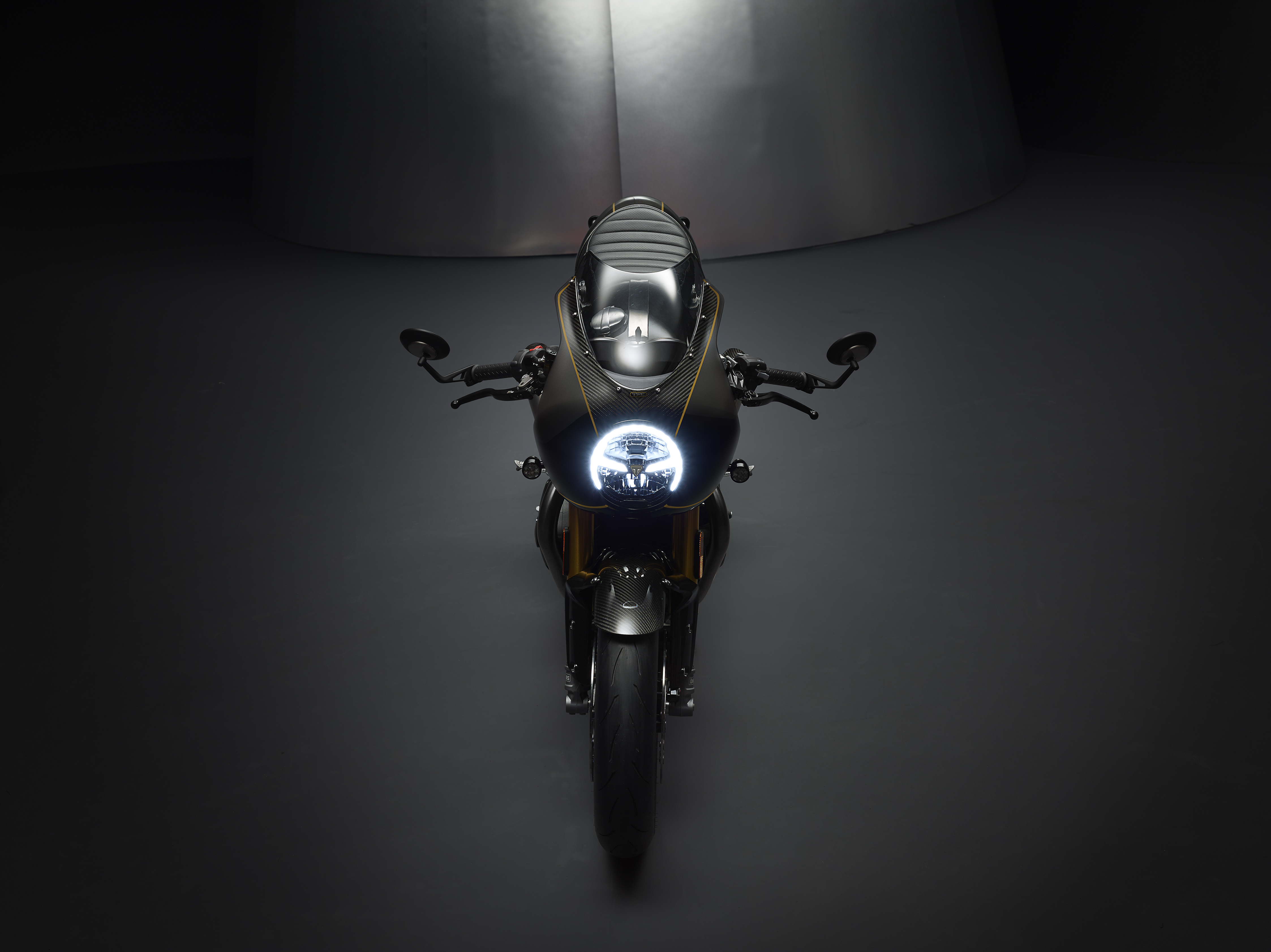
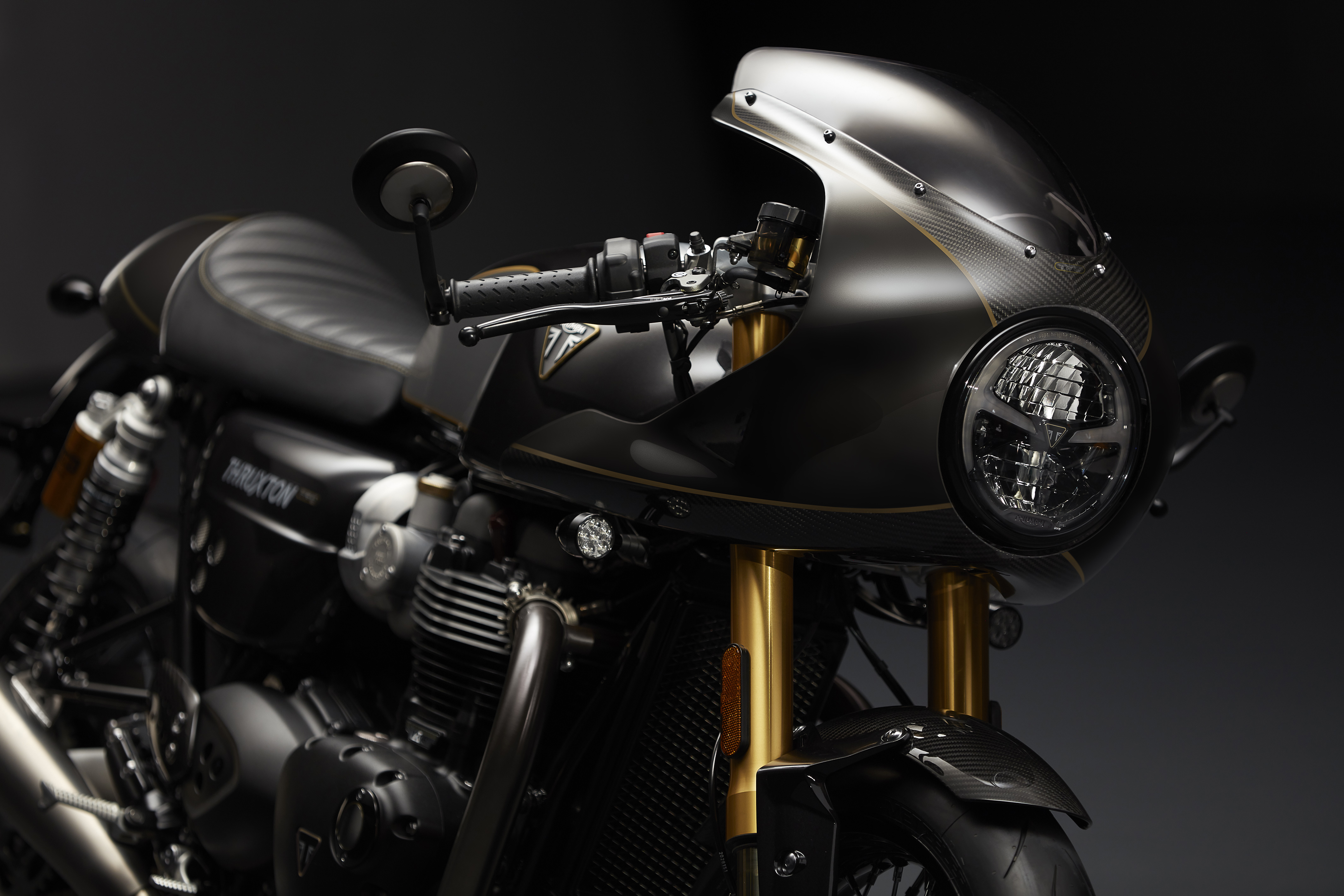

With the new year brings an all-new Triumph Factory Custom line (TFC). The new TFC lineup of limited edition, ultra-premium motorcycles debuts with the beautiful, more powerful, lighter and even higher specification Thruxton TFC and hints at what’s to come with the stunning concept Rocket TFC.
These models will be rare, individually numbered and with only 750 produced worldwide and never to be repeated. Out of the 750 being made of the Thruxton TFC only 20 will be available in Canada. Each custom machine promises to be the pinnacle of Triumph’s design, engineering and craftsmanship.
Thruxton TFC – The new definitive sports classic
- 750 numbered and TFC-badged editions (200 US / 20 CANADA)
- Increase of 10 horsepower over the Thruxton R
-
- 85 ft-lb of torque @ 4,850 rpm
- Weight reduction
- Benchmark-setting level of specification, including:
– Fully adjustable Öhlins suspension
– Brembo radial master cylinder and adjustable brake lever
– Race-specification Metzeler Racetec RR tires
– Titanium Vance & Hines silencers with carbon fibre end caps
- Premium custom finish and detailing including stunning carbon fibre bodywork and billet-machined top yoke with numbered TFC plaque
You can learn more at https://www.triumphmotorcycles.com/

Canadian motorcycle enthusiasts can get up-close and personal with Yamaha’s revolutionary NIKEN GT, featuring innovative Leaning Multi-Wheel technology, at The Motorcycle Shows across Canada.
The Niken GT combines Yamaha’s new Leaning Multi-Wheel platform with touring conveniences like heated grips, standard 25-litre side cases, a touring seat and a tall windscreen. Utilizing Ackerman geometry, twin 15-inch front wheels and an adjustable, dual-upside-down fork.
The Niken concept was designed to deliver an amazing corner-carving experience and offer elevated rider confidence in all conditions. The contact patch of the NIKEN GT produces a higher level of front-end grip (compared to a conventional motorcycle) that is particularly noticeable during cornering and braking. Deep lean angles up to 45 degrees are achievable, a direct result of the stability and technology of the LMW system. Truly, the Niken GT’s unique and dynamic characteristics make it feel and handle like no other motorcycle.
Visitors to The Motorcycle Shows this season will be able to sit on the NIKEN GT and closely inspect the Leaning Multi-Wheel setup.

NIKEN GT Key Features
- High windscreen
- Comfort seats
- Heated grips
- Semi-soft 25-litre ABS side cases
- Rear carrier base with passenger grip
- Main stand
- Second 12v DC outlet
- Radical, bold and unique 3-wheel design
- Advanced leaning multi-wheel technology
- Deep lean angle, maximum 45 degrees
- Fully adjustable rear suspension
- 847 cc, 3-cylinder, liquid-cooled, DOHC CP3 engine
- TCS, QSS, A&S clutch, D-MODE, Cruise Control
- Hybrid steel/aluminium frame
You can spot the unique machine at the Edmonton, Vancouver, Montreal, Toronto and Quebec City Motorcycle shows in the Yamaha area. The new NIKEN GT comes with an MSRP of $20,999. An early deposit program is available for those who want to be among the first to own this revolutionary three-wheeled sport tourer. For more information, visit http://yamaha-motor.ca.