Summer Love
Central Idaho’s Sawtooth Mountain Range takes us by surprise
I wasn’t looking for love when I rode up into Idaho’s Sawtooth Mountain Range last summer. I wasn’t looking for late night s’mores, the perfect campsite or the clearest night skies I can remember. And I definitely wasn’t fantasizing about making new friends or creating lasting memories. I had absolutely no clue I was about to become enchanted by a green splash on the map I’d intended to ride straight through, or that I would end up spending almost a week traversing it instead of a single afternoon.
But that’s exactly what happened when I rode up out of the heat of southern Idaho’s monotonous plains and into the majestic Sawtooth National Forest. I’d been on my way north to revisit what I believed at the time to be Idaho’s best motorcycle ride, the 450 km International Selkirk Loop, which encircles the Selkirk Mountains shared by northern Idaho and Alberta. I didn’t make it that far.
 The love affair began with pure drama. I’d just departed the sparkly ski town of Sun Valley on U.S. 75, feeling dusty and half-delirious from riding for a couple of days in intense Nevada heat, when a massive thunderhead trundled across the sky ahead of me. As I rode closer to the deafening rumble, the road began to tighten and twist as it scrambled up into steep mountains now darkened by the storm. And then the rain met me, hard and cleansing and smelling of cooled heat and life. I was so intoxicated by the sudden thrill and force of this energy, my breath caught and eyes stung with tears.
And then suddenly I shot out the other side of the thick, dark curtain of rain and found myself riding through shafts of sunlight and steam as thick as smoke rising from the shimmering road. I stopped at a pullout just over Galena Summit to catch my breath and gaze down into a long, grassy-green valley fringed by mountains as steep and jagged as shark’s teeth. Or the teeth of a saw. The Sawtooth Range. Aah.
You’d think that moment was the pinnacle of my Sawtooth experience, but no, it was only the very beginning of a very long, slow and extremely satisfying stopover.
Happy Campers
I was so jarred by the beauty of this river valley and its surrounding mountains I decided to slow down and explore a bit, taking side roads here and there, making notes about which of the many cabins and campgrounds seemed coolest, but never considering a spontaneous stay, because the only thing more obvious than this area’s beauty was its popularity, especially on a midsummer weekend.
 I parked the bike and took off my helmet at the tent-only Alturas Lake campground just to have a peek at the lake and use the loo. As an afterthought, I decided to walk the small trail that loops through the campground. As I was walking past one of the occupied sites, averting my eyes as the best of us do, I heard a voice ask, “Are you looking for a campsite?”
I looked over to see a cheerful couple draped in camp chairs and smiling brightly at me despite my unseemly full-gear appearance. They explained that a big family had prematurely departed from the campsite in the woods beyond their own, because their kids had been unmanageable. “They decided to pack it in,” they told me, and I could tell from their smiles they were super happy these kids had been cleared out. “We’re riders,” they said. “When we heard the motorcycle pull in, we both agreed a biker would be a nice neighbour.” And then, as if I needed encouragement, they added, “And it’s already been paid for.”
And just like that, I had an ideal lakeside campsite, just the right amount of trees away from fun fellow riders Teresa and Kelly Shively of nearby Boise, Idaho, who, in addition to clueing me in about the vacant tent site, yielded the inside story about the area’s history and secrets, including its best motorcycle roads.
Solace Among the Saw’s Teeth
 There are times when you’re travelling by motorcycle when you don’t know you’re dog-tired until you slow down. I’d been on the bike for weeks by the time I rode into Idaho, and while my mind had been enlivened by the journey, my body was spent. Over the next few days, I discovered an array of kinks and sore corners and sorted them out; I hiked and swam and ate and rode around each afternoon with a huge smile on my face.
With my tent and other camping gear off the back seat of the Indian Roadmaster I was testing, there was now plenty of room to bungee on the neon green raft I bought in town. I took the raft to all the lakes in the area and launched it from every beach, including one night floating on Redfish Lake, the terminus of the longest Pacific sockeye salmon migration in North America, until my teeth began to chatter. The entire Sawtooth Range is within the Central Idaho Dark Sky Reserve, one of the largest areas of protected natural nighttime darkness left in the U.S., and the intensity of the stars in the night sky is mind-bending.
When I needed sustenance, I headed to Stanley, a quirky little adventure launch pad with a smattering of restaurants. My favourite meals of the day are breakfast and ice cream, and this town had my needs met between the Stanley Baking Company and Stanley Scoops. I enjoyed dinners at both the Sawtooth Hotel on Ace of Diamonds Street and the Mountain Village Restaurant at the junction of Highways 75 and 21, with the former being my foremost recommendation.
Although I did take Hwy 75 back up and over twisty Galena Summit a few more times during my stay, this area between Sun Valley and Stanley is more of a downtime destination than a motorcycle playground. The motorcycle shenanigan portion of this Idaho experience was waiting a half-day north.
The Grand Finale: Lolo Pass
Before heading back to Boise, my virtuous camp mates Teresa and Kelly shared their favourite local motorcycle road with me: Lolo Pass, aka U.S. 12. I’d not heard of it, so when I finally grew antsy from all the repose, I packed up and chased the lively Salmon River north for a few hours on U.S. 75 and then U.S. 93 until I reached the town of Lolo, Montana, and the deceptively bland start to what is truly one of the world’s greatest motorcycle roads.
It was already late afternoon when I turned west and ripped right up and over the Lolo Summit, sun in my eyes so blinding I thought I’d passed a sign that said “Winding road next 99 miles.” That, of course, seemed too good to be true, so I turned the Roadmaster around to double-check. The sign had indeed promised 99 more miles of corners, and my map showed nothing but wilderness, so I decided to double back and top off my gas.
This led me down a twisty side road to the Lochsa Lodge, a shady Eden dotted with cute cabins. I queued up for fuel with a biker club that had just ridden the highway from the east, their good spirits and bright laughter rising up through the forest like tinkling bells. They said I would have a great time on the road, but advised I find a place nearby to overnight and begin again in the morning, as I was sure to lose the light and deer were plenty. I looked around at the cute cabins and knew they would all be booked, and retreating to brick-and-mortar Lolo didn’t feel like an option either. And then I heard a voice say, “Are you looking for a campsite?”
Good Fortune Strikes Twice
And so, for the second time in a week, I was invited to pitch my tent in an ideal spot free of charge, this time by the sympathetic owner of the booked-solid Lochsa Lodge. And while my grassy patch wasn’t overlooking a pristine lake, it was only a few steps from a terrific bar and restaurant and included usage of fancy showers and washrooms.
I’d been six days in Idaho by now and was feeling remarkably untroubled. As if I could stay forever. I’d met only friendly, generous people here. I’d rested in the cool shadows of towering mountains; ridden beautiful, uncrowded highways; floated daily on lakes as crystal clear as Idaho’s night sky. And to wrap it all up, I woke up on my last day high in the mountains with nothing planned but riding 160 km of river-tracing corners.
Wouldn’t you agree that the best motorcycle experiences are most often those unplanned? As with love, you can simply be riding along, minding your business when it hits you. Suddenly a place can feel indispensable, like an essential part of your life you previously
didn’t know was missing. Like home. Or a hand you just don’t want to stop holding.
Money won’t buy you love, and midsummer, it might not even buy you lodging, but it will get you on a motorcycle, and if you point your bike in the right direction, your heart is sure to follow.
Due to a recurring breakdown, it took years to finally get to their destination.
“I’m done. Get. Me. Out. Of. Here.” Naively, I thought you had to see it to believe it. An afternoon on the Strip in Las Vegas was about all I could handle. Neither of us could depart the desert metropolis fast enough. The resort city was an ongoing explosion of the gaudy and loud, the 24/7 city blowing itself to bits and my mind in the process. Not exactly city people, we wanted to trade slots of fun for slot canyons, and artificial lighting on those labyrinthine casino floors for a bewitching night sky whose ceiling twinkles like studded diamonds. Just west of the trillion-dollar bling lay Death Valley – forged by tectonic plates, shaped by the wind and sun-scorched, vast canyons mingled with epic mountains. To my mind, the jackpot. I couldn’t think of a better risk-taking adult playground compared to rolling dice until sunrise.
At full tilt, we merged at what I thought was dangerous speed onto Highway 95 and into the slipstream of racing vehicles. The cars fused into one entity, like a shoal of fish. All I heard was the whoosh of rubber on asphalt. Like a superorganism. Spend too much time or moolah in Vegas and this superorganism will subsume you.
Three hours from Vegas, we arrived at Emigrant Campground, an intimate little snuggery situated 34 km from the park boundary at Panamint Springs and 16 km south of Stovepipe Wells. We set up home in the desert of extremes.
Titus Canyon, Nevada
 Packing up our steeds the following morning before temperatures got silly, we loaded all the water we could carry from the campground’s spigot. As towns for the boom-and-bust scenario go, Leadfield, California, was located on Titus Canyon Road, just west of Beatty, Nevada. The adventurous backcountry road is a legacy of Leadfield, which once thrived thanks to its mining but what is now a ghost town. Bright and early saw us back on the bitumen as we jumped onto Hwy 374, our wheels humming to a song of a 43 km one-way route through Titus Canyon, which started a few kilometres east of the Death Valley National Park boundary. Our plan was to stop for gas and a resupply in Stovepipe Wells, inside the park.
Despite the vultures searching for carrion overhead, plunging into Death Valley for the second time gave me the confidence needed to get out there and kill it. As canyons go, Titus lived up to its Greek meaning: “of the giants.” Its swath of mountains possessed an endless supply of ruggedness, leading us on a serpentine stony trail – some of it loose – meandering through vivid rock formations, adorned with desert flora and petroglyphs. A spectacular finale ensued as the canyon narrowed to a winding finish at the western end. Back with a vengeance, bring it on Death Valley.
Here We Go Again
 Next stop: the Racetrack. It seemed like as good a time as any to attempt it again. What happened next is a paver short of a patio, so it bears being described. We’re story animals after all, where individual tales sometimes piece together human existence into a unified whole. Exactly two years ago, we were forced to leave Death Valley due to a failing stator on Jason’s motorcycle. Jason was gutted by never making it to the Racetrack; we were so geared up
to take her on again.
“Oh, you’re kidding me! No. You’ve got to be joking.” Jason spluttered in sheer disbelief on the roadside. We were not even 2 km outside of Titus Canyon. “What’s up?” Oh, don’t tell me it’s the stator, I thought as I parked my stare on Jason. He was as serious and sober as a judge, so I took a breath and put a firm lid on my high spirits at having just conquered the canyon. Aesthetic rejoicing, quiet appreciation and off-road euphoria would have to wait. Not for the first time, I felt a familiar shiver of dislike for the F800GS. Or, just Jason’s. It was beginning to behave like a cheap umbrella.
“That’s the second bloody stator that’s gone in two years,” a frustrated Jason said. Well, at least you’re not bitter, I mused, refraining to verbalize the nearest off-the-shelf remark. Alas, the realization kicked in as the bike flatly refused to start. The irony was almost comical, save for the exquisite timing. In derision, the machine gurgled to a halt and sat there radiating sadness. “I think the universe is trying to tell us something, Lisa – it doesn’t want us to go to the Racetrack.” Death Valley had claimed Jason’s stator a second time, but at least we’d live to die another day. I guess that was the way of it: some riders get to roll on, the vultures keep circling and it’s crucial that venturing into Death Valley isn’t to be taken lightly.
Alabama Hills, Eastern California
 A surge of power from the portable battery pack enabled Jason to scoot to the nearest big town with me: Lone Pine, California, where the washing machine, hot water and a fresh change of clothes became my new objects of desire. Parts could be shipped overnight and, thanks to Dave Mull, installed at the back of NAPA – his auto-parts store. Might as well camp just up the road in the Alabama Hills, a range of jumbled rock formations and hills near Mount Whitney on the eastern slope of the Sierra Nevada.
The morning had finally settled into a beautiful afternoon, high clouds rolling across the big blue sky. The muted orange volcanic rock, large boulders and dozens of natural arches make it a popular movie set location, big scenes from Iron Man and Django Unchained included. My mind was arrested, spellbound as it burrowed deep to understand the allure of this beguiling place straight out of a spaghetti western. Best of all? It was BLM (Bureau Land Management) – free, public camping.
Finally, the Racetrack
Back on the same ribbon of pavement the next day, we re-entered Death Valley. Pleasingly, we passed a meteor crater, narrow canyons, dunes and the odd Joshua tree. There was practically no sign of human life out here – not until we embarked on another 45 km bobbled ride of loose rocks, but mostly back-jarring and skull-shaking washboard. At least the temperature was smack dab perfect at around 26 C.
“Please, Lisa, just promise me you’ll stay in second gear once we head down this trail, and give it the tiniest amount to stay positive when it feels twitchy,” Jason pleaded. I knew he was referring to both the gas and my temperament, which didn’t take a lot to unravel. “Basically, you just need to suck it up. I can’t ride your bike for you” was his pragmatic conclusion. Looking back, I think it’s the reason why you never hear the phrase “male intuition.”
Mr. Jangles, we’re up! But not you, sweetie, you’re going down. Deflating the DR650’s tires made the world of difference. I knew categorically, more by feel and sixth sense than by appearance, my bike imparted to the sandy gravel itself a sense of sureness and a generosity of spirit. He exuded poise as much as purpose that took me in, urging to keep him steady in the loose stuff.
At Teakettle Junction, we took a breather from the concentrated corrugations – blood pulsating in my ears – before riding west over more sharp ridges and aggravating grooves. Third time lucky, as they say. Meaningless patter aside, it’s “a curious dry lake, almost perfectly oval in shape,” as Phil Townsend Hanna described the playa. Five kilometres long, ringed by mountains and flat as a pancake. The dried-up lakebed does look like a racetrack. Undeniably though, it’s out of place, even in this geologically jaw-dropping park.
Magic Stones?
The site is famous for the rocks that tumble down the mountainside, land on the playa and then somehow “race” around. They actually “move” by themselves across the desert, marking their journey with tracks and befuddling scientists for decades. But for me, they didn’t budge an inch. Still, the sun-baked cracked floor felt warm and ancient underfoot. I came across rocks ranging from the size of a lemon to a 700-pounder (scientists dubbed her “Karen”). Most of the rocks leave a track scored in the dirt, like a snail trail etched in the earth. Some are straight and short, while other tracks go the length of a football field and curve or zigzag off at odd angles. Surely no magic’s involved, but if they were removed from the lakebed, as some increasingly are by pebble-brained plunderers, then to my reckoning, all magic is lost forever.
Staring down at these “slithering stones,” I was split between two realities where logic only prevails:
(i) these rocks look as if they’ve sailed of their own volition across the desert floor, and yet (ii) rocks can’t make themselves move. Foremost, the mystery is still embedded in an astonishing fact: no one’s actually seen them advance! Unsubstantiated theories around magnetism, energy fields and aliens erred on the farcical. A blend of curious joy toward the stones piqued my interest.
Cue Ralph Lorenz, a planetary scientist at Johns Hopkins University, and his team that presented their findings in 2011. “Basically, a slab of ice forms around a rock, and the liquid level changes so that the rock gets floated out of the mud,” he explained. “It’s a small floating ice sheet which happens to have a keel facing down that can dig a trail in the soft mud.” The truth is usually simple; that got my buy-in.
The official answer given to the public, though, states that in 2014, cousins James and Richard Norris unearthed a similar truth behind the bizarre marks. With sufficient rainfall, the southern end becomes a shallow lake. During winter, the lake surface freezes into a floating sheet of ice, rooting the rocks. The sun causes the ice sheets to break up; steady breezes catch the floating ice sheets, pushing them along with their embedded rocks. Eventually, the ice melts and the water evaporates, leaving the rocks relocated. That is, until the next event – maybe years later – moves them again.
Was the bone-rattling ride to the Racetrack and sailing stones worth it? I think so – even if Jason’s side-stand snapped clean off on our way out. Death Valley is a killer on your bike. Or…just Jason’s! Yes, what the rocks are doing on their own little playa over millennia is fascinating.
Back at camp, clusters of dust from the desert erupted in a fine spray that pirouetted around us as we sat watching the sun melt into the mountains. Overcome with weariness, thanks to an impromptu party with some great guys and a travelling nurse we met, sleep crept through my veins like anaesthetic. Tired, I sank like a stone into a deep slumber.
Eureka Valley Sand Dunes
As the first pale fingers of light pried my eyes open, we wended over 25 km of good gravel in the Eureka Valley and descended on the Eureka Dunes, sparkling on the horizon. Rising to around 215 metres, it’s one of the highest dune fields in North America, with dry camping and concrete picnic tables located at the sandy bottom. Unusually, they’re also known as “singing dunes.” At certain times when the wind’s just right, they produce a high-pitched whistling sound.
While no soothing tunes emanated from the dunes for us, they whispered softly as the breeze whipped the sand around our feet. Magnesium white in the morning sun, they later take on a golden glow that intensifies as the sun sails westward on its afternoon journey. With every curve and striation on the sand burnished red by the setting sun, it’s perhaps the last place I stood that completely bowled me over.
My heart thumped, my skin tingled, and a dawning sense of paralysis slowed my feet upon each barefoot climb up the steep slopes. Keep pushing, Morris! The thigh-burning throb will be worth it as I withdrew into my own jagged thoughts. Hot and breathless, each heaving effort led us to magnificently sharp ridge lines split perfectly by the stark shadow; by daylight, twilight and moonlight.
Wow, it was stunning stomping ground in the remote desert wilderness. And just like the valley in which they reside, they offered a raw, grounding purity you can turn to for replenishment. In the very dreamy and earthly locale in which I now found myself –seeing is believing.
Check out the continuing travels of Lisa Morris and Jason Spafford at twowheelednomad.com and jasonspaffordphotography.com.
A new urban commuter with a penchant for highway travel
It’s been exactly seven years since BMW Motorrad re-entered the personal transportation sector, after coming to the party a bit too early back in 2000 with the, er, idiosyncratic C1, prices for which have since gone through the roof – very aptly, since of course it had one. BMW’s comeback to the two-wheeled world of urban mobility came in July 2012, with the advent of its maxi-scooter, the C650GT. Its parallel-twin engines were and still are made in China by Loncin – BMW’s established Asian partner, which had from 2009 onward also produced the G650GS single-cylinder motorcycle’s 652 cc engine. The German manufacturer’s steep pricing for its twist-n-go twins hasn’t deterred 70,000 examples of them from finding customers since then.
Entering a New Market
 Now BMW is entering the even larger 300–450 cc midsize global scooter segment representing around 40,000 units annually, with the C400X launched at last November’s EICMA show in Milan – appropriately, since Italy is expected to be the largest market for the 65 per cent of total production that BMW’s scooter project manager, Peter Maier (who led the creation of the C650 models), says the German company expects to find homes for in Europe. But this time around, the entire vehicle, rather than just the engine, will be built in China, though Maier is at pains to stress that BMW will exercise super-tight control over that process, just as it does for its G310 motorcycle models built for it by TVS in India.
“This midsize scooter is 100 per cent a BMW product,” Maier insists. “Every single part down to the smallest screw, whether in the engine or bodywork or chassis or instrument, is a BMW component. We are responsible for every element from design to manufacture, which is closely supervised by our engineers, so it’s completely built to BMW quality standards.” This is doubtless aimed at allaying any concerns of customers with long memories, after BMW switched production of its complete G650GS motorcycle to the Loncin factory in 2009. But it soon became aware of various quality problems associated with outsourcing it to China, and repatriated manufacture to its Spandau factory in Berlin in 2011, leaving Loncin to manufacture only the engines. However, judging by the good build quality of the array of C400X scooters fresh out of China that awaited us for the June press launch just north of – where else? – Milan, such issues have been successfully addressed this time around. Indeed, the perceived quality of the switchgear, or of the plastics of, say, the pair of lockable storage compartments in front of your knees, with a 12 V socket in the right one, which has room to charge a large smartphone, is fully in line with competitors’ products, and arguably of better quality than on BMW’s own larger C650GT model.
A Brand-New Design
 Having begun clean-sheet development of the C400X four years ago in 2014, production of this 2019 model scooter began in China on July 1, according to Maier, with deliveries to North American dealers commencing in the fourth quarter of 2018. As of this writing, prices were not yet available. In some ways, the BMW offers a step up from its competition with its level of equipment, such as the optional 6.5-inch full-colour TFT screen, the first on this type of scooter. The two big BMW roundels on either side of the C400X obviously count for something, as does the very Bavarian shade of Zenith Blue it’s available in, alongside Alpine White with a broad red seat stripe, or Black Storm Metallic. The C400X’s sporty styling is certainly distinctive, and clearly denotes its brand heritage, with a vestigial beak hinting at its GS relatives, and BMW’s trademark asymmetric styling for the LED headlight.
Purchase the issue to continue reading
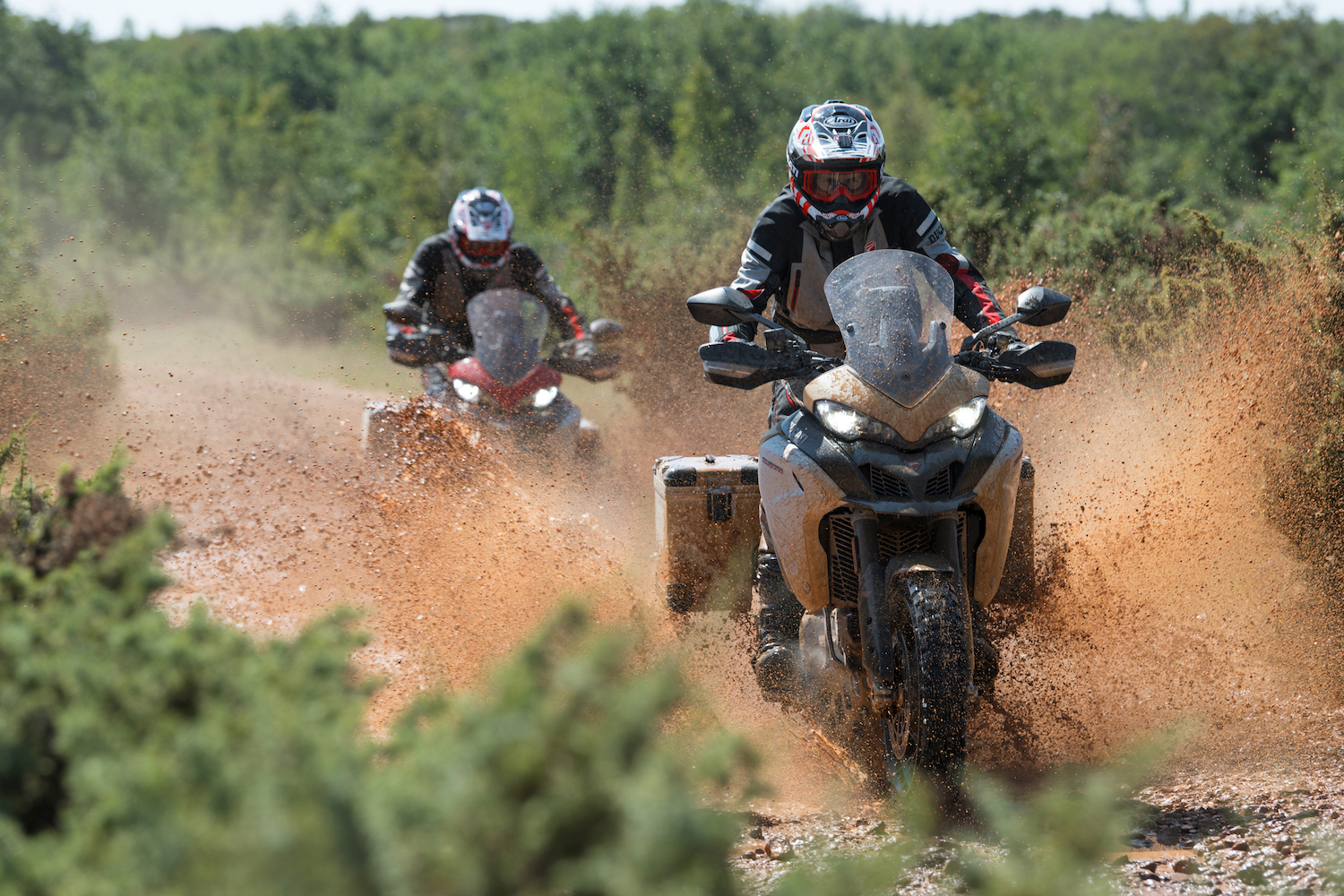
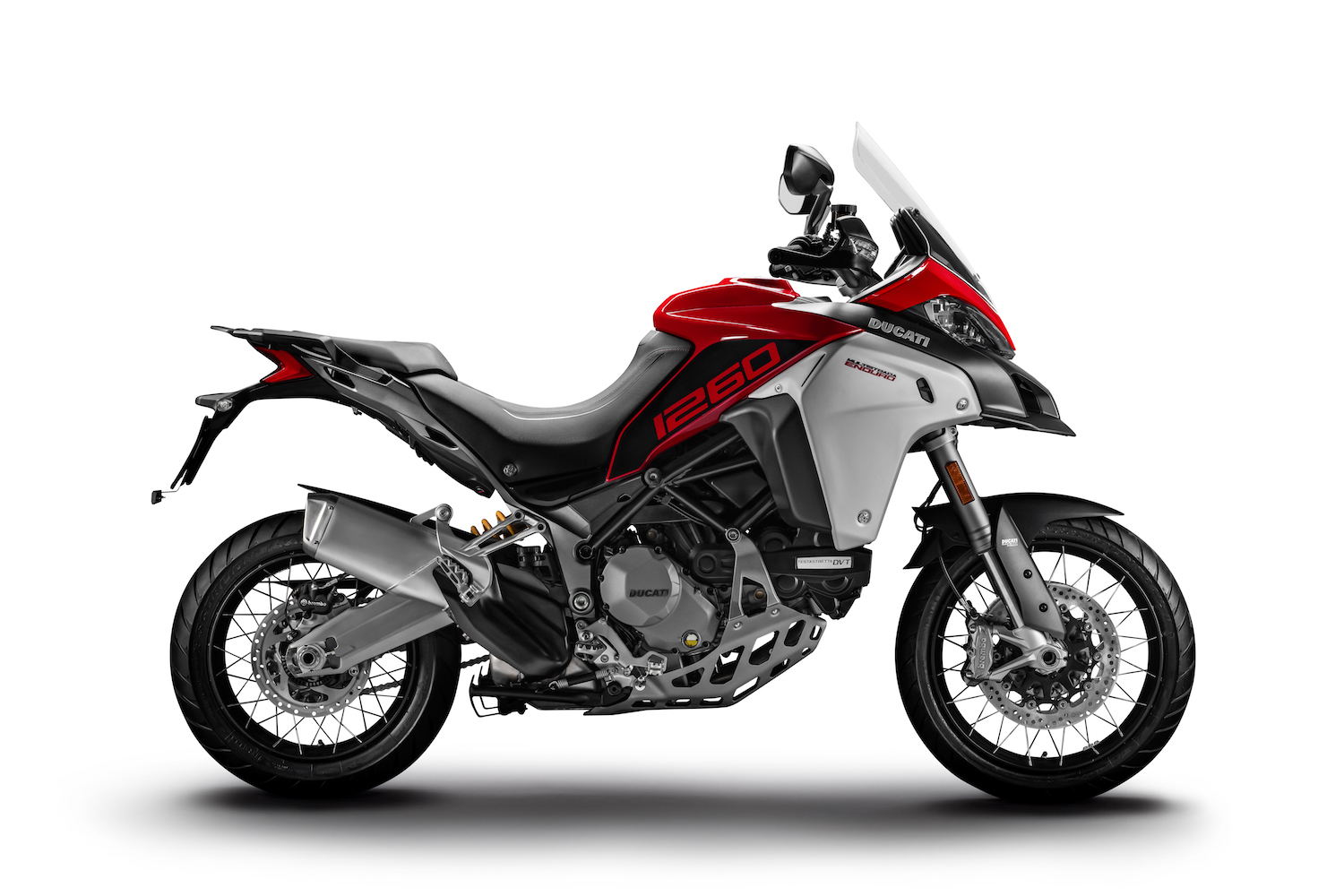
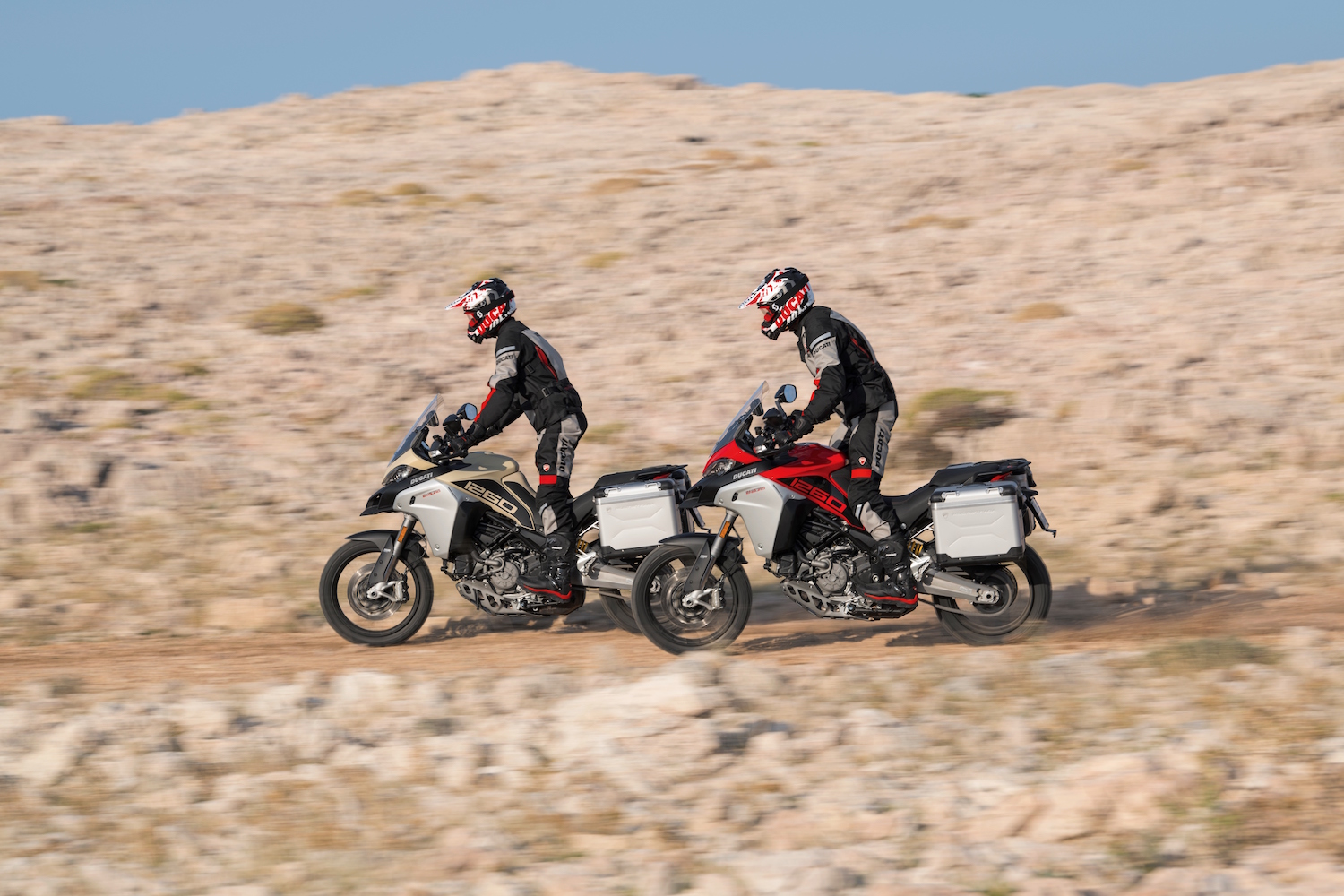
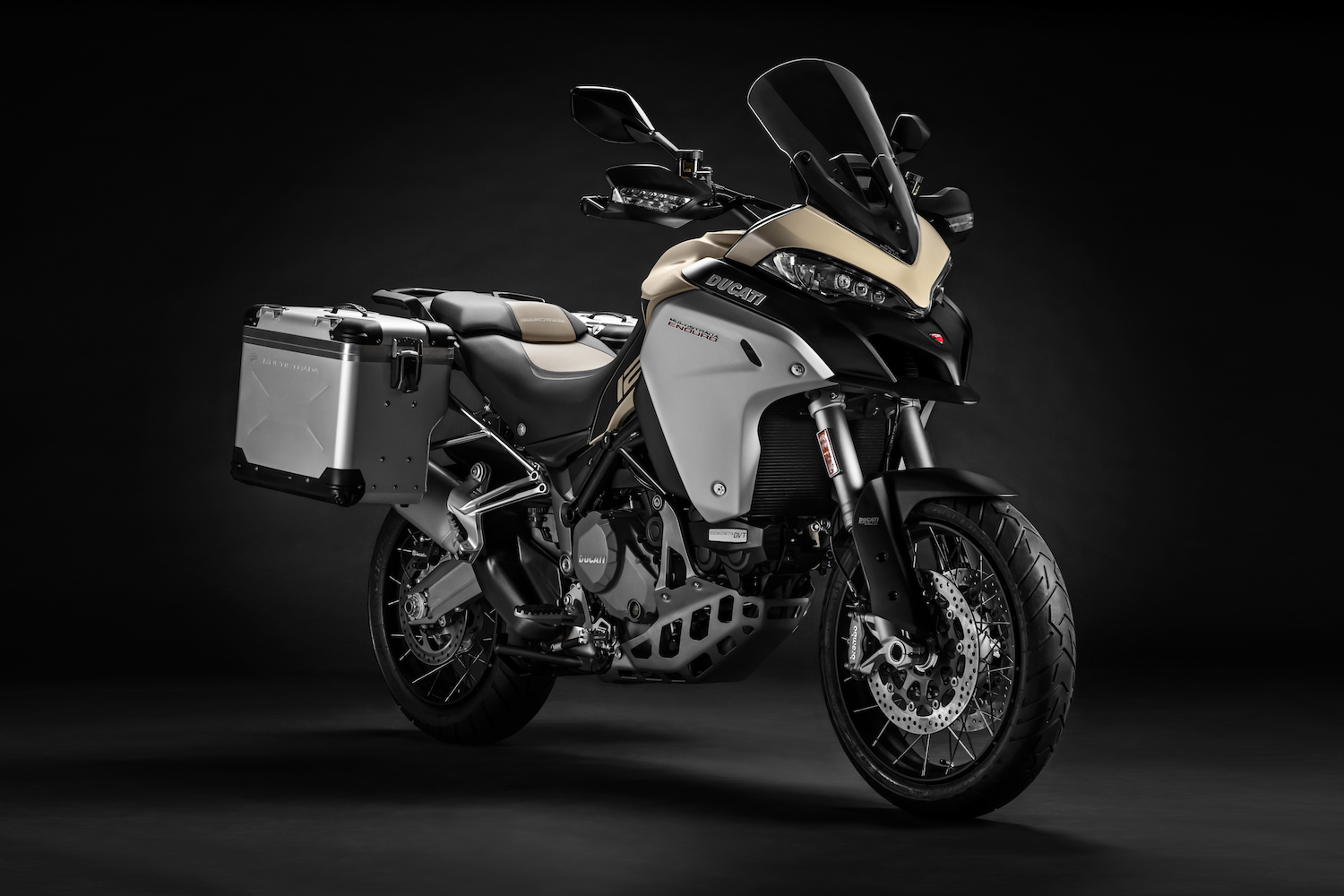
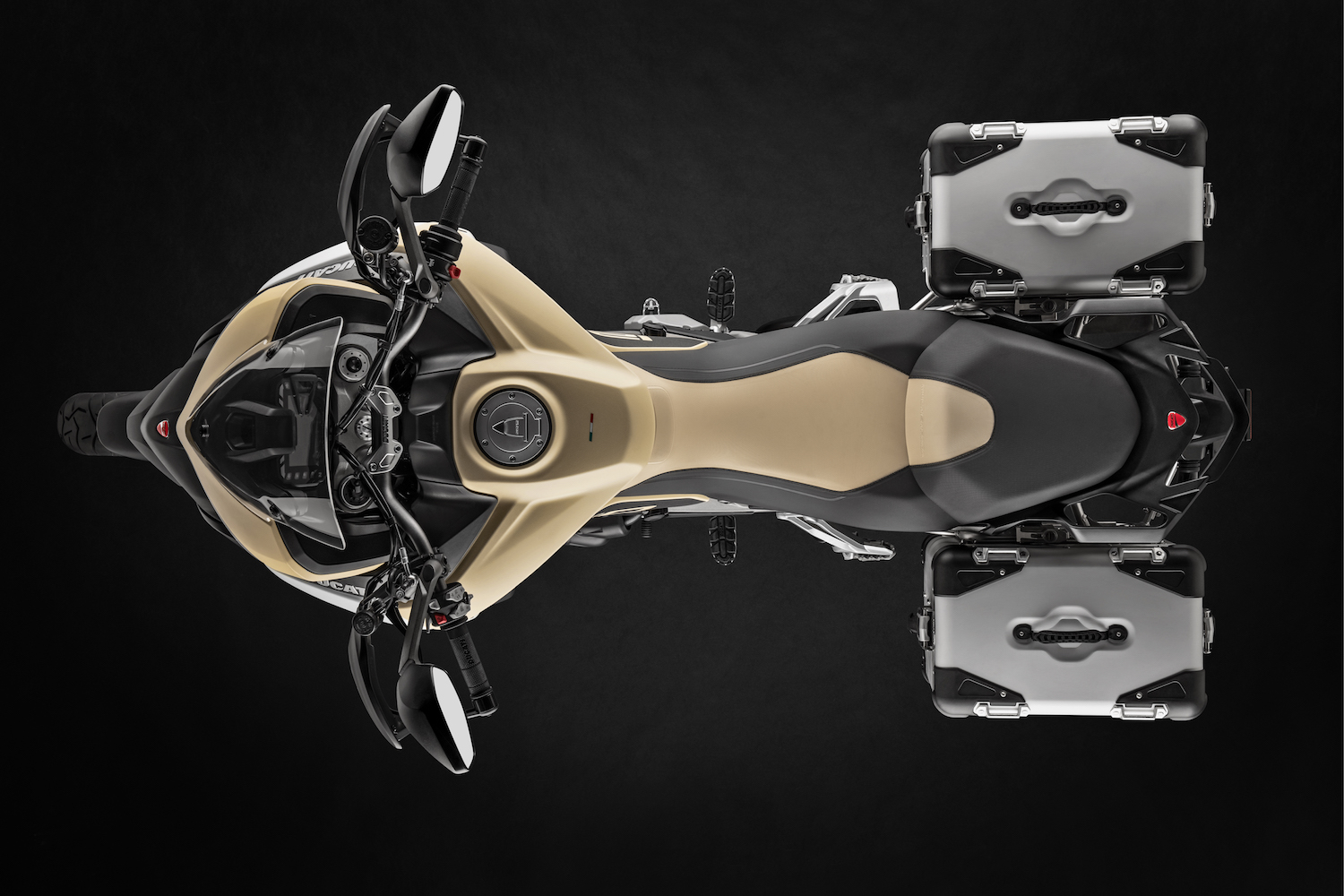
On October 12th in Bologna, Italy Ducati announced the arrival of the 1260 Enduro, the Bologna-built globetrotter has become even more user-friendly and fun, letting riders experience unlimited Ducati technology, performance and comfort whatever the challenge.
Presented back in 2016, the Multistrada 1200 Enduro was Ducati’s first travel enduro. The Enduro mounts the 158 hp, 1,262 cc Testastretta DVT with variable cam timing which made its debut last year on the Multistrada 1260. Compared to the previous version it has an extra 64 cc of displacement and a series of improvements that give it extremely smooth yet excellent pulling power right from the bottom of the rev range, making the bike more fun to ride than ever. While the new Testastretta engine provides impressive performance, power is kept under control and delivered safely thanks to the Riding Modes, the new Ride by Wire function which ensures smoother, more satisfying throttle control, and the DQS (Ducati Quick Shift) up and down which significantly improves the ride experience. The standard electronics package includes Bosch Cornering ABS, Cornering Lights, Wheelie Control, Traction Control and Vehicle Hold Control, making this bike the segment benchmark.
With spoked wheels – 19-inch at the front and 17-inch at the rear – the Multistrada 1260 Enduro is perfect for long adventure rides. Featuring re-calibrated electronic semi-active Sachs suspension (with 185 mm of travel both front and rear) and a 30-litre fuel tank, the Enduro is, with a range of 450 km and beyond, an unstoppable globetrotter on any terrain.
The new Multistrada 1260 Enduro will be available in Sand color in North America. There’s also a wide range of dedicated accessories, such as aluminium panniers and top case or a tire-pressure indicator, as well as the Touring, Sport, Urban and Enduro packages. The Multistrada 1260 Enduro will be previewed in November at the EICMA show in Milan and arrive at North American dealerships in February 2019.
Check out more at Ducati.com
The new 2019 Triumph Street Twin now brings a significant step up in power, a higher specification of equipment, even more rider comfort and first-in-class technology.
 Launched in 2016 the Street Twin is the most contemporary model in Triumph’s Bonneville line-up and has become the single biggest selling modern classic. The new 2019 Street Twin introduces a host of exciting new updates with more power and enhanced performance grabbing centre stage. The 900cc High Torque Bonneville engine benefits from a significant upgrade, delivering an incredible 10Hp more peak power. Totalling up to 65Hp, an impressive 18% more than its predecessor. This, combined with its renowned peak torque of 59 Ft-lbs delivered low down and its imposing twin upswept silencers, delivers that unmistakeable British twin soundtrack and thrilling, responsive Street Twin ride.
The new Street Twin represents a significant step forward in dynamic handling, exceptional rider and pillion comfort.
With new Brembo 4-piston brakes, and high-spec cartridge front forks with 120mm travel deliver a more comfortable ride. First in it’s class with new Road and Rain riding modes, which adjust the throttle map and traction
control settings and TPMS (Tire Pressure Monitoring System) accessory option and switchable traction control. The Street Twin also has an optional Café Custom kit and over 140 add-on accessories to personalize your ride. The new Street Twin is available in three exciting new paint schemes- Matte Ironstone, Korosi Red and Jet Black.
For more updates and information visit Triumph.ca
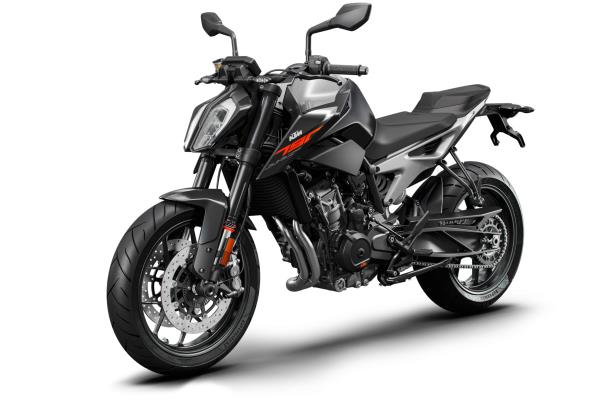
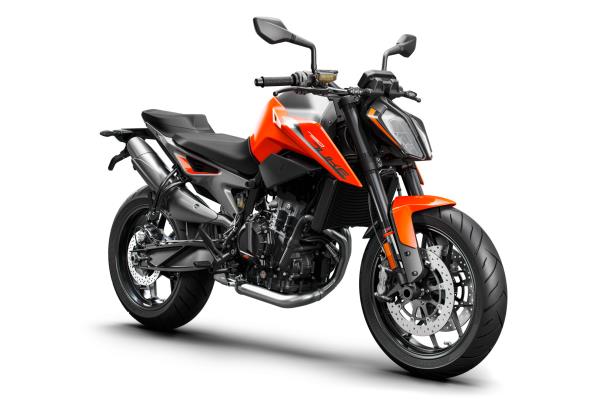
On October 9, 2018 in Germany KTM North America, Inc. was pleased to introduce the 2019 KTM 790 DUKE to the North American market, making its way to KTM Dealerships this November.
KTM 790 DUKE
 With the agility and purity you’d expect from a single, combined with the hard-hitting punch of a twin, the KTM 790 DUKE carves up the road with pinpoint precision, which now has a North American release date of November 2018. Boasting the all-new, compact 799 cc LC8c parallel twin motor – a first for KTM – nestled into one of the lightest frames around, the new KTM 790 DUKE is the most compact twin in its class. The engine was tuned for torque, giving it fantastic rideable power, while maintaining a great top end to match the sporty character of the bike. Power delivery is efficiently controlled by advanced electronics and next-generation rider aids.
Considerable attention was paid to achieving the typical DUKE, riding feeling of lightness, agility and sportiness. Handling is not only agile, but also very precise thanks to geometry developed specifically for sporty street riding. High-quality WP suspension ensures a perfect connection with the road and confidence in the bike at all times.
See Alan Cathcart’s report on the European launch of the 790 Duke in the June 2018 issue of Motorcycle Mojo.
To find out more information check out KTM Canada
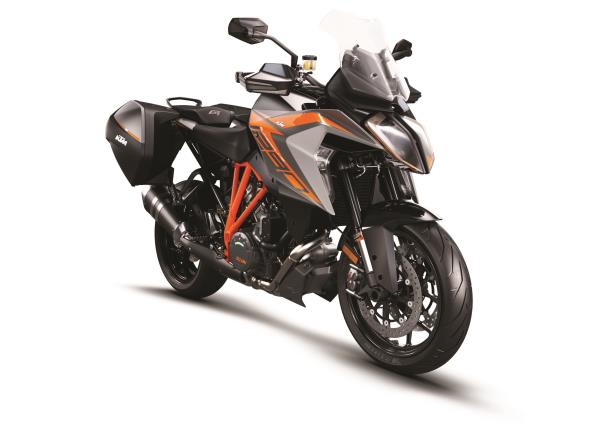
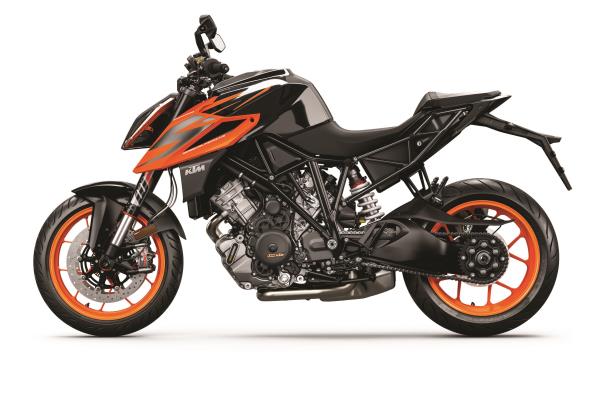
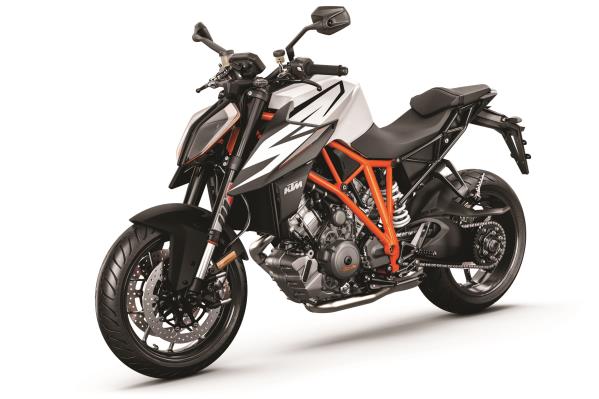
October 9, 2018 at the INTERMOT show in Cologne, Germany, KTM unveiled a sharper, stronger and more refined version of its premium sports tourer with the 2019 KTM SUPER DUKE GT, while ‘THE BEAST’ KTM 1290 SUPER DUKE R receives two new graphics options.
KTM 1290 SUPER DUKE GT
 At first glance, the 2019 “GT” betrays the distinct, extremely aggressive base of the 1290 SUPER DUKE R that became famous as the ‘THE BEAST’. Even though it was drafted as a separate model, the GT approaches touring from a sporty angle. This KTM is the cutting-edge interpretation of a sport bike fit for travel. The 1290 SUPER DUKE GT is not a slimmed-down super tourer with racing stripes, it is an extremely sporty real-world champion, which for the first time masters the seemingly impossible split between mountainous twisties, comfortable long-distance highway travelling and breath-taking track day use, thanks to intelligent and innovative design and technology.
For 2019, the 1290 SUPER DUKE GT features a new LED Headlight, handguards, improved wind protection, a full-colour TFT Dashboard, a whole new shape of the front and many more details like storage compartments and connectivity features. The GT’s engine also saw updates including titanium inlet valves, resonator chamber technology and new mapping, resulting in even further refinement, speed and performance.
KTM 1290 SUPER DUKE R
Hundreds of hours and thousands of test miles firmly cement KTM’s king of naked bikes on the cutting-edge of high-adrenaline motorcycling. Every piece, system, nut and bolt of the SUPER DUKE R wants you to go fast and yet stay in control: the wide, low handlebar, the Brembo monobloc brakes, the MSC including cornering ABS, the WP suspension, the optional, two-way Quickshifter+, the multifunctional TFT display and the LED headlight. The optional “Track Pack” includes launch control, spin adjuster, a track ride mode, freely configurable ignition mapping and anti-wheelie off function. Then, there is the optional “Performance Pack” to include motor slip regulation (MSR) and the Quickshifter+. The optional anti-wheelie mode can disengage the anti-wheelie function of the MTC, and with the KTM RACE ON transponder key in your pocket, you can forget about ignition keys and mechanically locked fuel caps.
Indian Motorcycle releases the groundbreaking FTR 1200 and FTR 1200 S.
Inspired by Indian Motorcycle’s storied history and success in flat track racing, the FTR 1200 and FTR 1200 S take design and styling cues from the championship-winning FTR750 race bike that has dominated American Flat Track since it was introduced in 2016. It also takes styling inspiration from the FTR1200 Custom, unveiled a year ago as an exploration of what a flat track-inspired street bike could be.
A new 1203cc V-Twin engine has approximately 120 horsepower and 85 ft-lbs of torque. The new platform is a key component in the company’s broader mission to expand its global appeal and reach new riders. “Our vision from the beginning was to be more than a traditional American V-twin brand. We continually seek to broaden Indian Motorcycle’s reach to a wider range of riders, and FTR 1200 represents a significant step forward in that strategy,” said Steve Menneto, President, Indian Motorcycle.
Housed in a trellis frame with a sporty riding position, both models feature an inverted front suspension with radially mounted dual Brembo brakes for exceptional control and stopping power. The fuel tank is strategically located under the seat for a lower centre of gravity and more centralized weight distribution. Similar to the FTR750 race bike, the airbox is positioned directly above the engine to optimize airflow and maximize power. Both models feature a similar rear suspension and swing-arm design as the FTR750 to not only provide a race bike look, but also ensure maximum grip and compliance on even the roughest of roads.
The FTR 1200 is available in Thunder Black, while the FTR 1200 S is available in Indian Motorcycle Red over Steel Gray, Titanium Metallic over Thunder Black Pearl, and a Race-Replica paint scheme matching the iconic FTR750 race bike. Both models will be available in dealers in spring of 2019.
Go to IndianMotorcycle.com for more information.
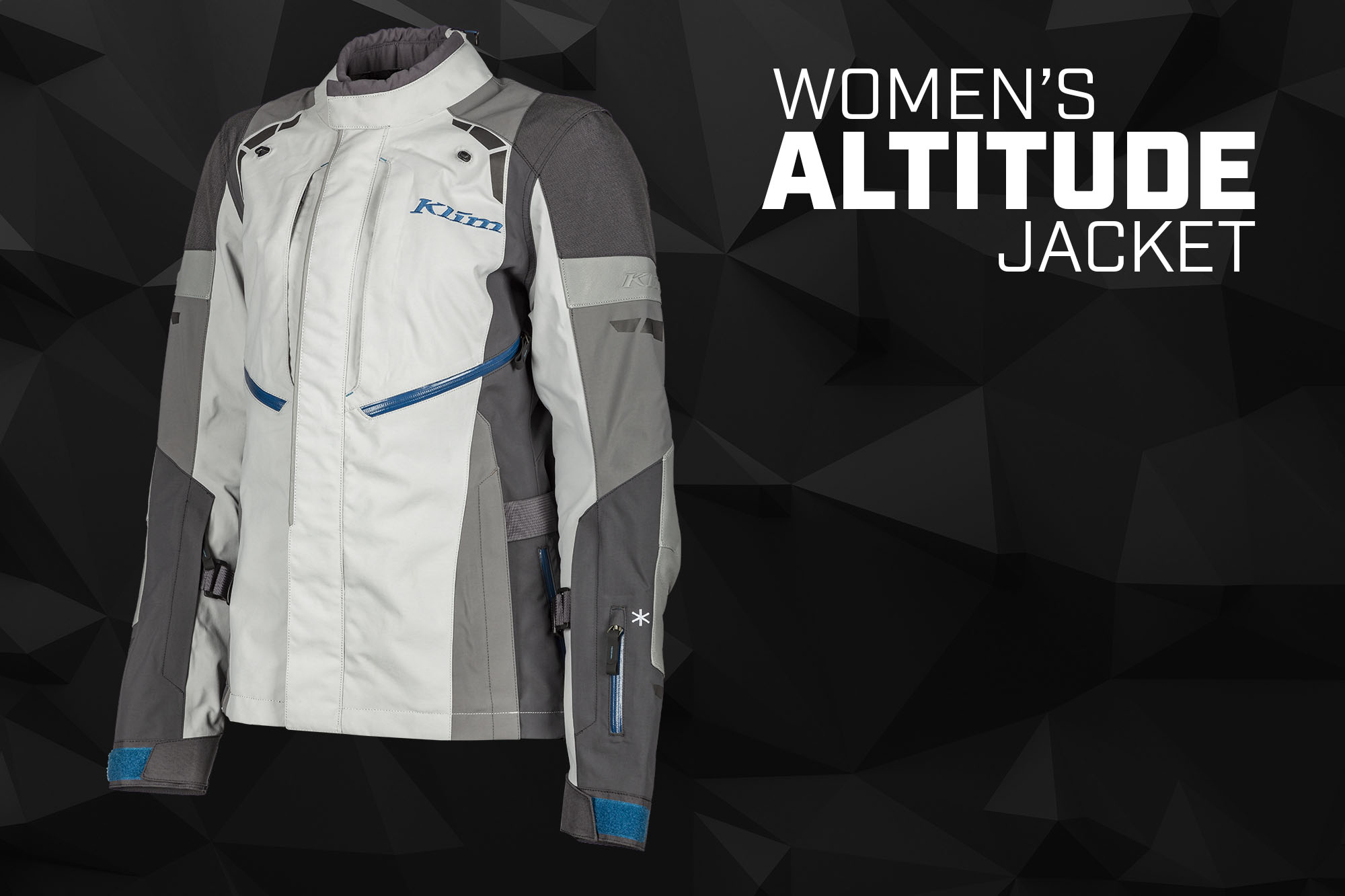
KLIM unveiled selected newly designed motorcycle gear from October 3-7, 2018 at the INTERMOT Expo in Cologne, Germany; with the full launch of the 2019 products to follow.
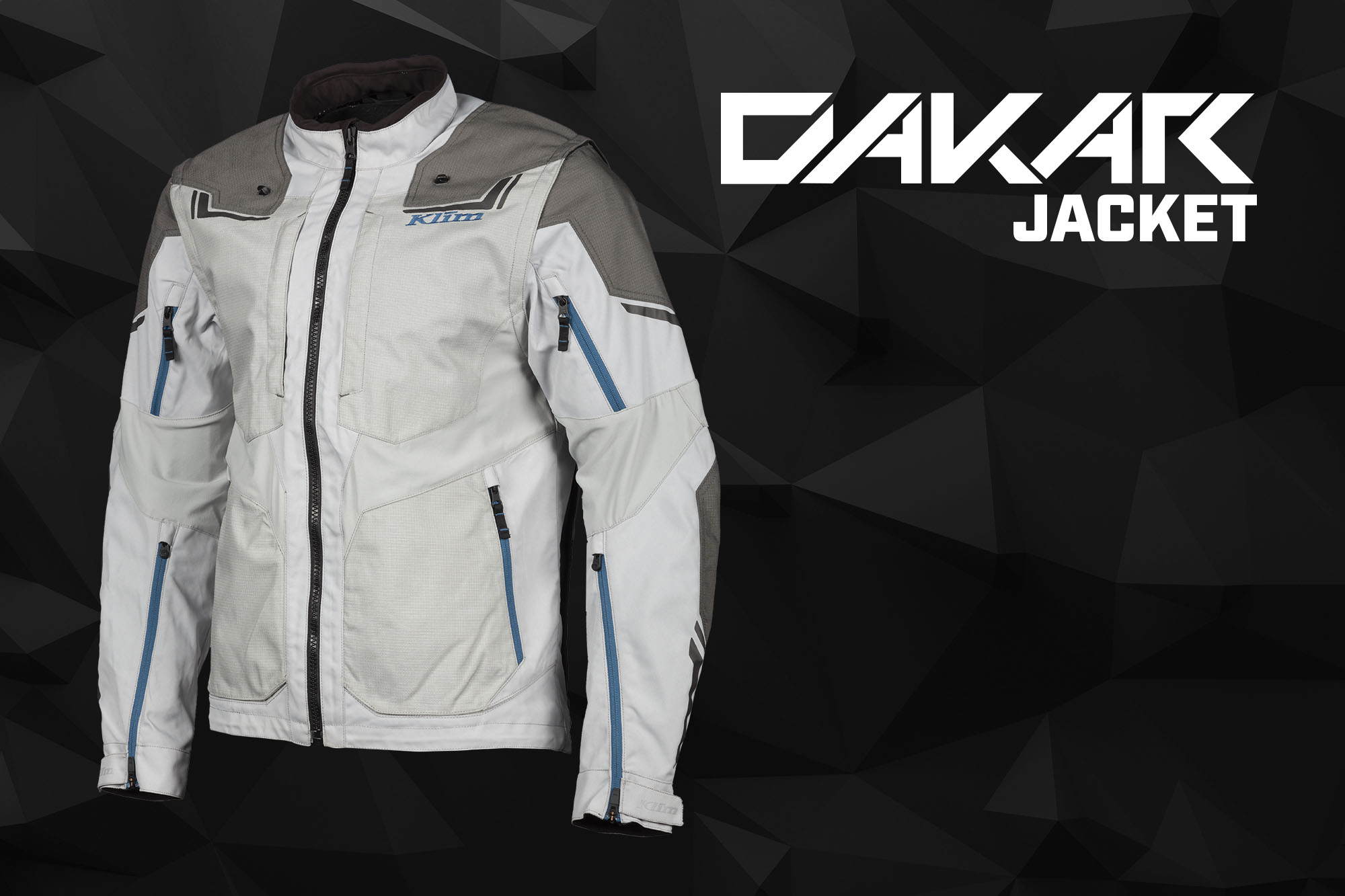
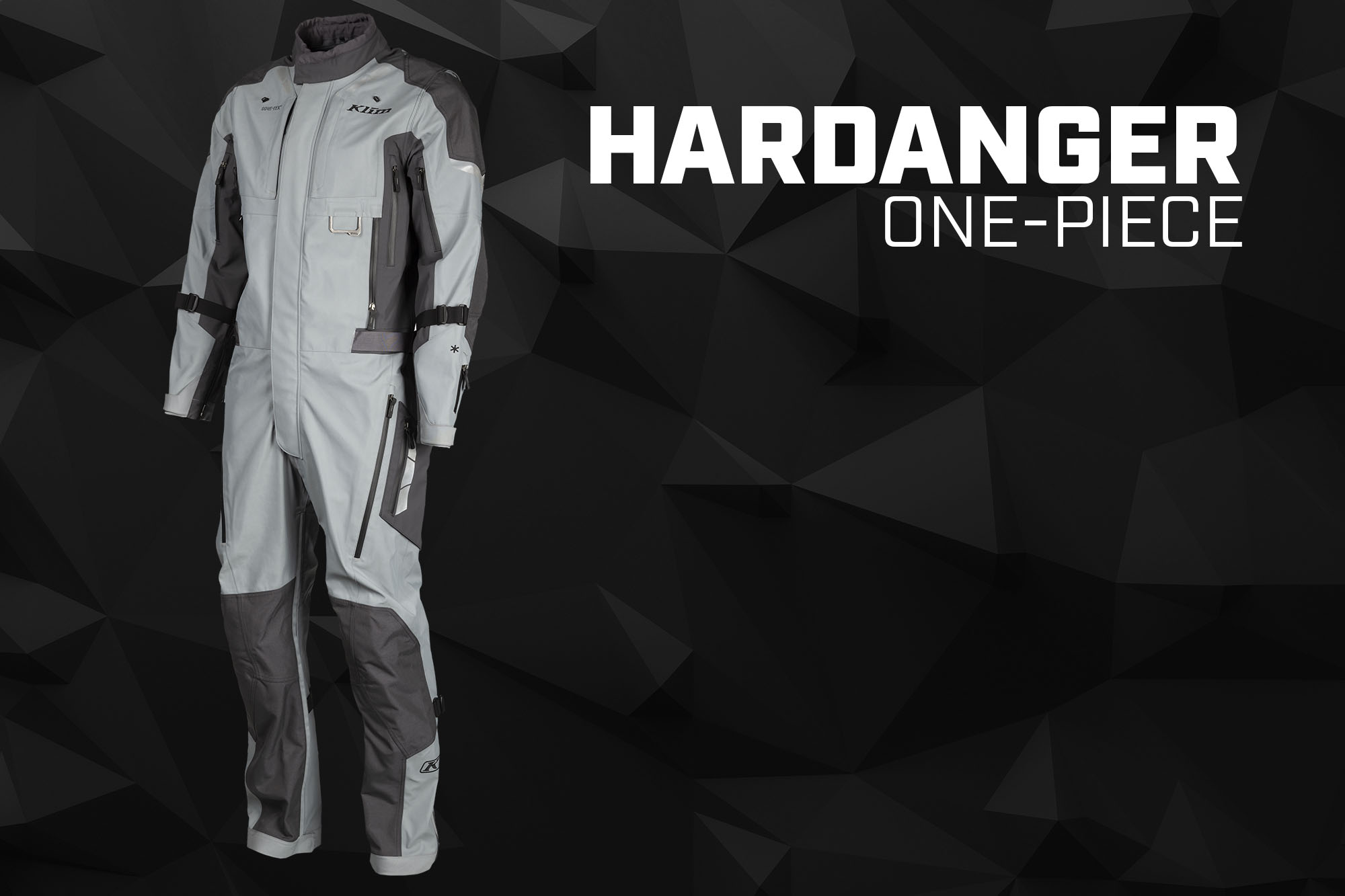
The lineup release includes a one-piece riding suit, redesigned women’s touring gear and men’s Dakar jacket. Below is more information on the release features.
NEW KLIM ONE-PIECE TOURING SUIT: THE HARDANGER – Engineered from a proven lineage of adventure and touring gear, the new Hardanger is the premier touring one-piece. Featuring full GORE-TEX waterproofing, full D3O vented armour, intuitive ventilation, and the functional practicality that touring riders need.
REDESIGNED KLIM WOMEN’S TOURING GEAR –KLIM is unveiling their newly redesigned women’s KLIM Altitude jacket and pants (Women’s Latitude in Europe). Engineered from a proven lineage of adventure and touring gear, the redesigned Altitude jacket and pants are refined for the ultimate touring experience. Featuring full GORE-TEX waterproofing, D3O armour, intuitive ventilation, and functional practicality that has been designed for women – by women.
REDESIGNED KLIM DAKAR JACKET -Developed from years of off-road experience in dirt bike and adventure gear, the new Dakar jacket is the ultimate dual-sport riding piece. Featuring removable sleeves, intuitive ventilation and lighter, durable, more comfortable fabrics, the Dakar is designed for aggressive off-road conditions.
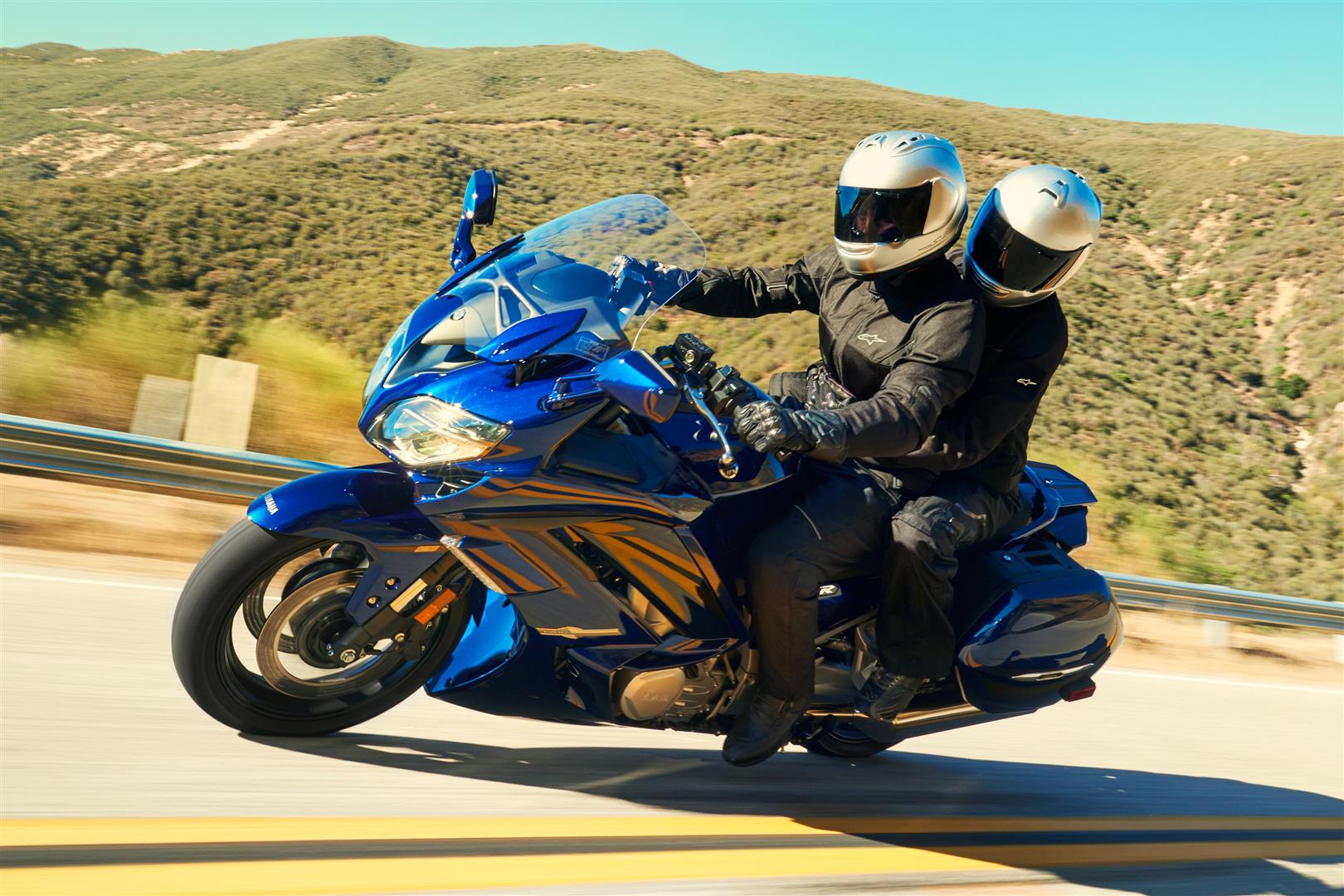
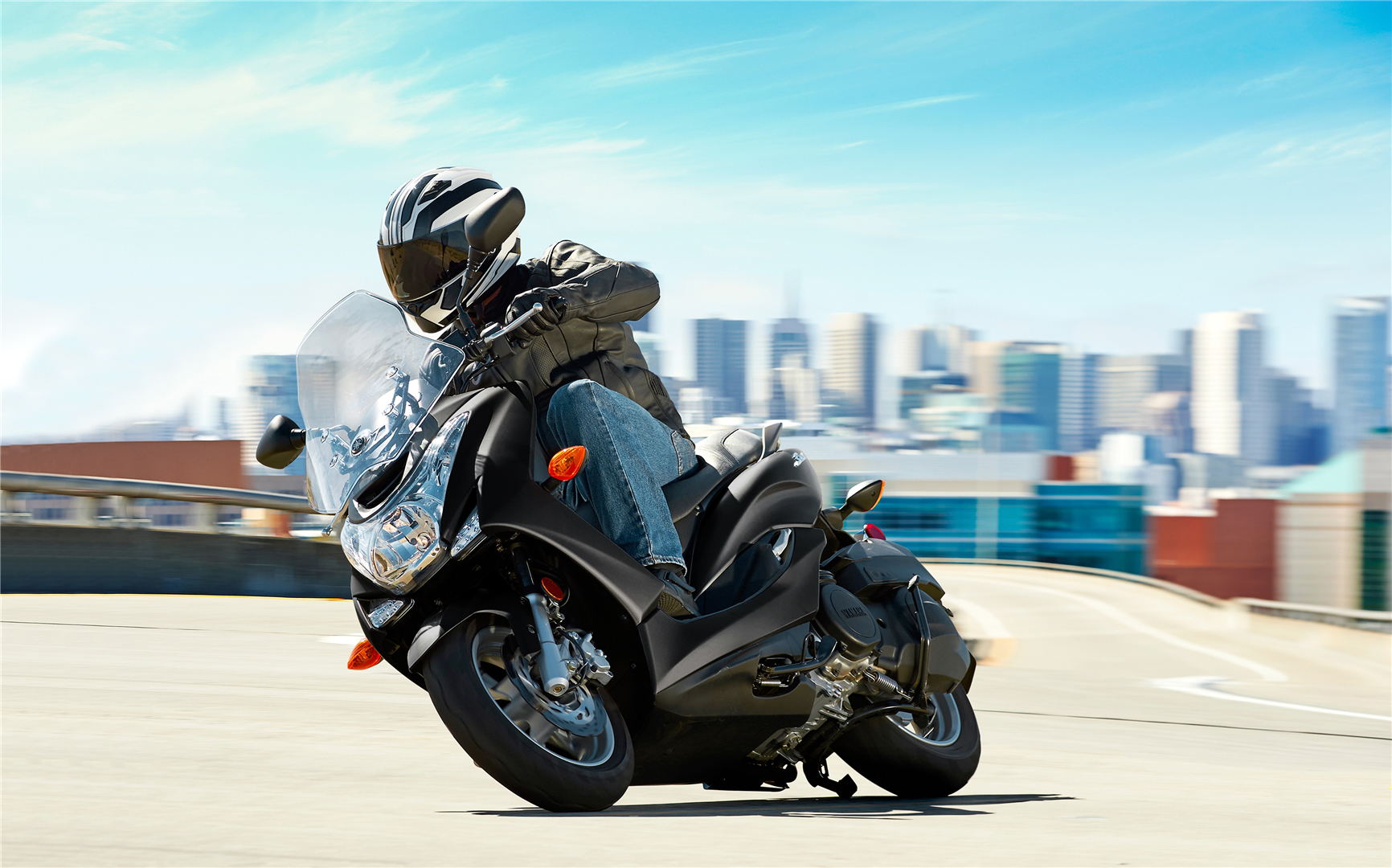
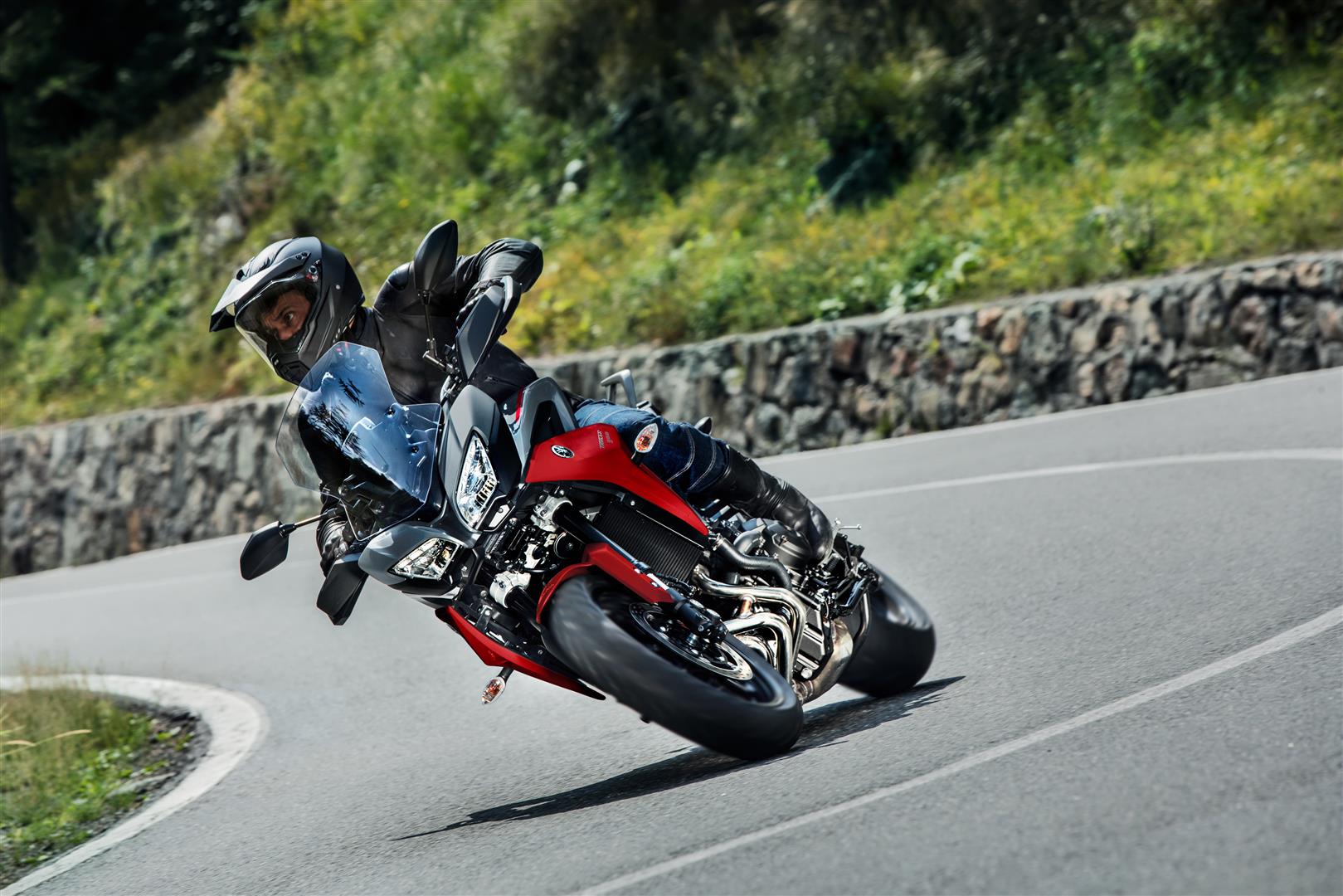
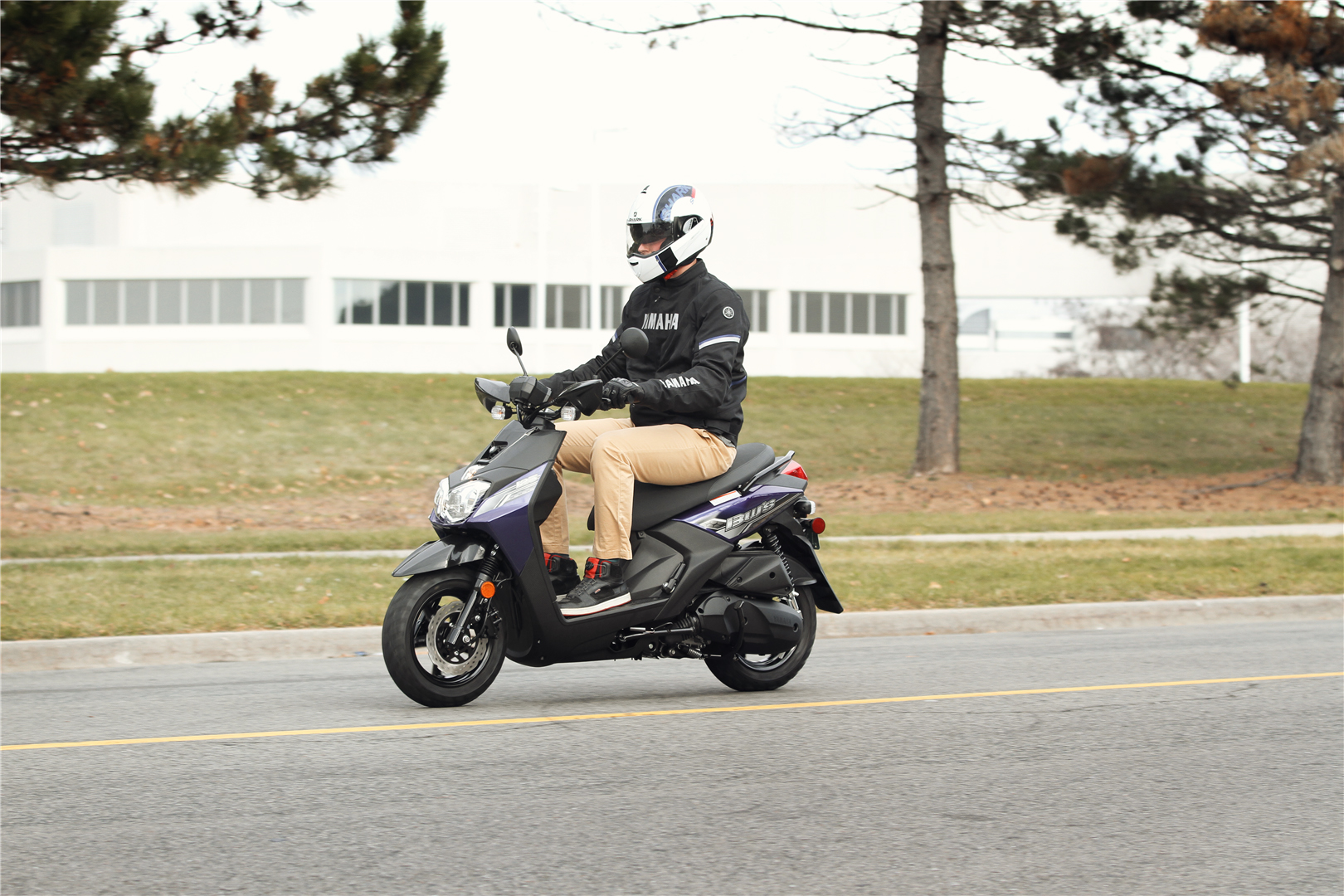
On September 28 in Toronto, Yamaha Motor Canada continued to roll out its 2019 motorcycle lineup with the release of the 2019 MT series, Tracer 900, FJR1300ES and a pair of scooters, the SMAX and BWS 125.
The MT series of naked motorcycles will once again include the MT-07, MT-09 and MT-10. The MT-07 (formerly FZ-07) was updated in 2018 with new styling and suspension, and remains a major player in the middleweight naked class thanks to its lively 685 cc inline twin and nimble chassis. The MT-09 (formerly FZ-09), the bike that rocked the industry when it debuted in 2014, returns with all the hallmarks that have made it a top-selling motorcycle in Canada. Lastly, the aggressive-looking MT-10 continues to prey on the naked class with its R1-derived engine and standard quickshifter.
Yamaha’s two key sport touring models also return for 2019, the FJR1300ES and the Tracer 900. The FJR1300ES comes with standard electronic suspension and creature comforts like heated grips, cruise control, an electronically adjustable windshield and 61 litres of storage capacity. Meanwhile, the Tracer 900 (formerly FJ-09) offers plenty of sport performance combined with a relaxed riding position for touring comfort.
Leading the 2019 Yamaha scooter lineup are the 155 cc SMAX and slightly smaller BWS 125, a pair of urban scooters with ample storage and enough punch to keep up with road traffic.
For full details including pricing, colour options, specs and accessories, visit www.yamaha-motor.ca.
Yamaha Motor Canada will continue releasing the 2019 lineup as we grow closer to the new year.
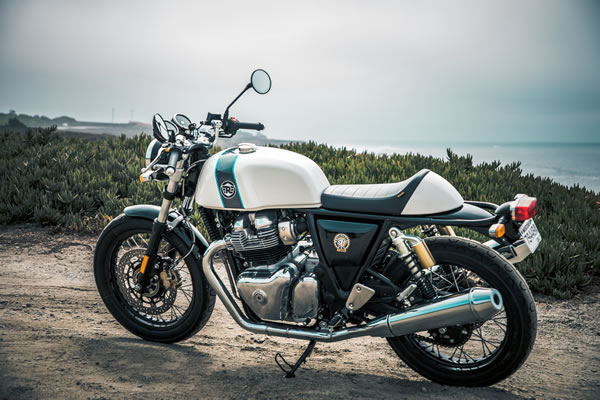
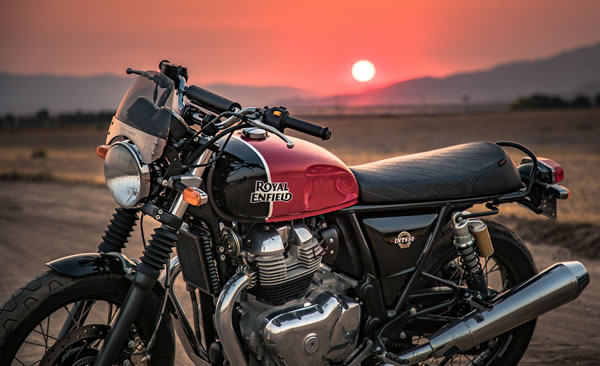
On September 26th, in Santa Cruz, California, Royal Enfield the leader in the global middleweight motorcycle segment, has officially announced the North America timing and pricing for the highly anticipated twin motorcycles. The INT 650 and the Continental GT 650 will be available at North American dealers in spring 2019.

“The twins are fun, affordable, capable motorcycles and will surely create excitement in the underserved middleweight segment in North America, while marking a significant milestone for the company globally,” said Rod Copes, president, Royal Enfield North America. “They are an integral part of Royal Enfield’s continued growth plan in the United States, Canada and Mexico.”
The first twin-cylinder motorcycles to be produced by Royal Enfield since 1970 – are built for real-world riding with sufficient power to navigate city traffic or cruise effortlessly on the open road. The offerings will inspire confidence in new riders and satisfy the performance expectations of experienced riders. The twins combine carefully considered engineering with classic looks and are inspired by the past and designed to remain relevant. Air-cooled to simplify maintenance and ensure lines that are faithful to Royal Enfield’s rich design heritage.
INT 650
The INT 650 is reminiscent of the street-scrambler-style motorcycle that emerged in California in the ’60s with a teardrop tank, dual seat and high, braced handlebars for a comfortable and commanding riding position.
Continental GT 650
The Continental GT 650 offers a more committed riding position and features a twin seat, sculpted fuel tank, rear-set footrests and race-style, clip-on handlebars for an optimum blend of steering feel and comfort with no compromise.
For more information on Royal Enfield North America, please visit www.RoyalEnfield.com/USA,
www.Instagram.com/
or www.Facebook.com/
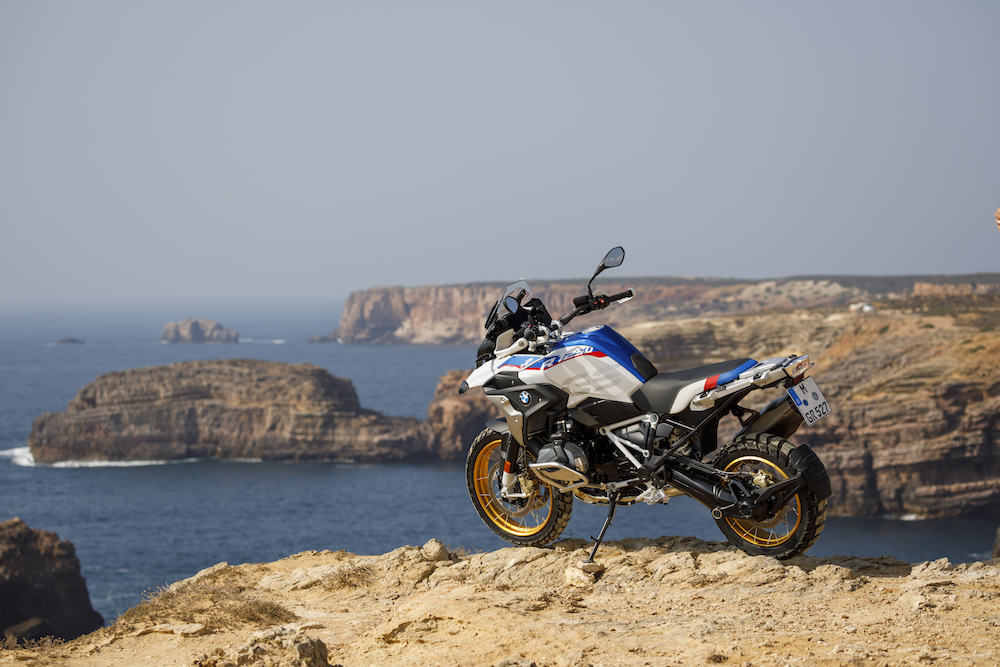
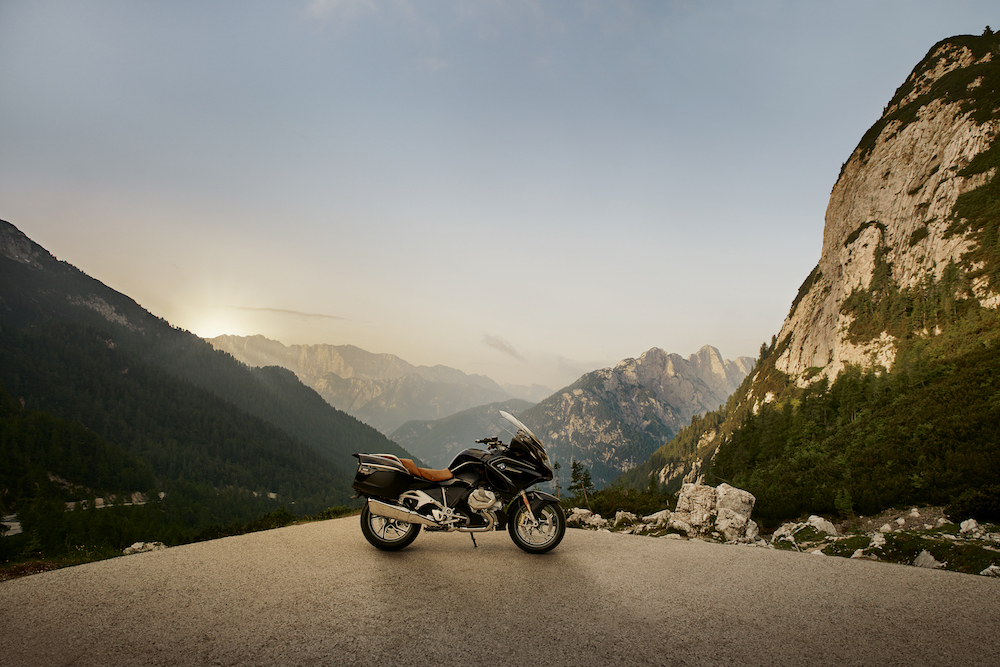
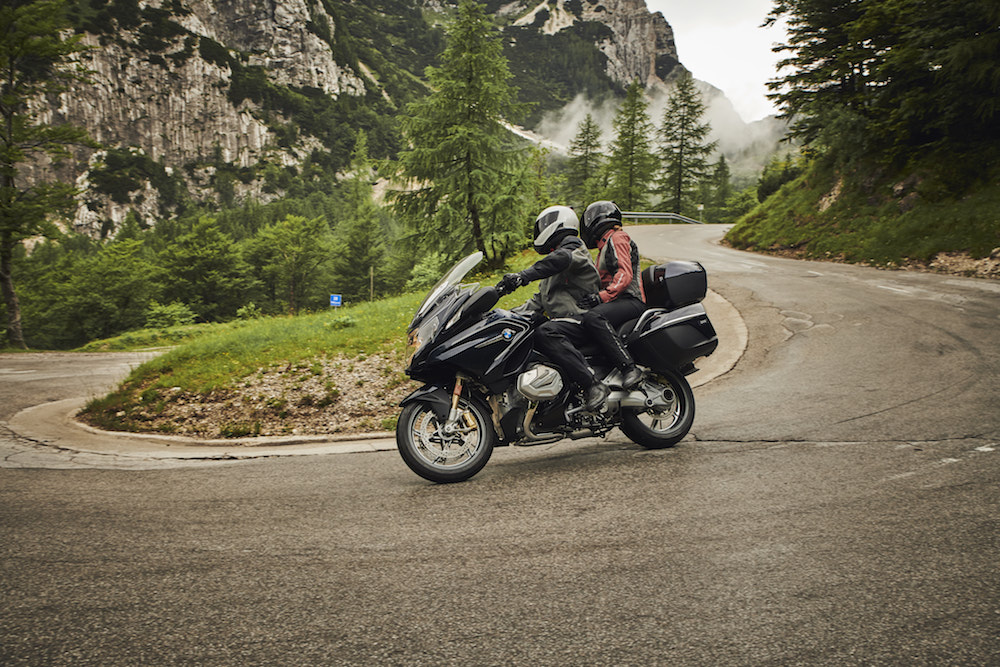
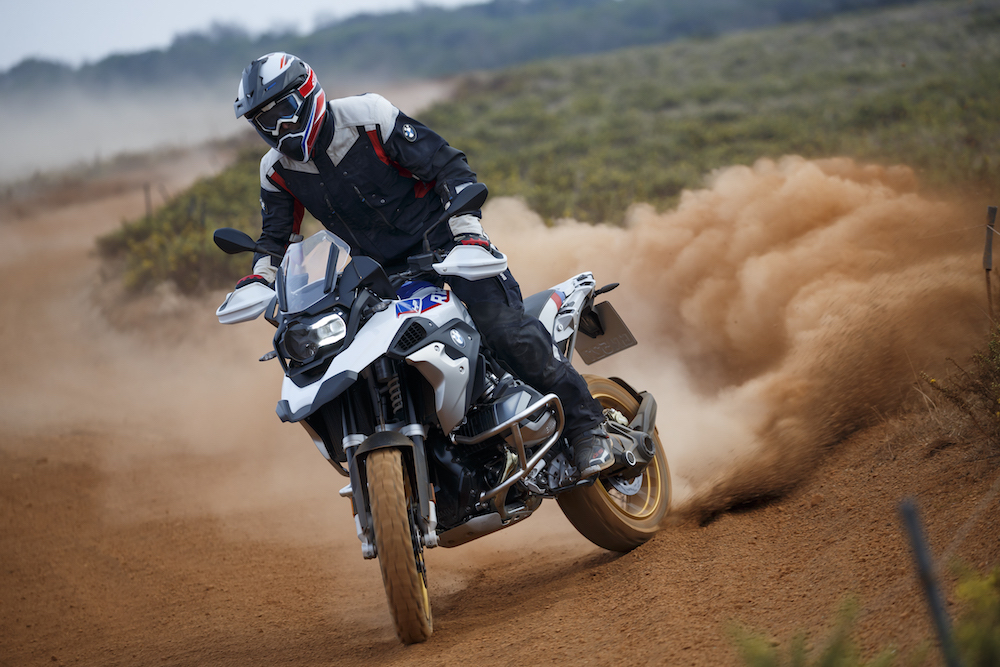
For more than 35 years, the flat-twin boxer engine in the BMW Motorrad GS and RT models have stood for powerful and reliable propulsion. With the extensively further advanced boxer engine with BMW ShiftCam technology, the new R1250GS and R1250RT achieve a whole new level of performance and efficiency.
For over 25 years, BMW Motorrad has used 4-valve technology, combined with electronic fuel injection and closed-loop catalytic converter technology. Evolved in order to achieve the best possible power and torque delivery, efficiency and environmental compatibility. With the extensively updated boxer engine, the new R1250GS and R1250RT not only achieve new level of power and torque, but significantly optimize refinement and running smoothness – especially within the lower engine speed range. Further more, the new engine offers improved emission and fuel consumption levels as well as a particularly robust sound.
For this purpose, BMW ShiftCam Technology has been used for the first time in the serial production of BMW Motorrad engines: this enables variation of the valve timings and valve stroke on the intake side. In addition, the intake camshafts are designed for asynchronous opening of the two intake valves, resulting in enhanced swirl of the fresh, incoming mixture and therefore more effective combustion.
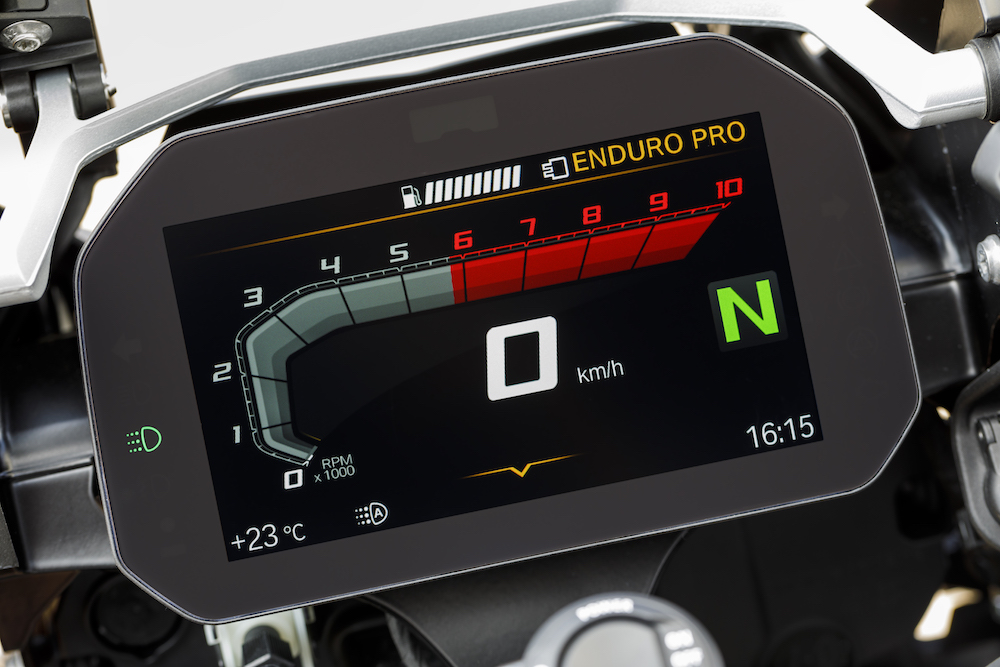
There are two riding modes available as standard in order to be able to adapt the motorcycle to individual rider preferences. The standard Automatic Stability Control ASC ensures a high level of riding safety due to the best possible traction. The set-off assistant Hill Start Control is likewise a standard feature in both models, enabling convenient set-off on slopes. The option “Riding Modes Pro” is now available as an optional equipment item, featuring the additional riding mode “Dynamic”, Dynamic Traction Control DTC, and in the R 1250 GS also the riding modes “Dynamic Pro”, “Enduro” and “Enduro Pro”. ABS Pro (part of Riding Modes Pro in the R1250GS, a standard feature in the R1250RT) offers even greater safety when braking, even in banking position. The new Dynamic Brake Control DBC provides additional safety when braking, also in difficult situations, by avoiding unintentional accelerator activation.
Electronic suspension Dynamic ESA “Next Generation” with fully automatic load compensation, now also for the R1250RT. With the optional equipment item BMW Motorrad Dynamic ESA “Next Generation”, damping automatically adapts to the situation according to riding state and manoeuvres, and there is also automatic compensation in all load states. This allows finely tuned adaptation of the motorcycle to riding states, achieving optimum damping comfort and a very stable ride response – this is now also available for the R1250RT.
The new R1250GS now has the equipment feature Connectivity as standard including a 6.5-inch full-colour TFT screen. In conjunction with the standard BMW Motorrad Multi-Controller, this means the rider can access vehicle and connectivity functions particularly swiftly and conveniently.
Intelligent Emergency Call as an extra works option. Ensuring the fastest possible assistance in the event of an accident or in situations of emergency and danger can save people’s lives. The optional equipment item Intelligent Emergency Call summons assistance to the scene as quickly as possible. As before, this feature can be ordered for both models.
The All-New 2019 BMW R1250GS and R1250RT will be on sale in Canada in October 2018, with MSRPs, respectively, of:
R1250GS – $21,400
R1250RT – $22,050
-Prices in Current Canadian Dollar