
BMW Motorrad presents autonomous driving BMW R 1200 GS.
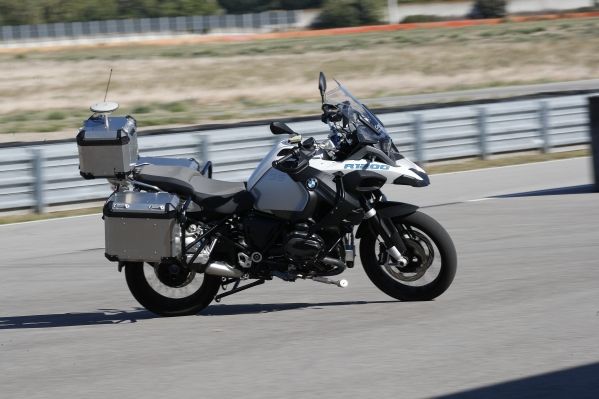
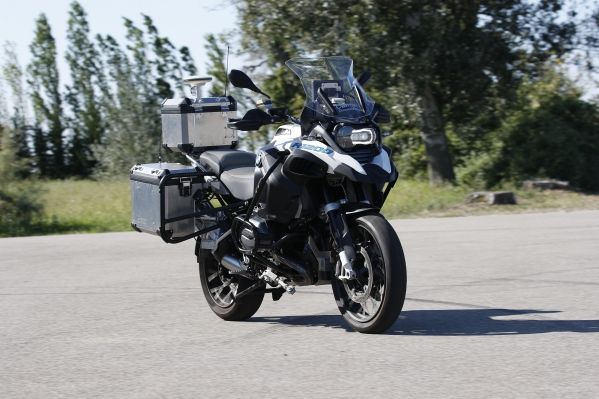
BMW Motorrad’s first autonomous motorbike was presented last week at the BMW Motorrad Techday in Miramas, southern France.
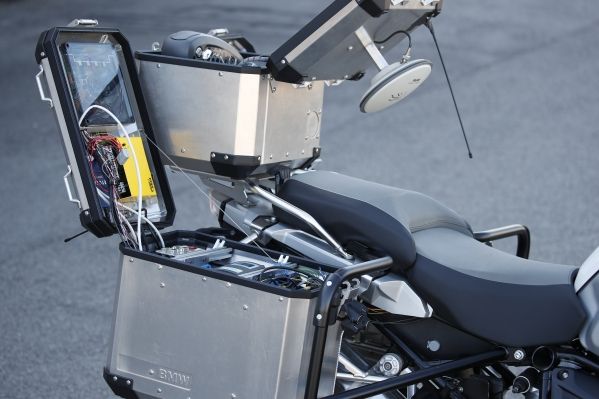
Developed by graduate engineer Stefan Hans and his team, the vehicle independently drives off, accelerates, circles a winding test track and independently slows down to a stop. With this forward-thinking development, BMW Motorrad, is by no means aiming for a completely independent motorbike. Rather, the underlying technology should serve as a platform for development of future systems and functions to make motorcycling even safer, and more comfortable.The aim of the prototype is to gather additional knowledge with regards to driving dynamics in order to detect dangerous situations early on and thus support the driver with appropriate safety systems to ensure safety.
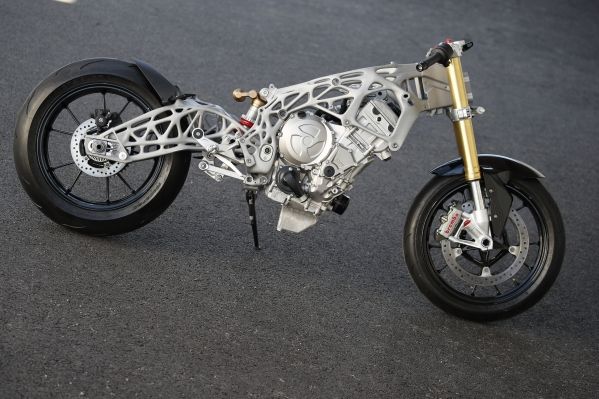
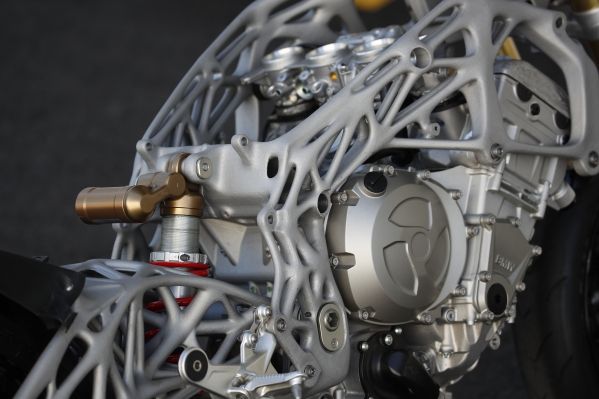
BMW Motorrad presented many more exciting technology projects such as Luminous motorcycle headlights from cornering lights to laser headlights; as well as a motorcycle frame manufactured completely using a 3D printing process, including a rear swinging arm. This manufacturing process has already made its way into series production for various vehicles. The advantage of 3D printing lies in the complete freedom of designing components that could not be produced in other ways.
The innovative processes used in the production of motorcycle chassis components, such as frame, swinging arm and wheels are made from the lightweight, yet high-strength material carbon – already industrially manufactured in the BMW HP4 RACE. With the goal of maximum innovation and highest possible quality, BMW Motorrad and BMW Automobile have a close alliance in this field too, where this material has long been used in series production.
BMW Motorrad has always been a leader in innovation, and have shown how the rapid pace of digitization will be shaping the future of motorcycling. To read about other innovations produced by BMW and more information on the Autonomous Motorcycle click on their links below.
Facebook: http://www.facebook.com/BMWGroup
Twitter: http://twitter.com/BMWGroup
YouTube: http://www.youtube.com/BMWGroupview
On September 5th Indian Motorcycle announced a redesigned Chieftain lineup.
Since its debut in 2013, the Chieftain has consistently won high marks for handling, power and comfort. Now, for 2019, the Indian Chieftain, Chieftain Dark Horse and Chieftain Limited feature more streamlined, aggressive styling that reflects the bike’s well-established performance capabilities. For those loyal to Indian’s classic designs, the 2019 Indian Chieftain Classic will continue to feature its traditional fairing and iconic valanced front fender.
“As we continue to evolve the Indian Motorcycle brand, we want to expand our lineup with more aggressive style options, while still maintaining the availability of our more classic style options,” said Reid Wilson, Senior Director for Indian Motorcycle. “What’s most important to us is developing motorcycles that meet a wide variety of customer style preferences, and Chieftain’s new look does just that.”
At first glance of the new Chieftain, riders will notice a restyled fairing and saddlebags with sharper lines and harder edges that give the bike a commanding presence and more streamlined look. A trimmed and slimmed fairing, paired with full LED lighting and new fork guards, delivers a package that’s indicative of the bike’s impressive performance capabilities. The Chieftain’s new, slammed saddlebags with colour-matched fender closeouts and the new Rogue gunfighter seat also provide a sleek and custom-inspired look. .
Chieftain maintains its superior handling and comfort with more than ten centimetres of rear suspension travel. For a more customized ride experience, riders can now choose between three Ride Modes – Tour, Standard or Sport. The throttle map for each Ride Mode was designed with a specific application in mind, resulting in one bike with three distinct personalities. All 2019 Chieftains are also equipped with Rear Cylinder Deactivation for increased rider comfort when the bike is stationary.
Also new for 2019, the Chieftain Dark Horse lineup expands with new paint options, including White Smoke, Bronze Smoke and Thunder Black Smoke. More than just matte-finish body paint, the 2019 Chieftain Dark Horse now features premium black ceramic exhaust and gloss black finishes on the primary cover, valve covers, push-rod tubes, cam cover, and saddlebag hinges for a custom, blacked-out look.
Pricing for the 2019 Chieftain begins at $26,999, while the Chieftain Dark Horse starts at $32,499. Indian’s Chieftain Limited is available starting at $32,499. Pricing for the Chieftain Classic begins at $31,499. All prices in current Canadian Dollar.
Arriving at dealerships now, riders can learn more or test ride by visiting a local Indian Motorcycle dealership. For more information on the 2019 Chieftain lineup, or to find the nearest dealer, visit IndianMotorcycle.com and follow along on Facebook, Twitter and Instagram.
Harley-Davidson, Inc. announced it will establish a new research and development facility in Northern California’s Silicon Valley.
 On September 6th, Harley-Davidson announced the new facility in California, which will serve as a satellite of the Willie G. Davidson Product Development Facility in Wauwatosa, Wis. Created to support its future product portfolio, including the company’s first complete line of electric vehicles; the facility is expected to open in the fourth quarter of 2018. It will initially focus on electric vehicle research and development, including battery, power electronics and e-machine design, development and advanced manufacturing. Long term, the company may consider expanding the centre’s focus to an increased range of advanced technologies that uniquely leverage the rich talent in the Silicon Valley and support its most comprehensive and competitive lineup of motorcycles across a broad spectrum of price points, power sources and riding styles.
“Recently we shared with the world our accelerated plans to build the next generation of Harley-Davidson riders globally,” said Matt Levatich, President and CEO of Harley-Davidson, Inc. “This new R&D facility in the heart of Silicon Valley will help us deliver on those plans and demonstrate our commitment to lead the electrification of the sport.”
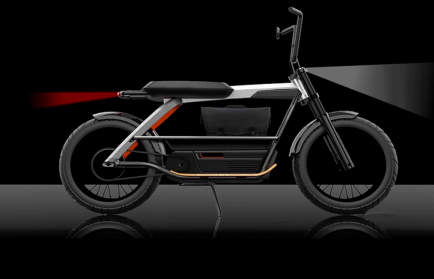
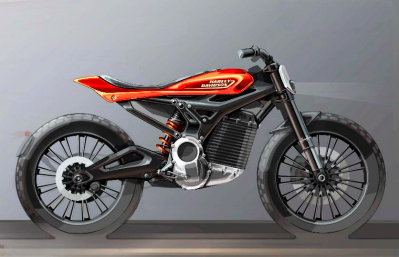
As part of their “More roads to Harley-Davidson” growth plan, Harley-Davidson will launch its first electric motorcycle, LiveWire™, in 2019. That motorcycle will be the first in a broad, no-clutch “twist and go” portfolio of electric two-wheelers designed by the company. It will be followed by additional models through 2022 to broaden the portfolio with lighter, smaller and even more accessible product options to inspire new riders with new ways to ride.
The company has already begun recruiting top talent in electrical, mechanical and software engineering, with experience in developing and delivering a wide variety of EV systems from design through production. The facility will initially employ a staff of approximately 25, most of which the company intends to hire from within the Silicon Valley area.
“This is an exciting time in Harley-Davidson’s incredible history, and it’s also an exciting time to join our company and help shape our future,” said Levatich.
For more information on the “More Roads to Harley-Davidson” plan, follow this link. For a variety of career opportunities at Harley-Davidson, including roles at the new research facility, please visit us at https://www.harley-davidson.com/careers.
Lubricating a drive chain can be a tedious task. It’s made easier if your bike is equipped with a centre stand, but if it’s not, you either have to prop up the bike so the rear wheel is in the air or you must roll the bike a short distance, partially lube the chain, and then roll the bike some more. You have to monitor the chain regularly, but even then, lubricating intervals can vary widely, depending on the conditions in which you ride. If you’re travelling long distances, you must pack a can of chain lube, which has a tendency to get a bit messy over time, and if you lose the plastic extension nozzle, lubing the chain becomes a tricky proposition.
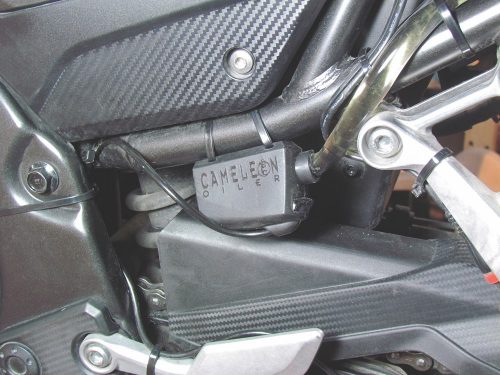 The Cameleon Chain Oiler Plus, an add-on electrically controlled automatic chain oiler, promises to keep your chain lubed with very little effort on your part, aside from the initial installation and occasional refilling of the oil reservoir. To give the Cameleon oiler a thorough workout, I installed one on one of the training motorcycles at the riding school I teach at, a 2016 Honda CB500F, since it goes out on the road four days a week, in challenging urban conditions and in all weather except snow.
The Cameleon Chain Oiler Plus comes complete with easy-to-follow instructions, all the hardware and wiring necessary for installation, as well as a full reservoir. Cameleon claims the quantity of oil in a full reservoir is good for about 8,000 km, which in my case should be good for the entire season of rider training without a refill. The company recommends refilling the reservoir with its CCo-90 ester-based synthetic formula, which is claimed to reduce oil splash. One 236 ml can ($20) is good for up to 37,000 km.
Installation proved easier than I anticipated. The first thing to do is to locate an ideal place to install the control unit. The plastic unit is designed to be installed onto a frame tube using the supplied tie wraps. The best location I could find on the CB500F was on the lower sub-frame tube, just ahead of the left passenger foot peg mount. This allowed me to route the reservoir tube upward and under the passenger seat. When the unit is shipped, the reservoir tube is capped to prevent leakage. It must be replaced with a vented cap to enable the oil to flow in the gravity-fed system, and you must place the end of the reservoir hose as high as possible, with the vented end cap facing up. On the CB500F, the best location was at the rear of the tailpiece, out of sight under the passenger seat.
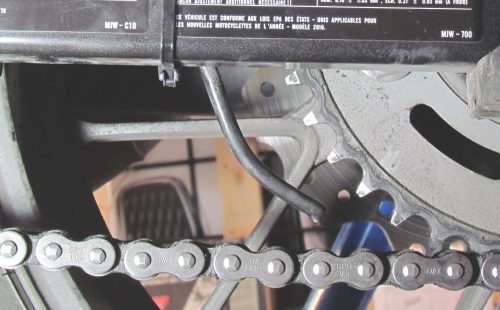 You have to check the clearance between the control unit and the swingarm or chain guard to make sure there’s no contact as the suspension works. To achieve the correct clearance on the CB500F, I had to turn the unit outward just a bit to clear the chain guard. Also pay attention to the routing of the reservoir tube and feed hose to prevent pinching or binding. The unit comes with a long feed hose and power wire, so you can also install it out of sight if you prefer, but then it will be difficult to access the programming button.
A semi-rigid oiling tube is supplied, which must be shaped and cut to length after you find the ideal mounting position. It follows the swingarm and eventually ends about 25 mm from the lower rear sprocket and drive chain junction. You can either attach it to the swingarm with the provided cable clamps, which require drilling the swingarm to mount them, or with tie wraps, as I did.
To wire the unit, you can tap it into a taillight or licence-plate feed wire, or, using an optional wiring kit, connect it to the fuse box. I connected it to the wire for the licence plate light (all the necessary connectors are included).
Once it’s connected, you can adjust the feed by turning on the ignition and pressing the programming button immediately, before the unit powers on. All you do is hold the button as an LED light flashes once for each of the seven feed levels (1 is low feed, 7 is maximum), and release it at whichever level you prefer. I set it to level 4, and will monitor the chain to see if the unit needs fine-tuning.
The unit is motion and temperature sensitive, and will adjust the flow of chain lube according to ambient temperature, or if it senses extensive movement, as when riding off-road, in which case it will increase oil flow. I’ll report on the performance of the Cameleon Chain Oiler Plus in a future issue.
For more information, go to cameleonoiler.com.
You can purchase the Cameleon Chain Oiler Plus at amazon.ca for $250; it comes with a three-year warranty.
Technical articles are written purely as reference only and your motorcycle may require different procedures. You should be mechanically inclined to carry out your own maintenance and we recommend you contact your mechanic prior to performing any type of work on your bike.
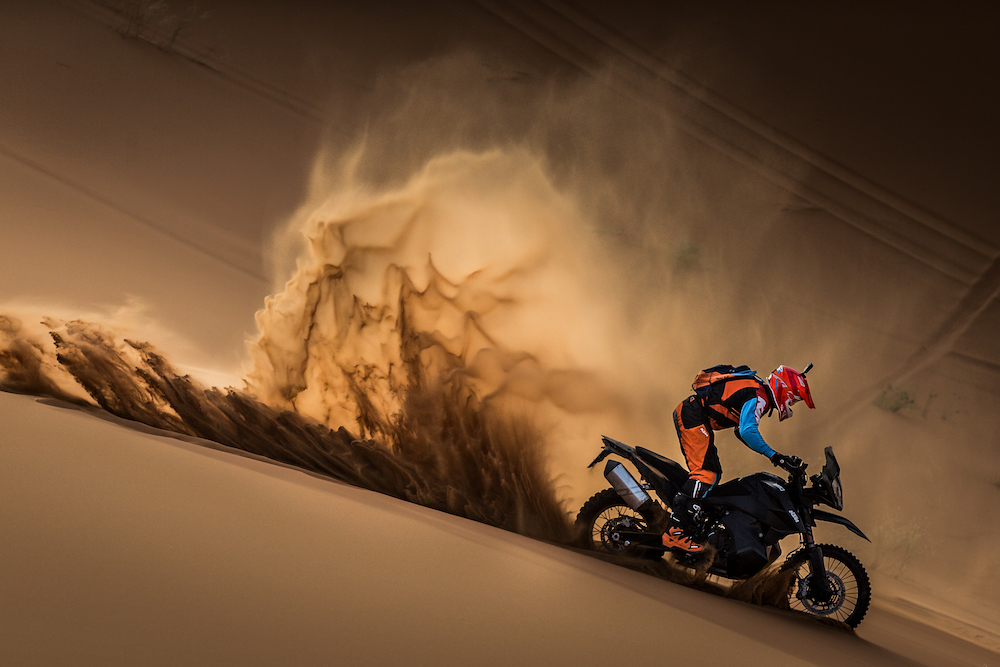
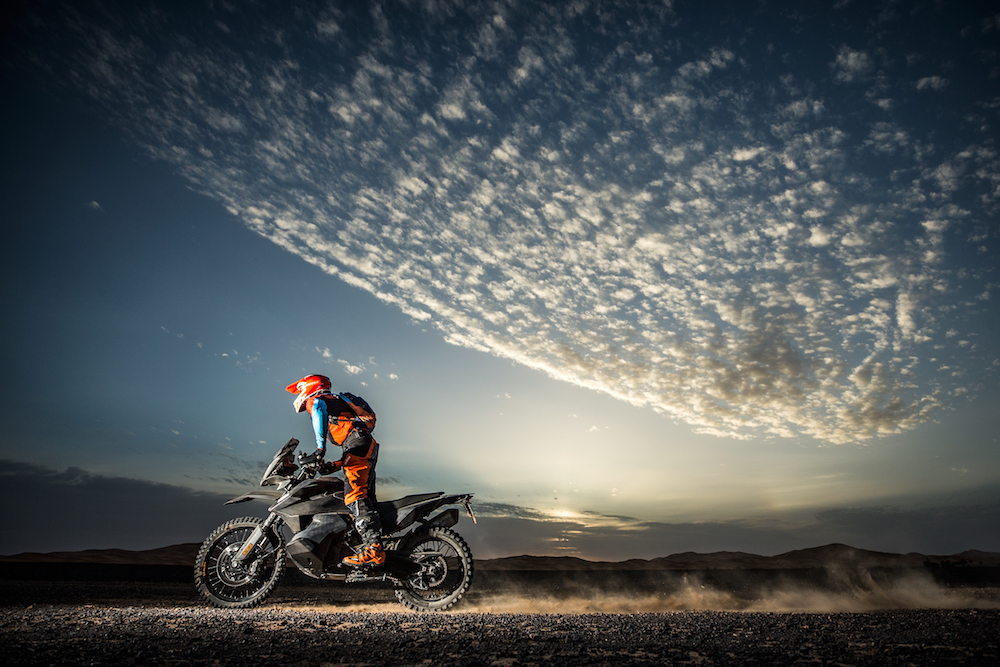
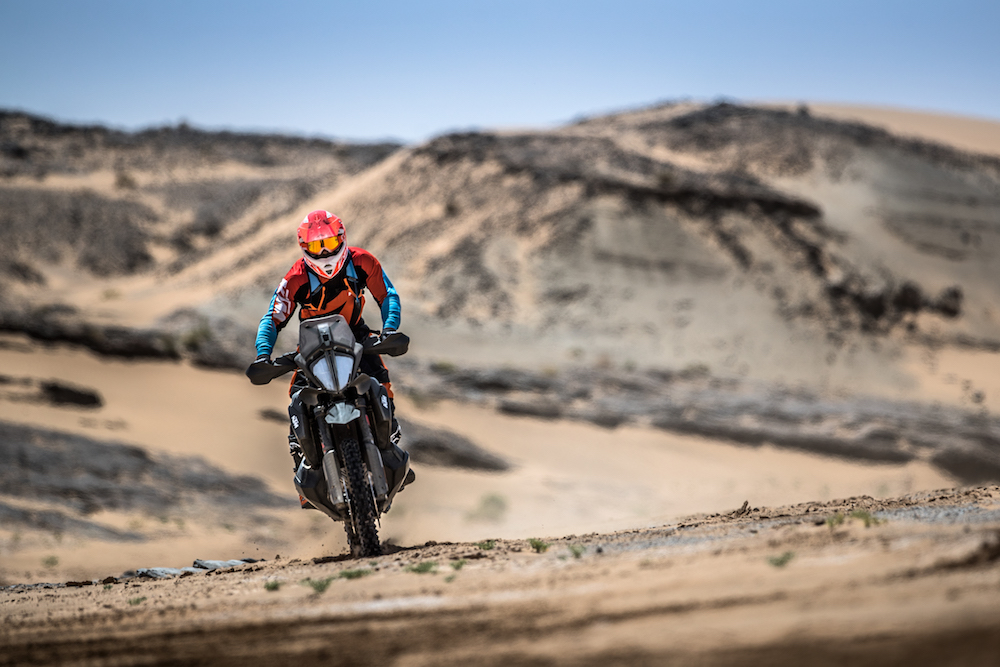
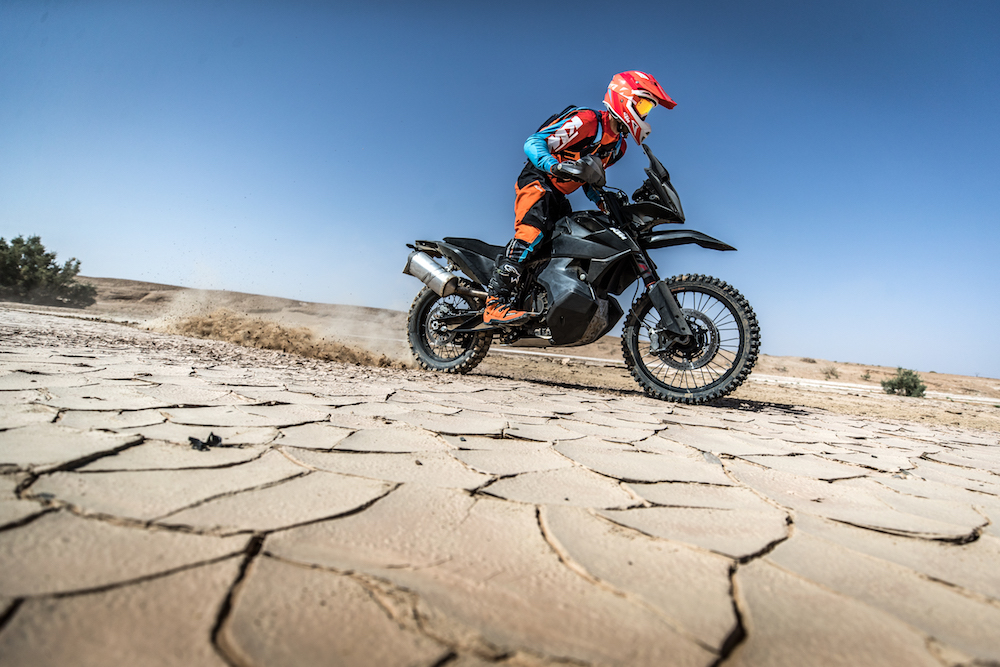
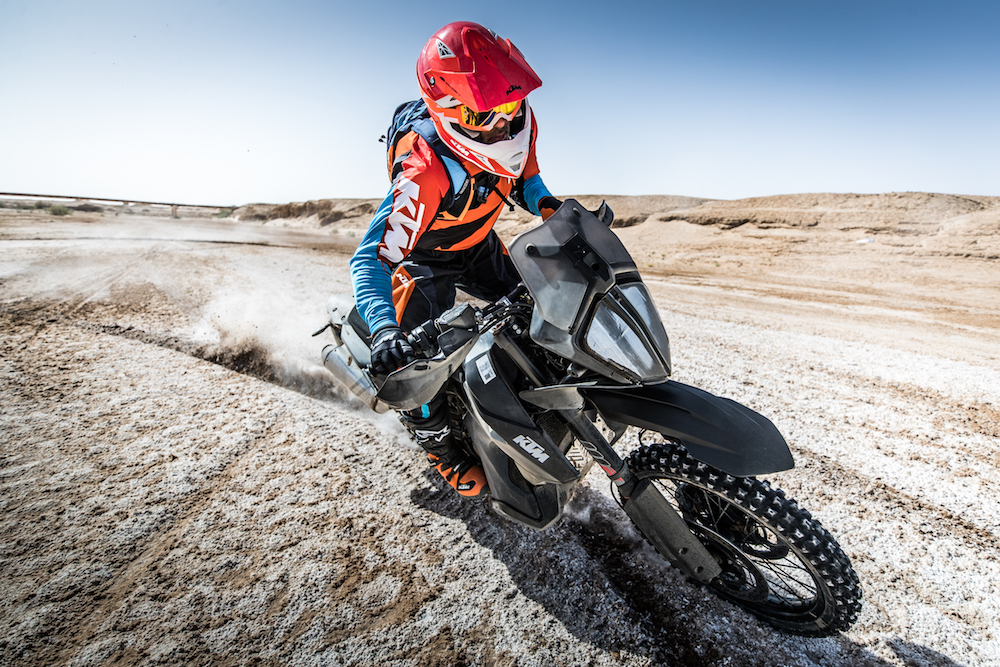
Riders in the 2nd Annual KTM Adventure Rally Canada will have the unique opportunity to compete for two spots during its three-day Canadian Rally in Silverstar Mountain, British Columbia on September 27th to 29th, 2018.
Riders will be put to the test with a series of challenging tasks on their own KTM ADVENTURE bike, including the successful navigation of unguided routes with waypoints, timed runs on an off-road enduro course, as well as wheel changes and strength ability tests with a KTM 1290 SUPER ADVENTURE R.
The winning qualifying riders will receive airfare and hotel accommodations to the 2019 KTM Merzouga Rally. This global adventure includes full race service, entry fees, a mechanic and factory support, while riding the new KTM 790 ADVENTURE R at the event. Riders will be coached by some of the world’s finest KTM riders and be treated like factory supported riders while they navigate through epic terrain. The winner of The KTM Ultimate Race in Morocco will win an incredible KTM 790 ADVENTURE R and a VIP DAKAR RALLY experience for two.
The KTM Ultimate Race is a unique chance to compete at the KTM Merzouga Rally for the top two qualifiers from each KTM Adventure Rally from across the world. Qualifiers from each KTM Adventure Rally will get to compete in an exclusive class at the Dakar series race in Morocco. The KTM Merzouga Rally race spans over five days that includes a prologue and marathon stage across the mighty Moroccan landscape. Stages are varied, navigation is key and the race features participants with a wide range of abilities from amateur rally riders to the factory pros. The KTM Ultimate Race is a one-of-a-kind route through Morocco, specifically designed with bike and rider in mind, and runs parallel with the pro class of the Merzouga Rally.
For your chance to compete in the KTM Ultimate Race, enter and race in one of the six KTM Adventure Rallies this year on a KTM twin cylinder machine. For Canada, all riders sign-up for the “R1” route will automatically be registered for the Ultimate Race qualification at no additional cost. Pre-qualification will be held during sign-up on Wednesday September 26th. Please note that no professional riders will be admissible to the KTM Ultimate Race challenge. The top two riders from each of the KTM Adventure Rallies in Italy, Australia, New Zealand, South Africa, Canada and USA will be awarded with The KTM Ultimate Race opportunity. For more information on The KTM Ultimate Race and participating global KTM Adventure Rallies, please visit www.ktm-adventure-rally.com.
To secure a spot at the 2nd Annual KTM ADVENTURE Rally Canada in Silverstar Mountain, BC, please visit the event’sofficial registration page or www.ktm.com for more details.
For any questions regarding the KTM Ultimate Race qualification in Canada please contact :eventscanada@ktmnorthamerica.com
Does a Dyna lose its spunk when it becomes a Softail?
It’s not every day you overtake a Ferrari F12 Berlinetta on a twisty mountain road . . . while you’re riding a Harley.
But that’s just one of the cool things that happened to me while I was testing Harley’s completely reworked and reclassified 2018 FXLR in Southern California, one of nine all-new motorcycles that make up a reimagined Softail line.
I’d just turned off the Pacific Coast Highway in Malibu onto Latigo Canyon Road, which snakes its way up to famous Mulholland Highway and the Rock Store. These minor roads are the undisputed territory of local speed lovers, unknown to tourists and avoided by natives in favour of more efficient highways.
 Seeing a flash of the Berlinetta’s tail a few corners ahead, I’d decided to put the Low Rider to work; after all, I’d ridden this bike directly to the mountains in order to lay it bare. The Dyna series had long been my favourite of the Harley strains, stout and sport-intended bikes preferred by riders who put handling first. The Softail line, on the other hand, has always been about looks. When Harley announced that for 2018 the Dyna bikes had been redesigned and would be reintroduced as Softail models, it caused a bit of a rumble among Dyna devotees.
It was a bold move, in fact the largest development project and launch of new product in Harley-Davidson’s 115-year history – nine hallmark models across two distinct lines stripped to their abstract essence, then rebuilt mechanically from the ground up: new wheels, new frames and chassis, new suspension, new drivetrain.
Beauty Marries the Beast
“People want tradition, but they also want technology,” says Paul James, director of product planning at Harley-Davidson. “They want to experience the best of both worlds, and that’s what these motorcycles deliver.”
The nine reborn bikes – Sport Glide,
Street Bob, Fat Bob, Low Rider, Breakout,
Softail Slim, Fat Boy, Heritage Classic and Deluxe – each retain their distinctive personas and styling queues, though all now sport the clean, Softail-esque rigid-rear look by sharing a new carbon steel tubular frame that’s both lighter and stiffer than previous frames. The new frame and chassis design is said to increase lean angles while providing sharper turn-in response. I was anxious to put the new engine and chassis to the test, and the sight of the Berlinetta’s white tail wiggling up the road ahead had the effect of a shiny fishing lure.
Dyna in Softail Badging
 The new 107 ci (1,753 cc) Milwaukee Eight engine used across the Softail line is phenomenal. Power is smooth and everywhere, though especially thick in the low to middle range. Since this new V-twin uses dual counterbalancers to cancel primary vibration, it can be mounted directly to the frame, which increases chassis stiffness, further improving the bike’s handling. Despite the frame mounting, vibration is negligible, with only a slight buzz coming through the handlebar as you approach 4,000 rpm.
Just a few kilometres up the dizzying road and it was clear this Softail Low Rider is a Dyna at heart. I wasn’t dragging any hard parts and I was reeling in the Ferrari corner by corner. As the driver saw me in the rearview mirror, his cornering became a little more chaotic and I was thinking maybe I should back off so as not to become a distraction. It’s a dangerous road with oft-dirty blind corners and huge drops, and it just felt a little wrong to pester someone trying to manoeuvre a half-million dollars’ worth of machinery.
A few corners later and the Berlinetta pulled off the road to let me pass, and then it was all bluster and dust as he pulled back on the road behind me. The guy looked a little wild-eyed as I went by. Definitely over his head in that car, and I’m guessing he didn’t tell his pals about getting chicked by a girl on a Harley.
Anyone still worried about the Dynas losing their mojo as Softails can sleep tonight. The Low Rider was right at home in the labyrinth of slinky back roads that crisscross the Santa Monica Mountains. The bike’s cornering clearance is indeed more generous, steering is lighter and the handling very nimble, a true feat when you consider we’re talking about a classically styled cruiser with a 19-inch front wheel.
Is it still easy to touch the foot pegs on the Low Rider? It’s not difficult, especially if you’re chasing Ferraris, but there’s noticeably more clearance than on past versions, and when you do slide a peg on pavement, it’s not problematic. As long as you stay cool, the Low Rider’s tracking will remain rock solid. Other Softails in the line will proffer quite a bit more clearance than the low-slung FXLR.
If Looks Could Thrill
 The Low Rider’s profile is immediately recognizable with its signature 70s-style stepped seat, headlight brow, bobbed fender and tank-mounted gauges. What’s missing is the unsightly battery box, and the two-into-one exhaust has been replaced by attractive two-into-two shotguns. Aficionados will be a bit fussy about losing the trademark dual shocks out back, though the hidden monoshock performs very well, and can be easily adjusted for preload. Up front is the high-performance fork introduced last year on Harley’s touring models that delivers 130 mm of travel, and does just fine soaking up irregularities.
I have long legs (34” inseam), and although I felt a bit like a spider at stoplights (26.2” seat height), I never felt cramped while underway, and in fact found the Low Rider’s compact rider triangle agreeable for aggressive riding. On long freeway stints, the mid-mounted foot pegs allowed for good, wind-fighting core engagement. A new torque-assisted clutch decreases lever effort, but the pull is still taxing during hours of canyon carving or around-town riding.
When I finally arrived at the Rock Store on Mulholland Highway, the parking lot was completely empty, which is a slightly sad feeling when you’re riding such a cool motorcycle, but the fact it’s a weekday is also the reason I had all the twisties to myself.
This famous motorcycle hangout is a must-visit if you’re ever in Southern California on a weekend, and if you want to experience it to full effect, stop by on a Sunday. The main structure, built entirely of volcanic rock, served as a stagecoach stop in the early 1900s and later a gas station. Ed and Veronica (Vern) Savko, purchased the place in 1961, and opened it as a local grocery store to serve the tiny mountain community of Cornell.
The Legend Lives On
Because the roads in every direction are challengingly steep and twisty, it’s no surprise that motorcyclists started showing up at the Rock Store to enjoy a cold beverage and some camaraderie. Over the years, it’s become a famous gathering spot for the moto crowd, studded with all flavours of bikes and riders, not to mention moto-minded celebrities (Jay Leno, Tommy Lee, Harrison Ford and Matt LeBlanc are regulars).
I mounted up and headed back down to the city for the night, taking Decker Canyon Road, a narrow twister on which I had my first accident on a motorcycle back in 1986. I was trying to keep up with a far better rider when I locked up the rear brake deep into a potholed corner and – bingo – high side.
Decker’s road surface, much like the bike I was riding, is totally improved. Over the years, the Motor Company has done an amazing job retaining the essence of what a Harley is supposed to look and feel and sound like, all the while discreetly implementing new technologies that benefit both safety and rider experience. The optional ABS on the unit I was riding, for example, would probably have saved me from that painful accident.
This 2018 Low Rider was a winner for me: easy to ride around town but likes to party in the corners; looks great straight out of the crate, yet is still asking for some custom touches. But moreover, the tasty goodness of this one model is evidence the entire line of Softails is better than ever.
“One thing I think we’ve achieved is a perfect balance of the best of the Softails and the best of the Dynas,” chief engineer Ben Wright says. “We’ve married looks and the performance into one architecture.”
Wright believes these are the best cruisers Harley has ever built, and after a couple of days on the Low Rider, I have to agree. My fast-riding friends will be happy to know the Dyna spirit is safely embedded in the new Softails. Rather than being neutered, these bikes have been further endowed. Just ask the guy in the Ferrari.
This was the first motorcycle author Calvin Danells ever rode, and he never forgot about it
 It all started back in 1967, when my next-door neighbour in Lancaster, N.B., Geoff, purchased a used Triumph 350. I marvelled at that bike every time I saw it, and after about two years of asking – or more like begging – for a ride, Geoff allowed me to ride the bike across his back lawn. At the tender age of just 13, that was my very first ride on a motorcycle. The love of riding was ingrained in me right then and there. Geoff sold the Triumph to his brother Peter in 1969, and over the next several years, I rode that Triumph many times, and purchased a few bikes of my own, including a BSA 250 and a Honda 175, but none could replace the Triumph.
Life Changes
 In 1973, the bike was used as a prop in the Saint John High School play Annie Get Your Gun. Peter continued riding the bike until 1976, when, due to some mechanical issues, it was parked in his basement. That same year, I joined the Navy and moved to Halifax; I lost contact with Peter for several years. At this point I had a family and a career, and motorcycling was just not in the cards for me.
In 1992, I decided to get back into motorcycling and purchased a 1976 Honda CB 750F. I rode that bike for a few years, but never forgot about my first ride on the Triumph. A few years later I purchased a 1984 Gold Wing, and I have been riding Gold Wings ever since – my current ride is a 2015 GL 1800. I consider myself an avid motorcyclist and have travelled to all but four of the United States, and every province in Canada on the Wing, many of them several times. I’ve been known to ride 200 km just for lunch.
Over the past several years, I have stayed in touch with Peter, and I often inquired about the Triumph, always asking if he would consider selling it to me; after all, it hadn’t seen the light of day since 1976. Peter always responded with a firm no. But finally, in January 2016, Peter agreed to sell me the bike. I guess persistence does pay off.
The Resurrection Begins
 I wanted to bring the Triumph back to its former glory and revive my childhood love affair. So thus began the resurrection; once the bike was in my garage, the long process began. The first item of business was to acquire overhaul manuals and some British Standard and British Standard Whitworth sockets and wrenches. After a few months of searching both online and locally, I finally had the manuals and the needed tools.
The teardown began in July 2016. The first step was to remove and strip down the engine – and I soon found out it was in much worse shape than expected. After remembering all the abuse we as teenagers put that bike through, its condition really shouldn’t have been a big surprise. In fact, it’s a wonder the Triumph survived at all. Not only did the engine require a complete rebuild, but most of the internal components were beyond repair and needed replacing – even the crankshaft and cylinders were toast. After a lot of online searching and many phone calls, I finally located every engine part needed, and believe it or not, all were NOS (new old stock) parts.
Following many hours of sanding and polishing, the original engine covers looked new, and I assembled the engine. The original transmission was inspected and serviced with new bushings. Next on the list was to have the frame media blasted and powdercoated black, and then the engine and transmission could be mounted back into the frame.
The original gas and oil tanks and the fenders were sent out for dent repair – and trust me, there were lots of those. For the paint, I decided to use a base, and then mix gloss and matte clear coats to get the correct level of shine similar to the factory Hard Black paint the bike originally had. The wheels were way beyond repair, so I replaced the chrome rims with reproductions, and reused the original spokes and hubs to lace them together. Some reproduction mufflers and headers completed the list of big parts needed to finish the bike.
Now finally after about 16 months and countless hours, the Triumph was ready for final assembly. After more than 40 years of sitting, the speedo needed to be cleaned and lubed, as did the generator; a few more weeks of work getting the small bits done and the final assembly was completed.
All Fired-Up
On January 28, 2018, the Triumph was ready to start. Peter travelled over from Saint John, and several of my friends were also on hand for the first attempt at start-up. On the very first kick she stumbled and on the third kick she was running. Wow, first time running in almost 42 years – what a day. The old memories came flooding back. I couldn’t wait for riding weather to arrive so I could get her on the road and relive some of my childhood memories.
I ride it weekly and put it in local shows. I’m a firm believer that vintage bikes and cars should be seen and used, not collecting dust in somebody’s garage.
I’d like to say a big thank you to Moto Montreal, Motoparts Edmonton and British Cycle Supply Wolfville for all the help tracking down the many parts needed to restore the Triumph, and also to Cook’s Classic Rebuilds in Dartmouth, N.S., for all the help throughout the project.
The Complete History of an American Original
Every mainstream marque in motorcycle history has at least one book written about it, and now it’s Victory’s turn for a definitive history.
There are a lot of Victory motorcycle fans out there, and for good reason. It was an amazing brand. Every Victory owner I have ever spoken with loved the bike – although some minds changed when news came about shuttering the factory doors.
 Michael Dapper, founding editor of Victory Rider Magazine and former employee of Victory from its very early days, and Lee Klancher, photographer and author of many books for the gearhead, have released this book that chronicles the Victory brand from its initial concept and the beginning of the market research in 1993 to the release of the first Victory V92C motorcycle in 1998 and right up to 8:15 a.m. on January 9, 2017 – the moment that Polaris executives told its employees, and the world, that Victory would be no longer. The last Victory (a red Vegas) rolled off the line the next day at 9:36 a.m.
The first portion of the book was originally published as The Victory Motorcycle in 1998 – a publication that is now out of print. In addition to explaining how a modern motorcycle brand gets past the initial thoughts scribbled on a proverbial napkin to the very first prototype and to the first machines to come off the production line, the authors know the brand inside and out and include many anecdotes from the people behind the scenes who made the Victory brand happen.
Also included in this hardcover, 192-page coffee-table book is detailed information on every Victory model ever produced, including design notes from engineers and designers, model specs, paint colours and quotes from employees and journalists around the world.
In the end, the brand had image problems that no amount of marketing could fix, and the production output was minuscule compared to its American competitor, making it financially unfeasible to continue.
If you’re a Victory owner or fan, or just like motorcycle history, you’ll appreciate this very interesting account of the first mass-produced, all-new American motorcycle since the 1940s.
Published by Octane Press with ISBN-13: 9781937747930. It retails for $60 at octanepress.com.
It’s not so much the destination, but the journey that makes a great road trip.
It all started out, as most road trips do, with a gaggle of riders sitting around in a back room trying to decipher the mystery of a crossplane crank and trading stories of their past road adventures.
“Have you guys ever been to what was once the largest waterfall in the world? Now it’s just the prehistoric bones of a 5.5 km-wide cataract at the end of a 30 km chasm.”
“I’m in.”
“Okay, I’m in.”
“Me too.”
And just like that, the trip was on.
Here were Bruce, Shel and I ready to pull the trigger on our first trip of the year. Bruce would be on his Suzuki 1200 Bandit, Shel on his Ducati Multistrada, and yours truly with my Yamaha Royal Star Venture and cargo trailer full of camping gear.
As you all know, a large part of the enjoyment of a road trip is the anticipation and packing. Camping gear has to be sorted, the trailer bearings lubed and maps copied. My bike’s oil is changed to allow for long rides in hot weather, and before you know it, we’re meeting and taking off through Vancouver, up the historic Fraser Canyon and on to Kamloops for the first night’s layover.
Leaving Kamloops, we head east from Vernon on Highway 6 toward Cherryville and the Monashee Pass through lush farm country and past lumber operations. Then on to Nakusp after crossing Arrow Lake on the cable ferry. Keep in mind that it’s an inland ferry – not part of BC Ferries – so the usual loading rules do not apply and bikes have to get in line like everyone else.
On the road into Nakusp, take a look at the hydro poles on your right. They are a unique crossbar design and the local osprey take advantage of this to build huge nests on them – adding to the nests each year to the point where they start to look like Vancouver condos.
Still on Hwy 6 out of Nakusp, the road wanders through some high lakes and what resembles a green shag rug of evergreen forest until we descend into New Denver, where Tamara awaits us at the Nuru Coffee Bar. She rides a Ducati Monster and owns Nuru, so her connection with riders is real and immediate.
Destination Toad Rock
 The road from New Denver gets really interesting as we head east on Hwy 31A to Kaslo, and finally Hwy 31 to Toad Rock Motorcycle Campground, just north of the Balfour ferry.
Great pavement, little traffic, spectacular abandoned-mine scenery on both sides of the road and gnarly twisties provide multiple layers of bliss for any rider. In the past on this road, I saw my first wild turkey in Canada, and on this trip, a turkey vulture is guarding something at the side of the road and refuses to budge as we blast by. Damn, they’re ugly.
We’ll stay at Toad Rock for a couple of nights, so we don’t just hit there and pack up the next morning – we’ll have time to tour and see the spectacular Kootenay countryside. Toad Rock is most likely the best motorcycle campground in the west. The first time I stayed there, I thought I’d died and gone to motorcycle heaven run by an angel called Mary Laird.
Mary greets us warmly as old friends and meets her newest campers, Bruce and Shel. While setting up camp, Shel and Bruce are introduced to Happy, the camp pig, as he waddles onto our site, mooching for anything to eat, grunting happily. In the evening, we wander down to the pavilion to join the Toad Rock family gathering, laughing with new friends and ruthlessly murdering the truth with our travel tales. There are no rules when you’re telling travel stories. Sitting around a campfire before sacking out is the ultimate camping experience, isn’t it?
 After a camp breakfast of coffee and burnt toast, we ride into Nelson so Bruce and Shel can explore. Shel is searching for a 93 octane at a Chevron station, but there isn’t one, so he opts for a can of octane boost and we end up at the Oso Negro Cafe to unwind in the shade of its fancy patio.
Great final night at Toad Rock with the crowd at the pavilion, and after packing up camp, we head to Nelson for lunch and fuel before heading for the U.S. border via Castlegar and Grand Forks. It is pleasantly cool over the Blueberry-Paulson Pass after the oppressive heat of Castlegar. A quick stop at the Nancy Greene rest area re-establishes the plan to meet in Christina Lake for lunch if anyone gets separated.
An Easy Crossing
 The border crossing at Danville, south of Grand Forks, is tiny compared to any of the other major ones we usually use, and the U.S. Customs gent has all three of us approach, rather than one at a time – much more efficient for him, I guess.
Heading south from Curlew, Washington, I think we have made a mistake, as the road is winding and narrow, and each side is covered in heavy bush. We are just waiting for something furry to leap out in front of us, so we are relieved when we pull into the impressive town of Republic, where we promptly get lost trying to get out of town.
After getting directions from a Republican, we get back on Hwy 20 to 97, then south to Omak, where we score the last two rooms at the Omak Inn. That’s what happens when you ride without reservations. People may ask us where we’re headed, and we reply, pointing, “That way.” So far, we’ve never had to camp at the side of the road.
The front desk clerk, Adrian, is the proud new owner of a Honda CBR600RR, so he checks out our bikes pretty closely and marvels at our “cramp busters”, floorboards, heel and toe shifter, cruise control, radios, trailer and the fact that we could ride comfortably for more than an hour at a time.
Into the High Country
From Omak, we cut off onto Hwy 155 through the Colville Indian Reservation, which runs through high ranching country, showing evidence of past fire activity, but is significantly cooler riding than if we had taken a valley route along Hwy 97. Alma and Dave’s Fruit and Produce on Hwy 155 provide us with some local cherries and a cold drink, as well as a lesson from Dave about local history and geology.
According to Dave, these huge, house-sized boulders we saw strewn across the countryside were the result of a monstrous flash flood that occurred when an ice dam broke and a 107-metre-high wall of water swept the area after the last ice age. This is confirmed when we visit the Dry Falls info centre later that day.
Highway 155 eventually leads us down through a winding chasm of desert to Coulee City and the Grand Coulee Dam, which is our first major destination. This thing is massive.
Constructed between 1933 and 1942, it was part of President FDR’s Depression-era works program, and today is the largest hydroelectric
power producer in the U.S. Damn near a kilometre and half long and167 metres high, it is the perfect venue for the summertime laser light show that splashes across its huge face.
Dry Falls
We’re cooled off now, after an hour in the visitor centre, so we head west down Hwy 2 and then south on 17 to the Ice Age relic, Dry Falls. Once the largest falls in the world, this precipice is 122 metres high and is about 5.6 km across its arcing face – about five times as wide as Niagara Falls. Today, it is dried up completely – a skeleton of its former might. You can still see the “scour pits” where the water cascaded into the channel below. These now look like small lakes.
Over several millennia, the water flowing from glacial Lake Missoula carved a canyon more than 30 km long. This canyon is now a water playground with huge lakes.
For the Gearhead
It’s gotten really hot. Farther west, the countryside along Hwy 2 has changed again to pure prairie, alternating between rocky flatland with 60-metre-high dust devils and a defined boundary with about 300 acres of new green wheat.
A necessary stop at the Hot Rod Cafe just outside Wenatchee for hydration nets us a surprise spectacular setting – a great place if you’re a gearhead. We are totally immersed in NHRA, Sprint car and virtually any type of motorsport memorabilia. The topper is the Sprint Car sitting on the roof.
When we get onto the bikes for the final leg to Leavenworth, Wash., and our stop for the night, the thermometer on my bike reads 109 F. We needed that stop. We get the last overflow camping spot at the Leavenworth KOA and set up camp in 104 F.
That KOA pool draws me like a magnet halfway through setting up. I couldn’t care less that 50 little bladders have emptied themselves – I have to do something to get relief from that heat. A nice quiet night’s sleep, despite the overcrowded campground and the tuner car crowd next door.
The Last Leg for Home
Riding east through the Mount Baker/Snoqualmie National Forest is mountainous, scenic two-lane, and I can’t remember ever going through Steven’s Pass before, although the buildings at the summit are pretty striking institutional architecture, reminding me of Mussolini’s Italy.
I had promised Shel a treat once we got to Anacortes – the Marine Supply and Hardware store. To catch the 2:50 p.m. ferry to Sidney, B.C., he budgeted a half-hour inside the store, which, if you’ve never been there, resembles a Second World War supply depot or the old basement at Capital Iron in Victoria.
There are about 10 of us bikers loaded on the car deck. We wander around the boat as usual until we hear cannon fire and come upon two square-rigged ships having a battle on the ferry route. We did hear the booms and we did see cannon smoke, but we didn’t see any shattered masts floating nearby or blood on the orlop. If Washington State Ferries makes this a regular occurrence, I’m sure its ridership would skyrocket.
This ferry ride caps off a unique trip through unknown territory in the wilds of the U.S.A., in addition to an impromptu geology class.
All hope is not lost when you want to wrench on your bike, but have no place to do it.
This used to be a gambling place. Then some sort of brothel. It wasn’t that when we bought it, though.” And that is my introduction to Adrenalin Motorcycle Co-op, as told by co-owner Scott Collins.
Motorcycle co-ops, or do-it-yourself (DIY) garages, are springing up in urban areas across Canada. City riders often face a special challenge: where to work on their bikes. Not everyone can afford, or find, a garage and tools, or maybe you’re just a bit of a Knucklehead and don’t have the know-how to clean and sync those carbs. Artists have been sharing workspaces for years, and what are bikes, if not rolling works of art?
By necessity, riders are often resilient and have advanced problem-solving abilities (you know, like monkeys). Hence, the motorcycle co-op, or collective. These facilities are available by membership, though some have day rates, and provide space, lifts, tools and sometimes even expertise for those who need it. This is by no means an exhaustive list, but here’s a look at what’s available in some of the big cities.
Victoria
 Adrenalin Motorcycle Co-op (adrenalinmotorcycle.com) is owned by Scott Collins, Steve Engbers and Jim Fields. The shop opened its doors in 2004 and is probably the oldest moto co-op in Canada. Although originally registered as a co-op, Adrenaline actually began as a regular motorcycle shop, where they initially worked on bikes, and sold gear and accessories, but then they branched out and began taking memberships. The co-op offers shop space, tools, lifts and advice if needed.
Adrenalin was conceived during a time when Collins was unemployed. He went to a seminar about starting a small business and heard the term “co-op” for the first time. Collins had friends who were always hanging around his garage working on bikes, so why not apply the co-op model and start a bike shop? There were some tough years, but things appear to be going strong now.
Co-owner Fields stresses that they have always been inclusive of all riders and genders, and thinks they probably have more female members than other co-ops. They even had a lounge with a pool table for members at one time, but it’s now used for storage. “No one ever went up there,” Fields says, adding they just wanted to hang out where the bikes are being worked on.
A popular feature is the “Pit Stop,” located right at the front of the service area, where members can just drop in if they need to do something quick that doesn’t require a lift. But if you prefer to get your bike up in the air, there are three lifts available, plenty of tools and professional advice and guidance if needed.
There’s even a bike-washing station for when you’re done working on your ride. But if you don’t want to get your hands dirty, they are a full-service shop as well.
Vancouver
 Samson Lang is a Red Seal-certified mechanic, and owner of Rising Sun Motorcycles (risingsunmotorcycles.ca). Rising Sun has been an all-makes, full-service and custom-build shop in East Vancouver for several years now. It also offers mobile services for emergencies and pre-purchase inspections.
But this year, under the management of Tori Tucker (who started out as a customer, restoring her dad’s BSA Victor Special), they’ve established the Vancouver Motorcycle Collective (VMC). You can find them at vanmotocoop.ca. VMC offers space and tools to those who need it. They have four lifts available for members to work on their bikes, with space in between for those who don’t mind working down low. And it gets very cozy in there once the wood stove gets to temperature. It’s like working on your bike at your cabin.
However, VMC also has a significant focus on education and training. As part of their membership, they offer an online motorcycle technician training program called Cyclepedia, in which students can learn at their own pace and earn a certificate. The program is quite extensive, with sections on engine, electrical and emissions. After each subsection is a test, and students must score 100 per cent to continue. As well, they offer monthly seminars on basic maintenance, and some ladies-only events.
Being a full-service shop, VMC also sells parts (new and used), lubricants and can provide winter storage; also available for purchase is a variety of swag, including T-shirts, hoodies and work shirts.
Toronto
 Moto Revere (motorevere.com) is owned by Andrea Lothrop and Peter Redford, who refer to their space as a “DIY moto-garage.” They’re coming up on their second anniversary, and 75 per cent of their square footage is devoted to workshop space.
“Our demographics are all over the place,” Lothrop says, “from 19-year-olds to retired guys.” She guesses that 15–20 per cent are women. And they get all kinds of bikes – particularly a lot of vintage hardware, because they require a lot of maintenance, but there’s also someone doing a ground-up café project. “Downtown people have no space of their own to work on their bikes,” she says.
The garage doesn’t have licenced mechanics on duty, but there are some mechanics in the community who will lend a helping hand when needed. And to help build community around the shop, they will soon be opening a coffee/hang-out space for riders and wrenchers to socialize. And if you really want to get into the Moto Revere spirit, there’s a selection of pins, patches and T-shirts on offer.
Barrie
T’s Cafe (tscafe.ca) in Barrie, the snow belt of Ontario, is a DIY collective run by Teresa Vincent, whose motto is to “move forward confidently, whether it’s riding or wrenching.”
There are currently four lifts, with hopes of increasing that to 10. “It makes sense to do it yourself,” Vincent says. In looking at the pricing schedule, one hour of dealership time will buy you about six months of a bronze membership, which gives you four hours of bench time per month, and a number of other perks. T’s Cafe doesn’t have any licenced mechanics itself, but has a local guy who helps out with advice and mentoring if needed, and if you get in over your head, you can always scoot your bike over to his shop for work. About the only thing it doesn’t have is a paint booth.
One of the company’s unique features is “Open Wrench” nights, every Thursday and on weekends. This is a time during which anyone can come and hang out, offer advice, help others, learn and collaborate. “About 75 per cent of our clients are men, and most are in their 40s and 50s, but we have everyone from mid- 20s to age 65,” Vincent says. Most work is maintenance and repairs, but there are a couple of shop projects on the go.
And when you need a break, T’s Cafe has a coffee bar to help you recharge.
Ottawa
DIY Moto (diymoto.ca) is a bit on the outskirts of Ottawa, so membership has been slow to build in the year since he opened, owner Shawn Lehn says. It doesn’t get the foot traffic that some of the other shops do.
With four bays, it is well named, as it is a strictly do-it-yourself shop. No mechanics here, though Lehn is in the process of getting his licence. DIY Moto does have classes for general maintenance, engine basics, tire changes, etc.
The clientele tends to be in the 30s–50s age group, and about one-third are women. And just like the men, they vary in skill level, from little know-how to solid DIYers.
The Rest of Canada
I couldn’t find anything on the East Coast. Maybe shop space is easier to come by, but if you have a DIY shop there, let us know.
These shops are a godsend to those who live in urban areas and need wrenching space. They all provide a warm, welcoming space for riders to do their thing, and help build community among riders in their home cities. Hopefully, moto-collectives are here to stay.
These lightweight shoes are made to get wet and are just what your dogs ordered after a long day’s ride
The Original Footwear Company manufactures and carries a few brands of lightweight tactical-type footwear, including Original S.W.A.T., Altama, and Smith and Wesson. All offer a good, solid tread pattern suitable for grip on a number of surfaces, including hot, smooth pavement, if you use them for riding.
The Altama Maritime Assault shoe is different in that it isn’t a protective boot, so I wouldn’t recommend it as riding footwear, but that isn’t to say you can’t use it on a bike trip.
The originalfootwear.ca website claims that the Altama Maritime Assault shoe “is made for all tactical water operations. With a fin-friendly fit, this boot will fit just about any dive fin used by militaries worldwide.”
 Now, I don’t know of any bikers who take scuba gear with them on a motorcycle trip, but it’s the thought that goes into designing something like this that can be beneficial to motorcyclists. Sometimes we get caught in the rain during or after a ride. These shoes offer a lightweight alternative to running shoes when your day’s ride is over and you can’t wait to take off your heavy and hot riding boots.
These shoes are made from quick-drying, high-abrasion 1000D Cordura with an air mesh lining to wick away sweat and moisture from your foot. Because they are made to be in the water as well as on land, they remain lightweight even when wet, should you get caught in the rain at your campsite or need to wade into a cold river to grab a beer. The insole is made of soft, contoured rubber that will not absorb water; they even have drain ports where the shoe flexes to allow water to drain easily. So many reasons these shoes are superior to running shoes.
I’ve been wearing a pair for a couple of weeks now without any discomfort or hot spots, and find they provide good grip on any surface I’ve tried them on. As an added bonus, the sole is stiff enough to prevent undue pressure on the soles of your feet from rocks or stones.
Just think how comfortable you’ll be at the end of your ride, or scuba diving experience, knowing you’ll have decent footwear to spend the rest of the evening in.
The Altama Maritime Assault shoe is available in black, two types of camo or sand. They retail for $119.99 at originalfootwear.ca, and come with a 60-day comfort guarantee and a one-year manufacturer’s warranty.
Whether you’re looking for paved elevation changes or dirt tracks, fine restaurants or barbecue, the Big Bend area has all that and so much more to satisfy your soul
“Texas is a state of mind” John Steinbeck wrote in his 1960 travelogue Travels with Charley. And while there is no dispute the state is best known for its prideful swagger and bold stance on the world stage, there is another, quieter nature to the Lone Star State, a sensation available only while travelling its deepest back roads and resting in its quietest corner. A state of mind that’s less about an exhibition and plentitude and more about the undiscriminating, healing arms of solitude.
 It took me many years to fall in love with Texas. For at least a decade, I simply rode across the colossal state as quickly as possible on my many trips back and forth from my previous home in Los Angeles to various bike events in Florida. Twice the size of Germany and four times the size of Florida, Texas is nearly 1,300 km across at its widest, most oft-traversed span. It was always a gruelling task, tolerable only for the barbecue and big smiles so plentiful along the way.
But then one spring many years ago, I found myself travelling east to west across Texas with the sun in my eyes and a few days to spare. I first dropped down to Austin – then just budding as the hub of hip it is today – to explore the roads I’d heard about in the Hill Country. These were and remain the best roads Texas has to offer if you’re looking for corners: the famous Twisted Sisters, of course, and the smaller single-lane squiggles in between as they dash across rivers and whoop over modest hills.
From the Hill Country I rode down to San Antonio to check out the Alamo, Texas’s most visited tourist attraction, to see firsthand the root of Texas pride and defiance, a battle site that was pivotal in Texas winning its freedom from Mexican rule to become an independent republic almost a decade before it was annexed as one of the United States in 1945.
A Church in the Desert
 From San Antonio, it was a very long, lonely ride across U.S. 90 and the current-day Mexican border to investigate West Texas, another part of the state I’d heard great things about. Little did I know this area would become sacred to me, that I would find a repeatable religious experience in Big Bend National Park, or that the towns tethering the roads into Big Bend would come to feel like old friends. It would be a place to which I would return over and over in the coming years, whenever I needed a true escape, to think big, to feel small, to be alone or to spend unforgettable time with friends.
These days if I’m travelling from the east, I make my way to Marathon and treat myself to one night at the Gage Hotel. Built in 1927, this historic hotel is the essence of Texas architecture and charm, including great food and an award-winning bar.
Mapping programs will suggest to drop down to Big Bend on Texas 118 via the larger town of Alpine, with its chain hotels and fast-food options, but this is a mistake. Not only is Marathon a higher-quality port of entry, U.S. 385
is a much more scenic highway, with gorgeous mountain views and an abundance of sweeping corners that take you into the park proper sooner than if you arrive via Texas 118.
Finding Your Space
 I suggest you spend a minimum of two days in the park if you’re on a street-only bike. If you would like to include some soul-satisfying hikes or downtime, allow for three days, and if you’re on an adventure bike, four days, minimum, with a week being ideal.
Big Bend National Park is not only extremely remote and austere, it is extreme in temperature as well, with summers bringing unbearable heat (many campgrounds and both visitor centres at lower elevations close from June through October). Winters tend to be mild with cold nights. I try to spend time in Big Bend in April and May or October to December.
In the summer, I make my main hub for exploration the Chisos Basin Campground, which can be crowded, but I feel safe leaving my tent unattended, and there is Wi-Fi at the nearby visitor centre (no cell service is available anywhere in the park). This is where you’ll find the only restaurant and camp store open in midsummer, and often the only livable temperatures, since the campground and visitor centre are situated almost 900 metres above the rest of the park.
If you don’t like to camp, there are dated (and in my opinion overpriced) motel-style accommodations here at the Chisos Mountains Lodge. If you have the luxury of planning ahead, the ideal scenario is to reserve one of the five Roosevelt Stone Cottages built in the 1930s. Thanks to a no-show, I lucked into one of these cabins for a night years ago and it was fantastic, but they are typically booked a year in advance. If you do have that kind of time to plan, try to book Cottage 103, which offers impossibly beautiful views down to the valley 550 metres below.
Roads to Nowhere
To ride in this region is to witness time standing still. The cliffs and washes and rock-crowned mountains are exactly as they’ve been for tens of thousands of years. The famous Rio Grande River bisects this territory and creates a natural border between the United States and Mexico. Immigrants don’t cross in this landscape because the distance is too great and the weather murderous.
Basin Junction Road, which runs to and from the services at the Chisos Basin Visitor Center is a fun little ride on its own, with lots of twists and elevation gain. To the east of this road’s terminus is Panther Junction and Park Road 12, the kind of parkland two-laner where you just have to surrender to the ridiculously low speed limit and enjoy the scenery. It will lead you to several cool things, including a scenic loop created by an unimproved dirt trail, Old Ore Road, which provides awesome views of the Chisos mountain range.
East River Road, a street bike-friendly dirt path on the opposite side of the park road near the Rio Grande Overlook, will take you to the trailhead of the short walk to the Langford Hot Springs, where ruins from an early bathhouse remain on the edge of the Rio Grande, framing tubs that still catch the 105-degree spring water for those who care for a soak. The water in the tubs has been crystal clear the times I’ve been there for a soak, though the Rio Grande beside them is almost always too muddy for a very satisfying cold plunge.
To the west of Panther Junction is beautiful, meandering Ross Maxwell Scenic Drive, which leads to the banks of the Rio Grande at Castolon and eventually to the Santa Elena Canyon Overlook. If you’re on a dirt-worthy bike and don’t mind some washboard, create a loop back into the park using Old Maverick Road. There are numerous, more primitive dirt roads on this side of the park – one, called the West River Road, even traces the Rio Grande all the way back to the eastern end of the park. Check with the park service before planning an outing on these routes, however, as many of the trails and campgrounds along the river are closed seasonally.
Rocks and Road Art
If I’ve arrived at Big Bend from the east, I depart to the west on Texas 118 to Study Butte, where I stop each time to visit Ring Huggins at the Many Stones rock shop. Ring is an old codger extraordinaire, a lifelong fossil hunter who was born in Texas but owned a rock shop in Kaslo, B.C., for 30 years and taught adult education on the remote North Coast reserves. He only recently returned to Texas to set up the roadside shop, where I first met him a few years back. Do stop by for a chat and to ogle Ring’s finds, which range from fossiliferous rocks to an ancient buffalo skull and priceless dinosaur bones.
Another worthy stop just down the road from Many Stones is the ghost town of Terlingua, where the sparrows fly in and out of the abandoned church as quietly as whispered prayers, and the town cemetery is crowded with ghosts and anonymous graves.
If I have the time, I continue on Farm Route 170 along the Rio Grande to Big Bend State Park for more beautiful scenery before sweeping up toward my exit indulgence of Marfa, an even more pleasurable bookend to Marathon, and always a pre-entry stopover if I’m travelling to Big Bend from the west.
Back when I first visited Marfa on that fateful excursion off I-10, the town was about five unlocked doors away from abandoned. I’d stopped overnight to see if I could catch a glimpse of the fabled “mystery lights,” unexplained dancing lights sometimes viewable in the far distance. In the years since, Marfa has exploded in popularity as a fine-arts enclave – super fashionable and fully endowed with city-style eateries and luxurious boutique hotels.
Rolling north out of town on Texas 90 toward El Paso, you’ll notice a tiny square building on the west side of the road. As you pass, it will reveal itself to be an impossibly perfect, yet fake, Prada store, complete with lighted displays, just one of the dozens of permanent art installations in the area. And then suddenly you’re back in regular old Texas, its flat, arid landscape etched by barbed wire fences and pin-straight roads dotted with barbecue joints and gun stores.
If you’re like me, the desolate high mountains behind you will have left an indelible mark. A beacon that will call you back to that magical space of absolute solitude and ensuing self-realization.
To Steinbeck, Texas was a state of mind, while Pulitzer-prize-winning poet Carl Sandburg wrote that “Texas is a blend of valour and swagger.” I think everyone would agree that at its heart, Texas is about attitude. About the pride of its people.
And way over to the west, in the high mountains above the Rio Grande, you’ll find its soul.