
19 Secrets of California’s Southern Pacific Coast Highway
It pays to listen to those who know, and where can you get better advice if not from someone who has visited these secrets locales many times?
California’s southern Pacific Coast Highway (PCH) is as famous a scenic road as they come. People travel from all over the world to take pictures of Rocky Creek Bridge, to soak in the hot springs around Big Sur, to eat oysters at Domenico’s on the Warf in Monterey.
I grew up on this coast. All my best memories are encrusted in its getaways: beaches, towns and bays strung like charms along the highway’s exhilarating twists and scenic straightaways. In some ways, my intimacy with the area feels like a personal thing, as if the sanctuaries and secret side roads should be kept mum and therefore remain pristine. But more often than not, I’m inspired to share them with people who appreciate a good motorcycle tour in the way I do. Besides, what are treasures if they are not admired?
Though it begins in Dana Point, the PCH is nothing but city streets, and rural fits and starts until you hit San Luis Obispo, about 418 km up the coast. Yes, there are fabulous riding roads in the mountains about Malibu and great day trips out of Santa Barbara, but they are not borne of the highway as much as they are destinations in themselves.
This set of secrets starts just above San Luis Obispo and ends just below San Francisco.
- Moonstone Beach
 Cambria is a quiet spot on the PCH and a great launch pad for your adventure. It has the appeal of a small town, without the touristy pull of neighbouring Morro Bay or San Simeon. Plus, it’s the terminus of must-do Santa Rosa Creek Road (secret #2). Moonstone Beach is the jewel of Cambria, an uncrowded strand littered with glistening agate, jade and quartz. My favourite place to stay is the Cambria Landing Inn & Suites, where most rooms have an ocean view. It’s not stuffy like some of the other beachfront lodges on the coast, and you can usually get a room on short notice. You can always get a good meal at the Moonstone Beach Bar and Grill, where you’re likely to see dolphins, seals and even whales passing by. Staying in Cambria will give you a fresh head for an a.m. romp up Santa Rosa and San Simeon Creek Roads, which do, indeed, require total concentration.
- Santa Rosa Creek Road
This is one of the best-loved, least-trafficked sidewinders on the south coast. Ride through Cambria toward the hills until you see the small sign for Santa Rosa Creek. It’s unbelievably twisty and scenic, so decide early whether you’re feeling like a sightseer or a squirrel, since this is one road that won’t allow for both. It’s single-lane, steep and loaded with off-camber corners, eventually hooking up with Highway 46, which you can take back down to Hwy 1. Or, if you’re like me, you’ll turn right around and ride Santa Rosa Creek back down.
- San Simeon Creek Road
An out-and-back rush, you’ll find this little sister to Santa Rosa just past San Simeon State Park.
- Hearst Castle
Call this the secret only the tourists know about. I can’t tell you how many times I’ve heard locals say they have never visited this wonderful castle. Yes, it is a touristy stop, but totally worth a tour. Just as California’s missions and Wild West towns are a huge part the state’s history, so is this amazing relic of Hollywood’s heyday. Tours start at $25.
- Elephant Seals
 The coolest place to view California’s plentiful elephant seals is Piedras Blancas Vista Point, just 13 km north of downtown San Simeon. A huge colony has established itself on the sandy shores, and it’s always up to something, even if it’s just noisy sleep. The viewing area here is a perfect place for photos.
- Plaskett Ridge Loop
Here’s an awesome side trip that keeps you headed up, or down, the coast, but throws in some amazing ocean views. You’ll want to take Plaskett Ridge Road up into Los Padres National Forest. Stay on winding Plaskett until it becomes Coast Road, which will lead you north to a connection with local favourite and current mudslide go-around Nacimiento-Fergusson Road (next secret).
- Nacimiento-Fergusson Road
This road is busier than normal these days because it’s the only way to bypass the mudslide damage caused by some crazy storms in 2016. Rutted and twisting steeply up into Los Padres National Forest, it’s not for the faint of heart. It will take you all the way over Highway 101, if you want to take the time. If you stay on the ocean side of the hills, Nacimiento-Fergusson branches into Cone Pine Road, which eventually becomes more of an off-road trail, ideal for adventure motorcycles, and heads back down to the coast. Even if you’re not sporting knobbies, taking this road for as long as you feel comfortable is worth the effort. You can ride through the old Hunter Liggett military base and visit the Mission San Antonio de Padua, then ride back over to catch the best views, which are optimal from east to west and early in the day.
- Coast Ridge Road
This is another out-and-back road for daring street riders, but it’s the adv crowd who will especially enjoy the asphalt goat path and dirt portion toward the end. You’ll find the turnoff for Coast Ridge on the east side of the highway just before popular Pfeiffer Big Sur campground. If you pass Sycamore Canyon Road on the west side of Hwy 1,
you’ve gone too far.
- Lucia Lodge
 There are only 15 rooms at the vintage Lucia Lodge, built in 1931, but it’s often overlooked by tourists, so you can secure a bed on short notice. The cliffside view is worth a stop, even if you only have a meal in the restaurant. If you do stay for the night, vie for the Honeymoon Suite, which isn’t all that romantic, but is perfectly situated for an amazing view over the cliffs.
- Ripplewood Resort
Big Sur isn’t actually a town, but rather a 145 km region of pristine coastline. The villagers refer to it as Big Sir, but it’s really just a dot on the map with a couple of gas stations and sundry shops. You can find places to stay ranging from thousands of dollars per night to a few bucks for primitive campsites. I like the Ripplewood for its charm. Its unpretentious cabins vary in price, with several sitting right on the Big Sur River.
- Get Naked in the Esalen Institute Hot Springs
If you do stay in Big Sur and are up for a late-night adventure, slip into the miraculous cliffside natural hot springs located within the exclusive Esalen Institute. While the institute’s accommodations are only available to seekers attending one of its many healing and personal-growth workshops, the bathing-suit-optional hot springs are open to the public from 1-3 a.m. only ($35 per dip).
- Love Triangle
When you visit the level hamlet of Carmel-by-the-Sea, take Carmel Valley Road inland to Cachagua Road, a right-hand turnoff just a few kilometres beyond the village. This is a crazily winding road with quick whoops that can tire you out by the time you reach Tassajara Road. If you’re looking for a short loop, taking Tassajara to the left will deliver you back to Carmel Valley Road. If you’re up for more twisties, with a treat at the end, head for the well-kept secret below.
- Tassajara Zen Mountain Monastery
After negotiating Tassajara Road, you might want to soak in the calming Santa Lucia hot springs located in the Zen Monastery. Unlike Esalen, you don’t need to sign up for a workshop to enjoy this property, the first monastery of its kind founded outside of Japan. From April 26 to September 9, you can simply buy a day-use pass for $34 and have a hot soak, then swim in the cool creek. Though pricey, you can rent a cabin or yurt and stay for the night. There is also a primitive campground nearby at China Camp. If you want to be really adventurous and seek the little-known, undeveloped Ventana hot springs, the 16 km hike starts here.
- The Giant Dipper
Here is a must-do if there ever was one. Stop and walk around retro Santa Cruz Beach Boardwalk and take at least one ride on the 1924-era Giant Dipper, the oldest wooden roller coaster in California. A ride costs $7 and only last for two minutes, but it’s a thrill you won’t forget; plus, the old boardwalk, with its vintage rides and arcade games, is just good fun.
- Swanton Strawberry Farm
This is an actual farm, located 9.5 km north of Davenport, and is another must-stop on your way out of Santa Cruz toward San Francisco. Inside a shack near the barn you’ll find an array of handmade eatables – chocolate-
dipped strawberries, little strawberry cheesecakes, strawberry shortcake with homemade whip cream and, my favourite, strawberry rhubarb Bettys. There won’t be anyone to take your money, though: you just add up your purchases on the supplied calculator and make change in the honour till.
- Duarte’s Tavern
If you’re near the town of Pescadero in the morning, stop for a breakfast at historic Duarte’s Tavern and try the artichoke omelette. If you’re around in the evening, there will be great local fish offerings, but don’t miss dipping freshly baked French bread in the restaurant’s signature artichoke soup. Yup, that’s what’s growing next door.
- Pescadero Road to Alice’s Restaurant
Pescadero Road is a nice route up to famous Skyline Boulevard, and moto hangout Alice’s Restaurant, but once you reach the crest of the Santa Cruz Mountains, be prepared to share the road with all the riders who live in the motorcycle-savvy Bay Area, which on weekends can feel like millions.
- Alpine Road
This might be one of the most spindly roads in California. It’s a cracked and crooked single-lane with an axle-height crown. If that doesn’t sound appealing, turn around. Alpine Road is not for sissies. It’s a challenging run, and you’re rewarded at the top with sweeping views across the ridge and back to the ocean. You see a lot of sport riders on this road, so watch the blind corners (which are all of them). An adventure bike is a lot more fun up here and less punishing. Alpine hooks into Skyline south of the aforementioned (secret #17) Alice’s Restaurant. Connect Alpine Road, Pescadero Road, Old La Honda Road and Skyline Boulevard for an awesome, albeit popular, loop.
- The Biggest Secret of Them All
Don’t think the fun is over once you’ve hit San Francisco. While this southern section of the PCH is the most well known, the section that continues north of San Francisco is in some ways an even better adventure. Its 345 km are less trafficked and more serpentine, leading you through quaint towns like Olema, Point Reyes Station and Mendocino, with side trips into a vast national seashore and a terminus in Northern California’s monolithic redwood forest.
[Editor’s note: There are more out-of-the-way spots along the southern Pacific Coast Highway if you care to stop and admire what they have to offer. Keep an eye on a future issue for secrets of the northern section of the PCH.]
At a time when many women didn’t even ride, Kathy Hubble proved against the odds that she could compete against the boys – and win
I met Kathy Hubble in 2003, when we raced against each other in the SV Cup Series at Mission Raceway in British Columbia. I was enamoured of her confidence and skills on a motorcycle. When I first started racing, there weren’t many women at the track, and while I didn’t mind racing against and hanging out with the guys, there was an instant camaraderie whenever I met another woman racer. My first thought about Kathy was that she was totally badass! She not only raced motorcycles, she also worked in the stunt industry, had her pilot’s licence, could ride a unicycle like a boss and do practically everything. I felt in some ways that I was meeting a kindred spirit, someone else who was willing to try anything and seemed to have a knack for all things fast and exciting.
We had had some intense battles, bashing bars and going head to head road racing. We had stood next to each other on the podium several times, and the final SV Cup race of that year was super-intense, as she and I and another competitor, “Flyin’ Brian,” had gone all out fighting for the championship. We were three abreast down the straightaway when I inched off the edge of the track and had my worst crash to date. Kathy finished second in the Championship that year, and we’ve been leading somewhat parallel lives ever since.
An Early Start
 Kathy starting riding and racing motorcycles at the age of seven, when her then new stepdad, Donn, joined the family. He raced sidecars and had five vintage bikes. He told her that if she saved up her allowance and paper route money, she could buy her own minibike. So she did! Her first bike cost her $60 and was powered by a Briggs & Stratton lawn mower engine.
When I ask her what she loved about riding as a kid, she says, “I just loved how cool I felt that I could go out in my backyard and toddle off all on my own, and I still feel this way! Riding gives me a complete sense of independence and freedom.”
Donn and Kathy’s brother both raced sidecars at Westwood Motorsport Park in Coquitlam, B.C., and although she was too young to do that, she begged Donn to let her do some kind of racing, so he allowed her to start flat-track racing in Bellingham, Washington, every Saturday night. Kathy describes racing on those Saturday nights as the “best feeling in the world when I got my YZ80 and raced knobby class with the boys!”
Kathy won the season championship during her first year, then got flat-track tires for the following year and won that class, too. “I felt like I was meant to be there,” she says. “I was so excited all week at school waiting for race weekends to come.”
Girl Versus the Boys
 Kathy later won the 125 cc class, and then eventually got into road racing once she was old enough. I ask her what it was like to be the only girl racing against the boys. “To be honest, it didn’t even occur to me that I was racing all boys,” she replies.
Kathy was somewhat of a pioneer in terms of road racing as a woman in the days when very few women even rode motorcycles, let alone raced. “I was a little more aware that I was racing the boys by the time I started road racing at 16,” she says. “People would tell me, or write, that I was the first female to win a road race at Westwood, and things like that. But all I wanted to do was race and win! I didn’t care who it was against, it made no difference to me who was there.”
She only road raced for a few years, though, because in 1990 they tore down the amazing Westwood Motorsports Park, and so Kathy switched gears and focused on competing full time in judo competitions around the world. She says she was “so bummed to leave road racing at that time.”
Kathy grew up comfortable interacting with and racing against men. When I ask her about her views on women-only classes, she says, “I have only ever competed in women-only racing recently when I came to the Okanagan [B.C.] and there was no track, so I took up Hare Scrambles. I grabbed an old Honda CRF230 and won the Women’s class my first and only year there.” (Kathy is 49 years old, FYI.)
“I really appreciated having that Women’s class because I didn’t know anyone, and there’s just a real cool respect and instant camaraderie with women when they compete with one another. We just get each other and become immediate friends, both on and off the track.”
The Best and the Worst
 Kathy’s best moment in road racing was back in 1989 when she won the season championship at Westwood. Or maybe it was when she went back to road racing 15 years later at Mission. After all, it was in Mission where an old friend of hers, Troy Burstyk (they used to flat-track race together as kids) ran up to her at the finish line of a race and asked her to help teach at what was then his road-race school, called Westcoast Superbike School. “I think I actually felt really worthy as a racer for the first time when he asked me that,” she says. “He wasn’t asking me because he needed a girl instructor or anything to fill a quota; he just said he needed a fast racer, and that felt really good. I enjoyed my time there more than anything else in any racing.”
Kathy’s worst crash? “Probably high-siding in the off-camber Turn 3 during a Wednesday night practice at Westwood on an RZ350. I broke my foot and had to race that Saturday with it in a cast.” She adds, “I needed the points for the season championship, so I reached down and shifted with my hand! I got my first-ever second place, but at least got the points!”
Lights. Camera. Action
When Kathy was only 13, a movie called Stepfather was looking for a young girl who could be “beaten up” for a scene. Casting called all the local judo clubs, searching for someone who might fit the bill, so Kathy applied for the job and got it. It would be the start of a very successful stunt career.
From there she did a bunch of TV series throughout her teens, shows like Wiseguy, 21 Jump Street to name just a couple, but her lucky break came when she landed on the movie set of Rumble in the Bronx with Jackie Chan. The stunt coordinator was looking for a girl who could ride a KX250 over a line of 20 cars. She had never ridden overtop of cars before (it’s not really the kind of thing that someone would practise regularly), but Kathy figured she could probably do it, and so she did. If you watch the bloopers at the end of the film credits, you can see that she does have a good crash off the end of one of the cars.
“I think Jackie [Chan] felt bad that I crashed (he broke his ankle on that shoot also, jumping onto the hovercraft), so he gave me another role in the movie! After a couple of weeks of healing from a huge hematoma on my femur, I ended up on that set for another few months.”
It was there that she got to really know the Vancouver stunt community and became entwined in the career path of stunt performer. It was also a definite highlight of her career. “I’ve been in too many other shows to count since then, but I’d have to say Rumble was my favourite, followed by a few fun ones like Smallville, Power Rangers, Lucifer, Supernatural and a few others.”
Never Stop Learning
Kathy does all sorts of other extreme sports, including her newest passion, ju-jitsu. When I ask her what drives her and what fuels her passion, she answers, “I’m not sure really. I just flow from thing to thing that excites me. If it’s a big challenge, then I’m driven even more!”
When she was 45, Kathy went back to judo (she’s a black belt), and won the Worlds in 2013. She says that it was so hard on her body that she decided to try her hand at ju-jitsu. She was teaching judo at a ju-jitsu facility in Kelowna, B.C., and it seemed easier on the body, and more technical and challenging. “I love martial arts because you can never stop learning,” she explains, “and even when you get to black belt, it’s really just the beginning. There is so much discipline required, and always an uphill mind battle. It’s so stimulating.”
I asked what one talent she would like to have that she doesn’t already possess. Her answer cracks me up: “Sewing. Or cooking, maybe? I feel like I really need to learn some domestic skills sometime!”
I totally understand the feeling, Kathy!
Her role model was and always will be her stepdad. “He always had complete integrity, he worked so hard for what he had, he would always lend a hand to anyone to help them better themselves, and if I could be half the person he was, I’d be extremely happy.”
Her road-race heroes are Tom Walther, Gary Goodfellow, Steve Dick and Steve Crevier.
Wheelie Practice
Kathy currently rides a KTM 690 Duke on the street. She says she likes it because when she’s on a side road and nobody’s looking, she can practise her wheelies. “One day I’ll get better at them!”
She currently lives in Kelowna with her husband, Jon. Her thoughts on the motorcycle industry in Canada are that “It’s awesome! I especially love seeing so many women riders out there. It feels like every time I go out now, I see just as many women as men, and that certainly wasn’t the case when I first started riding. And there is such cool riding gear for girls now, too. I don’t have to wear my brother’s leathers anymore!”
What’s next? She plans on winning a couple more ju-jitsu Masters World Championships, teaching judo at her local club and doing stunts in the entertainment industry as long as they’ll have her.
“Oh, and I’ll keep working on those darn wheelies!” she says with a laugh.
We might have seen a twin-cylinder, two-stroke 500 cc race replica from Harley-Davidson on the roads of North America if the timing had been a little different
As a home-run two-wheeled Trivial Pursuit question, it has few equals: Over 40 years ago, in 1975, Harley-Davidson competed in the 500 cc World Championship against Suzuki and Yamaha with a race-winning two-stroke Grand Prix racer of its own design – true or false? Sorry to disillusion the Hog faithful, but however unlikely, it happens to be true!
Okay, not exactly a full season of GP competition, more just a handful of races on the world stage, including one for Harley-Davidson’s factory rider Gary Scott, who retired his RR500 from the Austrian GP held at the Salzburgring in early May that year with engine problems. But by then, the same such bike had already finished seventh in the season-opening French GP at Paul Ricard in the hands of Michel Rougerie, in a race won by Giacomo Agostini, making his two-stroke GP debut on a Yamaha after his shock switch from MV Agusta.
Rougerie also scored two non-title international victories in France on the RR500, and his 250/350 GP factory teammate and Harley’s reigning 250 cc world champion, Walter Villa, had given Phil Read’s four-cylinder MV Agusta a serious wake-up call in early Italian championship rounds with the same bike. Yet later that same year, the twin-cylinder four-carb H-D RR500 project died away almost as mysteriously as it had been born, leaving Harley’s Italian factory where the bike had been created to focus on retaining its 250 cc world crown with Villa that year, going on to make it a hat-trick of titles in 1976, as well as doubling up by winning the 350 cc crown that year, too.
The Italian Connection
 Those achievements were the work of the close-knit band of just four men who made up the Harley-Davidson road-racing team working out of its Italian subsidiary’s lakeside factory at Varese, which formerly housed the Aermacchi flying boats. Postwar, Aermacchi became a motorcycle manufacturer to compete with dozens of other companies in catering to the need for personal transportation in war-ravaged Italy – so successfully that in 1960, Harley-Davidson purchased 50 per cent of the company as a source for lightweight motorcycles to be sold in America alongside its Milwaukee-made V-twins, acquiring the remaining half in 1974. But just four years later, in 1978, it sold its Italian subsidiary to the Castiglioni brothers, who renamed it Cagiva – only in due course, in 1998, to rebaptize it as MV Agusta, which it remains today.
Throughout the 1960s, Aermacchi H-D had successfully gone road racing with its air-cooled horizontal-cylinder OHV singles, sold in the Unitied States as a Harley-Davidson Sprint. But in 1971, the Varese-based factory began developing a two-stroke 250 cc twin, after its prodigal son Renzo Pasolini had rejoined Aermacchi from Benelli to race it. In 1972, Pasolini lost the World Championship by a single point to Yamaha-mounted Jarno Saarinen – only for fate to decree that they should both lose their lives in the terrible crash in the 250 cc Italian GP at Monza the following May. Pasolini’s vacant seat in the squad – by now rebaptized as a full Harley-Davidson team – was taken by the up-and-coming Gianfranco Bonera, and as Albino Fabris, one of the four men, together with Ezio Mascheroni, Claudio Lazzati and ex-racer Gilberto Milani, who made up the Harley GP team’s engineering crew, recalls, it was thanks to Bonera that the RR500 project came about.
Purchase the issue to continue reading
If you find sport bikes uncomfortable but still want the thrill of speed and acceleration, this just might be the bike for you
KTM’s latest 1290 Super Adventure S is fittingly named, since it’s the adventure bike equivalent of a supersport machine. A quick look at the spec sheet reveals that its 1,301 cc liquid-cooled, 75-degree V-twin pumps out 160 hp. That’s two ponies more than Ducati’s powerful Multistrada S, but more importantly, the Super Adventure S produces 8 ft-lb more torque than its Italian rival, at 103. That’s huge torque on a bike that claims a dry weight of just 222 kg.
But supersport machines are temperamental, highly focused machines that sacrifice comfort and utility on the road in their relentless pursuit of track-day lap times. The S tagged onto the Super Adventure’s name signifies that it’s the road-oriented version of the Super Adventure R, which is also focused, and designed for serious off-roading. All of this points to a bike that should be a beast to handle, but the Super Adventure S is aimed at riders who desire a sporty ride, want to pile on the mileage in comfort, and plan on taking only occasional forays onto gravel roads and moderately challenging trails. KTM held a press launch for the 1290 Super Adventure S in Southern California, where we discovered that this superbike in adventure-bike clothing is actually a splendid overall performer.
Semi-active Suspension
 The immediate visual cues differentiating the Super Adventure S from the R are the former’s wheels. And while the R rolls on trail-ready 21- and 18-inch front and rear spoked wheels, the S makes do with 19- and 17-inch cast wheels, onto which are mounted Pirelli Scorpion Trail II radials. It’s also equipped with WP-sourced, semi-active and electronically adjustable suspension that has 20 mm less travel than the R’s manually adjustable suspension. You can adjust the suspension for damping and preload via a directional keypad on the left handlebar switch assembly while using the 6.5-inch TFT colour screen to choose your settings. Suspension damping can be adjusted while riding, but preload (four load-based settings) must be adjusted with the engine running and the bike propped up on the centre stand to unload the spring.
Regardless of which setting you choose – Street, Sport, Comfort or Off Road – because the suspension is semi-active, it uses sensors and a computer to tell it what’s happening at the wheels, and it makes continuous finer adjustments depending on the surface condition. In practice, the suspension works remarkably well, soaking up bumps seamlessly and gliding over rough roads with no harshness. Switching to Sport mode firms it up enough to maintain an aggressive pace through twisty sections of road without wallowing through sweepers, while keeping the bike composed through tight turning transitions. The only noticeable adventure-bike trait the Super Adventure exhibits is the tall arc you make as you swing from side to side when manoeuvring through successive turning transitions. Despite its height, brake dive is modest, unless you’re charging and braking hard going into turns.
As mentioned earlier, the engine is very powerful, but to make things more manageable, KTM has included a comprehensive electronics package including adjustable lean-sensing traction control and combined braking with ABS. Traction control and ABS can be tailored to cope with different riding environments via the different ride modes, which include Street, Sport, Rain and Off Road.
Turn by Turn
 KTM also offers the My Ride app, which you can download onto your smartphone for $12.95. I think it should be offered at no cost, but it does add a lot of functionality and convenience, including turn-by-turn navigation that you can see on the screen, and hear in your helmet headset when connected to the bike via Bluetooth. If you prefer looking at a map while being guided by the navigation system, though, you’ll have to mount your phone to the handlebar, since the bike’s screen is not configured to display a map. With Bluetooth connectivity, you can also listen to music or accept calls. If you’re worried about your smartphone’s battery life when using it for navigation or other functions, fret not: the Super Adventure has a waterproof phone case that includes a USB port for charging your device. Although this case seems to be tacked on like an afterthought (mounted inside the right-hand side of the fairing), and accessing it is somewhat tight, it is a very convenient addition. There’s enough room in the case for my iPhone 5s and its charging cable, but there didn’t seem to be much more room available for larger phones. There is also a 12-volt accessory outlet mounted conveniently on top of the central fairing bracket, just below the instrument panel.
A Lot of Amenities
 Cruise control and self-cancelling turn signals are standard, but curiously, a heated seat and heated grips are optional. KTM should follow BMW’s lead in this respect and at least make heated grips standard on all its big adventure bikes. The windscreen is height-adjustable, and it can be raised or lowered easily while riding by turning either of the knobs mounted to the side of the screen. It offers good wind protection for the torso and shoulders, though it produces some buffeting at speed. Also standard are integrated saddlebag mounts and all-around LED lighting, which includes adaptive cornering headlights. These lights incorporate lean-sensing, side-mounted LEDs that light up while cornering to provide better vision through turns at night. For riders looking for even more convenience, KTM offers the optional Travel Pack, which includes an electric quick shifter that works the gearbox up and down, an adjustable engine-braking function that combines with the standard slipper clutch to smooth deceleration, and a hill-hold assist that automatically holds the bike still for a few seconds when taking off on an incline.
Comfy Ergonomics
The riding position is typical of an adventure bike, which means it is upright with very roomy ergonomics that are ideal for a taller rider. The tank rises high, which makes the bike feel bigger than it is, though it’s relatively narrow at the rear, nestling comfortably at your inseam. The handlebar is wide, and tall enough to be an easy reach for my six-foot frame when riding while standing on the foot pegs; seat height is, as expected, tall at either 860 or 875 mm (it’s two-position adjustable). The seat is firm but wide, and proved remarkably supportive during our daylong ride.
Starting the bike does not require turning on the ignition with a key; a key fob is provided for keyless starting, and for unlocking the gas cap and locking the steering remotely. A mechanical bypass system has been incorporated in case you lose the key fob or its battery goes flat.
Supersport Revealed
Clutch effort is light, and the bike launches readily with very little throttle. Twist the grip, however, and the Super Adventure reveals its supersport tendencies: it rips forward forcefully, gaining revs with surprising urgency. And that’s with the traction control on. Turn off the TC and the S blasts forward, lifting its wheel easily even in third gear at speed. The gearbox has very short throws, though the lever felt a bit stiff; the latter might be attributable to my test bike’s low mileage (less than 600 km).
Switching to Off-Road mode disables the ABS at the rear brake and allows the rear wheel to spin at up to twice the speed of the front wheel for better control on dirt. We didn’t ride off-road, however, so I can’t comment on the Super Adventure S’s off-road ability. I have ridden the R model off-road, however, and if you’re serious about backwoods exploring, the R is the Super Adventure model you want.
Despite its supersport spec sheet, the KTM 1290 Super Adventure S is a manageable machine, with lots to offer a sport-oriented rider looking for an alternative to a sport bike, but who doesn’t want to compromise road performance by opting for a more off-road-oriented machine. It’s more aggressive and leans toward the more sporting side of the adventure-bike spectrum than the BMW R1200GS, and is more in line with the Ducati Multistrada in that respect. At $19,499 (same price as the Super Adventure R), it undercuts the BMW by $800 and the Ducati by almost $1,700, and that alone makes it a serious new contender in this hotly contested category.
If you’ve ever considered flying to a corner of North America or a far-off land for a motorcycle riding holiday but don’t know where to begin the planning process, Magnificent Motorcycle Trips of the World: 38 Guided Tours from 6 Continents might be the perfect place to start.
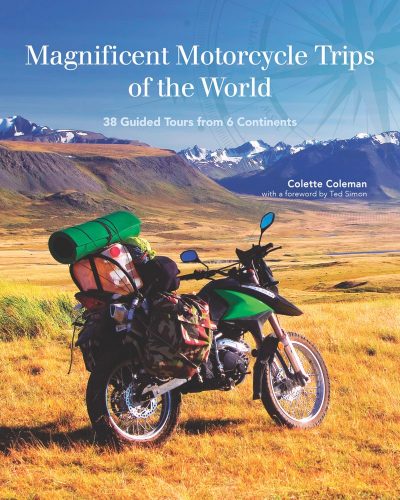 Author Colette Coleman has been riding for 25 years and has experienced the best that the world has to offer while exploring on two wheels. In her 208-page paperback book, Coleman has chosen some of the world’s most iconic routes or ones she has discovered herself, but in each case, she has chosen countries where travel is safe and where bike rentals are available or where there are options to pick up a bike as part of an organized tour. Any of the 38 routes can be stand-alone trips while taking a two- to three-week vacation, or in some cases, can be added on to for extended travel times. Each chapter has a map and is a quick read with at least one beautiful colour photo of the area on every page of the book.
In her route descriptions, Coleman begins by describing the region and even describes the types of roads you can expect – and therefore the types of bikes that might work best. She then moves into distances and lengths of time needed to complete sections of the route and what kind of scenery to expect. Finally, she informs about motorcycle rental availability or the possibilities of taking your own bike, and when the best time of the year to visit the particular area is based on temperatures and winter or rainy seasons.
In case you think a motorcycle trip to Africa, Asia, Australasia or Europe might be a lofty goal, Coleman has chosen four trips in Canada (the Rockies, Gaspé, the Maritimes or the Yukon) and five trips in the U.S.A. to get you started a little closer to home.
For an added bit of inspiration, the grandaddy of modern motorcycle travel, Ted Simon, opens the book with the foreword and he says it right: “Planning a journey can be as much fun as the journey itself.”
And what better way to plan a trip into the unknown than to take the advice of someone who has been there and experienced it firsthand.
Available in Chapters for $26.64. ISBN – 13:9781620082386. 208 pages, 8 x 10 inches.
As a rider of many years, I sometimes overlook the essentials of travelling, and often don’t take the time to search for new or better approaches to packing and safety before hitting the road. This book offers a well-rounded base for every motorcycle traveller to use as a starting point when preparing a motorcycle trip.
 Although this is a “woman’s” motorcycling guide, it holds a lot of pertinent information that’s easily overlooked and is a worthwhile read for men as well. Author Tamela Rich has jam-packed this book with smart, relevant tips and information, and sprinkled it with wholesome tidbits of personal experience and insight that she has learned on the road. It’s an exceptionally easy read and could be finished in a day.
Rich, who had started riding in 2007 after her career and the economy took a turn for the worst, left her husband at home and set off on a 40-day trip across 19 states, learning something new around every turn. She has put together a go-to guide on a broad spectrum of solo travel. In this thought-provoking book, Rich guides you to find out what type of traveller you are and how to go about making your trip truly your own.
The tips she offers for the road are plentiful – from how to pack and where to sleep to how to hide money and the mechanical details of a bike. I found the technological tips to be most useful, particularly her insight into apps, and how to find the right ones for you. In this ever-growing world of quick technology, I find it overwhelming to even think about downloading another phone application, however useful it may be. Rich does a great job of guiding you to find the most useful apps for your specific type of travel.
Most road information is based in the United States, and it touches greatly on how the highway systems work and other aspects we may overlook when headed across the border.
While you read, Rich has a way of creating a fictional café in which the two of you are sitting like old friends catching up; she shares her stories and knowledge in a very casually and carefree manner. You hear how she’s felt in particular situations and of the overwhelming emotions that come along with solo travel. From female empowerment to the love of the ride, we all have our reasons to ride bikes. This 146-page book takes it a step further and offers essential information into travelling solo by motorcycle.
ISBN: 978-0-9840473-2-1. Available on Amazon.ca for $25.64.
I’ve been experiencing some bad-ish luck recently. I say bad-ish because the unexpected “extras” I’ve experienced while performing some recent repair jobs were not devastating. They were, however, inconvenient and somewhat costly. But these unforeseen circumstances could have led to even bigger problems down the road had they not been checked, and it would have been even harder on the wallet had I not rectified these issues in time.
 My girlfriend and I bought a house recently – a fixer-upper – and during the pre-purchase inspection process it was discovered that the cinder block foundation needed waterproofing – before you flip to the next story, we’ll get back to bikes within the next few paragraphs.
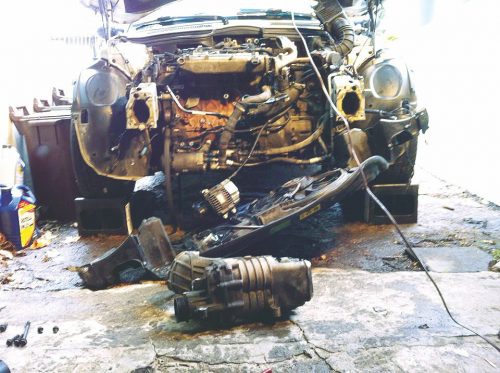
When the house was built in 1973, the owner had either neglected to install waterproofing, didn’t know it needed any or didn’t care. The result was damp basement walls. The job to install the waterproofing required that a special membrane be glued to the outside of the foundation walls, which meant a two-metre-deep trench had to be dug around the house. In other words, it was a relatively big project. Once the “moat” was dug to expose the foundation, we discovered that the house’s original rainwater drainage system was damaged.
The guy performing the repair work is a good friend of mine, so in the interest of saving me some money, he offered an easy patch job that wouldn’t really add much to his quoted price. He did, however, advise against it, because the potential for more damage in the future was high, and my moat would have to be re-dug. The alternative was to scrap the old drainage pipes and install a French drain, which also meant that he’d have to dig a new trench toward the street, to join the new pipes to the city’s drainage system. This increased the cost of the original estimate by 50 per cent. We’re not talking a few bucks; we’re talking thousands.
While the temptation to leave the old pipes in place and save some money for a new kitchen was strong, I opted for the new drainage system – if not for any other reason than for future peace of mind. We’ll be getting a new kitchen, too, just not a schmancy one.
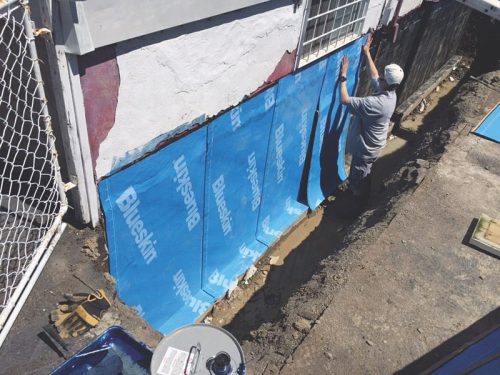 I experienced another such surprise a couple of years ago, when I’d replaced the oil in the supercharger of a Mini Cooper S I once owned (we’re getting back to bikes soon, I promise!). To do this, the supercharger had to come off, and to do that, so did the front bumper, the radiator, the radiator support and a bunch of other major components. It’s still the most involved oil change I have ever performed, and all for a measly four ounces of supercharger lube! The car had considerable mileage, and for a moment I pondered replacing the alternator, since it, too, had to come out in order to remove the supercharger. The alternator had never given me any problems, so it went back in – you can probably guess where I’m going with this. Not one month later, the battery icon lit up in the dashboard. A test proved that, indeed, the alternator had failed, and the whole front end of the car had to come apart again to replace it. Lesson learned.
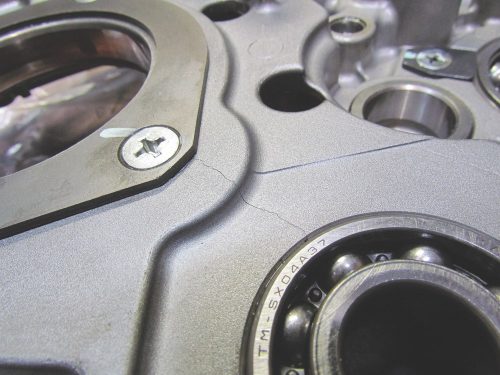
More recently, you may remember I disassembled the engine in my Kawasaki KLR650 (finally back to bikes!) to rid it of its oil consumption. As a preventive measure, I went deeper than just taking apart the top end, and while I had the engine completely apart I discovered a crack within the crankcase. Having learned from previous alternator experiences, among others, I didn’t hesitate to replace the crankcase. This entailed more work than I’d originally expected, as well as added costs. However, the peace of mind it has given me is worth well more than the couple of hundred added dollars; the same goes for the extra thousands for a new French drain.
 I took the KLR for its first ride recently, and am glad to report it runs great. I did notice some surging at steady highway speed, which indicates the stock jetting is a tad lean for the new, larger piston, even though I lifted the jet needle with a washer, which enriches the mid-range – unfortunately, it’s not rich enough. To remedy this, I’ve temporarily parked the bike to avoid melting the piston and have ordered a Dynojet jet kit, which allows for a much broader adjustment range. That’s more time and money spent than anticipated, but again, this modest change will prevent future problems.
If you’re in the process of an in-depth repair on your bike, take a close look at the adjoining components not related to that repair. If you spot something questionable, don’t ponder if you should replace it; just go ahead and get it done.
Technical articles are written purely as reference only and your motorcycle may require different procedures. You should be mechanically inclined to carry out your own maintenance and we recommend you contact your mechanic prior to performing any type of work on your bike.
The iconic American motorcycle company confirmed that an FTR1200 will be going into production with on sale date in 2019; inspired by Indian’s storied history in flat track racing.
The announcement comes in response to months of speculation and demand for a street version of the company’s wildly successful FTR750 – a purpose-built flat track racer that has dominated the American Flat Track professional racing series since its introduction in 2017. In addition to announcing production, Indian also announced a sweepstakes where riders can enter to win one of the first bikes to come off the assembly line.
“When we unveiled the FTR1200 Custom at EICMA, we said we’d listen to feedback from riders around the world,” said Steve Menneto, President, Indian Motorcycle. “Riders definitely have spoken and the response has been overwhelming. We’re proud and excited to announce that we will be putting the FTR1200 into production.”
The FTR1200’s full specification is yet to be announced, but it will embody a flat tracker style, housed in a trellis frame and powered by a new V-twin engine.
Visit www.indianmotorcycle.com/en-
There’s a reason why the Street Glide is one of the Motor Company’s best sellers.
As I cruised down some backcountry roads in the middle of Croatia, Bryan Adams’ song “Open Road” randomly started playing on the Boom! Box 6.5GT Infotainment System of the 2018 Harley-Davidson Street Glide I was riding. While belting out the familiar lyrics, “Let the engines roar . . . who knows where I’m going . . .” I giggled in my helmet while smiling and nearly tearing up at the irony of the situation I was in.
It’s not often I get an invite to travel to Croatia to test out new metal, and yet here I was on a beast of a machine with no idea where I was going, yet at the same time not really caring. I was free; it was just the wide open road, epic scenery and the familiar rumble of the V-twin engine of my bike and my fellow riders’ bikes who accompanied me on the adventure of a lifetime. There was no missing the torquey feeling of the Milwaukee-Eight 107 engine on that bike, along with a throaty sound that followed through the dual exhaust pipes.
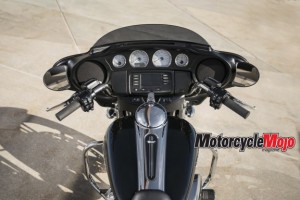 While I’ll admit touring bikes are not my favourite type of motorcycle to ride due to the sheer size and weight of them, I was impressed by the smooth handling and power of the Street Glide. It makes for a solid touring bike thanks to its comfort, and additional features like hand-adjustable rear shock absorbers for increased preload adjustment. I tested out this model in pretty varied terrain, consisting of rolling hills and mountains with sharp switchbacks, twists and turns in addition to straight back roads, busy city streets and, of course, beautiful roads sweeping alongside the Adriatic Sea. The life of a biker sure is a tough one sometimes.
My personal preference is sportier bikes that I can really lean into a corner with, usually with more centred foot controls versus forward controls. Either way, I was still able to navigate this bike through some pretty gnarly turns, and was also able to manoeuvre it fairly easily through a bit of construction and stopped traffic. In Croatia, lane splitting is common, and rather than struggle with the clutch and sit in the 26 C heat, I carefully cruised through lanes of traffic to get to our final destination, Le Méridien Lav, located in the city of Split.
Built for the Masses
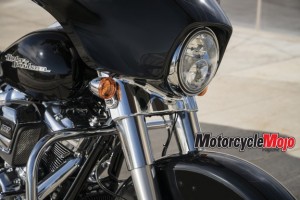 This bike is relatively unchanged for 2018, aside from additional colour options. After major improvements made last year, I suppose the old adage “If it ain’t broke, why fix it?” applies here. This sleek bike features a fork-mounted batwing fairing, hard saddlebags and enforcer cast-aluminum wheels. It’s an all-around attractive, modern machine that commands attention on the road. Check out the 2018 Street Glide Special if you want additional features that include blacked-out engine, forks, handlebars and hand controls, mirrors, tank console, exhaust, air-cleaner cover and more, plus those sexy black front and rear Talon wheels.
The Street Glide is no longer an old man’s bike. Harley-Davidson has worked hard to create a bike that suits a variety of riders, from the younger generation to middle-aged and beyond. For those women who enjoy a solid mid-weight bagger, and enjoy cruising highway or backcountry roads, then this bike is a solid option and worth a test ride to check it out further.
Efficient Driveline
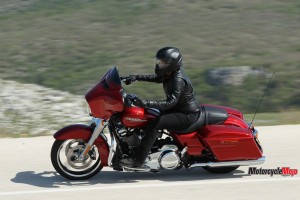 The introduction of the Milwaukee-Eight 107 V-twin in 2017 was a game changer for Harley-Davidson. With 1,746 cc to play with, this four-valves-per-cylinder V-twin engine adds additional torque and faster acceleration compared to its predecessors. It was also designed to reduce the heat being emitted from the engine, so despite wearing all black in hot weather, the engine heat wasn’t causing me to overheat. The increased power was noticeable as we passed slower-moving vehicles on those narrow Croatian roads. Following big tour buses on twisty roads was truly painful, so I was able to accelerate and pass quickly, smoothly and safely. The newer engine was designed to also keep in mind emissions compliancy and fuel efficiency, while being super-reliable and powerful at the same time.
The Street Glide comes with cruise control, which is great for highway riding. I’ve never been a huge cruise-control user on bikes, but it’s handy to have this option for those longer highway road trips. The six-speed transmission’s shifting is smoother than on older models, and while Harley-Davidson boasts seven per cent less clutch-lever effort for all Milwaukee-Eight models, my hand was getting pretty cramped after navigating rush hour traffic at the end of the day. I checked in with my fellow (male) riders, who didn’t experience as much difficulty with the clutch, so whether this was due to being one of my first rides of the season or to me having smaller hands, we may never know. I concluded that I need to (a) work on my hand exercises during those crazy cold Canadian winters, and (b) go on a riding trip mid-winter to get my two-wheeled fix and exercise that clutch hand.
Smooth Riding
For added comfort and customization, the Street Glide comes with hand-adjustable rear shock absorbers. The adjustment knob is located behind the left rear saddlebag, so this needs to be removed to make the adjustment. The quick-release option for saddlebags makes this a relatively easy adjustment, though.
The front suspension features newer technology to offer linear damping characteristics, meaning that the weight transfer in corners and while riding on varying terrain was consistent and even. The changing terrain on one of the roads we were on could have been tricky to navigate, but the balanced chassis and compliant suspension made it easier to control and ultimately saved my butt when I hit a sharp switchback on a fairly steep incline.
The Showa dual-bending valve technology in the forks and rear emulsion shocks prevent the bike from bottoming out as well, so whether you’re getting on the gas, hitting a big bump or rolling over train tracks, the ride is smooth.
The Street Glide comes with Harley’s own Reflex linked Brembo brakes (ABS optional). In some situations where I had to brake quickly (i.e., those tight corners and switchbacks), the linked braking system came in handy for smoother braking versus abrupt braking, which with a heavier bike could put me in a tricky situation with the uneven weight transfer.
Comfortable Amenities
A 300 km ride through the Croatian mountains and countryside is a great way to test out the comfort, ride quality and handling of a bike. I must say, this was one of the most comfortable bikes I’ve ridden. The enhanced suspension, combined with a firm yet plush seat, made for a nice, comfy ride resulting in zero soreness on the posterior. The saddlebags provided more than enough space for extra gear, water and snacks.
The bike weighs 376 kg ready to ride, and the seat sits at 695 mm high, so it’s certainly not the lightest or easiest to manoeuvre, but it’s also not the heaviest. At 5′ 7″ tall, I was able to push the bike around on flatter surfaces, but struggled to turn it around on a road with an incline, or back it into a parking space when it wasn’t flat. I had no problem seeing over the lower-profile windshield. My shoulders were a tad sore the following day from the upright riding stance, but again, I’m also not used to riding in this position. During this press intro, I also rode the new 2018 Road Glide, and while these bikes are quite similar, I found the Street Glide slightly lighter and easier to manoeuvre (especially in traffic) owing to the Street Glide’s fork-mounted fairing, as opposed to the frame-mounted fairing of the Road Glide.
The Street Glide’s hand controls are positioned with easy-to-reach buttons for signalling (I only hit the horn by accident once!), and the joystick for the audio controls was easy to manipulate with gloves on and without taking my eyes off the road. This bike comes with the Boom! Box 6.5GT Infotainment System, which has two 5.25-inch speakers and a large, high-definition 6.5-inch screen. The 6.5GT system sounds pretty good at 25 watts per channel, but I’m a big music buff and would likely switch those speakers out if this were my personal bike, as I found the sound a bit distorted at higher volumes. The larger screen is the mothership, though, and with full HD colour, its large viewing platform makes it easy to see on the road and on bright days. The infotainment system comes with AM/FM radio, weather alert, USB audio device hookups, GPS navigation and Bluetooth pairing for your phone. It comes with automatic volume control to compensate for the increase in noise level, plus hands-free voice recognition, making this a safer system for riders.
Stripped Down and Versatile
First introduced in 2006, the Street Glide remains one of Harley-Davidson’s top-selling bikes for a reason. This bike is quite versatile in that it balances smooth, consistent riding with a sleek, stripped-down design that appeals to riders of all ages, genders and riding styles. Yes, it’s a heavier bike, and yes it’s chock-full of extra features that you may or may not realize you need. If you’re a newer rider, this may not be your bike. But if you’re a confident, seasoned rider, enjoy road trips and checking out new destinations, then this bike is worth a test drive.
In the words of Bryan Adams, I encourage you to “be afraid of nothing . . . and let the white lines on the highway lead you out of town.” Whatever bike you’re on, make sure you find the right one, and just enjoy the ride. At the end of the day, life is an open road, and it’s even better when you’re on two wheels.
Just because most people wouldn’t ride in the winter doesn’t mean it’s wrong. But choosing to walk into the Pacific Ocean with a surfboard in January or February takes a special person.
It’s December: cold, grey and stormy. Grubby-looking clouds crouch low over the coast, and a saturated, fitful wind tries to gnaw my ears as I trudge up the steep trail. The relentless precipitation is the perfect combination of slush and snow – cold enough to sting, wet enough to penetrate all but the best rain gear: ideal weather for a remote motorcycle ride to a steep, rewarding hike overlooking Ucluelet on Vancouver Island’s west coast and 50 km of Pacific Rim coastline. Happily, I happen to be wearing the best rain gear.
Thirty minutes earlier I was on my 2005 Triumph Tiger 955i, picking a careful line along the muddy logging roads. At first the way was hard-packed dirt and gravel, but as I got deeper (and more lost) in the woods, the ruts deepened and softened, the stones got bigger and more jagged. Washed-out sections, lengths of broken tree and off-camber turns added tricky obstacles to steep descents. The Tiger is a fine bike and handles these roads fairly well despite my smooth road tires, but it’s no dirt bike. Nor am I an experienced off-road rider. So, to make up for both our shortcomings, I had to proceed ultra-cautiously. The slushy mud tried several times to take us down, but we kept it upright and eventually made it to the trailhead.
All in all it is a glorious and typical winter’s day in the Pacific northwest: infinite possibilities for adventure and not a single other person in sight. Granted, Tiger and I had encountered alarmingly large ice pellets along the way, and we are a good 90 minutes behind schedule due to, well, not quite knowing where we are going. My fingers are numb and I’m famished, but I’m happy!
Wet and Cold
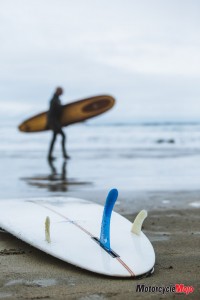 People seem incredulous when they see me riding in these conditions. Despite the fact that Tofino is one of the warmest parts of Canada throughout the winter months, the weather is often miserably wet and usually just a few degrees above zero. Five minutes of underdressed riding in this weather feels like an eternal frozen hell, and most days I compound the cold by spending a few hours surfing in the chilly North Pacific Ocean. Changing out of a frozen wetsuit in the rain is uncomfortable, to say the least, so generally I throw my protective gear on right over the sopping suit and scoot home as quickly as possible. Never does a hot shower feel better than on these days.
Truth be told, I don’t find riding in winter altogether unpleasant. Over time I’ve honed my riding wardrobe to comfortably accommodate any weather – from blistering hot summer days to sub-zero mountain passes to torrential freezing rain. On the very worst days, it’s not the cold or wet that’s an issue, but more often the condition of the road surface and my own preparedness that have become the most important factors in winter riding safety.
A New Year
 It’s the middle of January, and I have errands to run in Nanaimo and Courtenay, on the east side of the island. Not having a car, this means a 550 km round trip over two mountain passes and back on a loaded motorcycle. January means rain and fog, and more often than not, snow or ice through the passes. The trickiest part of the route takes you through the Alberni valley, where Sproat Lake cloaks the highway in dense, nearly liquid fog. The valley is bordered by Sutton Pass to the west and the Port Alberni Summit to the east (elevations 340 metres and 411 metres, respectively), and the combination of persistent moisture and sudden elevation changes means potential ice buildup on both asphalt and helmet visor. Preparation and patience are key.
Multilayered
 In the morning, five quick minutes are all I need for packing (wallet, keys, phone, shopping bags and spare underwear). The next 45 minutes are spent getting dressed: underwear, light merino socks, skiing shorts, nylons, thick socks, long johns, thick wool pants, riding pants, loose rain pants, bra, light merino tank top, light thermal long-sleeve, merino T-shirt, wool hoodie, wool sweater, light wool jacket, riding jacket, rain jacket, neck gator, and finally helmet, glove liners and mittens. Though I look like the Michelin Man, I feel confident that there is no danger of freezing on the four-hour road trip. Sure enough, I’m not only okay, but even comfortable on my arrival in Nanaimo, then Courtenay.
A crew of girls I ride with meet me in town and we do a loop through the Comox Valley together, then home to my host’s for beer and storytelling. The next day is the same in reverse, waddling safely back into Tofino with nothing worse than chilled fingertips and a bit of numbness in my sore but warm backside.
This evening I’m invited to dinner at a friend’s, and as he lives a mere 2 km away and the rain had stopped, I ride over in jeans and a sweater, riding jacket and gloves. By the time I leave his house, the rain has (naturally) started again, and the temperature has plummeted to about 3 C. The ride home takes little more than three minutes. I am miserable. My legs are frozen, my fingers feel as if they’re going to snap from the cold, and icy water rolls uncomfortably into my boots. I think I’ll never get home, that perhaps the morning commuters will find me frozen on the side of the road, my poor, sad motorcycle lifeless and frosty on the shoulder.
But I make it home, and have to heap extra blankets on my bed to warm up even after a hot shower. Somehow, through some trick of physics perhaps, those 180 seconds dragged on eternally: eons longer than the entire last two days of winter riding. The aha moment is powerful, one that I won’t lose the lesson from any time soon.
It’s not all rain and gloom, however, and the heavy clouds are occasionally dispersed by bright, cheerful sunny spells that can often last days or even weeks. During these times, all the frustration and care of winter riding lifts away and I’m many times repaid with blue skies and dry, deserted roads.
Ride the Waves
It’s February. The morning frost is heavy, and promises a glittering wonderland once the sun rises high enough to catch it. My fingertips quickly lose dexterity in the hard air, slowing down my progress as I strap my surfboard into the rack mounted on my saddlebag. The dawn sky brightens and turns into a bizarre and gorgeous shade of greenish orange; I pause to look at it a moment, wondering if this is the normal way of things in the pre-sunrise dawn. Ignoring the small, whiny part of my brain that protests the feeling of the clammy wetsuit I’m wearing under my gear, I slide into the saddle and move out. A shiver runs down my spine as my body adjusts to the icy wind, but again I ignore it, paying attention instead to the slippery pavement and to the extravagant prismatic effect in the eastern sky. Part of me wants to be back in my toasty bed, but with two jobs and fickle weather and swells, it’s hard to find time to surf. It’s go now or lose another chance to get out on the waves, so I swing by a friend’s house, enjoy a quick coffee and I’m back on the road.
In the parking lot at the beach, again my whiny brain protests loudly as I strip off my warm outer layer and prepare to walk into the Pacific Ocean. It takes all my strength of will to take that first step, but as soon as I do, all complaints are forgotten and I relish the feeling of the bracing water on my face. As always, once submerged, my wetsuit is perfectly warm despite the 8 C brine. There is only one other surfer on the water, and as I paddle past the break to where he’s floating he gives a broad grin, and we turn to watch the sun break free from the white-tipped mountains beyond the beach. I have to be at work in 90 minutes, but in this moment, my world is perfect.
A road trip to New Mexico reveals snow-white dunes and a city of rocks.
“I really don’t want to go.” Pouting, I tried to internalize an unnecessary degree of petulance.
Dispensing our warm goodbyes to biking friends in Arizona, Jason and I saddled up and I reluctantly turned the key in the ignition. Destination: New Mexico. A southern state not yet explored by us and sitting just above Mexico, one I was sure was filled with vast expanses of hot, arid desert. Nope. The weather blew a bracing, fresh wind for the most part of the week while we wended around a gamut of snow-capped mountains carpeted in pine and spruce. As we inched toward the white sands, we were met with towering cottonwood forests and colourful wildflowers beginning to bloom. Truth be told, there is nowhere else that reminded me of New Mexico.
Gloriously, the sky was cobalt blue and the air was crisp. Spring had sprung, but so had an oil leak on Mr. Jangles. A motorcycle trip wouldn’t carry much clout without one roadside repair. Or four, courtesy of Jason. Sympathetic to our transiency, the mechanics at Las Cruces Motorsports immediately tended to the leak, albeit a niggling drip more than a worrisome trickle. It turns out we were using ineffective sealant on the DR650’s valve cover – Honda Bond, however, worked like a charm.
It’s All White Now
 Toward the north side of Route 70 about 26 km southeast of Alamogordo, at the heart of the Tularosa Basin, glistening white dunes rise up from the earth. Unmissable but not immovable, they constantly shift and settle over the Chihuahuan Desert, engulfing 712 square kilometres of sparkle. White Sands National Monument is a gargantuan gypsum dune site, the world’s largest. Firmer and cooler to the touch than you might think, the dunes make for boatloads of fun sledding down them from up to 18 metres high, but between us – hauling a laden rucksack spilling over with camera equipment and more dry bags strapped to me than I care to remember – we traipsed rather than tobogganed in. A couple of kilometres later saw us set up camp in a secluded spot we’d call home for the next two days.
For thousands of years – since the Permian sea retreated when the shores of an ancient lake that covered what is now White Sands – ethereal lakes, wind and sun have separated the water from the gypsum and have formed transparent crystals. Once the wind and water are done, the crystals break down into sand-sized particles. Strong southwesterlies keep the gypsum on the go, stockpiling it up and pushing dunes into incredible sandscapes, displacing wave-like dunes of all shapes and sizes.
Who Turned Up the Heat?
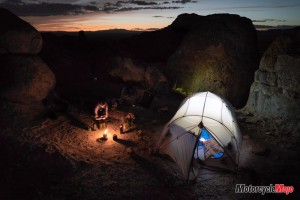 Unforgiving rays bounced excitedly off the sand, which, coupled with the midday sun’s atomic heat, meant I had to cling to the shade like a vampire. It was brutally warm, as if the sun was focused through a magnifying glass. To gain a moment of refreshment, I washed myself with wet wipes as if sanding down a wall. With no movement of air – where was that invigorating breeze I’d banished? – the afternoon grew hotter. I might as well have been on a salamander grill. Becoming increasingly aware of my skin’s flawless ability to leave me with the complexion of Jabba the Hutt, I dove under mesh and canvas.
As I looked out, the soft silence was periodically interrupted by the odd fighter jet that would dart across a cloudless sky. Those would be from the White Sands Missile Range, surrounding the monument. Late one afternoon, we were hiking over the sandy banks when a series of them glommed together. Military aircraft long gone, the dunes were, I now realized, layered and daunting, impenetrable and comparable
to nothing.
A Sight to Behold
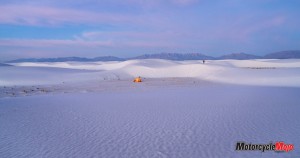 After a lovely swathe of afternoon approaching dusk, moments before the sun dipped below the dune field, Jason hollered at me to run toward the last vestige of golden light. With the utmost dispatch! Urging me to cling to it like the shipwrecked cling to the hull of an overturned ship.
“The dunes have changed colour. They’ve turned blue!” I said, stating the obvious to Jason as my head spun into the tungsten twilight. This was radically different: the gypsum must absorb every colour of visible light except blue, so it reflects a pure powder blue back to us. That, and a winter-blue light mingling with the evening cold, I mused.
“I know, you should see the pictures coming straight out of the camera. No one will believe I haven’t tweaked the images,” Jason responded. I smiled and stood casually, and there, with the great lilac hue taking over the place flaring like potassium in the low evening light, I just gawped, my brain roaring from all the colour, startled just as much by the scale and intricacy of the wind-blown rippled patterns. It felt as though all the world’s pleasures were mine for the taking. This was a fine day. The good ones always sneak up, unexpectedly.
Oil Leak Take Two
A trip back to Las Cruces Motorcycle Sports saw the same honourable lads make a second attempt to seal up the returned leak. No matter, the resultant oil refused to dry up and instead diminished to a glistening spot that I, and more importantly Jason, could live with.
Splitting off the 180, the City of Rocks rolled around to meet us. Located halfway between Silver City and Deming, it got its name from a striking mile-wide geological formation of volcanic rock. Over millennia, erosion has sculpted columns and pinnacles into a “city” rising to 12 metres and separated by pathways. As I rode along the lanes resembling city streets, I noticed nature’s infrastructure and tried to imagine this place at its inception 40 million years ago. A beautiful little add-on in the Chihuahuan desert region of southwestern New Mexico.
A Little Excitement, Please
Sluggish with a happy fatigue induced by brisk days in the saddle and even colder nights camping in succession, we both craved something to shake us up. “How about a portion back on the dirt?” Jason suggested, pinpointing a section of New Mexico’s Backcountry Discovery Route. Famished for some off-road fun, we kick-started the proceedings on the Pueblo Park Road off Route 180.
Enlivened, we cruised northwesterly of the Gila National Forest for around 65 km, twisting us around a serpentine course of compacted dirt some of the way, tracks more gravelly than rutty, and a little construction work grading the road thrown in here and there. Swinging a right on an unnamed road brought us out onto Saddle Mountain Road and back onto the 180 toward Luna. It was thrilling – getting my dirt legs back was always exhilarating, even in rude temperatures just above zero. Adrenaline barely kept the burning cold at bay in my summer-gloved fingers, but the dexterity of “feeling” the bike trumps heated winter-gloved digits any day on dirt.
“Ooh, look at you, Lisa!” Jason observed with boisterous good humour at my new-found capacity to slip straight back into “giving it some.” With that came a pleasant sense of self-satisfaction, as if I’d discovered that I was still capable of performing a forward roll. I’m sometimes a tangle of limbs with the grace of a three-legged dog before I straighten myself out and get on with it. Once the muscle memory kicks in, I am always so much more willing and malleable. I’m happy plasticine.
It’s Playtime
While the ride became finger-numbing, taking on the severity of a slow acid burn, my almost reckless swagger extinguished, it was anything but mind-numbing. On the contrary: woken out of a sleepy stupor, my blood pulsed gratifyingly. It felt good and essential to my well-being, motivated by pure curiosity and a sense of play. It was just terrific fun, and I hooted my bicycle bell, apropos of nothing, Mr. Jangles charmingly sure of his place in the world, and on the dirt.
At an elevation of more than 2,133 metres, a smattering of snow intersected our route and dictated we push on, particularly through tiny villages that were more of a gathering of buildings, if not struggling towns that continued to prevail because at some point long ago they set out to exist. For some time, we toyed with the idea of whether to take the stoic route and camp cheaply or bed down in a cozy motel. Our sense of frugality bristles, at times, at any want or need for comfort.
Creature Comforts Prevail
The temperatures plummeted and the smidgeon of flakes became a flurry; the prospect of solid walls became seductive, whatever the cost. I’d read somewhere that the great virtue of defeat, once accepted, is that it at least allows one to rest. No longer troubled by splurging a day’s budget on a bed alone, I outlined the reality of a warm and comfortable ending, to which Jason soon succumbed.
I dismounted the bike only to discover my knee joints had ossified. My hips ached as if I’d hiked across a dune field with my body weight in dry bags hanging off me. Hurting, I hobbled into the office with a robot’s gait and vowed I wouldn’t return without a room key in my hand. An evening of centrally heated warmth and subsisting on comfort food before I’d have to extricate myself. Sucking up electricity and Wi-Fi like a diver coming up for air. The prospect was blissful. It was transformative. Energized by several bowls of hot food, I soaked in a hot bath and have never enjoyed the sensation more. The place was aglow all around us, as though sharing our happiness. Lulled by the most wonderful, unshakeable feeling that comes from a springtime road trip to New Mexico.
Three friends and three bikes in the rugged remoteness of Alaska. Could it get any better?
Imagine you had three dream bikes in Alaska with your two best friends for 10 days. That was basically a dream of mine for years – and recently, it came true.
Never being to this part of the world before, I pictured baron lands; sharp, rocky mountains; a minimal number of people; small towns; and a very desolate, remote feeling. Well, that’s pretty much exactly what I got.
Alaska is no joke. There is so much open land, as high-population city dwellers, it really is hard to wrap your mind around. This isn’t a controlled National Park. This isn’t a place where someone can find you if you scream really loud. This isn’t a forested area where you can get back on the path – there is no path.
We made our own paths.
Adventurous Threesome
 The Wild Ones crew are no strangers to adventure. We three women travel together in places none of us have ever been, we take risks and we bring our motorcycles along. This wasn’t our first rodeo, but crossing that border into Alaska didn’t make us feel as though we were ready for this type of remoteness. We really were in the middle of nowhere. What we are used to is being outside our comfort zones.
We arrived at our first location, wide-eyed and ready to explore.
Hatcher Pass: If you’ve been, you know the feeling. It’s something you can never quite get across through words or photos. We were in the sky, above the rest of North America. It was the greenest greens contrasted below the bluest sky-blues. We were among monstrous mountains; we were so small. Our new home right in the middle of it all: a tiny cabin barely standing, with three motorcycles parked outside ready to be ridden wherever we pleased for the next 10 days.
A Classic Thumper
 My 1976 Yamaha XT 500 was used to the altitude of mountain passes. It was used to being in places it has never been before; it was also used to being outside its comfort zone and it was used to me, its owner and biggest fan. The old Yammy was my partner in crime, and I think it was just as excited to be in Alaska as I was.
Standing up on the pegs of my old friend riding up the dirt road toward the highest elevation in the area was an amazing feeling. The crisp air felt weird in the dead of July. Over and over in my head I said, I’m riding my XT in Alaska. A dream come true, to say the least.
The paths seemed to go forever, the wrong turn seemed so much more dangerous than it usually did, and every once in a while I’d catch a glimpse of a bear, a fox or a marmot. The freedom was massive. Becky, this is more freedom than you’ve ever had in your life was my thought as I raced around the backside of Hatcher Pass, more alone than I have ever been.
We spent those 10 days exploring as much of of Alaska as we could. We had motorcycles at our fingertips, no plans, and were ready to get lost. It was bucket-list material.
Land of the Midnight Sun
 Lanakila MacNaughton is the planner, the mom. We follow her lead across states and countries all over the world. On the Alaska trip, Lana drove the Sprinter chase van to Anchorage all the way from Portland, and got Adri and me gas when we ran out.
Adri Law is my best friend. In the past year, we rode across Europe together, lived together, tattooed our names on each other, and rode through Mexico, Washington State, Oregon and Canada together. We are like sisters, and now we were side by side riding through Alaska. We were Lost Boys in our dreamy Never-Never Land.
This far north, the sun doesn’t set in the middle of summer, so we rode into the “night” without even realizing. The glaciers that towered over the roads leered down on us as if watching us, since there wasn’t anyone else around for them to watch. So often we stopped to take a photo or just take off our helmets to listen. The quiet of the North is something that is familiar to me. I feel so at home and at peace when all you can hear are birds and the wind. “True Alaskan Girls” is what we joked we were when we’d conquer menial trip tasks at hand, but truly, I think we felt as if we could stay here forever and just live off the land – never to return back to our homes in Vancouver, Portland or Los Angeles.
A Lawless Land
You can off-road basically everywhere.
You can ride on the beaches.
There are no helmet laws.
We didn’t see one cop.
Alaska is lawless.
The state is your playground, and you better not die before going.
Here’s an example: Imagine an empty beach, flat and wide, rocky but smooth and totally deserted – not a vehicle or person in sight. That’s what we discovered on our way to Homer. It felt as though my XT had a mind of its own and just took off into the misty, salty air. I flew through a group of seagulls trying to enjoy their lunch of washed-up seal. I didn’t realize how many birds there actually were until I was in the middle of the flock, with loud squawking happening all around my head and gulls bumping into each other mid-air trying to escape my recklessness. They weren’t used to this type of animal, and I truly felt like one, part of nature and right in my natural habitat.
Alaska Tips and Tricks
I highly recommend Alaska to anyone who rides a motorcycle. Whether it’s on a dirt bike or a street bike, there is something for everyone up there. The roads are long, open and free; the backcountry is massive, technical and so very available. Even with 10 days in Alaska, I feel as though we didn’t quite scrape the surface, so give yourself some time, be prepared for the elements, bring gas and don’t count on having cellphone service. The best part about Alaska is its roads, rivers and lakes, but even in the dead of summer, it’s not warm. Don’t bring a bikini. Oh, and watch for grizzlies.